 Skip to content

moulage par injection1 transforme des granulés de plastique brut en pièces de précision en quelques secondes — tableaux de bord, seringues, engrenages, boîtiers et des milliers d'autres composants qui vous entourent chaque jour. Le processus est rapide, reproductible et capable de tolérances mesurées en millièmes de pouce, ce qui explique pourquoi il représente la majorité des pièces plastiques produites dans le monde. Ce guide parcourt les étapes du processus, les matériaux qui dominent la production, les industries qui en dépendent, et les compromis que vous devez comprendre avant de vous engager sur un moule. Tout au long de l'article, nous faisons référence à l'expérience réelle de notre atelier de production pour garder les explications pratiques plutôt que théoriques.
Cet article est structuré à la fois pour les acheteurs évaluant des fournisseurs et pour les ingénieurs souhaitant comprendre le processus à un niveau pratique. Nous couvrons les cinq étapes du cycle de moulage, les thermoplastiques qui dominent la production, les industries qui en dépendent, et les compromis coût-qualité qui motivent sourcing les décisions. Chaque section s'inspire de notre expérience en atelier chez ZetarMold, où nous exploitons 47 machines traitant plus de 400 matériaux pour des OEM mondiaux et des startups.
- Le moulage par injection fait fondre des granulés plastiques, les injecte dans un moule de précision et les refroidit en pièces reproductibles
- Les cinq étapes du processus — fermeture, injection, compactage, refroidissement, éjection — contrôlent chacune un facteur de qualité différent
- Les thermoplastiques comme l'ABS, le PP, le PC et le nylon couvrent plus de 90 % des applications de production
- L'automobile, le médical, les biens de consommation et l'emballage sont les quatre plus grands secteurs d'application
- Le coût initial de l'outillage est le principal compromis par rapport aux économies par pièce en grand volume
What Is Injection Molding and Why Does It Matter?
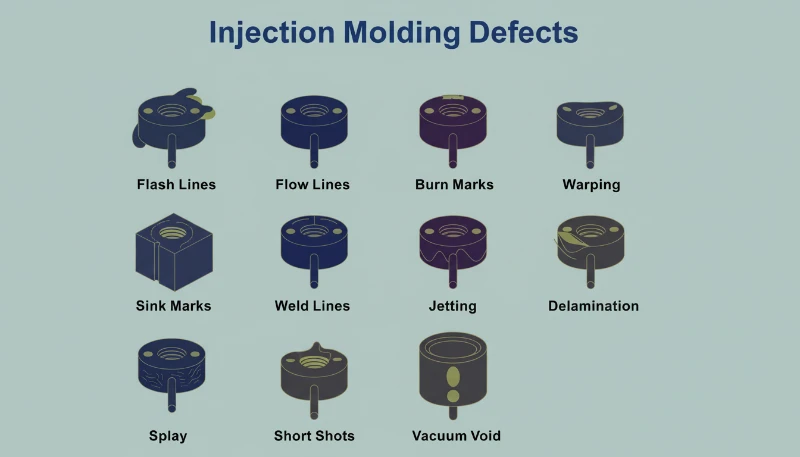
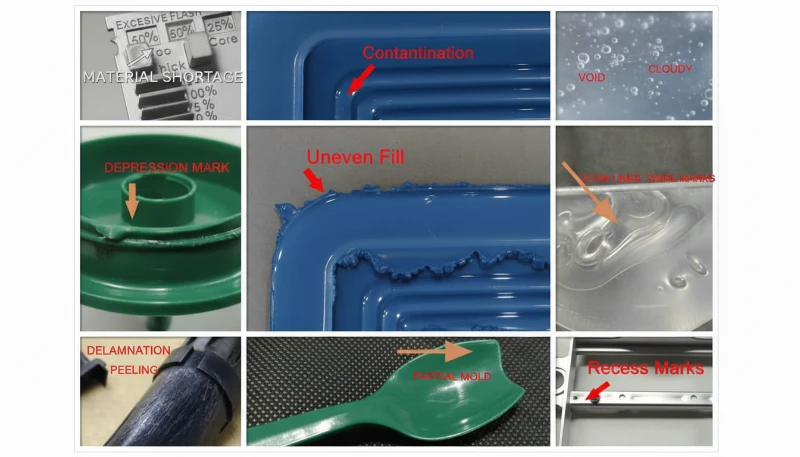
Le moulage par injection est un procédé de fabrication qui façonne du plastique fondu en pièces de précision à l'intérieur d'un moule métallique. Il est important car aucun autre procédé ne rivalise avec sa vitesse, sa précision et son rapport coût-efficacité en grand volume. Les variables clés sont moulage par injection la puissance en tonnes de la machine, le moule d'injection2 la conception, la qualité de la résine et la fenêtre de processus. Si une variable est mal réglée, des défauts apparaissent : bavures, retassures, gauchissement, pièces incomplètes ou dérive dimensionnelle.
Pour une vue plus large, notre injection molding complete guide couvre les fondamentaux du procédé, le comportement des matériaux et les décisions de production.
La raison pour laquelle le moulage par injection domine la fabrication des plastiques est une simple question d'économie. Une fois le moule fabriqué — et oui, ce coût initial peut aller de quelques milliers de dollars pour un outil simple à une seule empreinte à bien plus de cinquante mille dollars pour un moule de production à haute cavité avec actions latérales, éjecteurs et refroidissement conforme — le coût par pièce chute considérablement. Une pièce qui coûte vingt-cinq dollars à usiner pourrait coûter trente cents à mouler une fois l'outillage amorti. C'est ce calcul qui explique pourquoi les industries automobile, médicale, de l'électronique grand public et de l'emballage fonctionnent avec des composants moulés par injection.
Comment fonctionne le processus de moulage par injection étape par étape ?
Le moulage par injection est un processus en cinq étapes : fermeture, injection, maintien de pression, refroidissement et éjection. Chaque étape contrôle le remplissage, le retrait, le temps de cycle et la qualité de la pièce.
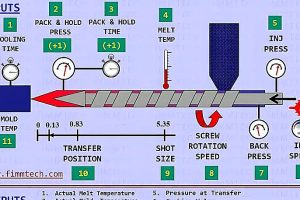
2. L'injection — La vis tourne et se rétracte, attirant les granulés plastiques de la trémie dans le cylindre chauffé. Les granulés fondent grâce à une combinaison de bandes chauffantes externes et de frottement par cisaillement interne. Une fois suffisamment de matière fondue accumulée (la dose), la vis avance comme un piston, forçant le plastique fondu à travers la buse, le canal d'alimentation et la porte d'injection dans la cavité sous des pressions typiquement comprises entre 5 000 et 30 000 psi.
3. Compactage et Maintien — Après que la cavité est visuellement pleine, la machine maintient une pression pour alimenter le moule en matériau supplémentaire pendant que le plastique refroidit et rétrécit. Cette compensation est ce qui évite les retassures et les soufflures. La pression de maintien est typiquement de 40 à 80 % de la pression d'injection, maintenue pendant 1 à 10 secondes selon l'épaisseur de paroi et le temps de gel de la buse.
« Les temps de cycle de moulage par injection varient généralement de 2 à 60 secondes selon la taille de la pièce et le matériau. »Vrai
Les thermoplastiques comme le PP et le PE ont un cycle rapide grâce à leurs points de fusion bas et leur conductivité thermique élevée, tandis que les résines techniques comme le PEEK ou le PC nécessitent un refroidissement plus long. Le temps de cycle est le facteur le plus important du coût unitaire en production.
« Le moulage par injection nécessite un nouveau moule pour chaque pièce produite. »Faux
Un seul moule produit des milliers à des millions de pièces identiques. Le moule est l'outil permanent — c'est pourquoi l'investissement initial en outillage peut être amorti sur toute la série de production.
4. Refroidissement — Le moule reste fermé pendant que la pièce se solidifie. Le refroidissement consomme typiquement 50 à 70 % du temps de cycle total. Des canaux d'eau ou d'huile dans le moule évacuent la chaleur, et la vitesse dépend de la conductivité thermique du matériau, de l'épaisseur de paroi et de l'acier du moule. Concevoir correctement le circuit de refroidissement est l'une des décisions de conception de moule les plus influentes — il contrôle directement le temps de cycle, le voilage et la stabilité dimensionnelle.
5. Éjection — Le moule s'ouvre, et des éjecteurs poussent la pièce hors du côté noyau. La pièce tombe dans un bac ou est saisie par un robot. Le moule se referme, et le cycle se répète. L'éjection doit être équilibrée — trop peu d'éjecteurs ou un mauvais placement entraîne un collage, une déformation ou des marques d'éjecteurs sur les surfaces esthétiques.
Pour mettre les cinq étapes en perspective : la fermeture prend généralement 1 à 5 secondes, l'injection 0,5 à 3 secondes, le maintien de pression 1 à 10 secondes, le refroidissement 5 à 30 secondes (le bloc de temps dominant) et l'éjection 1 à 3 secondes. Le temps de cycle total sur notre chaîne de production varie d'environ 8 secondes pour de petits bouchons en PP à plus de 60 secondes pour de grands boîtiers en PC à parois épaisses. Réduire le temps de refroidissement en améliorant le flux d'eau du moule est généralement le moyen le plus rapide d'augmenter la production par équipe.
« La pression de maintien compense le retrait volumétrique lorsque la matière fondue refroidit dans la cavité. »Vrai
Sans une pression de maintien adéquate, la pièce se rétracte de la paroi de la cavité, créant des retassures sur les sections épaisses et des vides internes. La pression de maintien alimente en plus de matière jusqu'à ce que la porte de coulée se fige.
« Le temps de refroidissement n'a pas d'effet significatif sur la qualité de la pièce ou la précision dimensionnelle. »Faux
La vitesse de refroidissement contrôle directement la cristallinité dans les résines semi-cristallines, les contraintes résiduelles dans les matériaux amorphes et le gauchissement dans les deux. Un refroidissement inégal est l'une des trois principales causes de rebut de pièces.
Quels matériaux sont couramment utilisés dans le moulage par injection ?
Les matériaux de moulage par injection les plus couramment utilisés sont l'ABS, le polypropylène, le polycarbonate, le nylon et le POM. Ces cinq thermoplastique3 les résines couvrent plus de 90 % de toutes les applications de production, des boîtiers grand public aux dispositifs médicaux. Le choix du matériau détermine la résistance, la flexibilité, la tenue en température et le coût.
ABS (Acrylonitrile Butadiène Styrène) — Le choix par défaut pour les produits grand public et les garnitures intérieures automobiles. L'ABS atteint un équilibre idéal entre résistance aux chocs, rigidité et qualité de finition de surface. Il se moule à 200-240°C et accepte bien la peinture, la texture et le chromage. Applications typiques : boîtiers d'outils électriques, composants de tableau de bord automobile, briques LEGO et enveloppes électroniques.
Polypropylène (PP) — Léger, chimiquement résistant et peu coûteux. Le PP est le matériau de prédilection pour les charnières flexibles, les fermetures à encliquetage et les contenants alimentaires. Il a une faible densité (0,90 g/cm³), une bonne résistance à la fatigue et se transforme facilement à 200-230°C. Le compromis est une rigidité inférieure et une faible résistance aux chocs à basse température par rapport à l'ABS. Applications typiques : bouchons de bouteille, contenants alimentaires, seringues médicales et boîtiers de batterie automobile.
Polycarbonate (PC) — Transparent, résistant à la chaleur et extrêmement résistant. Le PC peut supporter des températures jusqu'à 135°C en continu et a une résistance aux chocs environ 20 fois supérieure à celle de l'acrylique. Il se moule à 280-320°C et nécessite un séchage approfondi (humidité inférieure à 0,02 %) pour éviter l'hydrolyse et les gerçures. Applications typiques : lunettes de sécurité, boîtiers de dispositifs médicaux, lentilles de phares automobiles et vitres d'affichage électronique.
Résines techniques
Résines techniques pour applications exigeantes — Les matériaux ci-dessous offrent des performances mécaniques et thermiques supérieures pour des coûts de matériau et de traitement correspondamment plus élevés. Ils exigent un séchage précis, des températures de fusion plus élevées et des fenêtres de processus plus étroites, mais offrent des propriétés que les résines de commodité ne peuvent tout simplement pas égaler.
Nylon (PA6 / PA66) — Haute résistance, excellente résistance à l'usure et bonne résistance chimique aux huiles et carburants. Le nylon absorbe l'humidité, ce qui agit comme un plastifiant — les pièces gagnent en ténacité mais perdent en stabilité dimensionnelle avec les variations d'humidité. Moulez à 260-290°C et séchez à moins de 0,21% d'humidité. Les grades chargés de verre (PA66-GF30) offrent une rigidité approchant celle de l'aluminium. Applications typiques : engrenages, roulements, attaches de câbles, connecteurs automobiles sous capot et boîtiers d'outils électriques.
POM (Acétal / Delrin) — Une stabilité dimensionnelle exceptionnelle, une faible friction et une excellente résistance à la fatigue font du POM le matériau de choix pour les composants mécaniques de précision. Il se moule à 185-215°C et produit des pièces avec une surface lisse et à faible friction idéale pour les assemblages mobiles. Le compromis est une mauvaise résistance aux UV et une difficulté de collage avec les adhésifs. Applications typiques : roues dentées, composants de convoyeur, mécanismes de serrure de porte et corps de stylo-plume. Le POM excelle dans toute application où des pièces glissent, s'emboîtent ou tournent l'une contre l'autre de manière répétée.
Au-delà de ces cinq chevaux de bataille, le moulage par injection traite également du PEEK pour l'aérospatiale et les implants médicaux, du TPU pour les poignées souples surmoulées, du PMMA pour les lentilles optiques, et des dizaines de nuances chargées, mélangées et renforcées adaptées à des exigences de performance spécifiques. Le nylon chargé verre (PA66-GF30) offre une rigidité approchant celle de l'aluminium pour une fraction du poids. L'ABS ignifuge répond aux exigences UL94 V-0 pour les boîtiers électriques. Le PP stabilisé aux UV résiste à des années d'exposition extérieure sans dégradation. Le choix du matériau n'est pas un exercice théorique — le bon choix dépend de l'environnement de fonctionnement de la pièce, des exigences réglementaires, des standards esthétiques et du coût cible.
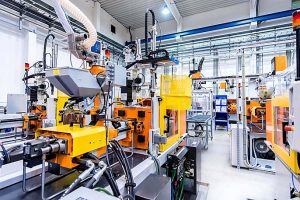
Dans notre usine de Shanghai, nous transformons plus de 400 matières plastiques sur 47 machines de moulage par injection allant de 90T à 1850T. Cette gamme nous permet d'adapter le tonnage de presse et la qualité de matériau appropriés aux exigences de tolérance, d'épaisseur de paroi et de volume de chaque projet — qu'il s'agisse d'un bouchon PP de 5 grammes avec des cycles de 8 secondes ou d'un boîtier PC de 2 kilogrammes sur notre presse 1850T.
Quelles industries dépendent du moulage par injection ?
L'automobile, les dispositifs médicaux, l'électronique grand public et l'emballage sont les quatre plus grands secteurs qui dépendent du moulage par injection. Chaque industrie compte sur ce procédé pour sa combinaison de précision, de vitesse et de faible coût unitaire en volume de production.
Les quatre plus grands secteurs sont l'automobile, les dispositifs médicaux, l'électronique grand public et l'emballage. Le moulage par injection sert chaque industrie car il offre précision, vitesse et faible coût unitaire en volume de production.
Dispositifs médicaux — Le moulage par injection produit des seringues jetables, des connecteurs IV, des boîtiers de dispositifs de diagnostic, des poignées d'instruments chirurgicaux et des composants d'administration de médicaments sous des systèmes qualité ISO 13485. La capacité de moulage en salle blanche, la traçabilité des matériaux et les processus validés sont des exigences non négociables. Le polycarbonate, le PEEK et le PP de qualité médicale dominent ce secteur.
Électronique grand public — Les coques de téléphone, boîtiers d'ordinateur portable, cadres de clavier, coques de connecteurs et supports structurels internes sont tous moulés par injection. La tendance vers des parois plus fines, des textures plus délicates et le surmoulage multi-matériaux (TPU toucher doux sur un substrat ABS rigide) continue d'accroître la complexité de conception des moules. Les tolérances pour les boîtiers électroniques sont typiquement de ±0,05 mm sur les dimensions d'ajustement critiques.
“Le moulage par injection médical nécessite souvent la certification ISO 13485 et des procédés de production validés.”Vrai
Les régulateurs de dispositifs médicaux s'attendent à une validation de processus documentée (IQ/OQ/PQ), une traçabilité des matériaux et des contrôles environnementaux en salle blanche. Un fournisseur sans ces éléments ne peut légalement produire la plupart des composants de dispositifs médicaux.
“Le moulage par injection ne peut pas produire des pièces avec des géométries internes complexes ou des contre-dépouilles.”Faux
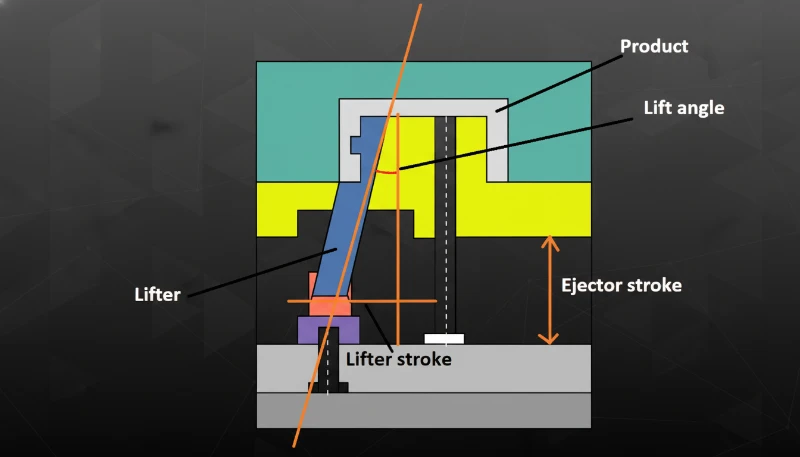
Les actions latérales, éjecteurs basculants, noyaux escamotables et mécanismes de dévissage permettent aux moules de produire des filetages internes, des contre-dépouilles et des caractéristiques internes complexes qui seraient impossibles avec un outillage à simple tirage.
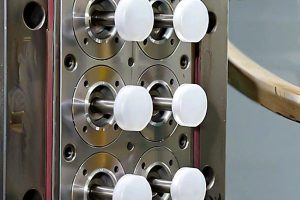
Emballage — Les fermetures, les bouchons, les récipients à paroi mince et les sceaux d'inviolabilité sont produits par milliards chaque année. Les moules à grande vitesse avec 64+ cavités et des cycles de 5 à 8 secondes sont courants dans ce secteur. Le PP et le HDPE représentent la majorité des applications d'emballage en raison de leur conformité au contact alimentaire et de leur faible coût.
Les autres secteurs importants comprennent les composants CVC, les équipements de nettoyage commerciaux, les pièces de machinerie agricole, les boîtiers de dispositifs de sécurité et les connecteurs de l'industrie énergétique. Dans chaque cas, le moteur est le même : haute précision, volume élevé et faible coût par pièce une fois l'investissement dans le moule amorti.
« L'industrie automobile utilise le moulage par injection pour les composants structurels et esthétiques. »Vrai
Les supports structurels, connecteurs de câbles et boîtiers de batterie exigent des performances mécaniques, tandis que les tableaux de bord, garnitures et badges nécessitent une finition esthétique. Un seul programme de moule produit souvent les deux types pour une même plateforme véhicule.
« Les pièces moulées par injection nécessitent toujours un usinage secondaire pour respecter les tolérances dimensionnelles. »Faux
Les moules de précision modernes avec refroidissement conforme et des fenêtres de processus optimisées livrent régulièrement des pièces à ±0,005 pouce ou mieux directement sorties du moule. L'usinage secondaire est l'exception, pas la règle, et se limite généralement aux alésages à tolérance serrée ou aux interfaces d'accouplement.
What Are the Advantages and Disadvantages of Injection Molding?
Le moulage par injection n'est pas la solution à tous les problèmes. Mais lorsque les volumes, le budget d'outillage et la géométrie de la pièce s'alignent, il est difficile de faire mieux. Voici un regard honnête sur les deux côtés.
Haute vitesse de production — Des temps de cycle de 5 à 60 secondes se traduisent par des centaines ou des milliers de pièces par machine et par équipe. Un seul moule fonctionnant 24h/24 et 7j/7 peut produire plus d'un million de pièces par an.
Précision reproductible — Une fois le procédé réglé, la variation entre pièces reste dans une plage de ±0,005 pouce sur les dimensions critiques. Cette constance explique pourquoi les industries automobile et médicale dépendent du moulage par injection pour les composants critiques pour la sécurité.
Flexibilité des matériaux et des couleurs — Les colorants, charges, retardateurs de flamme, stabilisants UV et renforts de fibres de verre peuvent être incorporés directement dans la résine. Les procédés de moulage à plusieurs coups et de surmoulage combinent différents matériaux ou couleurs en un seul cycle.
Faible coût par pièce en volume — Après l'amortissement de l'outillage, le coût est dominé par la matière première et le temps machine. Une pièce en PP de 10 grammes pourrait coûter /bin/zsh.02-0.05 en matériau et /bin/zsh.01-0.03 en temps machine à grands volumes. Aucun autre procédé plastique n'approche cette économie à grande échelle.
Coût initial élevé de l'outillage — Un moule de production est un outil en acier de précision. Les moules simples en aluminium à cavité unique commencent autour de trois à cinq mille dollars, tandis que les moules de production multi-cavités avec actions latérales coûtent de trente mille à plus de cent mille dollars. Cet investissement n'est justifié que lorsqu'il est réparti sur un volume suffisant.
Délai de fabrication des outils — De la conception validée aux pièces échantillonnées, l'outillage prend généralement de 4 à 12 semaines selon la complexité. Les modifications de conception après la découpe de l'acier sont coûteuses et prennent du temps, c'est pourquoi une revue DFM approfondie avant le lancement de l'outillage est cruciale.
Pas économique pour les faibles volumes — Si vous avez besoin de 100 pièces, le moulage par injection n'est presque jamais le bon choix. L'impression 3D, l'usinage CNC ou le moulage sous vide sont plus rentables pour le prototypage et la production à faible volume. Le moulage par injection commence à être économiquement justifié à des volumes supérieurs à 1 000-5 000 pièces, selon la complexité de la pièce et le coût de l'outillage.
Comment le moulage par injection se compare-t-il aux autres méthodes de fabrication ?
Le moulage par injection est l'un des nombreux procédés de fabrication de plastique. Comprendre où il se situe par rapport au moulage par soufflage, au moulage rotatif, à l'usinage CNC et à l'impression 3D vous aide à sélectionner le bon procédé pour votre application.
Moulage par injection et moulage par soufflage — Le moulage par soufflage gonfle un tube plastique chauffé (paraison) à l'intérieur d'un moule pour créer des pièces creuses comme des bouteilles, des réservoirs et des conteneurs. Le moulage par injection produit des pièces solides avec des tolérances plus serrées et une géométrie plus complexe. Si votre pièce est creuse et que les exigences esthétiques sont modérées, le moulage par soufflage est le bon choix. Si vous avez besoin de fonctionnalités de précision, de charnières vivantes ou d'inserts filetés, le moulage par injection l'emporte.
Moulage par injection vs. Moulage rotatif — Le moulage rotatif recouvre l'intérieur d'un moule en rotation avec du plastique en poudre pour produire de grandes pièces creuses comme des réservoirs d'eau, des équipements de jeu et des kayaks. L'outillage est moins cher (moules en tôle ou aluminium moulé) mais les temps de cycle sont longs (10-30 minutes par pièce) et la précision dimensionnelle est faible. Le moulage par injection est plus rapide et plus précis mais limité en taille maximale de pièce par le tonnage de la machine.
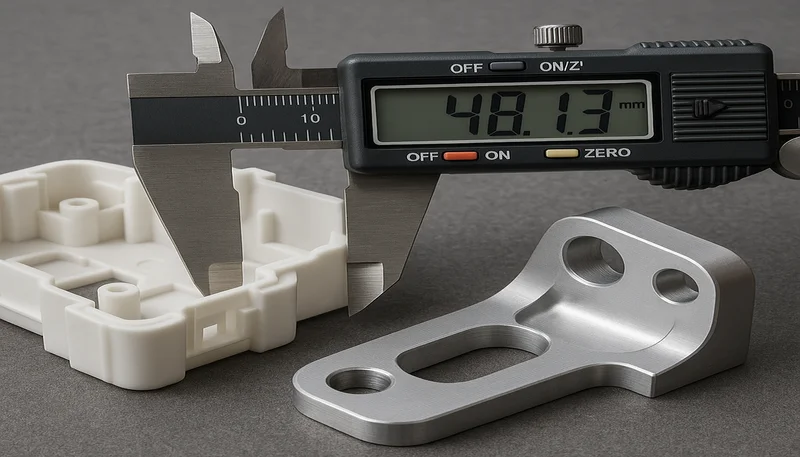
Moulage par injection vs. Usinage CNC — L'usinage CNC enlève de la matière d'un bloc plein de plastique ou de métal. Il offre d'excellentes tolérances (±0,001 pouce) et ne nécessite aucun investissement en outillage, mais le coût par pièce reste constant quel que soit le volume. Pour 10 pièces, le CNC est le vainqueur évident. Pour 100 000 pièces, le moulage par injection est 10 à 50 fois moins cher par pièce.
Moulage par injection ou impression 3D — L'impression 3D construit des pièces couche par couche à partir d'un modèle numérique. Elle ne nécessite pas d'outillage, gère des géométries extrêmes et est idéale pour le prototypage et les pièces uniques sur mesure. Cependant, elle ne peut égaler la vitesse, la finition de surface, les propriétés des matériaux ou le coût unitaire du moulage par injection en volumes de production. La plupart des flux de travail pratiques utilisent l'impression 3D pour la validation de conception puis passent au moulage par injection pour la production.
La bonne méthode de fabrication dépend de trois variables : la géométrie de la pièce (pleine vs creuse, complexité), le volume de production (prototype vs production de masse) et le coût cible (budget d'outillage vs économie par pièce). Dans de nombreux cas, la solution consiste à utiliser plusieurs procédés à différentes étapes du cycle de vie du produit.
Que devriez-vous considérer avant de choisir un fournisseur de moulage par injection ?
Choisir un fournisseur de moulage par injection est un engagement à long terme. Une fois le moule fabriqué, changer de fournisseur signifie le reconstruire ou le transférer. Avant de vous engager, évaluez le fournisseur sur ces aspects : capacité d'ingénierie (qualité des retours DFM, conception de moules expérience), capacité de production (gamme de machines, tonnage disponible, organisation des équipes), systèmes qualité (certifications ISO, équipement d'inspection, traçabilité), et réactivité de communication (rapidité à signaler les problèmes et proposer des solutions).
Pour les acheteurs qui s'approvisionnent en Chine, la décision va au-delà des capacités techniques. La maîtrise de la langue, l'expérience à l'exportation, la gestion logistique et la protection de la propriété intellectuelle comptent toutes. Notre guide d'approvisionnement de fournisseurs en moulage par injection couvre le cadre d'évaluation en détail, mais la version courte est : demandez des preuves de production, pas des affirmations marketing. Un fournisseur qui partage des données d'essai de moulage, des rapports d'inspection dimensionnelle et des certifications de résine est un fournisseur qui peut soutenir votre projet en profondeur de production.
Le signal le plus fort lors de l'évaluation d'un fournisseur est la qualité du retour DFM que vous recevez. Un fournisseur qui pose des questions sur l'accumulation des tolérances, les limites des vestiges de point d'injection, la certification des résines, l'appariement des couleurs et la variation de la demande annuelle évalue votre projet en profondeur de production — il ne se contente pas de citer pour remporter la commande.
Ready to Start Your Injection Molding Project? ZetarMold apporte plus de 20 ans d'expérience en moulage par injection, une installation de fabrication de moules interne et 47 machines de 90T à 1850T à chaque projet. Notre équipe d'ingénierie fournit un retour DFM, une revue de conception du moule et un échantillonnage de production avant que vous ne vous engagiez sur les volumes. Obtenez un devis gratuit →
Questions fréquemment posées
Quel est le temps de cycle typique pour le moulage par injection ?
Les temps de cycle varient de 2 secondes pour les petites pièces en PP à paroi mince à plus de 60 secondes pour les grands composants en résine technique à paroi épaisse. La plupart des pièces de production se situent dans la plage de 10 à 30 secondes. Le temps de refroidissement domine le cycle — généralement 50 à 70 % du temps de cycle total — donc toute amélioration dans la conception des canaux de refroidissement du moule réduit directement le temps de cycle et le coût par pièce. Le temps de cycle pour votre pièce spécifique dépend de l'épaisseur de paroi, de la conductivité thermique du matériau, du type d'acier du moule et de l'efficacité du circuit de refroidissement. Un mouleur expérimenté optimisera la disposition du refroidissement lors de la conception du moule pour minimiser le temps de cycle tout en maintenant la stabilité dimensionnelle.
Le moulage par injection peut-il produire des pièces avec des géométries internes complexes ?
Oui, le moulage par injection peut produire des pièces avec des géométries internes complexes en utilisant des mécanismes de moule spécialisés. Les éjecteurs à came, les actions latérales, les noyaux rétractables et les dispositifs de dévissage permettent aux moules de créer des filetages internes, des contre-dépouilles et des caractéristiques internes complexes que les outils à tirage direct ne peuvent pas gérer. Ces mécanismes ajoutent des coûts et de la complexité à l'outillage, mais ils éliminent le besoin d'opérations d'usinage secondaires. La clé du succès est d'impliquer l'équipe d'ingénierie de votre mouleur tôt dans le processus de développement du produit pour identifier les défis de moulabilité et optimiser la géométrie de la pièce avant que l'acier ne soit usiné. Les revues de conception pour la fabrication à ce stade peuvent réduire considérablement à la fois le coût de l'outillage et le risque de production.
Quelle est la différence entre le moulage par injection des thermoplastiques et des thermodurcissables ?
Les thermoplastiques fondent et se solidifient de manière réversible par des changements de phase physiques — ils peuvent être broyés et retraités dans certaines limites, ce qui les rend recyclables et plus faciles à travailler. Les thermodurcissables subissent une cure chimique irréversible pendant le moulage et ne peuvent pas être refondus une fois durcis. Les thermoplastiques dominent la production de moulage par injection (plus de 95% de la production mondiale) car ils offrent des temps de cycle plus rapides, un traitement plus facile, des taux de rebut plus faibles et une sélection de matériaux plus large. Les thermodurcissables comme les phénoliques et les époxydes servent des applications de niche où la résistance à la chaleur, la stabilité dimensionnelle à températures élevées ou les propriétés d'isolation électrique dépassent ce que les thermoplastiques peuvent offrir. Pour la plupart des acheteurs, le traitement thermoplastique est le point de départ par défaut.
How much does an injection mold cost?
Les coûts de moule varient considérablement en fonction de la complexité de la pièce, du nombre de cavités, de la qualité de l'acier du moule et des caractéristiques requises comme les actions latérales, les éjecteurs ou les systèmes à canaux chauds. Un moule prototype simple en aluminium à une cavité peut coûter 3 000 à 5 000 USD, adapté pour de petites séries et la validation de conception. Un moule de production avec plusieurs cavités, des canaux de refroidissement conformes et des actions latérales coûte généralement entre 20 000 et plus de 100 000 USD. La considération clé est le retour sur investissement : un moule coûtant 50 000 USD produisant des pièces à 0,50 USD chacune atteint le seuil de rentabilité à environ 100 000 pièces par rapport à l'usinage CNC à 5,00 USD par pièce. La plupart des projets de moulage par injection deviennent économiquement attractifs pour des volumes supérieurs à 5 000-10 000 pièces.
What tolerances can injection molding achieve?
Les tolérances commerciales standard pour les pièces moulées par injection sont de plus ou moins 0,005 pouce (0,13 mm) sur les dimensions critiques. Le moulage de précision avec un contrôle de processus optimisé, des lots de matériaux stables et un refroidissement bien conçu peut atteindre plus ou moins 0,001-0,002 pouce (0,025-0,05 mm) sur des caractéristiques sélectionnées. Cependant, la capacité de tolérance n'est pas déterminée uniquement par le moule — elle dépend du comportement de retrait du matériau, de la symétrie de la géométrie de la pièce, de l'emplacement de la porte par rapport aux dimensions critiques, de l'uniformité du refroidissement du moule et de la stabilité du processus tout au long des séries de production. Votre mouleur doit fournir des attentes de tolérance réalistes basées sur la résine spécifique, la géométrie de la pièce et le volume de production lors de l'étape de revue DFM.
Comment choisir le bon matériau pour ma pièce moulée par injection ?
Commencez par définir vos exigences de fonctionnement : charge mécanique et résistance aux chocs, exposition continue et de pointe à la température, exposition chimique et aux UV, besoins de conformité réglementaire (contact alimentaire FDA, médical ISO 10993, classement au feu UL) et normes esthétiques (finition de surface, correspondance des couleurs, transparence). Ensuite, évaluez les caractéristiques de traitement : plage de température de fusion, exigences de température du moule, taux de retrait et directionnalité, sensibilité à l'humidité et implications sur le temps de cycle. L'équipe d'ingénierie de votre mouleur doit fournir des recommandations de matériaux fondées sur leur expérience de production avec des applications similaires — c'est là que travailler avec un fournisseur expérimenté qui traite plus de 400 matériaux dans divers secteurs ajoute une réelle valeur à votre projet.
-
moulage par injection: le moulage par injection fait référence au processus de fabrication consistant à injecter du thermoplastique fondu dans une cavité de moule de précision pour produire à l'échelle industrielle des pièces plastiques répétables et de haute tolérance. ↩
-
moule d'injection: un moule d'injection fait référence à l'outil en acier usiné avec précision qui définit la géométrie de la pièce, l'emplacement de la porte, la disposition du refroidissement, la méthode d'éjection et la finition de surface pour le processus de moulage. ↩
-
thermoplastique: un thermoplastique fait référence aux polymères qui ramollissent lorsqu'ils sont chauffés et se solidifient lorsqu'ils sont refroidis sans changement chimique, ce qui leur permet d'être fondus, moulés et retraités plusieurs fois. ↩



 EN
EN  ES
ES  FR
FR  DE
DE  PT
PT  AR
AR  RU
RU  JA
JA  KO
KO  IT
IT  NL
NL  TR
TR  PL
PL 