 Vai al contenuto

stampaggio a iniezione1 turns raw plastic pellets into precision parts in seconds — dashboards, syringes, gears, housings, and thousands of other components that surround you every day. The process is fast, repeatable, and capable of tolerances measured in thousandths of an inch, which is why it accounts for the majority of plastic parts produced worldwide. This guide walks through the process stages, the materials that dominate production, the industries that depend on them, and the trade-offs you should understand before committing to a mold. Throughout the article, we reference real production experience from our factory floor to keep the explanations practical rather than theoretical.
This article is structured for both buyers evaluating suppliers and engineers who want to understand the process at a practical level. We cover the five stages of the molding cycle, the thermoplastics that dominate production, the industries that rely on them, and the cost-quality trade-offs that drive sourcing decisions. Every section draws from our factory floor experience at ZetarMold, where we run 47 machines processing over 400 materials for global OEMs and startups alike.
- Injection molding melts plastic pellets, injects them into a precision mold, and cools them into repeatable parts
- The five process stages — clamping, injection, packing, cooling, ejection — each control a different quality factor
- Thermoplastics like ABS, PP, PC, and nylon cover over 90% of production applications
- Automotive, medical, consumer goods, and packaging are the four largest application sectors
- Upfront tooling cost is the main trade-off against per-part savings at high volume
What Is Injection Molding and Why Does It Matter?
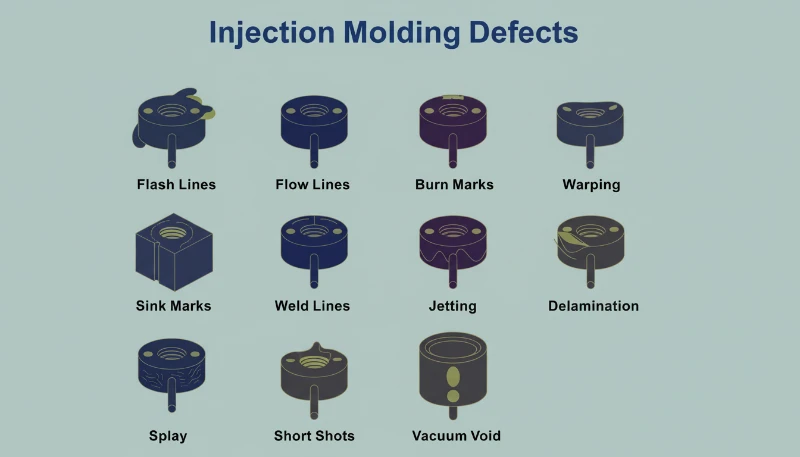
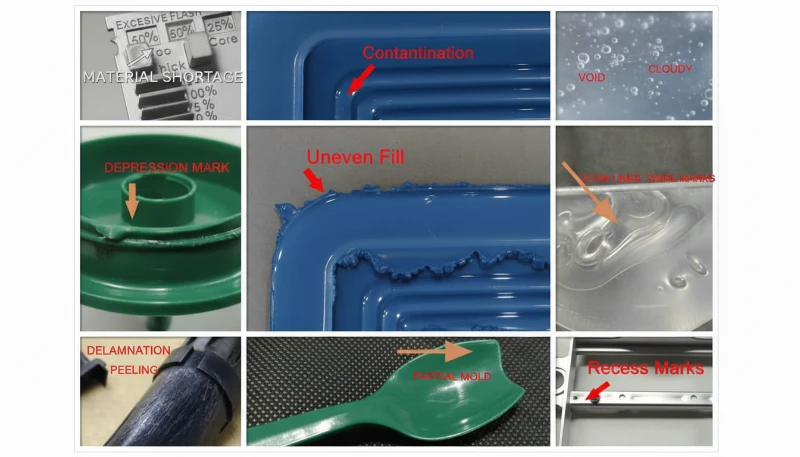
Injection molding is a manufacturing process that shapes molten plastic into precision parts inside a metal mold. It matters because no other process matches its speed, precision, and cost-efficiency at high volume. The key variables are the stampaggio a iniezione machine tonnage, the stampo a iniezione2 design, the resin grade, and the process window. Get any variable wrong, and defects appear: flash, sink marks, warpage, short shots, or dimensional drift.
Per una visione più ampia, i nostri guida completa allo stampaggio a iniezione copre i fondamenti del processo, il comportamento dei materiali e le decisioni produttive.
The reason injection molding dominates plastic manufacturing is simple economics. Once the mold is built — and yes, that upfront cost can range from a few thousand dollars for a simple single-cavity tool to well over fifty thousand dollars for a high-cavity production mold with side actions, lifters, and conformal cooling — the per-part cost drops dramatically. A part that costs twenty-five dollars to machine might cost thirty cents to mold once the tooling is amortized. That math is why automotive, medical, consumer electronics, and packaging industries run on injection-molded components.
How Does the Injection Molding Process Work Step by Step?
Injection molding is a five-stage process: clamping, injection, packing, cooling, and ejection. Each stage controls fill, shrinkage, cycle time, and part quality.
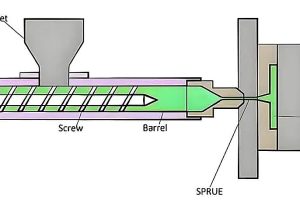
2. Iniezione — The screw rotates and retracts, drawing plastic pellets from the hopper into the heated barrel. The pellets melt through a combination of external heater bands and internal shear friction. Once enough melt is accumulated (the shot size), the screw moves forward as a plunger, forcing the molten plastic through the nozzle, runner, and gate into the cavity at pressures typically between 5,000 and 30,000 psi.
3. Packing and Holding — After the cavity is visually full, the machine maintains pressure to feed additional material into the mold as the plastic cools and shrinks. This compensation is what prevents sink marks and voids. Hold pressure is typically 40-80% of injection pressure, held for 1-10 seconds depending on wall thickness and gate freeze-off time.
“Injection molding cycle times typically range from 2 to 60 seconds depending on part size and material.”Vero
Thermoplastics like PP and PE cycle fast due to low melting points and high thermal conductivity, while engineering resins like PEEK or PC need longer cooling. Cycle time is the single biggest driver of per-part cost in production.
“Injection molding requires a new mold for every single part produced.”Falso
A single mold produces thousands to millions of identical parts. The mold is the permanent tool — that is why the upfront tooling investment can be amortized over the entire production run.
4. Cooling — The mold stays closed while the part solidifies. Cooling typically consumes 50-70% of the total cycle time. Water or oil channels in the mold extract heat, and the rate depends on the material’s thermal conductivity, wall thickness, and mold steel. Getting the cooling circuit right is one of the highest-leverage mold design decisions — it directly controls cycle time, warpage, and dimensional stability.
5. Ejection — The mold opens, and ejector pins push the part off the core side. The part drops into a bin or is picked by a robot. The mold closes, and the cycle repeats. Ejection must be balanced — too few pins or poor placement causes sticking, distortion, or pin marks on cosmetic surfaces.
To put the five stages in perspective: clamping typically takes 1-5 seconds, injection 0.5-3 seconds, packing and holding 1-10 seconds, cooling 5-30 seconds (the dominant time block), and ejection 1-3 seconds. The total cycle time on our production floor ranges from about 8 seconds for small PP caps to over 60 seconds for large, thick-walled PC housings. Reducing cooling time by improving mold water flow is usually the fastest path to higher output per shift.
“Pack and hold pressure compensates for volumetric shrinkage as the melt cools inside the cavity.”Vero
Without adequate hold pressure, the part shrinks away from the cavity wall, creating sink marks on thick sections and internal voids. Hold pressure feeds more material until the gate freezes off.
“Cooling time has no significant effect on part quality or dimensional accuracy.”Falso
Cooling rate directly controls crystallinity in semi-crystalline resins, residual stress in amorphous materials, and warpage in both. Uneven cooling is one of the top three causes of part rejection.
What Materials Are Commonly Used in Injection Molding?
The most commonly used injection molding materials are ABS, polypropylene, polycarbonate, nylon, and POM. These five termoplastico3 resins cover over 90% of all production applications, from consumer housings to medical devices. Material choice determines strength, flexibility, temperature resistance, and cost.
ABS (acrilonitrile butadiene stirene) — The default choice for consumer products and automotive interior trim. ABS hits a sweet spot of impact resistance, rigidity, and surface finish quality. It molds at 200-240 C and accepts paint, texture, and chrome plating well. Typical applications: power tool housings, automotive dashboard components, LEGO bricks, and electronics enclosures.
Polipropilene (PP) — Lightweight, chemically resistant, and inexpensive. PP is the go-to material for living hinges, snap-fit closures, and food-contact containers. It has low density (0.90 g/cm), good fatigue resistance, and processes easily at 200-230°C. The trade-off is lower stiffness and poor low-temperature impact strength compared to ABS. Typical applications: bottle caps, food containers, medical syringes, and automotive battery cases.
Policarbonato (PC) — Transparent, heat-resistant, and extremely tough. PC can withstand temperatures up to 135°C continuously and has impact strength roughly 20 times that of acrylic. It molds at 280-320°C and requires thorough drying (below 0.02% moisture) to prevent hydrolysis and splay. Typical applications: safety goggles, medical device housings, automotive headlamp lenses, and electronic display windows.
Engineering Resins
Engineering Resins for Demanding Applications — The materials below offer higher mechanical and thermal performance at correspondingly higher material and processing costs. They demand precise drying, higher melt temperatures, and tighter process windows, but deliver properties that commodity resins simply cannot match.
Nylon (PA6 / PA66) — High strength, excellent wear resistance, and good chemical resistance to oils and fuels. Nylon absorbs moisture, which acts as a plasticizer — parts gain toughness but lose dimensional stability as humidity changes. Mold at 260-290°C and dry to below 0.2% moisture. Glass-filled grades (PA66-GF30) offer stiffness approaching aluminum. Typical applications: gears, bearings, cable ties, under-hood automotive connectors, and power tool housings.
POM (Acetal / Delrin) — Outstanding dimensional stability, low friction, and excellent fatigue resistance make POM the material of choice for precision mechanical components. It molds at 185-215 C and produces parts with a smooth, low-friction surface ideal for moving assemblies. The trade-off is poor UV resistance and difficulty bonding with adhesives. Typical applications: gear wheels, conveyor components, door lock mechanisms, and fountain pen barrels. POM excels in any application where parts slide, snap, or rotate against each other repeatedly.
Beyond these five workhorses, injection molding also processes PEEK for aerospace and medical implants, TPU for flexible overmolded grips, PMMA for optical lenses, and dozens of filled, blended, and reinforced grades tailored to specific performance requirements. Glass-filled nylon (PA66-GF30) offers stiffness approaching aluminum at a fraction of the weight. Flame-retardant ABS meets UL94 V-0 requirements for electrical enclosures. UV-stabilized PP survives years of outdoor exposure without degradation. Material selection is not a theoretical exercise — the right choice depends on the part’s operating environment, regulatory requirements, cosmetic standards, and target cost.
At our Shanghai factory, we process over 400 plastic materials across 47 injection molding machines ranging from 90T to 1850T. This range lets us match the right press tonnage and material grade to each project’s tolerance, wall thickness, and volume requirements — whether it is a 5-gram PP cap running 8-second cycles or a 2-kilogram PC housing on our 1850T press.
What Industries Rely on Injection Molding?
Automotive, medical devices, consumer electronics, and packaging are the four largest sectors that rely on injection molding. Each industry depends on the process for its combination of precision, speed, and low per-part cost at production volume.
The four largest sectors are automotive, medical devices, consumer electronics, and packaging. Injection molding serves each industry because it delivers precision, speed, and low per-part cost at production volume.
Dispositivi medici — Injection molding produces disposable syringes, IV connectors, diagnostic device housings, surgical instrument handles, and drug delivery components under ISO 13485 quality systems. Cleanroom molding capability, material traceability, and validated processes are non-negotiable requirements. Polycarbonate, PEEK, and medical-grade PP dominate this sector.
Elettronica di consumo — Phone cases, laptop housings, keyboard frames, connector shells, and internal structural brackets are all injection molded. The trend toward thinner walls, finer textures, and multi-material overmolding (soft-touch TPU over a rigid ABS substrate) continues to push mold design complexity. Tolerances for electronic enclosures typically run ±0.05 mm on critical fit dimensions.
“Medical injection molding often requires ISO 13485 certification and validated production processes.”Vero
Medical device regulators expect documented process validation (IQ/OQ/PQ), material traceability, and cleanroom environmental controls. A supplier without these cannot legally produce most medical device components.
“Injection molding cannot produce parts with complex internal geometries or undercuts.”Falso
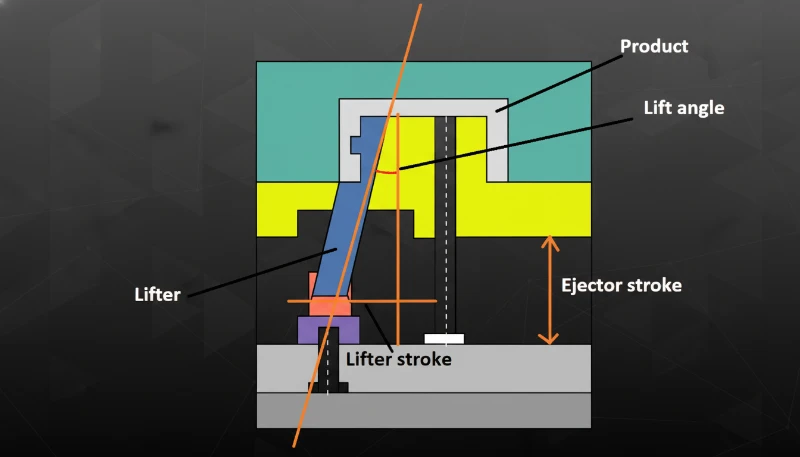
Side actions, lifters, collapsible cores, and threaded unscrewing mechanisms allow molds to produce internal threads, undercuts, and complex internal features that would be impossible with straight-pull tooling alone.
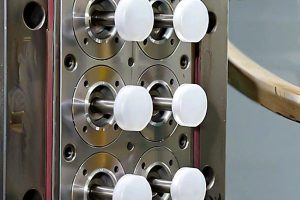
Imballaggio — Closures, caps, thin-wall containers, and tamper-evident seals are produced in the billions annually. High-speed molds with 64+ cavities running 5-8 second cycles are common in this sector. PP and HDPE account for most packaging applications due to food-contact compliance and low material cost.
Other significant sectors include HVAC components, commercial cleaning equipment, agricultural machinery parts, security device housings, and energy industry connectors. In each case, the driver is the same: high precision, high volume, and low per-part cost once the mold investment is recovered.
“The automotive industry uses injection molding for both structural and cosmetic components.”Vero
Structural brackets, cable connectors, and battery housings demand mechanical performance, while instrument panels, trim, and badges require cosmetic finish. A single mold program often produces both types for the same vehicle platform.
“Injection molded parts always require secondary machining to meet dimensional tolerances.”Falso
Modern precision molds with conformal cooling and optimized process windows routinely deliver parts at ±0.005 inch or better straight from the mold. Secondary machining is the exception, not the rule, and usually limited to tight-tolerance bores or mating interfaces.
What Are the Advantages and Disadvantages of Injection Molding?
Injection molding is not the right answer for every problem. But when volume, tooling budget, and part geometry align, it is difficult to beat. Here is an honest look at both sides.
High production speed — Cycle times of 5-60 seconds translate to hundreds or thousands of parts per machine per shift. A single mold running 24/7 can produce over a million parts per year.
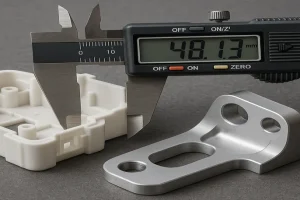
Repeatable precision — Once the process is dialed in, part-to-part variation stays within ±0.005 inch on critical dimensions. This consistency is why automotive and medical industries rely on injection molding for safety-critical components.
Material and color flexibility — Colorants, fillers, flame retardants, UV stabilizers, and glass fiber reinforcements can be compounded directly into the resin. Multi-shot and overmolding processes combine different materials or colors in a single cycle.
Low per-part cost at volume — After tooling amortization, material and machine time dominate cost. A 10-gram PP part might cost /bin/zsh.02-0.05 in material and /bin/zsh.01-0.03 in machine time at high volumes. No other plastic process approaches this economics at scale.
High upfront tooling cost — A production mold is a precision steel tool. Simple single-cavity aluminum molds start around three to five thousand dollars, while multi-cavity production molds with side actions run thirty thousand to over a hundred thousand dollars. This investment only makes sense when spread across sufficient volume.
Lead time for tooling — From approved design to sampled parts, tooling typically takes 4-12 weeks depending on complexity. Design changes after steel cut are expensive and time-consuming, which is why thorough DFM review before tooling kickoff is critical.
Not economical for low volumes — If you need 100 parts, injection molding is almost never the right choice. 3D printing, CNC machining, or vacuum casting are more cost-effective for prototyping and low-volume production. Injection molding starts to make economic sense at volumes above 1,000-5,000 parts, depending on part complexity and tooling cost.
How Does Injection Molding Compare to Other Manufacturing Methods?
Injection molding is one of several plastic manufacturing processes. Understanding where it fits relative to blow molding, rotational molding, CNC machining, and 3D printing helps you select the right process for your application.
Stampaggio a iniezione vs. stampaggio a soffiaggio — Blow molding inflates a heated plastic tube (parison) inside a mold to create hollow parts like bottles, tanks, and containers. Injection molding produces solid parts with tighter tolerances and more complex geometry. If your part is hollow and the cosmetic requirements are moderate, blow molding is the right choice. If you need precision features, living hinges, or threaded inserts, injection molding wins.
Injection Molding vs. Rotational Molding — Rotational molding coats the interior of a rotating mold with powdered plastic to produce large, hollow parts like water tanks, playground equipment, and kayaks. Tooling is cheaper (sheet metal or cast aluminum molds) but cycle times are long (10-30 minutes per part) and dimensional precision is low. Injection molding is faster and more precise but limited in maximum part size by machine tonnage.
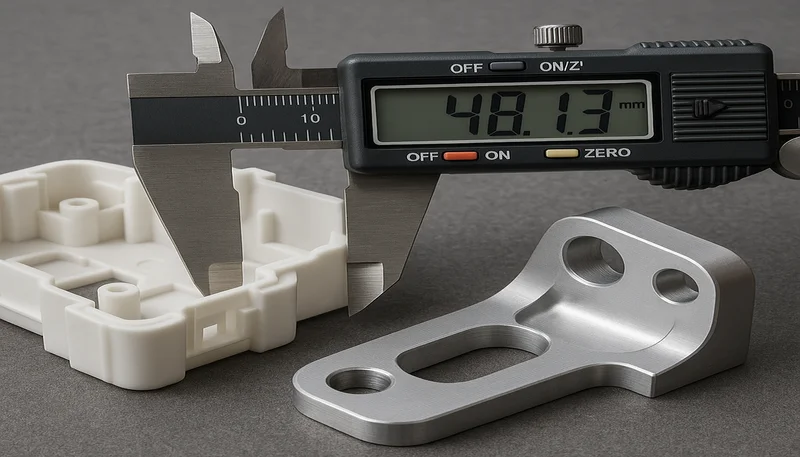
Injection Molding vs. CNC Machining — CNC machining removes material from a solid block of plastic or metal. It offers excellent tolerances (±0.001 inch) and requires no tooling investment, but per-part cost remains constant regardless of volume. For 10 parts, CNC is the clear winner. For 100,000 parts, injection molding is 10-50 times cheaper per part.
Stampaggio a iniezione e stampa 3D — 3D printing builds parts layer by layer from a digital model. It requires no tooling, handles extreme geometries, and is ideal for prototyping and custom one-offs. However, it cannot match injection molding’s speed, surface finish, material properties, or per-part cost at production volumes. Most practical workflows use 3D printing for design validation and then transition to injection molding for production.
The right manufacturing method depends on three variables: part geometry (solid vs. hollow, complexity), production volume (prototype vs. mass production), and target cost (tooling budget vs. per-part economics). In many cases, the answer is to use multiple processes at different stages of the product lifecycle.
What Should You Consider Before Choosing an Injection Molding Supplier?
Choosing an injection molding supplier is a long-term commitment. Once the mold is built, switching means rebuilding or transferring the tool. Before committing, evaluate the supplier across these dimensions: engineering capability (DFM feedback quality, progettazione di stampi experience), production capacity (machine range, available tonnage, shift structure), quality systems (ISO certifications, inspection equipment, traceability), and communication responsiveness (how quickly they flag issues and propose solutions).
For buyers sourcing from China, the decision extends beyond technical capability. Language proficiency, export experience, logistics handling, and intellectual property protection all matter. Our injection molding supplier sourcing guide covers the evaluation framework in detail, but the short version is: ask for production evidence, not marketing claims. A supplier who shares molding trial data, dimensional inspection reports, and resin certification is a supplier who can support your project at production depth.
The strongest signal during supplier evaluation is the quality of the DFM feedback you receive. A supplier who asks about tolerance stack-up, gate vestige limits, resin certification, color matching, and annual demand variation is evaluating your project at production depth — not just quoting to win the order.
Ready to Start Your Injection Molding Project? ZetarMold brings 20+ years of injection molding experience, an in-house mold manufacturing facility, and 47 machines from 90T to 1850T to every project. Our engineering team provides DFM feedback, mold design review, and production sampling before you commit to volume. Get a Free Quote →
Domande frequenti
What is the typical cycle time for injection molding?
I tempi ciclo vanno da 2 secondi per piccoli componenti in PP a pareti sottili a oltre 60 secondi per grandi componenti in resina tecnica a pareti spesse. La maggior parte dei pezzi di produzione rientra nell'intervallo di 10-30 secondi. Il tempo di raffreddamento domina il ciclo — tipicamente il 50-70% del tempo ciclo totale — quindi qualsiasi miglioramento nella progettazione dei canali di raffreddamento dello stampo riduce direttamente il tempo ciclo e il costo per pezzo. Il tempo ciclo per il tuo componente specifico dipende dallo spessore della parete, dalla conducibilità termica del materiale, dal tipo di acciaio dello stampo e dall'efficienza del circuito di raffreddamento. Uno stampatore esperto ottimizzerà il layout di raffreddamento durante la progettazione dello stampo per minimizzare il tempo ciclo mantenendo la stabilità dimensionale.
Can injection molding produce parts with complex internal geometries?
Yes, injection molding can produce parts with complex internal geometries using specialized mold mechanisms. Lifters, side actions, collapsible cores, and unscrewing devices allow molds to create internal threads, undercuts, and intricate internal features that straight-pull tooling cannot handle. These mechanisms add tooling cost and complexity, but they eliminate the need for secondary machining operations. The key to success is involving your molder’s engineering team early in the product development process to identify moldability challenges and optimize part geometry before steel is cut. Design-for-manufacturing reviews at this stage can significantly reduce both tooling cost and production risk.
What is the difference between thermoplastic and thermoset injection molding?
Thermoplastics melt and solidify reversibly through physical phase changes — they can be reground and reprocessed within limits, making them recyclable and easier to work with. Thermosets undergo an irreversible chemical cure during molding and cannot be remelted once cured. Thermoplastics dominate injection molding production (over 95% of global output) because they offer faster cycle times, easier processing, lower scrap rates, and broader material selection. Thermosets like phenolics and epoxies serve niche applications where heat resistance, dimensional stability at elevated temperatures, or electrical insulation properties exceed what thermoplastics can deliver. For most buyers, thermoplastic processing is the default starting point.
How much does an injection mold cost?
I costi dello stampo variano notevolmente in base alla complessità del pezzo, al numero di cavità, al grado di acciaio dello stampo e alle caratteristiche richieste come azioni laterali, sollevatori o sistemi hot runner. Uno stampo prototipo semplice in alluminio a cavità singola potrebbe costare 3.000-5.000 USD, adatto per piccole serie e validazione del design. Uno stampo di produzione con più cavità, canali di raffreddamento conformi e azioni laterali varia tipicamente da 20.000 a oltre 100.000 USD. La considerazione chiave è il ritorno sull'investimento: uno stampo che costa 50.000 USD producendo pezzi a 0,50 USD ciascuno raggiunge il pareggio a circa 100.000 pezzi rispetto alla lavorazione CNC a 5,00 USD per pezzo. La maggior parte dei progetti di stampaggio a iniezione diventa economicamente interessante per volumi superiori a 5.000-10.000 pezzi.
Quali tolleranze può raggiungere lo stampaggio a iniezione?
Le tolleranze commerciali standard per i pezzi stampati a iniezione sono più o meno 0,005 pollici (0,13 mm) sulle dimensioni critiche. Lo stampaggio di precisione con controllo di processo ottimizzato, lotti di materiale stabili e un raffreddamento ben progettato può raggiungere più o meno 0,001-0,002 pollici (0,025-0,05 mm) su caratteristiche selezionate. Tuttavia, la capacità di tolleranza non è determinata solo dallo stampo — dipende dal comportamento di ritiro del materiale, dalla simmetria della geometria del pezzo, dalla posizione del gate rispetto alle dimensioni critiche, dall'uniformità del raffreddamento dello stampo e dalla stabilità del processo durante le serie di produzione. Il tuo stampatore dovrebbe fornire aspettative realistiche di tolleranza basate sulla resina specifica, sulla geometria del pezzo e sul volume di produzione durante la fase di revisione DFM.
Come scelgo il materiale giusto per il mio pezzo stampato a iniezione?
Start by defining your operating requirements: mechanical load and impact resistance, continuous and peak temperature exposure, chemical and UV exposure, regulatory compliance needs (food contact FDA, medical ISO 10993, UL flame rating), and cosmetic standards (surface finish, color matching, transparency). Then evaluate processing characteristics: melt temperature range, mold temperature requirements, shrinkage rate and directionality, moisture sensitivity, and cycle time implications. Your molder’s engineering team should provide material recommendations grounded in their production experience with similar applications — this is where working with an experienced supplier who processes 400+ materials across diverse industries adds real value to your project.
-
stampaggio a iniezione: lo stampaggio a iniezione si riferisce al processo di produzione che consiste nell'iniettare termoplastica fusa in una cavità dello stampo di precisione per produrre componenti plastici ripetibili e ad alta tolleranza su scala produttiva. ↩
-
stampo a iniezione: stampo a iniezione si riferisce allo strumento in acciaio lavorato con precisione che definisce la geometria del pezzo, la posizione del gate, il layout di raffreddamento, il metodo di espulsione e la finitura superficiale per il processo di stampaggio. ↩
-
termoplastico: termoplastica si riferisce a polimeri che si ammorbidiscono quando riscaldati e si solidificano quando raffreddati senza cambiamenti chimici, consentendo loro di essere fusi, modellati e riprocessati più volte. ↩



 EN
EN  ES
ES  FR
FR  DE
DE  PT
PT  AR
AR  RU
RU  JA
JA  KO
KO  IT
IT  NL
NL  TR
TR  PL
PL 