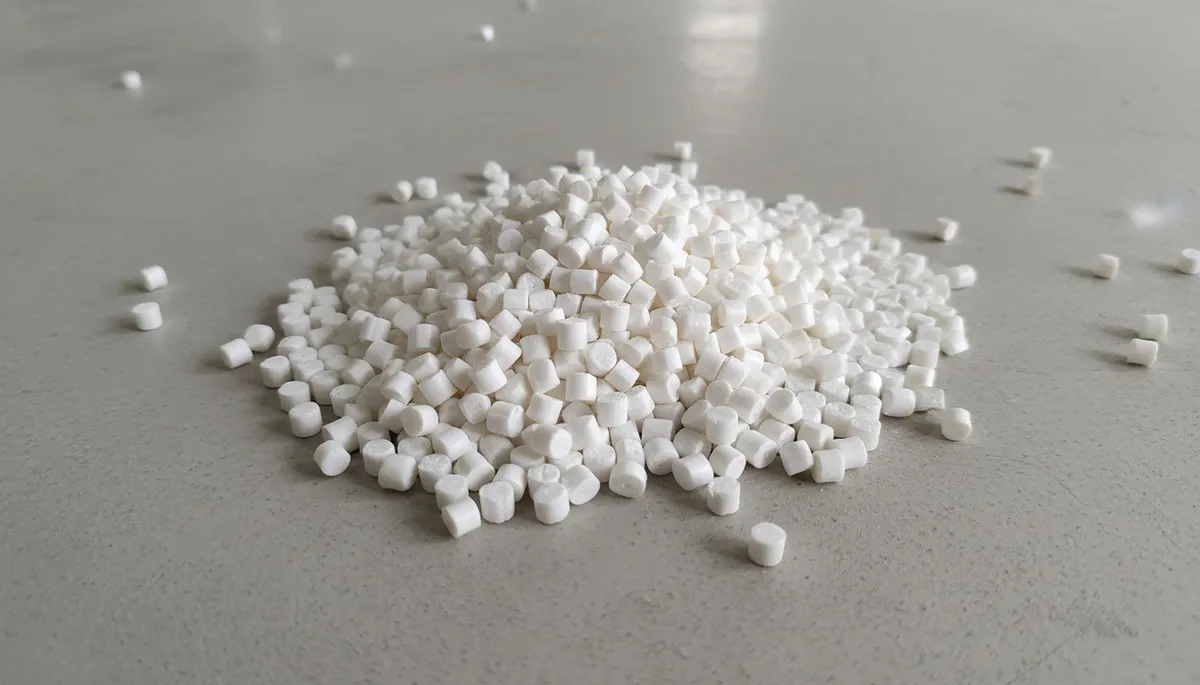
Qu’est-ce que la productivité d’un moule d’injection et pourquoi est-elle importante ?
La productivité d’un moule d’injection correspond au nombre de pièces conformes produites par heure après prise en compte du temps de cycle1, de la disponibilité, des rebuts, de la main-d’œuvre et des arrêts de maintenance. L’améliorer réduit le coût unitaire, sécurise les délais et maintient une qualité stable pendant les longues séries.
- La réduction du temps de cycle est le principal levier de productivité d’un moule
- Les circuits de refroidissement conformes peuvent réduire les temps de cycle de 20-40% par rapport au perçage conventionnel
- Le moulage scientifique utilise des paramètres fondés sur les données pour assurer une qualité de production répétable
- Les systèmes à canaux chauds suppriment les déchets de canaux et réduisent le cycle par pièce
- La surveillance en temps réel permet la maintenance prédictive et l’optimisation des procédés
Pourquoi est-ce si important ? Dans l’industrie manufacturière concurrentielle, chaque seconde et chaque gramme de plastique comptent. Améliorer la productivité du moule influe directement et fortement sur la rentabilité. Cela réduit le coût unitaire et nous permet de proposer des prix plus compétitifs à nos clients. Le débit de l’usine augmente : nous pouvons honorer des commandes plus importantes dans des délais plus courts sans compromettre la qualité. Une productivité élevée réduit aussi la consommation d’énergie par pièce et contribue à des pratiques de fabrication plus durables. En définitive, un moule productif est au cœur d’une activité de moulage par injection performante et évolutive, transformant la matière première en valeur avec une efficacité maximale.
Prenons deux moules fabriquant la même pièce. Le moule A fonctionne avec un cycle de 30 secondes et 2 % de rebuts. Le moule B réalise un cycle de 25 secondes, mais génère 10 % de rebuts en raison de problèmes de qualité. Bien que le moule B paraisse plus rapide, sa productivité réelle est nettement inférieure, puisqu’un dixième de sa production est inutilisable. C’est pourquoi nous mesurons toujours le nombre net de pièces conformes. Dans notre usine, chaque projet commence par une analyse approfondie de la conception et de l’exploitation de l’outillage afin d’obtenir une productivité maximale et durable dès la première injection.
Comment l’optimisation du temps de cycle augmente-t-elle la productivité des moules d’injection ?
Le temps de cycle est le facteur qui influe le plus sur la productivité d’un moule d’injection. Sur un moule de grande série, chaque seconde gagnée peut représenter des milliers d’euros d’économies et des centaines d’heures de capacité supplémentaire sur la durée du projet. Le cycle de moulage par injection comprend plusieurs étapes : fermeture du moule, remplissage par le plastique fondu, compactage et maintien pour compenser le retrait, refroidissement jusqu’à solidification, ouverture puis éjection. Nos ingénieurs procédé analysent chacune de ces phases pour détecter les possibilités d’optimisation.
Bien que le remplissage et le compactage soient déterminants pour la qualité de la pièce, la phase de refroidissement prend généralement le plus de temps — souvent 50-80% du cycle complet. C’est à ce stade que la pièce passe de l’état fondu à une forme solide et stable, éjectable sans gauchissement. Plus nous retirons rapidement la chaleur du plastique, plus le cycle peut être court. Une part importante de nos efforts de productivité vise donc précisément l’optimisation du refroidissement. Cela va du réglage de la température et du débit du fluide de refroidissement à la refonte complète du circuit de refroidissement du moule, que nous examinerons ensuite.
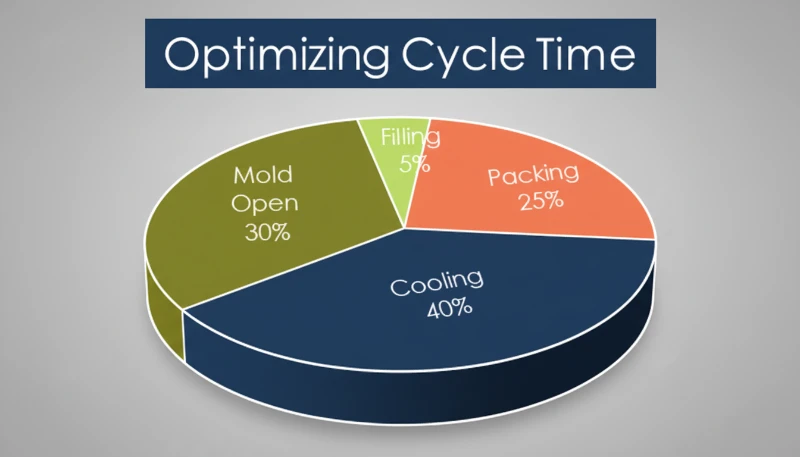
Au-delà du refroidissement, nous examinons aussi les autres étapes du cycle. Le moule peut-il s’ouvrir et se fermer plus vite ? Le robot ou l’opérateur peut-il retirer la pièce plus rapidement ? Même des ajustements mineurs, comme l’optimisation de la course des éjecteurs ou du trajet du robot, s’additionnent. Lorsqu’un moule effectue des millions de cycles, gagner une demi-seconde est considérable. Tout se joue à quelques dixièmes de seconde, et notre équipe cherche sans relâche à les gagner.
Quel rôle la conception du système de refroidissement du moule joue-t-elle dans la productivité ?
Si le temps de cycle est le roi de la productivité, alors le système de refroidissement est le roi. La capacité d’un moule à extraire efficacement et uniformément la chaleur du plastique fondu dicte non seulement le temps de cycle mais également la qualité finale de la pièce. Un système de refroidissement mal conçu entraîne des cycles longs, des déformations, des marques d’enfoncement et des contraintes internes. D’après notre expérience, investir dès le départ dans une conception de refroidissement avancée s’avère très rentable en termes de productivité accrue et de réduction des taux de rebut.
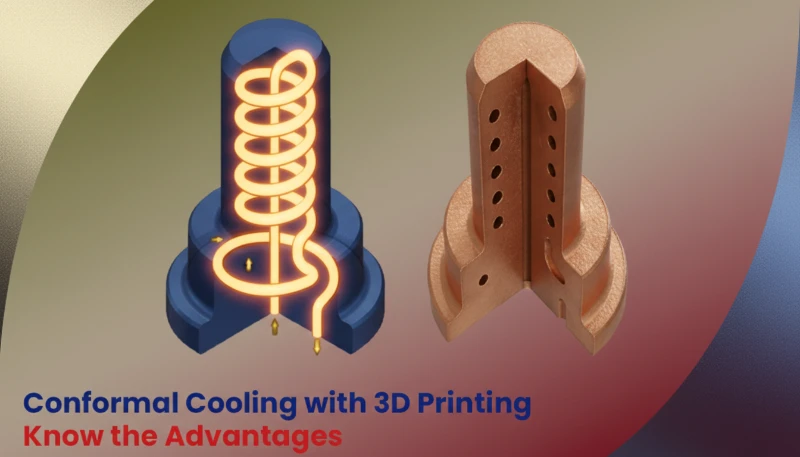
La méthode traditionnelle consiste à percer des canaux de refroidissement rectilignes dans la carcasse du moule. Simple et économique, elle assure rarement un refroidissement optimal des pièces aux géométries complexes : les canaux peuvent être trop éloignés des points chauds ou refroidir les différentes zones à des vitesses inégales. Le refroidissement conforme2 change la donne. Grâce à des technologies comme l’impression 3D métallique (DMLS), nous créons des canaux qui épousent précisément les contours de la pièce, comme une enveloppe. La chaleur est ainsi évacuée très rapidement et uniformément, même dans les zones difficiles d’accès.
Les résultats sont spectaculaires. Sur des projets intégrant un refroidissement conforme, nous avons réduit les temps de cycle de 30-50% tout en améliorant la rectitude et la stabilité dimensionnelle des pièces. L’essentiel est d’assurer un écoulement turbulent dans les canaux, beaucoup plus efficace pour transférer la chaleur qu’un écoulement laminaire, ou régulier. Nos ingénieurs utilisent des logiciels avancés de simulation de dynamique des fluides pour concevoir et valider les circuits de refroidissement, en optimisant le diamètre et le tracé des canaux ainsi que le débit du fluide caloporteur afin de maximiser la turbulence et l’efficacité thermique. La conception du système de refroidissement est l’un des leviers les plus puissants pour accroître fortement la productivité d’un moule.
"« Les canaux de refroidissement conformes peuvent réduire les temps de cycle de plus de 30% sur les pièces complexes. »"True
C'est exact. En suivant la géométrie de la pièce, les canaux de refroidissement conformes assurent une extraction de chaleur plus uniforme et plus efficace que les canaux droits conventionnels. La solidification est nettement plus rapide, le refroidissement plus court et le temps de cycle total souvent réduit de plus de 30%.
"« Utiliser de l'eau froide du robinet pour refroidir les moules est toujours la méthode la plus rentable et la plus efficace. » »False
C’est faux. Malgré son faible coût apparent, l’eau du robinet contient des minéraux qui entartrent les canaux de refroidissement. Ce tartre agit comme un isolant, réduit fortement l’efficacité du refroidissement, allonge les cycles et impose des détartrages fréquents et coûteux. Nous utilisons des circuits fermés alimentés en eau traitée et réfrigérée afin de stabiliser la température et d’éviter les dépôts, solution bien plus efficace et économique à long terme.
L’optimisation de la productivité du moule ne se limite pas à accélérer les cycles. À rendement maximal, elle réduit les rebuts, la consommation d’énergie par pièce et rend l’entretien plus prévisible. Un moule bien conçu et entretenu surpasse durablement un moule négligé — souvent de 20–40% de pièces supplémentaires par poste avec la même machine.
Comment l’entretien régulier des moules évite-t-il les arrêts et améliore-t-il la production ?
Un moule d’injection est un équipement de haute précision qui fonctionne sous des pressions et des températures extrêmes. Penser pouvoir l’exploiter pendant des millions de cycles sans entretien régulier mène directement à une défaillance catastrophique et à des arrêts coûteux. Chez ZetarMold, nous considérons l’entretien des moules non comme une corvée, mais comme une stratégie essentielle de productivité. Un moule bien entretenu fonctionne de manière plus fiable, produit des pièces de meilleure qualité et dure nettement plus longtemps. L’entretien préventif coûte toujours moins cher qu’une réparation corrective.
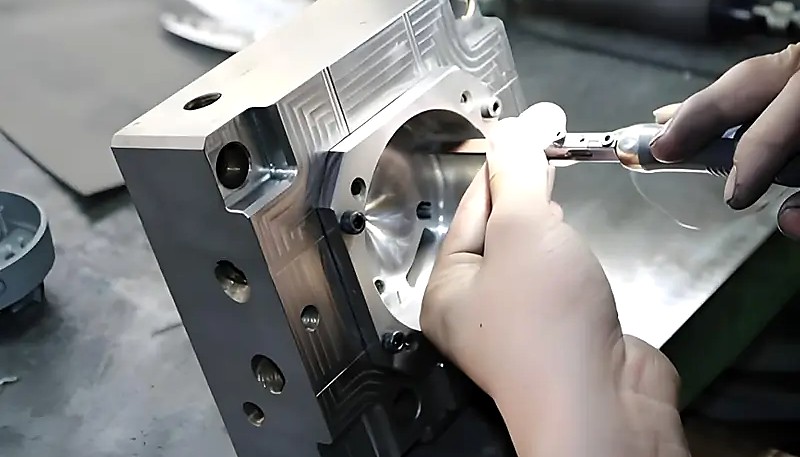
Notre programme de maintenance comporte plusieurs niveaux selon le nombre de cycles du moule. Après un nombre défini, le moule est retiré pour une maintenance de niveau 1. Nos outilleurs qualifiés nettoient soigneusement les plans de joint, évents et empreintes. Ils recherchent tout signe d’usure, de dommage ou d’accumulation de résidus (dégazage) susceptible de provoquer des bavures ou des défauts esthétiques. Les broches d’éjection, coulisseaux et autres composants mobiles sont nettoyés et lubrifiés de nouveau. Effectuée régulièrement, cette procédure simple prévient de nombreux problèmes et maintient le moule à son efficacité maximale.
Pour un entretien Level 2 ou Level 3 approfondi, le moule est entièrement démonté. Chaque composant est contrôlé, mesuré par rapport à ses spécifications d’origine et nettoyé. Les pièces usées ou endommagées—insert de seuil, colonne de guidage ou douille d’éjection—sont remplacées depuis le stock de rechange constitué au début du projet. Cette prévention empêche qu’une broche usée casse en production, endommage gravement l’empreinte et entraîne des jours ou semaines d’arrêt imprévu. Pour nos clients, cet entretien garantit fiabilité et livraison ponctuelle.
Quels ajustements des matériaux et paramètres de procédé améliorent l’efficacité du moule ?
Au-delà du moule et de la machine, les matériaux et paramètres de procédé sont les variables dynamiques que nous pouvons ajuster pour accroître encore la productivité. Le choix de la résine plastique a lui-même un effet important. Certaines matières, comme le polypropylène haute fluidité ou l’ABS, sont formulées pour remplir plus facilement le moule à moindre pression. Elles peuvent parfois autoriser des vitesses d’injection plus élevées et des temps de remplissage plus courts. Toutefois, le choix du matériau est presque toujours dicté par l’usage final de la pièce ; notre priorité est donc d’optimiser le procédé pour le matériau spécifié.
C’est ici qu’interviennent les principes du moulage scientifique3. Au lieu de nous fier aux intuitions ou aux habitudes d’atelier, nos ingénieurs procédé utilisent les données pour définir une fenêtre de fonctionnement robuste et efficace. Chaque phase est dissociée puis optimisée méthodiquement. Nous menons par exemple des études rhéologiques pour déterminer la température matière et la vitesse d’injection idéales, afin de remplir la pièce sans dégradation ni contrainte de cisaillement. Des études de perte de charge indiquent ensuite la pression nécessaire pour faire circuler le plastique dans la buse, les canaux, le seuil et l’empreinte.
Une fois le moule rempli, nous optimisons la phase de compactage. Le contrôle précis de la pression et de la durée force suffisamment de matière dans l’empreinte pour compenser le retrait pendant le refroidissement, évitant retassures et vides sans créer de bavures ni de contraintes internes. Nous affinons la contre-pression pendant le dosage de la vis pour homogénéiser la matière sans allonger excessivement le cycle. Cette démarche méthodique et scientifique produit un procédé très stable et reproductible qui maximise les pièces conformes tout en réduisant les rebuts et le temps de cycle. Elle transforme le moulage d’un art en science, condition d’une productivité maximale.
Comment la technologie d’automatisation améliore-t-elle la productivité du moulage par injection ?
Dans une usine moderne de moulage par injection, l’automatisation n’est pas un luxe, mais un élément fondamental d’une exploitation productive et compétitive. La forme la plus courante utilise des robots, ou « préhenseurs », pour retirer les pièces du moule. Elle apporte à elle seule un gain de productivité considérable par rapport au fonctionnement manuel. Le robot répète chaque mouvement avec une parfaite régularité, permettant un cycle plus stable et souvent plus court. Il élimine aussi le risque d’endommagement du moule lors du retrait manuel et améliore la sécurité des opérateurs.
L’impact de l’automatisation dépasse toutefois largement le simple retrait des pièces. Nous utilisons l’automatisation « en aval » pour accomplir des tâches autrement manuelles, augmentant le débit et la régularité. Un robot six axes peut par exemple extraire une pièce du moule et la présenter à un système de vision pour un contrôle qualité automatique. Il peut ensuite la déplacer vers un poste de coupe du seuil, l’intégrer à un assemblage ou même l’empiler directement dans son emballage final. Cette intégration des opérations après moulage crée une cellule de production fluide et efficace, réduit les coûts de main-d’œuvre et les dommages de manutention, et libère nos techniciens qualifiés pour des tâches plus complexes.
"“Les robots six axes offrent davantage de flexibilité que les robots trois axes pour les opérations complexes après moulage.”"True
C’est exact. Un robot trois axes (cartésien) convient parfaitement aux tâches simples de prise et dépose, tandis qu’un robot six axes (articulé) peut reproduire les mouvements d’un bras humain. Il peut ainsi accomplir des tâches complexes : faire pivoter une pièce pour l’inspecter, l’ébavurer avec précision, l’insérer en biais dans un assemblage ou réaliser une palettisation complexe. Sa valeur est donc nettement supérieure dans une cellule entièrement automatisée.
"« L'automatisation d'un processus de moulage par injection mal optimisé corrigera automatiquement ses inefficacités. » »False
Il s'agit d'une idée reçue courante. L'automatisation ne fait qu'exécuter un procédé plus rapidement et plus régulièrement. Si le procédé sous-jacent est inefficace — par exemple s'il génère un taux de rebut élevé — l'automatisation produira simplement de mauvaises pièces plus vite. Le procédé doit d'abord être optimisé selon les principes du moulage scientifique ; l'automatisation peut ensuite être appliquée pour verrouiller et amplifier ces gains d'efficacité.
L’automatisation dans le moule constitue une autre application puissante. Des techniques comme l’étiquetage dans le moule (IML) ou la décoration dans le moule (IMD) utilisent un robot pour placer un film décoratif ou une étiquette dans le moule avant l’injection. Le plastique est ensuite injecté sur l’étiquette et fusionne définitivement avec la pièce. Cela supprime toute une opération secondaire, économise du temps et de la main-d’œuvre, et produit une finition plus durable et de meilleure qualité. En mettant en œuvre l’automatisation de manière stratégique, nous transformons la presse à injecter, d’une unité autonome, en cœur d’un système de fabrication intégré et très productif.
Quelles améliorations de conception peuvent accroître la durée de vie et le rendement du moule ?
La productivité d’un moule d’injection se décide fondamentalement dès sa conception. Bien avant le premier usinage, nos ingénieurs et concepteurs d’outillages collaborent avec le client pour maximiser le rendement et la durée de vie du moule. Une conception robuste accélère la production, réduit la maintenance et limite les défaillances sur des millions de cycles. Cette démarche, souvent appelée conception pour la fabrication (DFM), est essentielle.
L’un des choix de conception les plus déterminants pour la productivité est l’emploi d’un système à canaux chauds plutôt que de canaux froids classiques. Un canal froid conduit le plastique dans le moule jusqu’aux empreintes ; il se solidifie avec les pièces et est éjecté comme déchet, puis rebroyé et recyclé. Un système à canaux chauds utilise au contraire un collecteur chauffé intérieurement qui maintient le plastique fondu jusqu’au seuil. Il supprime ainsi entièrement la carotte, économise la matière, évite une étape secondaire de rebroyage et permet souvent des cycles plus rapides, puisqu’aucune carotte massive ne doit refroidir.
Bien que le coût initial est plus élevé, pour la production à grand volume, un système de buse chaude est presque toujours le choix plus productif et économique.
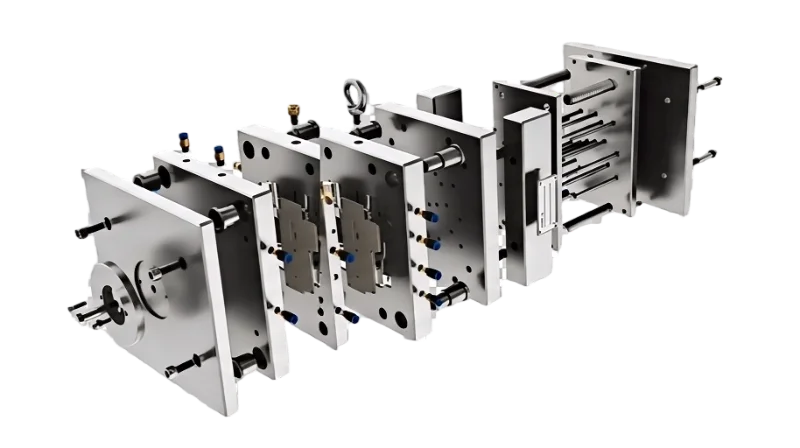
Les autres éléments de conception que nous privilégions incluent le nombre de cavités, le système d’éjection et les matériaux utilisés pour le moule lui-même. Un moule multi-cavités augmente la production par cycle, mais il est crucial de garantir que toutes les cavités se remplissent et se refroidissent uniformément, un challenge que nous résolvons grâce à des logiciels de simulation de flux avancés. Le système d’éjection doit être suffisamment robuste pour expulser les pièces de manière fiable pendant des millions de cycles sans adhérence ou dommage. Nous utilisons également stratégiquement différents types d’acier et revêtements. Pour les zones à forte abrasion comme les entrées ou les obturateurs, nous utilisons des aciers outils durcis. Pour les zones à charge thermique élevée, nous pouvons utiliser des inserts fabriqués en alliage de cuivre-beryllium hautement conducteur pour extraire la chaleur plus rapidement. Ces décisions au niveau de la conception sont la base d’un moule véritablement productif.
Comment la surveillance en temps réel et l’analyse des données peuvent-elles optimiser les performances du moule d’injection ?
La surveillance en temps réel est l’utilisation des données des capteurs de machine et moule pour ajuster le temps de cycle, le refroidissement, la pression et la maintenance avant que la production diminue. Elle transforme les signaux de production en dépannage plus rapide, moins de rebut et une performance de moule plus prévisible.
Notre stratégie est de capturer ces données et de les transformer en intelligence actionable. Nous utilisons des systèmes d’exécution de fabrication (MES) spécialisés pour surveiller la performance de chaque machine dans notre usine en temps réel. Ce système suit des métriques clés comme le temps de cycle, le temps de fonctionnement, le temps d’arrêt et le taux de rebut. Si le temps de cycle d’une machine dévie de la norme établie même d’une fraction de seconde, une alerte est générée, permettant à un technicien de processus d’investiguer immédiatement. Cela empêche les petits problèmes de devenir des problèmes majeurs pouvant causer des heures d’arrêt ou une série de pièces défectueuses.
Nous poussons cela plus loin en utilisant des capteurs dans le moule. En plaçant des capteurs de pression et température directement dans la cavité du moule, nous pouvons voir exactement ce que le plastique subit pendant les phases de remplissage, compactage et refroidissement. Ces données sont inestimables pour l’optimisation du processus et le contrôle qualité. Par exemple, si la courbe de pression de la cavité pour une pièce est identique à celle d’une “pièce référence” que nous savons bonne, nous pouvons être extrêmement confiant que la pièce satisfait toutes les spécifications qualité sans même avoir besoin de la mesurer. Cela permet une assurance qualité en temps réel et facilite la maintenance prédictive.
En analysant les tendances dans les données, nous pouvons prédire quand un évent commence à se boucher ou qu’un composant s’use, et planifier la maintenance avant qu’elle ne cause une panne. Cette approche basée sur les données est l’avenir de la maximisation de la productivité des moules d’injection.
Questions fréquemment posées sur la productivité des moules d’injection ?
Quel est le facteur unique le plus important affectant la productivité du moule d’injection ?
Bien que de nombreux facteurs soient importants, le plus significatif est presque toujours le temps de cycle. La phase de refroidissement du cycle offre généralement la plus grande opportunité d’amélioration. Chaque seconde gagnée sur le temps de cycle pour une pièce à grand volume a un effet cumulatif massif sur la production totale et le coût par pièce.
À quelle fréquence un moule d’injection à grand volume doit-il être entretenu ?
Ceci dépend de la complexité du moule, du matériau utilisé (certains sont plus abrasifs ou corrosifs) et du nombre total de cycles. En règle générale, nous effectuent un nettoyage et inspection basique en presse (Niveau 1) toutes les 8 à 24 heures de fonctionnement. Une maintenance préventive plus approfondie (Niveau 2), où le moule est retiré de la presse, est généralement planifiée tous les 25 000 à 100 000 cycles. Un démontage complet et révision (Niveau 3) peut intervenir tous les 250 000 à 1 000 000 cycles.
Un système de buse chaude est-il toujours plus productif qu’une buse froide ?
Pour la production à grand volume, un système de canaux chauds est presque toujours le choix le plus productif. Il élimine le gaspillage de matière dû aux canaux, évite la nécessité de regranulation et permet souvent des cycles plus rapides car il n’y a pas de canal solide à refroidir et à éjecter. Cependant, pour la production à faible volume, le prototypage ou certains matériaux sensibles à la température, la simplicité et le coût initial plus faible d’un système de canaux froids peuvent être plus appropriés.
Un moule familial (moulant différentes pièces dans le même moule) peut-il augmenter la productivité ?
Oui, un moule familial peut augmenter la productivité en produisant un ensemble complet de pièces apparentées en un seul cycle. Cependant, il présente des défis de conception significatifs. Les pièces doivent être de taille et de volume similaires, et le système de canaux doit être soigneusement équilibré pour garantir que toutes les cavités se remplissent à la même vitesse et sous la même pression. S’il n’est pas correctement équilibré, cela peut entraîner des problèmes de qualité comme des incomplets, des bavures ou des déformations sur certaines pièces, ce qui annulerait tout gain de productivité.
Quelle est la différence entre productivité et efficacité dans le moulage par injection ?
Bien que souvent confondues, ces notions ont des sens distincts dans notre usine. La productivité mesure la production dans le temps, par exemple le nombre de pièces conformes par heure. L’efficacité rapporte la production aux ressources consommées, par exemple le nombre de pièces conformes par kilowattheure ou par gramme de matière. Notre objectif est de maximiser les deux : produire autant de pièces de qualité que possible, tout en utilisant un minimum de ressources.
Améliorer la productivité des moules d’injection ne repose pas sur une solution miracle unique, mais plutôt sur un effort continu et holistique qui intègre conception, outillage, traitement et maintenance. De l’analyse DFM initiale à la mise en œuvre finale de la surveillance des données en temps réel, chaque étape présente une opportunité d’optimisation. Comme nous l’avons vu dans notre propre usine, se concentrer sur des domaines fondamentaux comme la réduction du temps de cycle grâce à une conception de refroidissement avancée, l’établissement de calendriers rigoureux de maintenance préventive et l’utilisation des principes de moulage scientifique basés sur les données sont essentiels. Lorsque ces éléments sont combinés avec des avancées modernes comme les systèmes de buse chaude, l’automatisation stratégique et l’analyse de données, le potentiel d’augmentation du rendement, de réduction des coûts et d’amélioration de la qualité est immense.
En fin de compte, un moule productif est le résultat d’un partenariat entre une équipe de fabrication expérimentée et un outil bien conçu, travaillant en harmonie pour atteindre une valeur maximale.
Besoin d’un devis pour votre projet de moulage par injection ?
Obtenez des prix compétitifs, un retour DFM et un calendrier de production auprès de l’équipe d’ingénierie de ZetarMold.
Demandez un devis gratuit → Consultez notre guide complet du moulage par injection pour une vue d’ensemble détaillée.
temps de cycle : durée totale entre la fermeture et l’ouverture du moule pour une injection ; elle est généralement de 15 à 60 secondes pour les pièces thermoplastiques. ↩
refroidissement conforme : canaux de refroidissement qui suivent le contour tridimensionnel de l’empreinte et réduisent le temps de cycle de 20 à 40 % par rapport aux canaux rectilignes classiques. ↩
moulage scientifique : également appelé moulage découplé, cette méthode fondée sur les données sépare les phases de remplissage, de compactage et de maintien afin d’obtenir une production répétable et de haute qualité. ↩