 Ir al contenido

Why Is Injection Molding the Most Widely Used Plastic Manufacturing Process?
El moldeo por inyección es el proceso de fabricación de plásticos más utilizado porque las compensaciones de costo, calidad, volumen y aplicación lo respaldan. moldeo por inyección1 es el proceso de fabricación de plásticos más utilizado porque ofrece una velocidad, precisión y rentabilidad inigualables a gran escala, produciendo piezas idénticas cada 5 a 60 segundos con tolerancias tan ajustadas como ±0.005 mm. Ningún otro proceso puede igualar su combinación de complejidad geométrica, versatilidad de materiales y economía de volumen, razón por la cual sirve prácticamente a todas las industrias manufactureras del planeta. Por eso los proveedores experimentados son importantes para cada aplicación industrial.
La economía es sencilla: una vez que un molde de inyección2 se construye, cada pieza adicional solo cuesta el material, la energía y el tiempo de máquina, típicamente entre $0.01 y $5.00 por pieza, dependiendo del tamaño y la complejidad. Para cualquier producto que requiera más de 1,000 a 5,000 piezas idénticas, el moldeo por inyección casi siempre supera en costo por unidad al mecanizado CNC, la impresión 3D y la fundición a presión.
El proceso maneja una enorme gama de materiales — más de 25,000 compuestos termoplásticos están disponibles comercialmente — permitiendo a los ingenieros ajustar con precisión la resistencia, flexibilidad, transparencia, resistencia química, retardancia a la llama y propiedades eléctricas para cada aplicación. Desde una carcasa de sensor médico de 0.5 gramos hasta un parachoques automotriz de 8 kilogramos, la misma tecnología fundamental se aplica.
- El moldeo por inyección sirve a las industrias automotriz, médica, electrónica, de envasado, industrial y aeroespacial, cada una con demandas únicas de material y calidad.
- La industria automotriz es el mayor consumidor individual, con entre 300 y 500 piezas moldeadas por inyección por vehículo.
- El moldeo médico requiere producción en sala limpia ISO 13485 y materiales biocompatibles ISO 10993.
- Los moldes de empaque de alta cavidad (64–128 cavidades) ejecutan ciclos de menos de 3 segundos, produciendo más de 1 millón de piezas por turno.
- La selección del material impulsa el éxito de la aplicación — PP, PA, PC, PEEK y PPS atienden necesidades industriales distintas.
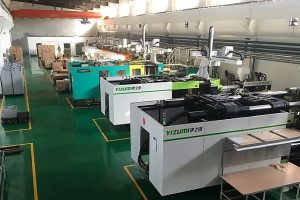
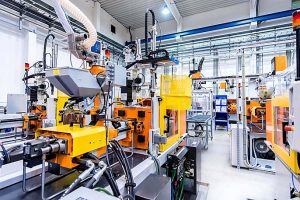
In our Shanghai factory, we run 47 injection molding machines from 90T to 1850T, backed by 20+ years of hands-on experience across automotive, medical, electronics, and industrial applications. We see firsthand how the same process technology serves fundamentally different industry requirements on the production floor every day.

What Are the Major Automotive Applications for Injection Molding?
Las principales aplicaciones automotrices para el moldeo por inyección son las categorías principales u opciones explicadas en esta sección. La industria automotriz es el mayor consumidor individual de piezas moldeadas por inyección, utilizándolas para el revestimiento interior, los paneles exteriores de la carrocería, los componentes bajo el capó, los sistemas de iluminación y los refuerzos estructurales. Los vehículos modernos contienen entre 300 y 500 componentes plásticos distintos moldeados por inyección, lo que representa entre 50 y 60 kg de plástico por automóvil, una cifra que continúa creciendo a medida que los fabricantes de automóviles reemplazan el metal con termoplásticos diseñados para reducir el peso y mejorar la eficiencia del combustible.
Aplicaciones interiores incluyen los paneles de instrumentos del tablero (típicamente mezclas de PC/ABS), los paneles de las puertas (PP con relleno de talco), las carcasas de la consola central, los conductos de HVAC (PP), los componentes estructurales de los asientos (PA 6/6) y los revestimientos de los pilares (ABS). Estas piezas deben cumplir con requisitos estrictos de estabilidad a los rayos UV, resistencia al calor de hasta 90°C cerca del parabrisas, resistencia a los arañazos y bajas emisiones de COV para la calidad del aire en la cabina.
Aplicaciones exteriores cubren faldones de parachoques (PP-EPDM con modificadores de impacto), carcasas de espejos (ABS o PC pintado), ensamblajes de rejilla, guardabarros de rueda (PP) y estribos. Los estabilizadores UV y los modificadores de impacto para clima frío son esenciales — un parachoques debe sobrevivir una prueba de impacto a -40°C sin agrietarse. Los acabados superficiales de clase A directamente del molde (eliminando la necesidad de pintura) son cada vez más demandados.
Aplicaciones bajo el capó llevan el rendimiento del material al límite: colectores de admisión (PA 6/6 + 30% fibra de vidrio), componentes del sistema de refrigeración (PA 6/6), carcasas de baterías de vehículos eléctricos (PP con retardante de llama) y conectores eléctricos (PBT, PPS). Procesamos regularmente PA 6/6-GF30 a temperaturas de fusión de 270–290°C con temperaturas de molde de 80–100°C para lograr la cristalinidad necesaria para la resistencia térmica y química en los entornos del compartimiento del motor.
| Área de aplicación | Material típico | Key Requirement | Piezas Comunes |
|---|---|---|---|
| Acabados interiores | PC/ABS, PP, ABS | Estabilidad UV, bajo VOC, resistencia a rayaduras | Tableros, paneles de puertas, consolas |
| Carrocería exterior | PP-EPDM, TPO | Resistencia al impacto (-40°C), acabado Clase A | Parachoques, carcasas de espejos, rejillas |
| Bajo el capó | PA 6/6-GF30, PPS | Resistencia al calor >120°C, resistencia química | Colectores de admisión, conectores, carcasas |
| Batería de vehículo eléctrico | PP-FR, PC | Clasificación de llama UL 94 V-0, estabilidad dimensional | Carcasas de batería, separadores de celdas |
| Iluminación | PC, PMMA | Claridad óptica, resistencia a los UV | Cubiertas de lentes, guías de luz, reflectores |
“Los plásticos diseñados en las carcasas de baterías de vehículos eléctricos reducen el peso entre un 40 y un 50% en comparación con el aluminio, al tiempo que cumplen con los estándares de seguridad contra incendios UL 94 V-0.”Verdadero
Los compuestos de PP retardantes de llama utilizados en los revestimientos de baterías de vehículos eléctricos son significativamente más ligeros que las carcasas de aluminio equivalentes, y la reducción de peso extiende directamente la autonomía por carga. La clasificación UL 94 V-0 garantiza que el material se autoextinga en 10 segundos tras retirar la llama.
“Metal parts are always stronger than injection molded plastic parts in automotive applications.”Falso
Los plásticos de ingeniería modernos como reforzado con vidrio3 PA 6/6 (resistencia a la tracción de 180–210 MPa) y PPS pueden superar la relación resistencia-peso de muchos metales. Los componentes bajo el capó fabricados con PA 6/6-GF30 resisten temperaturas superiores a 120°C y cargas mecánicas significativas, superando al aluminio en resistencia específica por kilogramo en muchas aplicaciones reales.
How Is Injection Molding Used in the Medical Industry?
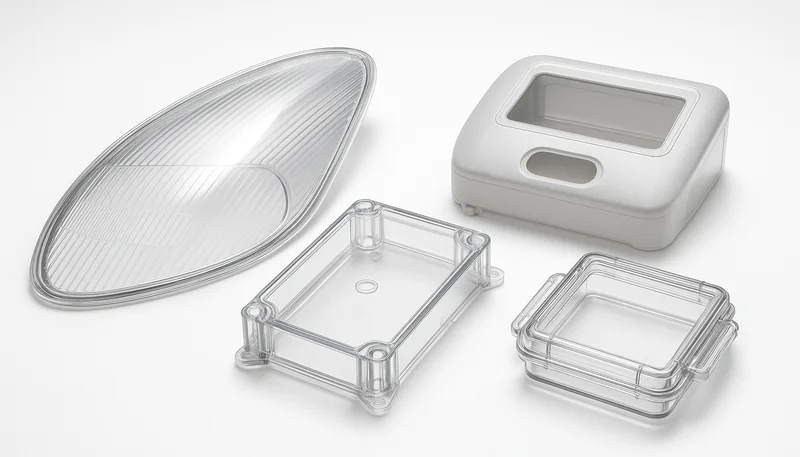
El moldeo por inyección se utiliza en la industria médica para fabricar piezas repetibles con requisitos controlados de material, herramientas y calidad. Se emplea principalmente para producir en masa dispositivos estériles de un solo uso —jeringas, componentes intravenosos, mangos de instrumentos quirúrgicos, carcasas de diagnóstico y componentes implantables— con la precisión dimensional y el cumplimiento de salas limpias que exigen los estándares regulatorios. El moldeo médico opera bajo los controles de proceso más rigurosos de cualquier categoría de aplicación.
El moldeo por inyección médico requiere materiales biocompatibles que cumplan con los estándares ISO 10993⁴. Las resinas más utilizadas son polipropileno (PP) para jeringas y contenedores desechables, policarbonato (PC) para carcasas transparentes y componentes de manejo de sangre, PEEK para componentes estructurales implantables y ABS para carcasas de equipos de diagnóstico. Cada lote de material debe ser rastreable desde la resina cruda hasta la pieza terminada para satisfacer los requisitos de trazabilidad de la FDA 21 CFR Parte 820 y del EU MDR. El moldeo en sala limpia de clase ISO 7 o superior es estándar para dispositivos invasivos, y los protocolos de validación deben cubrir la calificación de instalación (IQ), la calificación operacional (OQ) y la calificación de desempeño (PQ) antes de la liberación de producción.
El moldeo por inyección en sala limpia — realizado en entornos de clase ISO 7 o clase 8 con aire filtrado HEPA y protocolos de vestimenta — es estándar para cualquier dispositivo que entrará en contacto con un paciente. Los parámetros del proceso se monitorean y registran en tiempo real: presión de inyección (±1 bar), temperatura de fusión (±2°C) y tiempo de ciclo (±0.1 segundo) para demostrar consistencia del proceso para las presentaciones regulatorias de la FDA y el EU MDR.
| Aplicación | Material típico | Key Requirement | Regulatory Standard |
|---|---|---|---|
| Jeringas y componentes intravenosos | PP, COC | Biocompatibility, gamma sterilization | ISO 10993, FDA 21 CFR |
| Diagnostic housings | ABS, PC | Protección ESD, ensamblaje en sala limpia | ISO 13485, IEC 60601 |
| Surgical instruments | PEEK, PEI (Ultem) | Autoclave sterilization at 134°C | ISO 13485, EU MDR |
| Implantable components | Medical-grade PEEK, PP | Long-term biocompatibility, MRI compatibility | ISO 10993-1, FDA PMA |
| Drug delivery systems | PP, HDPE, TPE | Chemical inertness, tight tolerances | USP Class VI, ISO 15747 |
What Consumer Electronics Applications Use Injection Molding?
Consumer electronics applications that use injection molding are the part groups compared below by function, material, and quality demand. Injection molding produces virtually every plastic component in consumer electronics — smartphone housings, laptop frames, remote controls, gaming controllers, speaker grilles, and wearable device enclosures — because no other process delivers the cosmetic finish, dimensional accuracy, and multi-million-unit throughput this sector demands.
A single smartphone contains 20–40 injection molded components: back covers (PC/ABS or PC/GF), button inserts (PC), antenna windows (transparent PC), microphone and speaker grilles (fine-mesh PP), and internal structural frames (PA 6/6-GF30). Each part must meet Class A surface finish requirements — SPI A-1 to A-2 polish — visible from arm’s length without blemishes, sink marks, or gate vestige.
PC/ABS is the dominant material for consumer electronics enclosures because it combines PC’s impact strength and heat resistance with ABS’s excellent processability and surface quality. Typical processing parameters are 230–260°C melt temperature with 60–80°C mold temperature to achieve the surface gloss consumers expect.
Insert molding — where metal threaded inserts, EMI shielding cans, and electrical contact pads are placed in the mold before injection — is standard practice in electronics. Production runs with 12–16 inserts per shot, maintaining ±0.05 mm positional accuracy, are achievable with precise locating pins and camera-based pre-shot verification systems. This is one area where mold design complexity directly determines product quality.
How Does Injection Molding Serve the Packaging Industry?
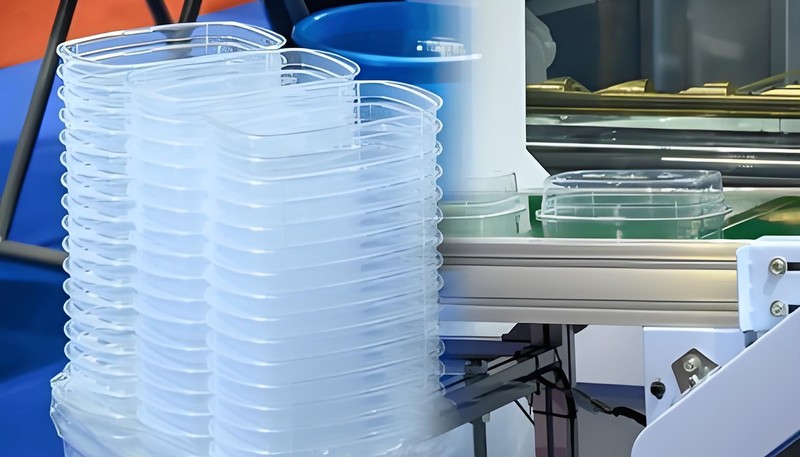
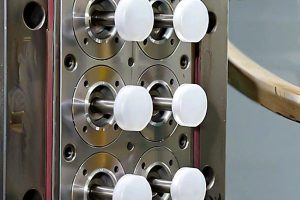
Injection molding is used in the packaging industry to produce high-volume parts where cycle time, consistency, and material performance matter. Injection molding serves the packaging industry by producing billions of bottle caps, closures, thin-wall containers, cosmetic jars, food-storage lids, and pharmaceutical vials each year at cycle times under 10 seconds using high-cavity molds. Packaging is the highest-volume application of injection molding by unit count — a 64-cavity bottle cap mold produces over 1.2 million caps per 8-hour shift.
Moldeo por inyección de pared delgada for packaging pushes material flow to its physical limits — wall thicknesses of 0.3–0.8 mm require injection speeds of 300–500 mm/s and pressures above 1,400 bar to fill all cavities before the melt freezes in the narrow channel. Runner balance across 64 or 128 cavities is critical; even small thermal variations cause short shots in the outermost positions.
PP (polypropylene) dominates food packaging due to FDA food-contact compliance, chemical resistance, and outstanding thin-wall flowability. HDPE is standard for personal care and household chemical containers. PET preforms for stretch blow molding are among the most technically demanding packaging applications — requiring exceptional melt clarity and tight weight control across all cavities, typically within ±0.1 gram.
“Hot runner thermal balance is critical in 64+ cavity packaging molds to prevent short shots in outer cavities.”Verdadero
Flow path length differences between inner and outer cavities create filling imbalances in multi-cavity molds. Properly designed and thermally balanced hot manifold systems ensure all cavities fill simultaneously, preventing short shots and dimensional variation in the outermost positions.
“Thin-wall packaging parts require lower injection pressure than thick-wall structural parts.”Falso
The opposite is true. Thin-wall parts (0.3–0.8 mm) require injection pressures of 1,200–1,500 bar and speeds of 300–500 mm/s to fill before the melt freezes in the narrow channel. Thick-wall parts fill at much lower pressures because the wider flow channel offers less resistance.
What Industrial and Construction Applications Use Injection Molded Parts?
Industrial and construction applications that use injection molded parts are the part groups compared below by function, material, and quality demand. Injection molding produces a wide range of industrial and construction components — pipe fittings, electrical conduit bodies, cable management systems, structural brackets, pump housings, and valve bodies — where functional durability and dimensional stability matter more than surface cosmetics. These are the workhorse applications that keep infrastructure running.
PP and HDPE pipe fittings are among the highest-volume industrial molded parts worldwide. Billions of threaded couplings, elbows, and tees are produced annually, meeting ASTM D2466 or ISO 15874 dimensional standards and pressure ratings. We hold cavity dimensions to ±0.05 mm on threading features to ensure reliable assembly with standard pipe systems.
Nylon (PA 6/6) is the workhorse material for industrial applications requiring both strength and temperature resistance. Pump housings, gear housings, conveyor components, and structural brackets benefit from its tensile strength of 180–210 MPa (glass-filled)³, continuous service temperature of 130°C, and excellent creep resistance under long-term load.
How Is Injection Molding Applied in Aerospace and Defense?
Injection molding is applied in aerospace and defense when parts need consistent geometry, validated materials, and repeatable production control. Aerospace and defense applications for injection molding are smaller in volume than automotive or consumer goods but technically demanding — requiring materials that perform reliably at extreme temperatures, under chemical exposure, and in weight-critical structural roles. Every gram matters in aerospace, and material performance margins are tested to their limits.
PEEK (polyetheretherketone) is the dominant high-performance plastic for aerospace injection molding. It withstands continuous operating temperatures of 250°C, maintains structural integrity in aviation fuel, hydraulic fluid, and de-icing chemicals, and achieves tensile strengths of 100–170 MPa. Interior aircraft components, cable management brackets, sensor housings, and fluid handling components are common PEEK applications.
Carbon-fiber-filled PEEK (PEEK-CF30) achieves a flexural modulus exceeding 20 GPa — approaching aluminum’s stiffness — while being 50% lighter. Processing PEEK requires specialized equipment: melt temperatures of 370–400°C with mold temperatures of 150–180°C, and barrel materials resistant to the corrosive polymer. PPS (polyphenylene sulfide) is another common aerospace resin for electrical connectors and structural brackets, offering excellent chemical resistance and UL 94 V-0 flame performance at lower cost than PEEK.
What Makes Injection Molding So Important Across Industries?
Injection molding is important across industries because it connects scalable production, material flexibility, and repeatable part quality. Injection molding’s dominance across industries — from automotive to aerospace — reflects a fundamental truth: no other manufacturing process matches its combination of geometric freedom, material versatility, and volume economics. Every major industry has found essential applications for injection molded plastics, and the trend toward lighter, more complex, and more precisely engineered parts continues to accelerate.
In our factory, we see the breadth of these applications every day. An automotive bumper and a medical syringe body might both be PP parts, molded on similar machines, yet subject to entirely different quality standards, material certifications, and process documentation requirements. Understanding these distinctions — by application, industry, and end-use environment — is what separates a good injection molding supplier from a great one.
If you are evaluating injection molding for a new application, the critical questions to ask are: What performance requirements does the end-use environment impose? What regulatory certifications apply? What volume justifies tooling investment? Answering these questions will guide material selection, mold type, and production strategy. For sourcing guidance, see our supplier sourcing guide.
Need a Quote for Your Injection Molding Project? Get in touch with our engineering team to discuss your application. Whether you need automotive connectors, medical housings, or consumer electronics enclosures, our Shanghai factory delivers quality parts from 90T to 1850T machines with 20+ years of experience.
Get competitive pricing, DFM feedback, and production timeline from ZetarMold’s engineering team.
Request a Free Quote →
¿Cuáles son las aplicaciones del moldeo por inyección?
What is the most common material used across all injection molding applications?
Polypropylene (PP) is the most widely used injection molding material globally, accounting for approximately 30% of all thermoplastics processed by volume. PP serves automotive interiors, packaging closures, medical syringes, consumer goods, and industrial pipe fittings due to its low raw material cost, excellent chemical resistance, good fatigue resistance for living hinges, and outstanding processability across a wide temperature range. PP can be further modified with talc fillers for stiffness, glass fibers for strength, or impact modifiers for toughness — making it the most versatile commodity thermoplastic for injection molding applications.
Can injection molding produce optically clear parts?
Yes, injection molding can produce optically clear parts using specific transparent resins and processing techniques. Polycarbonate (PC), PMMA (acrylic), COC (cyclic olefin copolymer), and COP are the primary materials for optical applications. Common uses include automotive headlamp lenses, camera lens elements, medical vials, LED light guides, and consumer electronics display windows. Achieving true optical clarity requires mirror-polish mold surfaces (SPI A-1 finish, Ra < 0.025 μm), strict contamination control in material handling, and precise melt temperature management to prevent splay, bubbles, or yellowing in the finished part.
What is the smallest part that can be injection molded?
Micro-injection molding can produce parts as small as 0.01 grams — smaller than a single grain of rice — with feature dimensions measured in micrometers. Medical micro-fluidic devices, electronics connectors, and miniature watch gears are all routinely manufactured this way. The process uses specialized micro-molding machines with precise shot-size control and high-speed clamping units to achieve consistent fills at extremely small shot volumes. At ZetarMold, we have produced micro-molded medical components down to sub-gram weights using our 90T-class machines, maintaining dimensional tolerances within ±0.01 mm across production runs exceeding 500,000 cycles.
Is injection molding suitable for flexible or rubber-like parts?
Yes, thermoplastic elastomers (TPE, TPU, TPV) can be processed on standard injection molding machines to produce flexible, rubber-like parts without requiring the specialized equipment needed for traditional vulcanized rubber. TPU gaskets, TPE overmolded grips, and TPV automotive seals are common examples. The key processing difference versus rigid plastics is that TPEs and TPUs require careful moisture drying (typically 2–4 hours at 80–100 °C) and narrower melt-temperature windows to avoid degradation. Multi-shot molding also allows combining a rigid substrate with a soft TPE overmold in a single machine cycle for integrated soft-touch components.
Which industries are growing fastest in injection molding adoption?
The fastest-growing sectors for injection molding adoption are electric vehicles, medical devices, and renewable energy. EV production is driving massive demand for flame-retardant PP battery housings, structural PA components, and thermal management parts. Medical device growth comes from diagnostic equipment, wearable health monitors, and prefilled drug delivery systems. Renewable energy applications include solar panel mounting brackets, wind turbine sensor housings, and EV charging infrastructure components. All three sectors share a common thread: increasing demand for precision-engineered plastic parts at high volume.
Can injection molding produce multi-color or multi-material parts?
Yes, through two-shot (2K) molding or overmolding processes. Two-shot molding injects two different materials sequentially within the same machine cycle using a rotating mold — this is common for soft-grip toothbrushes, dual-color automotive buttons, and sealed electronic enclosures where a rigid substrate needs a flexible sealing lip. Overmolding adds a second material onto a pre-molded substrate in a separate step. Material compatibility is critical: the second material must bond chemically or mechanically to the substrate. Common pairings include ABS + TPU, PC + silicone, and PP + TPE, each selected based on adhesion strength, color contrast, and functional requirements.
How does injection molding compare to 3D printing for production?
Injection molding wins decisively on per-unit cost and production speed at volumes above 500 to 1,000 parts. A single injection cycle produces 1 to 128+ parts in 5 to 60 seconds, while 3D printing builds one part layer by layer over hours. However, 3D printing requires zero tooling investment and excels for rapid prototyping and very low-volume production runs. The practical crossover point depends on part complexity, required tolerances, surface finish expectations, and material properties — but for any production volume exceeding a few thousand units, injection molding is almost always the more economical choice.
What quality standards apply to injection molded parts?
Quality standards vary significantly by industry and application. Automotive parts follow IATF 16949 and require PPAP (Production Part Approval Process) documentation with full dimensional reports. Medical parts must meet ISO 13485 quality system requirements and FDA 21 CFR compliance with full traceability. Aerospace parts require AS9100 certification and lot-level material traceability to original resin batches. Food-contact packaging must comply with FDA or EU Regulation 10/2011 for food contact materials. Across all industries, dimensional tolerances follow ISO 2768 or GD&T per ASME Y14.5, and material testing (tensile strength, impact resistance, flammability rating) is standard.
-
injection molding: Injection molding is a manufacturing process in which molten thermoplastic is injected under high pressure into a precision-machined mold cavity, cooled to solidify, and ejected as a finished part — capable of producing complex geometries at high volume with repeatable tolerances. ↩
-
injection mold: An injection mold is a precision tool typically machined from hardened steel or aluminum that defines the part geometry, surface finish, cooling channel layout, ejection system, and gate locations for injection molding production. ↩
-
glass-filled: Nylon refers to (PA 6/6) reinforced with 30% short glass fibers (PA 6/6-GF30) produces a composite with tensile strength of 180–210 MPa, flexural modulus of 8–10 GPa, and continuous service temperature of 130°C — significantly exceeding unfilled nylon performance. ↩


 EN
EN  ES
ES  FR
FR  DE
DE  PT
PT  AR
AR  RU
RU  JA
JA  KO
KO  IT
IT  NL
NL  TR
TR  PL
PL 