Pourquoi le moulage par injection est-il le procédé de fabrication des plastiques le plus utilisé ?
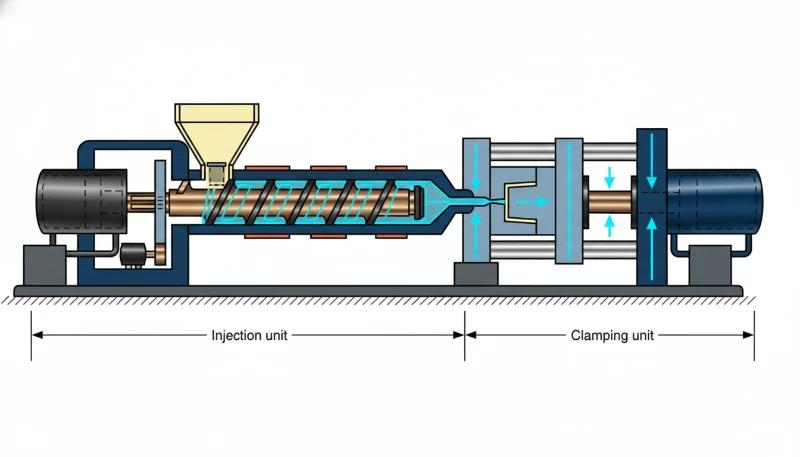
Ce procédé est le mode de fabrication du plastique le plus répandu, car ses compromis de coût, de qualité, de volume et d’application lui sont favorables. Le moulage par injection1 domine parce qu’il offre à grande échelle une vitesse, une précision et une rentabilité inégalées : il produit des pièces identiques toutes les 5 à 60 secondes avec des tolérances pouvant atteindre ±0,005 mm. Aucun autre procédé n’égale sa combinaison de complexité géométrique, de polyvalence des matériaux et d’économie d’échelle ; il sert donc pratiquement toutes les industries manufacturières de la planète. Voilà pourquoi l’expérience du fournisseur compte dans chaque application sectorielle.
L’équation économique est simple : une fois le moule d’injection2 construit, chaque pièce supplémentaire ne coûte plus que la matière, l’énergie et le temps machine, soit généralement 0,01 à 5,00 $ par pièce selon sa taille et sa complexité. Pour tout produit exigeant plus de 1 000 à 5 000 pièces identiques, le moulage par injection surpasse presque toujours l’usinage CNC, l’impression 3D et le moulage sous pression en coût unitaire.
Le processus gère une gamme énorme de matériaux — plus de 25 000 composés thermoplastiques sont disponibles commercialement — permettant aux ingénieurs d’ajuster précisément la résistance, la flexibilité, la transparence, la résistance chimique, l’ignifugation et les propriétés électriques pour chaque application. D’un boîtier de capteur médical de 0,5 gramme à un pare-chocs automobile de 8 kilogrammes, la même technologie fondamentale s’applique.
- Le moulage par injection sert à l'automobile, au médical, à l'électronique, à l'emballage, à l'industrie et à l'aérospatiale — chacun ayant des exigences uniques en matière de matériaux et de qualité.
- L'automobile est le plus grand consommateur, avec 300 à 500 pièces moulées par injection par véhicule.
- Le moulage médical nécessite une production en salle blanche ISO 13485 et des matériaux biocompatibles ISO 10993.
- Les moules de packaging à haute cavité (64–128 cavités) ont des temps de cycle inférieurs à 3 secondes, produisant plus d'un million de pièces par poste.
- Le choix des matériaux détermine le succès de l'application — PP, PA, PC, PEEK et PPS répondent chacun à des besoins industriels distincts.
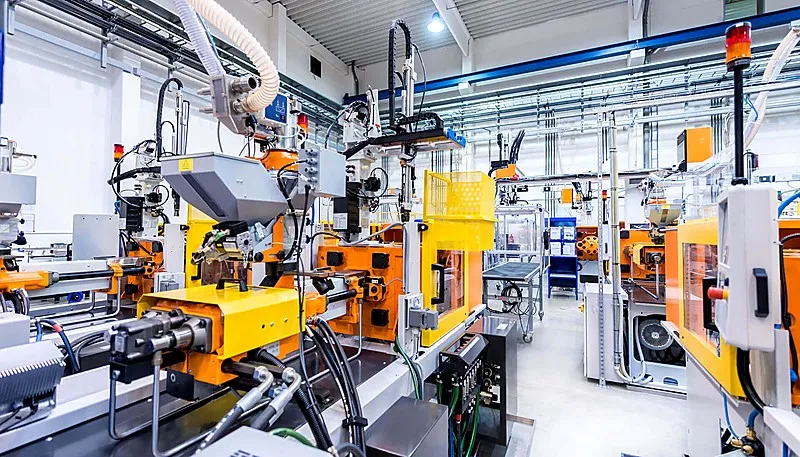
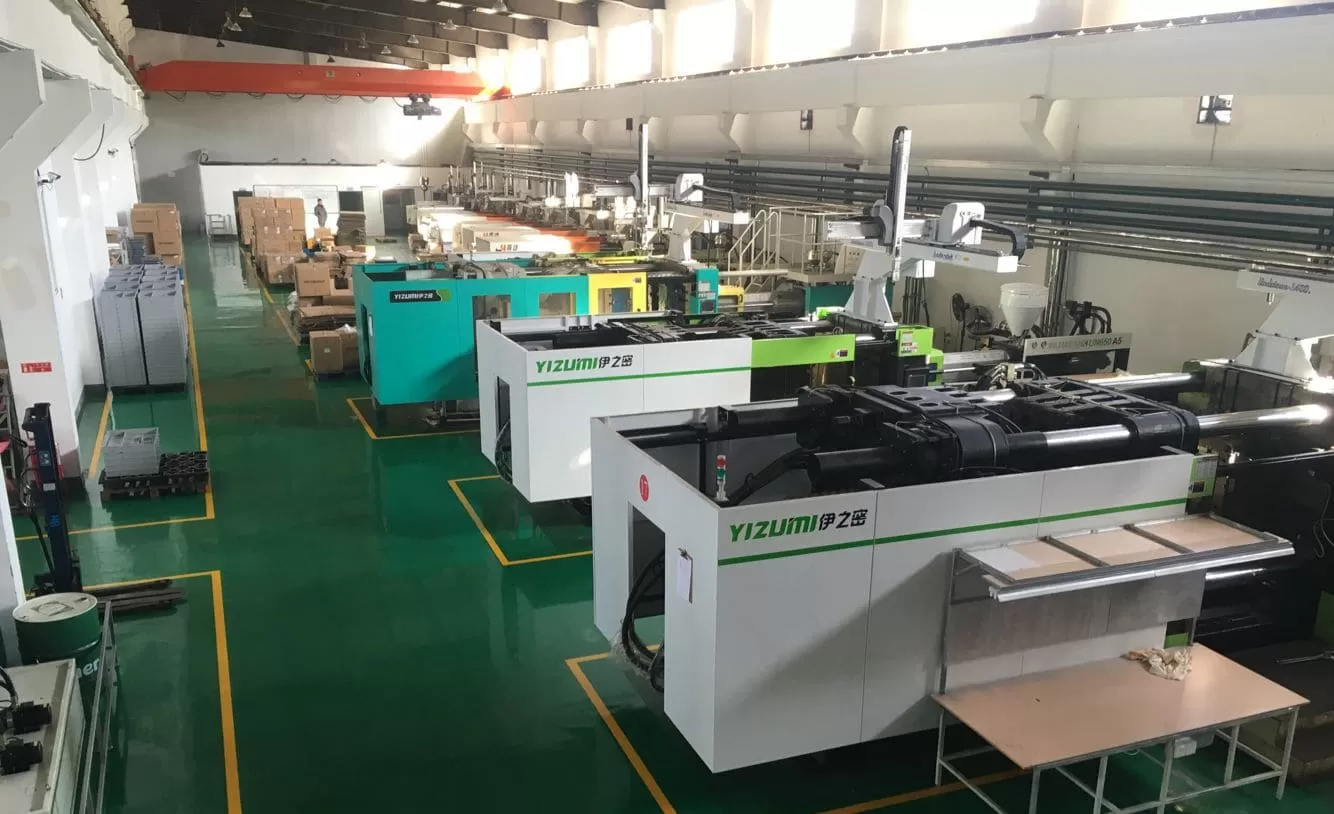
Dans notre usine de Shanghai, nous exploitons 47 machines de moulage par injection de 90T à 1850T, soutenues par plus de 20 ans d'expérience pratique dans les secteurs automobile, médical, électronique et industriel. Nous constatons quotidiennement sur le terrain de production comment la même technologie de processus sert des exigences industrielles fondamentalement différentes.
Quelles sont les principales applications automobiles du moulage par injection ?
Les principales applications automobiles pour le moulage par injection sont les catégories principales ou options expliquées dans cette section. L’industrie automobile est le plus grand consommateur de pièces moulées par injection, les utilisant pour les garnitures intérieures, les panneaux de carrosserie extérieurs, les composants sous le capot, les systèmes d’éclairage et les renforts structurels. Les véhicules modernes contiennent 300–500 composants plastiques distincts moulés par injection, représentant 50–60 kg de plastique par voiture — un chiffre qui continue de croître car les constructeurs automobiles remplacent le métal par des thermoplastiques techniques pour réduire le poids et améliorer l’efficacité énergétique.
Dans l’habitacle, les applications comprennent les tableaux de bord et combinés d’instruments, généralement en mélange PC/ABS, les panneaux de porte en PP chargé de talc, les boîtiers de console centrale, les conduits CVC en PP, les éléments structurels des sièges en PA 6/6 et les garnitures de montants en ABS. Ces pièces doivent satisfaire des exigences strictes de stabilité aux UV, de résistance thermique jusqu’à 90 °C près du pare-brise, de résistance aux rayures et de faibles émissions de COV pour préserver la qualité de l’air intérieur.
À l’extérieur, les applications couvrent les boucliers de pare-chocs en PP-EPDM modifié choc, les coques de rétroviseurs en ABS ou PC peint, les grilles, les garnitures de passages de roues en PP et les marchepieds. Les stabilisants UV et modifiants choc à basse température sont essentiels : un pare-chocs doit réussir un essai d’impact à -40 °C sans fissurer. Les finitions de classe A obtenues directement dans le moule, sans peinture, sont de plus en plus demandées.
Sous le capot, les applications poussent les matériaux à leurs limites : collecteurs d’admission en PA 6/6 + 30 % de fibres de verre, composants du circuit de refroidissement en PA 6/6, boîtiers de batterie de véhicule électrique en PP ignifugé et connecteurs électriques en PBT ou PPS. Nous transformons régulièrement du PA 6/6-GF30 à des températures matière de 270–290 °C et de moule de 80–100 °C afin d’obtenir la cristallinité nécessaire à la résistance thermique et chimique dans le compartiment moteur.
| Domaine d'application | Matériau typique | Exigence principale | Pièces courantes |
|---|---|---|---|
| Garnitures intérieures | PC/ABS, PP, ABS | Stabilité aux UV, faible émission de COV, résistance aux rayures | Tableaux de bord, panneaux de porte, consoles |
| Carrosserie extérieure | PP-EPDM, TPO | Résistance aux chocs (-40°C), finition de classe A | Pare-chocs, boîtiers de rétroviseur, grilles |
| Sous le capot | PA 6/6-GF30, PPS | Résistance à la chaleur >120 °C, résistance chimique | Collecteurs d'admission, connecteurs, boîtiers |
| Batterie de véhicule électrique | PP-FR, PC | Classement de résistance au feu UL 94 V-0, stabilité dimensionnelle | Boîtiers de batterie, séparateurs de cellules |
| Eclairage | PC, PMMA | Clarté optique, résistance aux UV | Couvercles de lentilles, guides de lumière, réflecteurs |
"Les plastiques techniques utilisés dans les boîtiers de batteries de véhicules électriques réduisent le poids de 40–50% par rapport à l’aluminium tout en respectant la norme de sécurité incendie UL 94 V-0."True
Les composés PP ignifugés utilisés dans les boîtiers de batterie pour véhicules électriques sont nettement plus légers que les boîtiers en aluminium équivalents, et la réduction de poids prolonge directement l'autonomie par charge. Le classement UL 94 V-0 garantit que le matériau s'auto-éteint dans les 10 secondes suivant le retrait de la flamme.
"Dans les applications automobiles, les pièces métalliques sont toujours plus résistantes que les pièces plastiques moulées par injection."False
Les plastiques techniques modernes tels que le PA 6/6 renforcé de fibres de verre3 (résistance à la traction 180–210 MPa) et le PPS peuvent dépasser le rapport résistance/poids de nombreux métaux. Les composants sous capot en PA 6/6-GF30 supportent des températures supérieures à 120°C et d’importantes charges mécaniques — surpassant l’aluminium en résistance spécifique par kilogramme dans de nombreuses applications réelles.
Comment le moulage par injection est-il utilisé dans le secteur médical ?
Le moulage par injection est utilisé dans l’industrie médicale pour fabriquer des pièces répétables avec des exigences contrôlées en matière de matériau, d’outillage et de qualité. Le moulage par injection est utilisé dans l’industrie médicale principalement pour produire en masse des dispositifs stériles à usage unique — seringues, composants IV, manches d’instruments chirurgicaux, boîtiers de diagnostic et composants implantables — avec la précision dimensionnelle et la conformité aux environnements contrôlés exigées par les normes réglementaires. Le moulage médical fonctionne sous les contrôles de processus les plus rigoureux de toutes les catégories d’application.
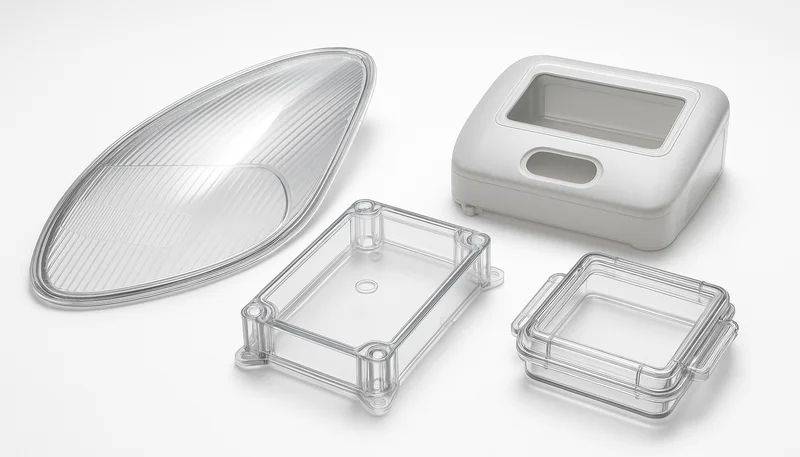
Le moulage par injection médical nécessite des matériaux biocompatibles répondant aux normes ISO 10993⁴. Les résines les plus couramment utilisées sont le polypropylène (PP) pour les seringues et les contenants jetables, le polycarbonate (PC) pour les boîtiers transparents et les composants de manipulation du sang, le PEEK pour les composants structurels implantables et l’ABS pour les enceintes des équipements de diagnostic. Chaque lot de matériau doit être traçable de la résine brute à la pièce finie pour satisfaire aux exigences de traçabilité de la FDA 21 CFR Partie 820 et du Règlement UE sur les dispositifs médicaux (MDR). Le moulage en salle blanche de classe ISO 7 ou mieux est standard pour les dispositifs invasifs, et les protocoles de validation doivent couvrir la qualification d’installation (IQ), la qualification opérationnelle (OQ) et la qualification de performance (PQ) avant la mise en production.
Le moulage par injection en salle blanche — réalisé dans des environnements de classe ISO 7 ou 8 avec de l’air filtré par HEPA et des protocoles de tenue — est standard pour tout dispositif qui entrera en contact avec un patient. Les paramètres du processus sont surveillés et enregistrés en temps réel : pression d’injection (±1 bar), température de fusion (±2°C) et temps de cycle (±0,1 seconde) pour démontrer la cohérence du processus pour les soumissions réglementaires de la FDA et du Règlement UE sur les dispositifs médicaux (MDR).
| Application | Matériau typique | Exigence principale | Norme réglementaire |
|---|---|---|---|
| Seringues et composants pour perfusion | PP, COC | Biocompatibilité, stérilisation gamma | ISO 10993, FDA 21 CFR |
| Boîtiers d’appareils de diagnostic | ABS, PC | Protection contre les décharges électrostatiques, assemblage en salle blanche | ISO 13485, IEC 60601 |
| Instruments chirurgicaux | PEEK et PEI (Ultem) | Stérilisation en autoclave à 134°C | ISO 13485, EU MDR |
| Composants implantables | PEEK et PP de grade médical | Biocompatibilité à long terme, compatibilité IRM | ISO 10993-1, FDA PMA |
| Systèmes d’administration de médicaments | PP, HDPE, TPE | Le nylon chargé de verre (PA 6/6-GF30) est un polyamide 6/6 renforcé avec 30 % en poids de fibres de verre courtes, produisant un composite avec une résistance à la traction de 180–210 MPa, un module de flexion de 8–10 GPa et une température de service continue de 130°C, dépassant significativement les performances du nylon non chargé. | Classe VI USP, ISO 15747 |
Quelles applications de l’électronique grand public utilisent le moulage par injection ?
Les applications électroniques grand public utilisant le moulage par injection sont comparées ci-dessous par fonction, matériau et exigence qualité. Le moulage par injection produit presque tous les composants plastiques de l’électronique grand public — boîtiers de smartphones, cadres d’ordinateurs portables, télécommandes, manettes de jeu, grilles de haut-parleurs et boîtiers d’appareils portables — car aucun autre procédé n’offre la finition esthétique, la précision dimensionnelle et le débit de plusieurs millions d’unités exigés par ce secteur.
Un seul smartphone contient 20–40 composants injectés : coques arrière (PC/ABS ou PC/GF), inserts de boutons (PC), fenêtres d’antenne (PC transparent), grilles de microphone et haut-parleur (PP à maillage fin) et cadres structurels internes (PA 6/6-GF30). Chaque pièce doit satisfaire aux exigences de finition de classe A — poli SPI A-1 à A-2 — sans défaut, retassure ni vestige de seuil visible à bout de bras.
Le PC/ABS est le matériau dominant pour les boîtiers électroniques grand public, car il associe la résistance aux chocs et à la chaleur du PC à l’excellente aptitude à la transformation et à la qualité de surface de l’ABS. Les paramètres courants sont une température de fusion de 230–260°C et une température de moule de 60–80°C pour obtenir la brillance attendue par les consommateurs.
Le moulage avec inserts — dans lequel des inserts filetés métalliques, des capots de blindage EMI et des plages de contact électrique sont placés dans le moule avant l’injection — est une pratique courante en électronique. Des séries comportant 12–16 inserts par injection et maintenant une précision de positionnement de ±0.05 mm sont réalisables avec des broches de positionnement précises et des systèmes de contrôle par caméra avant injection. Dans ce domaine, la complexité du moule détermine directement la qualité du produit.
Comment le moulage par injection sert-il l’industrie de l’emballage ?
Le moulage par injection est utilisé dans l’industrie de l’emballage pour produire en grande série des pièces pour lesquelles le temps de cycle, la régularité et les performances du matériau sont déterminants. Chaque année, il permet de fabriquer des milliards de bouchons, systèmes de fermeture, récipients à paroi mince, pots cosmétiques, couvercles de conservation alimentaire et flacons pharmaceutiques, avec des temps de cycle inférieurs à 10 secondes grâce à des moules multi-empreintes. En nombre d’unités, l’emballage est l’application du moulage par injection la plus volumineuse — un moule de bouchons à 64 empreintes produit plus de 1.2 million de bouchons par poste de 8 heures.
Le moulage par injection à paroi mince pour les emballages pousse l’écoulement de la matière à ses limites physiques : des parois de 0,3 à 0,8 mm exigent des vitesses d’injection de 300 à 500 mm/s et des pressions supérieures à 1 400 bar pour remplir toutes les empreintes avant que la matière ne gèle dans le passage étroit. L’équilibrage des canaux sur 64 ou 128 empreintes est critique ; la moindre variation thermique provoque des remplissages incomplets aux positions les plus éloignées.
Le PP (polypropylène) domine l’emballage alimentaire grâce à sa conformité FDA pour le contact alimentaire, sa résistance chimique et son excellente aptitude à l’écoulement en paroi mince. Le HDPE est la norme pour les contenants de soins personnels et de produits chimiques ménagers. Les préformes PET pour l’étirage-soufflage comptent parmi les applications d’emballage les plus exigeantes techniquement — elles nécessitent une limpidité exceptionnelle de la matière fondue et un contrôle strict du poids dans toutes les empreintes, généralement à ±0.1 gram.
« L’équilibre thermique des canaux chauds est critique dans les moules d’emballage à 64+ empreintes afin d’éviter les remplissages incomplets des empreintes extérieures. »True
Les différences de longueur d'écoulement entre empreintes internes et externes déséquilibrent le remplissage. Des collecteurs chauds bien conçus et équilibrés thermiquement remplissent toutes les empreintes simultanément, évitant manques et variations dimensionnelles aux positions extérieures.
"Les emballages à paroi mince exigent une pression d'injection inférieure à celle des pièces structurelles à paroi épaisse."False
C’est l’inverse. Les pièces à paroi mince (0.3–0.8 mm) nécessitent des pressions d’injection de 1,200–1,500 bar et des vitesses de 300–500 mm/s pour être remplies avant que la matière fondue ne se fige dans le canal étroit. Les pièces à paroi épaisse se remplissent à des pressions bien inférieures, car le canal d’écoulement plus large oppose moins de résistance.
Quelles applications industrielles et de construction utilisent des pièces moulées par injection ?
Les applications industrielles et du bâtiment utilisant des pièces moulées par injection sont comparées ci-dessous par fonction, matériau et exigence qualité. Le moulage par injection produit de nombreux composants industriels et de construction — raccords de tuyauterie, corps de conduits électriques, systèmes de gestion des câbles, supports structurels, corps de pompe et corps de vanne — où la durabilité fonctionnelle et la stabilité dimensionnelle priment sur l’aspect de surface. Ces applications robustes assurent le fonctionnement des infrastructures.
Les raccords de tuyauterie en PP et HDPE comptent parmi les pièces industrielles moulées produites dans les plus grands volumes au monde. Des milliards de manchons filetés, de coudes et de tés sont fabriqués chaque année selon les normes dimensionnelles et les classes de pression ASTM D2466 ou ISO 15874. Nous maintenons les dimensions des empreintes à ±0.05 mm sur les éléments filetés afin de garantir un assemblage fiable avec les systèmes de tuyauterie standards.
Le nylon (PA 6/6) est le matériau de référence des applications industrielles qui exigent à la fois résistance mécanique et tenue en température. Les corps de pompe, carters d’engrenages, composants de convoyeurs et supports structurels bénéficient de sa résistance à la traction de 180–210 MPa à l’état renforcé de verre³, de sa température de service continu de 130 °C et de son excellente résistance au fluage sous charge prolongée.
Comment le moulage par injection est-il utilisé dans l’aéronautique et la défense ?
Le moulage par injection est utilisé dans l’aéronautique et la défense lorsque les pièces exigent une géométrie constante, des matériaux validés et une maîtrise répétable de la production. Les volumes y sont inférieurs à ceux de l’automobile ou des biens de consommation, mais les exigences techniques sont élevées : les matériaux doivent rester fiables à des températures extrêmes, sous exposition chimique et dans des fonctions structurelles où le poids est critique. Chaque gramme compte, et les marges de performance des matériaux sont poussées à leurs limites.
Le PEEK (polyétheréthercétone) est le plastique haute performance dominant pour le moulage par injection aérospatial. Il résiste à des températures de service continu de 250 °C, conserve son intégrité structurelle dans le carburant aviation, le fluide hydraulique et les produits de dégivrage, et atteint des résistances à la traction de 100 à 170 MPa. Les composants intérieurs d’aéronefs, les supports de gestion des câbles, les boîtiers de capteurs et les composants de gestion des fluides sont des applications courantes du PEEK.
Le PEEK chargé de fibres de carbone (PEEK-CF30) atteint un module de flexion supérieur à 20 GPa — proche de la rigidité de l’aluminium — tout en étant 50% plus léger. Sa transformation exige un équipement spécialisé : matière fondue à 370–400°C, moule à 150–180°C et fourreau résistant au polymère corrosif. Le PPS (sulfure de polyphénylène), autre résine aérospatiale courante pour connecteurs électriques et supports structurels, offre une excellente résistance chimique et un classement au feu UL 94 V-0 pour un coût inférieur au PEEK.
Pourquoi le moulage par injection est-il si important dans tous les secteurs ?
Le moulage par injection est essentiel dans tous les secteurs, car il associe production à grande échelle, souplesse des matériaux et qualité répétable des pièces. Sa prédominance — de l’automobile à l’aérospatiale — reflète une réalité fondamentale : aucun autre procédé de fabrication n’égale sa combinaison de liberté géométrique, de polyvalence des matériaux et d’économie de volume. Tous les grands secteurs ont trouvé des applications essentielles aux plastiques moulés par injection, et la tendance vers des pièces plus légères, plus complexes et conçues avec une précision accrue continue de s’accélérer.
Dans notre usine, nous constatons chaque jour la diversité de ces applications. Un pare-chocs automobile et le corps d’une seringue médicale peuvent tous deux être en PP et moulés sur des machines similaires, tout en étant soumis à des normes qualité, des certifications matière et des exigences documentaires de procédé totalement différentes. Comprendre ces distinctions — selon l’application, le secteur et l’environnement d’utilisation finale — différencie un bon fournisseur de moulage par injection d’un excellent fournisseur.
Si vous évaluez le moulage par injection pour une nouvelle application, posez-vous trois questions essentielles : quelles performances le milieu d’utilisation impose-t-il ? Quelles certifications réglementaires s’appliquent ? Quel volume justifie l’investissement dans l’outillage ? Les réponses orienteront le choix du matériau, le type de moule et la stratégie de production. Pour l’approvisionnement, consultez notre guide de sélection des fournisseurs.
Besoin d’un devis pour votre projet de moulage par injection ? Contactez notre équipe d’ingénierie pour discuter de votre application. Que vous ayez besoin de connecteurs automobiles, de boîtiers médicaux ou de boîtiers pour appareils électroniques grand public, notre usine de Shanghai fournit des pièces de qualité grâce à des presses de 90 T à 1 850 T et à plus de 20 ans d’expérience.
Obtenez auprès de l’équipe d’ingénierie de ZetarMold un prix compétitif, un retour DFM et un calendrier de production.
Demandez un devis gratuit →
Questions fréquentes sur les applications du moulage par injection
Quel est le matériau le plus courant dans l’ensemble des applications de moulage par injection ?
Le polypropylène (PP) est la matière de moulage par injection la plus utilisée au monde et représente environ 30% du volume total de thermoplastiques transformés. Grâce à son faible coût de matière première, son excellente résistance chimique, sa bonne résistance à la fatigue pour les charnières intégrées et son excellente aptitude à la transformation sur une large plage de températures, le PP est utilisé pour les intérieurs automobiles, les bouchons d’emballage, les seringues médicales, les biens de consommation et les raccords de tuyauterie industriels. Le PP peut aussi être modifié avec des charges de talc pour la rigidité, des fibres de verre pour la résistance mécanique ou des modificateurs d’impact pour la ténacité — ce qui en fait le thermoplastique courant le plus polyvalent pour le moulage par injection.
Le moulage par injection peut-il produire des pièces optiquement transparentes ?
Oui, le moulage par injection peut produire des pièces optiquement transparentes grâce à des résines transparentes et des techniques de transformation spécifiques. Le polycarbonate (PC), le PMMA (acrylique), le COC (copolymère d’oléfine cyclique) et le COP sont les principales matières utilisées en optique. Les applications courantes comprennent les lentilles de phares automobiles, les éléments d’objectifs, les flacons médicaux, les guides de lumière LED et les fenêtres d’écran de l’électronique grand public. Une véritable clarté optique exige des surfaces de moule polies miroir (finition SPI A-1, Ra < 0.025 μm), un contrôle strict de la contamination lors de la manutention des matières et une gestion précise de la température de fusion afin d’éviter les stries argentées, les bulles ou le jaunissement de la pièce finie.
Quelle est la plus petite pièce réalisable par moulage par injection ?
Le micro-moulage par injection peut produire des pièces de seulement 0.01 grammes — plus petites qu’un grain de riz — avec des dimensions fonctionnelles mesurées en micromètres. Les dispositifs microfluidiques médicaux, les connecteurs électroniques et les engrenages miniatures de montres sont couramment fabriqués ainsi. Le procédé utilise des machines de micro-moulage spécialisées, dotées d’un contrôle précis du volume injecté et d’unités de fermeture à grande vitesse, afin d’obtenir un remplissage constant avec des volumes extrêmement faibles. Chez ZetarMold, nous avons produit des composants médicaux micro-moulés de moins d’un gramme sur nos machines de classe 90T, en maintenant des tolérances dimensionnelles de ±0.01 mm sur des séries dépassant 500,000 cycles.
Le moulage par injection convient-il aux pièces souples ou de type caoutchouc ?
Oui, les élastomères thermoplastiques (TPE, TPU, TPV) peuvent être transformés sur des presses à injecter standard afin de produire des pièces souples semblables au caoutchouc, sans l’équipement spécialisé requis pour le caoutchouc vulcanisé traditionnel. Les joints en TPU, les poignées surmoulées en TPE et les joints automobiles en TPV en sont des exemples courants. La principale différence par rapport aux plastiques rigides est que les TPE et TPU exigent un séchage soigneux (généralement 2–4 heures à 80–100 °C) et des fenêtres de température de fusion plus étroites pour éviter la dégradation. Le moulage multi-injection permet aussi d’associer en un seul cycle un substrat rigide et un surmoulage TPE souple pour créer des composants intégrés au toucher doux.
Quels secteurs adoptent le moulage par injection le plus rapidement ?
Les secteurs où l’adoption du moulage par injection progresse le plus rapidement sont les véhicules électriques, les dispositifs médicaux et les énergies renouvelables. La production de VE stimule fortement la demande de boîtiers de batterie en PP ignifugé, de composants structurels en PA et de pièces de gestion thermique. La croissance des dispositifs médicaux provient des équipements de diagnostic, des moniteurs de santé portables et des systèmes préremplis d’administration de médicaments. Les applications renouvelables comprennent les supports de panneaux solaires, les boîtiers de capteurs d’éoliennes et les composants d’infrastructure de recharge des VE. Ces trois secteurs ont un point commun : une demande croissante de pièces plastiques de précision en grande série.
Le moulage par injection peut-il produire des pièces multicolores ou multi-matériaux ?
Oui, par moulage bi-injection (2K) ou surmoulage. La bi-injection injecte successivement deux matériaux différents au cours du même cycle, avec un moule rotatif ; elle est courante pour les brosses à dents à poignée souple, les boutons automobiles bicolores et les boîtiers électroniques étanches dont le substrat rigide nécessite une lèvre d’étanchéité flexible. Le surmoulage ajoute un second matériau sur un substrat préalablement moulé, lors d’une étape distincte. La compatibilité des matériaux est essentielle : le second doit adhérer chimiquement ou mécaniquement au substrat. Les associations courantes comprennent ABS + TPU, PC + silicone et PP + TPE, choisies selon l’adhérence, le contraste des couleurs et les exigences fonctionnelles.
Comment le moulage par injection se compare-t-il à l’impression 3D en production?
Le moulage par injection s’impose nettement en coût unitaire et vitesse de production au-delà de 500 à 1,000 pièces. Un cycle produit de 1 à 128+ pièces en 5 à 60 secondes, tandis que l’impression 3D construit une pièce couche par couche pendant des heures. Toutefois, l’impression 3D ne demande aucun investissement en outillage et excelle pour le prototypage rapide et les très petites séries. Le seuil pratique dépend de la complexité, des tolérances, de l’état de surface et des propriétés du matériau, mais au-delà de quelques milliers d’unités, le moulage par injection est presque toujours plus économique.
Quelles normes de qualité s’appliquent aux pièces moulées par injection ?
Les normes qualité varient fortement selon le secteur et l’application. Les pièces automobiles suivent IATF 16949 et exigent la documentation PPAP (Production Part Approval Process) avec rapports dimensionnels complets. Les pièces médicales doivent respecter ISO 13485 et FDA 21 CFR avec traçabilité complète. L’aéronautique exige AS9100 et la traçabilité matière par lot jusqu’aux lots de résine. Les emballages alimentaires doivent respecter la FDA ou le règlement UE 10/2011. Dans tous les secteurs, les tolérances suivent ISO 2768 ou GD&T selon ASME Y14.5, et les essais matière sont standard.
moulage par injection : Le moulage par injection est un procédé de fabrication dans lequel un thermoplastique fondu est injecté sous haute pression dans l’empreinte d’un moule usinée avec précision, refroidi jusqu’à solidification, puis éjecté sous forme de pièce finie. Il permet de produire en grande série des géométries complexes avec des tolérances répétables. ↩
moule d’injection : Un moule d’injection est un outillage de précision, généralement usiné dans de l’acier trempé ou de l’aluminium, qui définit la géométrie de la pièce, son état de surface, la disposition des canaux de refroidissement, le système d’éjection et l’emplacement des points d’injection. ↩
chargé de fibres de verre : Le nylon (PA 6/6) renforcé de 30 % de fibres de verre courtes (PA 6/6-GF30) forme un composite offrant une résistance à la traction de 180–210 MPa, un module de flexion de 8–10 GPa et une température de service continu de 130 °C, des performances nettement supérieures à celles du nylon non chargé. ↩