 Zum Inhalt springen

If you’ve ever received a mold quote and thought “that’s a lot of money for a chunk of steel,” you’re not wrong—but you’re also not seeing the full picture. Injection mold tooling cost is the single largest upfront investment in any plastic part program, and understanding what drives it is the difference between an informed negotiation and a blind gamble. This article breaks down every cost component with real numbers so you can read your next quote like an engineer, not a gambler. For a broader understanding of the process, start with our complete injection molding guide.
- Machining labor is the largest single cost driver at 40–50% of total tooling price, not steel material as most buyers assume.
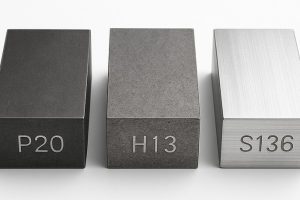
- Steel grade determines 15–25% of cost; H13 or S136 cost 3–5x more than P20 but deliver 5–10x the mold life for high-volume runs.
- Each complexity feature—side actions, lifters, hot runners—adds $500–$12,000 per feature to your tooling quote.
- Multi-cavity molds cut per-part cost but increase upfront tooling investment by 60–90% per added cavity.
- Chinese tooling delivers equivalent dimensional quality at 40–60% of Western prices when you qualify shops by ISO certification and export track record.
What Makes Up an Injection Mold Tooling Cost Quote?
An injection mold tooling cost quote breaks down into five measurable categories: steel material (15–25%), CNC and EDM Spritzgießen1 machining labor (40–50%), design and engineering (10–15%), assembly and bench fitting (10–15%), and tryout/validation (5–10%). These percentages hold across most mold sizes and complexities because machining hours scale with part geometry regardless of mold class. The key insight most buyers miss is that labor, not material, dominates the bill. A mold that requires 300 hours of CNC and EDM work at $30–60/hour will cost $9,000–$18,000 in machining alone before you add steel, design, or testing.
At ZetarMold, our quoting engineers break every project into these categories explicitly. We’ve found that transparency at this stage prevents scope disputes later—a customer who understands why their mold costs $15,000 is far less likely to request mid-project changes that add cost than one who received a single bottom-line number with no explanation.
If you’re new to the process, our injection mold overview covers the basics of mold construction and terminology. The SPI mold classification system provides a useful framework: Class 101 molds (over 1,000,000 cycles) require premium steel and precision finishing, while Class 104 molds (under 100,000 cycles) can use softer steels with less polishing. Your mold class should match your production plan—over-specifying wastes money, and under-specifying risks premature tool failure[1].

How Does Steel Grade Selection Drive 15–25% of Your Mold Cost?
Steel grade selection determines three cost components simultaneously: raw material price, machining time, and mold longevity. P202 pre-hardened steel (28–36 HRC) is the default for short-to-medium production runs under 500,000 parts. It machines easily, costs $4–8/kg, and delivers adequate life for most consumer product applications. H13 tool steel costs 3–4x more per kilogram but withstands 1,000,000+ cycles in glass-filled and high-temperature resins.
S136 stainless steel adds corrosion resistance for medical and food-contact molds, at 4–5x the P20 price point. The common mistake is selecting steel based on upfront cost alone. A P20 mold for a 1,000,000-part run of 30% glass-filled nylon will fail at 300,000–400,000 cycles, requiring cavity replacement that costs 40–60% of the original mold price. The correct steel for that application is H13 or a hardened grade like 8407. The $3,000–$5,000 premium on steel saves $8,000–$15,000 in repair and replacement cost over the production life.
With 45 injection molding machines from 90T to 1850T and 8 senior engineers averaging 10+ years of experience, we run DFM reviews that specify steel grade based on projected annual volume, resin abrasiveness, and required surface finish. This upfront analysis has reduced our customers’ tooling revision costs by an average of 60% compared to projects that skip this step. Our shop processes 100+ mold sets per month, so our steel purchasing volume also keeps material costs 10–15% below spot pricing for individual buyers.
Steel cost also varies with mold size. A small electronic housing mold might use 50 kg of steel ($200–$400 in P20), while a large automotive fascia mold could require 2,000+ kg ($8,000–$16,000). At larger mold sizes, steel becomes a larger percentage of total cost because material scales volumetrically while machining complexity does not always increase proportionally. For buyers evaluating quotes, ask your mold maker to specify the exact steel grade for cavities, cores, and mold base separately. Many shops quote P20 for the base and H13 for cavities—this hybrid approach balances cost and performance effectively[2].
Why Does Machining Labor Account for 40–50% of Tooling Cost?
Machining labor dominates injection mold tooling cost because mold making is fundamentally a precision metalworking process. A typical single-cavity mold requires 150–400 hours of combined CNC milling, EDM (electrical discharge machining), and surface finishing. At $30–60/hour for skilled machinists, that translates to $4,500–$24,000 in labor before any other cost is added. Multi-cavity molds and complex geometries push machining hours into the 600–1,200 range. CNC milling handles the bulk of material removal—roughing cavities, cutting parting lines, drilling cooling channels. EDM is used for features that CNC tools cannot reach: sharp internal corners, deep ribs, and complex undercut geometries.
Wire EDM cuts precision profiles through hardened steel with tolerances of ±0.005 mm. Surface finishing—polishing, texturing, plating—adds another 20–60 hours depending on the required surface class. A SPI A-1 mirror finish for optical lenses can require 40+ hours of hand polishing alone. The labor rate difference between regions is the single largest factor in tooling cost variation globally. CNC operators in China earn $8–15/hour, compared to $35–65/hour in the US and $25–55/hour in Western Europe. A 300-hour mold costs $2,400–$4,500 in machining labor in China versus $10,500–$19,500 in the US. The machines, software, and cutting tools are essentially the same globally—Haas, Makino, and GF Machining Solutions equipment appears in competent shops worldwide.
“Machining labor accounts for 40–50% of total tooling cost.”Wahr
CNC milling, EDM, and hand finishing represent the largest single cost component in any mold quote. Chinese shops offer 60–75% lower machining rates than Western facilities while operating equivalent equipment, creating the primary cost advantage in global tooling.
“More cavities always reduce per-part cost.”Falsch
Multi-cavity molds only make economic sense above 200,000–500,000 annual parts. Below that threshold, the additional upfront tooling investment outweighs machine time savings.

What Do Part Complexity Features Add to Your Tooling Quote?
Part complexity adds cost in discrete, estimable increments. Every undercut, thread, fine detail, and tight tolerance requirement translates into specific mold features that require additional machining, components, and assembly time. Here are the major complexity cost drivers with real dollar ranges: Side actions (external undercuts) cost $800–$2,500 each. These require sliding cam mechanisms that retract during mold opening. Each side action adds 20–40 hours of machining and fitting.
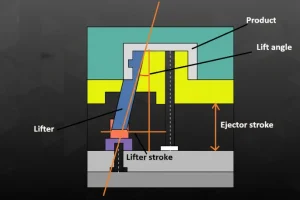
Internal lifters cost $400–$1,200 each. Lifters address internal undercuts using angled pins that pull inward during ejection. They are simpler than side actions but still add precision fitting work. Hot runner systems cost $1,500–$3,000 for a single-drop system; a multi-drop valve-gated system adds $6,000–$12,000. Hot runners eliminate cold runner waste but add temperature-controlled manifold assemblies, nozzles, and controllers[3].
Unscrewing mechanisms (threaded features) cost $2,000–$5,000 per thread axis. These use hydraulic or servo-driven rotation to unmold internal or external threads without collapsing cores. SPI A-1 mirror polish costs $1,500–$4,000 per cavity face. Optical-quality finishes require progressive hand polishing through diamond compounds. A straightforward single-cavity mold with no undercuts, P20 steel, and a standard polish might cost $5,000–$12,000. Add two side actions, a Heißkanal3, and a textured surface, and you’re at $15,000–$30,000.
The geometry didn’t change the steel or the machine—the complexity added labor hours and specialized components. The design-for-manufacturability (DFM4) review is where you control these costs. A skilled DFM engineer can often redesign undercuts into features that strip or collapse during ejection, eliminating side actions entirely. At our facility, DFM reviews catch an average of 3–5 cost-reducing design changes per project, and we encourage every customer to invest in this step before committing to tooling.
When Does a Multi-Cavity Mold Justify the Investment?
A multi-cavity mold makes economic sense when the per-part machine time savings exceed the additional tooling investment over your production run. The math is straightforward: each additional cavity adds 60–90% of the single-cavity tooling cost but doubles output per cycle. The breakeven point depends on three variables: annual volume, machine hourly rate, and cycle time. For volumes under 100,000 parts per year with a 30-second cycle, a single-cavity mold is almost always the lower-cost option. At 500,000+ annual parts, a 4-cavity mold virtually always wins on total cost of ownership. Between 100,000 and 500,000 parts, the answer depends on your specific machine rate and part geometry.
Here’s a practical example: a 20-gram polypropylene part running on a 150T machine at $25/hour. Single cavity, 25-second cycle, produces 144 parts/hour. A 4-cavity mold runs the same part in the same cycle time, producing 576 parts/hour. At 500,000 annual parts, the single-cavity option requires 3,472 machine hours ($86,800 in machine time) versus 868 hours ($21,700) for the 4-cavity mold.
If the 4-cavity mold costs $18,000 more than the single-cavity version, you recover the premium in machine time savings within the first year. The risk with multi-cavity molds is cavity imbalance—uneven fill between cavities causing dimensional variation. A competent mold maker addresses this through balanced runner design and flow analysis (Moldflow simulation), which adds $1,000–$3,000 to engineering cost but prevents production rejects.

How Much Can You Really Save with Chinese Tooling?
Chinese tooling shops deliver dimensionally equivalent molds at 40–60% of Western prices. The cost difference is almost entirely labor rate—CNC operators in China earn $8–15/hour versus $35–65/hour in the US and $25–55/hour in Europe. Equipment, CAD/CAM software, cutting tools, and raw steel costs are globalized and comparable across regions. A 300-hour mold costs $2,400–$4,500 in Chinese machining labor versus $10,500–$19,500 in American machining labor. Same machines, same software, different hourly rate.
The qualification criteria for Chinese toolmakers matter more than the price difference. ISO 9001 certification is the baseline—without it, you’re gambling on process consistency. ISO 13485 (medical) and IATF 16949 (automotive) indicate higher process discipline. English-language documentation capability matters because communication failures cause more project delays than technical failures. A shop with 30+ fluent English speakers on staff can resolve design questions in a single email thread rather than a week of back-and-forth through a translator.
Our Shanghai facility holds ISO 9001, ISO 13485, ISO 14001, and ISO 45001 certifications. With 30+ English-speaking staff and 20+ years of export experience since 2005, we serve North American and European OEMs with documentation, dimensional reports, and communication in native-level English. We process 400+ resin materials and deliver full PPAP documentation when required.
Exchange rate fluctuations of 5–10% can impact tooling costs quoted in USD but settled in RMB. Most Chinese mold makers quote in USD with a 30–90 day validity period to mitigate this risk. Lock your quote early if the RMB is trending against your currency. For guidance on evaluating and selecting Chinese tooling partners, see our injection molding supplier sourcing guide. Shipping and logistics add 3–7% to the landed cost of a Chinese-built mold. A 500 kg mold ships via air freight for $2,000–$4,000 (5–7 days) or sea freight for $400–$800 (25–35 days). Plan for sea freight unless your timeline is critical—the savings are substantial.

The initial tooling quote rarely represents your final cost. Hidden costs fall into three categories: design revisions, mold modifications, and maintenance. Design revisions (customer-requested changes after steel cutting) cost $500–$5,000 per change depending on severity. Weld repair and re-machining of a modified cavity can add 1–3 weeks to delivery. This is why DFM review before tooling starts is the highest-ROI step in any mold project. Mold modifications for production optimization—adding cooling circuits, adjusting gate locations, changing ejector pin positions—typically add 5–15% to the initial tooling cost. These are not failures of the original design; they are normal refinements that experienced molders expect during the first production run. Budget for them.
Maintenance costs run 2–5% of initial mold cost per year for medium-production molds. This includes annual inspection, component replacement (ejector pins, springs, wear plates), and repolishing of cavity surfaces. A $20,000 mold costs $400–$1,000 per year to maintain properly. Skipping maintenance accelerates wear and leads to dimensional drift that produces rejects—always more expensive than the maintenance itself. Sampling and validation costs are often quoted separately. First article inspection (FAI), dimensional reports, and material certifications add $500–$2,000 to the project. If your industry requires PPAP (automotive) or IQ/OQ/PQ (medical), validation documentation can run $2,000–$8,000. Clarify with your tooling supplier whether these costs are included or additional[4].

Frequently Asked Questions About Injection Mold Tooling Cost
Was sind die typischen Kosten für ein Spritzgusswerkzeug?
A standard single-cavity injection mold costs $5,000–$15,000 for simple geometries in P20 steel. Complex multi-cavity molds with hot runners and side actions range from $20,000–$80,000+. Large automotive or medical molds can exceed $100,000. The cost depends primarily on part complexity, cavity count, steel grade, and required surface finish.
Die Einholung von 3-5 Angeboten zeigt Preisunterschiede von 30-70 % zwischen Anbietern für identische Formenspezifikationen. Inländische Anbieter verlangen typischerweise 50–150 € pro Stunde für Konstruktionsleistungen, gegenüber 15–40 € pro Stunde bei Offshore-Anbietern, was erhebliche Kostendifferenzen schafft. Der Angebotsvergleich deckt versteckte Kosten auf wie Versand (500–3.000 €), Zollgebühren (6–25 %) und Änderungsgebühren (100–300 € pro Stunde). Regionale Spezialisten bieten oft 15–25 % bessere Preise für bestimmte Branchen oder Bauteiltypen. Die Qualitätsstandards variieren erheblich – manche Anbieter liefern Formen für 1 Million Zyklen, während andere Werkzeuge für 100.000 Zyklen zu ähnlichen Preisen anbieten. Die Qualität der Dokumentation, Garantiebedingungen (6–24 Monate) und die Unterstützung nach der Lieferung unterscheiden sich wesentlich, weshalb ein gründlicher Angebotsvergleich für einen optimalen Wert unerlässlich ist.
Mold life depends on steel grade, resin abrasiveness, and maintenance. P20 molds typically deliver 300,000–500,000 cycles. H13 hardened molds achieve 1,000,000+ cycles. Glass-filled and flame-retardant resins accelerate wear by 2–3x. Annual maintenance at 2–5% of mold cost extends life by 30–50% compared to unmaintained tools.
Kann ich die Kosten für Spritzgussformen senken, ohne die Qualität zu beeinträchtigen?
Yes, through three strategies: (1) invest in DFM review to eliminate unnecessary complexity before steel cutting, (2) match steel grade to actual production volume rather than over-specifying, and (3) source from qualified Chinese tooling shops that deliver equivalent precision at 40–60% lower labor costs. Each strategy can save 10–30% independently.
Was ist der Unterschied zwischen einem Prototypenwerkzeug und einem Serienwerkzeug?
Prototype molds (also called bridge tools) use aluminum or soft steel, simplified cooling, and manual ejection to produce 100–10,000 parts at 30–50% of production mold cost. They sacrifice longevity for speed and lower investment. Production molds use hardened steel, optimized cooling, and automated ejection for runs of 100,000+ parts with consistent dimensional quality.
Wie vergleiche ich Spritzgussangebote von verschiedenen Lieferanten?
Compare quotes line by line: steel grade for cavities and base, total machining hours, included surface finish, number of design revision rounds, sampling shots included, and warranty terms. Two quotes at $15,000 can represent very different value propositions—one may include T1 sampling and two revision rounds while the other charges extra for both.
Welche Zahlungsbedingungen sind typisch für Spritzgussformen?
Standard terms are 40–50% deposit with order, 30–40% at T1 sampling, and 10–20% upon final approval. Chinese tooling shops commonly offer 50/30/20 or 40/40/20 structures. Avoid suppliers requiring 100% upfront—milestone-based payments protect both parties and align incentives for on-time delivery.
Beeinflusst die Formgröße die Kosten stärker als die Komplexität?
Complexity affects cost more than size in most cases. A small mold with 4 side actions, a hot runner, and SPI A-1 polish will cost more than a large flat mold with no undercuts and a standard finish. Size drives steel and machine time cost linearly, while complexity drives labor hours exponentially due to precision fitting requirements.
“DFM review before steel cuts reduces total project cost.”Wahr
A 4-hour DFM session typically saves 2–3 weld repair rounds at $1,000–$5,000 each, plus 2–4 weeks of delay. Identifying issues before machining begins is the highest-ROI step in any new tool program.
“The lowest tooling quote always represents the best value.”Falsch
Low quotes often exclude essential services like DFM review, mold qualification reports, or post-delivery support. Request line-by-line breakdowns to compare steel grades, machining hours, and validation allowances—not just total price.
Get an Accurate Tooling Cost Estimate from ZetarMold
Understanding your injection mold tooling cost breakdown is the first step toward making informed sourcing decisions. At ZetarMold, we provide transparent, line-item quotes that show exactly where your money goes—steel grade, machining hours, complexity features, and validation costs. No surprises, no hidden fees.
With 20+ years of tooling experience, 8 senior engineers averaging 10+ years each, and ISO 9001/13485/14001/45001 certifications, we deliver production-grade molds that meet North American and European OEM standards. Our 30+ English-speaking staff ensures clear communication from DFM review through production sampling.
Request a Quote Send us your 3D CAD file and annual volume requirements. Our engineers will return a detailed cost breakdown within 48 hours.
-
SPI Mold Classification: The Society of the Plastics Industry (SPI) defines mold classes from 101 (highest, 1,000,000+ cycles) to 104 (lowest, under 100,000 cycles). Class determines steel grade, cooling requirements, and surface finish standards. ↩
-
Tool steel cost benchmarks: P20 pre-hardened steel trades at $4–8/kg globally. H13 hot-work tool steel trades at $12–25/kg. S136 stainless tool steel trades at $18–35/kg. Prices sourced from ASM International material specifications and global steel distributor pricing, 2024–2025. ↩
-
Hot runner cost data: Single-drop hot runner systems from manufacturers like Mastip, Yudo, and Synventive range from $1,500–$3,000. Multi-drop valve-gated systems range from $6,000–$12,000 depending on nozzle count and controller complexity. ↩
-
Maintenance cost benchmarks: Based on data from the American Mold Builders Association (AMBA), annual mold maintenance costs range from 2–5% of initial tooling cost for production molds running medium-volume applications. ↩




 EN
EN  ES
ES  FR
FR  DE
DE  PT
PT  AR
AR  RU
RU  JA
JA  KO
KO  IT
IT  NL
NL  TR
TR  PL
PL 