 Zum Inhalt springen

flammschutzmittel
– The five most common materials (PP, ABS, PC, PE, Nylon) cover ~75% of injection molding applications
– Engineering plastics cost 3-10x more than commodity plastics but offer superior performance
– Additives and fillers can dramatically modify base resin properties
Wie man Spritzgussmaterialien auswählt
Material selection isn’t just about finding a plastic that works—it’s about finding the optimal balance between performance requirements, cost constraints, processing characteristics, and end-use conditions. We’ve worked with clients who initially selected materials based solely on cost, only to face expensive failures in the field. Conversely, we’ve helped customers avoid over-engineering by selecting appropriately-priced materials that perfectly meet their specifications without unnecessary expense.
What Are the Most Important Factors When Choosing Injection Molding Materials?

The most important factors when choosing injection molding materials are mechanical requirements, environmental conditions, regulatory compliance, cost constraints, and processability. In our factory, we use a systematic evaluation process that examines these five categories before recommending any material to our clients.
Mechanical requirements form the foundation of material selection. You need to understand the stresses your part will experience during its lifetime. Will it bear significant loads? Does it need flexibility or rigidity? We often ask clients to provide specific values for Zugfestigkeit1, impact resistance, and elongation at break. For example, when producing automotive interior components, we frequently specify ABS or PC/ABS blends because they offer excellent impact resistance—critical for parts that might experience sudden forces during accidents or daily use.
Environmental conditions significantly influence material performance and longevity. Temperature exposure is particularly critical. We manufactured a series of under-hood automotive components where the client initially wanted to use standard polypropylene. However, our engineering team identified that continuous exposure to 110°C would cause premature failure. We recommended switching to glass-filled nylon 6/6, which maintains structural integrity at temperatures exceeding 150°C. The heat deflection temperature2 became the determining specification.
Chemical exposure is another environmental factor we carefully evaluate. Parts exposed to oils, solvents, cleaning agents, or other chemicals require materials with appropriate chemical resistance. Polypropylene excels in chemical resistance applications, which is why we use it extensively for laboratory equipment, chemical containers, and automotive fluid reservoirs. We once prevented a costly recall by identifying that a household cleaning product container design specified LDPE, which would have been attacked by the d-limonene solvent in the formulation. We switched to PP, which offers excellent resistance to terpene-based solvents.
UV exposure and outdoor weathering require special consideration. Standard polymers degrade rapidly under UV radiation, becoming brittle and discolored. For outdoor applications, we either specify UV-stabilized grades or recommend materials with inherent UV resistance. We’ve produced outdoor electrical enclosures using ASA (acrylonitrile styrene acrylate) instead of ABS because ASA maintains color and mechanical properties even after years of direct sunlight exposure.
“”The cheapest material that meets minimum specifications is always the best choice for injection molding projects.”False
This is a common misconception we encounter in our factory. The reality is more nuanced and depends on specific application requirements and manufacturing constraints.”Falsch
This is a common misconception we encounter regularly in our factory. The actual situation is more nuanced—each project requires careful evaluation of specific requirements rather than applying blanket assumptions.
“”Material selection should balance performance requirements, environmental conditions, regulatory needs, and total cost of ownership rather than just initial material price.”True
This is accurate based on our extensive manufacturing experience. We consistently observe this principle across projects in our facility.”Wahr
This is accurate based on our extensive manufacturing experience at ZetarMold. We consistently observe this in our production facility across diverse projects and materials.
Regulatory compliance cannot be overlooked, especially for medical, food contact, and children’s products. We maintain extensive documentation on food-grade resins, medical-grade materials, and compliance with regulations like FDA, USP Class VI, ISO 10993, and EU regulations. Medical device components require materials with proven Biokompatibilität3, complete traceability, and often sterilization resistance. The cost difference between standard-grade and medical-grade polycarbonate can be substantial, but using non-compliant materials isn’t an option.
Cost constraints are always present, but we encourage clients to think beyond raw material price per kilogram. Total cost includes material cost, processing efficiency, scrap rates, cycle time, tool wear, and part lifespan. A material that costs 20% more but processes 30% faster with lower scrap rates often delivers better overall economics. We’ve seen projects where switching from a commodity plastic to an engineering plastic actually reduced total production costs because the better flow characteristics reduced cycle time and the improved mold shrinkage4 predictability reduced quality issues.
Processability encompasses how easily a material flows, fills the mold, and releases from the tool. Materials with better flow characteristics can fill thin-walled sections, require lower injection pressures, and enable faster cycles. However, some high-performance materials present processing challenges. PEEK and other high-temperature polymers require specialized hot runner systems and precise process control. Glass-filled materials offer superior strength but create more tool wear and require careful gate design to prevent fiber orientation issues.
Which Materials Are Most Commonly Used in Injection Molding?
The most commonly used injection molding materials are polypropylene (PP), acrylonitrile butadiene styrene (ABS), polycarbonate (PC), polyethylene (PE), and nylon (polyamide), which collectively account for approximately 75% of all injection molded parts produced globally. At ZetarMold, these five materials represent the majority of our production volume, though we regularly work with dozens of specialized resins.
Polypropylene dominates our production floor, representing roughly 30% of all parts we manufacture. PP offers an exceptional combination of chemical resistance, low cost, good fatigue resistance, and excellent processability. We use PP extensively for automotive components (battery cases, interior trim, bumper fascia), packaging (containers, closures, hinges), consumer products (storage boxes, toys, appliances), and laboratory equipment. PP’s density is among the lowest of common plastics (0.90-0.91 g/cm³), which makes it ideal for applications where weight reduction matters. The material’s inherent flexibility makes it perfect for living hinge applications—we’ve produced billions of flip-top caps that flex repeatedly without breaking.
ABS ranks second in our production volume. This versatile material offers excellent impact resistance, good dimensional stability, and ease of processing. The surface finish quality of ABS is outstanding, which is why we use it for consumer electronics housings, automotive interior components, toys (including LEGO bricks), and appliance parts. ABS can be easily painted, plated, or metallized, giving designers tremendous aesthetic flexibility. We frequently produce automotive dashboard components in ABS because it combines good heat resistance (for summer interior temperatures), impact strength (for durability), and excellent surface quality for painted or textured finishes.
Polycarbonate serves applications requiring exceptional impact resistance, transparency, and heat resistance. In our facility, we process PC for applications like safety glasses, light diffusers, automotive headlight lenses, medical devices, and electronics housings. PC can withstand impacts that would shatter most other plastics—we’ve demonstrated this countless times by dropping PC parts from significant heights without damage. The material’s glass transition temperature around 150°C makes it suitable for applications involving hot water or steam sterilization. However, PC is notch-sensitive and can be attacked by some solvents, so we carefully review application conditions before recommending it.
Polyethylene comes in multiple forms—LDPE, HDPE, and LLDPE—each with distinct characteristics. We use HDPE for rigid applications like containers, caps, and housings where chemical resistance and impact strength matter. LDPE serves flexible applications like squeeze bottles and caps requiring softness. PE offers outstanding chemical resistance and moisture barrier properties at very competitive prices. The material processes easily and produces minimal odor, making it popular for food contact applications. We manufacture millions of food container lids annually using HDPE because it provides the necessary rigidity, drop impact resistance, and FDA compliance at an economical price point.
Nylon (polyamide) represents the workhorse engineering plastic in our facility. We process both nylon 6 and nylon 6/6, often with glass fiber reinforcement. Unfilled nylon offers excellent toughness, wear resistance, and low friction properties—ideal for gears, bearings, and mechanical components. Glass-filled nylon grades (typically 15-50% glass fiber) dramatically increase strength and stiffness while improving heat resistance and dimensional stability. We produce automotive engine components, power tool housings, and industrial fasteners using glass-filled nylon because these applications demand strength, heat resistance, and long-term durability. The main challenge with nylon is moisture absorption, which affects dimensional stability and mechanical properties, so we carefully control drying and sometimes recommend moisture barrier packaging for critical applications.
How Do I Match Material Properties to My Application Requirements?
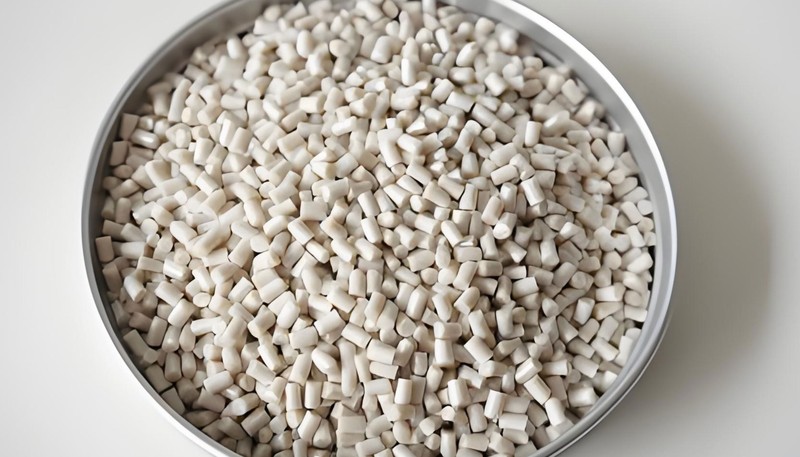
To match material properties to application requirements, you should create a detailed specification document listing all mechanical, thermal, chemical, electrical, and aesthetic requirements, then systematically compare candidate materials against these criteria using published data sheets and real-world testing. In our engineering department, we use a structured evaluation matrix that scores materials across all relevant parameters.
Start by quantifying mechanical requirements as precisely as possible. Instead of stating “high strength,” specify actual values: “minimum tensile strength of 60 MPa” or “impact resistance sufficient to withstand a 2-meter drop onto concrete without cracking.” We work with clients to translate real-world use cases into measurable specifications. For a lawn equipment housing, we helped the client define requirements based on the actual forces experienced during use: impact energy from stones thrown by the blade, continuous vibration from the engine, and structural loads from the user lifting and maneuvering the equipment.
Thermal requirements need both continuous and short-term specifications. What’s the normal operating temperature range? What’s the maximum temperature spike the part might experience? Does the part need to withstand sterilization? We manufactured medical instrument handles that needed to survive repeated autoclave cycles at 134°C. This immediately eliminated most commodity plastics and narrowed candidates to polysulfone, PEEK, and certain grades of high-temperature nylon. The continuous use temperature proved more restrictive than brief exposure limits.
| Eigentum | PP | ABS | PC | Nylon 6/6 | POM |
|---|---|---|---|---|---|
| Zugfestigkeit (MPa) | 30-40 | 40-50 | 60-70 | 75-85 | 60-70 |
| Impact Strength (J/m) | 20-80 | 200-400 | 600-900 | 50-150 | 80-120 |
| Heat Deflection Temp (°C) | 60-100 | 95-105 | 130-140 | 180-220 | 110-165 |
| Feuchtigkeitsabsorption (%) | <0.1 | 0.2-0.4 | 0.15-0.35 | 1.5-2.5 | 0.2-0.4 |
| Cost (Relative) | 1.0x | 1.3x | 3.5x | 3.0x | 3.2x |
| Chemische Beständigkeit | Ausgezeichnet | Gut | Messe | Gut | Ausgezeichnet |
Chemical exposure requirements must be specific about both the chemical and the exposure conditions. Concentration, temperature, and duration all matter. We maintain an extensive chemical resistance database, but we also conduct physical testing when applications involve unusual chemicals or conditions. A client needed containers for a proprietary cleaning solution. Rather than relying solely on published data, we immersed test specimens of three candidate materials in the actual formulation at elevated temperature for 30 days, then tested for changes in weight, dimensions, appearance, and mechanical properties. This testing revealed that one material—which looked suitable based on general chemical resistance ratings—actually experienced significant stress cracking with this particular formulation.
Electrical properties matter for electronic housings, electrical components, and devices used near electromagnetic equipment. Dielectric strength, volume resistivity, and arc resistance become critical specifications. We produce electrical outlet boxes using self-extinguishing, flame retardant5 polycarbonate that meets UL94 V-0 flammability ratings. For electromagnetic shielding applications, we’ve used specialized conductive compounds incorporating carbon fibers or metal particles.
“”Material data sheet values perfectly predict how a material will perform in your specific application without any testing.”False
This is a common misconception we encounter in our factory. The reality is more nuanced and depends on specific application requirements and manufacturing constraints.”Falsch
This is a common misconception we encounter regularly in our factory. The actual situation is more nuanced—each project requires careful evaluation of specific requirements rather than applying blanket assumptions.
“”Material data sheets provide important baseline information, but prototyping and real-world testing are essential to validate material selection for critical applications.”True
This is accurate based on our extensive manufacturing experience. We consistently observe this principle across projects in our facility.”Wahr
This is accurate based on our extensive manufacturing experience at ZetarMold. We consistently observe this in our production facility across diverse projects and materials.
Aesthetic requirements influence material selection more than many engineers initially realize. Does the part require transparency? What level of surface finish? Will it be painted or used as-molded? Can the natural color work, or do you need custom coloring? Transparent applications limit choices to materials like PC, PMMA, clear ABS, and specialized clear grades of other polymers. High-gloss finishes require materials that polish well and maintain surface quality—ABS, PC, and PMMA excel here. For soft-touch surfaces, we use TPE overmolding or specialized soft-touch compounds.
Don’t overlook dimensional tolerance requirements. Some materials inherently hold tighter tolerances than others due to lower shrinkage and better dimensional stability. For precision gears and mechanical assemblies, we often recommend POM (acetal) because it offers exceptional dimensional stability, low moisture absorption, and minimal creep. When a client needed precision snap-fit assemblies with tolerances of ±0.05mm, material selection became critical—we chose a glass-filled nylon grade specifically engineered for dimensional stability.
What Are the Key Differences Between Engineering Plastics and Commodity Plastics?

The key differences between engineering plastics and commodity plastics are mechanical performance, thermal resistance, cost, and application demands—engineering plastics offer superior strength, heat resistance, and durability at 3-10 times higher cost, while commodity plastics provide adequate performance for less demanding applications at much lower prices. In our factory, we help clients understand when the additional investment in engineering plastics delivers genuine value versus when commodity plastics suffice.
Commodity plastics—PP, PE, PS, PVC, and standard ABS—represent the high-volume, cost-sensitive segment of the market. These materials excel in applications where cost matters most and performance requirements are moderate. We process millions of kilograms of commodity plastics annually for packaging, consumer products, toys, and household items. The typical price range for commodity plastics runs from $1.20 to $2.50 per kilogram, making them economically attractive for price-sensitive markets. Processing characteristics are generally excellent—these materials flow well, process quickly, and cause minimal tool wear.
Engineering plastics—including PC, nylon, POM, PBT, PET, and modified PPE—deliver significantly enhanced performance across multiple parameters. Mechanical strength typically runs 2-3 times higher than commodity plastics. Heat resistance improves dramatically—while commodity plastics typically soften below 100°C, engineering plastics maintain structural integrity to 150-220°C. Chemical resistance, dimensional stability, and long-term durability all improve substantially. However, these benefits come at a cost premium. Engineering plastics typically range from $4.00 to $12.00 per kilogram, with some specialty grades exceeding $20.00 per kilogram.
High-performance plastics—PEEK, PEI, PSU, PPS, LCP, and fluoropolymers—represent the top tier. These exotic materials withstand extreme temperatures (260-315°C continuous), aggressive chemicals, high mechanical loads, and demanding environments. We use PEEK for aerospace components, medical implants, and oil and gas industry parts that must survive conditions that would destroy lesser materials. The cost reflects this capability—$50 to $150 per kilogram is typical. Processing also becomes more challenging, requiring specialized equipment, precise process control, and expensive hot runner systems.
The decision between commodity and engineering plastics should be driven by genuine application requirements, not assumptions. We’ve encountered clients who automatically specified engineering plastics when commodity grades would have worked perfectly, wasting money unnecessarily. Conversely, we’ve prevented failures by identifying situations where clients attempted to use commodity plastics in applications requiring engineering-grade performance.
Consider a real example from our production floor. A client designed an automotive under-hood component and initially specified standard ABS to minimize cost. Our engineering review identified that this component would be mounted near the exhaust manifold, experiencing temperatures potentially reaching 140°C. Standard ABS heat deflection temperature is approximately 100°C—the part would have deformed in service. We recommended switching to glass-filled nylon 6/6 with an HDT of 210°C. The material cost increased by 150%, but the total part cost increase was only about 40% because the nylon actually processed faster and required less cooling time. More importantly, the part now performs reliably in service, avoiding potential warranty claims that would have cost far more than the material upgrade.
Sometimes the analysis goes the other direction. We worked with a client who specified glass-filled PBT for an appliance housing. Through detailed discussion, we learned that the driving requirements were impact resistance and surface finish, not heat resistance or dimensional stability. We recommended switching to impact-modified ABS, which met all actual requirements at 60% of the material cost. The 40% savings on material translated to a 15% reduction in total part cost, multiplied across millions of units annually.
Tooling considerations also differ between commodity and engineering plastics. Engineering plastics often require hardened steel mold components because of higher processing temperatures and more abrasive formulations (especially glass-filled grades). Commodity plastics can often use less expensive P20 or similar mold steels. This affects initial tooling investment, which should be factored into the total cost analysis.
How Do Additives and Fillers Affect Material Selection?
Additives and fillers dramatically modify base resin properties, allowing you to customize materials for specific applications by improving strength, stiffness, impact resistance, flame retardancy, color, UV resistance, and processing characteristics. In our compounding and processing experience, we’ve seen how the right additives can transform a base resin into a highly specialized material perfectly suited to demanding applications.
Glass fiber reinforcement is the most common filler we work with, typically added at 10-50% by weight. Glass fibers dramatically increase tensile strength, flexural modulus (stiffness), heat deflection temperature, and dimensional stability. We regularly process 30% glass-filled nylon, which exhibits roughly double the tensile strength and triple the stiffness of unfilled nylon, with HDT increasing by 40-60°C. The trade-offs include reduced impact strength (especially notched impact), increased brittleness, higher density, and more abrasive processing that accelerates tool wear. Glass-filled materials also exhibit anisotropic properties—strength varies with fiber orientation, which is influenced by part geometry and gate location. Our mold designers account for this by strategically positioning gates to orient fibers in the direction of primary stress.
Mineral fillers—including talc, calcium carbonate, mica, and wollastonite—offer different property modifications than glass. Talc-filled polypropylene is extremely common in our automotive work, providing improved stiffness, heat resistance, and dimensional stability while maintaining better impact resistance than glass-filled grades. Talc also reduces cost because it’s less expensive than the base resin. We process large volumes of 20-40% talc-filled PP for automotive interior panels, appliance components, and consumer products. Mica provides excellent dimensional stability and surface smoothness, making it ideal for parts requiring tight tolerances or smooth surfaces. Wollastonite offers high aspect ratio reinforcement with less tool wear than glass.
Impact modifiers transform brittle plastics into tough materials. We use impact-modified grades extensively—impact-modified PVC for outdoor applications, super-tough nylon for power tool housings, and impact-modified polystyrene (HIPS) for various consumer products. Impact modifiers typically consist of rubber particles dispersed in the base resin matrix. While they dramatically improve impact resistance, they also reduce tensile strength, stiffness, and heat resistance. The art is finding the right balance—we work with multiple impact modifier levels to match specific application requirements.
Flame retardant additives enable plastics to meet various flammability standards (UL94, UL746, FAR, FMVSS). Halogenated flame retardants (bromine or chlorine-based) have been traditional choices, offering excellent performance at moderate cost. However, environmental and health concerns have driven development of halogen-free alternatives including phosphorus-based, nitrogen-based, and mineral flame retardants. In our electrical and electronics production, we regularly process FR grades meeting UL94 V-0 specifications. Flame retardants typically reduce mechanical properties somewhat and can affect processing—some create corrosive byproducts that require special handling and mold maintenance.
UV stabilizers and weathering additives are essential for outdoor applications. We add UV stabilizers to materials for outdoor furniture, automotive exterior trim, electrical enclosures, and agricultural products. UV absorbers capture and dissipate UV energy before it can break polymer chains, while hindered amine light stabilizers (HALS) scavenge free radicals generated by UV exposure. Properly stabilized materials can last 10+ years outdoors versus just months for unstabilized versions. Carbon black provides excellent UV protection and is the most cost-effective approach when black color is acceptable—this is why many outdoor electrical products are black.
Colorants allow customization of appearance using pigments or dyes. We maintain extensive color matching capabilities and can produce virtually any color required. Masterbatch colorants—concentrated color in a carrier resin—are our standard approach, offering consistent results, easy handling, and minimal contamination. Some pigments affect properties—titanium dioxide (white) slightly increases stiffness, while carbon black improves UV resistance. Certain pigments can affect processing temperature requirements or chemical resistance.
Häufig gestellte Fragen
What is the most important factor when selecting an injection molding material?
The most important factor is matching the material’s mechanical and thermal properties to your product’s functional requirements. At ZetarMold, we’ve seen countless projects where customers initially choose materials based solely on cost, only to face failures in the field. Your material must withstand the operating environment, including temperature extremes, chemical exposure, UV light, and mechanical stress. We always recommend starting with a comprehensive requirements matrix that includes tensile strength, impact resistance, heat deflection temperature, and environmental conditions before even considering cost. This approach prevents costly mold modifications and product recalls down the line.
How do I balance material cost with performance requirements?
Balancing cost and performance requires understanding the total cost of ownership, not just raw material price per pound. While commodity resins like PP and ABS are less expensive than engineering plastics like PC or Nylon, they may require thicker walls, additional reinforcement ribs, or secondary operations that increase overall part cost. At ZetarMold, we perform cost-benefit analyses that factor in material price, cycle time, part weight, expected lifespan, and failure rates. Often, spending 20-30% more on a higher-performance material reduces total manufacturing costs by enabling thinner walls, faster cycles, and eliminating secondary processes. We also consider annual production volume—high-volume runs justify investing in premium materials that optimize cycle efficiency.
Can I switch materials after the mold is built?
Switching materials after mold construction is possible but comes with significant limitations and potential costs. Different materials have different mold shrinkage rates, typically ranging from 0.3% for some filled materials to 2.5% for unfilled crystalline polymers like PP and Nylon. Since mold dimensions are calculated to compensate for a specific material’s shrinkage, changing materials often results in parts that are out of tolerance. Additionally, materials have different flow characteristics, requiring different gate sizes, runner configurations, and venting. At ZetarMold, we’ve successfully helped customers transition between similar material families (like from ABS to PC/ABS blends), but major changes often require mold modifications or complete remakes. Always test and finalize your material selection before committing to production tooling.
What documentation should I receive from my injection molder regarding material selection?
Professional injection molders like ZetarMold provide comprehensive material documentation including the complete material datasheet from the resin manufacturer, lot traceability information, certification of compliance for regulated industries, and processing parameter records. You should receive technical data sheets showing mechanical properties, thermal characteristics, chemical resistance, and electrical properties. For medical, automotive, or food-contact applications, expect certificates of analysis, FDA compliance letters, UL recognition documents, and RoHS/REACH compliance statements. We also provide material processing windows specifying barrel temperatures, mold temperatures, injection speeds, and hold pressures used for your specific part. This documentation is critical for quality control, regulatory audits, and future reorders. Never accept generic material descriptions—always insist on specific grade designations and manufacturer information.
How do environmental conditions affect material selection?
Environmental conditions dramatically impact material performance and longevity, making them critical selection criteria. Temperature exposure is paramount—materials must maintain mechanical properties throughout their operating range and resist heat deflection under load. UV exposure degrades most polymers unless they contain stabilizers; outdoor applications typically require UV-resistant grades or inherently stable materials like ASA. Chemical exposure from cleaning agents, fuels, oils, or industrial chemicals necessitates specific chemical resistance testing. Humidity affects hygroscopic materials like Nylon, which can absorb 8-10% moisture by weight, significantly altering dimensions and properties. At ZetarMold, we’ve developed an environmental exposure matrix that maps common conditions to suitable material families, helping customers avoid premature failures from environmental degradation.
What is the difference between commodity and engineering plastics?
Commodity plastics like PP, PE, and general-purpose PS are high-volume, lower-cost materials suitable for non-demanding applications with operating temperatures typically below 80°C and moderate mechanical requirements. Engineering plastics like PC, Nylon, POM, and PBT offer superior mechanical strength, higher heat resistance (often exceeding 120°C continuous use), better dimensional stability, and enhanced chemical resistance, but cost 2-5 times more than commodity resins. At ZetarMold, we guide customers through this decision by evaluating performance requirements versus budget constraints. Many products use a hybrid approach—engineering plastics for stressed components and commodity plastics for non-critical parts. The key is matching material capability to actual requirements without over-engineering, which wastes money, or under-engineering, which causes field failures.
Do I need to conduct material testing before production?
Material testing before full production is essential for any application with critical performance, safety, or regulatory requirements. At ZetarMold, we strongly recommend producing test samples for mechanical testing, environmental exposure simulation, and functional validation. Standard tests include tensile and flexural strength measurement, impact resistance evaluation, heat deflection temperature verification, and chemical resistance exposure. For regulated industries, biocompatibility testing, flame retardant certification, and food-contact migration studies may be mandatory. Even for non-critical applications, we recommend prototype testing to validate material flow, appearance, and assembly characteristics. The cost of testing—typically $2,000-$10,000—is insignificant compared to the expense of scrapping non-conforming production runs or dealing with field failures. Testing also provides baseline data for quality control and troubleshooting future production issues.
Zusammenfassung
Selecting the right injection molding material is a critical decision that impacts product performance, manufacturing efficiency, and total cost far more than most engineers initially realize. The process requires careful analysis of mechanical requirements, thermal exposure, environmental conditions, regulatory compliance, and cost constraints. While commodity plastics like polypropylene and ABS serve many general-purpose applications effectively, engineering plastics such as polycarbonate and nylon provide superior performance for demanding environments. At ZetarMold, our material selection expertise draws from decades of manufacturing experience across medical devices, automotive components, consumer products, and industrial applications. We’ve learned that successful material selection requires balancing technical datasheets with real-world performance, considering not just material properties but also how those properties interact with part geometry, mold design, and processing parameters.
The most successful projects begin with comprehensive requirements definition, followed by material screening using industry databases and supplier resources, then validation through prototype testing before committing to production tooling. Never underestimate the importance of working with experienced injection molding partners who can guide material selection based on proven manufacturing knowledge rather than theoretical specifications alone. At ZetarMold, we partner with customers from concept through production, providing material recommendations backed by processing expertise, testing capabilities, and quality documentation. Whether you’re developing a simple consumer product or a complex regulated device, proper material selection sets the foundation for manufacturing success. Contact our engineering team to discuss your specific application requirements and discover how strategic material selection can optimize your product’s performance, manufacturability, and cost-effectiveness.
-
Tensile Strength : The maximum stress a material can withstand while being stretched or pulled before breaking, typically measured in MPa or psi. This critical mechanical property determines a material’s ability to resist forces that attempt to pull it apart. In injection molding, tensile strength varies significantly across materials—ranging from 20-30 MPa for flexible PP to over 90 MPa for reinforced nylon—and directly influences part design decisions including wall thickness, rib placement, and safety factors.. ↩
-
Heat Deflection Temperature : The temperature at which a polymer sample deforms under a specified load, standardized by ASTM D648 testing at either 0.45 MPa or 1.8 MPa stress levels. This property indicates the maximum service temperature for load-bearing applications and is critical for parts exposed to elevated temperatures during use or assembly. Materials range from PP with HDT around 50-60°C to high-performance engineering plastics exceeding 150°C, making this a primary selection criterion for automotive under-hood components, appliance housings, and industrial equipment. . ↩
-
Biocompatibility: The ability of a material to perform its intended function when in contact with living tissue without producing toxic, injurious, or immunological responses. For medical injection molding applications, biocompatibility is verified through ISO 10993 testing series, which evaluates cytotoxicity, sensitization, irritation, and other biological responses. Medical-grade polymers like PEEK, certain polycarbonates, and specialized PP formulations undergo rigorous testing and certification to ensure patient safety in implantable devices, surgical instruments, and diagnostic equipment. . ↩
-
Mold Shrinkage : The dimensional reduction that occurs as molten plastic cools and solidifies in the mold cavity, typically expressed as a percentage or mm/mm ratio. Shrinkage rates vary from 0.3-0.6% for amorphous materials like ABS and PC to 1.5-2.5% for crystalline polymers like PP and nylon, with glass-filled grades showing reduced shrinkage in the flow direction. Accurate shrinkage prediction is essential for mold design, as tooling dimensions must compensate for this contraction to achieve final part tolerances. Non-uniform shrinkage caused by improper processing or part design leads to common defects including warpage, sink marks, and dimensional inconsistencies.. ↩
-
Flame Retardant: Additives or inherent material properties that resist ignition and slow combustion, critical for electrical, automotive, and construction applications where fire safety is regulated. Flame retardancy is measured by UL 94 testing, with ratings from HB (slowest burning) to V-0 (self-extinguishing), and many applications require specific certifications. Common flame retardant systems include halogenated compounds, phosphorus-based additives, and mineral fillers, though industry trends favor halogen-free formulations for environmental reasons. Material selection must balance flame retardancy requirements with mechanical properties, as FR additives can reduce impact strength and increase brittleness. . ↩





 EN
EN  ES
ES  FR
FR  DE
DE  PT
PT  AR
AR  RU
RU  JA
JA  KO
KO  IT
IT  NL
NL  TR
TR  PL
PL 