 Skip to content

PA6, PA66, PA12, and PA1010 are the four most commonly injection molding nylon grades, each with distinct moisture absorption, temperature resistance, and mechanical properties that make them suited to different applications. Choosing the wrong grade leads to dimensional instability, brittle failure, or unnecessary cost. This guide compares all four grades side by side so you can specify the right material for your injection molding project.
For material background, compare external references for polyamide, Nylon 6, and Nylon 66 with your supplier’s drying data sheet. These references are useful for vocabulary, but the final processing window should still be confirmed by resin grade, moisture test, mold temperature, and trial-shot results.
Process planning should also connect nylon selection with machine and mold behavior. Review screw recovery and residence time with screw recovery and residence time setup, compare cooling impact through production time analysis, and check dimensional risk through mold shrinkage analysis before production approval.
- PA66 offers the highest stiffness and temperature resistance among the four grades, making it the default for automotive and electrical applications
- PA6 absorbs more moisture than PA66 but costs 15-25% less and processes at lower temperatures, ideal for consumer and industrial parts
- PA12 has the lowest moisture absorption (0.25%) enabling tight-tolerance dimensional stability in humid environments
- PA1010 delivers the best chemical resistance and flexibility, derived from renewable castor oil feedstock
- All four grades require thorough drying (80-120°C, 4-8 hours) before molding to prevent splay and hydrolytic degradation

What Are PA6, PA66, PA12, and PA1010 Nylon Grades?
PA6, PA66, PA12, and PA1010 are four semi-crystalline polyamide grades engineered for different thermal, mechanical, and moisture conditions. For vendor comparison and procurement planning, our injection molding supplier sourcing guide covers RFQ prep, qualification, and commercial risk checks.
Nylon grades are semi-crystalline engineering thermoplastics. Polyamide (nylon) is characterized by strong hydrogen bonding between amide groups in adjacent polymer chains. This intermolecular bonding gives nylon its trademark combination of high strength, toughness, and abrasion resistance. The number in each grade name indicates the carbon atom count in the monomer, which directly affects crystallinity, melting point, and moisture absorption behavior.
Understanding Polyamide Thermoplastic Families
PA6 (polyamide 6) is produced by ring-opening polymerization of caprolactam, a six-carbon monomer. It melts at approximately 220°C and offers good mechanical properties at moderate cost. PA6 crystallizes at a slower rate than PA66, which gives slightly longer cycle times but reduces warpage risk in complex geometries. PA6 is the most widely molded nylon grade globally by volume, used in everything from cable ties to automotive intake manifolds.
PA66: High-Stiffness Engineering Nylon
PA66 (polyamide 6,6) is produced by polycondensation of hexamethylenediamine and adipic acid, both six-carbon monomers. The symmetrical molecular structure produces higher crystallinity and a higher melting point of approximately 260°C. PA66 is approximately 15 to 20 percent stiffer than PA6 at room temperature and retains mechanical properties at elevated temperatures better than any unfilled nylon grade. This makes PA66 the standard choice for under-hood automotive components and electrical connectors operating above 120°C.
PA12: Low-Moisture Precision Nylon
PA12 (polyamide 12) is produced from laurolactam, a twelve-carbon monomer. The longer aliphatic chain reduces the density of amide groups along the polymer backbone, which dramatically lowers moisture absorption to approximately 0.25 percent compared to 2.5 to 3.0 percent for PA6. PA12 melts at approximately 178°C, processes easily, and delivers excellent dimensional stability in humid environments. It commands a significant price premium over PA6 and PA66, typically 3 to 5 times higher per kilogram.
PA1010: Bio-Based Flexible Nylon
PA1010 (polyamide 10,10) is produced from sebacic acid and decamethylenediamine, both derived from castor oil. This renewable feedstock origin makes PA1010 attractive for applications requiring bio-based content certification. PA1010 combines low moisture absorption (approximately 1.0 to 1.5 percent) with good chemical resistance and flexibility, positioning it between PA12 and PA6 in both performance and cost. It is gaining adoption in automotive fuel lines and hydraulic tubing where renewable content is specified.
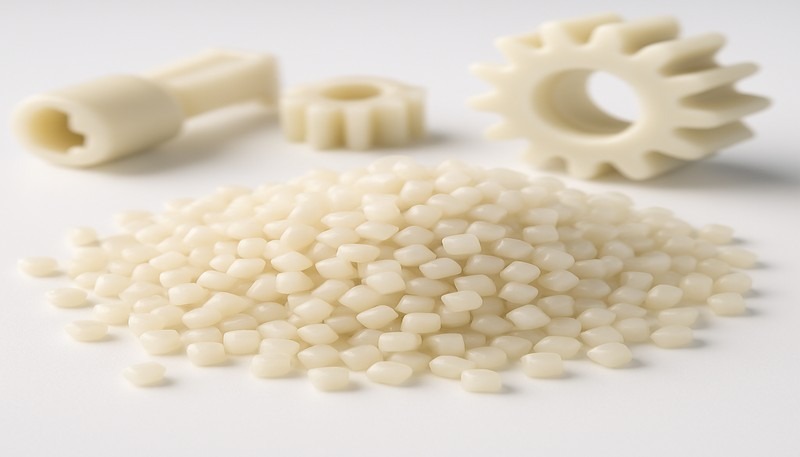
What Are the Key Property Differences Between PA6, PA66, PA12, and PA1010?
PA66 is stiffest, PA12 absorbs the least moisture, PA6 is lowest cost, and PA1010 offers the best chemical resistance. These differences affect part performance, tolerance stability, drying time, and molding temperature. Selecting the wrong grade can create avoidable warpage, brittleness, or moisture-related dimensional drift.
| Property | PA6 | PA66 | PA12 | PA1010 |
|---|---|---|---|---|
| Melting Point | 220°C | 260°C | 178°C | 200°C |
| Moisture Absorption (23°C/50%RH) | 2.8% | 2.5% | 0.25% | 1.2% |
| Tensile Strength (dry) | 80 MPa | 85 MPa | 50 MPa | 55 MPa |
| Flexural Modulus (dry) | 2.8 GPa | 3.0 GPa | 1.5 GPa | 1.8 GPa |
| Izod Impact (dry) | 45 J/m | 40 J/m | NB* | NB* |
| Cost (relative to PA6) | 1.0x | 1.15x | 3.5x | 2.5x |
Moisture absorption is the single most important differentiator for processing and application design. PA6 and PA66 absorb 2.5 to 3.0 percent moisture at equilibrium in a 50 percent relative humidity environment, which causes dimensional swelling of 0.5 to 1.0 percent and reduces stiffness by 50 to 60 percent compared to the dry-as-molded state. PA12 absorbs only 0.25 percent, making its dimensional change negligible. Proper injection mold design accounts for these material-specific shrinkage differences. If your application requires tight tolerances in a humid environment, PA12 is the clear choice regardless of its higher raw material cost.
The notched Izod impact values marked NB (no break) for PA12 and PA1010 indicate that these grades are inherently tough and do not exhibit brittle fracture in standard impact tests. This toughness, combined with low moisture absorption, makes PA12 and PA1010 the preferred choices for fuel lines, hydraulic tubing, and pneumatic fittings where impact resistance must be maintained across temperature and humidity ranges.
What Are the Critical Processing Parameters for Each Nylon Grade?
Nylon processing is sensitive to moisture and melt temperature. nylon injection molding1 parameters are more demanding than commodity plastics like PP or PE because of the material’s high melting temperature, narrow processing window, and sensitivity to moisture. Getting drying and melt temperature wrong is the most common cause of defective nylon parts in production.
“Drying nylon to below 0.2 percent moisture content before molding is the single most impactful processing decision — inadequate drying causes splay, reduced molecular weight through hydrolysis2, and dimensional instability that no parameter adjustment downstream can fix”True
Nylon is hygroscopic and absorbs moisture rapidly from ambient air. Processing wet nylon causes the water to react with amide bonds in the polymer chain (hydrolysis), permanently reducing molecular weight and mechanical properties. This damage is irreversible and undetectable by appearance alone.
“PA6 and PA66 can be processed at the same melt temperature because they are both polyamide materials with similar molecular structures”False
PA6 melts at approximately 220°C and processes at 240-270°C, while PA66 melts at 260°C and requires 270-300°C melt temperature. Using PA6 temperatures for PA66 produces incomplete melting and high viscosity. Using PA66 temperatures for PA6 causes thermal degradation.
Recommended Drying Times and Temperatures by Grade
| Parameter | PA6 | PA66 | PA12 | PA1010 |
|---|---|---|---|---|
| Drying Temperature | 80-100°C | 80-100°C | 70-80°C | 80-90°C |
| Drying Time | 4-8 hours | 4-8 hours | 2-4 hours | 3-6 hours |
| Target Moisture | <0.2% | <0.2% | <0.1% | <0.15% |
| Melt Temperature | 240-270°C | 270-300°C | 190-230°C | 210-250°C |
| Mold Temperature | 60-90°C | 70-100°C | 30-50°C | 40-70°C |
| Injection Pressure | 80-130 MPa | 90-140 MPa | 70-110 MPa | 75-120 MPa |
Drying requirements vary significantly across the four grades. PA6 and PA66 require 4 to 8 hours at 80 to 100°C in a dehumidifying hopper dryer to reach below 0.2 percent moisture. PA12 needs only 2 to 4 hours at 70 to 80°C due to its low moisture absorption. PA1010 falls between at 3 to 6 hours at 80 to 90°C. Verify moisture content with a Karl Fischer titration test before molding. All four grades should be dried immediately before molding — leaving dried pellets exposed to ambient air for more than 30 minutes negates the drying effort.
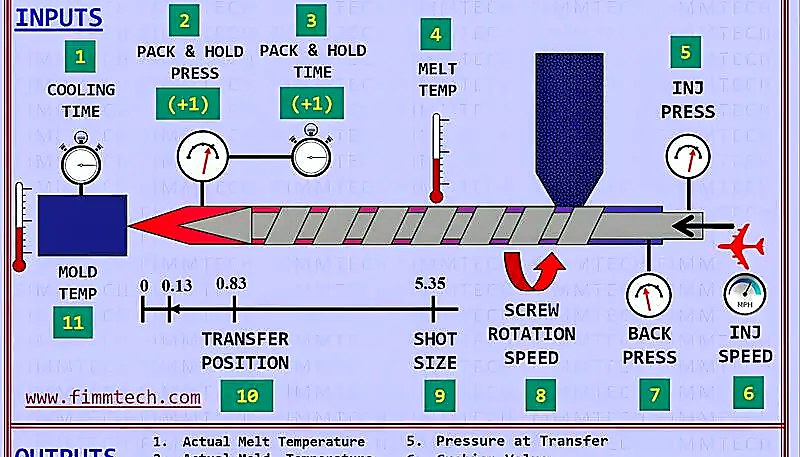
How Does Mold Design Affect Nylon Part Quality?
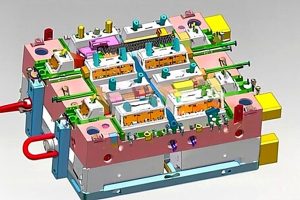
Mold design is the primary driver of nylon part quality through gate shear, cooling uniformity, and vent effectiveness. Proper injection mold design3 prevents flash, weld lines, and dimensional instability that nylon hygroscopic nature amplifies.
Gate design for nylon parts should prioritize flow balance and minimize shear heating. Edge gates and submarine gates are common for PA6 and PA66 parts, while hot-runner systems with valve gates reduce material waste for high-volume production. Gate size should be 50 to 80 percent of the nominal wall thickness at the gate location to minimize jetting and ensure progressive cavity fill without freeze-off before packing is complete.
Cooling channel design directly affects cycle time and dimensional consistency for nylon parts. Because PA6 and PA66 have relatively high mold temperature requirements (60 to 100°C), conformal cooling channels provide the most uniform thermal profile and reduce warpage in complex geometries. In practice, we have found that maintaining mold temperature variation below 5°C across the cavity surface reduces dimensional scatter by 30 to 40 percent on tight-tolerance PA66 parts. This is especially critical for glass-filled grades where fiber orientation amplifies differential shrinkage.
In our Shanghai factory, we run 47 injection molding machines from 90T to 1850T clamping force, giving us the range to handle everything from micro-nylon gears on small machines to large automotive structural brackets on high-tonnage presses. Our in-house mold manufacturing facility allows us to iterate on gate placement and cooling design quickly when optimizing new nylon part programs.
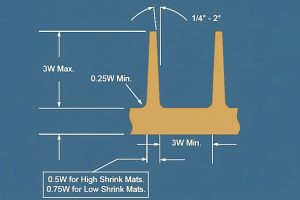
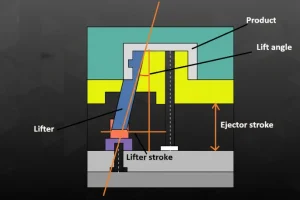
Ejection system design requires extra care with nylon because the material’s high friction coefficient and shrinkage around cores create significant ejection forces. Adequate draft angle (minimum 1 degree for unfilled nylon, 1.5 to 2 degrees for glass-filled grades) and sufficient ejector pin area prevent push-pin marks and part distortion during ejection. Stripper plates are preferred for cylindrical nylon parts where concentricity matters.
What Are Common Nylon Molding Defects and How Do You Prevent Them?
The most common nylon molding defects are moisture damage (splay, hydrolysis), temperature errors (short shots, flash), and dimensional warpage. Identifying which category your defect belongs to is the fastest path to a fix.
“PA12 costs 3 to 5 times more than PA6 per kilogram, making it uneconomical for applications where its low moisture absorption is not required”True
PA12 raw material typically costs $8-12/kg versus $2-3/kg for PA6. This premium is only justified when the application specifically demands dimensional stability in humid environments, fuel resistance, or low-temperature flexibility that PA6 cannot provide.
“Adding 30% glass fiber to PA6 eliminates moisture absorption entirely, so drying is unnecessary before molding glass-filled grades”False
Glass fiber reinforcement reduces but does not eliminate moisture absorption. Glass-filled PA6 still absorbs approximately 1.5% moisture at equilibrium and requires the same drying protocol as unfilled grades. Molding wet glass-filled nylon causes the same splay and hydrolysis damage, with the added risk of fiber-matrix interface degradation.
Splay and silver streaks are the most visible moisture-related defect. These appear as fan-shaped surface marks on the part where water vapor expands rapidly as the melt enters the cavity. The fix is always more drying time or higher drying temperature — never a parameter adjustment at the machine. Check hopper dryer dew point (target below -30°C) and verify actual material moisture content with a Karl Fischer test before adjusting anything else.
Warpage in nylon parts is driven by differential shrinkage between flow and cross-flow directions, amplified by fiber orientation in glass-filled grades. The most effective countermeasure is uniform mold temperature across all cavity surfaces, followed by balanced gate placement that equalizes flow lengths. Post-molding fixtures that hold parts in the desired geometry during the first 24 hours of cooling can reduce warp by 40 to 60 percent for flat parts with varying wall thickness.
How Do You Select the Right Nylon Grade for Your Application?
The right nylon grade is determined by three factors: service temperature, tolerance needs, and chemical exposure. Match those requirements to each grade property profile below.
| Application Requirement | Recommended Grade | Key Reason |
|---|---|---|
| Service temperature above 120°C | PA66 | Highest heat deflection temperature among the four grades |
| Tight tolerances in humid environment | PA12 | Lowest moisture absorption (0.25%) minimizes dimensional change |
| Cost-sensitive structural parts below 100°C | PA6 | 15-25% lower material cost than PA66 with adequate performance |
| Fuel or chemical resistance required | PA12 or PA1010 | Superior chemical resistance to hydrocarbons and solvents |
| Bio-based content certification needed | PA1010 | Derived from renewable castor oil feedstock |
| Automotive under-hood components | PA66 (glass-filled) | Retains stiffness at elevated temperatures with fiber reinforcement |
| Medical tubing and catheters | PA12 | Flexibility, biocompatibility, and chemical inertness |
| Electrical connectors (UL94 V0) | PA66 (flame-retardant) | Achieves V0 at 0.4mm with proper FR additives |
Automotive applications consume over 40 percent of global PA66 production. Under-hood components like intake manifolds, engine covers, and radiator end tanks operate at temperatures above 120°C where PA6 loses stiffness. Electrical connectors, sensor housings, and fuse boxes use flame-retardant PA66 grades (V0 rated) that meet UL94 flammability standard requirements. Interior trim and structural brackets use PA6 or glass-filled PA6 for cost efficiency where temperature exposure is moderate.
Electrical and electronics applications leverage nylon’s excellent dielectric properties and flame retardancy. PA66 grades with red phosphorus or nitrogen-based flame retardants achieve UL94 flammability standard V0 rating at 0.4mm wall thickness, qualifying them for connectors, switches, and circuit breaker housings. The growing electric vehicle market drives demand for PA66 battery module components that combine flame retardancy with structural performance.
Consumer goods manufacturers select nylon for its balance of toughness and surface quality. Power tool housings use glass-filled PA6 for impact resistance at reasonable cost. Sporting goods like ski bindings and helmet hardware rely on PA66 fatigue resistance. Kitchen appliance components contacting hot surfaces require heat-stabilized PA66 grades rated for continuous 130°C service.
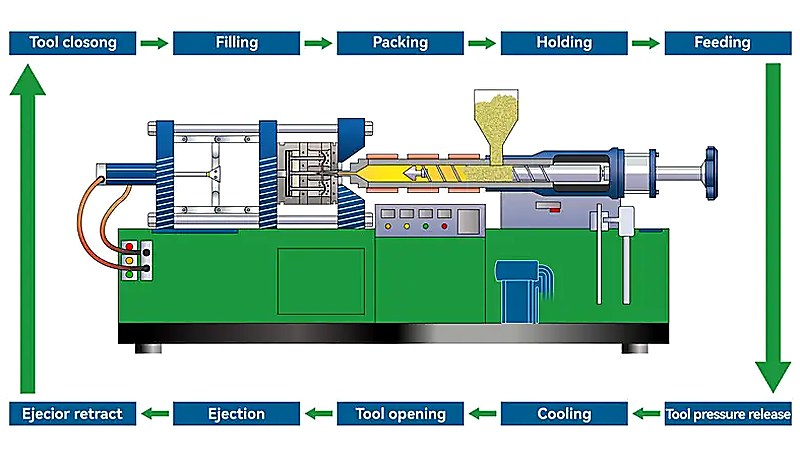
Medical device applications demand specific nylon grades with documented biocompatibility. PA12 dominates catheter and tubing uses due to flexibility and chemical inertness. PA6 serves in surgical instrument handles where autoclave sterilization requires thermal cycling between 121-134°C. ISO 10993 testing confirms biocompatibility for patient-contact applications and material traceability is mandatory for all medical nylon projects.
With over 20 years of injection molding experience and a team of 8 senior engineers, we have processed more than 400 plastic materials across our production floor. In our production reviews, our engineers track resin moisture, melt temperature, first-shot defect patterns, and dimensional drift before releasing a nylon job. Our quality workflow from IQC through process inspection to OQC catches nylon-specific defects like splay and hydrolytic degradation before they reach your assembly line.
Frequently Asked Questions
How long should I dry PA6 and PA66 before injection molding?
PA6 and PA66 require 4 to 8 hours of drying at 80 to 100 degrees Celsius in a dehumidifying hopper dryer to reach moisture content below 0.2 percent. The exact time depends on initial moisture level, pellet size, and dryer airflow capacity. PA66, with its higher melting point, is slightly more sensitive to residual moisture than PA6, so err on the longer end of the drying range when in doubt. Always verify with a calibrated moisture analyzer before starting production to avoid splay and hydrolysis defects in molded parts.
Can PA6 and PA66 be molded on the same machine without modifications?
Yes, PA6 and PA66 can run on the same machine but require different temperature profiles. PA66 needs barrel temperatures of 270 to 300 degrees Celsius versus 240 to 270 degrees Celsius for PA6. The mold temperature also differs: PA66 performs best at 70 to 90 degrees Celsius, while PA6 works at 60 to 80 degrees Celsius. Changeover requires purging the barrel thoroughly with a compatible transition material to avoid cross-contamination and degraded parts. Allow 15 to 20 minutes for temperature stabilization after adjusting the barrel settings between grades.
What happens if nylon is molded without proper drying?
Molding undried nylon causes three progressive problems. First, moisture creates surface splay marks and silver streaks that ruin part appearance. Second, water triggers hydrolysis at processing temperatures, breaking amide bonds and permanently reducing molecular weight, which lowers impact strength and elongation at break by 30 to 50 percent. Third, trapped moisture causes dimensional variation as parts absorb and release moisture unevenly during cooling. These defects cannot be repaired after molding because the polymer chain damage is irreversible and affected parts must be scrapped.
Is PA12 worth the significant price premium over PA6 for general applications?
For general-purpose applications where moisture absorption is tolerable and operating temperatures stay below 80 degrees Celsius, PA6 is more cost-effective at roughly one-third the price of PA12. PA12 justifies its premium only when you need its exceptionally low moisture absorption at 0.25 percent, superior dimensional stability in humid environments, fuel and chemical resistance for automotive fuel lines, or excellent low-temperature flexibility down to minus 40 degrees Celsius. Evaluate the total cost of quality failures and post-molding conditioning before choosing PA6 over PA12 for precision applications.
How does glass fiber reinforcement affect nylon injection molding processing?
Glass-filled nylon grades, typically 30 percent short glass fiber, require 10 to 20 degrees Celsius higher barrel temperatures and 20 to 30 percent higher injection pressures compared to unfilled grades. The glass fibers increase melt viscosity, reduce shrinkage from 1.2 percent to 0.3 percent for PA6, and improve stiffness by two to three times. Tooling wear increases significantly due to fiber abrasion, so hardened mold steel such as H13 or S136 is recommended for production runs exceeding 100,000 cycles. Screw design should use a lower compression ratio to minimize fiber breakage during plasticization.
What is the difference between conditioned and dry-as-molded nylon properties?
Dry-as-molded properties are measured immediately after molding when moisture content is near zero. Conditioned properties reflect equilibrium moisture absorption, usually reached at 50 to 60 percent relative humidity for 48 hours. Conditioned PA6 often shows 40 to 50 percent lower tensile strength but 2 to 3 times higher impact resistance than dry-as-molded data. Always specify the condition used in design calculations, tolerance reviews, and supplier RFQs so safety factors are not based on the wrong dataset. This distinction is critical for load-bearing nylon parts.
What shrinkage values should I use for nylon mold design?
Unfilled PA6 shrinks approximately 0.8 to 1.4 percent, while unfilled PA66 shrinks 1.0 to 1.5 percent, depending on wall thickness, gate location, and mold temperature settings. Glass-filled grades shrink significantly less: 0.3 to 0.7 percent for PA6-GF30 and 0.4 to 0.8 percent for PA66-GF30. Shrinkage is anisotropic in glass-filled grades, meaning flow-direction and transverse-direction shrinkage differ by 0.2 to 0.4 percent. Your mold designer must account for this anisotropy in cavity dimension calculations to achieve tight tolerances consistently across production runs.
Can nylon be over-dried before molding?
Yes, excessive drying above 110 degrees Celsius or beyond 12 hours causes thermal oxidation that yellows the pellets and reduces mechanical properties, particularly impact strength and elongation at break. For regrind or recycled nylon, the risk is higher because thermal history is cumulative across multiple processing cycles. If drying must extend beyond 8 hours due to production scheduling delays, reduce the temperature to 70 to 80 degrees Celsius to hold the material safely until production starts. Monitor pellet color as a quick visual indicator of over-drying damage.
Why ZetarMold for Nylon Injection Molding?
ZetarMold is a reliable nylon molding partner with 47 presses (90T–1850T), dedicated per-grade drying systems, and 20+ years of polyamide expertise. We maintain dedicated hopper dryers for each nylon grade to prevent cross-contamination and run automated moisture monitoring before every production shift. For complex injection mold design challenges in glass-filled nylon, our engineering team provides DFM feedback within 48 hours.
ZetarMold is a strong nylon molding partner because we combine 47 presses, dedicated drying systems, and 20+ years of polyamide processing experience. We maintain dedicated hopper dryers for each nylon grade to prevent cross-contamination and run automated moisture checks before production starts. Our engineering team can help you compare PA6, PA66, PA12, and PA1010 against tolerance, heat, chemical, and cost requirements before tooling is finalized.
Quick rule: Dry PA6/PA66 at 80–100°C for 4–8 hours before molding. Choose PA66 for parts above 120°C, PA6 for cost-sensitive structural parts, PA12 for flexible or chemical-resistant applications, and PA1010 when bio-content matters.
-
nylon injection molding: Nylon injection molding refers to the manufacturing process of shaping polyamide thermoplastic materials using injection molding equipment to produce engineering components with high strength and chemical resistance. ↩
-
hydrolysis: Hydrolysis is a chemical reaction in which water molecules cleave the amide bonds in polyamide polymer chains, permanently reducing molecular weight and degrading mechanical properties of nylon materials. ↩
-
injection mold design: injection mold design refers to is the engineering discipline encompassing tool geometry, cooling channel layout, gate placement, and ejection system optimization for producing dimensionally accurate plastic parts. ↩


 EN
EN  ES
ES  FR
FR  DE
DE  PT
PT  AR
AR  RU
RU  JA
JA  KO
KO  IT
IT  NL
NL  TR
TR  PL
PL 