 Перейти к содержанию

You just finished your first 3D-printed prototype. It looks right on the bench, but you already know plastic prints won’t survive real use. Now you need injection-molded parts — hundreds of thousands of them — and someone just suggested China. The question isn’t whether China can do it. It’s whether you can navigate the gap between a working prototype and stable, repeatable mass production without wasting six months and $50,000 on avoidable mistakes.
This article walks through the full prototype-to-production path as it actually works inside a Chinese injection molding factory — not the idealized version, the real one with DFM revisions, steel choices that matter, and timelines you can plan around.
- Prototype molds (soft tooling) handle 1,000–10,000 shots; production molds handle 1M+.
- DFM review before tooling cuts modification costs by up to 60%.
- Typical prototype-to-production timeline: 8–16 weeks.
- China offers 30–50% cost savings without sacrificing ISO-grade quality.
- Gate location and wall thickness decisions during prototyping lock in your production quality.
What Is the Prototype-to-Production Process in Injection Molding?
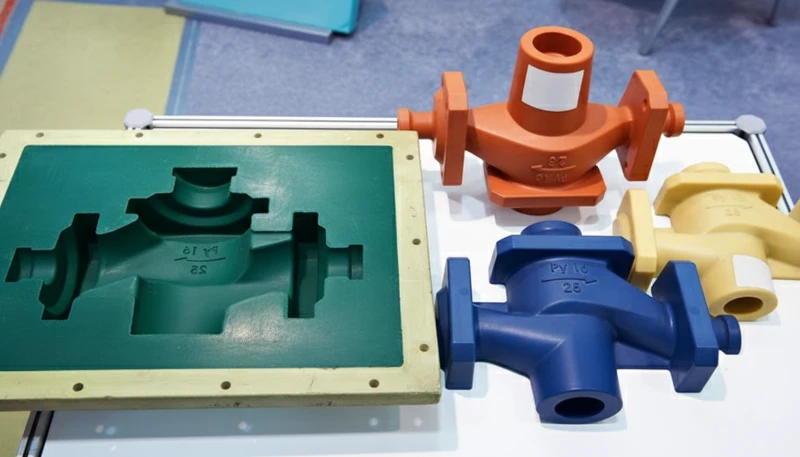
The prototype-to-production process in injection molding is defined by the function, constraints, and tradeoffs explained in this section. The prototype-to-production process is a three-phase manufacturing workflow: design validation through rapid prototyping, bridge tooling for short-run testing, then full production tooling for volume manufacturing. Each phase narrows your risk and locks in decisions that are expensive to reverse later.
Phase one is about answering one question: does this part work? You’re testing fit, function, and basic material performance. 3D printing or CNC machining works here because you need speed, not precision or scale. But the moment you need 500+ parts in the actual production material, you’ve outgrown prototyping methods.
Phase two — bridge tooling — is where most engineers underestimate the complexity. A soft mold (usually aluminum or low-grade steel) gives you real injection-molded parts in the correct material, but it won’t last. You get 1,000 to maybe 10,000 shots before wear affects dimensions. That’s enough for market testing, regulatory submissions, and initial assembly trials.
Phase three is production tooling. This is where steel grade, cavity count, gate design, and cooling layout become permanent decisions. A well-designed production mold in P20 or H13 steel runs a million cycles or more with consistent part quality. Getting here without surprises is what separates a smooth launch from a costly one.
How Does Prototyping Differ from Production Molding?
The difference between prototype molding and production molding is mold steel, cycle consistency, and per-part cost at volume. A prototype mold uses aluminum or mild steel, costs $1,500–$8,000, and delivers parts with ±0.1 mm tolerance. A production mold uses hardened tool steel (P20, H13, S136), costs $15,000–$100,000+, and holds ±0.02 mm tolerance across hundreds of thousands of cycles.
| Параметр | Prototype Mold | Production Mold |
|---|---|---|
| Стальная пресс-форма | Aluminum / 5052 | P20 / H13 / S136 |
| Стоимость оснастки | $1,500–$8,000 | $15,000–$100,000+ |
| Shot Life | 1,000–10,000 | 500,000–1,000,000+ |
| Tolerance | ±0,1 мм | ±0.02 mm |
| Время выполнения | 7–15 days | 30–60 days |
| Cavity Count | Single | Multi-cavity possible |
| Отделка поверхности | Limited options | Full range (SPI A-1 to D-3) |
The mistake engineers make is treating the prototype mold as a “draft” of the production mold. In reality, the two serve different purposes. Your prototype mold validates geometry and material flow. Your production mold optimizes for cycle time, longevity, and part-to-part consistency. The design intent is different, even when the part geometry looks identical.
One practical note: if your part has tight tolerances on critical features (snap-fits, bearing bores, sealing surfaces), build those features into the prototype mold from the start. Testing fit and function with oversimplified geometry and then redesigning for production is how projects lose three weeks.
Another difference that catches people off guard: cycle time. A prototype mold often runs at sub-optimal cooling because aluminum dissipates heat differently than hardened steel. What takes 30 seconds on a production mold might take 45 seconds on a prototype tool. This doesn’t matter for 500 parts, but it matters if you try to run 10,000 parts on soft tooling — your unit economics shift significantly.
“A prototype mold (soft tooling) typically lasts 1,000–10,000 shots before dimensional wear becomes measurable.”Правда
Aluminum and mild steel molds deform under repeated injection pressure and heat cycling. After approximately 10,000 cycles, cavity surfaces begin showing erosion and dimensional drift exceeding ±0.05 mm, making them unsuitable for tight-tolerance production parts.
“Production molds and prototype molds use the same steel grade and only differ in cavity count.”Ложь
Production molds use hardened tool steels like P20 (pre-hardened to 28–32 HRC) or H13 (heat-treated to 48–52 HRC), while prototype molds typically use aluminum 6061-T6 or mild steel 1045. The steel grade directly determines mold life, surface finish capability, and dimensional stability over time.
Why Do Engineers Choose China for Injection Molding Production?
China is a preferred production base because it combines 30–50% lower tooling costs with mature ISO-certified supply chains. The cost advantage comes from integrated supply chains (steel, machining, polishing all under one roof) and higher machine utilization rates, not from cutting corners on quality.
A production mold that costs $45,000 in the US typically runs $25,000–$30,000 at a qualified Chinese facility. For multi-cavity production tools or family molds, the savings compound. When you’re running 500,000 parts per year at $0.08 less per part, the math speaks for itself.
Cost comparison is straightforward. But there’s a nuance most cost analyses miss: the total cost of ownership includes communication overhead, revision cycles, and shipping logistics. A supplier with in-house English-speaking engineers reduces communication friction to near zero. A supplier without that capability generates hidden costs in misunderstood specifications, delayed feedback loops, and rework.
The real advantage isn’t just cost — it’s vertical integration. Factories with in-house литьевая форма manufacturing capability handle DFM review, mold design, tool building, sampling, and volume production under one roof. That eliminates the back-and-forth between a US design shop and an overseas toolmaker that adds weeks to every project.
Communication is the variable most engineers worry about. It’s a valid concern. The difference between a smooth project and a frustrating one often comes down to whether your supplier has English-speaking project managers who understand engineering intent, not just order details. A team that can push back on a bad gate location during DFM review is worth more than any unit price discount.
Наш сайт injection molding supplier sourcing guide makes lead-time planning easier. Chinese molders with 40+ injection molding machines can run tool building and production sampling in parallel, compressing the overall timeline. When your supplier has dedicated CNC, EDM, and wire-cut equipment for mold building, you’re not waiting in a queue behind other customers’ production jobs. The mold shop runs on its own schedule.
Material selection flexibility matters too. Chinese molders working with 400+ materials can source engineering-grade resins — glass-filled nylon, medical-grade polycarbonate, PEEK — domestically, often at prices 15–25% below Western distributors. For projects requiring material certification (UL94 flame ratings, FDA-compliant grades), verify that your supplier sources from authorized distributors and provides material certification with lot traceability for every production batch.
How Do You Transition from Prototype to Mass Production?
The transition from prototype to mass production is a five-step workflow. Those steps are DFM review, tooling design approval, T1 sampling, process optimization, and PPAP1 sign-off. Skipping any step saves time upfront but costs it back in production defects.
Step 1: DFM review. Before any steel is cut, your supplier should run a complete design-for-manufacturability analysis. This is where you catch undercuts that need side-actions, wall thickness variations that will cause sink marks, and gate locations that affect weld-line positioning. A thorough DFM review takes 2–3 days and prevents 80% of tool modifications.
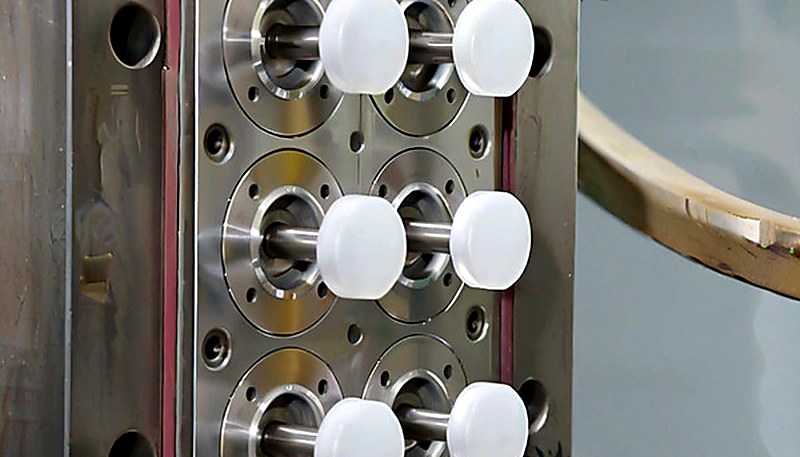
Step 2: Tooling design approval. The mold design (2D layout + 3D model) should be reviewed and approved in writing before machining starts. Check cavity layout, cooling channel routing, ejection method, and gate type. Changes after this point mean re-machining, which means cost and delay.
Step 3: T1 sampling. First-off samples from the completed mold reveal what simulation predicted and what it didn’t — actual fill patterns, real shrinkage values, weld line visibility. Expect 1–3 rounds of sampling with minor adjustments before sign-off.
Step 4: Process optimization. Lock in injection parameters (temperature profile, pressure curve, hold time, cooling time) using mold flow analysis data and actual trial results. Document everything. These parameters become your production standard.
Step 5: PPAP or equivalent sign-off. For regulated industries (medical, automotive), you need documented first article inspection2 reports, dimensional data, and material certifications. Even without regulatory requirements, a formal sign-off with golden samples prevents scope disputes later.
What Timeline Should You Expect from Prototype to Production?
In our production programs, the typical prototype-to-production timeline is 8–16 weeks. DFM runs in week 1–2, tooling in week 3–8, sampling in week 7–10, and process validation in week 10–14. Rush timelines of 4–6 weeks are possible but trade testing cycles for speed.
| Phase | Duration | Key Deliverable |
|---|---|---|
| DFM Review | 3–5 days | Approved design report |
| Дизайн пресс-формы | 5–7 days | 2D/3D mold drawings |
| Tool Building | 25–35 days | Completed mold |
| Образец Т1 | 5–10 days | First article samples |
| Revisions (1–2 rounds) | 5–10 days | Approved samples |
| Валидация процесса | 3–5 days | Locked process parameters |
| Total | 8–12 weeks | Production-ready |
Where do delays happen? Mold steel procurement (add 5–7 days if using imported steel), design changes after tooling starts (each change = 3–10 days), and shipping sample parts for approval (use express courier, budget 3–5 days international). The biggest single delay source is late design changes — every week you wait to finalize geometry adds a week to delivery.
For engineers working with Chinese suppliers, time zone differences can actually help. Your DFM feedback sent at 5 PM EST gets processed during their morning shift and is ready when you start your next day. The key is structuring your review cycles to minimize round-trips. Give consolidated feedback in one batch, not drips.
“A thorough DFM review before tooling starts can reduce mold modification costs by up to 60%.”Правда
Industry data shows that 70–80% of post-tooling modifications trace back to issues identifiable during DFM: inadequate draft angles, non-uniform wall thickness, gate placement causing weld lines on cosmetic surfaces, and missing shut-off angles. Catching these on screen takes hours; fixing them in steel takes days and thousands of dollars.
“You must complete 100% of prototyping and testing before starting production tooling.”Ложь
In practice, most projects overlap the final prototype validation phase with production tooling design. As long as critical dimensions and material selection are locked, the mold design can begin while final functional testing completes. This parallel approach compresses the overall timeline by 2–4 weeks without increasing risk.
What Quality Standards Should Your Chinese Molder Meet?
The baseline certifications are ISO 9001:2015 for general manufacturing, ISO 13485 for medical devices, and IATF 16949 for automotive parts. Certification alone isn’t enough — request recent audit reports and verify that the certificate covers the specific facility producing your parts.
Beyond certification, look for a six-step quality process: incoming material inspection (IQC), in-process sample checks, process inspection, packaging and assembly inspection, final quality control (FQC), and outgoing quality control (OQC). A supplier who can walk you through their inspection frequency, AQL3 levels, and corrective action process is one who actually uses their quality system — not just frames the certificate.
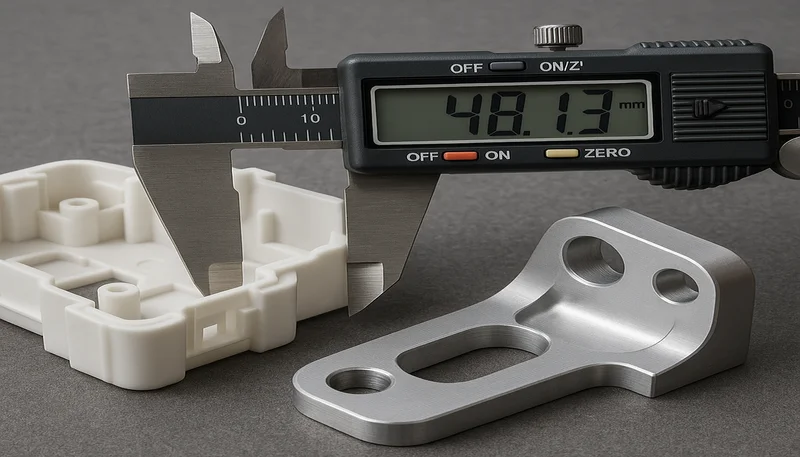
Dimensional verification equipment matters too. Coordinate Measuring Machines (CMM), profile projectors, and hardness testers should be calibrated and available for first article inspection. Ask to see a sample FAI report before you commit. The level of detail in that report tells you more about a supplier’s quality culture than any sales pitch.
One thing we’ve learned running production molds for overseas clients: the first three production runs are where stability is proven. If dimensional data is consistent across runs 1, 2, and 3, you have a stable process. If dimensions drift, the process needs locking down before volume ramps. This is why ZetarMold’s 8 senior engineers (each with 10+ years of experience) monitor the first runs personally — it’s cheaper to catch drift early than to sort 50,000 non-conforming parts.
For overseas clients who cannot visit the factory, request a video call during the first production run. Watching the machine run, seeing the parts eject, and reviewing CMM data in real time gives you more confidence than any inspection report sent after the fact.
What Are Common Mistakes When Scaling from Prototype to Production?
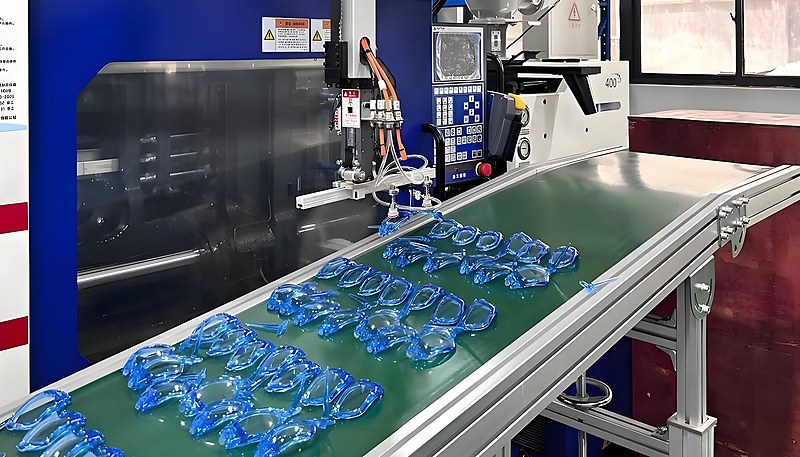
The most costly mistake is treating prototype geometry as final production geometry without running a DFM review. Features that 3D print easily — undercuts, uniform wall thickness regardless of function, zero draft angles — become expensive problems in production tooling.
Mistake 1: Ignoring draft angles. Every vertical surface needs 0.5°–2° draft for clean ejection. Zero-draft walls work in 3D printing. In injection molding, they cause sticking, scoring, and damaged parts. Adding draft late means re-machining cavity surfaces — expensive and avoidable.
Mistake 2: Specifying tight tolerances everywhere. Not every dimension needs ±0.02 mm. Over-tolerancing drives up mold cost (more precision machining) and inspection time (more CMM measurements). Apply tight tolerances only to functional interfaces — bearing fits, seal surfaces, alignment features — and leave cosmetic dimensions at ±0.1 mm.
Mistake 3: Choosing the wrong mold steel. P20 works for most applications up to 500,000 cycles. But if you’re running glass-filled nylon (abrasive) or need 1M+ cycles, H13 or S136 is the right choice from the start. Retooling because you under-specified steel costs more than upgrading upfront.
Mistake 4: Skipping process documentation. When your production parameters live only in a technician’s head, every shift change is a quality gamble. Document temperature profiles, pressure curves, and timing sequences. Lock them into the machine controller. The процесс литья под давлением is repeatable — but only when the process is actually repeated identically.
Mistake 5: Not planning for part removal and packaging. This sounds trivial until you’re molding 50,000 parts per month and realize your parts scratch during ejection or deform in transit. Ejection method (pin, sleeve, stripper plate) should be decided during mold design, not after first articles. Packaging specifications (bagging, tray type, stacking limits) should be defined before the first production shipment.
Mistake 6: Assuming all Chinese molders are the same. The gap between a $5,000 mold from a back-alley workshop and a $25,000 mold from an ISO-certified facility is not just price — it’s dimensional consistency, surface finish, mold life, and the ability to actually hit your spec on the first T1. Choosing solely on price is how projects end up with molds that need $10,000 in modifications before they produce acceptable parts.
How Much Does the Full Process Cost in China?
The full prototype-to-production cost in China is usually $20,000 to $120,000+. The final number depends on part complexity, mold steel, cavity count, and annual volume. Tooling represents 60–80% of the initial investment; per-part pricing drops significantly as volume increases.
| Item | Low Complexity | High Complexity |
|---|---|---|
| Prototype Mold (Soft Tooling) | $1,500–$3,000 | $5,000–$8,000 |
| Production Mold (Hardened Steel) | $15,000–$25,000 | $50,000–$100,000+ |
| T1 Sampling (per round) | 200–500 | $500–$1,500 |
| Стоимость за деталь (количество 1–10 тыс.) | $0.50–$2.00 | $1.50–$5.00 |
| Стоимость за деталь (тираж 100K+) | $0.10–$0.50 | 0.30–1.50 |
| Доставка (Образец, экспресс) | 50–150 | $100–$300 |
| Итого за первый год (10 тыс. изделий) | 18 000–32 000 | 55 000–115 000+ |
Два фактора стоимости, которые упускают из виду большинство инженеров: бюджет на доработки и логистика доставки. Заложите 10–15% от стоимости оснастки на ожидаемые доработки (даже хорошо спроектированные формы требуют мелких корректировок после первого пробного отлива). И рассчитывайте конечную стоимость, а не только франко-завод — морской фрахт, таможенные пошлины и складирование добавляют 8–15% в зависимости от вашего пункта назначения.
Для компаний, рассматривающих малотиражное литье под давлением (менее 10 000 деталей/год), переходная оснастка часто имеет больше экономического смысла, чем немедленный переход на производственную пресс-форму. Вы получаете реальные литые детали из производственного материала за долю от инвестиций в оснастку. Компромисс — более высокая стоимость за деталь и ограниченный срок службы — но если ваш дизайн может измениться, эта гибкость имеет реальную ценность.
Простое правило для бюджетирования: одногнездная форма из стали P20 для детали размером с колоду карт стоит в Китае примерно 12 000–18 000. Каждое дополнительное гнездо добавляет 40–60% к стоимости оснастки, но сокращает стоимость детали почти вдвое. Точка окупаемости многогнездной оснастки обычно наступает при общем объеме около 20 000–30 000 деталей, в зависимости от геометрии и материала.
What Do Buyers Ask About Prototype-to-Production Injection Molding in China?
Часто задаваемые вопросы
Сколько времени занимает переход от прототипа к серийному литью под давлением в Китае?
Типичный срок составляет 8–16 недель от утвержденных 3D CAD данных до первого производственного запуска. Анализ технологичности конструкции (DFM) занимает 3–5 дней, проектирование пресс-формы — 5–7 дней, изготовление оснастки — 25–35 дней, а изготовление образцов с доработками — 10–20 дней. Сжатые сроки в 4–6 недель возможны, но сокращают циклы тестирования и увеличивают риск модификаций после запуска. Для квалифицированного поставщика с собственной оснасткой и 40+ машинами узким местом обычно являются итерации дизайна, а не производственные мощности. Эффективное планирование циклов обратной связи — консолидированные замечания одной партией, а не поэтапные изменения — может сократить общий график на 1–2 недели без ущерба для качества.
Каков минимальный объем заказа (MOQ) для литья под давлением в Китае?
Минимальный объем заказа (MOQ) варьируется в зависимости от поставщика и сложности детали, обычно составляя от 500 до 5000 штук для производственных партий. Заказы на прототипную или переходную оснастку могут начинаться от 100 штук. MOQ существует потому, что настройка оборудования, подготовка материалов и первичный контроль имеют фиксированные затраты независимо от размера партии. В ZetarMold ежемесячная мощность в 100+ комплектов пресс-форм означает поддержку как малотиражных, так и крупносерийных проектов без конфликтов в расписании. Для первых заказов рассмотрите возможность начать с переходной оснастки на 500–1000 штук для проверки дизайна перед переходом на производственную пресс-форму и большие объемы.
Могу ли я использовать свою прототипную пресс-форму для первых производственных партий?
Да, прототипные формы (мягкая оснастка) могут произвести 1000–10 000 деталей из правильного производственного материала. Они хорошо подходят для тестирования рынка, подачи документов в регулирующие органы и создания начальных запасов, пока параллельно изготавливается серийная форма. Однако ожидайте большего разброса допусков (±0,1 мм против ±0,02 мм) и меньшего срока службы формы по сравнению с серийной оснасткой из закаленной стали. Также учтите, что варианты отделки поверхности ограничены для алюминиевых форм — максимум класс SPI B или C. Если ваш продукт имеет косметические требования, проверьте качество поверхности на прототипной форме перед размещением полного серийного заказа.
Какие сертификаты должен иметь китайский поставщик литья под давлением?
Как минимум, ISO 9001:2015 для общего управления качеством производства. Детали медицинских устройств требуют сертификата ISO 13485, а автомобильные детали — IATF 16949. ZetarMold имеет сертификаты ISO 9001, ISO 13485, ISO 14001 и ISO 45001, охватывающие управление качеством, медицинские устройства, экологический менеджмент и охрану труда и технику безопасности соответственно. Помимо самих сертификатов, убедитесь, что область сертификации охватывает конкретное предприятие, где будут изготавливаться ваши детали. Запросите копии последних отчетов об аудите и подтвердите, что орган по сертификации признан на международном уровне (TUV, SGS, BSI и т.д.).
Как обеспечить качество при производстве литых деталей в Китае?
Требуйте документально оформленный процесс контроля качества, охватывающий как минимум четыре этапа: входной контроль материалов (IQC), межоперационный контроль во время литья, окончательный контроль качества (FQC) и выходной контроль качества (OQC). Запрашивайте отчеты о первоначальной выборочной проверке с данными размерных измерений на КИМ по каждому критическому размеру. Убедитесь, что сертификаты покрывают конкретное производственное предприятие. Проведите первоначальный аудит завода — на месте или виртуально — охватывающий производственный цех, лабораторию контроля качества и записи о калибровке. Установите четкие критерии приемки по AQL (обычно 0,65 для критических дефектов, 1,0 для основных, 2,5 для незначительных) до начала первого производственного запуска.
В чем разница между переходной и производственной оснасткой?
Переходная оснастка использует алюминиевые или мягкие стальные пресс-формы для коротких производственных серий в 1000–10 000 деталей по более низкой стоимости ($1500–$8000). Производственная оснастка использует закаленную сталь, такую как P20 (предварительно закаленная, 28–32 HRC) или H13 (термообработанная, 48–52 HRC), для крупносерийного производства в 500 000+ деталей по более высокой стоимости ($15 000–$100 000+). Переходная оснастка дает реальные литьевые детали из производственного материала, что делает ее идеальной для проверки дизайна, тестирования рынка и подачи документов в регулирующие органы. Производственная оснастка обеспечивает превосходную размерную стабильность, варианты отделки поверхности и многогнездную конструкцию для долгосрочной экономической эффективности.
Стоит ли посетить завод перед размещением заказа на производственную форму?
Для первых заказов с инвестициями в оснастку свыше $30 000 настоятельно рекомендуется посещение завода на месте. Вы увидите организацию производственного цеха, состояние калибровки оборудования контроля качества, возможности цеха пресс-форм и условия труда из первых рук. Для небольших первоначальных заказов практичной альтернативой является виртуальный аудит через видеозвонок в реальном времени, охватывающий производственный цех, лабораторию контроля качества и образцовую комнату. Предприятие ZetarMold в Шанхае приветствует как посещения на месте, так и предоставляет подробные видеоэкскурсии для удаленных клиентов. Ключевое наблюдение во время любого аудита — организовано ли производство системно — инструментальные доски, маркированные контейнеры для материалов и задокументированные технологические карты указывают на профессиональную работу.
-
PPAP: PPAP (Процесс утверждения серийных деталей) — это стандартизированная система, используемая в основном в автомобильной промышленности для проверки того, что производственный процесс поставщика стабильно соответствует требованиям конструкторской документации заказчика. ↩
-
первичный контроль: Первоначальная выборочная проверка (FAI) — это детальный процесс измерений, который проверяет каждый размер первых серийных образцов по инженерным чертежам перед утверждением серийного производства. ↩
-
AQL: AQL (Приемочный уровень качества) — это статистический показатель качества, определяющий максимальный процент дефектных единиц, считающийся допустимым в производственной партии во время инспекции. ↩




 EN
EN  ES
ES  FR
FR  DE
DE  PT
PT  AR
AR  RU
RU  JA
JA  KO
KO  IT
IT  NL
NL  TR
TR  PL
PL 