

Submitting an литьё под давлением1 RFQ that gets accurate quotes back — on time and without costly surprises — is a skill most engineers learn the hard way. After reviewing thousands of RFQs from buyers worldwide, the pattern is clear: vague requests produce vague quotes, and missing details invite assumptions that inflate your price. This guide breaks down exactly what to include, what to avoid, and how to structure your RFQ so suppliers can quote competitively and accurately.
- A complete RFQ includes part geometry, material, tolerances, surface finish, volume, and timeline.
- Missing or ambiguous specs force suppliers to guess — and they always guess conservatively (higher cost).
- Always provide 3D CAD files (STEP/IGES) alongside 2D drawings with GD&T callouts.
- Specify cosmetic and functional surfaces separately to avoid over-engineering non-critical areas.
- BUY-intent RFQs should target 3–5 qualified suppliers for meaningful comparison.
What Is an Injection Molding RFQ and Why Does It Matter?
An injection molding RFQ (Request for Quotation) is a formal document you send to potential suppliers asking them to price your molding project. Think of it as the blueprint for your business relationship — the more precise it is, the more accurate and comparable the quotes you receive.
““Including your target price range in the RFQ helps suppliers propose the right solution.””Правда
Sharing a target range allows suppliers to suggest alternatives — different materials, cavity counts, or adjusted tolerances — to meet your budget, rather than quoting conservatively with maximum safety margins.
““A STEP file alone is sufficient for an injection molding RFQ — no 2D drawing is needed.””Ложь
While STEP files provide 3D geometry, 2D drawings with GD&T callouts capture tolerances, surface finish symbols, and critical dimensions that the 3D model alone does not convey. Both are needed for an accurate quote.
In practice, an RFQ is not just a price request. It is a technical specification package that tells the supplier everything they need to know to engineer the right mold, select the right machine, and plan the right process for your parts. The литьё под давлением process involves dozens of variables — from clamp tonnage to gate type to cooling channel layout — and each one affects cost and quality. Your RFQ locks down the ones you care about.
Why does this matter? Because a poorly written RFQ creates a cascade of problems. The supplier quotes high to cover their risk. You accept a high quote because you have no better option. Production starts, and the part does not match your expectations because the supplier assumed something you forgot to specify. Now you are paying for mold modifications — often $2,000–$10,000 per change — that could have been avoided with a better RFQ.
The best RFQs we see come from experienced procurement engineers who have been burned before. They know that an extra hour spent on the RFQ saves weeks of back-and-forth later. Whether you are sourcing a simple polypropylene clip or a multi-cavity precision medical housing, the fundamentals are the same: be specific, be complete, and be honest about your priorities.
What Information Must You Include in an Injection Molding RFQ?
An injection molding RFQ is a specification package that must include part geometry, material, tolerances, surface finish, volume, and timeline. Let us walk through each one: part design files, material specification, tolerance requirements, surface finish and cosmetic criteria, production volume and schedule, quality and compliance requirements, and any special processes (assembly, overmolding, insert molding, etc.).
““SPI surface finish grades affect both the appearance of the part and the cost of the mold.””Правда
Higher SPI grades (A-1 to A-3) require diamond polishing of the mold steel, which is significantly more expensive than stone (C-grade) or blasted (D-grade) finishes. Specifying A-grade only on cosmetic surfaces saves considerable tooling cost.
““Specifying tighter tolerances on every dimension ensures higher quality parts.””Ложь
Over-specifying tolerances drives up cost significantly because every tight dimension requires more precise mold machining, stricter process control, and more frequent inspection. Apply tight tolerances only where function demands them.
Let us walk through each one.
Part Design Files. Always include 3D CAD files in STEP or IGES format, plus 2D drawings with GD&T callouts. A 3D model alone is not enough — the 2D drawing captures tolerances, surface finish symbols, and critical dimensions that the 3D file may not convey clearly. If you have DFM feedback from a previous supplier, include that too. It shows you have already thought about manufacturability.
Material Specification. Do not just say “ABS.” Specify the exact grade (e.g., “ChiMei PA-747”), or at minimum the performance requirements (impact strength, heat deflection temperature, UL94 rating) so the supplier can recommend the right grade. If you need FDA-compliant, medical-grade, or RoHS-certified material, say so upfront.

Tolerance Requirements. Specify general tolerances and any tight-tolerance dimensions individually. A blanket “±0.1mm” on everything is expensive — only apply tight tolerances where function demands it.
Surface Finish and Color. Use SPI finish standards (A-1 through D-3) or VDI standards. Specify color via Pantone or RAL code. If certain surfaces are cosmetic (visible to the end user) and others are purely functional, mark them clearly on the drawing.
Production Volume. Give both the initial order quantity and the expected annual volume. This determines whether the supplier recommends a single-cavity prototype mold, a multi-cavity production mold, or something in between.
How Do You Specify Part Geometry and Design Requirements?
Part geometry is the foundation of your RFQ. The supplier needs to understand not just what the part looks like, but how it functions, what loads it bears, and what features are critical versus cosmetic.
““Mold ownership terms should be specified in the RFQ rather than left for later negotiation.””Правда
Clarifying mold ownership, storage location, and transfer terms upfront prevents disputes later. These commercial terms directly affect your total project cost and supply chain flexibility.
““The number of cavities in a mold is always determined by the supplier without buyer input.””Ложь
While suppliers can recommend cavity count based on your volume, you should understand the trade-off: more cavities mean higher mold cost but lower per-part price. For volumes under 50,000 annually, single-cavity molds are often most economical.
Start with your 3D CAD file in STEP format — this is the universal standard that every mold designer can open and work from. IGES is acceptable but less reliable for complex geometries because it can lose surface integrity during translation. STL files are useful for rapid prototyping but never для коммерческих предложений на серийное литьё, поскольку они не содержат точных данных о поверхности, необходимых для программирования ЧПУ.
В дополнение к 3D-модели предоставьте 2D-чертеж, который четко указывает:
Критические размеры с указаниями по геометрическим допускам и размерам (позиция, плоскостность, соосность)
Ссылки на базовые поверхности, определяющие способ измерения и фиксации детали
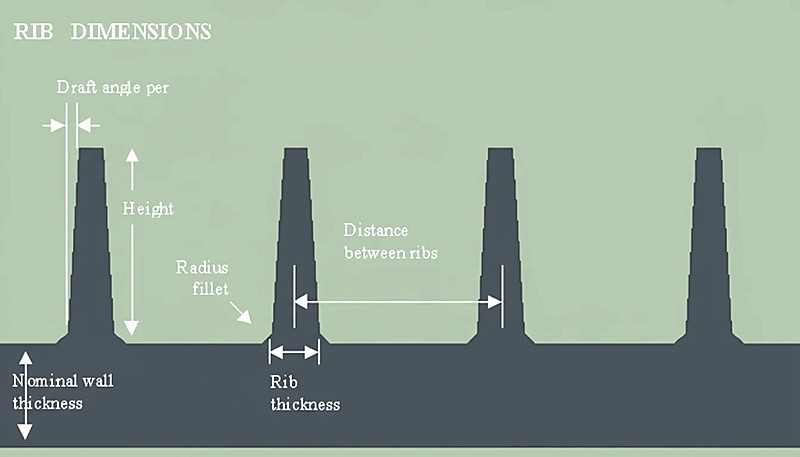
Требования к толщине стенок (номинальная и минимально допустимая)
Требования к углу съема (обычно 1–3° в зависимости от глубины текстуры)
Подрезки и требования к боковым действиям
Предпочтения или ограничения по расположению впуска
Если ваша деталь включает элементы литья с накладками или вставками, укажите их отдельно с конкретными требованиями к сочетанию материалов и ожиданиями по сцеплению. Эти особенности существенно влияют на сложность и стоимость пресс-формы.
Частая ошибка: инженеры отправляют только чертеж готовой детали без указания сборки с сопрягаемыми деталями. Если поставщик понимает контекст сборки, он может предложить улучшения конструкции, снижающие стоимость формы, сокращающие цикл или оба варианта. Опытный литьевая форма2 Дизайнер обнаружит проблемы, такие как недостаточный угол съема, невозможные подрезы или нереальные изменения толщины стенки, вызывающие утяжины.
Why Do Tolerance and Dimension Specifications Matter?
Спецификации допусков — это область, где большинство RFQ либо успешны, либо проваливаются. Слишком широкие допуски — деталь не функционирует. Слишком жесткие допуски на всех участках — вы платите за точность, которая вам не нужна. Ключ — быть стратегическим: применять жесткие допуски только там, где функция детали требует их.
Вот практическая структура для указания допусков в вашем RFQ:
| Тип элемента | Typical Tolerance | Когда следует затянуть |
|---|---|---|
| Некритические размеры | ±0.25 мм (±0.010″) | Никогда — это экономически эффективный вариант по умолчанию |
| Функциональные посадки (защелки, бобышки) | ±0,10 мм (±0,004″) | Когда зазор сборки мал |
| Сопрягаемые поверхности, уплотнение | ±0.05 мм (±0.002″) | Для уплотнения жидкостей или оптической юстировки |
| Высокоточные элементы | ±0.025 мм (±0.001″) | Только медицинские устройства, прецизионные шестерни |
Критическое отличие, которое важно понимать: допуски литья под давлением и допуски обработки на станках с ЧПУ — это принципиально разные вещи. Литье под давлением включает усадку материала (обычно 0.5–2.5% в зависимости от смолы), тепловое расширение и технологические колебания, которых нет при обработке на ЧПУ. Если вы указываете допуски уровня ЧПУ на литой детали, ожидайте, что в предложении будет либо очень дорогая пресс-форма с расширенным контролем процесса, либо дополнительная механическая обработка после литья.
Наш совет: указывайте то, что вам действительно нужно, а не то, что звучит впечатляюще. Грамотно составленный запрос коммерческого предложения со стратегическими допусками всегда позволит получить лучшую цену, чем требование ±0,01 мм на каждый размер.
How Should You Define Material Requirements in Your RFQ?
Спецификация материала обманчиво важна. Просто написать «нейлон» или «АБС» в вашем запросе коммерческого предложения — всё равно что заказать «автомобиль»: вы можете получить компактный седан или роскошный внедорожник, и разница в цене будет огромной.
Вот как выглядит тщательная спецификация материала:
Семейство и класс материала — например, «PA66 GF30» (нейлон 66 с 30% стекловолокна) или «SABIC Cycoloy C1200HF» (смесь ПК/АБС). Указание марки исключает догадки.
Требования к характеристикам — если точный класс неизвестен, укажите требования к детали: прочность на растяжение, устойчивость к ударам, HDT (температура тепловой деформации), химическая устойчивость, устойчивость к УФ-излучению и т.д.
Нормативные требования — FDA, USP Class VI, ISO 10993, UL94 V-0, RoHS, REACH. Это необсуждаемые критерии фильтрации для выбора материала.
Цвет и внешний вид — натуральный/подобранный по цвету, ссылка на Pantone или RAL, мастербатч или предварительно окрашенная смола.
Содержание переработанного материала — если вам требуется содержание переработанного потребительского пластика (PCR), укажите процент. Это влияет как на доступность материала, так и на стоимость.
Что часто упускают первые покупатели: требования к сушке материала. Гигроскопичные смолы, такие как нейлон, поликарбонат и ПЭТ, должны быть высушены перед обработкой — обычно 2–6 часов при 80–120°C в зависимости от материала. Если ваш поставщик пропускает или сокращает этот этап, вы получите следы от выпотевания, сниженные механические свойства и нестабильность размеров. Хороший запрос коммерческого предложения должен подтверждать, что вы понимаете процесс литья под давлением требования для выбранного материала.
What Surface Finish and Cosmetic Details Should You Specify?
Шероховатость поверхности — это место, где искусство встречается с инженерией в литье под давлением. Шероховатость влияет не только на внешний вид детали, но и на конструкцию пресс-формы, используемую сталь, требуемую полировку и, в конечном счете, на ваши затраты.
Используйте стандарты SPI (Ассоциации пластиковой промышленности) для поверхности:
| SPI Grade | Тип шероховатости | Типовое применение |
|---|---|---|
| A-1 до A-3 | High gloss (diamond polish) | Lens covers, consumer electronics |
| B-1 to B-3 | Semi-gloss (paper polish) | Appliance housings, automotive trim |
| C-1 to C-3 | Matte (stone finish) | Industrial enclosures, structural parts |
| D-1 to D-3 | Textured (blasted) | Hand tools, consumer goods, grip surfaces |
The practical tip: separate cosmetic surfaces from functional ones. If only one face of your part is visible to the end user, only that face needs an A-grade finish. The rest can be D-grade, which costs dramatically less to tool. Mark cosmetic surfaces clearly on your 2D drawing — our mold designers appreciate this distinction because it tells them where to invest polishing time.
Also specify whether knit lines, gate marks, or ejector pin marks are acceptable on cosmetic surfaces — and if so, where they can be located. Most suppliers will place gates on non-critical surfaces by default, but only if the RFQ tells them which surfaces matter.
How to Communicate Volume, Timeline, and Budget Expectations?
Your RFQ volume section is the key to proper mold class and machine selection — state your quantities and milestones clearly. Volume and timeline information drives almost every major decision the supplier makes: mold material selection (P20 steel vs. hardened H13), number of cavities, automation level, and even which machine gets assigned to your project.
Be specific about these three things:
Initial order quantity (first article run) — “500 pieces for validation” tells the supplier this is a prototype phase. “50,000 pieces in month one” signals production readiness.
Expected annual volume — This determines mold class (SPI Class 103 for under 100K parts vs. Class 101 for millions). A Class 101 mold in hardened steel might cost 3–5× more than a Class 103 mold in P20, but it lasts 10× longer.
Delivery schedule — “T1 samples in 6 weeks, production start in 10 weeks” gives the supplier a concrete timeline to plan against. Avoid vague language like “ASAP” — it helps no one.
Budget transparency works in your favor. You do not need to reveal your maximum price, but sharing a target range helps the supplier propose the right solution. For example, if your target is $0.50/part but the supplier’s initial proposal is $1.20, they can suggest alternatives — different material, fewer cavities, adjusted tolerances — to close the gap. Without a target, they quote conservatively.
For low-volume projects (under 10,000 parts), consider mentioning low-volume injection molding options like aluminum molds or sourcing from a supplier who specializes in short runs. For a structured approach to finding the right partner, see our injection molding supplier sourcing guide3. Production-grade steel tooling may not be economically justified for quantities under 5,000.
What Common Mistakes Cause RFQ Rejections or Overpriced Quotes?
The most common RFQ mistakes are missing CAD files, omitted tolerances, vague material specs, unclear tool ownership, and blasting too many suppliers. Here is why each one hurts you — and they all lead to the same outcome: higher quotes, longer lead times, or outright rejection.
Mistake 1: Sending only a screenshot or PDF rendering. A picture is not a technical specification. Without 3D CAD data, the supplier cannot generate a проектирование пресс-форм, run mold flow analysis, or calculate clamp tonnage. The quote will either come back with a massive risk premium, or not come back at all.
Mistake 2: Omitting tolerance specifications. When tolerances are not specified, suppliers default to their shop standard (often ±0.25mm). If your part needs tighter precision, you will discover this only after receiving samples — followed by an expensive mold rework. If ±0.25mm works for you, say so explicitly. It signals that you understand the process and helps the supplier quote accurately.
Mistake 3: Not specifying material grade. “ABS” covers hundreds of grades with wildly different properties and prices. Some cost $1.50/kg, others $6.00/kg. Without a grade or performance spec, the supplier either quotes the cheapest option (hoping to win on price) or the safest option (quoting high to cover uncertainty). Neither serves you well.
Mistake 4: Ignoring tool maintenance and ownership terms. Who owns the mold? Where is it stored? What happens to it if you switch suppliers? These are commercial terms that belong in the RFQ, not as an afterthought discovered during contract negotiation. Clarify this upfront.
Mistake 5: Requesting quotes from too many suppliers. Blasting your RFQ to 20 factories sounds like good competitive practice, but experienced suppliers know when they are one of many. They either skip the RFQ or invest minimal effort in the quote. Target 3–5 suppliers from our supplier sourcing guide and give each one a fair chance to win your business.
How to Evaluate and Compare Quotes from Injection Molding Suppliers?
Compare quotes on total landed cost, technical capability match, lead time, quality system maturity, and commercial terms — not just part price. Once quotes come back, the real work begins. Comparing injection molding quotes is not as simple as picking the lowest number — you need to normalize the data to make an apples-to-apples comparison.
Check these elements in every quote:
Mold cost breakdown — Does the quote include mold design, sampling, and revisions? How many design iterations are included? What happens if T1 samples fail — who pays for rework?
Part price assumptions — What volume was the part price based on? Does it include packaging, shipping, and inspection? What is the minimum order quantity (MOQ)?
Material sourcing — Is the supplier quoting their standard grade or your specified grade? Are they using virgin or regrind material?
Lead time commitments — Does the timeline include mold design review, or does it start after design approval? Is shipping time included?
Quality assurance — What inspection reports are included? FAI (First Article Inspection)? PPAP? In-process inspection frequency?
Here is a comparison framework we recommend:
| Evaluation Criteria | Вес | Why It Matters |
|---|---|---|
| Total landed cost (mold + part) | 30% | True project economics over 12 months |
| Technical capability match | 25% | Right machines, materials, experience |
| Lead time and responsiveness | 20% | Speed to market and communication quality |
| Quality system maturity | 15% | ISO certifications, inspection capability |
| Commercial terms flexibility | 10% | Payment, mold ownership, warranty |
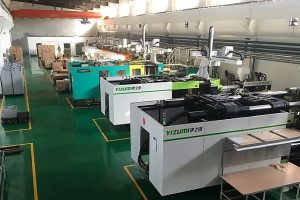
In our RFQ reviews at ZetarMold, we match each package against press capacity, mold complexity, inspection needs, and launch volume before quoting. With 47 injection molding machines ranging from 90T to 1850T, in-house mold manufacturing, and 8 senior engineers averaging 10+ years of experience, our team can handle most projects from prototype through high-volume production. But the right fit depends on your specific needs — which is exactly why a thorough RFQ matters.
What Are the Most Frequently Asked Questions About Injection Molding RFQs?
What Files Should I Include in My Injection Molding RFQ?
Include a 3D CAD file (STEP format preferred), a 2D drawing with GD&T callouts and critical dimensions, and any reference samples or photos. If you have existing mold design files from a previous supplier, include those as well. The more complete your data package, the faster and more accurate the quote.
How Long Does It Take to Get a Quote Back?
Most qualified suppliers respond within 3–7 business days for standard parts. Complex multi-cavity molds or parts requiring specialized materials may take 1–2 weeks. If you need a faster turnaround, indicate your deadline in the RFQ — many suppliers offer expedited quoting for an additional fee or with a commitment to proceed.
What Is a Reasonable Mold Cost for Injection Molding?
Mold costs range from $3,000 for a simple single-cavity aluminum prototype mold to $80,000+ for a multi-cavity hardened steel production mold with complex side actions. For a typical mid-complexity production mold (2–4 cavities, P20 steel), expect $8,000–$25,000. The cost depends on part complexity, number of cavities, surface finish requirements, and mold life expectation.
Do I Need to Specify the Number of Cavities in My RFQ?
Not necessarily. You can specify your production volume and let the supplier recommend the optimal cavity count. A good supplier balances mold cost against per-part price — more cavities mean higher mold cost but lower part price. For annual volumes under 50,000 parts, single-cavity molds are usually the most economical choice.
What Quality Documentation Should I Request?
At minimum, request a First Article Inspection (FAI) report, dimensional inspection data for T1 samples, and material certification (CoA). For automotive or medical applications, request PPAP documentation. In-process inspection plans and outgoing inspection reports should also be specified for ongoing production orders.
Can I Use the Same RFQ for Domestic and Overseas Suppliers?
The core technical content is the same, but overseas RFQs should additionally specify shipping terms (FOB, CIF, DDP), communication language expectations, time zone availability for meetings, and intellectual property protections (NDA requirements). International shipping timelines and customs duties should be factored into your total cost comparison.
How Do I Protect My Intellectual Property When Sending RFQs?
Have a signed NDA (Non-Disclosure Agreement) in place before sharing detailed CAD files. Use a non-disclosure agreement that covers both the part design and any proprietary manufacturing processes. Most reputable suppliers have standard NDA templates and will sign without hesitation. For highly sensitive designs, consider using a sourcing agent as an intermediary.
What Happens After I Award the Project to a Supplier?
The typical post-award process includes: mold design review (1–2 weeks), mold fabrication (4–8 weeks), T1 sampling with dimensional inspection, design revisions if needed (1–2 weeks), and production approval. A clear RFQ sets expectations upfront so this process runs smoothly. Your supplier should provide a detailed project timeline within the first week after award.
Ready to Submit Your RFQ?
ZetarMold’s engineering team reviews every RFQ with detailed feedback — including DFM suggestions, material alternatives, and cost optimization ideas. With 47 injection molding machines (90T–1850T), in-house mold manufacturing, 8 senior engineers, and 30+ English-speaking project managers, we handle projects from 500 to 5 million+ parts.
Get a Free Quote
-
литьё под давлением: is a manufacturing process that injects molten resin into a mold cavity to produce repeatable plastic parts at scale. ↩
-
литьевая форма: injection mold refers to is the production tool that shapes molten plastic into the final part geometry, including cavity, core, cooling, and ejection systems. ↩
-
injection molding supplier sourcing guide: injection molding supplier sourcing guide refers to explains how buyers compare factories, evaluate RFQ quality, assess lead time risk, and negotiate commercial terms before awarding an injection molding project. ↩





 EN
EN  ES
ES  FR
FR  DE
DE  PT
PT  AR
AR  RU
RU  JA
JA  KO
KO  IT
IT  NL
NL  TR
TR  PL
PL 