 Перейти к содержанию

What Is 3D Printed Metal Casting and How Does It Work?
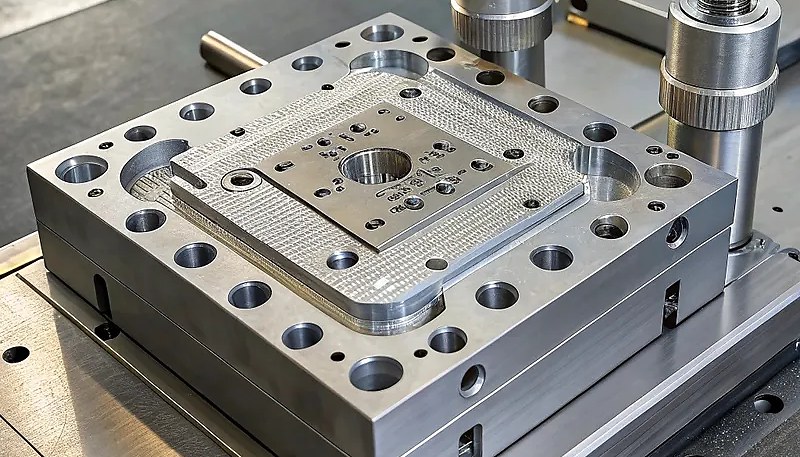
3D-проектирование пресс-форм с охлаждающими каналами для гибридного инструмента1 decisions for printed casting molds should start with RFQ prep, qualification, and commercial risk checks. If you are comparing vendors or planning procurement, our injection molding supplier sourcing guide covers the buyer-side checks in more detail.
For a broader view of литьё под давлением, our pillar guide covers process fundamentals, material behavior, and production decisions.
3D printed metal casting2 combines additive manufacturing with traditional casting processes. Instead of spending weeks making wooden patterns or machining metal mold tooling, engineers 3D print the mold or pattern directly from a CAD file. The 3D printed piece then serves as the mold, core, or sacrificial pattern for pouring molten metal.
- 3D printed casting molds are strongest for prototypes, bridge production, and complex internal passages where traditional pattern making is slow.
- The process shortens lead time, but buyers still need casting allowances, finishing stock, inspection planning, and supplier capability checks.
- For repeat production, compare printed mold cost per pour against permanent tooling before choosing the manufacturing route.
Factory Insight: ZetarMold reviews printed casting and prototype tooling projects through an engineering lens before quoting. Our 8 senior engineers, in-house mold manufacturing capability, and 100+ mold sets per month tooling capacity help us compare fast prototype routes against durable injection mold tooling instead of pushing every project into the same process.

В ZetarMold мы используем этот подход в основном для прототипов металлических деталей и переходного производства, когда клиентам нужны функциональные металлические компоненты до инвестиций в постоянную оснастку. Технология подходит для литья из алюминия, бронзы, чугуна, стали и даже титана — по сути, для любого металла, который можно отливать традиционным способом. На практике решение об использовании литейных форм, изготовленных методом 3D-печати, сводится к трем факторам: сколько деталей вам нужно, насколько сложна геометрия и как быстро требуется первый образец.
Which 3D Printing Methods Are Used for Casting Molds?
Этот раздел посвящен методам 3D-печати, используемым для изготовления литейных форм, и их влиянию на стоимость, качество, сроки или риски поставок. Основные 3D printing integrating with injection molding methods for casting molds are binder jetting, SLA burnout patterns, FDM sacrificial patterns, SLS patterns, and DMLS/SLM metal inserts. Each method serves a different balance of mold size, surface finish, accuracy, and production intent.
| 3D Printing Method | What It Produces | Casting Process | Лучшее для | Точность |
|---|---|---|---|---|
| SLA (Stereolithography) | Wax-like burnout patterns | Investment casting | Small, detailed parts | ±0.1–0.2 mm |
| Binder Jetting (sand) | Sand molds and cores directly | Sand casting | Large parts, complex cores | ±0.3–0.5 mm |
| FDM/FFF (PLA/ABS) | Sacrificial patterns | Investment casting | Larger patterns, lower cost | ±0.2–0.5 mm |
| SLS (Nylon/Wax) | Durable patterns | Sand/investment casting | Reusable patterns, short runs | ±0.15–0.3 mm |
| DMLS/SLM (Metal) | Metal mold inserts | Die casting, injection | Production tooling with conformal cooling | ±0.05–0.1 mm |
““Binder jetting can 3D print a complete sand mold — including internal cores — in a single build, eliminating core assembly entirely.””Правда
Binder jetting sand printers (like ExOne and voxeljet systems) build the mold and all internal cores as one integrated piece. This eliminates the traditional multi-step process of making separate core boxes, shooting sand cores, and assembling them into the mold — saving days of labor and reducing dimensional error from core assembly.
““3D printed casting molds can only produce rough, low-quality metal parts.””Ложь
3D printed investment casting patterns from SLA printers achieve surface finishes of Ra 1.6–3.2 μm on the final metal part — comparable to traditional investment casting. Binder-jet sand molds produce Ra 6–12 μm, which is standard for sand casting. The casting quality depends on the printing resolution and post-processing, not the fact that it was 3D printed.
How Do You Design a CAD Model for 3D Printed Casting?
Этот раздел посвящен проектированию CAD-модели для литья с использованием 3D-печати и ее влиянию на стоимость, качество, сроки или риски поставок. CAD-модель для литья с 3D-печатью должна включать припуск на усадку, припуск на механическую обработку, уклоны, толщину стенок, скругления, вентиляционные каналы и литниковую систему до печати формы. Проектирование для литья с 3D-печатью требует понимания как процесса печати, так и процесса литья. CAD-модель должна учитывать усадку на двух этапах: сначала при печати и отверждении материала формы, затем при охлаждении и затвердевании расплавленного металла.
1ТП4Т200–1ТП4Т2,000
Draft angles — For sand casting molds, add 1–3° draft on vertical surfaces, similar to traditional pattern design. For investment casting with burnout patterns, zero draft is possible because the printed pattern is destroyed during burnout.
Толщина стенки — Minimum 3–4 mm for sand mold walls, 0.5–1.0 mm for SLA burnout patterns. Metal casting minimum wall depends on the alloy: 2 mm for aluminum, 3 mm for steel.
Shrinkage allowance — Add 1.0–1.6% for aluminum, 2.0–2.5% for steel, 1.5–2.0% for bronze to the pattern dimensions.
Gating system — Design the sprue, runners, and risers into the 3D model. For binder-jet sand molds, integrate the gating directly into the print.
Fillets and radii — Minimum 2 mm internal radii to prevent hot tears in the casting and reduce stress concentrations.
What Is the Step-by-Step Process for 3D Printed Sand Casting?
The binder jetting sand casting workflow is the most common industrial application of 3D printed casting molds. Here is the complete process.
Step 1: CAD preparation (2–4 hours)
Design the part with casting allowances3 (shrinkage, machining stock)
Design the mold halves (cope and drag) around the part
Add gating system (sprue, runners, gates, risers)
Integrate cores for internal features
Step 2: 3D printing (4–24 hours depending on size)
Slice the mold/core design and send to the binder jetting printer
Print layers of sand bonded with furan or phenolic resin binder
Typical layer thickness: 0.28–0.4 mm
Step 3: Post-processing (1–4 hours)
Remove loose sand from cavities and channels
Apply refractory coating if needed for surface finish
Assemble mold halves (for multi-part molds)
Step 4: Metal pouring (1–2 hours including heat-up)
Melt metal to required temperature (660°C for aluminum, 1,500°C+ for steel)
Pour into the 3D printed sand mold through the gating system
Allow solidification (minutes to hours depending on size)
Step 5: Finishing (2–8 hours)
Break away the sand mold (shake-out)
Cut off gating system
Blast, grind, and machine as needed
Inspect dimensions and quality
What Are the Cost and Time Advantages of 3D Printed Molds?
The cost and time advantages of 3d printed molds are the main categories or options explained in this section. The business case for 3D printed casting molds centers on eliminating traditional tooling lead time and cost for small quantities.
| Фактор | Traditional Pattern/Tooling | 3D Printed Mold | Savings |
|---|---|---|---|
| Lead time (prototype) | 4–8 weeks | 3–7 days | 80–90% |
| Pattern cost (1-off) | $2,000–$20,000 | $200–$2,000 | Сравнение производства пресс-форм |
| Design iteration | 2–4 weeks per revision | 1–3 days per revision | 80–90% |
| Complex cores | $5,000–$50,000 (core boxes) | Integrated in print ($0 extra) | 90–100% |
| Break-even quantity | - | - | 1–100 parts (3D); 100+ (traditional) |
The crossover point where traditional tooling becomes cheaper is typically 50–200 parts, depending on complexity. For quantities above this, the per-part cost of 3D printed molds exceeds that of reusable metal tooling.
What Are the Limitations and When Should You Choose Traditional Tooling?
3D printed casting molds are not universally superior. Understanding the limitations ensures you choose the right approach for each project.
Surface finish — 3D printed sand molds produce Ra 6–12 μm surfaces (vs. Ra 3–6 μm for machined metal molds). Secondary machining may be needed for critical surfaces.
Dimensional accuracy — ±0.3–0.5 mm for binder-jet sand casting vs. ±0.1–0.2 mm for precision investment casting or die casting.
Объем производства — Each 3D printed sand mold is consumed in a single pour. For 1,000+ parts, traditional reusable tooling is far more economical.
““3D printed sand molds are particularly valuable for casting parts with complex internal passages that would require multiple traditional cores.””Правда
Traditional sand casting of parts with complex internal channels (like manifolds or heat exchangers) requires assembling 5–20 separate sand cores, each made from its own core box. 3D printing integrates all cores into a single mold, eliminating core boxes, assembly labor, and core shift errors. This is where 3D printing delivers the highest ROI.
““3D printed molds will replace all traditional casting tooling within a few years.””Ложь
3D printed molds are excellent for prototyping and short runs (1–100 parts), but traditional tooling remains far more economical for medium to high volumes. A reusable metal die casting mold can produce 100,000+ parts; a 3D printed sand mold is consumed in a single pour. The technologies are complementary, not competitive.
Size limitations — Binder jetting build volumes are typically 800 × 500 × 400 mm (though large-format machines reach 4,000 × 2,000 × 1,000 mm).
Mold strength — 3D printed sand molds have lower green strength than traditionally rammed molds. Very large pours may require reinforcement.
Для литьевая формаing tooling specifically, channels designed to сократить время охлаждения can be 3D printed in steel inserts by DMLS or SLM. This is different from disposable casting molds, but it shows where additive manufacturing can enhance traditional mold making instead of replacing it.
Хотите ускорить разработку металлических деталей? Обратитесь в ZetarMold за услугами быстрого прототипирования, включая литейные формы, изготовленные методом 3D-печати, и оснастку для литья под давлением. Предоставьте чертеж детали, целевой сплав, количество, зоны допусков, требования к отделке и сроки, чтобы наши инженеры могли сравнить литье с 3D-печатью, ЧПУ-обработку и производственную оснастку с практическим планом поставок. Имея более 20 лет опыта в литье под давлением и изготовлении оснастки, наша команда в Шанхае может оценить, подходят ли для вашего проекта по объему, бюджету и срокам литейные формы с 3D-печатью, ЧПУ-обработка из цельной заготовки или традиционная производственная оснастка.
Часто задаваемые вопросы
What metals can be cast using 3D printed molds?
3D printed sand molds can support aluminum, bronze, brass, cast iron, carbon steel, stainless steel, and many specialty alloys when the mold coating, binder, venting, and pour temperature are matched to the alloy. For buyer decisions, the key is not only whether the alloy can be poured, but whether the printed mold process can meet the required surface finish, dimensional allowance, post-machining stock, and inspection plan. If the part has pressure sealing, thin ribs, or high cosmetic requirements, confirm the finishing route before approving the process.
Насколько точны отливки из 3D-печатных форм по сравнению с деталями, изготовленными механической обработкой?
3D printed sand castings typically target casting-level tolerances such as roughly plus or minus 0.3 to 0.5 mm before finishing, while investment casting from printed patterns can be tighter on small detailed parts. CNC machining remains the better process for final precision surfaces. The practical approach is often near-net casting first, then CNC machine only the datum faces, threads, sealing surfaces, and high-tolerance features. This reduces machining time without pretending that printed casting replaces precision machining. Ask the supplier to mark which features are cast tolerance and which are post-machined tolerance.
How long does a 3D printed sand mold take to produce?
For many prototype and bridge-production parts, a 3D printed sand mold can move from checked CAD data to a ready mold in a few days rather than several weeks. Actual timing depends on build volume, wall thickness, mold complexity, coating, curing, pouring schedule, and inspection needs. The biggest time saving comes from removing separate wooden pattern making, core-box machining, and multi-step core assembly. Buyers should still reserve time for DFM review and first-article inspection before approving the casting route safely.
Можно ли повторно использовать 3D-печатные литейные формы?
Most 3D printed sand molds and investment casting patterns are single-use because the mold or pattern is broken, burned out, or consumed during the casting process. Reuse is possible only for certain printed patterns or printed metal tooling inserts, not for ordinary sand molds. If the program needs hundreds or thousands of repeat parts, permanent tooling or injection molding tooling should be compared before committing to printed molds. The reusable asset is usually the validated CAD and process plan, not the sand mold itself.
Когда покупателям следует выбирать традиционную оснастку вместо 3D-печатных форм?
Traditional tooling becomes more attractive when annual volume is high, the geometry is stable, repeatability is more important than speed, or the part requires a surface finish that printed sand cannot economically deliver. Buyers should compare total landed cost, not just mold cost. Include printed mold cost per pour, scrap risk, machining stock, inspection, lead time, design-change probability, and the point where a permanent pattern or production mold becomes cheaper. This prevents fast prototypes from becoming expensive production bottlenecks and keeps sourcing decisions tied to volume reality.
Ключевые выводы: Подходит ли 3D-печать металлических отливок для вашего проекта?
Этот раздел посвящен ключевым выводам: подходит ли 3D-печать металлических отливок для вашего проекта и ее влиянию на стоимость, качество, сроки или риски поставок. 3D-печать изменила экономику металлического литья для прототипов и мелкосерийного производства. Устраняя недели традиционного изготовления моделей, она сокращает цикл разработки с месяцев до дней и снижает стоимость прототипной оснастки на 70–90%. Технология лучше всего подходит для сложной геометрии, малых количеств и быстрых итераций дизайна, когда внутренние каналы или многокомпонентные сборки делают традиционное изготовление моделей чрезмерно медленным. Для больших объемов или более жестких допусков традиционная оснастка остается более экономичным выбором.

-
Supplier sourcing: Supplier sourcing refers to the ZetarMold sourcing guidance that connects technical process choice with RFQ readiness, qualification checks, and commercial risk review. ↩
-
3D printed metal casting: 3D printed metal casting refers to the NIST additive manufacturing resources that explain how layer-by-layer production changes tooling, prototyping, inspection, and process-control decisions. ↩
-
casting allowances: casting allowances refers to the shrinkage, machining stock, draft, fillet, gating, and inspection adjustments required before a printed mold is approved for metal pouring. ↩



 EN
EN  ES
ES  FR
FR  DE
DE  PT
PT  AR
AR  RU
RU  JA
JA  KO
KO  IT
IT  NL
NL  TR
TR  PL
PL 