Перейти к содержанию

Your injection molded part just came out of the tool — except it didn’t come out. It’s stuck on the core like it was glued there. Now you’re looking at a damaged part, a scratched cavity, and a production line that’s stopped. Nine times out of ten, the culprit is insufficient угол осадки1.
In this guide, I’ll walk through what draft angle is, how to calculate it for different materials and surface finishes, and the specific numbers we use on the shop floor after 20+ years of making injection molds. No theory without practice — just the rules that actually work.
- Draft angle is the taper on vertical mold surfaces that lets parts eject cleanly
- Most parts need 1–3° minimum draft; textured surfaces need 1–1.5° extra per 0.001″ texture depth
- Harder plastics (PC, POM) and glossy finishes require more draft than soft or matte ones
- Missing or insufficient draft causes sticking, scratches, and cycle time increases
- Always apply draft in the direction of mold opening — and verify with your molder before tooling
What Is a Draft Angle in Injection Molding?
A draft angle in injection molding is defined by the function, constraints, and tradeoffs explained in this section. A draft angle is the deliberate taper you build into every vertical face of a part so it can be ejected from the injection molding tool without fighting friction. Think of it like the slight slope on the inside of an ice cube tray — without that slope, you’d never get the ice out in one piece.
In technical terms, draft angle is measured in degrees from the vertical axis of the mold opening direction. If a wall is perfectly perpendicular to the parting line (0° draft), the part creates a vacuum seal against the steel as it cools and shrinks. That seal is what makes ejection2 brutal — or impossible. Adding even 0.5° of taper breaks that seal and lets air in behind the part during ejection.
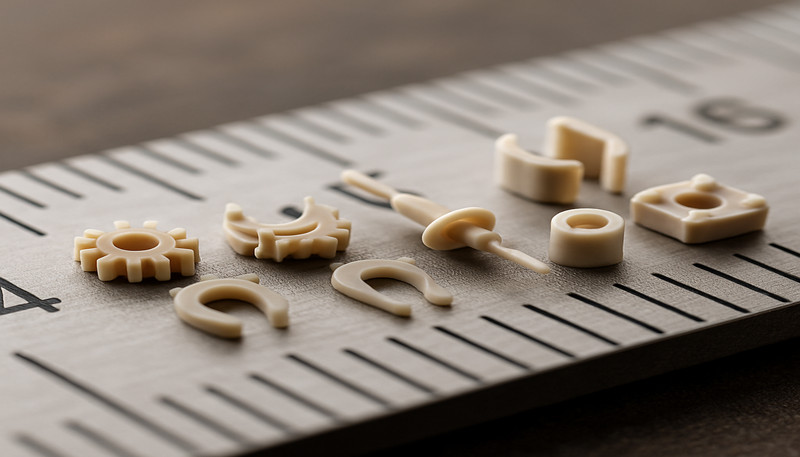
Here’s a number that surprises a lot of designers: the friction force between a cooling plastic part and a polished steel core can exceed 500 N per square centimeter of contact area. On a part with a 50 mm tall cylindrical wall, that’s potentially thousands of newtons of holding force working against your ejector pins. Draft angle is what keeps that force manageable.
In our shop, we’ve seen parts come in for rework where the original designer specified 0° draft on a 40 mm deep bore. The result? Every 20th part stuck and had to be pried out manually — on a high-speed production run of 100,000 parts. The fix was a mold modification costing $3,500 and two weeks of lost production. A 1° draft from the start would have cost exactly nothing.
“Adding just 0.5° of draft angle can break the vacuum seal between a plastic part and the mold core, making ejection possible.”Правда
Even a tiny taper allows air to flow behind the part during ejection, dramatically reducing the force needed to separate the part from the steel. Without any draft, the vacuum effect can make ejection physically impossible without damaging the part.
“Draft angle is only necessary on the cavity side of the mold, not the core side.”Ложь
The opposite is true: the core side is where draft matters most. As plastic shrinks during cooling, it grips the core tighter. The cavity side actually benefits from natural усадка3 pulling the part away from the steel. This is why core-side draft specifications are always more critical in mold design.
Why Do Injection Molded Parts Need Draft Angles?
В этом разделе речь идет о том, что литьевые детали требуют углов съема и о влиянии этого на стоимость, качество, сроки или риски снабжения. Углы съема необходимы, потому что без них пластик при охлаждении плотно сжимается на сердечнике формы и создает достаточное трение, делающее извлечение невозможным или, как минимум, повреждающим деталь. Угол съема (конусность на вертикальных поверхностях) нарушает вакуумное уплотнение и снижает контактное трение, обеспечивая чистое и надежное извлечение детали в каждом цикле. Чем выше элемент и жестче материал, тем критичнее становится угол съема.
During cooling, thermoplastic shrinks toward the center of its mass. On external features (cavity side), this shrinkage pulls the plastic away from the steel — that’s helpful. But on internal features (core side), shrinkage pulls the plastic tighter onto the steel. The taller and straighter the core surface, the more contact area, the more friction, the harder the ejection. Draft angle progressively reduces that contact area from bottom to top.
Без достаточного угла съема вы столкнетесь с рядом проблем, нарастающих в производстве: залипание деталей, требующее ручного удаления, поверхностные потертости и следы волочения в каждом цикле, повышенная нагрузка на толкатели, ведущая к преждевременной поломке, неравномерное выталкивание, вызывающее коробление или растрескивание, и увеличение времени цикла литья, так как фаза извлечения не может быть безопасно ускорена.
I’ve also seen cases where zero-draft parts would eject fine on the first 50 shots of a new, polished tool — but started sticking after 5,000 shots as the mold surface developed microscopic wear. Draft isn’t just about making it work on day one; it’s about making it work reliably for the life of the tool.
There’s a secondary benefit that’s often overlooked: draft angle improves airflow and coolant flow inside the mold. Tapered surfaces create a natural vent path that helps trapped air and gas escape during filling. This reduces burn marks, short shots, and the need for complex venting schemes — especially on deep-ribbed parts.
What Factors Affect the Required Draft Angle?
В этом разделе речь идет о факторах, влияющих на требуемый угол съема, и его влиянии на стоимость, качество, сроки или риски снабжения. Пять основных факторов, определяющих требуемый угол съема: жесткость материала, качество поверхности, геометрия детали (глубина элемента), толщина стенки и объем производства. Жесткие пластики, текстурированные поверхности, глубокие элементы и крупносерийное производство — все это увеличивает требуемый угол съема: обычно 1,5–3° для сложных комбинаций против 0,5–1° для простых.
Material stiffness: Rigid materials like polycarbonate (PC), POM (acetal), and glass-filled nylons resist deformation during ejection. They don’t “give” as they slide off the core, so they need more draft — typically 1.5–3°. Softer materials like TPU, PE, and PP can tolerate less draft (0.5–1°) because they flex slightly during ejection and release more easily.
Surface finish: This is the factor that catches people off guard. A polished (A1 or A2 SPI finish) mold surface has low friction, so 0.5–1° draft might suffice. But a textured surface (SPI B, C, or D finish, or EDM) acts like microscopic teeth gripping the plastic. For every 0.001″ (0.025 mm) of texture depth, you need to add 1–1.5° of additional draft.
“A deep leather-grain texture at 0.004″ depth may require 4–6° of additional draft angle on top of the base material draft.”Правда
Texture depth is one of the most underestimated factors in draft angle specification. Each 0.001″ of texture depth adds roughly 1–1.5° of required draft. A deep leather grain at 0.004″ is actually a common specification that catches many designers off guard, especially when the texture is applied after the initial mold design is complete.
“Textured mold surfaces require the same draft angle as polished surfaces because the texture does not affect friction.”Ложь
Textured surfaces dramatically increase friction during ejection. The microscopic peaks and valleys of the texture interlock with the plastic surface, creating mechanical resistance that polished steel simply does not have. This is why textured molds always need significantly more draft — often 3–6° more than their polished equivalents.
Part geometry: Deep draws, tall ribs, and long cores all amplify friction. A 10 mm deep pocket with 1° draft works fine; a 100 mm deep pocket with 1° draft is a recipe for sticking because the contact area is 10× larger. As a rule of thumb, for features deeper than 50 mm, increase draft by at least 0.5° per additional 25 mm of depth.
Wall thickness: Thicker walls shrink more, which increases the gripping force on cores. A 4 mm wall section will need more draft than a 1.5 mm section for the same geometry and material.
Production volume: For low-volume prototype проектирование пресс-форм для литья под давлением и оснасткой (менее 1000 выстрелов), можно обойтись меньшим углом съема, так как инструмент остается в идеальном состоянии. Для серийной оснастки, работающей на 100К+ циклов, достаточный угол съема необходим — поверхность формы со временем изнашивается, и то, что работает на выстреле #1, может заклинить на выстреле #50,000.
How Do You Calculate the Correct Draft Angle?
There are two practical approaches: rule-of-thumb tables and CAD-based analysis. For most parts, the table-based method is sufficient. For high-precision or complex parts, CAD simulation catches problems the tables miss.
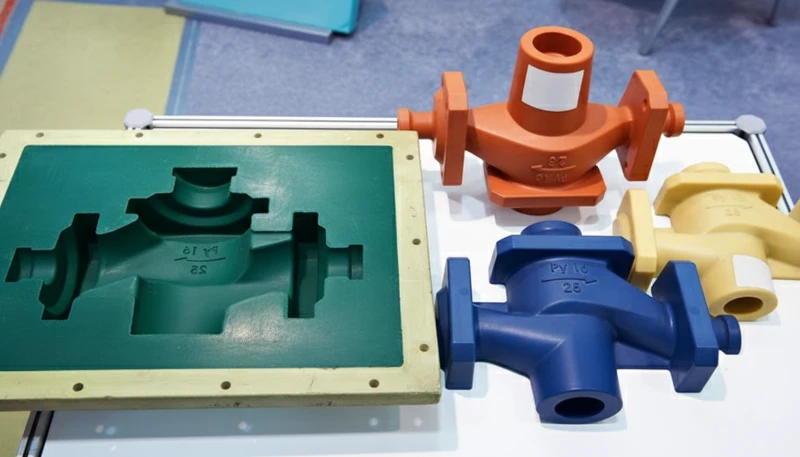
Базовая формула: Для заданной глубины элемента (H) и желаемого зазора вверху (C) угол съема θ = arctan(C / H). На практике большинство инженеров не рассчитывают это — они ориентируются на минимальные значения для конкретного материала и добавляют запас прочности.
Rule of thumb for smooth surfaces:
– Small parts (150 mm feature depth): ≥2–3°
– All surfaces: minimum 0.5° even for low-friction materials
Корректировка для текстуры: Для текстурированных поверхностей добавьте 1–1,5° на каждые 0,001″ (0,025 мм) глубины текстуры. Ваш поставщик литья под давлением должен предоставить точную спецификацию глубины — всегда уточняйте у них перед окончательным утверждением углов съема.
CAD-based analysis: Modern mold flow simulation tools (Moldflow, Moldex3D) can predict ejection forces and identify areas where draft is insufficient. We run these simulations on complex parts to catch draft-related issues before steel is cut. It’s far cheaper to fix a CAD model than to re-cut a cavity.
One practical tip we use on the shop floor: when in doubt, add draft. It’s almost never wrong to have more draft than the minimum — the only cases where excessive draft causes problems are precision fits and snap-fit features where the taper changes the geometry. For those features, you specify draft direction (toward or away from the functional surface) and verify with tolerances.
What Draft Angle Standards Should You Follow by Material?
For smooth mold surfaces, most engineering plastics (ABS, PA66, PC) need 1–2° of draft, while softer materials like PP and TPU can get by with 0.5–1°. High-temperature or glass-filled materials like PEEK and GF-PA66 require 1.5–3°. For every step of texture depth (0.001″), add another 1–1.5° on top of these base values. The table below breaks it down by material.
| Материал | Min. Draft (°) | Recommended (°) | Примечания |
|---|---|---|---|
| ABS | 0.5 | 1.0–1.5 | Low shrinkage; forgiving |
| ПК | 0.5 | 1.0–2.0 | Rigid; higher friction |
| PA66 | 0.5 | 1.0–1.5 | Glass-filled needs more |
| PP | 0.25 | 0.5–1.0 | Soft; easy release |
| POM | 0.5 | 1.0–2.0 | Rigid but slippery |
| TPU | 0.25 | 0.5–1.0 | Elastomeric; self-releasing |
| PEEK | 0.5 | 1.5–3.0 | High-temp; generous draft needed |
| ПММА | 0.5 | 1.0–2.0 | Brittle; needs smooth ejection |
Important caveat: these are for smooth (SPI A-2 or better) mold surfaces. For every step down in surface finish (polished → fine matte → coarse matte → textured), add 0.5–1.5° to the recommended draft. For EDM surfaces, add 1–2° minimum.
Glass-filled grades deserve special mention. When you move from unfilled PA66 to 30% glass-filled PA66, the part becomes significantly more rigid and abrasive. The filler also increases the surface roughness of the molded part, which increases friction during ejection. Our rule: add 0.5–1° extra for any glass-filled or mineral-filled grade.
What Are Common Draft Angle Mistakes?
Common draft angle mistakes are the main categories or options explained in this section. After two decades of reviewing mold designs, I see the same draft angle mistakes over and over. Here are the ones that cost the most money and time.
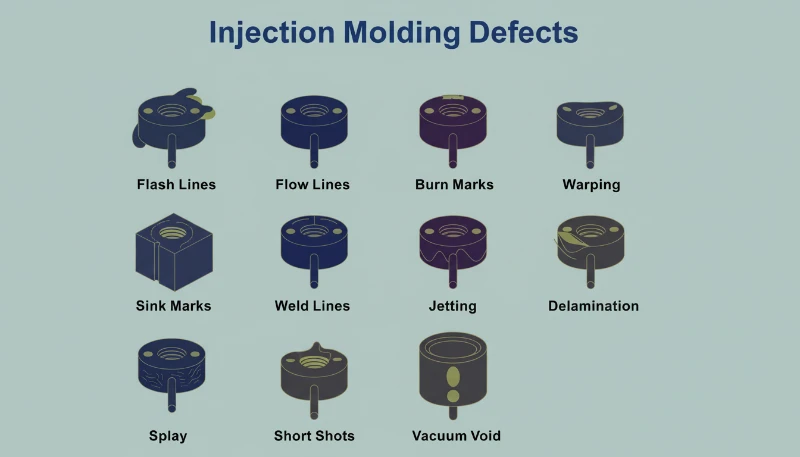
Mistake 1: Specifying 0° draft on cosmetic surfaces. Some designers think draft will be visible on show surfaces and therefore specify zero. The reality: 0.5° is virtually invisible on most parts, and 1° is imperceptible on anything larger than a medical micro-mold. Meanwhile, 0° draft on a polished cosmetic surface means drag marks on every single part — which is a lot more visible than 1° of taper.
“A 1° draft angle is virtually invisible on most injection molded parts, yet it prevents costly ejection problems.”Правда
Many designers avoid draft on cosmetic surfaces, fearing visible taper. In reality, 0.5–1° of draft is imperceptible on parts larger than a few centimeters. The drag marks caused by zero-draft ejection are far more visible and damaging to part appearance.
“If a part ejects fine during initial sampling, the draft angle is sufficient for production.”Ложь
Initial sampling uses a fresh, polished mold surface. After thousands of cycles, microscopic wear increases friction on marginal-draft features. What ejects cleanly on shot #10 may stick consistently by shot #5,000. Production reliability requires more draft than sampling suggests.
Mistake 2: Ignoring draft on ribs and bosses. Everyone remembers the outside walls. But internal ribs and bosses have the tightest ejection clearances and the smallest ejector pin contact area. These features need at least 0.5° per side — and many designers leave them at 0° because they’re “small.” A stuck rib is just as production-stopping as a stuck wall.
Mistake 3: Not accounting for texture depth. This one happens when the texture specification is added after the mold design is finalized. The designer uses smooth-surface draft values, the texture gets applied later, and suddenly every part sticks. Always confirm the texture depth before finalizing draft.
Mistake 4: Draft in the wrong direction. If you apply draft that tapers the part smaller at the parting line instead of larger, you’ve created an undercut — the part now locks into the mold instead of releasing from it. This is a CAD error, but it gets through to tooling more often than you’d think, especially on complex multi-core parts.
Mistake 5: Insufficient draft on deep pockets. A 2° draft on a 5 mm deep pocket is fine. The same 2° on a 100 mm deep pocket may not be enough — the friction force scales with surface area, and a 100 mm deep wall has a lot of surface area. For deep features, increase draft progressively or use stepped drafts.
The common thread in all these mistakes: they’re all cheap to fix in CAD and expensive to fix in steel. Catching a draft problem on screen takes 30 minutes. Fixing it in a hardened steel cavity takes two weeks and thousands of dollars. That’s why a thorough draft review should be part of every mold design sign-off before machining starts.
Имея более 20 лет опыта, 8 старших инженеров, 47 литьевых машин от 90 до 1850 тонн и собственные мощности по производству форм на 100+ комплектов в месяц, ZetarMold выявляет риски технологичности конструкции, связанные с углами съема, до начала обработки металла.
Часто задаваемые вопросы
What is the minimum draft angle for injection molding?
The absolute minimum is 0.25° for very soft, flexible materials like TPU or LDPE with a polished mold surface. For most engineering plastics (ABS, PA66, PC) on a smooth surface, the practical minimum is 0.5–1°. Anything below 0.5° is risky for production tooling and should only be used when the part geometry absolutely cannot accommodate more draft. In production environments, most molders recommend at least 1° as a comfortable starting point for most materials to ensure reliable ejection over the full life of the tool.
Can you injection mold parts with zero draft angle?
Technically yes, but it requires special measures: generous use of mold release agents, very slow ejection speeds, and acceptance of higher scrap rates. Zero-draft parts typically need stripper plates instead of ejector pins, and even then, you’ll see surface drag marks on every part. For any volume above prototyping, zero draft is a false economy that leads to inconsistent quality and costly mold rework. Most experienced molders will flag zero-draft features as a DFM risk and recommend at least minimal taper.
How does surface finish affect the required draft angle?
Surface finish is one of the most impactful factors in draft angle specification. A polished (SPI A-1) surface needs only 0.5–1° draft for most materials because the smooth steel has low friction. A standard EDM finish (SPI C-1) needs 1.5–2° extra because the spark-eroded texture grips the plastic mechanically. Textured surfaces need an additional 1–1.5° per 0.001″ of texture depth. Always get the finish specification confirmed before finalizing your draft values — changing the finish after tooling is cut is extremely expensive.
What draft angle is needed for textured surfaces?
For textured surfaces, add 1–1.5° of draft per 0.001″ (0.025 mm) of texture depth. A light sandblast texture at 0.001″ needs about 1–1.5° extra. A deep leather grain at 0.004″ needs 4–6° extra, on top of your base material draft. Inner surfaces (core side) need more than outer surfaces (cavity side) because shrinkage grips the core tighter. Always verify the exact texture depth with your mold texturing supplier, as different suppliers may have slightly different depth specifications for the same nominal texture pattern.
Does draft angle affect part dimensional accuracy?
Yes, but the effect is usually negligible at normal draft values. A 2° draft on a 50 mm tall wall changes the top dimension by approximately 1.75 mm per side. If your part has tight tolerances on that wall, you need to account for the taper in your tolerance stack and specify which dimension is the reference (top, bottom, or midpoint). For most applications under 3° draft, the dimensional impact is within standard molding tolerances (±0.1–0.3 mm) and won’t cause functional issues.
How much draft angle does polycarbonate need?
Polycarbonate is a rigid, high-friction material that typically requires 1–2° draft on smooth mold surfaces. For textured or matte-finish PC parts, increase the draft to 2–4° minimum. PC’s high melt viscosity also means it fills molds at higher injection pressures, which can increase the gripping force during ejection — another reason to be generous with draft on polycarbonate parts. In our experience, under-specifying draft on PC is one of the most common causes of production issues with this material. Always specify generous draft for PC parts during the DFM phase.
What happens if the draft angle is too small?
The symptoms are progressive and get worse over the tool’s life. First, you’ll notice faint drag marks or gloss changes on the part surface where the plastic scraped against the steel. Then parts start sticking intermittently, requiring slower ejection speeds or operator intervention. As the mold surface degrades, you’ll see increasing scuffing, scratching, and warpage from uneven ejection forces. In severe cases, parts crack during removal. The mold surface also wears faster in low-draft areas, creating a downward spiral of worsening quality and increasing scrap rates. If in doubt, always consult with your molder before finalizing the design.
Need a Quote for Your Injection Molding Project?
Прежде чем отправить следующий проект формы в инструментальное производство, пройдитесь по этому краткому чек-листу: каждая вертикальная грань имеет угол съема ≥1°, текстурированные поверхности имеют дополнительный угол, соответствующий глубине текстуры, ребра и бобышки не забыты, а направление съема соответствует раскрытию формы. Если какой-либо пункт не отмечен, исправьте это в САПР сейчас — ваша производственная команда позже скажет вам спасибо. Нужен экспертный взгляд на ваш проект? Получите конкурентные цены, отзывы по технологичности конструкции (включая проверку углов съема) и сроки производства от инженерной команды ZetarMold. Имея 47 литьевых машин (от 90 до 1850 тонн), опыт обработки 400+ материалов и более 20 лет опыта, мы выявляем проблемы, связанные с углами съема, до того, как они станут производственными проблемами.
Запросите бесплатное предложение → Используйте руководство по шнековым литьевым машинам, если хотите связать проверку углов съема со стабильностью процесса на стороне машины.
-
draft angle: draft angle refers to is the taper applied to vertical surfaces of a mold cavity or core to facilitate removal of the molded part after the injection molding cycle. ↩
-
ejection: Ejection refers to the phase of the injection molding cycle where the cooled part is pushed out of the mold using pins, plates, or air blast systems. ↩
-
shrinkage: shrinkage refers to is the reduction in part dimensions that occurs as molten plastic cools and solidifies, typically ranging from 0.2% to 2.5% depending on the material. ↩



 EN
EN  ES
ES  FR
FR  DE
DE  PT
PT  AR
AR  RU
RU  JA
JA  KO
KO  IT
IT  NL
NL  TR
TR  PL
PL