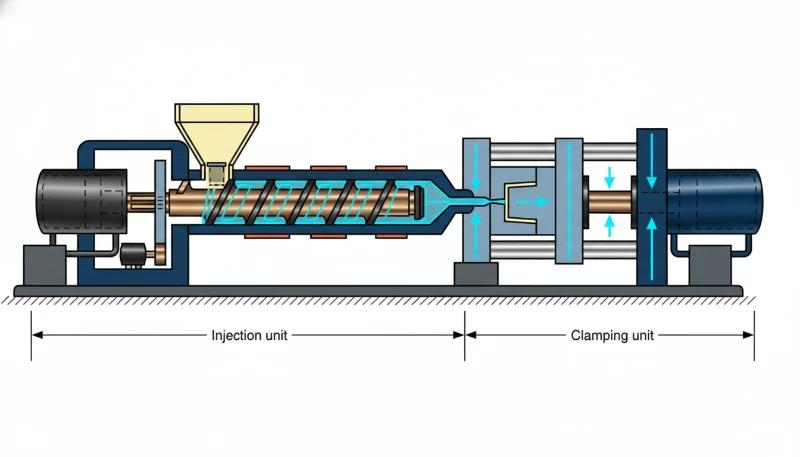
Você está produzindo um lote de carcaças automotivas quando o inspetor de qualidade identifica peças com bolhas de ar visíveis e mistura de cores irregular. A primeira reação é culpar o material ou a temperatura do molde, mas, após 20 anos neste setor, posso afirmar que o verdadeiro culpado muitas vezes está à vista: a contrapressão1. A maioria dos transformadores trata esse parâmetro como algo secundário, ajustando-o uma vez e depois o esquecendo. Esse erro custa peças, tempo e dinheiro. A contrapressão é um dos parâmetros mais subestimados na moldagem por injeção2, embora controle diretamente a qualidade do material fundido, a desgaseificação e a mistura do material. Um ajuste incorreto fará você perseguir defeitos o dia inteiro.
Já vi linhas de produção operarem com apenas 60% de eficiência porque os operadores não compreendiam a relação entre a contrapressão e a preparação do material fundido. Um fornecedor automotivo com quem trabalhei rejeitava 12% de seus componentes de painel em ABS por causa de estrias prateadas — uma perda mensal de $40,000 que desapareceu quando elevamos a contrapressão de 80 para 120 PSI. A física é simples: a resistência controlada durante a recuperação da rosca gera o aquecimento por cisalhamento3 e a ação de mistura necessárias para preparar um material fundido homogêneo. Sem isso, você estará basicamente injetando um material irregular no molde de injeção e esperando resultados consistentes.
- A contrapressão é a resistência hidráulica aplicada à rosca durante a recuperação, normalmente de 50–300 PSI.
- A contrapressão adequada elimina bolhas de ar, melhora a dispersão da cor e garante consistência entre os ciclos.
- Uma contrapressão demasiado elevada provoca degradação térmica, ciclos mais longos e desgaste do equipamento.
- Comece em 100 PSI e ajuste em incrementos de 20 PSI enquanto monitora a qualidade da peça.
O que é contrapressão na moldagem por injeção?
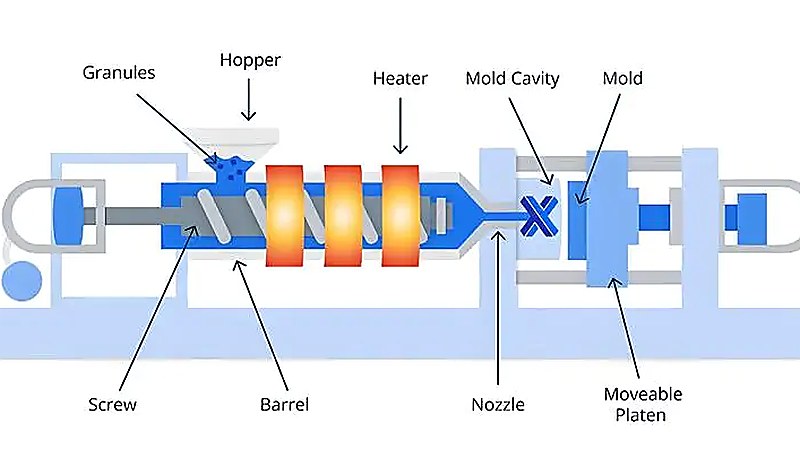
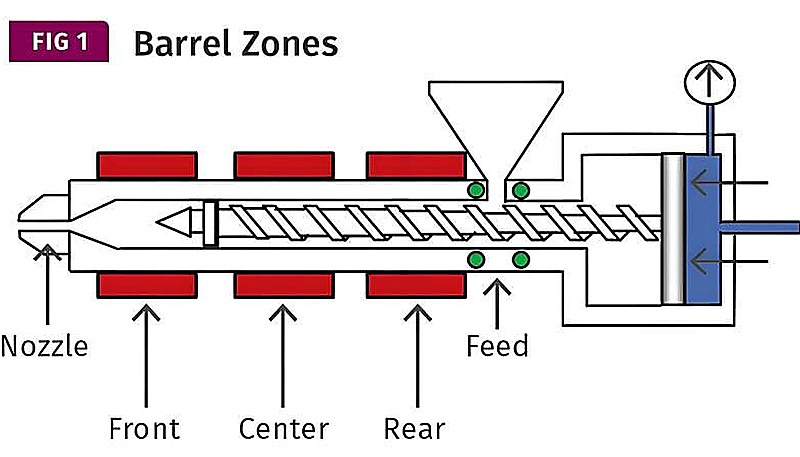
A contrapressão é a resistência hidráulica aplicada para abrandar a recuperação do fuso, situando-se normalmente entre 50-200 PSI para a maioria dos termoplásticos. Pense nela como um travão no fuso durante a fase de plastificação. Quando o fuso roda e recua para preparar a injeção seguinte, a contrapressão cria uma resistência que obriga o plástico fundido a exercer maior esforço à medida que avança no cilindro. Esta resistência cumpre várias funções: melhora a homogeneidade do fundido, elimina o ar e a humidade retidos e assegura uma densidade uniforme do material. O mecanismo funciona através do sistema hidráulico da máquina: uma válvula de pressão restringe o fluxo de óleo do cilindro de injeção, criando resistência à tendência natural do fuso para recuar rapidamente sob a pressão do plástico fundido que entra.
Se você está comparando fornecedores ou planejando uma compra, nosso guia de seleção de fornecedores de moldagem por injeção aborda a preparação da solicitação de cotação, a qualificação e a avaliação de riscos comerciais.
Para uma visão mais ampla, nosso guia completo de moldagem por injeção aborda os fundamentos do processo, o comportamento dos materiais e as decisões de produção.
Sem contrapressão adequada, o plástico flui demasiado facilmente durante a recuperação do fuso, provocando mistura deficiente e voláteis retidos. Medi temperaturas do material fundido com pirómetros que mostraram variações de 15-20°F ao longo da injeção quando a contrapressão desceu abaixo dos níveis ideais. O sistema funciona através da pressão hidráulica aplicada ao cilindro de injeção, que contraria a tendência natural do fuso para recuar rapidamente. A maioria das máquinas modernas de moldação por injeção permite regular a contrapressão de forma independente da pressão de injeção, proporcionando um controlo preciso da preparação do material fundido. A regulação da contrapressão encontra-se no painel de controlo de todas as máquinas, normalmente medida em bar, PSI ou percentagem da pressão do sistema.
As máquinas europeias apresentam normalmente valores em bar (1 bar = 14.5 PSI), enquanto o equipamento norte-americano usa diretamente PSI. O essencial é compreender que a contrapressão gera aquecimento controlado por corte — normalmente aumenta a temperatura do fundido em 10-25°F, consoante a velocidade do fuso e a viscosidade do material.
Por que é importante a contrapressão para a qualidade da peça?
A contrapressão é essencial para a qualidade da peça porque controla a homogeneidade da massa fundida, a desgaseificação e a consistência da injeção. À medida que o parafuso roda sob contrapressão, o aquecimento por cisalhamento funde o plástico uniformemente enquanto força a saída de ar e humidade através da entrada de alimentação. A física envolve dissipação viscosa — a energia mecânica converte-se em energia térmica, aumentando a temperatura da massa fundida em 8-12°F por cada aumento de 100 PSI. Este aquecimento controlado é crítico para materiais como o policarbonato, onde uma distribuição uniforme da temperatura previne a distorção ótica. Sem contrapressão suficiente, obtém-se fusão inconsistente, gases aprisionados e má mistura de cor que se manifesta como estrias ou marcas de salpicos.
O principal impacto da contrapressão na qualidade é a prevenção de defeitos: as regulações corretas eliminam bolhas de ar, melhoram a dispersão da cor e asseguram uma densidade consistente entre injeções. Já vi moldadores debaterem-se durante semanas com defeitos de moldação por injeção, ajustando temperaturas e velocidades, quando o verdadeiro problema era uma contrapressão insuficiente que permitia que a humidade permanecesse no fundido. A pressão também assegura a consistência do volume de injeção ao impedir que o fuso recue demasiado depressa, o que pode criar variações de densidade no cilindro. Para materiais que absorvem humidade, como nylon ou PET, a contrapressão correta é fundamental para remover o vapor de água que, de outro modo, causaria bolhas ou defeitos superficiais.
Notará imediatamente a diferença no acabamento superficial e na consistência dimensional das suas peças quando a contrapressão estiver corretamente otimizada. Só a melhoria do brilho superficial pode eliminar operações secundárias como o polimento ou a pintura em muitas aplicações.
"Uma contrapressão mais elevada melhora sempre a qualidade da peça"True
Falso. Embora uma contrapressão adequada melhore a qualidade do fundido, uma contrapressão excessiva pode causar a degradação do material, ciclos mais longos e maior desgaste do fuso e do cilindro. O essencial é encontrar o intervalo ideal para cada material.
"As definições de contrapressão mantêm-se constantes durante toda a produção"False
Falso. A contrapressão pode precisar de ajustes conforme as variações entre lotes de material, as mudanças na umidade ambiente ou os requisitos de produção. Moldadores experientes monitoram e ajustam a contrapressão quando necessário para manter a qualidade consistente das peças.
É impossível exagerar a importância do efeito de desgaseificação de uma contrapressão adequada. Quando os grânulos de plástico fundem, libertam ar retido, humidade e compostos voláteis que têm de ser evacuados antes da injeção. A contrapressão cria uma ação de bombagem que força estes gases a recuar através da secção de alimentação e a sair pela tremonha. Sem pressão adequada, estes voláteis permanecem no fundido e manifestam-se sob a forma de estrias prateadas, bolhas ou linhas de soldadura fracas nas peças acabadas. Documentei casos em que o aumento da contrapressão em apenas 40 PSI eliminou 90% das imperfeições superficiais em lentes de policarbonato transparente.
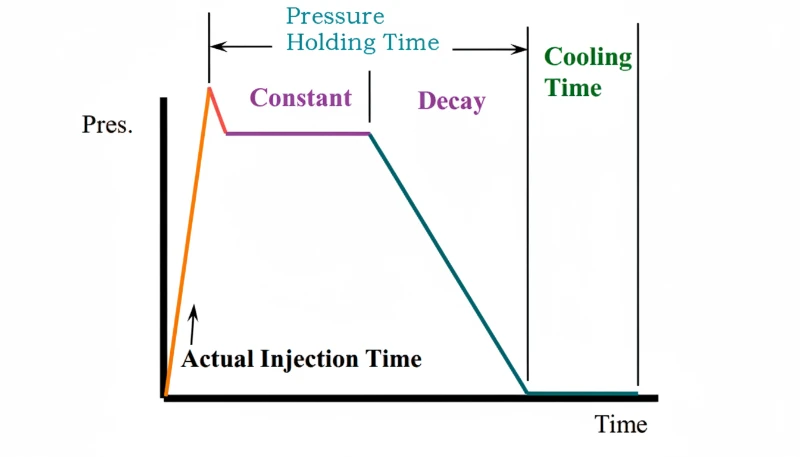
O essencial é criar tensão de corte suficiente para homogeneizar o material fundido, mantendo ao mesmo tempo um tempo de residência adequado para a evacuação dos gases — normalmente 15-30 segundos de tempo total de recuperação do parafuso, consoante o volume de injeção.
Como a contrapressão afeta diferentes materiais?
Cada material exige uma contrapressão diferente: os plásticos higroscópicos necessitam de 100-200 PSI e os materiais não higroscópicos de 50-80 PSI. Por serem apolares e resistentes à humidade, o polipropileno e o polietileno necessitam de uma contrapressão mínima — normalmente 50-80 PSI. Estes materiais têm uma viscosidade relativamente baixa quando fundidos e misturam-se facilmente sem cisalhamento excessivo. Uma pressão excessiva degrada estes materiais e prolonga desnecessariamente os tempos de ciclo. Já vi para-choques automóveis de PP desenvolverem estrias castanhas por degradação térmica quando a contrapressão ultrapassou 120 PSI — o material simplesmente não suportou o aquecimento adicional por cisalhamento.
Os requisitos de contrapressão variam drasticamente consoante o tipo de material: os plásticos higroscópicos, como o nylon e o PET, necessitam de 150-200 PSI para remover adequadamente a humidade, enquanto os materiais não higroscópicos, como o PP, necessitam apenas de 50-80 PSI. O nylon, o PET e o policarbonato absorvem humidade do ar — em condições húmidas, o nylon pode absorver até 3% do seu peso — e é necessária uma pressão elevada e constante para expelir esse vapor de água durante a plastificação. Moldei milhares de peças de nylon e uma contrapressão insuficiente manifesta-se sempre sob a forma de estrias prateadas causadas por bolhas de vapor. O PET é particularmente sensível — mesmo um teor de humidade de 0.02% causa degradação do IV e peças turvas.
Os materiais reforçados com fibra de vidro apresentam um desafio completamente diferente: necessitam de contrapressão moderada (100-150 PSI) para assegurar uma distribuição adequada das fibras, mas uma pressão excessiva pode partir as fibras e reduzir as propriedades mecânicas. Testei amostras de nylon com 30% de fibra de vidro nas quais uma contrapressão excessiva (acima de 180 PSI) reduziu o comprimento médio das fibras de 200 microns para 85 microns, diminuindo a resistência à tração em 25%. A chave é proporcionar uma mistura suficiente para distribuir uniformemente as fibras, sem o corte excessivo que provoca a sua rutura. Plásticos de engenharia como POM e PPS exigem um equilíbrio cuidadoso: pressão suficiente para assegurar a homogeneidade, mas não tanta que cause degradação térmica.
O POM é particularmente difícil porque pode despolimerizar em altas temperaturas, liberando gás formaldeído que causa defeitos superficiais e instabilidade dimensional.
Configurações de Resina Reciclada vs. Virgem
O PET pós-consumo, por exemplo, pode exigir 180-220 PSI, em comparação com 150-180 PSI para material virgem. O nível de contaminação e o histórico térmico afetam significativamente os requisitos de processamento. Já processei ABS reciclado que necessitou de uma contrapressão de 140 PSI, em comparação com 100 PSI para material virgem do mesmo fornecedor. O essencial é compreender a classe específica do seu material e ajustar o processo em conformidade. As fichas técnicas dos materiais raramente especificam as definições ideais de contrapressão, pelo que é necessário desenvolver este conhecimento através de ensaios sistemáticos e da documentação do que funciona em cada aplicação.
| Tipo de material | Contrapressão recomendada (PSI) | Considerações principais |
|---|---|---|
| PP/PE | 50-80 | Baixa pressão para evitar degradação |
| Poliamida (Nylon, PA) | 150-200 | Alta pressão para remoção de umidade |
| Policarbonato (PC) | 120-180 | Moderada-alta para desgaseificação |
| Reforçado com fibra de vidro | 100-150 | Equilibre a mistura com a integridade das fibras |
| PET | 150-200 | Pressão elevada essencial para a transparência |
| POM | 80-120 | Moderada para evitar degradação |
Quais configurações de contrapressão devem ser usadas?
Comece com 100 PSI para a maioria dos materiais e ajuste depois com base na qualidade da peça e no comportamento do material durante os ensaios de produção. Na minha experiência, este valor de referência funciona para cerca de 70% dos termoplásticos comuns. Para a configuração inicial, recomendo começar de forma conservadora e aumentar gradualmente, monitorizando a qualidade do fundido. Observe o tempo de recuperação do fuso — deve aumentar proporcionalmente à contrapressão. Se o tempo de recuperação duplicar quando aumenta a pressão em 50%, estará próximo do valor correto. Uma relação típica é de 2-3 segundos adicionais de recuperação por cada aumento de 50 PSI, embora varie significativamente com o diâmetro do fuso, a viscosidade do material e o volume de injeção. Para um fuso de 2.5 polegadas de diâmetro que processe ABS, preveja tempos de recuperação de 8-12 segundos a 100 PSI, em comparação com 12-18 segundos a 150 PSI.
Pontos de Partida Específicos do Material
Estes números não são fórmulas mágicas, mas permitem aproximar-se o suficiente para depois afinar o processo. À medida que ajusta os parâmetros, monitorize as peças quanto a defeitos superficiais, mistura de cores e consistência dimensional. O ponto ideal é aquele em que se obtém uma boa qualidade do material fundido sem tempo de ciclo excessivo nem degradação do material. Recomendo sempre moldar peças de amostra a três níveis de pressão: o ponto de partida, 30 PSI acima e 30 PSI abaixo. Compare o acabamento superficial e a uniformidade da cor e verifique se existem estrias prateadas ou bolhas. O ajuste ideal torna-se normalmente evidente quando se examinam as peças lado a lado, sob boa iluminação.
Ao definir os valores iniciais, considere também o projeto do fuso: os fusos de barreira necessitam normalmente de menos 20-30% de contrapressão do que os fusos convencionais para obter a mesma qualidade de mistura. A geometria de um fuso de barreira proporciona inerentemente uma melhor mistura, pelo que uma contrapressão excessiva apenas aumenta desnecessariamente o tempo de ciclo. Considere também o teor de humidade e a temperatura de processamento do material. O nylon seco poderá necessitar apenas de 120 PSI de contrapressão, enquanto o material retirado diretamente do saco poderá exigir 180 PSI para obter a mesma qualidade de fundido. A humidade ambiente afeta significativamente os materiais higroscópicos: observei peças de nylon exigirem mais 40 PSI de contrapressão nos meses de verão do que no processamento de inverno com o mesmo lote de material.
Nas instalações da ZetarMold em Xangai, os nossos 8 engenheiros seniores otimizaram as regulações de contrapressão em 47 máquinas de moldação por injeção com capacidades entre 90T e 1850T. Ao produzirmos 100+ conjuntos de moldes por mês, desenvolvemos perfis de contrapressão específicos para mais de 400+ classes diferentes de plástico. A nossa experiência demonstra que a otimização correta da contrapressão pode reduzir as taxas de defeitos em até 30% e melhorar simultaneamente a eficiência do ciclo; por isso, os nossos 120+ trabalhadores da produção recebem formação para monitorizar e ajustar estas regulações ao longo das séries de produção.
O que acontece quando a contrapressão é alta ou baixa demais?
A pressão de retorno demasiado baixa causa bolhas de ar e má mistura; a pressão demasiado alta causa degradação e ciclos longos. Os problemas de baixa pressão manifestam-se rapidamente — verá estrias prateadas, variações de cor e inconsistências dimensionais. O parafuso retrai-se demasiado depressa, introduzindo ar na massa fundida a partir da entrada de alimentação. Isto é particularmente problemático com materiais de baixa viscosidade como o polipropileno, onde uma pressão de retorno inadequada pode causar variações de peso de 2-3% entre injeções. A humidade e os voláteis também não são removidos adequadamente, levando a defeitos superficiais e vazios internos.
Porque é que Aumentar a Contrapressão em 30-50 PSI Frequentemente Resolve Problemas de Bolhas de Ar
Num caso memorável, um fabricante de dispositivos médicos rejeitava 8% dos seus componentes de polissulfona devido a vazios microscópicos detetados por inspeção por raios X. A causa principal era uma contrapressão insuficiente — apenas 70 PSI quando o material necessitava de 140 PSI para uma desgaseificação adequada. Os vazios concentravam-se junto à zona do ponto de injeção, onde é mais provável ocorrer aprisionamento de ar durante o recuo rápido do fuso. Uma contrapressão baixa também afeta drasticamente a consistência da cor. Sem uma mistura adequada, a distribuição do corante torna-se irregular, criando estrias visíveis ou um aspeto mosqueado, particularmente evidente em cores claras ou materiais transparentes.
Por outro lado, uma contrapressão excessiva cria um conjunto próprio de problemas, muitas vezes mais subtis, mas igualmente prejudiciais. O tempo de permanência do material aumenta significativamente, provocando degradação térmica, sobretudo em polímeros sensíveis ao calor, como PVC ou POM. Os tempos de ciclo prolongam-se desnecessariamente — observei casos em que a redução da contrapressão de 200 para 140 PSI diminuiu os tempos de ciclo em 12% sem afetar a qualidade da peça. Isto traduz-se em ganhos de produtividade substanciais ao longo de milhões de ciclos. Na pior das hipóteses, o desgaste excessivo pode danificar o fuso e o cilindro, sobretudo com materiais abrasivos reforçados com fibra de vidro. O aumento da tensão de cisalhamento acelera o desgaste dos filetes do fuso e das superfícies do cilindro, podendo exigir uma substituição prematura que custa $15,000-40,000, consoante a dimensão do fuso.
O material também pode sobreaquecer devido a cisalhamento excessivo, causando alterações de cor ou degradação de propriedades que podem não ser imediatamente visíveis. Documentei casos em que peças automóveis de ABS apresentavam inicialmente um excelente aspeto, mas falharam nos ensaios de impacto após seis meses devido à degradação do peso molecular provocada por contrapressão excessiva durante o processamento. As peças pareciam perfeitas, mas apresentavam ductilidade reduzida, o que levou a uma rotura frágil sob tensão. Encontrar o equilíbrio ideal exige compreender a aplicação específica e os requisitos do material. As medições de temperatura com pirómetros portáteis podem ajudar a identificar quando o aquecimento por cisalhamento se torna excessivo - as temperaturas do fundido não devem aumentar mais de 20-25°F apenas devido à rotação do fuso.
"A contrapressão afeta a consistência entre injeções"True
Verdadeiro. Uma contrapressão adequada garante densidade consistente do fundido e recuperação uniforme da rosca, resultando em pesos de injeção e dimensões das peças mais uniformes. Contrapressão inconsistente é uma causa comum de variações no peso das peças.
"A contrapressão afeta apenas a fase de plastificação"False
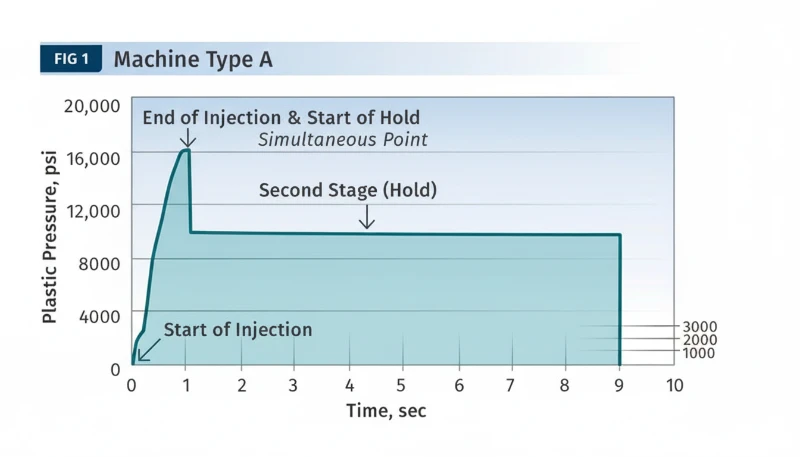
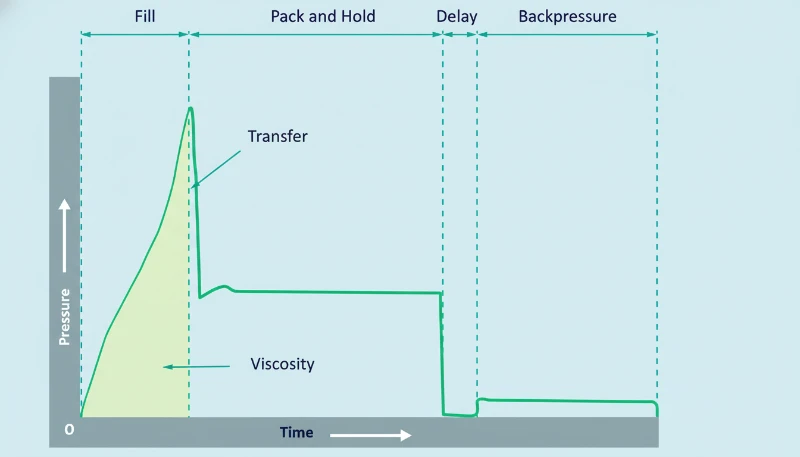
Falso. Embora a contrapressão seja aplicada durante a plastificação, seus efeitos se estendem às fases de injeção e recalque ao influenciar a temperatura, a homogeneidade e o teor de gás da massa fundida, fatores que afetam a qualidade final da peça.
Como otimizar a contrapressão para a produção?
Monitorize a qualidade do material fundido, o tempo de ciclo e os defeitos das peças enquanto ajusta a contrapressão em incrementos de 20-30 PSI durante os ensaios de produção. Comece por estabelecer definições de referência nos ensaios iniciais de moldagem e depois ajuste-as com base no desempenho real das peças. Recomendo sempre uma experiência planeada: molde peças com três níveis diferentes de contrapressão, mantendo todos os outros fatores constantes.
Por exemplo, se começar em 120 PSI, teste a 90, 120 e 150 PSI, mantendo temperaturas, velocidades e pressões idênticas. Meça o peso das injeções ao longo de 20-30 ciclos para cada definição — o coeficiente de variação deve ser inferior a 0.5% para assegurar uma consistência aceitável. Verifique a existência de defeitos superficiais, avalie a consistência dimensional e documente quaisquer alterações do tempo de ciclo.
O ajuste ideal geralmente se torna evidente quando as peças são comparadas lado a lado sob iluminação fluorescente, na qual os defeitos ficam mais visíveis.
Durante a otimização, preste muita atenção ao tempo de recuperação do fuso e à temperatura da massa fundida. O tempo de recuperação deve manter-se dentro dos requisitos do tempo de ciclo global - não faz sentido obter uma qualidade perfeita da massa fundida se isso comprometer a produtividade. Utilize um pirómetro de contacto ou uma pistola de infravermelhos para medir a temperatura da massa fundida no bico durante o arranque. Uma contrapressão devidamente otimizada aumenta normalmente a temperatura da massa fundida em 10-20°F face às regulações de pressão mínima. Se as temperaturas excederem as orientações de processamento do material, existe o risco de degradação, mesmo com um bom aspeto superficial. Documente rigorosamente as regulações para cada combinação de material e molde. O que funciona num trabalho não funcionará necessariamente noutro, mesmo com a mesma resina de base proveniente de fornecedores ou lotes diferentes.
Considere as variações sazonais no seu processo de otimização: a humidade ambiente afeta significativamente os materiais higroscópicos, exigindo ajustes da contrapressão ao longo do ano. Mantenho registos detalhados que mostram que as aplicações de nylon 66 exigem 140 PSI durante os meses de inverno, em comparação com 170 PSI sob a humidade do verão. Os fornecedores de materiais raramente mencionam este facto, mas ele é essencial para garantir uma qualidade consistente. Os calendários de manutenção regular também afetam os requisitos de otimização. Fusos ou cilindros desgastados, com folgas superiores, podem exigir uma contrapressão 20-40 PSI mais elevada para obter a mesma qualidade do fundido que um equipamento novo. Recomendo que as definições de contrapressão sejam reavaliadas após qualquer manutenção importante ou substituição do fuso, pois as características de processamento podem mudar significativamente com equipamento novo.
Perguntas Frequentes Sobre Contrapressão na Moldagem por Injeção?
Perguntas mais frequentes
Qual é a gama habitual de contrapressão na moldação por injeção?
A maioria dos termoplásticos utiliza contrapressão de 50-200 PSI, dependendo do tipo de material. Materiais não higroscópicos como PP necessitam de 50-80 PSI, enquanto materiais sensíveis à humidade como nylon exigem 150-200 PSI. Comece com 100 PSI como referência para a maioria das aplicações. Materiais não higroscópicos como PP e PE funcionam normalmente a 50-80 PSI, enquanto plásticos de engenharia como policarbonato e nylon exigem frequentemente 120-200 PSI. Comece sempre pelo limite inferior do intervalo recomendado e aumente gradualmente, monitorizando defeitos superficiais e consistência dimensional.
Como a contrapressão afeta o tempo de ciclo?
Uma contrapressão mais alta aumenta proporcionalmente o tempo de recuperação da rosca, prolongando o tempo total do ciclo. Um aumento de 50% na contrapressão normalmente acrescenta 10-20% ao tempo de recuperação. Equilibre as necessidades de qualidade do fundido com os requisitos de eficiência da produção. Por exemplo, aumentar a contrapressão de 100 para 150 PSI em uma rosca típica de 2.5 polegadas processando ABS pode prolongar o tempo de recuperação de 8 para 12 segundos. Esse tempo adicional se traduz diretamente em ciclos mais longos e menor produtividade. O essencial é equilibrar a qualidade do fundido com a eficiência da produção para cada aplicação específica.
A contrapressão pode eliminar completamente as bolhas de ar?
Uma contrapressão adequada reduz significativamente as bolhas de ar ao melhorar a desgaseificação durante a plastificação. No entanto, as bolhas também podem resultar do projeto do molde, da velocidade de injeção ou do teor de umidade do material. A contrapressão é uma ferramenta dentro de uma solução abrangente. O ar aprisionado no fundido também pode ter origem em ventilação deficiente do molde, secagem insuficiente de materiais higroscópicos ou velocidades de injeção excessivas. Uma abordagem sistemática — verificando em conjunto a umidade do material, a ventilação do molde e a contrapressão — geralmente produz os melhores resultados para eliminar vazios e bolhas. A ventilação adequada do molde, combinada com contrapressão suficiente durante a recuperação da rosca, resolve a maioria dos defeitos relacionados a vazios em ambientes de produção.
A contrapressão deve mudar entre materiais?
Sem dúvida: materiais diferentes exigem definições de contrapressão diferentes, consoante a viscosidade, sensibilidade à humidade e estabilidade térmica. Os materiais higroscópicos necessitam de maior pressão, enquanto os polímeros sensíveis ao calor exigem um equilíbrio cuidadoso para evitar degradação. Por exemplo, o PP requer apenas 50-80 PSI, enquanto a PA66 pode necessitar de 150-200 PSI para uma desgaseificação adequada. A mudança de material na mesma máquina exige sempre o ajuste da contrapressão e das temperaturas. Documentar definições específicas por material reduz significativamente o tempo de preparação em ambientes de produção multimaterial. Ao mudar de material, verifique e ajuste sempre os parâmetros do processo para manter normas de qualidade consistentes entre séries de produção.
O que acontece com a contrapressão quando as roscas estão desgastadas?
Roscas desgastadas normalmente exigem maior contrapressão para alcançar a mesma qualidade e mistura do material fundido. A menor profundidade dos filetes e as folgas alteram a eficiência da plastificação, tornando necessários ajustes de pressão para compensar o desgaste. À medida que os filetes se desgastam, aumenta a folga entre rosca e cilindro, reduzindo o cisalhamento e a eficiência da mistura. Assim, os operadores precisam elevar a contrapressão — normalmente 20–40 PSI acima das configurações de um equipamento novo — para manter a mesma homogeneidade e os padrões de qualidade. A inspeção regular da rosca e do cilindro com medições por micrômetro ajuda a prever quando os ajustes compensatórios deixarão de ser suficientes.
Como saber se a contrapressão está otimizada?
A contrapressão ideal proporciona pesos de injeção consistentes, bom acabamento superficial, mistura adequada de cores e defeitos mínimos. As peças não devem apresentar estrias prateadas, bolhas de ar ou variações de cor, mantendo tempos de ciclo razoáveis. Um método eficaz consiste em moldar peças em três níveis de pressão (baixo, de referência e alto) e compará-las lado a lado sob iluminação controlada. Meça a consistência do peso da injeção ao longo de 20-30 ciclos em cada ajuste. A contrapressão ideal proporciona a melhor qualidade superficial com o menor tempo de recuperação aceitável. Registre sistematicamente as taxas de defeitos e os tempos de ciclo para quantificar a melhoria decorrente de cada ajuste.
O projeto da rosca afeta os requisitos de contrapressão?
Sim — os fusos de barreira e os fusos misturadores necessitam normalmente de menos contrapressão do que os fusos convencionais. A maior capacidade de mistura permite obter uma qualidade e homogeneidade semelhantes do fundido com uma pressão inferior. A geometria da secção de mistura dos fusos de barreira proporciona maior eficiência de fusão, reduzindo a necessidade de contrapressão elevada para obter um fundido uniforme. Um fuso convencional de uso geral pode necessitar de 150 PSI para atingir a mesma qualidade de mistura que um fuso de barreira alcança a 100 PSI, pelo que a seleção do fuso é um fator importante na otimização do processo.
A contrapressão pode corrigir uma mistura de cores inadequada?
Uma contrapressão maior melhora a mistura de cores ao aumentar o cisalhamento e o tempo de residência no cilindro. Entretanto, problemas graves de mistura também podem exigir modificações na rosca, tempos de ciclo mais longos ou ajustes no masterbatch, além da pressão isoladamente. Em nossa experiência de produção, aumentar a contrapressão de 80 para 140 PSI melhorou em 40% os índices de uniformidade de cor em peças de interiores automotivos que usam corantes masterbatch. Contudo, se os problemas de mistura persistirem após a otimização da pressão, considere avaliar o projeto da rosca, a concentração do corante ou a mudança para um material pré-colorido para obter resultados mais consistentes.
contrapressão: a contrapressão é a resistência hidráulica aplicada à rosca de injeção durante sua recuperação, normalmente entre 50 e 300 PSI. ↩
moldagem por injeção: a moldagem por injeção é um processo de fabricação no qual plástico fundido é injetado na cavidade de um molde para formar peças. ↩
aquecimento por cisalhamento: o aquecimento por cisalhamento é o aumento da temperatura do plástico fundido causado pelo atrito viscoso durante a rotação da rosca, medido em graus Celsius. ↩