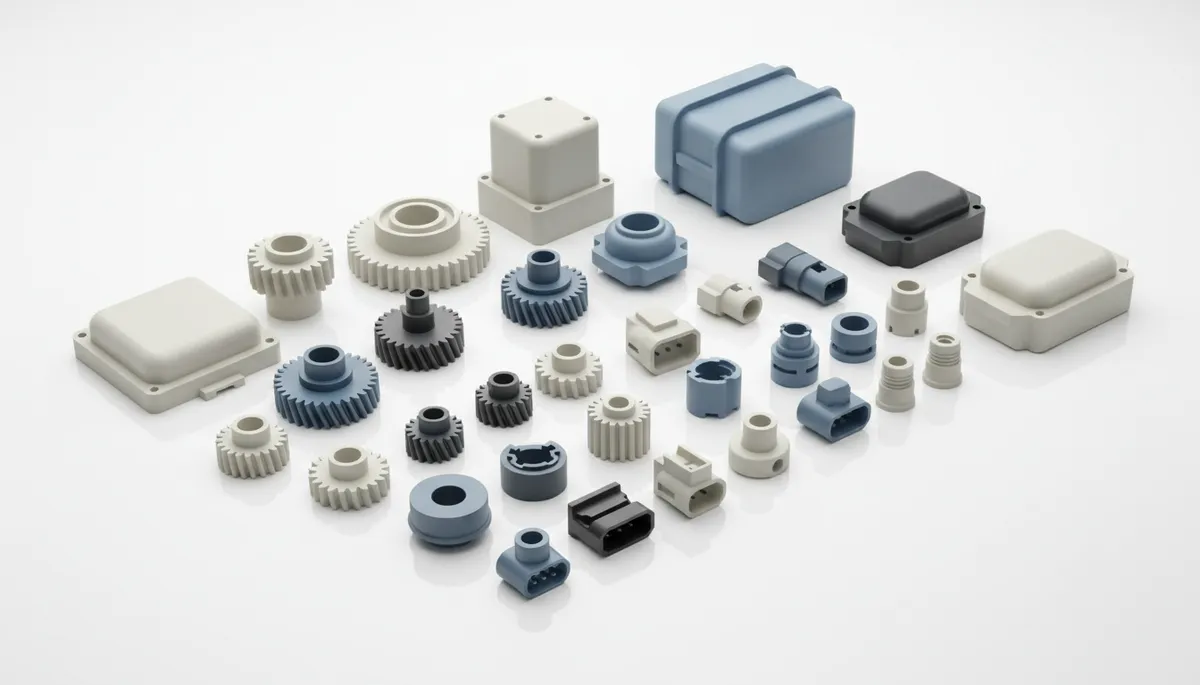
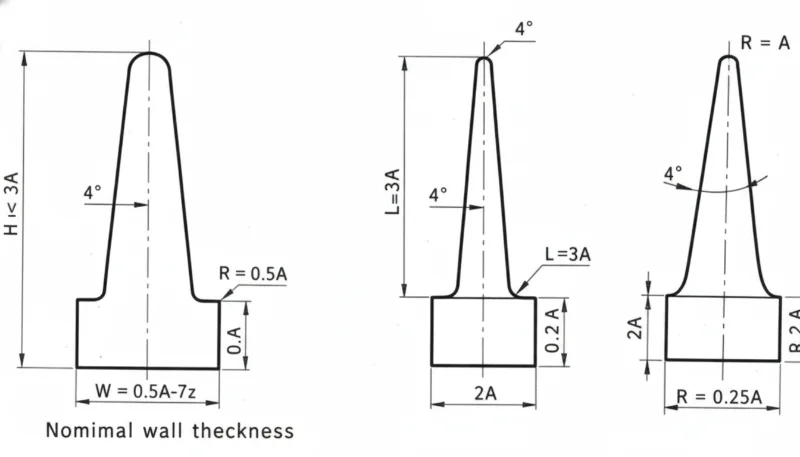
Zmienność skurczu w przekładni powoduje problemy z dokładnością podziałki i niespójność luzu. Ta zmienność występuje z powodu efektów orientacji w materiałach wzmocnionych, różnic w szybkości chłodzenia oraz wahań ciśnienia docisku. Rozwiązania obejmują modelowanie predykcyjne skurczu, strategiczną orientację włókien wzmacniających oraz zoptymalizowane profile docisku uwzględniające geometrię przekładni.
- POM (acetal) i PA66 (nylon 6/6) to najlepsze materiały na formowane wtryskowo koła zębate z tworzyw sztucznych, zapewniające optymalny stosunek wytrzymałości do odporności na zużycie
- Centralne umieszczenie przewężki i precyzyjna kompensacja skurczu mają kluczowe znaczenie dla uzyskania jednolitej geometrii zębów
- Nowoczesne koła zębate z tworzyw sztucznych mogą osiągać klasy jakości AGMA Q8-Q10 przy prawidłowej konstrukcji formy i kontroli procesu
- Koła zębate z tworzyw sztucznych zapewniają oszczędność kosztów rzędu 50-70% w porównaniu z metalowymi odpowiednikami w zastosowaniach o momencie poniżej 5 Nm
- Obróbka elektroerozyjna drutowa umożliwia precyzyjne wykonanie profilu zębów w formach produkcyjnych
Czym jest formowanie wtryskowe kół zębatych z tworzyw sztucznych i dlaczego tak szybko się rozwija?
Formowanie wtryskowe kół zębatych z tworzyw sztucznych jest specjalistycznym procesem produkcyjnym, w którym stopiony termoplast jest wtryskiwany pod wysokim ciśnieniem do precyzyjnego gniazda formy odwzorowującego dokładny profil zębów i geometrię koła. Proces ten różni się od konwencjonalnego formowania tworzyw sztucznych ze względu na złożoną geometrię i wąskie tolerancje wymagane do prawidłowego zazębienia.
Światowy rynek kół zębatych z tworzyw sztucznych odnotowuje dynamiczny wzrost o 6-8% rocznie, napędzany inicjatywami ograniczania masy pojazdów, presją na redukcję kosztów oraz postępem w dziedzinie tworzyw konstrukcyjnych. Nowoczesne koła zębate z tworzyw sztucznych mogą obecnie pracować w zastosowaniach wcześniej zarezerwowanych dla kół metalowych, otwierając nowe możliwości rynkowe w wielu branżach.
W ZetarMold z powodzeniem produkujemy koła zębate z tworzyw sztucznych do samochodowych podnośników szyb, napędów podawania papieru w urządzeniach biurowych oraz mechanizmów czasowych sprzętu AGD. Każde zastosowanie wymaga określonych właściwości materiału i precyzji geometrycznej, które można uzyskać tylko przez staranne połączenie projektu formy z optymalizacją procesu. Zrozumienie podstaw jest kluczowe — więcej informacji o podstawowych zasadach zawiera nasz kompletny przewodnik po formowaniu wtryskowym.
Przejście na koła zębate z tworzyw sztucznych oznacza więcej niż tylko zastąpienie materiału. Umożliwia elastyczność projektowania nieosiągalną w tradycyjnych obrabianych metalowych kołach zębatych, w tym zintegrowane elementy montażowe, zespoły zatrzaskowe i złożone geometrie, które w metalu wymagałyby wielu operacji obróbki. Ta swoboda projektowa w połączeniu z ekonomiką produkcji wielkoseryjnej sprawia, że formowane wtryskowo koła zębate z tworzyw sztucznych są coraz atrakcyjniejsze dla inżynierów poszukujących ekonomicznych rozwiązań przenoszenia napędu.
Które materiały zapewniają najlepsze właściwości plastikowych kół zębatych formowanych wtryskowo?
Dobór materiału stanowi podstawę prawidłowego działania kół zębatych z tworzyw sztucznych. Dominują dwa materiały: POM (polioksymetylen, znany także jako acetal lub Delrin) oraz PA66 (nylon 6/6). Te termoplasty konstrukcyjne zapewniają idealne połączenie wytrzymałości mechanicznej, odporności na zużycie i stabilności wymiarowej potrzebnych do niezawodnej pracy przekładni. Zobacz nasz przewodnik po formowaniu wtryskowym1.
POM zapewnia wyjątkowe właściwości: wytrzymałość na rozciąganie 60-70 MPa, niezwykle niskie zużycie i minimalną absorpcję wilgoci wynoszącą zaledwie 0,2%. Jego struktura krystaliczna zapewnia doskonałą stabilność wymiarową i niski współczynnik tarcia, dzięki czemu idealnie nadaje się do zastosowań precyzyjnych. Naturalna smarność materiału zmniejsza hałas i wydłuża okres eksploatacji przekładni.
„POM (acetal) zapewnia lepszą stabilność wymiarową niż materiały nylonowe”.True
POM pochłania zaledwie 0.2% wilgoci w porównaniu z 2.5% w przypadku nylonu, co skutkuje znacznie mniejszą zmianą wymiarów w wilgotnym środowisku. Dzięki temu POM jest preferowanym wyborem do precyzyjnych przekładni wymagających wąskich tolerancji.
„Wszystkie materiały na koła zębate z tworzyw sztucznych mają takie same właściwości rozszerzalności cieplnej”False
Różne tworzywa sztuczne mają bardzo różne współczynniki rozszerzalności cieplnej. POM rozszerza się o 100 μm/m/°C, podczas gdy PEEK tylko o 50 μm/m/°C. Różnica ta istotnie wpływa na luz międzyzębny i jakość zazębienia w różnych temperaturach, wymagając kompensacji konstrukcyjnej dostosowanej do materiału.
PA66 zapewnia większą wytrzymałość na rozciąganie, wynoszącą 70-85 MPa, i doskonałą udarność, choć pochłania więcej wilgoci (2.5%). Gatunki wzmacniane włóknem szklanym (PA66-GF30) mogą przenosić znacznie większe obciążenia, lecz powodować zwiększone zużycie współpracujących elementów metalowych. Udarność materiału sprawia, że nadaje się on do zastosowań obejmujących obciążenia udarowe lub cykle temperaturowe.
Materiały specjalistyczne rozszerzają możliwości zastosowań. PEEK wytrzymuje ciągłą pracę w skrajnych temperaturach do 250°C, dzięki czemu nadaje się do zastosowań motoryzacyjnych pod maską. PPS zapewnia wyjątkową odporność chemiczną w trudnych środowiskach. PC jest przezroczysty i pozwala wizualnie wskazywać położenie przekładni, lecz jest bardziej podatny na pękanie naprężeniowe. Dobór materiału musi równoważyć wymagania wydajnościowe z kosztem i właściwościami przetwórczymi.
Jak konstrukcja formy bezpośrednio wpływa na dokładność kół zębatych i jakość produkcji?
Precyzyjna konstrukcja formy jest najważniejszym czynnikiem zapewniającym stałą jakość kół zębatych. W przeciwieństwie do prostych części formowanych koła zębate wymagają dokładnego odwzorowania złożonych profili zębów przy zachowaniu wąskich tolerancji wymiarowych w całej geometrii części. Każdy aspekt konstrukcji formy bezpośrednio wpływa na parametry użytkowe gotowego koła zębatego.
Umiejscowienie przewężki zasadniczo określa schemat wypełniania i charakterystykę przepływu materiału. Przewężki centralne (przeponowe) zapewniają najbardziej równomierne wypełnienie, gwarantując stałą gęstość materiału we wszystkich zębach. Takie równomierne wypełnienie minimalizuje różnice między zębami i zmniejsza ryzyko niedolewów w wąskich przestrzeniach międzyzębnych. Przewężki boczne mogą powodować nierównomierne wypełnienie i tworzyć linie łączenia osłabiające poszczególne zęby.
Informacje z produkcji: wytwarzanie kół zębatych z tworzyw sztucznych w ZetarMold. W naszym zakładzie uzyskujemy wartości Cpk >1.67 dla krytycznych wymiarów kół zębatych dzięki formom ze stali narzędziowej H13, których profile zębów wykonujemy metodą elektrodrążenia drutowego. W klimatyzowanej strefie formowania utrzymujemy stabilność temperatury ±1°C. Ustaliliśmy również, że 24-zębowe koła samochodowe z przewężką centralną wykazują o 40% lepszą powtarzalność między zębami niż warianty z przewężką boczną. W ostatnim kwartale wyprodukowaliśmy 2.3 miliona kół zębatych z tworzyw sztucznych, osiągając wskaźnik jakości przy pierwszym przejściu na poziomie 99.2%.
Kompensacja skurczu wymaga precyzyjnych obliczeń i walidacji empirycznej. Różne materiały kurczą się w różnym stopniu — POM zwykle o 2,0–2,5%, a PA66 o 1,5–2,0%. Co ważniejsze, skurcz zmienia się zależnie od geometrii części, grubości ścianki i odległości od punktu wtrysku. Zęby koła zębatego położone blisko punktu wtrysku mogą kurczyć się inaczej niż zęby położone dalej, co wpływa na dokładność podziałki i powtarzalność luzu międzyzębnego.
Elektrodrążenie drutowe (Wire EDM) zrewolucjonizowało produkcję form do kół zębatych, umożliwiając precyzyjne wykonywanie profili zębów bezpośrednio w hartowanej stali narzędziowej. Proces ten eliminuje ograniczenia geometryczne tradycyjnej obróbki i pozwala tworzyć złożone kształty zębów, w tym koła śrubowe, koła wewnętrzne i profile z podcięciami. Wykończenie powierzchni uzyskane metodą Wire EDM jest bezpośrednio odwzorowywane na formowanym kole, wpływając na hałas i odporność na zużycie. Szczegółowe zasady projektowania form przedstawia nasz kompletny przewodnik po formach wtryskowych.
Jakie parametry procesu są krytyczne przy formowaniu precyzyjnych kół zębatych?
Optymalizacja parametrów procesu pozwala uzyskać z dobrych konstrukcji form koła zębate o niezmiennie wysokiej jakości. Każdy materiał wymaga określonych profili temperatury, ciśnienia i czasu, aby osiągnąć optymalną charakterystykę przepływu i dokładność wymiarową. Zrozumienie tych parametrów oraz ich wzajemnych zależności umożliwia przewidywalną produkcję precyzyjnych kół zębatych.
Regulacja temperatury wpływa zarówno na przepływ materiału, jak i na końcową jakość części. POM wymaga temperatury stopu 190-210°C i temperatury formy 80-100°C. Parametry te zapewniają pełne wypełnienie przy zachowaniu stabilności wymiarowej. PA66 wymaga wyższych temperatur przetwarzania — temperatury stopu 270-290°C i temperatury formy 80-90°C — ze względu na wyższą temperaturę topnienia i charakterystykę krystalizacji.
Ciśnienie i prędkość wtrysku trzeba starannie zrównoważyć, aby uzyskać pełne wypełnienie bez wypływek ani odkształceń wymiarowych. Wysoka prędkość wtrysku pomaga wypełnić wąskie przestrzenie między zębami, zanim materiał zacznie stygnąć, lecz nadmierna prędkość może powodować strugowanie lub powstawanie linii łączenia. Ciśnienie docisku i podtrzymania zapewnia stabilność wymiarową, kompensując skurcz materiału podczas chłodzenia.
Statystyczna kontrola procesu jest niezbędna w produkcji kół zębatych. Minimalnym akceptowalnym poziomem średnicy podziałowej według przewodnika po formach wtryskowych2 jest Cpk powyżej 1.33, a zakłady światowej klasy osiągają >1.67. Najważniejsze parametry kontroli to średnica całkowita, grubość zęba, współosiowość i wykończenie powierzchni. Zaawansowani producenci wdrażają systemy monitorowania w czasie rzeczywistym, które automatycznie korygują parametry procesu na podstawie pomiarów wymiarowych, zapewniając stałą jakość w całej serii produkcyjnej.
Czas chłodzenia ma istotny wpływ zarówno na wydajność cyklu, jak i jakość części. Niedostateczne chłodzenie powoduje niestabilność wymiarową i możliwe odkształcenia, a nadmierne niepotrzebnie wydłuża cykl. Zmienna grubość ścianek między zębami a wrębami utrudnia analizę chłodzenia koła. Wielostrefowe układy regulacji temperatury formy pozwalają zoptymalizować szybkość chłodzenia całej geometrii koła. Więcej informacji o optymalizacji procesu znajdziesz w naszym centrum wiedzy o formowaniu wtryskowym.
Jakie są najczęstsze problemy w formowaniu kół zębatych z tworzyw i jak je rozwiązywać?
Formowanie kół zębatych z tworzyw sztucznych wiąże się z wyjątkowymi wyzwaniami, które nie występują przy typowych częściach z tworzyw. Wynikają one ze złożonej geometrii, wąskich tolerancji i wymagań funkcjonalnych odróżniających koła zębate od elementów dekoracyjnych lub konstrukcyjnych. Zrozumienie tych wyzwań i sposobów ich rozwiązania zapobiega kosztownym opóźnieniom produkcji i problemom jakościowym.
Odkształcenie profilu zęba jest najczęstszym problemem jakościowym. Powstaje wskutek różnic skurczu między grubymi i cienkimi przekrojami, nierównomiernego chłodzenia oraz naprężeń szczątkowych z procesu formowania. Rozwiązania obejmują optymalizację położenia przewężki, kontrolę szybkości chłodzenia i dobór materiału na podstawie jego charakterystyki skurczu. Wyżarzanie po formowaniu może zmniejszyć naprężenia szczątkowe w krytycznych zastosowaniach.
Linie łączenia na zębach kół zębatych tworzą słabe punkty prowadzące do przedwczesnego uszkodzenia pod obciążeniem. Linie te powstają, gdy oddzielne fronty przepływu spotykają się podczas napełniania formy, zwykle w kołach zębatych o złożonej geometrii lub wielu przewężkach. Strategie zapobiegania obejmują doprowadzenie w jednym punkcie, zwiększenie temperatury stopu oraz modyfikacje formy przekierowujące przepływ z dala od krytycznych powierzchni zębów.
„Wypaczenie plastikowych kół zębatych wynika głównie z nierównomiernego tempa chłodzenia w obrębie geometrii części”True
Zmienna grubość ścianek między zębami koła zębatego a piastą środkową powoduje różne szybkości chłodzenia, prowadząc do naprężeń wewnętrznych i odkształceń wymiarowych. Prawidłowa kontrola temperatury formy i konstrukcja o równomiernej grubości ścianek ograniczają ten efekt.
„Wszystkie wady kół zębatych z tworzywa można usunąć przez zwiększenie ciśnienia wtrysku”False
Wyższe ciśnienie wtrysku może wręcz pogorszyć niektóre wady, takie jak odkształcenia i naprężenia wewnętrzne. Wiele problemów z jakością kół zębatych wymaga rozwiązań związanych z konstrukcją przewężki, optymalizacją chłodzenia lub zmianą materiału, a nie prostą regulacją ciśnienia.
Różnice skurczu w obrębie koła zębatego powodują problemy z dokładnością podziałki i niestabilny luz międzyzębny. Wynikają one z wpływu orientacji w materiałach wzmacnianych, różnic szybkości chłodzenia i zmian ciśnienia docisku. Rozwiązania obejmują predykcyjne modelowanie skurczu, strategiczne ukierunkowanie włókien wzmacniających oraz zoptymalizowane profile docisku uwzględniające geometrię koła zębatego.
Kompleksowy przewodnik po kołach zębatych z tworzyw sztucznych formowanych wtryskowo. Porównaj POM z nylonem, poznaj wskazówki dotyczące projektowania formy i optymalizuj parametry procesu dla precyzyjnej produkcji kół zębatych.
W jakich zastosowaniach koła zębate z tworzyw formowane wtryskowo mają największe znaczenie?
Koła zębate z tworzyw sztucznych formowane wtryskowo znalazły zastosowanie praktycznie w każdej branży wymagającej ekonomicznego przenoszenia napędu. Ich wykorzystanie nadal rośnie wraz z poprawą właściwości materiałów i wzrostem zaufania konstruktorów do możliwości kół zębatych z tworzyw sztucznych. Zrozumienie trendów zastosowań pomaga identyfikować możliwości wdrażania rozwiązań z takimi kołami zębatymi.
Zastosowania samochodowe stanowią największy segment rynku plastikowych kół zębatych. Mechanizmy podnoszenia szyb wykorzystują je ze względu na cichą pracę i odporność na korozję. Elektryczne regulatory foteli korzystają z możliwości integrowania elementów montażowych w tworzywie i ograniczenia złożoności montażu. Układy wycieraczek wykorzystują zdolność plastikowych kół zębatych do przenoszenia obciążeń okresowych przy jednoczesnym ograniczeniu hałasu przenoszonego do wnętrza pojazdu.
Zastosowania w urządzeniach biurowych wymagają wysokiej precyzji i cichej pracy. Mechanizmy podawania papieru w drukarkach wykorzystują plastikowe koła zębate ze względu na precyzyjne sterowanie ruchem i zdolność do powtarzalnej pracy cyklicznej. Układy obsługi dokumentów w kopiarkach korzystają z odporności plastikowych kół zębatych na pył tonera i zdolności zachowania dokładności przez miliony cykli. Napędy skanerów wykorzystują je do płynnej pracy bez drgań, niezbędnej dla jakości obrazu.
Zastosowania w sprzęcie AGD wykorzystują opłacalność i elastyczność projektową kół zębatych z tworzyw sztucznych. Napędy mieszadeł pralek wykorzystują wzmocnione koła zębate z tworzyw sztucznych, aby przenosić znaczne obciążenia i jednocześnie wytrzymywać kontakt z wodą i detergentami. Mechanizmy ramion spryskujących zmywarek korzystają z odporności tworzyw sztucznych na korozję i możliwości integracji złożonych kanałów wodnych. Układy talerzy obrotowych kuchenek mikrofalowych wykorzystują koła zębate z tworzyw sztucznych ze względu na ich cichą pracę i zdolność do ciągłej pracy z małą prędkością.
Zastosowania w urządzeniach medycznych stanowią rosnący rynek precyzyjnych kół zębatych z tworzyw sztucznych. Mechanizmy pomp insulinowych wymagają takich kół ze względu na biokompatybilność i precyzyjne sterowanie dawkowaniem. Systemy regulacji łóżek szpitalnych wykorzystują je ze względu na cichą pracę w środowiskach wrażliwych na hałas. Układy dmuchaw respiratorów korzystają z ich zdolności do zachowania precyzji przy jednoczesnym zmniejszeniu masy i złożoności systemu.
Często zadawane pytania
Jakie poziomy dokładności przekładni może konsekwentnie osiągać formowanie wtryskowe?
Nowoczesne formowanie wtryskowe może osiągnąć klasy jakości AGMA Q8-Q10 dla kół zębatych z tworzyw sztucznych, z całkowitym błędem złożonym (TCE) zazwyczaj w zakresie 0,05-0,10 mm. Ten poziom dokładności odpowiada większości zastosowań przemysłowych, choć niektóre zastosowania wysokiej precyzji mogą wymagać operacji poformowania w celu osiągnięcia klas Q11-Q12.
Czy plastikowe koła zębate skutecznie radzą sobie z aplikacjami wymagającymi wysokiego momentu obrotowego?
PA66 wypełnione szkłem (włókno szklane 30%) może przenosić ciągłe obciążenia momentem obrotowym w zakresie 2-5 Nm, z obciążeniami szczytowymi do 10 Nm przez krótkie okresy. POM zazwyczaj przenosi 1-3 Nm w sposób ciągły. Te możliwości obejmują szeroki zakres zastosowań, choć metalowe koła zębate pozostają niezbędne w ekstremalnie wysokomomentowych zastosowaniach.
Jak długo zazwyczaj służą wtryskiwane plastikowe koła zębate?
Żywotność usługi różni się znacznie w zależności od zastosowania, ale koła zębate z POM zazwyczaj osiągają 10-50 milionów cykli w normalnych warunkach pracy. Koła zębate z PA66 mogą osiągnąć 5-25 milionów cykli w zależności od warunków obciążenia. Właściwe smarowanie i optymalizacja konstrukcji mogą znacznie wydłużyć żywotność poza te podstawowe wartości.
Czy plastikowe koła zębate wymagają smarowania tak jak metalowe?
POM i PA66 są materiałami z natury samosmarującymi i w wielu zastosowaniach mogą pracować bez zewnętrznego smarowania. Odpowiednie smarowanie stałym smarem zwykle wydłuża jednak trwałość o 200–400% i zmniejsza hałas podczas pracy. Wybór zależy od wymagań zastosowania i dostępności podczas konserwacji.
Jaka jest minimalna ilość produkcyjna wymagana do wykonania narzędzi do plastikowych kół zębatych?
W ZetarMold zwykle zalecamy minimalne ilości 1000-5000 sztuk, aby uzasadnić koszty oprzyrządowania produkcyjnego, choć zależy to od złożoności kół zębatych i wymagań dotyczących precyzji. Partie prototypowe można wykonać metodami szybkiego oprzyrządowania z użyciem form aluminiowych do wstępnej walidacji.
Czy plastikowe koła zębate mogą całkowicie zastąpić metalowe we wszystkich zastosowaniach?
Nie, przekładnie z tworzyw sztucznych mają ograniczenia w środowiskach o wysokiej temperaturze powyżej 150°C oraz w zastosowaniach z dużym obciążeniem przekraczającym 10 Nm ciągłego momentu obrotowego. Jednak w zastosowaniach poniżej 5 Nm prawidłowo zaprojektowane przekładnie z tworzyw sztucznych zapewniają oszczędność kosztów na poziomie 50-70%, oferując równoważne parametry, a często także lepsze właściwości akustyczne w porównaniu z odpowiednikami metalowymi.
Jakie są ostateczne wnioski dotyczące wtrysku kół zębatych z tworzyw?
Formowanie wtryskowe kół zębatych z tworzyw rozwinęło się z metody obniżania kosztów w zaawansowany proces produkcyjny zdolny wytwarzać precyzyjne elementy, które często przewyższają tradycyjne odpowiedniki metalowe. Kluczem do sukcesu jest zrozumienie złożonych zależności między właściwościami materiału, konstrukcją formy i parametrami procesu, które decydują o końcowej jakości i działaniu przekładni.
| Materiał | Najlepsze dla | Kluczowa zaleta |
|---|---|---|
| POM | Precyzyjne koła zębate, niskie tarcie | absorpcja wilgoci 0,2% |
| PA66+GF | Zastosowania pod dużym obciążeniem | Wytrzymałość na rozciąganie 70-85 MPa |
| PEEK | Środowiska wysokotemperaturowe | Praca ciągła w temperaturze 250°C |
Dobór materiału pozostaje kwestią fundamentalną, a w zastosowaniach dominują POM i PA66 ze względu na optymalną równowagę wytrzymałości, odporności na zużycie i stabilności wymiarowej. Zaawansowane materiały, takie jak PEEK i PPS, rozszerzają możliwości na trudne środowiska, w których stosowanie tworzyw sztucznych było wcześniej niemożliwe. Argumenty ekonomiczne są przekonujące — koła zębate z tworzyw sztucznych kosztują zwykle o 50–70% mniej niż ich metalowe odpowiedniki, a przy tym zapewniają elastyczność projektową nieosiągalną w tradycyjnych metodach produkcji.
Sukces produkcji wymaga precyzji na każdym etapie. Profile zębów wykonane metodą Wire EDM i centralne doprowadzenie tworzywa — te zasady stosujemy na naszej linii produkcyjnej i weryfikujemy w ramach usługi formowania wtryskowego3 — wraz z kontrolowaną kompensacją skurczu tworzą podstawę powtarzalnej jakości. Kontrola procesu przy Cpk >1.33 zapewnia niezawodność wymiarową, a prawidłowe chłodzenie i docisk zapobiegają wypaczeniom i odkształceniom. Współczesne koła zębate z tworzyw sztucznych rutynowo osiągają klasy jakości AGMA Q8-Q10, odpowiednie do wymagających zastosowań przemysłowych.
Kierunek rozwoju rynku zdecydowanie sprzyja wdrażaniu kół zębatych z tworzyw. Dążenie do zmniejszania masy pojazdów, presja na obniżanie kosztów i postęp materiałoznawstwa stale poszerzają możliwości zastosowań. Wyroby medyczne, produkty konsumenckie i urządzenia przemysłowe coraz częściej wykorzystują przekładnie z tworzyw ze względu na cichą pracę, odporność na korozję i zintegrowane funkcje.
Dla producentów rozważających koła zębate z tworzyw kluczowe czynniki sukcesu są jasne: dobór materiałów do środowiska zastosowania, inwestycja w precyzyjne oprzyrządowanie z prawidłowymi przewężkami i chłodzeniem, statystyczne sterowanie procesem oraz współpraca z doświadczonymi firmami znającymi wymagania kół zębatych. Technologia wyszła poza etap eksperymentalny — koła z tworzyw są dziś standardowym rozwiązaniem przeniesienia napędu wymagającym ekonomicznej i niezawodnej pracy.
ASTM D638: Standardowa metoda badania właściwości tworzyw sztucznych przy rozciąganiu, stosowana do określania wytrzymałości mechanicznej materiałów na koła zębate ↩
Normy AGMA: System klasyfikacji jakości kół zębatych opracowany przez American Gear Manufacturers Association; klasy Q8-Q10 odpowiadają typowej dokładności formowanych wtryskowo kół zębatych z tworzyw sztucznych ↩
Wire EDM: Proces elektrodrążenia drutowego umożliwiający precyzyjne wycinanie złożonych profili zębów bezpośrednio w formach z hartowanej stali narzędziowej ↩
Uzyskaj konkurencyjną wycenę, informacje zwrotne DFM i harmonogram produkcji od zespołu inżynierów ZetarMold.