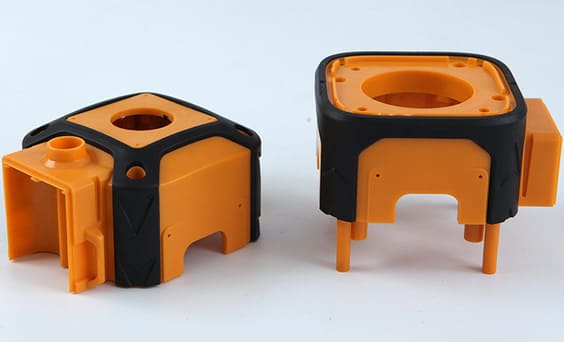
- VDI 6–12 (półbłyszczący)
- Stal H13 (HRC 48–52, po obróbce cieplnej) nadaje się do żywic z włóknem szklanym, ściernych lub wysokotemperaturowych, takich jak PPS i PEI, oraz wytrzymuje ponad milion cykli.
- Stal S136 (HRC 48–52, nierdzewna) jest niezbędna w przypadku żywic powodujących korozję (PVC, POM, trudnopalny ABS) oraz elementów optycznych lub medycznych wymagających powierzchni polerowanych na lustro.
- Gatunek stali odpowiada za 30–40% kosztu oprzyrządowania: przejście z P20 na S136 zwykle zwiększa koszt formy jednogniazdowej o $3,000–$8,000.
- Dobierz stal do trzech czynników: wielkości produkcji, chemii żywicy i wymaganego wykończenia powierzchni — w tej kolejności priorytetów.
Dlaczego dobór stali formy decyduje o jakości części i koszcie oprzyrządowania
Karta materiałowa wyglądała prawidłowo. Żywica była zatwierdzona. Grubość ścianek przeszła analizę DFM1. Jednak po wykonaniu pierwszych wtrysków powierzchnia wyglądała, jakby ktoś przeciągnął po niej papierem ściernym. Ustaliliśmy, że przyczyną było gniazdo z P20 dobrane do zlecenia z nylonu wzmocnionego 30% włókna szklanego. Narzędziownia użyła tego, co miała na półce. Po trzech tygodniach ponownego polerowania klient przeniósł zamówienie do konkurencji. Od tamtej pory mój zespół nigdy nie pomija rozmowy o stali na początku projektu.
Większość awarii form wtryskowych wynika z niedopasowania gatunku stali do ścieralności materiału, jego agresywności chemicznej lub wymagań dotyczących wydajności narzędzia. Wybór nieodpowiedniej stali nie tylko wpływa na jakość powierzchni — przyspiesza również zużycie na liniach rozdzielających, zatyka otwory wentylacyjne produktami korozji i może zmniejszyć używalność narzędzia o połowę. Koszt różnicy między decyzją o odpowiedniej stali od początku i naprawą po awarii jest zazwyczaj 3× do 5× większy niż pierwotna premia za stal.
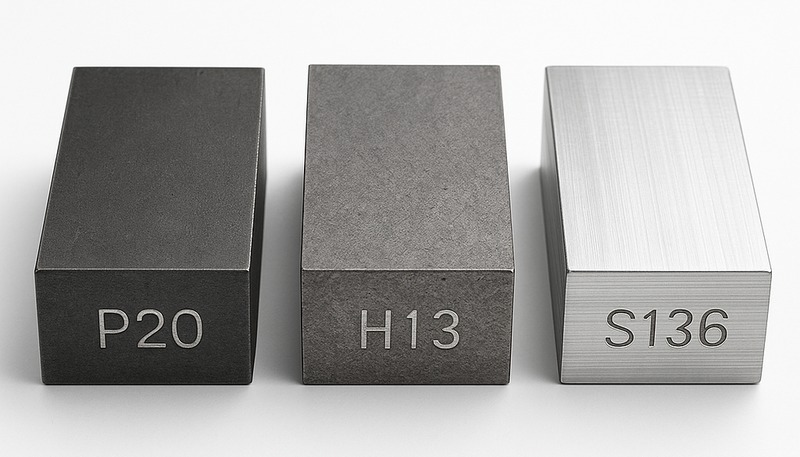 stal formierska2 bloki porównawcze” style=”max-width:100%;height:auto;” />
Stal formierska P20: najlepszy wybór przy ograniczonym budżecie i produkcji średnioseryjnej
P20 to wstępnie hartowana chromowo-molibdenowa stal narzędziowa3 dostarczana z twardością HRC 28–33, co oznacza, że można ją obrabiać bezpośrednio, bez cyklu obróbki cieplnej po obróbce zgrubnej. Pozwala to skrócić harmonogram wykonania o 5–10 dni i eliminuje ryzyko odkształceń związane z obróbką cieplną po skrawaniu. W naszej fabryce stosujemy P20 w około 60% form do produktów konsumenckich, gdy materiałem jest niewzmacniany ABS, PP lub PE, a roczny wolumen nie przekracza 500 000 wtrysków na gniazdo.
Kompromisem jest twardość. Przy HRC 30 stal P20 wykazuje widoczne zużycie linii podziału i obszarów przewężek po około 300,000–500,000 wtrysków z użyciem lekko ściernych żywic. W przypadku niewypełnionych żywic standardowych to samo narzędzie może osiągnąć 800,000–1,000,000 wtrysków przed koniecznością ponownego polerowania lub naprawy przewężki. P20 nadaje się również do teksturowania (faktura EDM, VDI 24–36), lecz polerowanie lustrzane poniżej VDI 12 jest trudne, ponieważ niższa zawartość węgla ogranicza możliwą do uzyskania twardość powierzchni.
| Własność | Wartość P20 | Praktyczne znaczenie |
|---|---|---|
| Twardość (w stanie dostawy) | HRC 28–33 | Po obróbce skrawaniem nie jest wymagana obróbka cieplna |
| Wytrzymałość na rozciąganie | Wartość ~1,000 MPa | Odpowiednie do standardowych ciśnień wtrysku do 1,400 bar |
| Maksymalna zalecana wielkość produkcji | 500 000–1 000 000 wtrysków | Zależy od ścieralności żywicy |
| Podatność na polerowanie | VDI 12–18 (satynowe) | Nie nadaje się do wykończenia optycznego ani lustrzanego klasy A |
| Odporność na korozję | Niski | Podczas przechowywania wymaga zabezpieczenia antykorozyjnego; unikać PVC/POM |
| Względny koszt narzędzia (jedno gniazdo) | 1.0× (wartość bazowa) | Najbardziej ekonomiczny gatunek stali |
Jeden punkt decyzyjny często zaskakuje inżynierów: stal P20 jest dostępna w wariancie azotowanym (P20+Ni lub P20H), w którym warstwa powierzchniowa jest utwardzona do HRC 50–55, a rdzeń pozostaje miękki. Zapewnia to lepszą odporność na zużycie w obszarze przewężek i linii podziału bez konieczności przeprowadzania pełnego cyklu obróbki cieplnej. Wariant ten stosujemy w narzędziach P20 przewidzianych na 600 000–900 000 wtrysków z lekko napełnionymi tworzywami (do 10% włókna szklanego).
“P20 może być obrabiana i użyta bez cyklu obróbki cieplnej po obróbce.”True
Stal P20 jest dostarczana w stanie wstępnie hartowanym do twardości HRC 28–33, co oznacza, że jest gotowa do obróbki i wykańczania bez dodatkowej obróbki cieplnej. W porównaniu ze stalami narzędziowymi takimi jak H13 lub S136, które po obróbce wymagają hartowania próżniowego i odpuszczania, skraca to czas wykonania narzędzia o 5–10 dni.
“Stal P20 jest odpowiednia dla długoterminowego formowania PVC lub ABS z środkami zmniejszającymi palność.”False
To nieprawda. P20 ma minimalną odporność na korozję i ulega degradacji pod wpływem chlorowodoru wydzielanego podczas rozkładu PVC lub związków bromu w trudnopalnym ABS. W ciągu 50,000–100,000 wtrysków na powierzchni gniazda powstają wżery, powodujące wady powierzchni części. Do tych żywic wymagana jest nierdzewna stal na formy (S136 lub 2316).
Stal narzędziowa H13: właściwy wybór do żywic wysokotemperaturowych i wypełnień ściernych
H13 to chromowo-molibdenowo-wanadowa stal narzędziowa do pracy na gorąco, która po hartowaniu próżniowym i odpuszczaniu osiąga HRC 48–52. Wanad tworzy twarde węgliki odporne na zużycie ścierne powodowane przez włókno szklane, napełniacze mineralne i włókno węglowe. Gdy klient zgłasza detal z nylonu 66 zawierającego 30% włókna szklanego, a wymagana seria wynosi 2 mln cykli, niemal zawsze zalecamy H13 — nie dlatego, że jest jedyną opcją, lecz dlatego, że przy takiej wielkości produkcji zapewnia najlepszą równowagę odporności na zużycie, udarności i skrawalności.
Inną zaletą H13 jest odporność na zmęczenie cieplne. Temperatura formowania dla PPS, PEI (Ultem) i LCP często przekracza 300°C. Przy takich temperaturach, cykliczne nagrzewanie i chłodzenie podczas wtrysku może powodować pęknięcia w miękkiej stali na cienkich żebrach lub ostrych promieniach w ciągu 200 000 cykli. Wysoka zawartość chromu i molibdenu w H13 zmniejsza zmienność współczynnika rozszerzalności cieplnej, zapewniając około 3× większą żywotność na zmęczenie cieplne niż P20 w identycznych warunkach. W naszej fabryce stosujemy H13 w każdej formie, gdzie temperatura płynnej masy przekracza 280°C lub zawartość włókna szklanego jest powyżej 15%.
| Własność | Wartość H13 | Praktyczne znaczenie |
|---|---|---|
| Twardość (po obróbce cieplnej) | HRC 48–52 | Wysoka odporność na zużycie w obszarze punktu wtrysku i linii podziału |
| Wytrzymałość na rozciąganie | ~1600 MPa | Wytrzymuje wysokie ciśnienia wtrysku i siły zwarcia |
| Maksymalna zalecana wielkość produkcji | Trwałość 1,000,000–2,000,000+ wtrysków | Idealny do produkcji wielkoseryjnej z użyciem żywic ściernych |
| Podatność na polerowanie | VDI 6–12 (półpołysk) | Najkrótszy (+0 dni) |
| Odporność na korozję | Umiarkowany | Nie nadaje się do PVC; dopuszczalne dla większości pozostałych żywic |
| Względny koszt narzędzia (jedno gniazdo) | 1.5×–2.0× P20 | Wyższy koszt stali i obróbki cieplnej, niższy koszt konserwacji na jeden wtrysk |
Praktyczna uwaga z hali produkcyjnej: H13 wymaga prawidłowego cyklu odprężania po obróbce zgrubnej i przed końcowym hartowaniem. Pominięcie tego etapu jest najczęstszą przyczyną pękania form z H13, jaką obserwujemy w narzędziowniach próbujących skrócić czas realizacji. Cykl odprężania (550–600°C przez 2 godziny na każde 25 mm grubości przekroju) wydłuża proces o 2–3 dni, ale zapobiega odkształceniom podczas hartowania próżniowego. Widzieliśmy formy pękające u nasady żeber w ciągu pierwszych 50,000 wtrysków, gdy ten etap pominięto — rachunek za naprawę przekraczający $15,000 sprawia, że taka oszczędność czasu wygląda absurdalnie.
“H13 jest preferowaną stalą formową dla materiałów z włóknem szklanym przy zawartości powyżej 15%.”True
H13 at HRC 48–52 contains vanadium carbides that resist the abrasive cutting action of glass fibers against the cavity surface. At 30% GF loading, P20 cavities typically show measurable wear (>0.02 mm depth at gate) after 200,000–300,000 shots, while H13 maintains dimensional tolerance beyond 1 million shots under identical conditions. The wear resistance advantage of H13 over P20 increases proportionally with filler content and injection velocity.
“H13 i S136 mają tę samą twardość i mogą być stosowane zamiennie.”False
Chociaż zarówno H13, jak i S136 poddaje się obróbce cieplnej do HRC 48–52, stale te zaprojektowano pod kątem różnych mechanizmów uszkodzenia. H13 to stal do pracy na gorąco zoptymalizowana pod kątem odporności na zmęczenie cieplne i zużycie ścierne, zawierająca 5% chromu, 1% molibdenu oraz wanad. S136 to nierdzewna stal narzędziowa zawierająca 13% chromu, co zapewnia odporność na korozję i doskonałą podatność na polerowanie. Zastąpienie S136 stalą H13 tam, gdzie wymagana jest S136 — na przykład w formach do PVC lub detali przezroczystych — spowoduje wżery korozyjne i wady powierzchni.
Nierdzewna stal formierska S136: niezbędna do żywic korozyjnych i powierzchni optycznych
Stal S136 (odpowiednik modyfikowanej stali nierdzewnej AISI 420) zawiera około 13% chromu, który tworzy pasywną warstwę tlenkową chroniącą przed korozją powodowaną przez kwaśne gazy wydzielane z PVC, halogenowych środków zmniejszających palność, POM (acetalu) i niektórych poliuretanów. Odporność na korozję nie ma wyłącznie znaczenia estetycznego — działanie kwasu na powierzchnię gniazda powoduje mikrowżery, które bezpośrednio odwzorowują się na powierzchni części, tworząc wady niemożliwe do wypolerowania bez ponownej obróbki gniazda.
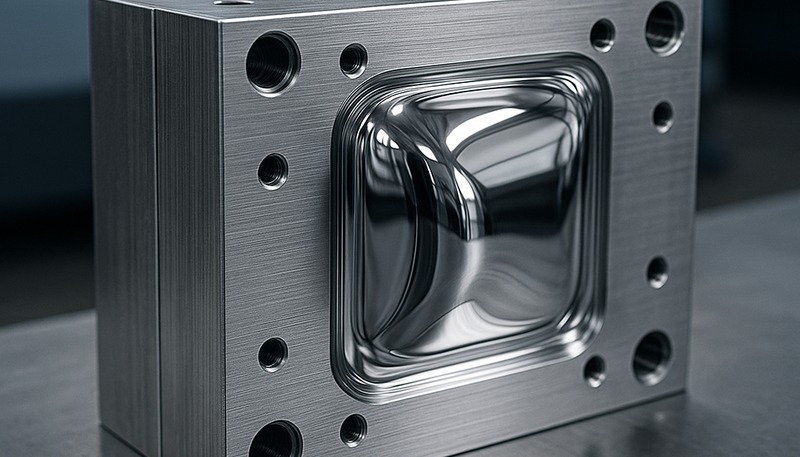
S136 zapewnia również najlepszą polerowalność spośród popularnych stali formierskich, osiągając przy prawidłowej obróbce VDI 0–3 (wykończenie lustrzane, Ra 0,01–0,02 µm). Jest to niezbędne w przypadku soczewek optycznych, światłowodów, obudów wyrobów medycznych i każdej części wymagającej dekoracyjnej przezroczystości klasy A. W naszej fabryce używamy S136 wyłącznie do całego oprzyrządowania medycznego, przezroczystych części z PC i PMMA oraz wszystkich zastosowań z żywicami PVC lub POM. Lustrzanie wypolerowana powierzchnia gniazda S136 może zachować stan przez 500 000–1 000 000 wtrysków przy prawidłowych procedurach środka antyadhezyjnego i czyszczenia.
| Własność | Wartość S136 | Praktyczne znaczenie |
|---|---|---|
| Twardość (po obróbce cieplnej) | HRC 48–52 | Taka sama twardość jak H13, lepsza odporność na korozję |
| Zawartość chromu | ~13% | Pasywna warstwa tlenkowa jest odporna na kwaśne gazy wydzielane przez PVC, POM i FR-ABS |
| Maksymalna podatność na polerowanie | VDI 0–3 (lustro, Ra 0.01 µm) | Wymagane w przypadku soczewek optycznych, światłowodów i przezroczystych obudów |
| Odporność na korozję | Wysokie (stal nierdzewna) | Odpowiednia do PVC, POM i żywic klasy medycznej |
| Maksymalna zalecana wielkość produkcji | 500 000–1 000 000 wtrysków | Nieco mniejsza ciągliwość niż H13 przy dużej liczbie cykli |
| Względny koszt narzędzia (jedno gniazdo) | 2.0×–2.8× P20 | Najwyższy koszt materiału; równoważony przez rzadsze naprawy powierzchni |
Kompromisem przy stosowaniu S136 jest udarność. Przy tej samej twardości stal ta jest nieco bardziej krucha niż H13, dlatego jest bardziej podatna na wykruszanie cienkich krawędzi żeber (poniżej 0,5 mm) lub głębokich, wąskich szczelin. Formy z S136 projektujemy z minimalnym stosunkiem grubości żebra do jego głębokości wynoszącym 1:6 i dodajemy promień 0,3 mm na wszystkich ostrych narożnikach wewnętrznych. Zmiany te wydłużają obróbkę o 2–4 godziny, ale zapobiegają kruchym pęknięciom podczas eksploatacji. Dla zespołu projektowania form wtryskowych4 jest to krytyczny punkt kontroli DFM.
Porównanie gatunków stali: P20, H13 i S136 obok siebie
Gdy inżynierowie pytają nas, jakiej stali użyć, odpowiedź prawie zawsze sprowadza się do trzech pytań zadawanych w tej kolejności: ile cykli? Jaka żywica? Jakie wykończenie powierzchni? Poniższa tabela ujmuje nasze 20-letnie doświadczenie fabryczne w bezpośrednim porównaniu. Żaden gatunek nie jest uniwersalnie najlepszy — każdy zajmuje odrębną niszę eksploatacyjną.
| Kryterium | P20 | H13 | S136 |
|---|---|---|---|
| Twardość (HRC) | 28–33 (wstępnie hartowana) | 48–52 (po obróbce cieplnej) | 48–52 (po obróbce cieplnej) |
| Najlepsze dla wolumenu | Do 500 tys. wtrysków | 500K–2M+ wtrysków | Do 1 mln cykli |
| Odporność na ścieranie | Niska–umiarkowana | Wysoki | Średnia–wysoka |
| Odporność na korozję | Niski | Umiarkowany | Wysokie (stal nierdzewna) |
| Możliwość polerowania na lustro | Średnia (VDI 12–18) | Dobra (VDI 6–12) | Doskonała (VDI 0–3) |
| Trwałość zmęczeniowa cieplna | Dobry | Doskonały | Dobry |
| Zalecane tworzywa | ABS, PP, PE, PS (bez napełniacza) | Nylon GF, PPS, PEI, LCP, PC | PVC, POM, FR-ABS, PMMA, optyczny PC |
| Obróbka cieplna po obróbce mechanicznej | Niewymagane | Wymagane (próżnia) | Wymagane (próżnia) |
| Wpływ na termin realizacji | Najkrótszy (+0 dni) | P20 H13 S136 <a href= | P20 H13 S136 <a href= |
| Względny wskaźnik kosztu | 1.0× | 1.5×–2.0× | 2.0×–2.8× |
Częsty błędny założenie: inżynierowie widzą, że H13 i S136 mają ten sam zakres HRC i uważają, że są zamienne. Nie są. Węgliki wanadu w H13 czynią ją odporną na ścieranie; 13% chromu w S136 czyni ją odporną na korozję. Formowanie PVC w formie H13 wywoła korozję wżerową w ciągu 50 000 cykli. Formowanie 40% GF nylonu w formie S136 powoduje przyspieszone zużycie powierzchni, ponieważ S136 nie ma fazy węglików wanadu, która daje H13 przewagę w odporności na ścieranie.
Jak wybrać stal na formę w 3 krokach: praktyczne ramy decyzyjne
Krok 1: Kwalifikacja składu chemicznego żywicy
Pierwszym filtrem jest zawsze chemia. Sprawdź kartę technologiczną materiału dla produktów gazowych, zalecanej temperatury przetwarzania i ostrzeżeń dotyczących korozji. PVC, halogenowe środki zmniejszające palność, acetal (POM) i materiały techniczne absorbujące wilgoć, które rozkładają się przy wysokich temperaturach, wszystkie produkują kwasy podczas przetwarzania. Każdy materiał, który generuje HCl, HBr, HF lub gazowe produkty formaldehydowe podczas normalnego przetwarzania, wymaga S136 lub minimum stali nierdzewnej 2316. Bez wyjątków — nigdy nie widzieliśmy, że P20 lub H13 przetrwały 200 000 cykli w zastosowaniu PVC bez widocznej korozji wżerowej w gnieździe.
W zastosowaniach optycznych lub medycznych wymagane wykończenie powierzchni prowadzi do wyboru S136 nawet wtedy, gdy żywica nie jest agresywna chemicznie. Poliwęglan na światłowody, PMMA na soczewki oraz COC/COP na fiolki medyczne wymagają wartości Ra poniżej 0,025 µm — poziomu osiągalnego wyłącznie przy użyciu S136 i przez wykwalifikowanego polernika pracującego nad powierzchnią gniazda przez 6–8 godzin.
Krok 2: Ustal docelową wielkość produkcji
Wielkość produkcji określa, za jaką odporność na zużycie warto zapłacić. Jeśli program wykorzystuje formę pomostową na 50 000–100 000 cykli w czasie budowy formy produkcyjnej, P20 jest niemal zawsze właściwym wyborem — oszczędności na oprzyrządowaniu finansują formę produkcyjną. Jeśli program zakłada 3 miliony cykli w ciągu 5 lat, H13 lub S136 są konieczne: odbudowa formy P20 po 500 000 cykli kosztowałaby więcej z powodu przestojów i ponownego wykonania oprzyrządowania niż pierwotna różnica w cenie. W naszej fabryce kalkulacja progu opłacalności przejścia z P20 na H13 zazwyczaj przemawia za H13 przy rocznej produkcji powyżej 250 000 cykli na gniazdo w przypadku żywic ściernych.
Krok 3: Dopasowanie wykończenia powierzchni do gatunku stali
Wymagania dotyczące wykończenia powierzchni pochodzą bezpośrednio ze specyfikacji części. SPI A1/A2 (lustro) wymaga S136. SPI B1 (półpołysk) może używać H13. SPI C1/C2 (mat) może używać P20. Gdy rysunek części wymaga ‘poformowanego połysku’ bez określenia klasy SPI, poproś o wyjaśnienie przed wyceną stali — różnica między niejasną specyfikacją ‘połysk’ i specyfikacją SPI A1 może dodawać $4,000–$6,000 do kosztu narzędzia jedno-gniazdowego. W naszych przeglądach DFM zawsze potwierdzamy klasę wykończenia powierzchni przed wyborem stali, ponieważ klienci często nie zdają sobie sprawy, że ich wymaganie ‘błyszczącej części’ oznacza pracę polerską na poziomie optycznym.
Rzeczywisty wpływ wyboru gatunku stali na koszty i harmonogram
Liczby pomagają szybciej rozstrzygać spory dotyczące gatunku stali niż teoria. Oto rzeczywiste dane z ostatnich budów narzędzi w naszej fabryce, zanonimizowane dla zachowania poufności klienta. Te liczby reprezentują jednogniazdowe narzędzia rodzinne do części konsumenckich i przemysłowych o powierzchni około 150 cm² na gniazdo.
| Gatunek stali | Koszt materiału (tylko stal) | Całkowity koszt oprzyrządowania | Czas realizacji | Zalecane do |
|---|---|---|---|---|
| P20 | $400–$800 | $8,000–$15,000 | 4–6 tygodni | Prototypy, małe wolumeny, masowe żywice bez wypełniaczy |
| H13 | $800–$1,600 | $12,000–$22,000 | 6–8 tygodni | Produkcja wielkoseryjna, żywice ścierne, wysokotemperaturowe tworzywa konstrukcyjne |
| S136 | $1,200–$2,400 | $15,000–$28,000 | 6–8 tygodni | PVC, POM, zastosowania optyczne i medyczne, żywice FR |
Różnica w terminie realizacji wynika zarówno z harmonogramu obróbki cieplnej, jak i z dodatkowej obróbki EDM oraz polerowania wymaganych w przypadku H13 i S136. Piece do hartowania próżniowego w większości narzędziowni pracują partiami — jeśli narzędzie nie trafi do cotygodniowego cyklu, termin wydłuży się o 5–7 dni. Dlatego doradzamy klientom wybór gatunku stali w pierwszym tygodniu uruchamiania projektu oprzyrządowania, a nie po wykonaniu obróbki zgrubnej formy w stali, która akurat była dostępna w magazynie.
Najczęściej zadawane pytania o dobór stali do form wtryskowych
Jaka jest najlepsza stal formierska do przezroczystych części z tworzyw sztucznych?
Nierdzewna stal formierska S136 jest standardem branżowym dla przezroczystych części formowanych wtryskowo. Umożliwia uzyskanie lustrzanego wykończenia powierzchni (SPI A1/A2, Ra ≤ 0.025 µm), wymaganego dla optycznej przejrzystości żywic PC, PMMA i COC. Zawartość 13% chromu zapewnia także odporność na plamienie przez środki antyadhezyjne, które mogłyby zmętnić polerowaną powierzchnię gniazda. P20 i H13 mogą osiągnąć SPI B1, ale nie utrzymują wartości Ra 0.01–0.02 µm wymaganych w soczewkach lub światłowodach. W przypadku medycznych części optycznych S136H (wariant wstępnie hartowany do HRC 38–42) skraca harmonogram wykonania, zachowując wymaganą polerowalność.
Czy mogę użyć stali P20 do formy do produkcji wielkoseryjnej?
P20 może obsłużyć produkcję do 500,000–1,000,000 cykli z niewzmacnianych żywic standardowych (ABS, PP, PE, PS) przy ciśnieniu wtrysku poniżej 1,200 bar. Powyżej tych wielkości lub podczas przetwarzania żywic napełnionych zawierających ponad 10% włókna szklanego na P20 pojawi się widoczne zużycie w obszarach przewężek i na liniach podziału, które przeniesie się na detale w postaci wypływek lub odchyłek wymiarowych. Przy rocznej produkcji powyżej 500,000 cykli na gniazdo z dowolnej żywicy ściernej przejście na H13 zwykle zwraca się w pierwszym roku dzięki wyeliminowaniu napraw gniazd w trakcie produkcji. Przed ustaleniem gatunku stali zawsze potwierdź typ żywicy i roczną wielkość produkcji.
Jakiej stali formowej powinienem użyć do wtryskiwania PVC?
W przypadku PVC formowanie wtryskowe bezwzględnie wymaga nierdzewnej stali formowej S136 (lub 2316). Podczas przetwarzania PVC ulega niewielkiemu rozkładowi i uwalnia gazowy chlorowodór (HCl), który w ciągu 50 000–100 000 wtrysków atakuje powierzchnie gniazd wykonane ze stali innej niż nierdzewna, powodując korozję wżerową niszczącą wykończenie powierzchni i wywołującą wady części. Zawartość 13% chromu w S136 tworzy pasywną warstwę tlenkową odporną na działanie HCl. Wszystkie kanały chłodzące, trzpienie rdzeniowe i suwaki mające kontakt ze strefą stopionego PVC powinny być również wykonane ze stali nierdzewnej lub chromowane, aby zapobiec korozji wewnętrznej. Nawet prototypowe formy do krótkich serii PVC powinny być wykonane z S136 — uszkodzenia powodowane przez HCl szybko się kumulują.
Jak twardość stali formowej wpływa na jakość wykończenia powierzchni?
Twardsze stale (HRC 48–52, H13 i S136) można wypolerować do gładszego wykończenia niż stale miększe (HRC 28–33, P20), ponieważ duża zawartość węglików w stalach hartowanych pozwala materiałowi polerskiemu uzyskać jednolitą powierzchnię bez zarysowań. P20 o twardości HRC 30 ma bardziej miękkie obszary osnowy, które wyrywają się podczas polerowania diamentowego, ograniczając możliwe Ra do około 0,05–0,10 µm (SPI B1). S136 o twardości HRC 50 może osiągnąć Ra 0,01 µm (SPI A1) dzięki stopniowemu polerowaniu diamentem od ziarna 6 µm do 0,25 µm. H13 o twardości HRC 50 osiąga Ra 0,03–0,05 µm (SPI A2–B1). Twardość określa także, jak długo polerowane wykończenie zachowuje się w warunkach produkcyjnych.
Czy H13, czy S136 jest lepsza na formę do wyrobu medycznego?
S136 jest preferowanym wyborem w większości przypadków dla form do urządzeń medycznych. Części medyczne zazwyczaj wymagają lustrzanie wypolerowanych powierzchni dla łatwości czyszczenia i zgodności z kontrolą kosmetyczną, a wiele żywic medycznych — w tym LDPE do opakowań leków, PC do obudów urządzeń oraz różne polimery uwalniające leki — może zawierać dodatki powodujące korozję w stalach nierdzewnych. S136 spełnia zarówno wymagania dotyczące wykończenia powierzchni (VDI 0–3), jak i odporności na korozję niezbędne w środowisku produkcji medycznej. H13 jest stosowany w narzędziach medycznych tylko wtedy, gdy geometria części ma cienkie żebra lub głębokie rdzenie, gdzie nieco niższa odporność S136 stwarza ryzyko wykruszania, oraz gdy żywica nie jest korozyjna.
DFM: DFM (Design for Manufacturability, projektowanie pod kątem możliwości produkcyjnych) oznacza proces przeglądu inżynierskiego przeprowadzany przed rozpoczęciem wykonywania oprzyrządowania, który wykrywa w projekcie części takie cechy jak cienkie ścianki, ostre narożniki lub niewystarczające pochylenie, mogące powodować wady formowania lub zwiększać koszt narzędzia. ↩
stal na formy: Kategoria stali narzędziowych używanych do wykonywania rdzeni i gniazd form wtryskowych, dobieranych według twardości (HRC), podatności na polerowanie, odporności na korozję i wytrzymałości na zmęczenie cieplne odpowiednio do docelowego wolumenu produkcji i rodzaju żywicy. ↩
stal narzędziowa: Kategoria stali węglowych i stopowych opracowanych specjalnie do produkcji narzędzi skrawających i formujących, w tym gniazd form wtryskowych; jej twardość mierzy się w skali Rockwella C (HRC) i zależnie od zastosowania zwykle mieści się w zakresie HRC 28–HRC 65. ↩
projektowanie form wtryskowych: Dziedzina inżynierii określająca geometrię gniazda, układ doprowadzania tworzywa, rozmieszczenie obwodów chłodzenia i mechanizm wypychania formy, a tym samym bezpośrednio decydująca o czasie cyklu, jakości części i trwałości narzędzia. ↩