Kunststofspuitgieten1 is een zeer efficiënt productieproces dat snelle productie, kostenbesparingen en ontwerpvrijheid biedt, waardoor het voor diverse industrieën een voorkeurskeuze is.
De voordelen van kunststof spuitgieten zijn onder andere een hoge productiesnelheid, minder materiaalverspilling en de mogelijkheid om complexe geometrieën te maken. Deze methode wordt veel gebruikt in de auto-industrie, consumentenproducten en de medische sector vanwege de kosteneffectiviteit en precisie. Bijkomende voordelen zijn een consistente productkwaliteit en de mogelijkheid om meerdere materialen in één proces te gebruiken.
Dit overzicht toont de belangrijkste voordelen van kunststof spuitgieten, maar een beter begrip van de processen en toepassingen kan uw productie-efficiëntie nog verder verbeteren. Verdiep u in de details om te zien hoe spuitgieten uw productiemogelijkheden kan veranderen.
- Spuitgieten is het meest waardevol wanneer hoge herhaalbaarheid, een stabiele cyclustijd en schaalbaar gereedschap vereist zijn.
- Het werkelijke voordeel hangt af van de samenwerking tussen matrijsontwerp, materiaalkeuze, kwaliteitscontrole en leverancierscapaciteit.
- Kopers moeten de totale projectkosten vergelijken, niet alleen de geoffreerde stukprijs.
"Kunststofspuitgieten biedt kortere productietijden dan andere methoden."True
Het spuitgietproces maakt snelle cyclustijden mogelijk, waardoor fabrikanten snel grote hoeveelheden onderdelen kunnen produceren.
"Alle kunststofspuitgietprocessen zijn schadelijk voor het milieu."False
Hoewel traditionele methoden afval kunnen genereren, kunnen technologische vooruitgang en het gebruik van gerecyclede materialen bij spuitgieten de impact op het milieu aanzienlijk verminderen.
Wat is kunststof spuitgieten?
Kunststofvormen is een productieproces dat ruw polymeermateriaal met warmte, druk en een gevormde matrijscaviteit omzet in afgewerkte onderdelen. Het omvat verschillende methoden—spuitgieten, blaasvormen, persvormen en rotatiegieten—maar spuitgieten vertegenwoordigt qua volume en precisie het grootste aandeel.
Als u leveranciers vergelijkt of inkoop plant, behandelt onze gids voor het vinden van een spuitgietleverancier de voorbereiding van offerteaanvragen, kwalificatie en controles op commerciële risico’s.
Plastic molding is een productieproces waarbij plastic materialen in verschillende vormen worden gegoten met behulp van mallen. Het wordt veel gebruikt in de auto-, elektronica- en medische industrie vanwege de veelzijdigheid, efficiëntie en het vermogen om nauwkeurige, duurzame onderdelen te maken. De belangrijkste voordelen zijn flexibiliteit in ontwerp, kosteneffectiviteit voor grote volumes en de mogelijkheid om complexe vormen te maken.
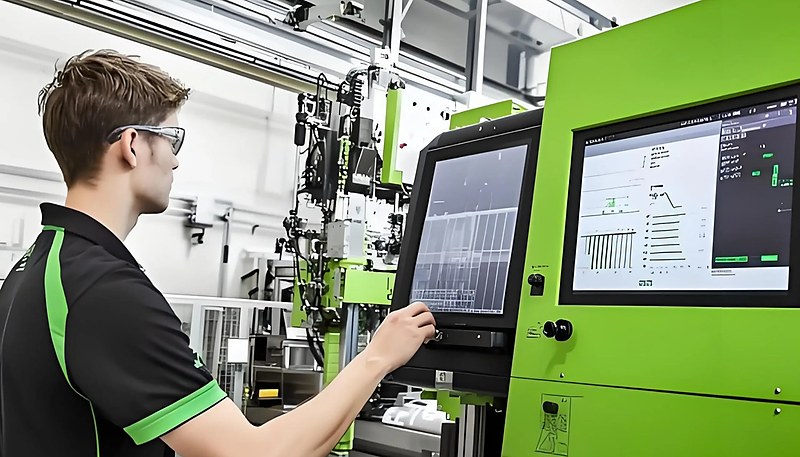
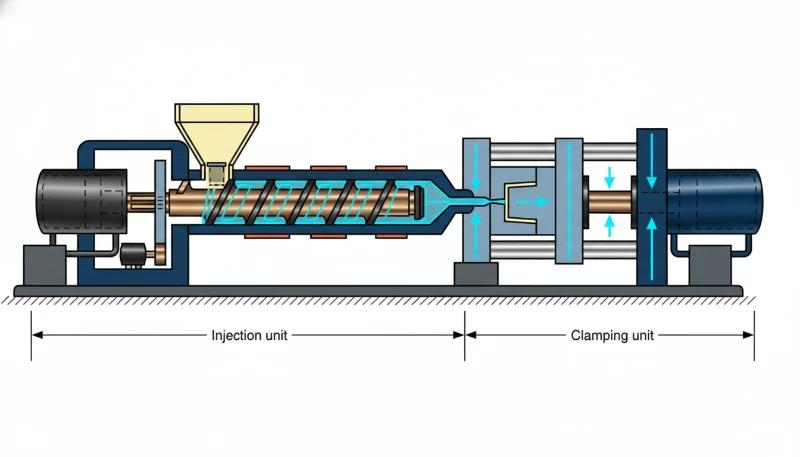
Thermoplast2 spuitgieten is een standaardproces waarbij vormapparatuur een matrijs met polymeersmelt vult. Met de spuitgietmachine kunnen injectiedruk en -snelheid, wanddikte, kwaliteitscontrole en kleine toleranties worden beheerst, zodat het product doorgaans direct na productie verzendklaar is.
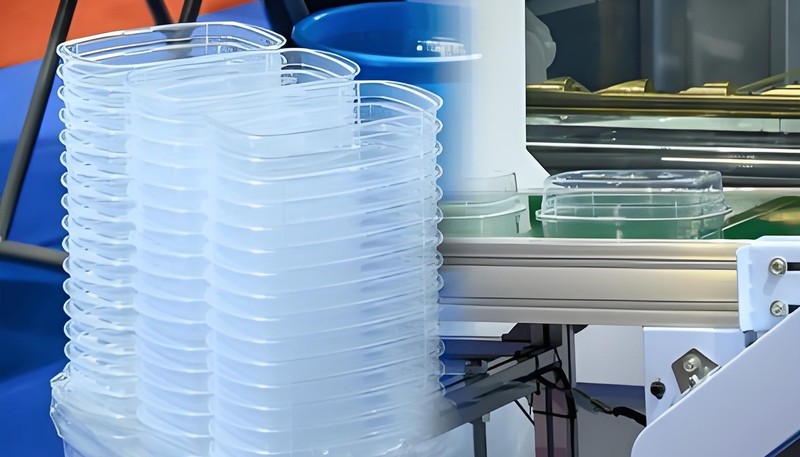
Kunststofkorrels worden in een cilinder gevoerd, waar ze worden gesmolten, samengeperst en in de matrijsholte gespoten. Het hete materiaal koelt af en stolt in de matrijs tot een spuitgietdeel. Bij het spuitgietproces werpt de uitwerper het onderdeel ten slotte uit de matrijs, waarna het in een bak valt. Zodra de productierun is voltooid, worden de onderdelen (of masterbatch) direct verpakt en verzonden.
Hoe werkt de spuitgietcyclus?
Na verwerking van 400+ materialen in onze fabriek in Shanghai gedurende de afgelopen twintig jaar, weten we dat materiaalkeuze de meest invloedrijke beslissing in elk spuitgietproject is. Een verkeerde harskeuze kan leiden tot kromtrekken, een slechte oppervlakteafwerking of zelfs volledig falen van het onderdeel in de praktijk. Daarom beoordeelt ons engineeringteam de materiaalopties aan de hand van de toepassingseisen voordat matrijsstaal wordt verspaand.
Wat zijn de plastic materialen die gebruikt worden voor kunststof spuitgieten?
‘De voordelen van spuitgieten zijn het grootst wanneer matrijsontwerp, materiaalkeuze en leverancierscapaciteit gezamenlijk worden beoordeeld.’True
Een lage onderdeelprijs verdwijnt snel als het gereedschap nabewerking, aangepaste koeling of een late materiaalvervanging nodig heeft.
"De laagste stukprijs betekent altijd de laagste totale productiekosten."False
Matrijsonderhoud, uitvalpercentage, tolerantierisico, logistiek en technische ondersteuning kunnen een goedkope offerte over de levenscyclus van het project duurder maken.
Veel gebruikte kunststofmaterialen bij het spuitgieten zijn polypropyleen, ABS en polyethyleen, die elk unieke eigenschappen hebben voor verschillende toepassingen. Polypropyleen staat bekend om zijn flexibiliteit en chemische weerstand, terwijl ABS sterkte en slagvastheid biedt. Polyethyleen wordt in zijn verschillende vormen veel gebruikt vanwege zijn duurzaamheid en kosteneffectiviteit. De keuze van het juiste materiaal is cruciaal voor het bereiken van optimale prestaties en kwaliteit van het eindproduct.
Welke thermoplastische kunststof moet u kiezen?
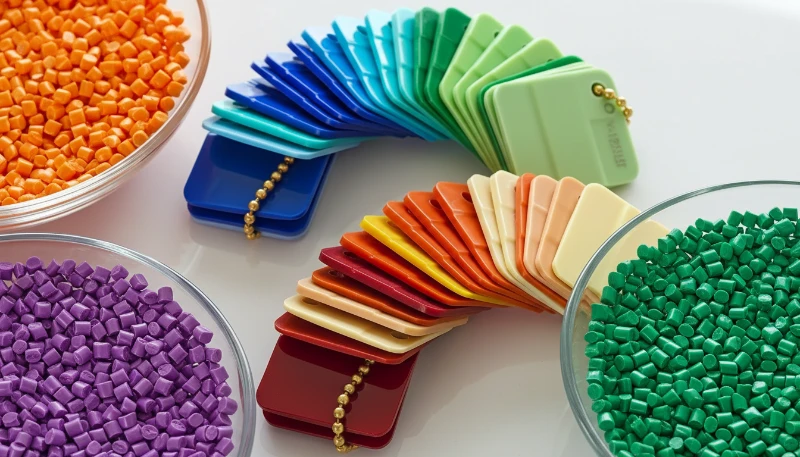
Voor spuitgieten gebruiken we thermoplastische polymeren. Deze kunststoffen kunnen door verhitting worden gesmolten en verweekt en stollen vervolgens door afkoeling. Welk thermoplastisch materiaal geschikt is, hangt af van het te produceren onderdeel. We gebruiken materialen zoals polyethyleen, polycarbonaat, nylon, polypropyleen en slagvast polystyreen. De juiste materiaalkeuze kan de prestaties verbeteren en de kosten verlagen.
Polypropyleen (PP)
PP, of polypropyleen, is een veelzijdige thermoplast die wordt gebruikt bij spuitgieten. Het is licht, bestand tegen chemicaliën en kan tegen een stootje. Daarom is het zo populair voor het maken van bijvoorbeeld verpakkingen, containers en auto-onderdelen.
Polystyreen (PS)
Polystyreen (PS) is helder, hard en goedkoop. PS wordt vaak gebruikt in wegwerpspullen zoals verpakkingen, voedselcontainers en wegwerpbestek, en wordt geliefd omdat het makkelijk te vormen is en omdat het goedkoop is.
Polyamide (PA 6)
Nylon, vooral nylon 6 of PA 6, staat bekend als sterk, taai en slijtvast. Het is geweldig voor het maken van mechanische onderdelen en wordt veel gebruikt in dingen zoals tandwielen, lagers en andere onderdelen die in grote hoeveelheden moeten worden gemaakt, lang meegaan en zeer precies moeten worden gemaakt.
Polycarbonaat (PC)
PC, of polycarbonaat, staat bekend om zijn doorzichtigheid, taaiheid en hoge hittebestendigheid. Daarom wordt het in veel verschillende industrieën gebruikt voor brillenglazen, elektronische onderdelen en heldere dingen die niet breken.
Wat is een kunststofspuitgietmatrijs?
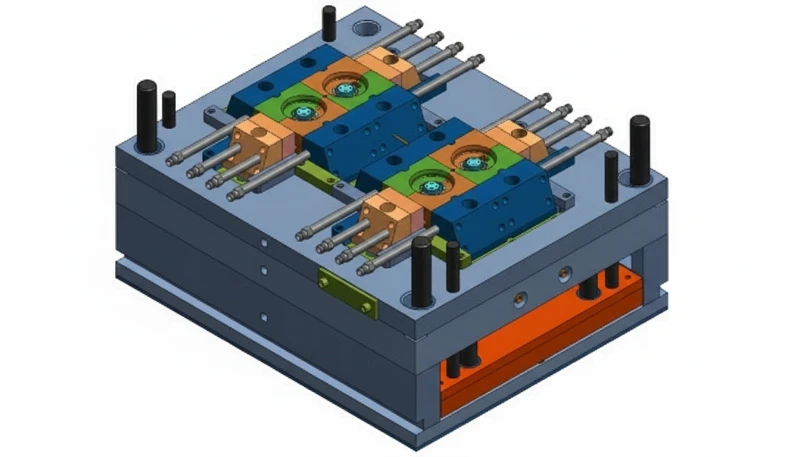
Een kunststof spuitgietmatrijs is een nauwkeurig bewerkt stalen gereedschap dat de vorm van de holte, de koelindeling en het uitwerpsysteem voor elk onderdeel bepaalt.
Als het onderdeel groot is, zal er één holte zijn voor het onderdeel. Maar als het onderdeel klein is, heeft de mal meerdere of zelfs tien of meer holtes. Dit verhoogt de efficiëntie van het hele proces. Afhankelijk van het aantal holtes kan de mal verschillende aantallen en lengtes runners hebben om de kunststof te verdelen.
Wat zijn de kenmerken van het kunststof spuitgietproces?
Spuitgieten is een snel, herhaalbaar proces dat bij massaproductie nauwe toleranties, weinig afval en korte cyclustijden oplevert.
Om het spuitgietproces goed te laten verlopen en een goed eindproduct te verkrijgen, moeten in elke spuitgietcyclus de juiste omstandigheden worden gerealiseerd.
Een belangrijk aspect van het kunststofspuitgietproces is de cyclustijd3: de tijd dat de kunststof onder hoge druk in de matrijs blijft terwijl deze afkoelt. Dit duurt meestal enkele seconden tot ongeveer twintig seconden. Doorgaans hangt deze tijd af van het materiaaltype en van de afmetingen en het gewicht van het product.
Als je niet lang genoeg perst, zal het oppervlak van je product instorten of op een andere manier beschadigd raken. Als je te lang perst, heb je geen enkel voordeel. Als je te lang perst, sluit het materiaal te veel af en wordt het moeilijk om je product uit de mal te krijgen.
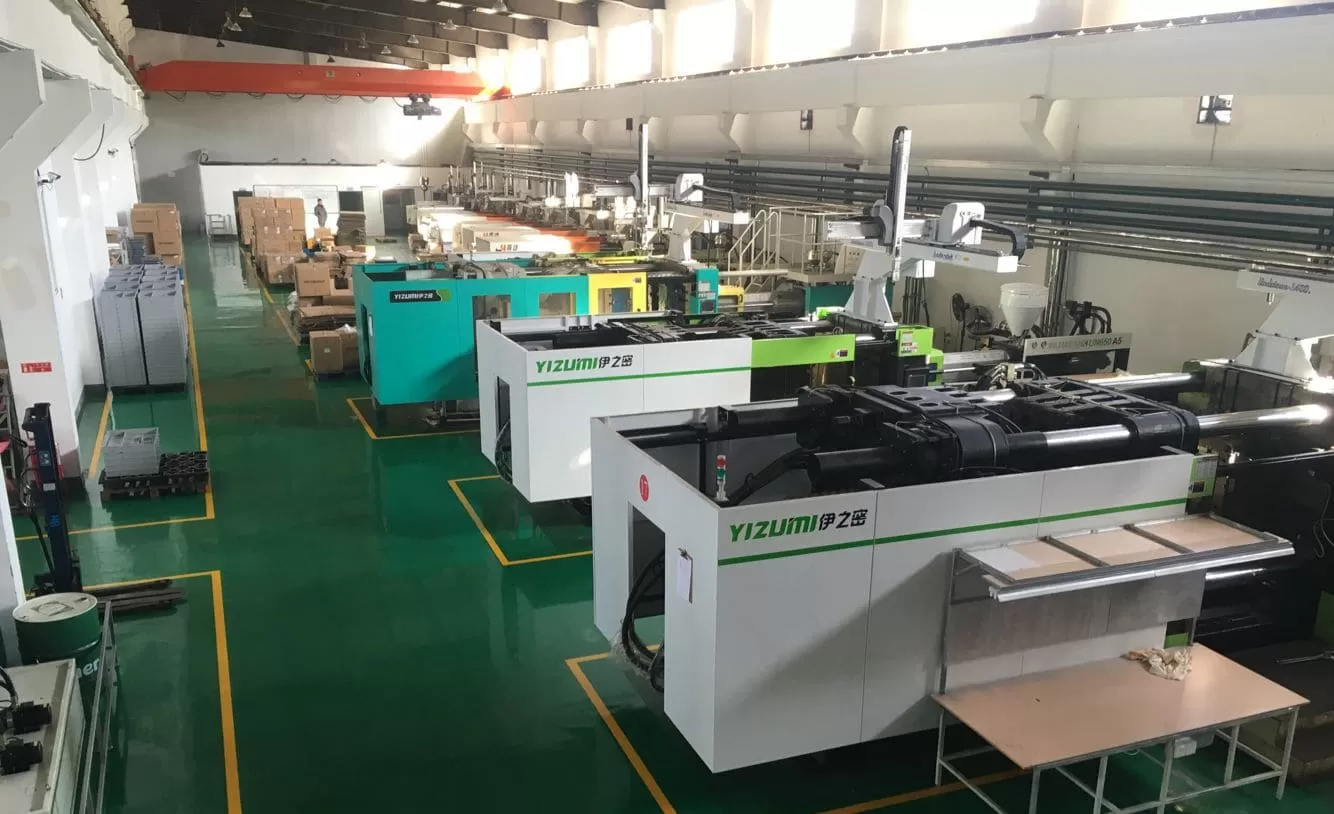
In onze fabrieksbeoordelingen behandelen we de voordelen van spuitgieten als een systeemvraagstuk, niet alleen als een kwestie van machinecycli. Met 20+ jaar ervaring in matrijzenbouw en spuitgieten, 47 spuitgietmachines en een persbereik van 90T-1850T hebben we gezien dat de grootste besparingen doorgaans ontstaan door onderdeelontwerp, matrijskoeling, harskeuze en inspectieplanning vóór de productiestart op elkaar af te stemmen.
Wat zijn de voordelen van spuitgieten?
De belangrijkste voordelen van spuitgieten zijn een hoge productiesnelheid, lage stukkosten bij grote volumes, nauwe toleranties en de mogelijkheid om complexe geometrieën te vervaardigen.
Spuitgieten is een efficiënt en snel productieproces
Een van de grote voordelen van spuitgieten is hoe snel en efficiënt het is. Als je eenmaal de mal hebt gemaakt en de spuitgietmachine hebt ingesteld, kun je in korte tijd een heleboel onderdelen maken. en minder ongebruikt of afvalplastic, Dit is geweldig voor industrieën die veel van hetzelfde nodig hebben.
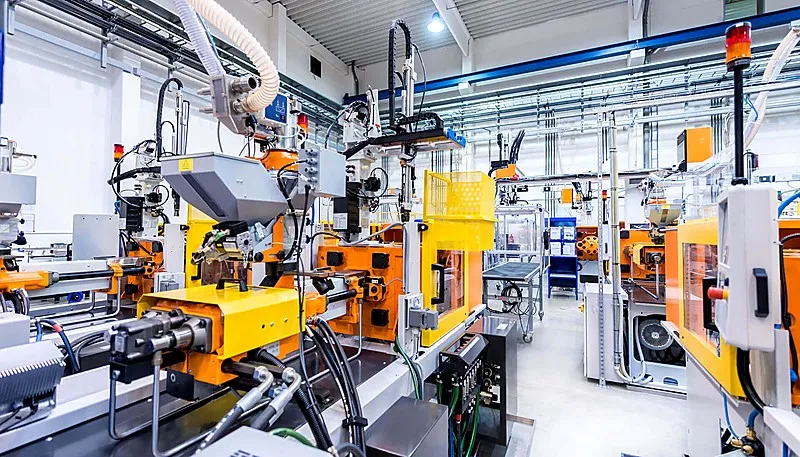
De snelheid van spuitgieten komt omdat het geautomatiseerd is. Robots en automatisering maken daar een groot deel van uit, omdat ze hetzelfde steeds opnieuw kunnen doen, 24/7. Dit is geweldig voor industrieën zoals de auto-industrie en verpakkingsindustrie, waar tijd geld is.
Veelzijdigheid van spuitgietmaterialen
Spuitgieten is als een kameleon - het kan zich aanpassen aan de meest uiteenlopende materialen. Van thermoplasten en kunststoffen tot harsen en zelfs siliconen, de mogelijkheden zijn enorm. Deze veelzijdigheid is een ander groot voordeel van spuitgieten.
Verschillende materialen hebben verschillende eigenschappen en het is belangrijk om het juiste materiaal te kiezen voor een specifieke toepassing. Of je nu een onderdeel nodig hebt met meer sterkte, een specifieke oppervlakteafwerking of weerstand tegen bepaalde omstandigheden, spuitgieten heeft wat je nodig hebt. Het is alsof je een Zwitsers zakmes in je productiegereedschapskist hebt!
Spuitgieten creëert lichtgewicht producten
OEM’s gebruiken lichtgewicht kunststof spuitgietproducten in veel industrieën, maar ze komen het meest voor in de auto-industrie. Het gebruik van kunststof onderdelen helpt het gewicht te verminderen in vergelijking met het gebruik van metalen onderdelen. Vandaag kunnen lichtgewicht thermoplasten met hoge sterkte metalen onderdelen vervangen met weinig verschil in sterkte of duurzaamheid, alleen in gewicht.
Spuitgieten heeft een consistent productieproces
Voor OEM-inkopers is spuitgieten geschikt wanneer een project reproduceerbare kwaliteit, stabiele cyclustijden en schaalbare stukskosten vereist. Deze voordelen worden pas reëel met een competente leverancier; beoordeel fabrieken zorgvuldig vóór goedkeuring van de matrijsbouw.
Enkele voordelen van spuitgieten zijn: het is snel en efficiënt, kan veel verschillende oppervlakken maken, is geschikt voor talrijke materialen, levert lichte producten, is consistent, kan uiterst nauwkeurige en zeer complexe onderdelen produceren, versnelt productontwikkeling, is sterk, herhaalbaar en goedkoop, en biedt grote ontwerpvrijheid. Raadpleeg onze Complete gids voor spuitgieten voor een volledig overzicht.
Spuitgieten creëert precisieproducten
Met moderne, snelle en goed onderhouden spuitgietapparatuur kunt u precisieonderdelen van kunststof in serie produceren. Dit is de beste methode voor nauwkeurige kunststofonderdelen zoals connectoren en tandwielen. Toleranties tot +/- 0.0002 inches zijn haalbaar.
Spuitgieten verkort de productontwikkelingstijd
Spuitgiettechnici met diverse vaardigheden kunnen OEM’s helpen om kortere productontwikkelingstijden te realiseren. Dit zorgt voor snellere productiecycli en brengt defectvrije onderdelen sneller op de markt, wat een doorslaggevend concurrentievoordeel is voor fabrikanten.
Spuitgieten biedt complexe onderdelenontwerpen
Spuitgieten is ideaal om complexe onderdelen te maken, dingen consistent te houden en een miljoen onderdelen te maken die allemaal hetzelfde zijn. Om veel onderdelen te maken en ze goed te maken, moet je nadenken over een aantal belangrijke dingen.
Onderdelen ontwerpen om de efficiëntie te maximaliseren die inherent is aan het vormen van grote volumes is essentieel. Met een ideaal ontwerp kunt u onderdelen van hoge kwaliteit maken zonder aan complexiteit in te boeten.
Spuitgieten voor grotere sterkte
Kunststoffen zijn in de loop der jaren veel sterker en steviger geworden. Tegenwoordig kunnen lichtgewicht thermoplasten net zo goed tegen een stootje als metalen onderdelen, en soms zelfs beter.
Bovendien zijn er meer dan 25,000 technische materialen beschikbaar voor complexe spuitgiettoepassingen. U kunt ook hoogwaardige kunststofmengsels en hybriden maken om aan specifieke onderdeeleisen en eigenschappen te voldoen, zoals een hoge treksterkte.
Precisie en nauwkeurigheid in spuitgieten
Bij spuitgieten draait alles om precisie en nauwkeurigheid. Je kunt er onderdelen mee maken met complexe vormen en nauwe toleranties. Het is als een meesterbeeldhouwer die de kleinste details met perfecte precisie kan uitsnijden. Dit is vooral belangrijk in sectoren zoals de auto-industrie en de medische sector, waar zelfs de kleinste afwijkingen grote gevolgen kunnen hebben.
De precisie van spuitgieten hangt af van de matrijs en het gecontroleerde spuitgietproces. De mal wordt gemaakt in de exacte vorm van het uiteindelijke onderdeel en het gesmolten plastic wordt onder hoge druk geïnjecteerd, zodat elk hoekje gevuld is. Het resultaat? Onderdelen die zowel precies als mooi zijn.
De factor herhaalbaarheid in spuitgieten
Een ander voordeel van spuitgieten is dat je hetzelfde onderdeel steeds opnieuw kunt maken. Zodra je de matrijs hebt gemaakt en de machine hebt ingesteld, kun je hetzelfde onderdeel steeds opnieuw maken. Het is als een machine die maar door blijft gaan. Hij maakt elke keer hetzelfde onderdeel met heel weinig verschil. Dit is echt belangrijk in sommige industrieën.
Als je miljoenen flessendoppen of auto-onderdelen maakt, wil je dat ze allemaal bijna exact hetzelfde zijn. Dat is moeilijk bij andere vormen van productie, dus is spuitgieten de beste manier.
Kostenvoordelen van spuitgieten
Zullen we het over geld hebben? Spuitgieten is een rendabele manier om kunststof onderdelen te maken, vooral in grote volumes. De initiële kosten om een matrijs te maken kunnen hoog zijn, maar als je de matrijs eenmaal hebt, zijn de kosten per onderdeel erg laag. Het is alsof je in bulk koopt - hoe meer je er maakt, hoe goedkoper elk onderdeel wordt.
Omdat spuitgieten een geautomatiseerd proces is, zijn de arbeidskosten en overhead laag. Dankzij robotica en automatisering kan het proces 24 uur per dag, 7 dagen per week worden uitgevoerd met weinig menselijke tussenkomst. Deze kosteneffectiviteit is een groot voordeel van spuitgieten, waardoor het een goede keuze is voor bedrijven die een evenwicht willen tussen kwaliteit en kosten.
Flexibiliteit in spuitgietontwerpen
Ontwerpflexibiliteit is een andere eigenschap van spuitgietdoppen. Het proces kan onderdelen produceren met complexe geometrieën, ondersnijdingen en ingewikkelde vormen die moeilijk, zo niet onmogelijk, te realiseren zijn met andere productiemethoden.
Wat zijn de toepassingen van kunststof spuitgieten?
Kunststof spuitgieten wordt veel gebruikt in de auto-industrie, elektronica, medische apparatuur en bij de productie van consumentengoederen. Het maakt massaproductie mogelijk met nauwkeurige detaillering en minimaal afval, waardoor het ideaal is om complexe onderdelen snel en betrouwbaar te maken. De belangrijkste toepassingen zijn dashboards voor auto’s, medische spuiten en elektronische behuizingen.
Plastic onderdelen zijn overal. Ze zijn goedkoop, sterk, chemisch stabiel, slijtvast, isolerend en warmtegeleidend. Daarom wordt spuitgieten in zoveel industrieën gebruikt. Hier zijn enkele voorbeelden.
Auto-industrie
Ze maken onderdelen voor auto’s en machines door kunststof in mallen te spuiten. De industrie gebruikt deze kunststof onderdelen om een aantal redenen. Een van de belangrijkste redenen is dat ze lang meegaan. Ze slijten of gaan niet kapot en gaan meestal lang mee.
Kunststoffen zijn ook lichter dan andere materialen. Dit gewicht helpt de brandstofefficiëntie van auto’s te verbeteren, want hoe zwaarder de auto, hoe meer brandstof hij verbruikt.
Bovendien zijn plastic onderdelen bestand tegen UV-blootstelling en corrosie, waardoor ze ideaal zijn voor de productie van auto-onderdelen zoals radiobedieningen, bekerhouders, bumpers en dashboards.
Medische industrie
De medische industrie is dol op spuitgegoten kunststof onderdelen. Ze hebben er veel van nodig en ze moeten perfect zijn. Ze houden er ook van om er veel van te maken omdat de meeste plastic spullen die ze maken wegwerpartikelen zijn, waardoor ziektes en bacteriën zich niet kunnen verspreiden omdat ze steriel zijn.
Dingen die in deze industrie worden gemaakt met spuitgieten zijn onder andere plastic wegwerpspuiten en infuusconnectoren. Andere leuke dingen zijn biocompatibele dingen zoals prothesen en tandheelkundige implantaten, maar ook handgrepen en triggers die gesteriliseerd kunnen worden. Veelgebruikte kunststoffen van medische kwaliteit zijn siliconen, polypropyleen, polyethyleen en ABS.
Elektronica
Kunststoffen geleiden geen elektriciteit, maar toch worden ze gebruikt in de elektronica-industrie. Ze gebruiken spuitgieten om elektrische panelen en andere elektronische apparaten te maken.
Bovendien zijn de kunststoffen die fabrikanten gebruiken in de elektronica-industrie meestal erg goed in het niet geleiden van elektriciteit en ze zijn taai. Spuitgieten wordt gebruikt om afstandsbedieningen, computers, medische instrumenten, tv’s, sleutelhangers en nog veel meer te maken.
Landbouwproducten
De landbouw heeft nog steeds spuitgegoten onderdelen nodig. De industrie gebruikt kunststof spuitgietproducten die sterk zijn en verschillende weersomstandigheden aankunnen.
Ook hebben spuitgegoten onderdelen veel voordelen voor de industrie. Een van de grootste is dat ze niet corroderen. Dit is een groot voordeel voor boerderijen. In tegenstelling tot metalen corroderen kunststoffen niet door bijvoorbeeld regen. Ze zijn ook licht van gewicht, wat betekent dat ze sterk zijn en niet veel kosten om te maken voor de landbouw.
Huishoudelijke producten
De meeste consumentenproducten die je in huis vindt, zijn verpakt door middel van spuitgieten. Maar waarom gebruiken fabrikanten dit proces? Omdat kunststof producten die met behulp van het spuitgietproces zijn gemaakt, meestal erg sterk zijn. Een andere reden is dat ze bestand zijn tegen verschillende temperaturen en weersomstandigheden. Ze kunnen ook gerecycled worden, waardoor fabrikanten geld besparen op het maken van nieuwe producten.
Spuitgieten wordt ook gebruikt om huishoudelijke plastic producten te maken zoals flessendoppen, toiletbrillen, buitenmeubilair, drankgerei, barbecue-accessoires en nog veel meer. Spuitgieten wordt ook gebruikt om duurzame, kleurrijke en gemakkelijk schoon te maken huishoudelijke artikelen te maken, zoals kinderspeelgoed.
Consumptiegoederen
Veelgestelde vragen
Veelgestelde vragen
Wat is het belangrijkste voordeel van kunststofspuitgieten?
Het belangrijkste voordeel is reproduceerbare productie in grote volumes met stabiele afmetingen, korte cyclustijden en lagere stukkosten nadat de matrijs is gebouwd. Voor inkopers is dit belangrijk omdat hetzelfde gereedschap duizenden of miljoenen consistente onderdelen kan produceren zodra DFM, materiaalkeuze, koeling en inspectieplannen stabiel zijn. De grootste besparingen ontstaan doorgaans wanneer het productontwerp volwassen en de productievraag voorspelbaar is. In de praktijk ligt de waarde niet alleen in snelheid, maar in de combinatie van reproduceerbaarheid, minder uitval, beheerste toleranties en consistente kwaliteitsdocumentatie.
Wanneer is spuitgieten rendabeler dan 3D-printen?
Spuitgieten is doorgaans kostenefficiënter dan 3D-printen wanneer het ontwerp stabiel is en het productievolume hoog genoeg is om de matrijskosten over veel onderdelen te verdelen. 3D-printen is nuttig voor prototypes en ontwerpcontroles bij lage volumes, maar spuitgieten is sterker wanneer inkopers reproduceerbaarheid, een consistent oppervlak, materiaalkeuze en voorspelbare doorlooptijden voor doorlopende productie nodig hebben. Het break-evenpunt hangt af van onderdeelgrootte, hars, tolerantie, jaarvolume en matrijscomplexiteit. Inkopers moeten daarom de totale projectkosten vergelijken en niet alleen de prijs van het eerste monster.
Hoe beïnvloedt matrijsontwerp de voordelen van spuitgieten?
Het matrijsontwerp beïnvloedt koeling, cyclustijd, onderdeelconsistentie, oppervlakteafwerking en onderhoudskosten op lange termijn. Een goed ontworpen matrijs kan kromtrekken, inval, bramen en maatvariatie verminderen, terwijl een zwak matrijsontwerp een lage geoffreerde onderdeelprijs kan veranderen in terugkerende probleemoplossing. Daarom moeten plaatsing van de aanspuiting, kanaalbalans, staalkeuze, ontluchting, koeling en uitwerping vóór productiegoedkeuring worden beoordeeld. Een goed matrijsontwerp vereenvoudigt ook onderhoud, beschermt kritieke maten en geeft het vormteam tijdens massaproductie een ruimer procesvenster.
Waarom moeten inkopers zowel de leverancier als het proces beoordelen?
Kopers moeten zowel de leverancier als het proces beoordelen, omdat de capaciteiten van de leverancier invloed hebben op DFM-feedback, materiaalkeuze, matrijsonderhoud, inspectiediscipline en de snelheid waarmee productieproblemen worden opgelost. Een bekwame leverancier kan risico’s vóór het verspanen van het staal identificeren, kwaliteitscontroles documenteren, de cyclustijd stabiliseren en afwegingen helder toelichten. Deze capaciteiten bepalen vaak of de voordelen van spuitgieten daadwerkelijk tot besparingen leiden. De beste leveranciersbeoordeling kijkt naar engineeringkennis, machinepark, projectcommunicatie, inspectierapporten, exportervaring en het vermogen van het team om de uitgangspunten van de offerte duidelijk uit te leggen.
Kan spuitgieten complexe kunststofonderdelen produceren?
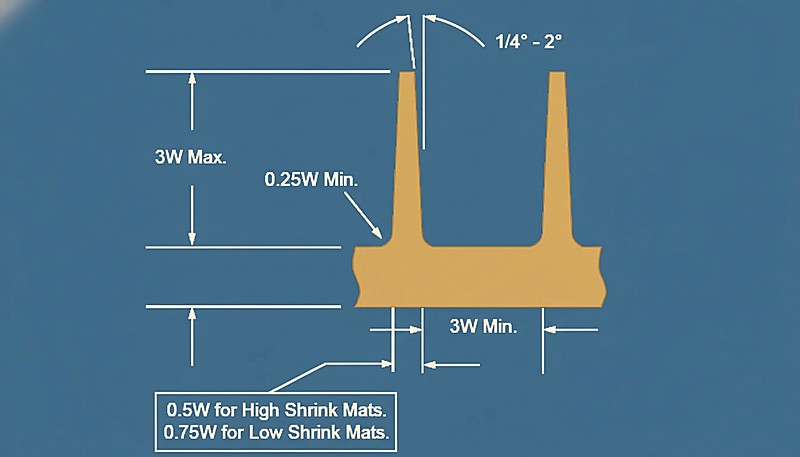
Ja, spuitgieten kan complexe kunststofonderdelen ondersteunen wanneer wanddikte, aanspuitingen, ribben, nokken, lossingshoeken en uitwerping zijn ontworpen met het oog op maakbaarheid. Het proces kan gedetailleerde kenmerken, reproduceerbare toleranties, gestructureerde oppervlakken en sterke kunststofconstructies produceren. Complexe onderdelen vereisen echter een vroege technische beoordeling, omdat ondersnijdingen, dunne wanden, scherpe hoeken, materiaalkrimp en montagevereisten de matrijskosten en productiestabiliteit kunnen beïnvloeden. Bij complexe projecten moeten inkopers vóór goedkeuring van de matrijs om DFM-feedback vragen, zodat het definitieve ontwerp functie, gereedschapsrisico, onderdeelsterkte en productie-efficiëntie in balans brengt.
Welke sectoren profiteren het meest van spuitgieten?
Vooral automotive, medische hulpmiddelen, consumentenelektronica en verpakkingen profiteren. Deze sectoren gebruiken spuitgieten voor grote aantallen maatvaste onderdelen met een consistente afwerking. Automotive gebruikt het voor lichte constructiedelen en interieurdelen; de medische sector voor steriele wegwerpproducten en biocompatibele behuizingen. Elektronica vereist nauwkeurige connectoren en isolerende behuizingen. Waar aantallen, reproduceerbaarheid en tolerantiebeheersing tellen, presteert spuitgieten meestal beter dan alternatieven zodra de matrijsinvestering verantwoord is.
Welke invloed heeft de materiaalkeuze op de kwaliteit van het spuitgieten?
De materiaalkeuze beïnvloedt rechtstreeks de onderdeelsterkte, maatvastheid, oppervlakteafwerking en prestaties op lange termijn in de praktijk. Technische harsen zoals polycarbonaat en nylon bieden een hogere hittebestendigheid en mechanische sterkte, terwijl standaardharsen zoals polypropyleen de kosten voor eenvoudigere toepassingen laag houden. Een verkeerde harskeuze kan kromtrekken, brosheid of uitval onder bedrijfsomstandigheden veroorzaken. Inkopers moeten de toepassingseisen met hun leverancier bespreken, zodat materiaalkwaliteit, vulstofgehalte en kleurstofdosering vóór de matrijsbouw op de functie van het onderdeel worden afgestemd. Onze ervaring is dat een vroege materiaalbeoordeling kostbare matrijsaanpassingen voorkomt.
Waarom kunststof spuitgieten overwegen voor uw volgende project?
Voor OEM-inkopers is spuitgieten de juiste keuze wanneer een project herhaalbare kwaliteit, stabiele cyclustijden en schaalbare stuksprijzen vereist. Een bekwame leverancier maakt deze voordelen daadwerkelijk waar; gebruik onze leveranciersgids om fabrieken te beoordelen voordat u een matrijsbouw goedkeurt.
Enkele voordelen van spuitgieten zijn: snelle en efficiënte productie, veelzijdige oppervlakteafwerkingen, ruime materiaalkeuze, lichte producten, constante kwaliteit, hoge precisie, kortere productontwikkelingscycli, mogelijkheid voor complexe onderdelen, sterke constructieve prestaties, uitstekende herhaalbaarheid, lage kosten bij grote volumes en brede ontwerpvrijheid. Raadpleeg voor een volledig overzicht onze Complete gids voor spuitgieten.
Spuitgieten: Spuitgieten is een productieproces waarbij gesmolten materiaal in een matrijsholte wordt geïnjecteerd om reproduceerbare kunststofonderdelen te vormen. ↩
Thermoplast: Een thermoplast is een kunststof die bij verwarming zacht wordt en bij afkoeling weer uithardt. ↩
Cyclustijd: De cyclustijd is de totale tijd die nodig is om één vormcyclus te voltooien, inclusief vullen, nadrukken, koelen, openen van de matrijs, uitwerpen en sluiten van de matrijs. ↩