kern1 en holte2 klinken als eenvoudige matrijstermen, maar ze bepalen meer dan alleen de basisvorm van een kunststof onderdeel. Ze beïnvloeden de toegang tot de aanspuiting, de positie van de deelnaad3, uitwerpermarkeringen, textuur, het risico op braamvorming, de koelbalans, de krimprichting en of een onderdeel zonder beschadiging kan worden uitgeworpen.
Als u alleen vraagt: “wat is de kern en wat is de holte?”, krijgt u een leerboekantwoord. Als u vraagt hoe de twee helften kosten, defecten, levensduur van de matrijs en productiestabiliteit beheersen, krijgt u een bruikbaar technisch antwoord voor spuitgieten en projecten met een spuitgietmatrijs.
Deze gids legt de kern-holte relatie uit in gewone taal, en zet het vervolgens om in een praktische ontwerp- en koperchecklist. Het doel is om u te helpen een matrijsconcept te beoordelen voordat staal wordt gesneden, omdat late wijzigingen aan de kern of holte zelden goedkoop zijn.
- Kern vormt interne geometrie; holte vormt buitenste vorm.
- Parting line keuze beïnvloedt flash, uiterlijk en release.
- Koelbalans is even belangrijk als staalnauwkeurigheid.
- Kern-holte mismatch veroorzaakt vaak defecten en herwerk.
- Kopers moeten de matrijsindeling beoordelen vóór goedkeuring van de gereedschapsbouw.
Wat zijn kern en holte in spuitgieten?
Kern en holte zijn de twee matrijsvormende zijden die de uiteindelijke kunststof onderdeelvorm creëren. De holte vormt meestal de buitenkant of zichtbare oppervlakte, terwijl de kern meestal interne oppervlakken, gaten, pennen, ribben, ondertanden, of de zijde die uitstootondersteuning nodig heeft vormt.
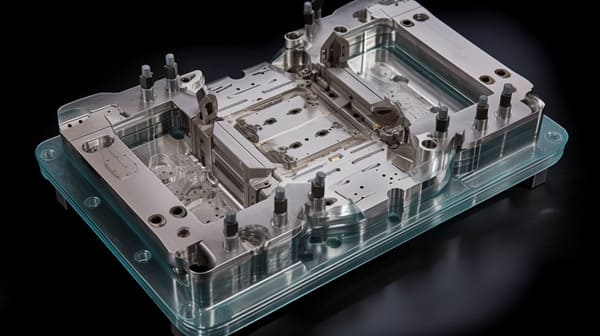
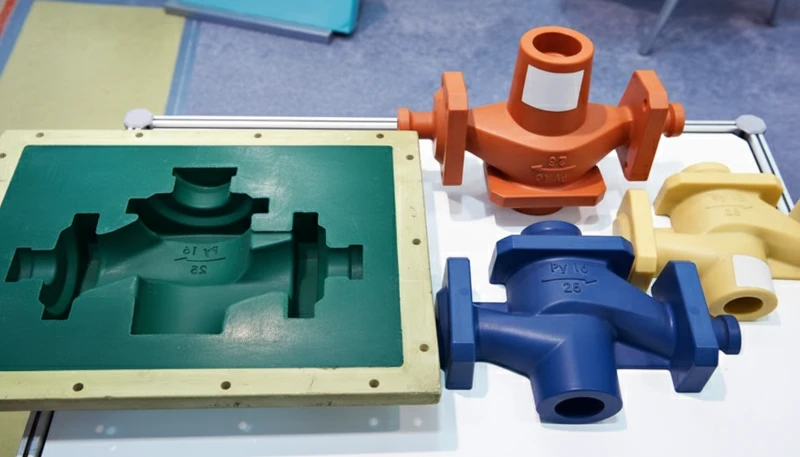
In een eenvoudig doosvormig onderdeel kan de holte de buitenste schil en cosmetische voorkant vormen, terwijl de kern de binnenste holle ruimte creëert. In een complexer onderdeel kunnen verschillende inzetstukken, lifters, schuivers of verwijderbare kernen samenwerken. Daarom is echt matrijsontwerp niet zomaar een mannelijke en vrouwelijke helft tekening.
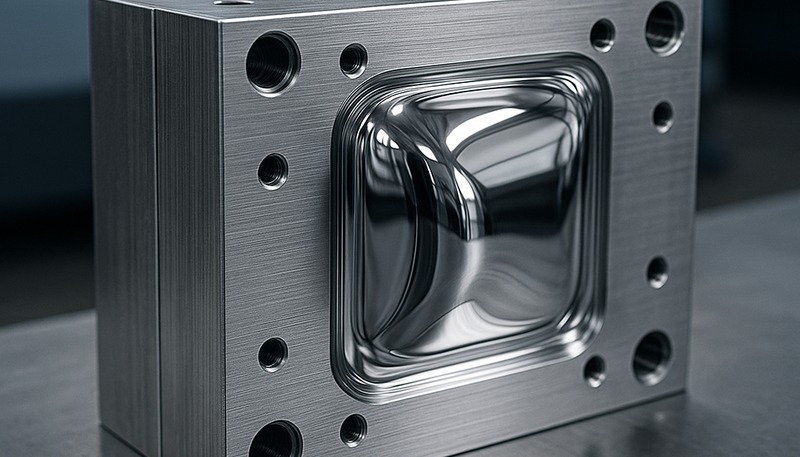
In onze ervaring is de beste eerste reviewvraag simpel: welke zijde controleert het functionele oppervlak? Als het cosmetische gezicht, afdichtingsgezicht, clipfeature, screwboss of assemblage datum aan de verkeerde zijde wordt toegewezen, kan de matrijs nog een deel maken, maar productiekwaliteit wordt moeilijker te controleren.
"Keuzes voor kern en holte beïnvloeden zowel de onderdeelvorm als het productierisico."True
De matrijsopening bepaalt hoe kunststof vult, waar lucht ontsnapt, hoe het onderdeel afkoelt, waar uitstootkracht wordt toegepast, en welk oppervlak scheidingslijn- of uitstulpingsmarkeringen vertoont.
"De caviteit bevindt zich altijd aan de vaste zijde en de kern altijd aan de bewegende zijde."False
Veel matrijzen volgen die conventie, maar complexe gereedschappen kunnen inzetstukken, schuivers, lifters, ontkernende kernen en andere mechanismen gebruiken. Functie en vrijgave strategie zijn belangrijker dan een simpel label.
Hoe bepalen kern en holte de vorm van een gespoten kunststof onderdeel?
De kern wordt gebruikt om interne of opstaande features te vormen, terwijl de holte wordt gebruikt om de buitencontour en zichtbare gezicht te vormen. Gesmolten plastic stroomt in de ruimte tussen deze oppervlakken, koelt tegen het staal en wordt de finale deelgeometrie nadat de matrijs opengaat.
Die ruimte is niet alleen lege ruimte. Het bepaalt wanddikte, ribhoogte, bosshoogte, afsluithoek, toegang tot de gate, venting, koelafstand en ejectierichting. Een kleine mismatch tussen kern en holte kan ongelijke wanden, sink marks, flash, short shots, drag marks of dimensionele variatie veroorzaken.
Wanddikte is het eerste wat moet worden gecheckt. Als de kern te dicht bij de holte zit, kan het deel short shot worden of zwak worden. Als de kern te ver weg zit, wordt de wand dik, koeling vertraagt en sink marks verschijnen nabij ribs of bosses. Dit is waar early DFM zijn geld verdient.
| Ontwerpkeuze | Kern-holte-impact | Risico als genegeerd |
|---|---|---|
| Wanddikte | Afstand tussen kern en holte | Sink, short shot, lange cyclus |
| Scheidingslijn | Waar matrijshalven samenkomen | Braam, deelvlakmarkering, verspringing |
| Uitstootzijde | Waar het deel blijft na opening | Uitstootmarkeringen of vervorming |
| Koelindeling | Warmteafvoer van beide helften | Warping en ongelijke shrink |
Waarom beïnvloeden kern- en holtebeslissingen spuitgietdefecten?
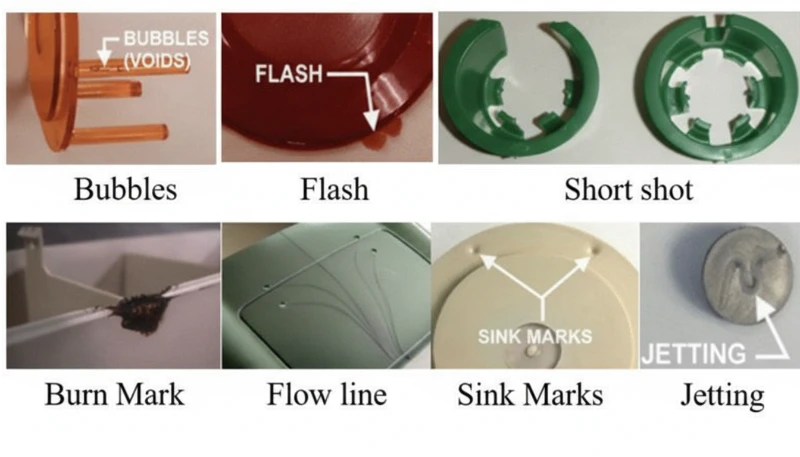
Kern- en holtebeslissingen zijn belangrijk omdat veel gietdefecten beginnen als tooling layoutproblemen. Flash, burn marks, luchtinsluitsels, short shots, sink marks, warpage, drag marks en parting-line mismatch komen vaak van zwakke splitbeslissingen, slechte venting of ongebalanceerde koeling.
Bijvoorbeeld, als een diepe rib wordt gevormd door een dunne kern die niet goed kan koelen, kan de nabijgelegen wand anders krimpen dan het buitenoppervlak. Als de holte een lang stroompad heeft zonder ontluchting aan het einde, kan opgesloten lucht brandmerken veroorzaken. Dit zijn niet alleen verwerkingsproblemen.
Een praktische review moet matrijslayout verbinden met defectpreventie. Gebruik een mould shrinkage checklist om te vragen welke dimensionele en cosmetische risicos deze kern-holte split kan creëren, niet alleen of het 3D-model kan worden machined.
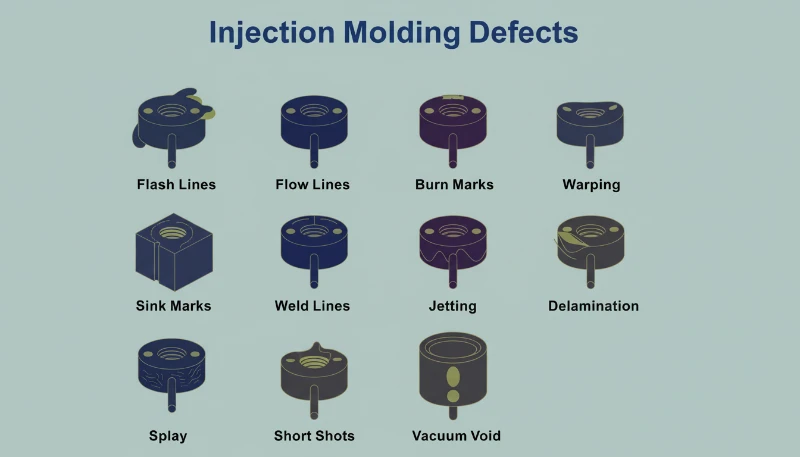
Het instroom- en runnerplan werkt ook samen met de kern en holte. Als de instroom nabij een cosmetisch oppervlak komt, kan de koper een markering zien. Als het stroompad rond een kernkenmerk loopt, kunnen laslijnen samenkomen in een zwak gedeelte. Beoordeel de matrijsplitsing samen met de aannames voor de productietijd van spuitgieten, niet achteraf.
Hoe moeten engineers de parting line kiezen?
Een parting line is de grenslijn waar kern en holte samenkomen. Het moet worden geplaatst waar het functie, uiterlijk, toolsterkte en deelrelease beschermt. Een goede parting line is niet altijd verborgen; het wordt geplaatst waar de markering acceptabel en controleerbaar is.
Begin met de kritieke oppervlakken. Houd afdichtingsgezichten, glijgezichten, assemblage datums en hoog-cosmetische zones weg van avoidable flash. Review dan draftrichting, undercuts, shutoffs, side actions en ejectie. Een parting line die op scherm clean lijkt kan een fragiele shutoff in staal creëren.
Wij raden aan om de ondertekening te markeren met drie zones: schone oppervlakken die moeten zijn, acceptabele markeringsoppervlakken en verborgen oppervlakken. Die eenvoudige kaart helpt de matrijsontwerper te beslissen waar de scheidingslijn, instroom, uitstootpennen, schuivers en inzetstukken kunnen zitten zonder de koper te verrassen bij T1-monsters.
"Een zichtbare deellijn kan nog steeds een goede ontwerpkeuze zijn."True
Als de lijn op een niet-kritieke oppervlak ligt en afdichting, assemblage, koeling en matrijssterkte beschermt, kan het beter zijn dan het te verbergen in een kwetsbare of dure tool-locatie.
"De beste deellijn is altijd de lijn die in CAD onzichtbaar lijkt."False
Een visueel verborgen lijn kan moeilijke shutoffs, zwakke steel, trapped air of dure side actions veroorzaken. De tooling-praktijk moet samen met het uiterlijk worden beoordeeld.
Welke toleranties en matrijsstaaldetails zijn het belangrijkst?
Kern- en holte-tolerances zijn het meest kritisch waar het molded part moet seal, snap, slide, align of een dimension moet houden na cooling. Algemene oppervlakken kunnen vaak bredere tolerance accepteren, maar shutoffs, ribs, bosses, clips, holes en datum features vereisen meer zorgvuldige steel en inspection planning.
De keuze van matrijzenstaal is ook belangrijk. Een zacht inzetstuk kan prima zijn voor een prototype of een proef met laag volume, maar het kan snel slijten bij afsluitingen of textuurgebieden. Gehard staal kan aanvankelijk meer kosten, maar beschermt hoogslijtage-oppervlakken en houdt afmetingen stabiel tijdens de productie.
De koper moet vragen welke afmetingen staalveilig zijn, welke worden vastgezet na gereedschapsbouw en welke kunnen worden gecorrigeerd na T1. Als elke afmeting als even kritiek wordt behandeld, wordt het project duur. Als geen enkele afmeting als kritiek wordt behandeld, kan de montage mislukken.
In onze fabriek in Shanghai gebruiken onze ingenieurs meer dan 20 jaar ervaring in gereedschapsbouw, 47 spuitgietmachines van 90T tot 1850T, interne matrijsproductie, een capaciteit van meer dan 100 matrijsets per maand, UG, SOLIDWORKS, MOLDFLOW en CAD, plus ISO 9001, ISO 13485, ISO 14001 en ISO 45001 systemen om de kern-holte-splitsing, staalveilige afmetingen, koelbalans en correctiepaden te beoordelen voordat de matrijs wordt gebouwd.
Hoe moeten kopers een kern-holte matrijsontwerp beoordelen vóór goedkeuring?
Een goede kern-holte review is een kort technisch gate voorafgaand aan de tooling-approval, niet een lang theoretisch rapport. De koper moet de parting line, gate, runner, venting, cooling, ejection, steel-safe areas, kritische dimensies, texture surfaces en verwachte T1-correctiepad bevestigen.
Vraag het gereedschapsbouwteam om de openingsrichting van de matrijs te tonen en uit te leggen waar het onderdeel blijft wanneer het gereedschap opengaat. Vraag waar de uitstootpennen duwen, waar lucht ontsnapt, hoe inzetstukken worden vastgehouden en welk oppervlak de scheidingslijn zal tonen. Deze antwoorden onthullen of het matrijsconcept volwassen is.
Een simpele checklist van de koper moet must-control features afzonderen van nice-to-have surfaces. Markeer sealing areas, clip hooks, screw bosses, datum pads, visible texture zones en assembly contact faces. Vraag dan de mold designer om te verklaren hoe elke feature wordt beschermd door de kern-holte split. Dit voorkomt een gemeenschappelijk probleem: de tool lijkt acceptabel in een algemeen beeld, maar de één feature die de assembly fit bepaalt, zit over een zwakke shutoff of slechte ejection zone.
Vergelijk voor een gedisciplineerde inkoop matrijsleveranciers op basis van dezelfde tekeningen, materiaalsoort, jaarvolume, tolerantielijst, oppervlaktestandaard en assemblagevereisten. Een gestructureerde gids voor leveranciersselectie helpt de beoordeling op bewijs te richten in plaats van alleen op de prijs van de matrijs.
Vraag voordat u met een matrijs begint om een één pagina DFM-samenvatting. Deze moet de geplande kernzijde, holtezijde, scheidingslijn, poort, loopkanaal, ontluchting, uitstoting, koeling, staalveilige correctiepunten en hoe T1-monsterfeedback wordt afgehandeld, vermelden. Als de leverancier die samenvatting niet kan produceren, is het matrijsontwerp waarschijnlijk niet klaar voor aankoopgoedkeuring.
Dit hoeft het project niet te vertragen. Een sterke leverancier kan meestal snel de splitsing, risico’s en correctiepaden uitleggen, omdat dezelfde vragen van invloed zijn op verspanen, polijsten, monteren, bemonsteren en productieonderhoud. De beoordeling voelt alleen traag aan wanneer het ontwerpteam nog niet heeft besloten welke oppervlakken er echt toe doen.
Heeft u een DFM-beoordeling van kern en holte nodig? Stuur ZetarMold uw 3D-bestand, 2D-tekening, hars, verwachte volume en kritieke afmetingen. Ons team kan de matrijssplitsing, het gereedschapsrisico, het risico op defecten en de productieaannames beoordelen voordat u zich vastlegt op de matrijs.
Veelgestelde vragen
Wat is het verschil tussen kern en holte in injection molding?
De kern vormt meestal de interne of verhoogde kenmerken van het gespoten onderdeel, terwijl de holte meestal de buitenvorm en het zichtbare oppervlak vormt. In een eenvoudige plastic behuizing kan de holte de buitenste cosmetische schaal creëren en de kern het binnenste holle gebied. In echte matrijzen kan de splitsing inzetstukken, schuiven, lifters en verwijderbare kernen omvatten, dus de functie van elk staaloppervlak is belangrijker dan alleen het label. Een koper moet vragen welke zijde het kritieke oppervlak beheerst, omdat dat antwoord de afwerking, uitstoting, flitsrisico en correctieopties beïnvloedt.
Is de kern altijd aan de beweegbare kant van de mal?
Nee. Veel injection molds plaatsen de kern aan de beweegbare kant omdat het part vaak shrinks onto the core en daar ejection support nodig heeft. Complexe mold layouts kunnen deze assumptie echter veranderen. Side actions, inserts, unscrewing features of speciale cosmetische vereisten kunnen forming features op andere locaties plaatsen. De juiste vraag is waar het part na opening blijft en hoe het zonder damage wordt vrijgegeven. Die review bepaalt ook ejector pin marks, slider travel, mold maintenance access en of delicate features repeated production cycles kunnen doorstaan.
Waarom veroorzaakt kern- en holteontwerp flits?
Flash kan ontstaan wanneer de kern en holte niet goed afsluiten, wanneer de clamp force onvoldoende is, wanneer venting of druk slecht wordt gecontroleerd, of wanneer steel wear optreedt bij de parting line. Het designrisico komt vroeg naar voren als thin shutoffs, zwakke steel, lange unsupported edges of high-pressure flow paths zich nabij de split line bevinden. Een DFM-review moet deze zones identificeren voordat de tooling wordt gebouwd. Als het flash-oppervlak een sealing face of visueel cosmetisch oppervlak raakt, kan de kost van late correctie veel hoger zijn dan de kost van een early mold-split review.
Hoe beoordeel ik het kern-holte-ontwerp voordat de matrijs wordt gemaakt?
Review de mold open direction, parting line, gate location, runner path, venting, ejection, cooling, kritische dimensies, steel-safe areas en cosmetische oppervlakken. Vraag de leverancier om te tonen welke features door de kern en welke door de holte worden gevormd. Verbind dan deze keuzes met verwachte defecten zoals flash, sink marks, warpage, drag marks, trapped gas en dimensionale variatie. Een nuttige review vermeldt ook welke wijzigingen makkelijk zijn na T1 en welke wijzigingen grote steel rework vereisen, zodat de koper het risico begrijpt voorafgaand aan tooling-approval.
Kunnen kern- en holte-wijzigingen worden gemaakt na T1 samples?
Sommige kern- en holte-wijzigingen kunnen worden gemaakt na T1, maar niet alle wijzigingen zijn gelijk. Steel-safe correcties, kleine dimension adjustments, vent changes, polishing en enkele gate refinements kunnen manageable zijn. Major parting-line relocation, nieuwe side actions, deep geometry changes of cosmetische oppervlak relocation kunnen expensive en slow zijn. Kopers moeten vragen welke dimensies adjustable zijn voorafgaand aan mold design approval. De veiligste aanpak is om kritische dimensies, cosmetische limits en verwachte sample correction methods te documenteren voordat de mold build begint.
kern: Een kern is een matrijselement dat een intern oppervlak, gat, rib, boss of negatieve geometrie vormt in een spuitgegoten kunststof onderdeel. ↩
holte: Een holte is een ruimte of oppervlak in de matrijs die de buitenvorm, het cosmetische vlak of de zichtbare geometrie van een spuitgietonderdeel vormt. ↩
deelnaad: Een deelnaad is een zichtbare of functionele lijn waar twee matrijshelften samenkomen en tijdens het lossen van een spuitgietonderdeel van elkaar scheiden. ↩