

Every injection molding project carries tooling.lead.time1 risk — the gap between when you need parts and when your supplier actually delivers them. In 20+ years of running tooling and molding projects, we have seen that gap shrink to zero exactly once. The rest of the time, late tooling delivery cascades into delayed production runs, missed market windows, and cost overruns that can reach six figures. This guide breaks down the real causes of spuitgieten supplier lead time risk, shows you how to audit a supplier’s delivery track record, and gives you contract strategies that actually protect your schedule.
- Supplier lead time risk starts at tooling design, not at production
- Most delays come from poor communication, not technical problems
- Always add a 20-30% buffer to quoted mold build timelines
- Audit your supplier’s capacity utilization before signing
- Contract penalty clauses only work if you can enforce them
What Is Supplier Lead Time Risk in Injection Molding?
Supplier lead time risk is the chance your supplier fails to deliver tooling or parts on time. It is not a single event but a cumulative exposure that builds across every project phase: mold design, steel cutting, first trial (T1), sampling revisions, and production qualification. A standard single-cavity mold might quote 4-6 weeks, while a multi-cavity family mold with side actions can take 10-14 weeks before sampling begins. Each mold.sampling2 round adds 1-3 weeks depending on the complexity of changes needed.
In practice, in our own production experience, we have seen “8-week” molds take 16 weeks when design changes pile up and communication breaks down. Understanding where risk enters your timeline is the first step to controlling it.
Why Do Injection Molding Projects Miss Their Deadlines?
The number one reason is not technical failure — it is communication failure. When a buyer sends a 3D CAD file and expects a finished mold in 6 weeks without intermediate check-ins, they are setting up both sides for disappointment. Here are the most common root causes we encounter in practice:\n\nDesign changes after tooling starts. Every change order after steel cutting means rework. Even a “small” wall thickness adjustment can require modifying multiple mold inserts, redoing cooling channels, and re-running flow analysis. We have seen single change orders add 3-4 weeks to a timeline.\n\nMaterial lead times. Specialty engineering resins (PEEK, PPS, LCP) often have 6-10 week lead times from distributors.
If material selection is not finalized before mold design begins, you are adding risk before the first steel is cut.\n\nSupplier overcommitment. A shop that tells every prospect “yes, 4 weeks” while running at 95% capacity utilization is a ticking clock. Their 4 weeks becomes your 8 weeks the moment one of their existing projects hits a snag.\n\nQuality issues at T1 sampling. First-off samples rarely pass on the first attempt. Sink marks, warpage, short shots, flash — these are normal.
But each revision round costs 1-3 weeks, and if the root cause is a fundamental design issue rather than a process tweak, you may need mold modifications that add another 2-4 weeks.\n\nPoor milestone tracking. Without structured progress reports (photos, dimensional data, CMM reports), small problems grow into large delays. A schimmel builder who goes silent for three weeks is not “making progress” — they are likely stuck.
Common delay causes and their impact: Design changes after steel cutting typically add 2-4 weeks. Supplier capacity overload can add 2-8 weeks. T1 sampling failures add 1-3 weeks per revision round. Material procurement delays range from 2-10 weeks for specialty resins. Poor communication or lack of progress updates adds 1-6 weeks. Shipping and customs delays contribute 1-3 weeks. The most frequent causes are design changes and supplier overcommitment — both are preventable with proper planning and milestone tracking.

How Do You Calculate Realistic Lead Times for Mold Building?
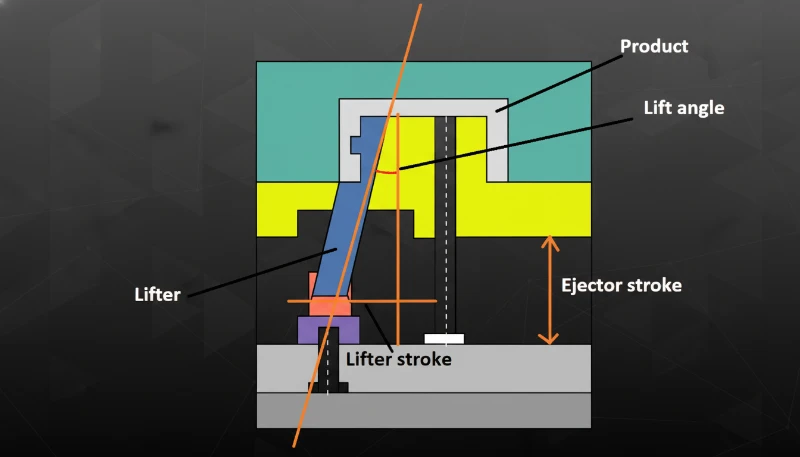
The short answer: take the supplier’s quoted timeline and add 25-30%. That is not cynicism — it is how experienced buyers plan. Mold build timelines depend on several variables: part complexity, number of cavities, side actions (lifters, sliders), surface finish requirements, and material hardness of the tool steel. Here is a practical breakdown of realistic timelines by mold category.
A simple single-cavity mold with no side actions quotes 4-6 weeks but realistically takes 5-8 weeks with buffer. A medium complexity mold with 2-4 cavities and sliders quotes 6-10 weeks and realistically takes 8-13 weeks. Complex multi-cavity molds with hot runners and lifters quote 10-16 weeks and realistically take 13-20 weeks. High-precision or medical-grade molds quote 12-20 weeks but should be planned at 16-26 weeks. These estimates include standard sampling rounds but assume no major design changes after steel cutting begins.
Beyond the mold build itself, you need to account for sampling rounds. A T1 (first trial) sample typically takes 1-2 weeks to produce and ship. If dimensional checks reveal issues, expect another 1-3 weeks per revision cycle. Most projects require 2-3 sampling rounds before reaching production approval. That means even a “perfect” 8-week mold build can realistically stretch to 12-14 weeks when you factor in T1, T2, and possibly T3 sampling. Some buyers try to skip sampling rounds to save time. This is a false economy — catching a dimensional issue during sampling costs days; catching it during mass production costs weeks and thousands of rejected parts. Always build sampling time into your project plan.
Experienced buyers treat sampling as a separate project phase with its own timeline, budget, and acceptance criteria — not as an afterthought to the mold build. This mindset shift alone can prevent costly schedule surprises.
The obvious cost of a late mold is the delay itself. But the real financial damage comes from the cascade effects that follow. When your mold arrives three weeks late, every downstream activity shifts — production scheduling, material procurement, assembly, quality validation, and ultimately your ship date to the end customer. Here is what that looks like in dollars. Expedited shipping. If your production window shrinks, you may need to air-freight finished parts instead of shipping by sea. For a typical container shipment from China to the US, air freight costs 4-6x more than ocean freight. On a $50,000 shipment, that is an extra $150,000-250,000 in freight alone.
Overtime production. Running presses on weekends or adding night shifts to recover lost time typically adds 30-50% to your per-part cost. Missed market windows. This is the hardest to quantify but often the most expensive. A consumer product that misses its retail launch date by a month may lose an entire selling season. A medical device that misses its regulatory submission window could face 6-12 months of additional delay. Lost customer trust. In B2B manufacturing, your reputation for on-time delivery is a competitive advantage. One high-profile delay can cost you years of relationship building.
The cost of these cascading delays compounds quickly. A three-week tooling delay does not simply add three weeks to your overall schedule — it creates a domino effect through your entire supply chain. Production lines sit idle, assembly operations lose their sequencing, and finished goods inventory drops below safety stock levels. For companies operating with lean inventory strategies or just-in-time delivery commitments to their own customers, even a two-week delay can trigger penalty clauses in downstream contracts. This is why lead time risk management is fundamentally a financial exercise, not just a scheduling exercise. The most successful buyers we work with treat every week of potential delay as a quantifiable cost line item in their project budget.
They calculate the daily cost of a delayed product launch, the per-unit cost of air freight versus ocean freight, and the penalty cost of missing downstream delivery windows. When you frame lead time risk in financial terms, the ROI of investing in proper supplier due diligence and milestone tracking becomes obvious.
“A 30 percent buffer on quoted tooling lead times is standard practice for experienced buyers”Echt
Even well-run tooling shops experience 2-3 week delays on complex molds due to sampling rounds, material procurement, and scheduling conflicts. Experienced procurement teams routinely build this buffer into their project timelines.
“The cheapest supplier quote always delivers the best overall value”Vals
Low quotes often exclude sampling rounds, design revisions, or material premiums. The total project cost including delays, expedited shipping, and quality rework frequently exceeds what a mid-range supplier would have charged.
How Can You Audit a Suppliers On-Time Delivery Track Record?
The way to audit a supplier is by requesting verifiable delivery data. Here are the specific metrics to ask for and the red flags to watch for. Ask for their on.time.delivery3 rate over the past 12 months. A well-run molding shop should deliver above 85 percent. Anything below 75 percent is a warning sign. Also ask how they define on time — some suppliers reset the clock every time they send a revised schedule, which inflates their numbers. When they are late, how late? A supplier with 90 percent on-time delivery but 8-week average delays on the 10 percent they miss is riskier than one with 85 percent on-time and 1-week average delays.
Capacity utilization. Ask what percentage of their press time is currently booked. A shop running at 95% capacity has no room for schedule recovery when something goes wrong. We aim to keep utilization at 75-85% so we have buffer for rush orders and schedule recovery. Current order backlog. How many active mold builds are in their shop right now? If they have 20 molds in progress and 12 CNC machines, that tells you more about your actual lead time than any quote. Customer references. Ask for 2-3 references from customers with projects similar in complexity to yours. Call them. Ask specifically about delivery performance, not just part quality.
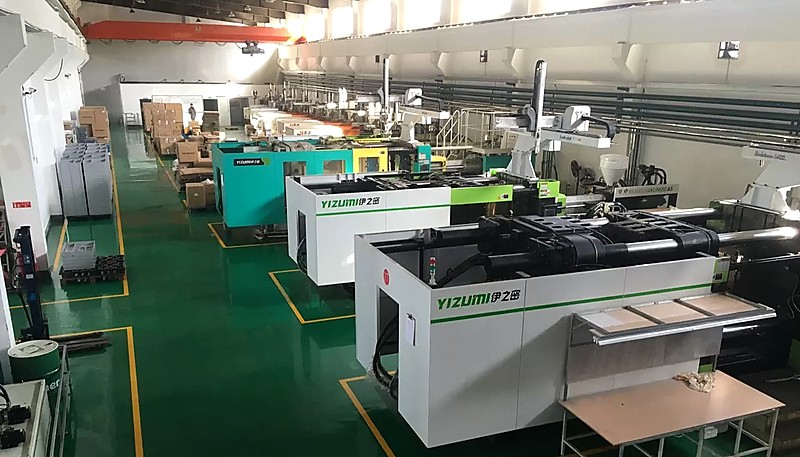
In our Shanghai factory, we run 47 injection molding machines ranging from 90T to 1850T, supported by an in-house mold manufacturing facility capable of producing 100+ mold sets per month. With 30+ English-speaking project managers, we maintain weekly progress reporting with photos and CMM data so our customers always know exactly where their tooling stands — no black boxes, no surprises.
What Contract Terms Protect You Against Lead Time Overruns?
Managing over 100 mold builds per month has taught us that a purchase order is not a contract — at least not one that protects you. Here are the specific terms experienced buyers use to manage lead time risk in their sourcing agreements. Mijlpaalgebaseerde betalingen. Never pay 100% upfront. Structure payments around milestones: 30% at order, 30% at T1 sampling, 30% at production approval, 10% after first production run. This gives the supplier incentive to hit each milestone on time and gives you leverage if they slip. Penalty clauses for late delivery. Include a clause that specifies a daily or weekly penalty for each day/week the delivery exceeds the agreed date.
Typical rates are 0.5-1% of the tooling price per week, capped at 10-15% of total value.
Make sure the penalty is enforceable under the governing law of your contract. Weekly progress reporting. Require written weekly updates with photos of the mold in its current state. This is non-negotiable. A supplier who resists weekly photo updates is either disorganized or hiding something. Exit clauses. Define the conditions under which you can terminate the agreement and recover your tooling. This should include repeated missed milestones, quality failures beyond a defined number of revision rounds, and force majeure terms. Intellectual property protection. Ensure the contract specifies that all mold designs, part designs, and manufacturing data remain your property. Include non-compete and non-disclosure clauses.
“Weekly progress photos during mold building significantly reduce lead time risk”Echt
Regular visual updates catch problems early — before they compound into multi-week delays. Buyers who require weekly reporting consistently report fewer surprises and faster issue resolution.
“Standard purchase order terms provide adequate protection against lead time overruns”Vals
Generic PO terms rarely include milestone tracking, penalty clauses, or exit provisions. They offer almost no recourse when a supplier misses deadlines, and recovering your tooling investment becomes a costly legal battle.
When Should You Walk Away From a High-Risk Supplier?
Walk away from a supplier when repeated delays, poor communication, or quality regression make staying more expensive than switching. In our factory, we see buyers who switched after repeated delays. Walking away mid-project is painful — you have invested time, money, and design effort. But staying with a supplier who is failing can be even more expensive. Here are the clear warning signs that indicate it is time to find an alternative. Repeated delays with no root cause analysis. A supplier who says “we are running a bit behind” three weeks in a row without explaining why is not solving the problem — they are managing your expectations downward.
Communication degradation. If response times go from same-day to multi-day, or if your contact person changes without explanation, the supplier may be reallocating resources away from your project.
Quality regression at sampling. If T2 samples are worse than T1 samples, something fundamental is wrong with the mold build process. This rarely self-corrects. Scope creep on change orders. If the supplier starts charging for items that should be included in the original scope (basic design for manufacturability feedback, standard surface finishes, routine sampling), it suggests they underbid the project and are trying to recover margin. Inability to provide references. A supplier who cannot produce 2-3 recent customer references for similar work may not have the track record they claim. The decision framework is simple: calculate the cost of switching (new tooling deposit, lost time, project management overhead) versus the cost of staying (continued delays, quality risk, opportunity cost).
If staying costs more — and it often does after the third missed deadline — it is time to move.
How to Build Lead Time Buffers Into Your Production Schedule?
The best time to manage lead time risk is before you sign the PO. Here is a practical framework for building realistic production.buffer into your project schedule. Phase 1: RFQ stage. Request detailed lead time breakdowns from at least 3 suppliers. Do not just ask “how long?” — ask for a Gantt chart showing each phase: design review, material procurement, CNC machining, EDM, polishing, assembly, T1 sampling, revision cycles, and production qualification. Compare the breakdowns. If one supplier quotes 6 weeks total while the others quote 8-10, the short quote is probably incomplete. Phase 2: Buffer allocation. Apply a standard 25% buffer to each phase, not just the total.
This accounts for the compounding nature of delays — a 1-week delay in steel cutting pushes everything downstream. Phase 3: Parallel path planning. Identify activities that can run in parallel rather than serial. For example, finalize material selection while the mold is being designed. Order raw resin while the mold is being built. Prepare production fixtures during the sampling phase. Phase 4: Checkpoint gates. Define go/no-go criteria at each major milestone. If T1 samples fail dimensional checks by more than a defined tolerance, trigger a pre-planned recovery action rather than ad-hoc troubleshooting. The goal is not to eliminate risk — that is impossible in custom tooling. The goal is to make risk visible early enough to manage it.
Veelgestelde vragen
What is a typical lead time for injection mold tooling?
A typical single-cavity mold takes 4-6 weeks to build, while complex multi-cavity molds with hot runners and side actions can take 10-16 weeks. The exact timeline depends on part geometry complexity, number of cavities, surface finish requirements, and the type of tool steel used. Always add 25-30 percent buffer for sampling rounds and potential revisions. For a standard production mold with moderate complexity, plan for 8-12 weeks from purchase order to production-approved samples as a realistic baseline. High-precision molds for medical or aerospace applications may require 16-26 weeks.
How can I reduce injection molding lead time?
To reduce lead time effectively, finalize your part design before tooling starts and avoid change orders after steel cutting. Pre-order specialty engineering resins with long procurement windows. Choose a supplier with confirmed available capacity rather than one running at maximum utilization. Request weekly progress reports with photos to catch issues early. Parallel-path activities where possible — order raw materials and design production fixtures while the mold is being built. These steps together can shave 2-4 weeks off a typical mold build timeline.
What causes the most delays in mold building?
The most common delay causes in mold building are design changes requested after steel cutting has begun, supplier capacity overload from accepting too many concurrent projects, and T1 sampling failures that require mold modifications. Each of these can add 2-8 weeks to a project timeline. Communication gaps between buyer and supplier also contribute significantly — buyers who do not establish weekly check-ins often discover problems weeks later than necessary. Material procurement delays for specialty resins can also add substantial lead time.
How do I verify a supplier lead time claim?
Ask for their on.time.delivery rate over the past 12 months, their current capacity utilization percentage, the number of active mold builds in their shop, and customer references for projects of similar complexity. Cross-check their quoted timeline against industry benchmarks for your specific mold complexity level. A supplier quoting significantly faster than competitors without explaining how is likely underestimating the scope of work. Also request a detailed Gantt chart showing each phase of the mold build process with specific milestones and deliverables at each stage.
Should I choose a local or overseas injection molding supplier?
Overseas suppliers typically offer 30-50% lower tooling costs but add 2-4 weeks for shipping and communication overhead due to time zone differences. The right choice depends on your total project timeline requirements, not just tooling cost alone. For critical-deadline projects where schedule risk is the primary concern, consider a supplier who offers local project management combined with overseas manufacturing capacity. This approach gives you the cost advantage of offshore production with the communication reliability and responsiveness of a domestic project management partner.
What is T1 sampling in injection molding?
T1 (Trial 1) is the first test run of a newly built mold, producing sample parts for dimensional and visual inspection against specifications. It is a critical quality gate that typically occurs near the end of the mold build phase. During T1, the mold is mounted in a press and run at production-intended parameters. The resulting samples are measured via CMM and evaluated for defects like sink marks, flash, or warpage. Most projects require 2-3 sampling rounds before achieving production approval.
How much buffer should I add to quoted lead times?
Industry best practice is to add 25-30 percent buffer to the supplier quoted timeline. For an 8-week quoted build, plan for 10-11 weeks realistically. This buffer accounts for sampling rounds, minor design revisions, material procurement variability, and normal scheduling fluctuations at the tooling shop. For complex molds with hot runners or tight tolerances, consider increasing the buffer to 35-40 percent. The buffer is not waste — it is realistic planning that prevents cascade delays in your downstream production schedule and protects your commitments to end customers.
Can I speed up mold building without sacrificing quality?
Yes, you can accelerate mold building without sacrificing quality by finalizing designs before tooling starts, choosing standard mold components where possible, ensuring clear and frequent communication with at least twice-weekly progress updates, and working with a supplier who has confirmed available capacity in their schedule. Using simulation software like Moldflow to validate the design before steel cutting also reduces the number of sampling rounds needed. However, rushing through dimensional checks or skipping sampling rounds is a false economy that always costs more time and money in the long run.
Managing supplier lead time risk starts with choosing a partner who communicates proactively and has the capacity to deliver on schedule. ZetarMold operates an in-house mold manufacturing facility in Shanghai with 47 injection molding machines (90T to 1850T), producing 100+ mold sets per month. Our 30+ English-speaking project managers provide weekly progress reports with photos and dimensional data throughout your entire tooling build. Whether you need a single-cavity prototype mold or a complex multi-cavity production tool, we provide realistic timelines upfront — no inflated promises. Vraag een gratis offerte and let us show you what transparent project management looks like.
-
tooling.lead.time: Tooling lead time refers to the total duration required to design, manufacture, and qualify an injection mold before production can begin. ↩
-
mold.sampling: mold.sampling refers to mold sampling is the process of running initial test shots from a completed mold to verify dimensional accuracy and surface quality before approving mass production. ↩
-
on.time.delivery: On-time delivery refers to a procurement metric measuring the percentage of supplier orders fulfilled by the originally committed delivery date. ↩




 EN
EN  ES
ES  FR
FR  DE
DE  PT
PT  AR
AR  RU
RU  JA
JA  KO
KO  IT
IT  NL
NL  TR
TR  PL
PL 