 콘텐츠로 건너뛰기

- +60–90% 대 P20
- Labor accounts for 40–50% of total mold cost; raw steel material is 15–25%.
- Upgrading from P20 to H13 steel adds 25–40% to mold cost but extends tool life significantly.
- Every additional cavity adds 30–50% to mold cost but reduces per-part cost at scale.
- ZetarMold pricing runs 40–60% below equivalent Western tooling for comparable steel grade and complexity.
What Does an Injection Mold Cost in 2026?
이 섹션은 2026년 사출 금형 비용과 그것이 비용, 품질, 시기 또는 조달 리스크에 미치는 영향에 관한 것입니다. 공급업체를 비교하거나 조달을 계획 중이라면, 우리의 injection molding supplier sourcing guide covers RFQ prep, qualification, and commercial risk checks.
A simple single-cavity prototype mold runs $1,000–$3,000 in 2026. A production-grade multi-cavity mold for a complex consumer product can reach $30,000–$100,000. The difference is not profit margin — it is steel grade, cavity count, surface finish specification, and the engineering hours to get there.
The confusion usually comes from comparing apples to bulldozers. A $1,500 quote and a $20,000 quote for ‘an injection mold’ can both be accurate — they are just describing completely different tools built to different specifications. Understanding what drives each cost component is the fastest way to know whether a quote you received is fair.
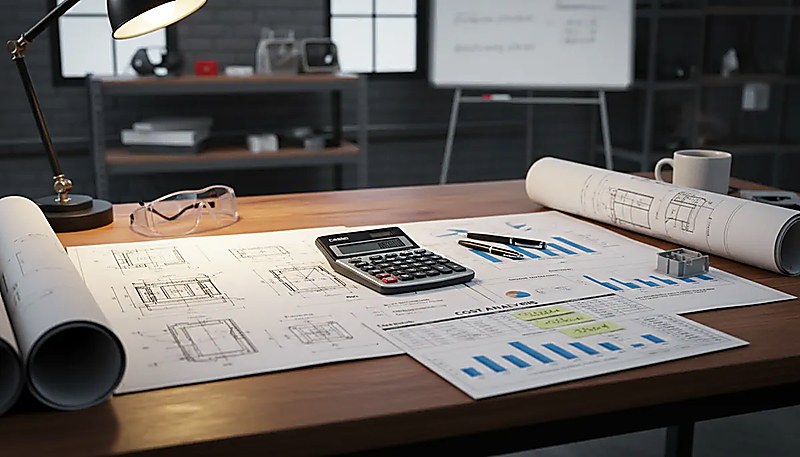
In our factory, we run 47 injection molding machines and quote dozens of new molds every month. The price ranges below are based on what we actually charge — not theoretical averages. Where our numbers differ from North American quotes, I will flag that explicitly.
Before you read any further, one caveat: prices below assume standard tolerances (±0.05 mm or looser) and common materials. Tight-tolerance medical parts, optical lenses, and micro-molding applications have their own cost universe — often 2–5× the prices listed here — because they require tighter steel specs, more polishing, and longer qualification cycles.
Another factor that inflates quotes from Western buyers: over-specifying the mold. I have seen customers request H13 steel and mirror polish for a part that will be painted, hidden inside a housing, and never seen by the end user. Matching spec to actual need is the first step in cost control, and it is free.
What Does This Injection Mold Price List Show at a Glance?
이 섹션은 이 사출 금형 가격표가 한눈에 보여주는 것과 그것이 비용, 품질, 시기 또는 조달 리스크에 미치는 영향에 관한 것입니다. 이 표를 시작점으로 사용하세요. 모든 금형은 다르지만, 이 범위는 수출 실적이 있는 중국 공구 업체들의 2025년 시장 가격을 반영합니다. 북미 및 유럽 업체들은 일반적으로 노동 비용이 2~4배 더 높습니다.
| 금형 유형 | Cavities | 강철 등급 | Typical Price Range | Shot Life |
|---|---|---|---|---|
| Prototype / Soft Mold | 1 | P20 or Aluminum | $1,000–$3,000 | 10,000–50,000 |
| Bridge Mold | 1–2 | P20 | $3,000–$5,000 | 50,000–200,000 |
| Production Mold (simple) | 2–4 | P20 / H13 | $5,000–$10,000 | 300,000–500,000 |
| Production Mold (complex) | 4–8 | H13 / S136 | $10,000–$30,000 | 500,000–1,000,000 |
| High-Precision / Medical | 1–16 | S136 / NAK80 | $30,000–$100,000 | 1,000,000+ |
ZetarMold Factory Insight
우리 상하이 공장에서는 47대의 사출 성형기와 20년 이상의 금형 제작 경험을 바탕으로 공구 프로그램을 지원합니다. 금형 가격 프로젝트의 경우, 우리 견적 팀은 일반적으로 가장 큰 비용 변동이 캐비티 수, 슬라이더 수, 강철 등급 및 검증 범위에서 발생하는 것을 봅니다. 이러한 직접 견적 경험이 바로 우리가 강철 절단 전에 DFM을 강조하는 이유입니다. 이는 고객이 비용이 많이 드는 메커니즘 변경을 피하고 공구 예산을 예측 가능하게 유지하는 데 도움이 됩니다.
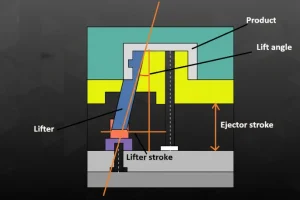
These figures assume standard part geometry. Add side actions (lifters, sliders), hot runner systems, or in-mold labeling and you can add $2,000–$8,000 per feature. A two-slider mold that looks straightforward on a CAD screen can jump from $7,000 to $20,000 once you account for the slider machining, guide rails, and spring-return mechanism.
The shot life column matters for your cost-per-part math. A $3,000 prototype tool good for 50,000 shots costs $0.06 per shot in tooling amortization. A $10,000 production tool running 500,000 shots costs $0.02 per shot. At 1,000,000 annual parts, the production tool pays for itself in under two months of runtime.
What Are the Main Cost Factors in Injection Mold Pricing?
Four variables account for 90% of the spread in any mold quote: steel material, part complexity, number of cavities, and machining labor. Understanding each one lets you challenge a quote intelligently — or at least know when a price is reasonable in the broader 사출 성형 공정.
Steel Material: 15–25% of Total Mold Cost
Raw steel material accounts for 15–25% of total mold cost in a typical Chinese tooling shop. For a $10,000 mold, that means $1,500–$1,500 in steel. P20 is the baseline; H13 adds 25–40% to steel cost; S136 adds 60–90%. The steel premium is real, but it is the smallest line item — labor and EDM time are what actually drive the quote.
Here is how the three most common mold steels compare on cost and performance in 2025. P20 is the workhorse: affordable, easy to machine, hardness around HRC 30. H13 is the step up for high-volume production runs — roughly 25–40% more expensive than P20 but rated for 500,000+ cycles. S136 is the stainless option for corrosive or food-grade materials, adding another 30–50% premium over H13.
| 강철 등급 | 경도(HRC) | Shot Life | Relative Cost | 최상의 대상 |
|---|---|---|---|---|
| P20 | 28–34 | 50,000–300,000 | Baseline | Medium-volume, general plastics |
| H13 | 44–52 | 300,000–800,000 | +25–40% | High-volume, abrasive resins |
| S136 | 50–54 | 500,000–1,000,000+ | +60–90% vs P20 | > 연간 300,000명 |
| NAK80 | 37–43 | 200,000–500,000 | +30–50% vs P20 | High-polish, optical, cosmetic parts |
When a customer asks why our H13 quote is higher than a competitor’s P20 quote for the same part, this table is my answer. They are not the same mold. A P20 tool for glass-filled nylon will show wear by shot 100,000. An H13 tool for the same material runs comfortably to 600,000. That difference in longevity is worth far more than the price gap.
For buyers running corrosive materials like PVC or flame-retardant ABS, S136 is not optional — it is insurance. PVC offgasses hydrochloric acid during processing. Run that through a P20 tool and you will be replating or replacing cavity surfaces within six months. The extra 60–90% on steel pays for itself in the first production run.
| Cost Driver | Typical Impact on Quote | Why It Changes Price |
|---|---|---|
| Cavity count | +30–50% per added cavity set | Larger mold base, more machining, more balancing work |
| Side actions | +$1,500–$8,000 each | Adds sliders, lifters, rails, and fitting time |
| Steel upgrade | +25–90% vs baseline steel | Higher hardness, corrosion resistance, longer tool life |
Machining Labor: 40–50% of Total Mold Cost
Machining labor — CNC milling, EDM, grinding, polishing — accounts for 40–50% of total mold cost. A $10,000 mold might carry $4,000–$5,000 in machining time. Complex geometry with deep ribs, thin walls, or tight radii drives EDM time up sharply. A simple flat-faced part might require 40 hours of EDM; an intricate medical device housing can require 200+ hours.
""사출 금형 제조에서 노동력은 가장 큰 단일 비용 구성 요소로, 일반적으로 총 금형 가격의 40~50%를 차지합니다.""True
CNC milling, EDM spark erosion, and hand polishing are time-intensive operations. A complex mold insert may require 80–120 hours of machining. At $20/hour in China versus $120/hour in the US, the labor delta alone explains most of the offshore cost advantage.
""낮은 노동 비용 국가를 선택하면 항상 품질이 낮은 금형이 나옵니다.""False
Tool quality is determined by the shop’s equipment, quality control processes, and engineering competence — not geography. Many Chinese tooling shops run 5-axis Makino and Sodick EDM equipment identical to European shops. Vetting a shop’s tolerance capability (±0.005 mm), inspection reports, and reference customers matters far more than country of origin.
Part Complexity: Side Actions Add $1,500–$8,000 Each
A flat, draft-correct part with no undercuts is the cheapest part to mold. Every feature that requires the mold to do extra mechanical work adds cost: side cores and lifters for undercuts add $1,500–$4,000 each; a full slide mechanism for a large undercut feature adds $3,000–$8,000. A part with three undercuts can add $8,000–$20,000 to a base mold price.
Here is the rule I give every product designer: if your part cannot be pulled straight out of a two-piece mold, you are paying for extra mechanisms. Sometimes those mechanisms are unavoidable — a snap-fit latch that faces sideways has to have a side action. But sometimes, a 2mm design change eliminates the undercut entirely. That design review is where the real money is saved. A proper design for manufacturability review before steel is cut can eliminate $5,000–$10,000 in mechanism cost, especially when the underlying 사출 금형 설계 is simplified early.
Should You Choose a Single-Cavity or Multi-Cavity Mold?
이 섹션은 단일 캐비티 금형과 다중 캐비티 금형 중 어떤 것을 선택해야 하는지와 그것이 비용, 품질, 시기 또는 조달 리스크에 미치는 영향에 관한 것입니다. 단일 캐비티 금형은 사이클당 하나의 부품을 생산하고, 8-캐비티 금형은 여덟 개를 생산합니다. 다중 캐비티 공구는 초기 투자 비용이 더 높습니다(동일 부품 기준으로 단일 캐비티 대비 약 1.5~2.5배). 하지만 부품당 생산 비용은 캐비티 수에 비례하여 떨어집니다. 이 결정은 전적으로 생산량에 따라 다릅니다.
Here is the math we use internally. Assume a part with a 30-second cycle time and a machine rate of $0.03 per second ($108/hr). A single-cavity mold at $5,000 running 200,000 parts annually amortizes at $0.025/part tooling cost1. At 4 cavities ($7,000 mold, 800,000 parts/yr), amortization drops to $0.015/part. The per-part savings fund the cavity upgrade within 6–8 months.
The crossover point depends heavily on your annual volume. For runs under 50,000 parts per year, single-cavity usually wins on total cost of ownership. For runs over 200,000 parts per year, multi-cavity becomes mandatory to stay price-competitive. Between 50,000 and 200,000, it depends on your cycle time, machine hourly rate, and how many years you plan to run the tool.
| Cavities | Typical Mold Price | Parts per Hour | Break-even Volume | Recommended For |
|---|---|---|---|---|
| 1 | $3,000–$5,000 | 60–180 | < 50,000/yr | Prototyping, low volume, market testing |
| 2 | $5,000–$8,000 | 120–360 | 50,000–100,000/yr | Medium volume, regional distribution |
| 4 | $8,000–$16,000 | 240–720 | 100,000–300,000/yr | Standard mass production |
| 8+ | $16,000–$40,000+ | 480–1,440+ | > 300,000/yr | 소비자 가전 제품 외관, 단일 캐비티, ABS, 2슬라이더, P20 강철. 최종 견적: $6,800. 두 슬라이더 — USB 포트 절단용 하나, 배터리 잠금 장치 언더컷용 하나 — 는 기본 단일 캐비티 P20 가격 $4,000에 $2,800을 추가했습니다. 총 소요 시간: 4.5주. |
One thing buyers often overlook: a 4-cavity mold requires perfectly balanced runner systems to fill all cavities evenly. An unbalanced runner creates part-to-part weight variation and increases reject rates. We use 금형 흐름 분석2 on every multi-cavity tool before cutting steel — a step that adds $500–$1,500 to the quote but prevents $10,000+ in rework when cavities fill unevenly on the first production run.
There is also the question of mold base size. A 4-cavity tool for a small part runs on a smaller, lower-cost machine than a 1-cavity tool for a large part. When selecting cavity count, factor in the clamping force required — more cavities increase projected area and require higher tonnage. If the 4-cavity tool requires a 200-ton machine instead of a 100-ton machine, that machine rate difference affects your long-term production economics.
| Annual Demand | Safer Choice | 이유 |
|---|---|---|
| Under 50,000 parts | 1 cavity | Lowest upfront spend and easiest debugging |
| 50,000–200,000 parts | 2 cavities | Balanced ROI without overcomplicating the tool |
| 200,000+ parts | 4+ cavities | Better amortization if runner balance is validated early |
For most buyers in the 100,000–500,000-part annual range, a 2-cavity tool is the lowest-risk decision. It gives you throughput flexibility, keeps mold complexity manageable, and does not require the precision runner balancing of an 8-cavity system. We recommend starting with 2 cavities and adding a second identical mold when demand grows, rather than jumping to an 8-cavity tool before volume is proven.
""다중 캐비티 금형은 부품당 생산 비용을 줄이지만 더 높은 초기 투자와 균형 잡힌 러너 설계가 필요합니다.""True
A 4-cavity tool at $20,000 versus a 1-cavity tool at $8,000 carries a $7,000 premium. At a production cost differential of $0.03/part, the break-even is 400,000 parts. Beyond that volume, the 4-cavity tool saves money on every part produced. Runner balance is critical: unbalanced fill causes weight variation exceeding ±3% between cavities.
""대량 생산에는 8-캐비티 금형이 항상 가장 비용 효율적인 선택입니다.""False
Eight-cavity tools require precise runner balancing, higher clamping force (often 500–800 ton machines), and significantly more complex maintenance. For most consumer parts under 500,000 units per year, a 2- or 4-cavity tool delivers better return on investment with lower operational risk.
Prototype Molds vs. Production Molds: Which Do You Need?
Prototype molds ($1,000–$3,000) and production molds ($5,000–$30,000+) are built for fundamentally different purposes. Conflating them is the most common reason buyers feel blindsided by a quote.
| 요인 | Prototype Mold | Production Mold |
|---|---|---|
| 가격 | $1,000–$3,000 | $5,000–$30,000+ |
| 리드 타임 | 2–3 weeks | 5–8 weeks |
| Steel | Aluminum or soft P20 | H13 / S136 |
| Shot Life | 10,000–50,000 | 300,000–1,000,000+ |
| 최상의 대상 | 설계 검증 | Volume production |
A prototype mold — sometimes called a soft tool or bridge tool — is built to aluminum or soft P20 스틸3. 이는 빠르고(생산용 공구의 6~10주에 비해 2~4주의 리드 타임), 저렴하며, 생산용 공구를 확정하기 전에 부품 형상, 맞춤, 기능을 검증하는 데 좋습니다.
A production mold is built to last. H13 or S136 steel, hardened and ground, with proper venting, cooling, and surface treatment. Lead time is 6–10 weeks and the price reflects the engineering investment. In our factory, a production mold goes through DFM review, mold flow simulation, T1 trial, measurement report, and often one or two rounds of modification before it ships. That process is what buys you 500,000 shots of consistent quality.
""프로토타입 금형은 부품 설계를 검증하고 생산용 공구 비용의 일부로 기능성 샘플을 생산할 수 있습니다.""True
For design verification stages, a $3,000–$5,000 aluminum or soft-steel tool produces injection-molded parts with the correct material properties and surface finish — something 3D printing cannot replicate for engineering resins. This allows form-fit-function testing before committing to a $18,000 production tool.
""프로토타입 공구 제작을 건너뛰고 바로 생산용 금형으로 가면 시간을 절약할 수 있습니다.""False
Going straight to production tooling without a prototype trial is one of the most expensive mistakes in product development. Engineering changes after a production mold is cut typically cost $2,000–$8,000 per modification. A $4,000 prototype tool that catches three design issues saves $10,000+ in production mold rework — and months of schedule delay.
The right answer depends on your design maturity. If you have an off-the-shelf product with a proven CAD model and just need a cost-effective run of 5,000 units, a bridge mold at $6,000–$10,000 may be the fastest path to market. If you are still iterating on wall thickness and draft angles, start with a prototype tool. In our experience, products that skip the prototype stage average 2.3 engineering change orders on the production tool — each costing time and money.
| If Your Priority Is… | Better Mold Choice | 왜 |
|---|---|---|
| Fast samples and lower entry cost | Prototype mold | Lower price and shorter lead time for validation |
| Stable dimensions at high volume | Production mold | Harder steel and better cooling for long runs |
| Uncertain design that may change | Prototype mold | Cheaper to revise before final tooling |
A practical guide: if your part has passed FEA and thermal simulation, if the wall thickness is locked, and if you have done at least one round of DFM review — you can probably skip prototype tooling and go straight to a bridge or production mold. If any of those three are still open questions, a prototype tool is almost always cheaper than finding the answer after the production mold is cut.
What Do Real ZetarMold Quotes Look Like in 2025–2026?
Abstract price ranges are useful, but real quotes are more useful. Here are four molds we quoted in 2025–2026, with the factors that drove the final price. Names are omitted but the numbers are real.
Case 1 and 2: Electronics and Medical
Consumer electronics housing, single cavity, ABS, 2-slider, P20 steel. Final quote: $6,800. The two sliders — one for a USB port cutout, one for a battery latch undercut — added $2,800 above the base single-cavity P20 price of $4,000. Total lead time: 4.5 weeks.
모든 프로젝트
| 요인 | 전자 제품 하우징 | Medical Device |
|---|---|---|
| Steel | P20 | H13 |
| Cavities | 1 | 4 |
| Hot runner | None | Valve gate, $6,500 |
| Surface finish | SPI B1 | SPI A1 mirror |
| Final quote | $6,800 | $28,000 |
Case 3 and 4: Automotive and Startup
Automotive interior trim, 2-cavity, PP+talc 20%, H13 steel. Final quote: $16,500. Glass- and mineral-filled PP is moderately abrasive — it ruled out P20 and required H13 at $48/kg versus P20 at $32/kg. The 2-cavity layout added $5,500 versus single-cavity base.
Startup prototype, 1-cavity, soft P20, PETG, no surface treatment. Final quote: $2,100. The customer needed 500 functional samples for investor demos. We used soft P20 aluminum-equivalent tooling rather than production steel, which cut build time to 12 days and held the budget under $1,500.
| Quote Feature | What It Usually Signals | Budget Effect |
|---|---|---|
| P20 + 1 cavity | Lower-volume or bridge production intent | Keeps upfront tooling lower |
| H13 + 4 cavities | Longer-run production planning | Higher capex, lower amortized unit cost |
| Valve gate + mirror polish | Cosmetic or regulated product requirement | Adds significant machining and validation cost |
Put another way, the summary table below helps buyers compare those four quote patterns side by side before they ask for revisions.
| Case | 금형 유형 | Steel | Cavities | Final Quote |
|---|---|---|---|---|
| Electronics housing | 프로덕션 | P20 | 1 | $6,800 |
| Medical device | 프로덕션 | H13 | 4 | $28,000 |
| Auto trim | 프로덕션 | H13 | 2 | $16,500 |
| Startup prototype | Prototype | Soft P20 | 1 | $2,100 |
How Can You Reduce Injection Mold Cost Without Cutting Corners?
There are legitimate ways to reduce mold cost, and there are ways that create hidden costs downstream. Here are four strategies that actually work, with the trade-offs spelled out.
Design Simplification and Steel Right-Sizing
Simplify the part design. Every undercut eliminated, every side action removed, every wall thickness rationalized reduces mold cost. A well-executed design for manufacturability review before steel is cut typically saves 10–20% of mold cost. We offer DFM as standard on every quote, and customers who take it seriously consistently see smaller bills.
Right-size your steel grade. If you need 50,000 parts for a market test and your resin is standard ABS, there is no reason to pay for H13 steel. A well-built P20 tool will outlast your production run with margin. Conversely, if you are planning 1 million parts, investing in H13 upfront costs less than relining a P20 tool after it wears.

Sourcing Strategy and Family Molds
자격을 갖춘 공급업체를 통해 중국에서 조달하세요. 동일한 사양으로 제작된 동일한 금형은 검증된 중국 공구 업체에서 북미 또는 유럽의 유사 업체보다 40~60% 저렴합니다. 적절한 공급업체 검증, 초도품 검사 및 명확한 기술 사양을 통해 리스크는 관리 가능합니다. 우리 공장에서는 이러한 계산을 정확히 수행하고 해마다 재주문을 계속하는 북미 및 유럽 고객들에게 금형의 70%를 수출합니다.
Use family molds for related parts. If you have three or four related parts in the same assembly, a family mold that runs all of them in a single cycle is often 30–40% cheaper than three or four separate molds. The caveat: all parts must have similar cycle times and the same material. If one part needs a 20-second cycle and another needs 45 seconds, a family mold actually hurts you.
| Strategy | Typical Savings | Risk Level | Best Applied |
|---|---|---|---|
| DFM review before steel cut | 10–20% of mold cost | 낮음 | Every project |
| 사출 금형 가격표 2025: 상세 비용 내역서 | 5–15% per mold | 낮음 | Volume < 200,000 |
| Source from China (qualified) | 40–60% vs Western shops | Medium (manageable) | Most projects |
| Family mold (related parts) | 30–40% vs separate molds | Medium | 3+ related parts, same material |
FAQ로 넘어가기 전에, 이 빠른 비교는 어떤 절감 아이디어가 일반적으로 생산에서 유효하고 어떤 것들이 트레이드오프를 수반하는지 보여줍니다. 모든 프로젝트는 다르므로, 최종 금형 설계를 확정하기 전에 DFM 단계에서 공구 공급업체와 비용 절감 전략을 항상 검증하세요.
우리 상하이 공장에는 90톤부터 1850톤까지 47대의 사출 성형기가 가동되며, 8명의 수석 엔지니어와 월 100세트 이상의 금형을 제작할 수 있는 내부 금형 제조 시설이 지원합니다. 이는 대부분의 공구 프로젝트를 외부 하청업체에 의존하지 않고 내부에서 견적을 내고 납품할 수 있음을 의미합니다. 따라서 비용, 일정, 품질을 직접 통제할 수 있습니다.
자주 묻는 질문
사출 금형을 제작하는 데 얼마나 걸리며, 더 빠른 납품은 비용이 더 많이 드나요?
Standard production mold lead time is 6–10 weeks from approved DFM and deposit. Expedited tooling (3–4 weeks) is available at a 20–35% premium — the shop has to prioritize your tool over others, run extra shifts, and potentially outsource EDM work. Prototype and soft molds deliver in 2–4 weeks at standard pricing. For time-critical projects, we recommend starting with a prototype tool to get samples quickly while the production tool is being built in parallel. That parallel approach adds zero cost and shaves 4–6 weeks off your total time to market. Rush fees are real money — plan your tooling timeline early.
더 많은 부품을 주문하면(더 높은 MOQ) 금형 가격이 낮아지나요?
Mold price is fixed regardless of part quantity — it is a one-time tooling investment, not a per-piece charge. However, higher MOQ directly reduces your per-part production cost and spreads the tooling amortization over more pieces. At 10,000 parts, a $10,000 mold adds $1.00 per part in tooling cost. At 100,000 parts, the same mold adds $0.10 per part. Committing to higher volume can influence the production rate quoted, but the mold price itself is set at the engineering stage, not the order stage. Negotiate mold price on design and specifications, not order quantity.
금형 비용을 상환한 후 단위 부품 비용은 얼마입니까?
Once the mold is fully amortized, part cost drops to raw material plus machine time plus labor plus overhead — typically $0.05 to $5.00 per part depending on size, material, and complexity. A simple 10-gram ABS housing running on a small machine with a 20-second cycle in China typically costs $0.08–$0.25 per part at volume. A larger engineering-resin part on a 500-ton press with a 60-second cycle may run $1.50–$4.00 per part. These figures assume China-based production. North American rates are typically 2–4× higher for equivalent parts.
도구 비용을 제품 가격에 어떻게 분할 상각해야 하나요?
Divide total mold cost by expected lifetime shots to get tooling cost per part. For a $7,000 mold rated at 300,000 shots, tooling amortization is $0.04/part. Add this to your per-part production cost, packaging, and logistics for your landed unit cost. Most buyers amortize tooling over the first 12–24 months of production volume, then set it to zero in their COGS model once the mold is paid off. Keep a 10–15% reserve for maintenance, modification, and unplanned repairs. Do not forget to budget for mold shipping — a large tool can weigh 800 kg and cost $800–$2,000 to freight.
금형 제작 후 변경을 하는 데는 얼마의 비용이 드나요?
Minor changes — adjusting a rib height, opening a gate, adding a small feature — typically cost $300–$1,500 and take 3–7 days. Significant changes — adding a side action, moving a parting line, changing wall thickness — cost $2,000–$8,000 and may require 2–4 weeks. Changes that require cutting into a finished hardened cavity are the most expensive. The principle: you can always take steel away (add plastic to the part), but adding steel back (remove plastic from the part) often requires welding, which weakens the tool. DFM before cutting steel is the best insurance against expensive revisions.
사출 금형 가격에 가장 큰 영향을 미치는 요인은 무엇인가요?
가격에 가장 큰 영향을 미치는 요소는 캐비티 수, 부품 형상, 강철 등급, 측면 동작, 표면 마무리 요구 사항 및 검증 범위입니다. 실제로, 간단한 단일 캐비티 P20 금형은 $5,000~$10,000 범위에 머물 수 있는 반면, 리프터, 핫 러너 및 Class A 코스메틱 마무리가 있는 다중 캐비티 공구는 $100,000를 초과할 수 있습니다. ZetarMold에서 수천 개의 금형에 대한 견적 경험을 통해 볼 때, 비용을 통제하는 가장 효과적인 단일 방법은 초기 DFM 검토입니다. 강철이 절단되기 전에 언더컷, 불필요한 엄격한 공차 또는 과도하게 지정된 표면 마무리를 발견하면 부품 품질에 영향을 주지 않으면서 공구 비용을 15~30% 절약할 수 있습니다.
-
tooling cost: Tooling cost refers to the total expenditure required to design, machine, and finish an injection mold, including steel, labor, and EDM processing. ↩
-
mold flow analysis: Mold flow analysis is a simulation technique that predicts how molten plastic fills a mold cavity, used to optimize gate placement, cooling, and wall thickness before cutting steel. ↩
-
P20 steel: P20 steel is a pre-hardened mold steel alloy (HRC 28–34) commonly used for medium-volume production molds, offering a balance of machinability and durability. ↩



 EN
EN  ES
ES  FR
FR  DE
DE  PT
PT  AR
AR  RU
RU  JA
JA  KO
KO  IT
IT  NL
NL  TR
TR  PL
PL 