Injection Molding Supplier Change Control: How to Prevent Unapproved Material or Process Changes

• ZetarMold Engineering Guide
• Plastic Injection Mold Manufacturing Since 2005
• Built by ZetarMold engineers for buyers comparing mold and molding solutions.

Your injection molder just shipped 50,000 parts — and the material is different from what you approved. The color is off. The dimensions drift. Worst of all, nobody told you. This scenario happens more often than most OEMs want to admit. Supplier change control is the systematic process of reviewing, approving, and documenting any material, process, or tooling change at your molding supplier. It is the difference between catching problems before they ship and discovering them in your customer’s hands.

주요 내용
  • Supplier change control is mandatory under IATF 16949, FDA 21 CFR 820, and ISO 9001
  • Unapproved material swaps are the most common defect source in outsourced molding
  • A 4-tier classification system keeps approvals practical and proportional
  • First article inspection after any change is non-negotiable
  • Your purchase order must include explicit change notification clauses

모든 사출 성형 project involves dozens of variables: resin grade, colorant batch, mold temperature, injection speed, holding pressure, cooling time. When your supplier changes any of these without telling you, the parts you receive may no longer match the validated specification.

What Is Supplier Change Control in Injection Molding?

Supplier change control is a formal process requiring your molder to get written approval before changing materials, processes, or tooling. It is mandatory under IATF 169491, ISO 9001, and FDA 21 CFR 8202[1][2].

In practice, your supplier cannot swap from DuPont Delrin 500P to a generic POM without your written approval. They cannot move your mold from a 200T machine to a 350T machine without running it past you first. They cannot change the drying temperature for your hygroscopic resin without documenting it.

The scope covers four main categories. Material changes include resin grade, supplier, colorant, regrind ratio, and masterbatch. Process changes cover injection parameters, cycle times, temperatures, and pressures. Equipment and tooling changes mean machine swaps, mold modifications, and new cooling circuits. Organizational changes include key personnel, sub-suppliers, and facility relocation. Each category carries different risk levels, which is why a classification system is essential.

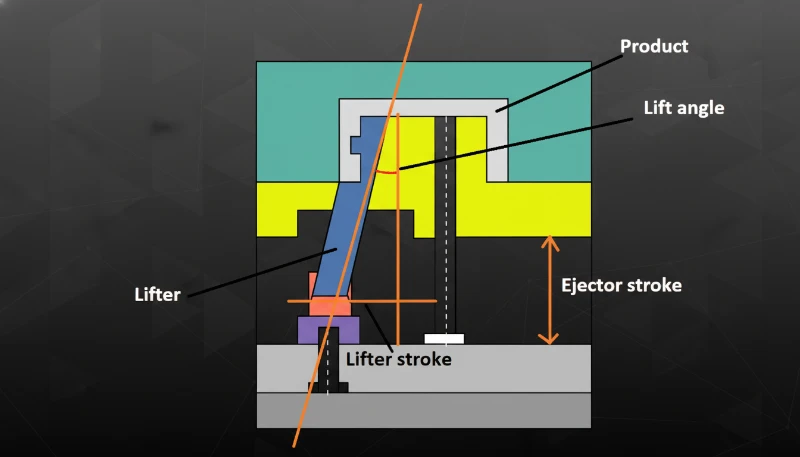
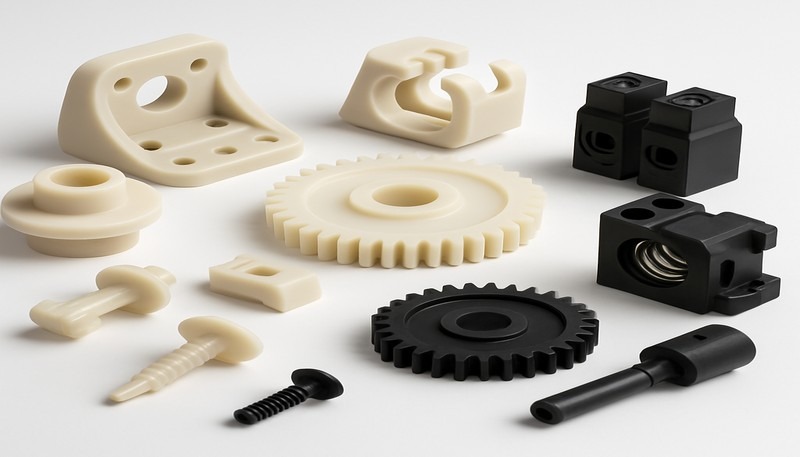
Injection mold lifter and ejector stroke diagram
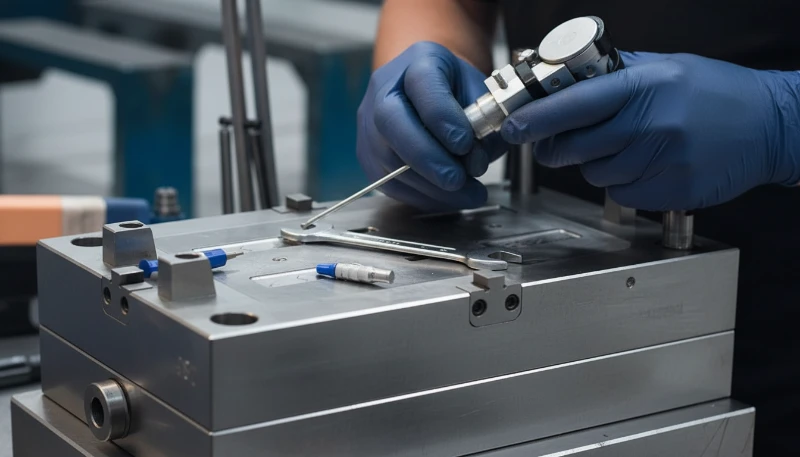
Mold modifications demand formal change control

Why Do Suppliers Make Unapproved Changes?

Understanding why suppliers deviate is the first step to preventing it. In our experience running 사출 금형 production for over 20 years, the most common reasons fall into three buckets.

Cost pressure drives many substitutions. Resin prices fluctuate, and a supplier paying $4.20/kg for approved PA66 might find a compatible grade at $3.60/kg. The incentive to swap is real, especially on tight-margin jobs.

Availability constraints also play a role. Supply chain disruptions such as container delays, factory shutdowns, and force majeure events can make approved materials temporarily unavailable. Rather than halt production, some molders substitute what they can find.

Operator habit is the third factor. Experienced technicians sometimes adjust parameters based on feel. A machine operator who has run similar parts for years might tweak hold pressure without logging it. These informal optimizations are invisible to you until the parts fail.

🏭 ZetarMold Factory Insight
In our Shanghai factory, we run 47 injection molding machines across a wide tonnage range. With 20+ years of production experience, we have seen firsthand how uncontrolled changes create quality drift that compounds over production runs.

How Do You Classify Changes by Risk Level?

Not all changes are equal. If you treat a minor label update with the same urgency as a resin swap, your system will drown in paperwork and people will start bypassing it. A practical classification system keeps things proportional.

Tier 1, or minor changes, require only notification with no approval needed. Examples include label or packaging text changes with no impact on dimensions or material, internal documentation corrections, and routine tool cleaning with no dimensional change. Keep a log but no production hold is necessary.

Tier 2, or major changes, require approval before implementation. This covers raw material lot-to-lot variation within approved spec with COA verification, machine changes within the same tonnage range, and parameter adjustments within the validated window. The supplier submits a change request and you review within 48 to 72 hours. First article inspection is required.

Tier 3, or critical changes, demand full PPAP-level revalidation. Material grade changes, alternate suppliers, mold modifications such as added features or changed gates, and process changes outside the validated window all fall here. Full revalidation includes dimensional data, material testing, and process capability studies. A new PPAP submission may be required.

Tier 4 covers safety-critical changes. Any change affecting safety-critical or regulated medical device components, or relocation of a mold to a different facility, triggers an immediate production hold with full re-PPAP. Regulatory notification is required if applicable.

What Should Your Change Notification Process Look Like?

A change notification process is a five-step workflow: identify, submit, classify, approve, and verify. The supplier first recognizes that a change is needed.

The supplier then submits a Change Notification Request including what is changing, why, the proposed timeline, risk assessment, and proposed mitigation. The format can be a standardized form or digital submission, but consistency is key.

You classify and route the request based on your tier system. Tier 1 goes to your SQE for logging. Tier 2 goes to engineering. Tier 3 and 4 go to a cross-functional team including quality, engineering, and procurement.

You respond with approval, rejection, or conditional approval within your agreed SLA. We recommend 48 hours for Tier 2 and 5 business days for Tier 3. Conditional approval means the supplier can try the change, but first article data is required before production resumes.

After implementation, the supplier provides first article inspection data, updated process parameters, and material COAs. You verify against the approved change. If everything matches, you close the change notification.

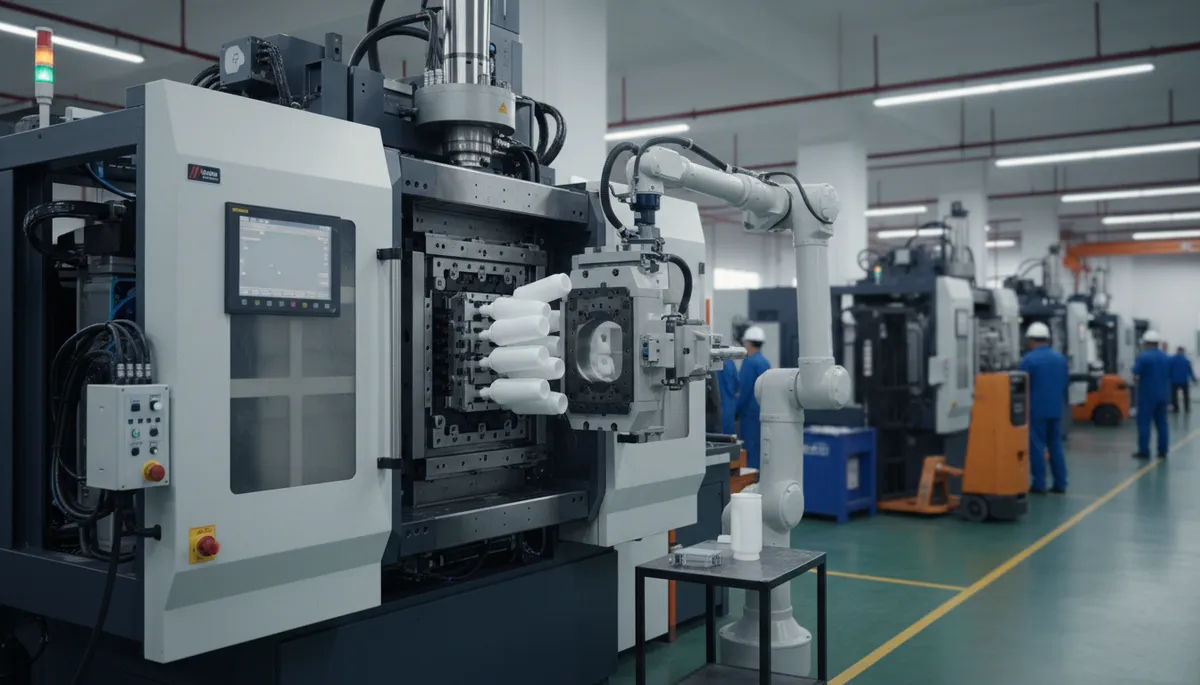
Engineer inspecting injection molded part
Inspection verifies process stability

What Contractual Clauses Protect You from Unauthorized Changes?

Your quality system only works if it is enforceable. The contract is where enforcement starts. Every purchase order and supply agreement with your 사출 성형 공급업체 should include four essential clauses.

A change notification clause states that the supplier shall not implement any change to materials, processes, equipment, tooling, sub-suppliers, or manufacturing location without prior written approval. Changes include resin grade or supplier, colorant or masterbatch, regrind percentage, machine assignment, mold modifications, and process parameters outside the validated range.

A first article requirement clause specifies that any approved change classified as Tier 2 or above requires a first article inspection report submitted to and approved by the buyer prior to resuming production shipments.

A remediation clause covers what happens if an unapproved change is discovered. The supplier must replace affected parts at their own cost, perform root cause analysis and corrective action within 10 business days, and implement preventive measures to avoid recurrence.

An audit rights clause reserves the buyer’s right to audit the supplier’s facilities, records, and processes at any time, with or without prior notice, to verify compliance with change control requirements. Without these clauses, you have no contractual recourse when something goes wrong.

How Do You Detect Unauthorized Changes?

Prevention is ideal, but detection is your safety net. Even with the best systems, some suppliers will deviate. The most effective detection methods combine several layers of verification.

Incoming inspection with measurement data trending is your first layer. Do not just check pass or fail. Track actual dimensions, weight, and visual characteristics over time. A subtle shift in part weight from 24.3g to 23.9g can indicate a material or process change even when dimensions are still in spec.

🏭 ZetarMold Factory Insight
We maintain a 6-step quality workflow including IQC, sample checking, process inspection, packaging and assembly inspection, FQC, and OQC, supported by 8 senior engineers and 10+ QC specialists. Detecting process drift early prevents costly recalls later.

Material verification testing provides a second layer. Periodically run DSC, MFI, or FTIR analysis on received parts. These tests can identify material substitutions that visual and dimensional checks miss.

Audit trail review is the third layer. Request process parameter logs from your supplier’s machines. Modern injection molding machines record every cycle. Compare current parameters against the validated process sheet. Any unexplained deviation is a red flag.

COA cross-referencing adds a fourth layer. When your supplier ships parts, they should include a Certificate of Analysis from the resin supplier. Cross-reference the lot numbers and material grade against your approved list. A different lot number from an unapproved supplier is evidence of a material change.

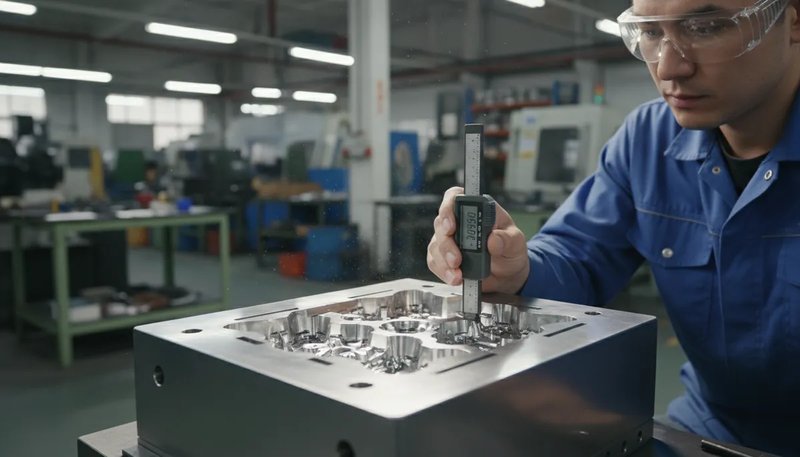
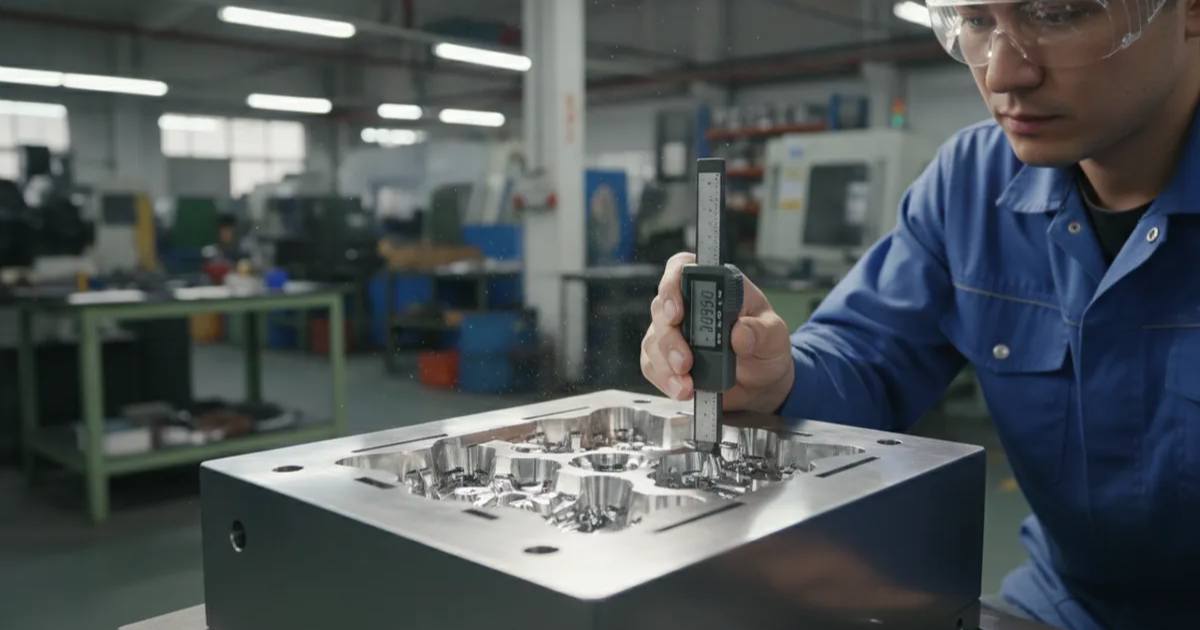
Mold tooling quality inspection
On-site inspection catches drift

What Does a Practical Change Control Checklist Include?

Here is a field-tested checklist you can adapt for your own programs. We use a version of this internally for every customer engagement.

Before production starts, lock the material specification including grade, supplier, colorant, and regrind percentage in the quality plan. Document validated process parameters with acceptable ranges. Record baseline dimensional and weight data from initial sampling. Establish change classification criteria from Tier 1 through Tier 4. Include change notification clauses in the purchase order.

During production, trend incoming inspection data covering dimensions, weight, and visual criteria. Require change notification submission for any proposed change. Approve or reject notifications within the agreed SLA. Run first article inspection after any approved Tier 2 or higher change. Periodically audit supplier process records.

After detecting an unauthorized change, quarantine affected parts immediately. Request full root cause analysis from the supplier. Verify the scope, including how many lots were affected and over what time period. Determine whether parts can be reworked, must be scrapped, or are acceptable as-is. Update the supplier scorecard and escalate if the issue is recurring.

How Does Change Control Differ Across Industries?

The fundamentals are the same everywhere: notify, classify, approve, verify. But the stakes and regulatory requirements vary significantly by industry.

Automotive, governed by IATF 16949, has the most prescriptive framework. It requires formal Supplier Change Notification processes, PPAP revalidation for significant changes, and documented approval workflows. Non-compliance can result in OEM-imposed controlled shipping levels CS-1 or CS-2, which are expensive and reputation-damaging.

Medical devices under FDA 21 CFR 820 require that any change to a validated process be revalidated. The burden of proof is on the manufacturer to demonstrate that the change does not affect device safety or efficacy. Unreported changes can trigger FDA Warning Letters, consent decrees, or product recalls.

Aerospace under AS9100D3 has even tighter traceability requirements than automotive. Changes to flight-critical components may require notification to the certifying authority such as the FAA or EASA and coordination with the Design Authority.

Consumer electronics is less regulated but no less important. A material change in a housing component can affect drop test performance, EMI shielding, or surface finish, all of which impact end-user experience and warranty costs. For industrial and general applications, ISO 9001 provides the baseline. Change control is required under Clause 8.5.6, but the specific implementation is left to the organization, which is where you see the most variability and the most gaps.

🏭 ZetarMold Factory Insight
Operating under ISO 9001, ISO 13485, ISO 14001, and ISO 45001 systems means our internal change control process is audited regularly. With 400+ materials in our experience base, we understand that even switching between lots of the same grade can affect processing behavior.

What Are the Most Common Mistakes in Supplier Change Control?

The five most damaging mistakes are handshake trust, over-classification, missing data trends, ignoring sub-suppliers, and zero consequences. We see these patterns repeatedly across automotive, medical, and industrial supply chains.

The first mistake is relying on the trust-us handshake. Some OEMs depend on personal relationships instead of formal systems. Trust is good, but trust without verification is negligence. Even the best suppliers make mistakes or face pressure you cannot see.

The second mistake is over-classifying everything as critical. If every minor change requires a full review board, your engineers will spend all day in meetings and the supplier will stop submitting notifications. The tier system exists to keep the process proportional.

The third mistake is running only pass-or-fail inspection with no trending. If your incoming check only looks at green or red, you will miss gradual drift. A dimension that moves from 10.02mm to 10.04mm to 10.06mm over three shipments is still in tolerance, but it tells you something is changing. Catch it early.

The fourth mistake is ignoring sub-supplier changes. Your molder buys resin from a distributor, and that distributor may change their source without telling your molder. You need change control requirements that extend through your supplier’s supply chain, not just your direct supplier.

The fifth mistake is having no consequence for unauthorized changes. If a supplier makes an unauthorized change and receives only a stern email, they will do it again. Your remediation clause must include cost of replacement parts, corrective action requirements, and supplier scorecard impact.

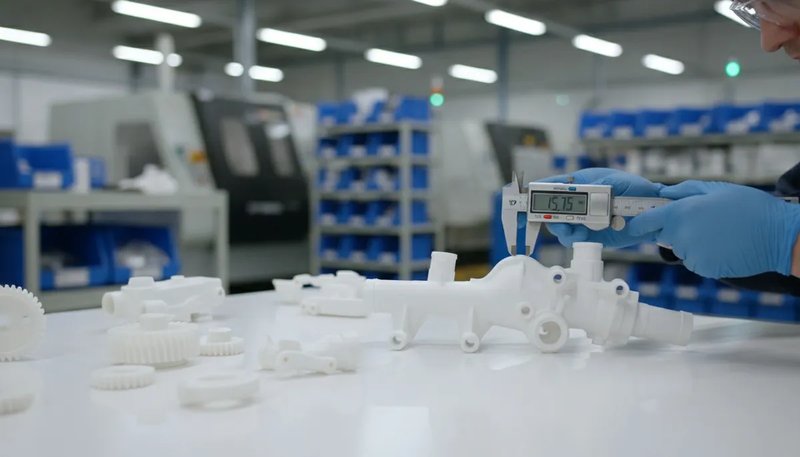
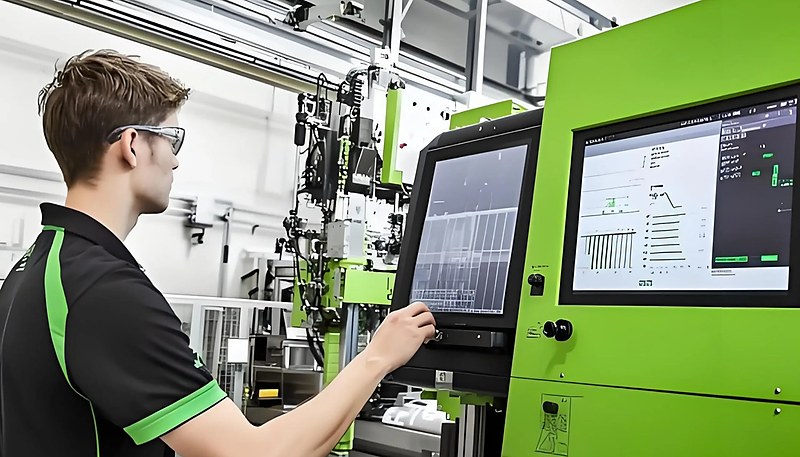
Quality testing injection molded parts
Quality testing validates changes

True or False: Test Your Change Control Knowledge

Change control knowledge is essential for anyone managing injection molding supply chains. Test your understanding with these four statements about common change control misconceptions.

“IATF 16949 requires suppliers to notify OEMs before making any change that could affect product quality.”True

IATF 16949 Section 8.4.2.4 explicitly requires that the organization have a documented process to control changes made by suppliers, including notification and approval requirements. This is one of the most frequently audited clauses in automotive supply chains.

“If a supplier changes to a different lot of the same approved resin grade, no notification is needed.”False

Even lot-to-lot changes within the same grade can affect processing behavior, especially for hygroscopic or filled materials. Best practice is to require COA verification for every lot change and flag any parameter adjustments as a Tier 2 notification.

In practice, many OEMs discover unauthorized changes only after receiving customer complaints or failing incoming inspection. The gap between when a supplier makes a change and when you detect it is the window of risk. Shortening that window requires active monitoring, not passive trust. This is why leading automotive OEMs require suppliers to submit formal Change Notification Requests for even minor process adjustments, and why medical device manufacturers mandate revalidation after any process modification.

“ISO 9001 Clause 8.5.6 requires organizations to control changes to production and service provision.”True

ISO 9001 explicitly states that organizations shall control changes to production and service provision, including changes to processes that affect product conformity. This requirement extends to externally provided processes, meaning your injection molding supplier must follow your documented change control procedures.

“Moving a mold to a different injection molding machine of the same tonnage does not require change control.”False

Even within the same tonnage range, machine characteristics such as platen parallelism, injection unit performance, and controller tuning differ. A mold moved from Machine A to Machine B may produce parts with different dimensions or sink marks. This is a Tier 2 change at minimum.

자주 묻는 질문

자주 묻는 질문

What is supplier change control in injection molding?

Supplier change control is a formal process requiring your injection molding supplier to notify you and obtain written approval before making any change to materials, processes, equipment, tooling, or sub-suppliers that could affect part quality. It is a mandatory requirement under IATF 16949, ISO 9001, FDA 21 CFR 820, and other quality management standards used in automotive, medical, and aerospace manufacturing. The process involves classifying changes into risk tiers ranging from minor notification-only changes to critical changes requiring full revalidation and new PPAP submissions to your engineering team.

Why is change control important for injection molding suppliers?

0 Injection molding involves dozens of interdependent variables including resin grade, melt temperature, injection speed, packing pressure, and cooling time. An unapproved change to any single one of these critical variables can shift part dimensions, mechanical properties, or surface finish outside your validated specification, often without triggering any visual defect that your incoming inspection process would catch. Change control prevents these silent quality drifts from reaching your production line or your end customers by ensuring every modification is thoroughly reviewed, tested, and formally approved before full-scale production is allowed to resume.

What happens if a supplier makes an unauthorized material change?

0 The OEM should quarantine all affected parts immediately and trace the scope of the deviation across all recent shipments. Request a full root cause analysis from the supplier covering exactly what changed, when it changed, and why it was not reported through proper channels. Verify how many lots and production runs were affected over what time period. Then enforce your contractual remediation clauses, which typically include replacement parts at the supplier\u2019s cost, corrective action completed within 10 business days, and documented preventive measures. Update the supplier scorecard and schedule a follow-up audit to verify the corrective action is effective.

How do you classify changes in supplier change control?

0 A practical system uses four tiers of increasing severity. Tier 1 covers minor changes such as label updates that require only notification and logging with no approval needed. Tier 2 covers major changes such as lot-to-lot material variation or same-range machine swaps, requiring engineering approval and first article inspection. Tier 3 covers critical changes including material grade changes, alternate suppliers, or mold modifications, demanding full PPAP-level revalidation with dimensional data and process capability studies. Tier 4 covers safety-critical changes that trigger an immediate production hold, full re-PPAP, and regulatory notification if applicable.

Does ISO 9001 require supplier change control?

0 Yes, ISO 9001 Clause 8.5.6 explicitly requires organizations to review and control changes to production and service provision, including changes to processes, equipment, or documentation that affect product conformity. This requirement extends to externally provided processes under Clause 8.4, meaning your injection molding supplier must follow your documented change control procedures. While ISO 9001 does not prescribe a specific format for the change control process, the requirement for documented and controlled changes is regularly audited during both initial certification audits and ongoing surveillance visits.

How can I detect unauthorized changes at my molding supplier?

0 Use a layered detection approach combining multiple independent verification methods for maximum coverage and reliability. Track measurement data trends over time, analyzing actual values rather than just pass or fail results to catch gradual drift before it exceeds tolerance. Run periodic material verification testing using DSC, MFI, or FTIR analysis to identify material substitutions that visual inspection cannot detect. Audit process parameter logs from supplier machines and compare them against your validated process sheets. Cross-reference COA lot numbers against your approved supplier and grade list to catch unauthorized supplier switches. And conduct regular on-site production floor audits to physically verify resin storage, machine setups, and operator practices. No single method catches everything, so layered detection provides the best protection.

What contractual clauses should I include for injection molding change control?

0 Your purchase order should include four essential clauses. A change notification clause that prohibits the supplier from implementing any change to materials, processes, equipment, tooling, or sub-suppliers without prior written approval. A first article inspection requirement for any approved Tier 2 or higher change. A remediation clause that specifies consequences for unauthorized changes including replacement cost, corrective action timelines, and preventive measures. And an audit rights clause allowing unannounced facility inspections. Together these provide the contractual foundation for enforcing your change control system.

Is change control different for medical injection molding?

0 Yes, significantly. FDA 21 CFR 820.50 requires documented purchasing controls for medical device manufacturing, and any change to a validated process must be revalidated per FDA expectations. The burden of proof rests entirely on the manufacturer to demonstrate that the change does not affect device safety or efficacy. Unreported or undocumented changes can trigger FDA Warning Letters, consent decrees, mandatory recalls, or facility shutdowns. The regulatory stakes are substantially higher than in general industrial applications, making robust change control absolutely critical for medical injection molding programs.

결론

Supplier change control is not bureaucracy — it is risk management. Every unapproved change is a bet that nothing will go wrong. In injection molding, where tolerances are tight, materials are sensitive, and production volumes are high, that bet has terrible odds. Build the system: classify changes, require notification, demand first article data, enforce contractual consequences, and audit regularly.

If you need a molding partner that takes change control as seriously as you do — with documented ISO processes, full traceability, and a team that communicates proactively — get in touch with us. We would rather have a difficult conversation before a change than an impossible one after a defect.


  1. IATF 16949: IATF 16949 refers to automotive Industry Action Group, IATF 16949:2016 Quality Management System Requirements, Section 8.4.2.4 Supplier Change Control.

  2. FDA 21 CFR 820: FDA 21 CFR 820 refers to .50, Purchasing Controls – requires documented evaluation of suppliers and notification of changes affecting device quality.

  3. AS9100D: AS9100D refers to sAE International, AS9100D:2016, Section 8.4 – Control of Externally Provided Processes, Products and Services.

최신 게시물
Facebook
트위터
LinkedIn
Pinterest
Mike Tang 사진
마이크 탕

Hi, I'm the author of this post, and I have been in this field for more than 20 years. and I have been responsible for handling on-site production issues, product design optimization, mold design and project preliminary price evaluation. If you want to custom plastic mold and plastic molding related products, feel free to ask me any questions.

나와 연결하기 →

빠른 견적 요청하기

다음을 통해 도면 및 세부 요구 사항을 보내세요. 

Emial:[email protected]

또는 아래 문의 양식을 작성하세요:

빠른 견적 요청하기

다음을 통해 도면 및 세부 요구 사항을 보내세요. 

Emial:[email protected]

또는 아래 문의 양식을 작성하세요:

빠른 견적 요청하기

다음을 통해 도면 및 세부 요구 사항을 보내세요. 

Emial:[email protected]

또는 아래 문의 양식을 작성하세요:

빠른 견적 요청하기

다음을 통해 도면 및 세부 요구 사항을 보내세요. 

Emial:[email protected]

또는 아래 문의 양식을 작성하세요:

빠른 견적 요청하기

다음을 통해 도면 및 세부 요구 사항을 보내세요. 

Emial:[email protected]

또는 아래 문의 양식을 작성하세요:

브랜드에 대한 빠른 견적 요청하기

다음을 통해 도면 및 세부 요구 사항을 보내세요. 

Emial:[email protected]

또는 아래 문의 양식을 작성하세요:

댓글 작성하기

이 도움말에 대한 자세한 내용을 보려면 "[email protected]"으로 이메일 주소를 입력하세요.

빠른 견적 요청하기

다음을 통해 도면 및 세부 요구 사항을 보내세요. 

Emial:[email protected]

또는 아래 문의 양식을 작성하세요:

빠른 견적 요청하기

다음을 통해 도면 및 세부 요구 사항을 보내세요. 

Emial:[email protected]

또는 아래 문의 양식을 작성하세요: