 콘텐츠로 건너뛰기

강판 절단 전에 시뮬레이션은 부품의 각 영역이 어떻게 수축할지 예측하여, 공구 설계자가 차등 보정을 적용할 수 있게 합니다. 즉, 일부 캐비티 특징은 약간 크게, 다른 특징은 작게 조정하고 금형 형상을 조정하여 최종 부품이 냉각 후 허용 오차 범위 내에 들어오도록 합니다. 시뮬레이션 없이는 추측에 의존하게 되며, 경화된 강철을 재절단하는 것은 비용이 많이 들고 시간이 오래 걸립니다.
이 글은 사출 금형 설계1—스틸 선택 및 게이트 배치부터 쿨링 전략 및 금형 흐름 분석2. 첫 번째 정밀 금형을 설계하거나 50번째 금형의 문제를 해결하는 경우, 이러한 결정들은 500,000 샷을 생산하는 금형과 10,000 샷 후에 재작업이 필요한 금형을 구분합니다.
- Mold design starts at the part design stage—fix DFM issues before cutting steel.
- Steel choice (P20 vs H13 vs S136) determines tool life, cost, and part finish quality.
- Gate location and type directly affect weld lines, air traps, and dimensional accuracy.
- Cooling channel design accounts for up to 70% of cycle time optimization.
- Tolerances below ±0.05 mm require specialized mold features and process controls.
- Always run mold flow simulation before committing to tooling fabrication.
What Makes a Precision Injection Mold Different from a Standard Mold?
이 섹션은 정밀 사출 금형이 표준 금형과 어떻게 다른지와 그에 따른 비용, 품질, 시간 또는 소싱 위험에 대한 영향에 관한 것입니다. 정밀 금형은 표준 금형과 세 가지 측정 가능한 방식으로 다릅니다: 더 엄격한 치수 허용 오차 (±0.01 ~ ±0.05 mm 대 ±0.1 ~ ±0.25 mm), 우수한 표면 마감 (SPI A-1 ~ A-3 대 B 또는 C 등급), 그리고 단위 수 초를 목표로 하는 최적화된 주기 시간. 이것들은 단순한 개선이 아닙니다—강철 선택, 냉각 배치 및 프로세스 검증에 근본적으로 다른 접근 방식이 필요합니다.
Precision molds require tighter steel grades, more sophisticated cooling layouts, multi-axis CNC finishing, and often in-process measurement systems. A standard mold might take 3–4 weeks to build. A precision mold for the same part could take 8–12 weeks and cost 2–3 times more. But the payoff is consistency—parts that match the CAD model shot after shot, with scrap rates under 1%.
In our Shanghai facility, we have built precision molds for medical device components where the tolerance on a sealing surface was ±0.015 mm. That is not something you achieve with a standard mold approach. It requires dedicated steel selection, thermal management in the mold base, and process validation that runs hundreds of samples before the first production batch.
The precision gap becomes most visible in multi-cavity molds. If you are running an 8-cavity mold for a connector housing, each cavity must produce identical parts. Any variation in cooling, gate size, or venting between cavities shows up as dimensional spread across the parts from the same shot. That is why precision multi-cavity molds require balanced runner layouts, individually adjustable cooling, and cavity-by-cavity dimensional tracking during sampling.
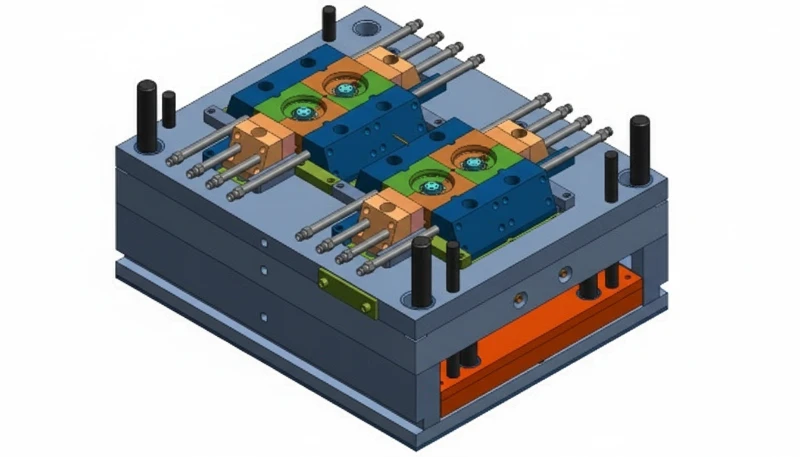
How Do You Select the Right Steel for a Precision Mold?
툴 스틸 선택은 첫 번째 되돌릴 수 없는 결정입니다 금형 설계. 올바른 선택은 세 가지 요소에 달려 있습니다: 생산량, 성형되는 소재 및 표면 마감 요구 사항. 이를 잘못 선택하면 툴링에 과도한 비용을 지출하거나 금형의 초기 마모를 겪게 됩니다.
| 강철 등급 | 경도(HRC) | 최상의 대상 | Expected Tool Life |
|---|---|---|---|
| P20 / P20HH | 28–36 | Low-volume (under 100K shots), general purpose | 100K–300K shots |
| H13 | 44–52 | High-temperature resins (PEEK, LCP), high volume | 500K–1M+ shots |
| S136 / STAVAX | 48–54 | Mirror-polish finishes, medical/optical, corrosion resistant | 500K–1M+ shots |
| NAK80 | 37–41 | Pre-hardened, good machinability, mid-volume | 300K–500K shots |
| 718H | 33–38 | General purpose, good polishability, cost-effective | 200K–500K shots |
The common mistake is over-specifying steel. Not every mold needs H13. If you are molding 20,000 parts in PP with a matte surface, P20 is perfectly adequate and saves 30–40% on tooling cost. But if you are running glass-filled nylon at 300°C with a SPI A-2 finish, you need hardened steel—anything softer will erode at the gate area within weeks.
For precision work, we typically specify S136 or STAVAX for cavities that need mirror finishes, paired with H13 for core inserts that see high thermal cycling. The combination gives you the surface quality precision parts demand with the thermal durability high-volume production requires. Our 8 senior engineers each have 10+ years of experience selecting and specifying these materials for specific applications.
At ZetarMold, our in-house mold manufacturing facility in Shanghai includes CNC machines, wire cutters, EDMs, grinders, and precision engravers—all supporting a monthly capacity of 100+ mold sets. With 8 senior engineers averaging 10+ years of experience, we select steel grades based on actual production conditions: resin type, expected volume, and required surface finish, not theoretical recommendations from a catalog.
What Role Does Shrinkage Compensation Play in Mold Design?
Every plastic shrinks as it cools, and compensating for that shrinkage is one of the most mathematically demanding aspects of precision mold design. The shrinkage rate for common engineering plastics ranges from 0.2% for amorphous materials like PC to 2.5% for semi-crystalline materials like POM. You must compensate directionally, because shrinkage is not uniform across the part.
A 100 mm nominal dimension in PA66 with 1.3% shrinkage means the cavity must be cut to 101.3 mm. But that is the simplified version. In reality, shrinkage varies with wall thickness, flow direction, gate proximity, and holding pressure. A rib that is 2 mm thick will shrink differently than the adjacent 4 mm wall. In our mold manufacturing experience, we have seen parts where the difference between flow-direction and transverse-direction shrinkage exceeded 0.4%—enough to push a ±0.05 mm tolerance out of spec.
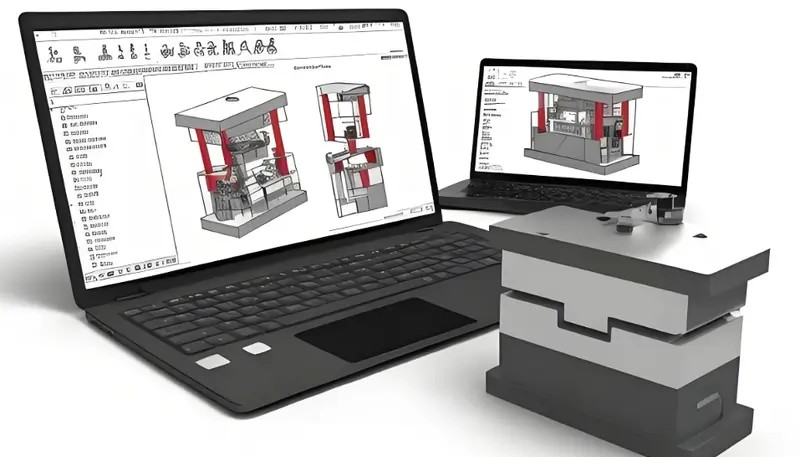
이것이 정밀 금형이 강철 절단 전에 금형 유동 분석을 필요로 하는 이유입니다. 시뮬레이션은 부품의 각 영역이 어떻게 수축할지를 예측하여, 도구 설계자가 차등 보정을 적용할 수 있게 합니다—일부 캐비티 특징을 약간 크게, 다른 특징을 작게 만들고, 금형 형상을 조정하여 최종 부품이 냉각 후 허용 범위 내에 들어오도록 합니다. 시뮬레이션 없이는 추측에 의존하게 되며, 경화된 강철을 재절단하는 것은 비용이 많이 들고 느립니다.
How Should You Design the Gate and Runner System?
이 섹션은 게이트 및 런너 시스템 설계와 그 비용, 품질, 시기 또는 조달 위험에 대한 영향에 관한 것입니다. 게이트는 용융 플라스틱이 캐비티에 들어가는 곳이며, 그 유형, 크기 및 위치는 흐름 패턴, 용접선 위치, 패킹 효율성 및 부품에 남는 보이는 마크를 결정합니다. 정밀 금형에서는 게이트 설계가 핵심 엔지니어링 결정이며, 사후 고려 사항이 아닙니다. 게이트를 잘못 설계하면 어떤 프로세스 튜닝도 필요한 치수 일관성을 제공할 수 없습니다.
“Gate location directly affects part dimensional accuracy and weld line strength.”True
The gate determines the fill pattern inside the cavity. A poorly placed gate creates uneven packing, causing one side of the part to be dimensionally different from the other. In multi-gate designs, weld lines form where flow fronts meet—if these land on a structural feature, part strength drops 20–40%.
“A larger gate always produces better quality parts.”False
An oversized gate leaves a large vestige that requires secondary trimming, increases the freeze time (slowing cycle), and can cause over-packing near the gate, leading to flash. Gate size must balance fill speed, packing pressure transfer, and clean degating.
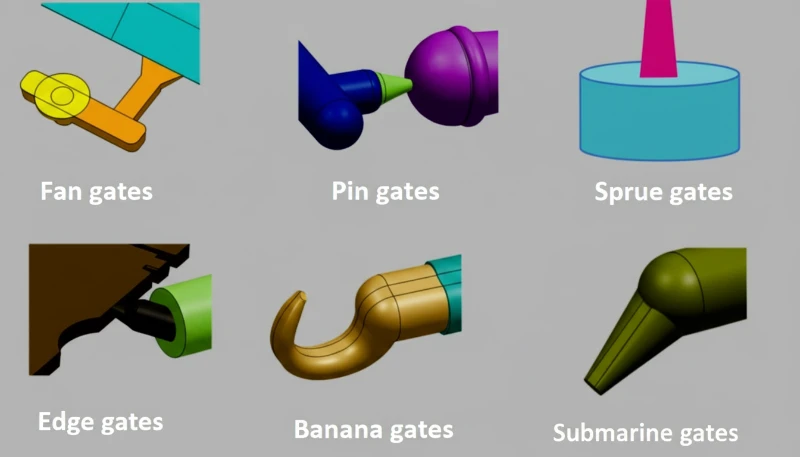
For precision parts, the most common gate types are submarine (tunnel) gates, which leave minimal visible marks, and direct (sprue) gates for single-cavity molds where maximum packing is needed. Edge gates work for flat parts but leave a visible mark that must be managed. The choice depends on part geometry, aesthetic requirements, and production volume.
The runner system connects the sprue to the gates. In precision molding, hot runner systems are often preferred because they eliminate cold runner waste, reduce cycle time, and deliver more consistent melt temperature to each cavity. However, hot runners add USD 3,000–15,000 to tooling cost and introduce potential maintenance points. For multi-cavity precision molds running high-volume production, the payback is usually within the first 50,000 shots.
Why Is Cooling Channel Design Critical for Precision Parts?
냉각은 전체 주기 시간의 60–70%를 차지합니다 사출 성형 cycle. 정밀 성형에서, 냉각은 또한 부품 품질에 직접적인 영향을 미칩니다—불균일한 냉각은 차등 수축, 뒤틀림 및 내부 응력을 유발하여 치수가 허용 범위를 벗어나게 합니다. 잘 설계된 냉각 시스템은 열을 균일하고 빠르게 제거합니다; 잘못 설계된 시스템은 부품을 변형시키고 불량률을 높이는 열점을 생성합니다.
표준 드릴 냉각 채널은 금형 베이스를 통과하는 직선입니다. 단순한 형상에는 효과적이지만 복잡한 부품 윤곽을 따라갈 수 없습니다. 다양한 벽 두께나 깊은 리브를 가진 정밀 부품에는, 캐비티 표면을 따라가는 채널인 컨포멀 냉각이 훨씬 더 효과적입니다. 연구와 우리 자신의 생산 데이터는 컨포멀 냉각이 주기 시간을 20–35% 줄이고 치수 일관성을 15–25% 향상시킨다는 것을 보여줍니다.
컨포멀 쿨링의 실제적인 어려움은 제조입니다. 전통적인 드릴링은 곡선 채널을 만들 수 없습니다. 코어 인서트에 대한 금속 3D 프린팅(선택적 레이저 용융) 또는 컨포멀 흐름을 근사화하는 제작된 배플 및 버블 설계가 필요합니다. 두 접근법 모두 비용과 시간을 증가시키므로, 적합한 사출 성형 공급업체 프로젝트 초기에 중요한 요소입니다. 우리 공장에서는 각 정밀 금형 프로젝트를 개별적으로 평가합니다—때로는 잘 설계된 배플 시스템이 30%의 비용으로 80%의 컨포멀 쿨링 효과를 달성합니다.
What Are the Key Part Design Features That Affect Mold Precision?
금형 정밀도에 영향을 미치는 주요 부품 설계 특징은 이 섹션에서 설명되는 주요 범주 또는 옵션입니다. 최고의 금형 설계도 부적절한 부품 설계를 수정할 수 없습니다. 정밀도는 CAD 단계에서 시작하며, 정밀 성형을 가능하게 하거나 방해하는 여러 특징이 있습니다. DFM 검토 시 이를 해결하면 이후 금형 재작업에 수 주를 절약할 수 있습니다.
Draft angles are non-negotiable. Even precision parts need at least 0.5° of draft on vertical surfaces; 1–2° is preferred. The common argument—that draft changes dimensions—misses the point. Without draft, the part drags on the cavity wall during ejection, causing scratches, dimensional variation, and eventual cavity damage. The solution is to design the draft into the tolerance stack from the beginning.
Wall thickness uniformity is the second critical factor. Variations greater than 15–20% between adjacent sections cause differential cooling, sink marks, and internal stress. If your part has thick sections next to thin ones, you either need to core out the thick areas or accept that they will shrink differently. We regularly work with customers during the DFM review to adjust wall thickness transitions before the mold is cut.
Corner radii are the third. Sharp internal corners create stress concentrations that cause cracking in-service and make mold filling inconsistent. A minimum internal radius of 0.5 mm is standard; for precision parts loaded in use, 1.0 mm or more is recommended. External corners should also have a small radius—0.25 mm minimum—to prevent steel chipping at the cavity edge during the millions of clamp cycles the mold will endure.
“Draft angle as small as 0.5° is sufficient for precision ejection on polished cavity surfaces.”True
On cavities polished to SPI A-2 or better, the surface friction is low enough that 0.5° of draft allows clean ejection for most engineering plastics. However, for glass-filled materials or textured surfaces, 1.5–3° is necessary to prevent drag marks.
“Precision parts cannot have any undercuts because side actions reduce accuracy.”False
Modern lifter and slide mechanisms can maintain positional accuracy within ±0.02 mm. The key is designing the side action with hardened wear plates and adequate guiding. Undercuts should be avoided when possible, but they are not automatic disqualifiers for precision work.
What Inspection and Validation Steps Ensure Mold Precision?
A precision mold is not finished when the steel is cut—it is finished when the first articles pass inspection. Validation is the last and most critical phase, and it requires specific equipment and procedures that many mold shops skip in the interest of speed.
우리가 따르는 순서: 첫째, 금형이 플라스틱을 만나기 전에 캐비티 치수의 CMM(좌표 측정 기계) 검증. 이것은 강철 절단 오류를 발견합니다—일반적으로, 성형 시작 전에 캐비티 치수는 수축 보정된 허용 범위의 80% 내에 있어야 합니다. 둘째, 단축 분석—캐비티를 점진적으로 채워 유동이 mold flow simulation3. 세 번째, CMM 또는 광학 측정을 사용하여 30–50개의 샘플에 대한 전체 샷 치수 분석을 수행하여 프로세스 능력을 확립합니다(정밀 작업에는 Cpk ≥ 1.33이 최소 기준이며; 의료용에는 ≥ 1.67입니다).
Our QC team of 10+ specialists uses a six-step quality control process—from incoming material inspection through in-process checks to final outgoing verification. For precision molds, we add a mold-specific capability study that runs 100+ consecutive shots to confirm that dimensional variation stays within specification over time. This catches issues like cavity wear, cooling drift, and gate erosion before they affect production parts.
We also perform a 24-hour post-molding dimensional check in addition to immediate measurement. This catches delayed dimensional shifts caused by residual stress relaxation or continued crystallization—particularly important for semi-crystalline materials like POM and PA66, where post-molding shrinkage can continue for 48 hours or more.
정밀 사출 금형 설계에 관한 자주 묻는 질문
정밀 사출 금형은 어떤 공차를 달성할 수 있나요?
A well-designed precision injection mold can reliably hold tolerances of ±0.01 to ±0.05 mm on critical dimensions, depending on part geometry, material selection, and mold design complexity. Achieving ±0.01 mm consistently requires hardened steel cavities (S136 or H13), optimized conformal cooling layouts, and process windows validated through capability studies with Cpk ≥ 1.67. For most engineering applications, ±0.025 to ±0.05 mm is a practical and cost-effective target that balances precision requirements with production economics. For critical medical and optical applications, we recommend targeting ±0.025 mm as a design tolerance and validating the process Cpk over at least 100 consecutive shots.
정밀 사출 금형은 표준 금형에 비해 얼마나 비용이 더 드나요?
A precision mold typically costs 2–3 times more than a standard mold for the same part geometry. The premium comes from higher-grade steel (S136 or H13 instead of P20), multi-axis CNC finishing, additional validation steps including CMM measurement, and more sophisticated cooling systems such as conformal channels. For a mid-complexity part, this might mean USD 15,000–25,000 versus USD 6,000–10,000 for standard tooling. However, the lower scrap rate and longer tool life often recover the premium within the first production run. In our experience building precision molds monthly, the additional investment pays for itself through reduced scrap and fewer production interruptions.
정밀 사출 금형을 제작하는 데 얼마나 걸리나요?
Build time ranges from 6 to 12 weeks depending on complexity and steel requirements. A single-cavity mold with moderate features might take 6–8 weeks from design approval to T0 sampling. A multi-cavity mold with side actions, lifters, and conformal cooling can take 10–14 weeks. The validation phase—T0 sampling, dimensional analysis on 30–50 parts, and any necessary revisions—adds another 1–3 weeks on top of mold fabrication. Rush timelines are possible but often compromise the validation step, which we do not recommend for precision applications.
모든 정밀 금형에 핫 러너 시스템이 필요한가요?
No, not all precision molds require hot runner systems. Hot runners are strongly recommended for multi-cavity precision molds and high-volume production because they eliminate cold runner waste and deliver more consistent melt temperature to each cavity, which improves dimensional uniformity. However, for single-cavity molds or low-volume precision work, a cold runner with a direct sprue gate can achieve the same dimensional accuracy at significantly lower tooling cost. The decision between hot and cold runners should be made during the DFM review phase, considering annual volume projections and material characteristics.
정밀 금형 설계에서 가장 흔한 실수는 무엇인가요?
The most frequent error is underestimating the interaction between cooling channel design and final part dimensional accuracy. Engineers often focus intensely on cavity tolerances and steel cutting precision but neglect cooling uniformity. This leads to parts that measure correctly immediately after molding but drift out of tolerance as internal stresses relax over 24–48 hours. Thermal imaging during sampling and extended capability studies over 100+ shots catch this early. Our standard practice is to always run a 24-hour post-molding dimensional check to catch delayed shifts from stress relaxation.
정밀 금형으로 다른 재료로 부품을 생산할 수 있습니까?
Yes, a precision mold can produce parts in different materials, but with important caveats. Different plastics have different shrinkage rates, flow behaviors, and processing temperatures. A mold designed for PA66 (1.0–1.5% shrinkage) will not produce dimensionally correct parts in POM (1.8–2.5% shrinkage) without cavity adjustments. Material changes in precision molds typically require new cavity inserts, offset compensation in the mold design, or running a separate capability study for each material. We recommend specifying the primary production material during the initial mold design phase.
정밀 금형은 어떤 표면 마무리를 달성할 수 있습니까?
Precision molds can achieve SPI A-1 (mirror, below 0.01 μm Ra) to SPI A-3 surface finishes depending on the steel grade and polishing process used. S136 and STAVAX are the preferred steel grades for optical-quality finishes because their high chromium content allows diamond polishing to extremely low roughness values. The achievable finish also depends heavily on part geometry—deep ribs, tight corners, and thin-wall sections are significantly harder to polish than open flat surfaces. For precision optical components, we specify STAVAX with SPI A-1 polish followed by a coating verification step.
Ready to Build Your Precision Mold?
이 섹션은 정밀 금형을 구축하는 준비와 그에 따른 비용, 품질, 시간 또는 소싱 위험에 대한 영향에 관한 것입니다. 정밀 사출 금형 설계는 강철 등급, 게이트 위치, 냉각 배치, 수축 보정 등의 일련의 엔지니어링 결정입니다—각 선택은 다음 선택을 제한합니다. 최상의 결과는 부품 설계부터 생산 검증까지의 전체 과정을 이해하는 경험 많은 도구 설계자들에게서 나옵니다.
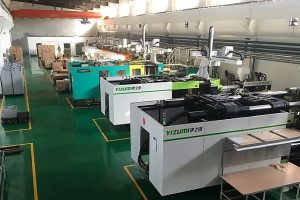
ZetarMold에서는 상하이 공장에서 90T부터 1850T까지의 47대의 사출 성형기를 운영하며, 내부 금형 제작 작업장을 통해 월 100+ 금형 세트를 생산할 수 있습니다. 우리의 8명의 고급 엔지니어 팀은 각각 정밀 금형 설계에 10+년의 경험을 가지고 있으며, IQC부터 OQC까지의 완전한 품질 관리 프로세스를 뒷받침합니다. 단일 캐비티 프로토타입 금형이나 핫 러너와 컨포멀 냉각을 갖춘 16 캐비티 생산 도구가 필요한 경우에도, 우리는 부품이 요구하는 정밀도를 달성하는 데 도움을 줄 수 있습니다.
Reach out for a mold design consultation—we will review your part design, identify potential precision challenges, and provide a tooling recommendation before you commit to steel.
-
injection mold design: 사출 금형 설계는 사출 성형을 통해 플라스틱 부품을 형성하는 데 사용되는 금형 캐비티, 코어, 쿨링 시스템 및 이젝션 메커니즘을 생성하는 엔지니어링 과정을 의미합니다. ↩
-
mold flow analysis: Mold flow analysis is a computer simulation technique that predicts how molten plastic fills, packs, and cools within a mold cavity, helping engineers optimize gate location and processing parameters. ↩
-
금형 유동 시뮬레이션: 금형 흐름 시뮬레이션은 용융 플라스틱이 금형 캐비티 내에서 어떻게 채워지고, 패킹되고, 쿨링되는지를 예측하기 위해 유한 요소 분석을 사용하여, 스틸이 절단되기 전에 게이트 배치, 용접선 관리 및 쿨링 채널 배치를 최적화할 수 있게 합니다. ↩




 EN
EN  ES
ES  FR
FR  DE
DE  PT
PT  AR
AR  RU
RU  JA
JA  KO
KO  IT
IT  NL
NL  TR
TR  PL
PL 