 コンテンツへスキップ

はじめに
ABS(アクリロニトリル・ブタジエン・スチレン)は、最も広く使用されている熱可塑性プラスチックの一つです。 射出成形1—そしてそれには正当な理由があります。ABSは強度、表面仕上げ品質、加工の容易さを、他の材料ではほとんど匹敵しない方法でバランスさせています。自動車内装トリムから民生機器ハウジング、医療機器筐体から電動工具ケーシングまで、エンジニアが頑丈で塗装可能、かつ寸法安定性のある部品を必要とするあらゆる場所でABSは活躍しています。
しかし、ほとんどのガイドが教えてくれないことをお伝えします:ABSは成形しやすい材料ですが、手を抜くと容赦ありません。溶融温度を15℃間違えると、シンクマークやウェルドラインが発生し、どんな後処理でも隠せません。肉厚を不均一に設計すると、成形サイクルごとに反りとの戦いになります。このガイドでは、生産規模でABS部品を成形する際に実際に重要なパラメータ、設計ルール、現実的なトレードオフについて解説します。
- ABSは溶融温度220〜260℃、金型温度40〜80℃で最適に加工されます
- 均一な肉厚(理想的には2〜3 mm)は、シンクマークと反りを防止します
- MFIグレードは5〜35 g/10分の範囲—部品形状に合わせてグレードを選択
- 成形前の80〜85°Cでの2〜4時間の乾燥は絶対条件です
- ABSは、塗装、メッキ、テクスチャー成形に優れた表面仕上げを提供します
ABSプラスチックとは何ですか?なぜ射出成形でこれほど人気があるのですか?
ABSは三元共重合体です—3つのモノマーをブレンドすることで、単独では実現できない材料特性を発揮します。アクリロニトリルは耐薬品性と耐熱性を、ブタジエンは靭性と耐衝撃性を、スチレンは剛性、光沢のある表面、および優れた加工性をもたらします。その結果、明確な融点を持たず、ある範囲で徐々に軟化する非晶性熱可塑性プラスチックとなり、わずかな加工変動に対して非常に許容性が高くなっています。
数十の生産プログラムでABSを扱った経験から、他の汎用プラスチックと一線を画すのは、二次加工におけるその汎用性です。塗装、クロメートメッキ、超音波溶接、溶剤接合、直接テクスチャー加工などが可能です。 射出成形金型2そのため、部品の性能と見た目の両方が求められる用途で優位性を発揮します。
この材料はまた、金型をきれいに充填します。加工温度での比較的低い粘度は、過度の射出圧力をかけずに、薄いリブ、ボス形状、スナップフィットクリップなどの複雑な形状を充填できることを意味します。これは実用的な利点であり、金型と機械の両方の摩耗を減らし、大量生産プログラムでの工具寿命を延ばします。
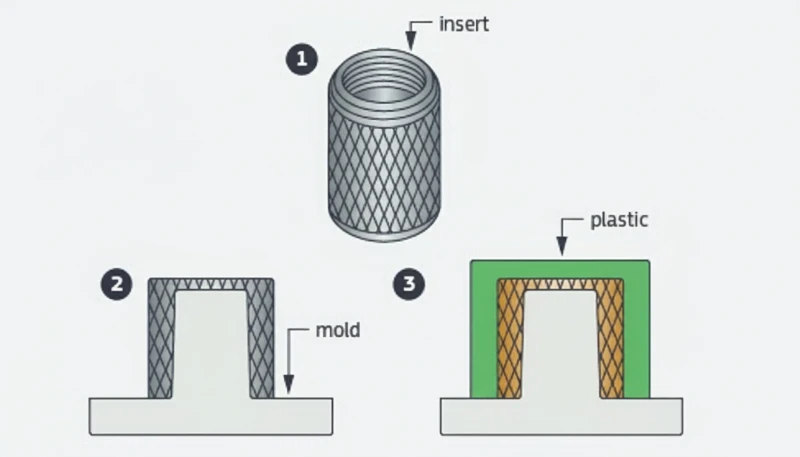
ABSの主要な材料特性は何ですか?
ABSの主要な材料特性は、このセクションで説明する主なカテゴリーまたはオプションです。ABSの特性を一目で理解することで、加工中および使用中の材料の挙動を予測できます。以下の表は、射出成形プロジェクトでABSを指定する際にエンジニアが必要とする重要な仕様をまとめたものです。
| プロパティ | Typical Range | Why It Matters |
|---|---|---|
| 引張強度 | 29–48 MPa | 構造部品の耐荷重能力を決定します |
| アイゾッド衝撃強度(ノッチ付き) | 200–400 J/m | 筐体の落下試験と耐衝撃性 |
| 熱偏向温度(HDT) | 85–100°C @ 0.45 MPa | 自動車および家電部品の上限使用温度限界 |
| メルトフローインデックス(MFI) | 5〜35 g/10分 | MFIが高い=薄肉部品の流動性が向上;MFIが低い=機械的強度が向上 |
| ガラス転移温度(Tg) | ~105°C | 材料が著しく軟化する前の上限を定義します |
| 密度 | 1.04–1.07 g/cm³ | 金属や一部のエンジニアリングプラスチックに対する軽量性の優位性 |
| Mold Shrinkage | 0.4–0.7% | 寸法精度に重要 ― 金型鋼材のサイジングを決定します |
| ロックウェル硬さ | R100〜R115 | 表面のキズや凹みに対する耐性 |
エンジニアが不意を突かれる一つの詳細: ガラス転移温度3 標準ABSのHDTは約105℃ですが、連続使用温度は通常60〜80℃と評価されています。部品が自動車のボンネット内の温度や80℃を超える持続的な熱に耐える必要がある場合は、標準ABSではなく、ABS-PCブレンドや耐熱安定化ABSグレードを検討すべきです。
ABSの最適な射出成形パラメータはどのように設定しますか?
ABSのパラメータを適切に設定することは、数値を暗記するよりも、温度、圧力、時間の相互作用を理解することが重要です。生産現場で実際に効果を発揮するポイントをご紹介します。
溶融温度
目標は220〜260°Cで、ほとんどの汎用グレードでは240°Cが信頼できる出発点です。220°Cを下回ると、ショートショット、弱い溶接線強度、目立つ流れ跡が見られます。260°Cを超えると材料の劣化が始まり、銀条痕(水分やガスによる)、機械的特性の低下、変色の可能性があります。特定グレードのメルトフローレート(MFI)が指針となります:高MFIグレード(20+ g/10分)は220〜240°Cで良好に加工され、低MFIの構造用グレードは適切に充填するために240〜260°Cを必要とします。
金型温度
金型は40〜80°Cで運転してください。低温側(40〜50°C)ではサイクルタイムが短縮され、単純な形状に適しています。高温側(60〜80°C)では表面仕上げが向上し、溶接線の目立ちが減少し、内部応力が最小限に抑えられます。これは塗装やクロメート処理を施す部品にとって重要です。当社の設備では、外観面が重要な部品には60°C、サイクルタイムが外観よりも重要な構造部品には50°CでABS金型を運転することが一般的です。
射出速度と射出圧力
ABSは中速から高速の射出速度(多くの機械で40〜80 mm/s)に良好に反応します。薄肉部品は早期凍結を防ぐために高速が必要で、厚肉部品はエアトラップを最小限にするために低速充填が可能です。射出圧力は通常70〜120 MPaの範囲に収まり、保圧はピーク射出圧力の40〜70%です。保圧時間はゲートが凍結するまで維持する必要があり、通常は肉厚とゲートサイズに応じて2〜5秒です。
乾燥条件
これは絶対条件です:成形前にABSを80〜85°Cで2〜4時間乾燥させ、水分含有量を0.11%以下に抑えてください。このステップを省略すると、スプレーマーク、衝撃強度の低下、寸法不安定が発生します。湿度の高い気候や雨季では、乾燥時間を延長するか、除湿ホッパードライヤーを使用してください。未乾燥のABSから作られた部品が、予想衝撃エネルギーの半分で落下試験に失敗した例があります。それほど水分が材料を劣化させるのです。
ABS部品に適用される金型設計の考慮事項は何ですか?

Good ABS parts start with good mold design. The material is forgiving, but it has specific design rules that, when ignored, guarantee production headaches.
Wall thickness should be uniform, ideally 2.0–3.0 mm. Variations beyond ±10% across the part will cause differential shrinkage, leading to warpage and sink marks. When thickness transitions are unavoidable, use a gradual taper (1:3 ratio minimum) rather than a sharp step. Bosses should be cored to maintain uniform wall thickness—the outside diameter should be 2.0–2.5 times the nominal wall, with a core diameter that leaves 50–60% wall thickness in the boss sidewall.
Draft angles of 1–2° per side are sufficient for most ABS parts, thanks to the material’s relatively low shrinkage and good release characteristics. For deep draws or textured surfaces, increase to 3° per side. The textured surface itself adds effective draft—a coarse texture (VDI 33+) might need an extra 1.5° per 0.025 mm of texture depth.
Gate design for ABS typically favors edge gates or submarine gates for aesthetic parts, and direct sprue gates for structural parts where gate vestige is acceptable. Gate diameter should be 50–80% of the wall thickness at the gate location—too small and you get shear-induced discoloration, too large and you extend cycle time with excessive gate freeze time. Runner systems should be balanced, full-round, and sized to deliver adequate pressure without excessive material waste.
“ABS parts require drying at 80–85°C for 2–4 hours before molding to prevent splay marks and reduced impact strength.”真
ABS is moderately hygroscopic and absorbs moisture from the atmosphere. Without proper drying (targeting <0.1% moisture content), trapped water vapor creates splay marks on the part surface and hydrolytically degrades the polymer chains, significantly reducing impact resistance.
“ABS has a sharp melting point at 180°C, so you must maintain melt temperature within ±2°C of that target.”偽
ABS is an amorphous thermoplastic—it has no sharp melting point. Instead, it gradually softens over a temperature range, which is actually one of its processing advantages: it tolerates minor temperature variations (typically ±10°C) without catastrophic defects, unlike semi-crystalline materials like POM or PEEK.
一般的なABS射出成形の欠陥とその対策は何ですか?
Common abs injection molding defects and how do you fix them are the main categories or options explained in this section. Even with ABS’s process-friendly nature, defects happen. Here are the ones we see most often in production, ranked by frequency, along with their root causes and fixes.
| 欠陥 | Root Cause | Fix |
|---|---|---|
| Sink marks | Thick sections shrinking more than surrounding thin walls | Core out thick areas, reduce wall ratio below 1.5:1, increase hold pressure and time |
| Splay / silver streaks | Moisture in melt or excessive melt temperature | Dry material thoroughly (80–85°C, 2–4 hrs), reduce barrel temperature 5–10°C |
| 溶接ライン | Flow fronts meeting around an obstacle (hole, boss, core) | Increase melt and mold temperature, move weld line to non-cosmetic area, add overflow well |
| 反り | Uneven cooling or non-uniform wall thickness | Equalize wall thickness, optimize cooling channel layout, reduce injection speed for thick parts |
| Short shots | Insufficient fill—low melt temp, inadequate pressure, blocked vent | Increase melt temperature 5–10°C, raise injection pressure, verify vent clearance (0.01–0.02 mm) |
| ジェット噴射 | Melt streaming through gate without spreading | Reduce injection speed, increase gate size, relocate gate to create flow impingement |
The single most impactful thing you can do to prevent defects: optimize your cooling circuit layout before cutting steel. In our mold shop, we run mold flow simulations on every new ABS tool to identify hot spots and ensure balanced cooling. Fixing cooling in the design phase costs nothing compared to reworking a hardened steel mold after you discover uneven shrinkage on your first trial run.
ABSは他の一般的な射出成形材料と比較してどうですか?
Engineers rarely choose ABS in isolation. Here’s how it stacks up against the materials it most often competes with for similar applications.
| プロパティ | ABS | ポリカーボネート(PC) | PP | ナイロン6 (PA6) |
|---|---|---|---|---|
| 引張強度 | 29–48 MPa | 60–70 MPa | 25–40 MPa | 50–85 MPa |
| 衝撃強度 | 高い | 非常に高い | Low (notched) | Moderate (dry) |
| Processing Temp | 220–260°C | 280–320°C | 200–250°C | 240–280°C |
| Mold Temp | 40–80°C | 80–120°C | 20–60°C | 60–90°C |
| Moisture Absorption | Low (0.2–0.4%) | Low (0.15–0.2%) | Very Low (<0.01%) | High (1.5–2.5%) |
| 表面仕上げ | 素晴らしい | 素晴らしい | Poor–Fair | グッド |
| Cost (relative) | $$ | $$$ | $ | $$ |
| 最適 | Housings, trim, enclosures | Transparent/bullet-resistant parts | Living hinges, containers | Gears, bearings, structural |
ABS-PC blends deserve special mention. They combine ABS’s processability with PC’s impact resistance and heat performance. If your application needs better impact strength than standard ABS but doesn’t justify the cost of pure PC, ABS-PC (typically 50/50 or 70/30 blends) is often the sweet spot. These blends process at 240–280°C and offer HDT values of 95–110°C—significantly better than standard ABS.
For applications requiring chemical resistance that ABS can’t provide—exposure to oils, fuels, or aggressive solvents—nylon variants like PA6 or PA66 are the usual upgrade path. However, nylon’s high moisture absorption means dimensional stability suffers in humid environments, and you’re trading surface finish quality for chemical resistance.
“ABS-PC blends offer higher heat deflection temperature (95–110°C) than standard ABS (85–100°C) while maintaining better processability than pure polycarbonate.”真
The addition of polycarbonate raises the thermal performance ceiling, while the ABS component keeps processing temperatures 20–40°C lower than pure PC would require, reducing energy costs and extending equipment life.
“ABS absorbs more moisture than nylon (PA6), so it requires longer and more aggressive drying before molding.”偽
The opposite is true. ABS absorbs only 0.2–0.4% moisture at equilibrium, while PA6 absorbs 1.5–2.5%. Nylon requires more stringent drying (often 6+ hours at 80°C) compared to ABS’s 2–4 hours. ABS is actually one of the easier materials to dry properly.
ABS成形部品に適用される品質基準と試験は何ですか?
Quality control for ABS injection molding isn’t just about measuring parts at the end of the line—it’s a layered system that starts before material hits the hopper and continues through every stage of production.
Incoming material verification includes checking the MFI against the supplier’s certificate of analysis, visual inspection of pellet color and consistency, and moisture testing with a halogen or Karl Fischer moisture analyzer. If the MFI is more than 15% outside specification, reject the lot—it indicates either degradation during transport or a grade mix-up that will cause processing problems.
In-process quality checks should cover critical dimensions (using CMM or calibrated gauges), visual inspection for surface defects (splay, sink, weld lines, color consistency), and weight monitoring as a proxy for fill consistency. A part weight variation exceeding ±0.5% from the established baseline signals a process drift that needs investigation.
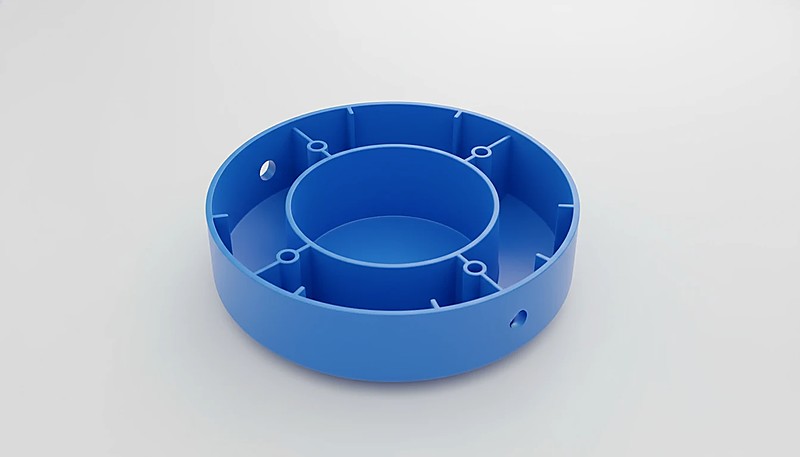
At our Shanghai facility, we run a six-step quality control workflow—IQC, in-process sample checks, process inspection, packaging and assembly inspection, FQC, and OQC—across 45 injection molding machines ranging from 90T to 1850T. With 10+ dedicated QC specialists and measurement tools including CMMs, profile projectors, and hardness testers, we catch defects before they reach the customer. It’s not glamorous work, but it’s the difference between a reliable supply chain and one that generates costly surprises.
適切なABS射出成形パートナーを選ぶ方法は?
Selecting an injection molding supplier for ABS parts comes down to three practical questions: Can they build the mold? Can they maintain consistent quality at volume? And can they communicate effectively when problems arise?
In-house mold manufacturing capability matters more than most buyers realize. When your mold needs modification—which it almost certainly will during qualification—waiting 3–4 weeks for an external mold shop to squeeze you into their schedule adds directly to your timeline. A supplier with their own mold shop can turn around modifications in days, not weeks. Look for CNC machining centers, EDM capabilities, wire cutting, and precision grinding equipment on-site.
Machine tonnage range tells you about the supplier’s capability envelope. ABS parts range from tiny electronic clips (needing 50–90T machines) to large automotive panels (requiring 800–1500T). If a supplier only has machines in one tonnage band, they’re optimized for a narrow range of parts. A broader range—like our 90T to 1850T fleet covering 45 machines—means they can handle your current parts and scale to larger or more complex geometries without you needing to find another vendor.
Material expertise is the third differentiator. A supplier who works with 400+ materials has seen the edge cases—how different ABS grades behave, what blend ratios work for specific applications, and how to troubleshoot the defects that show up in real production environments, not just in a textbook. Ask potential suppliers about their drying protocols, their typical process parameter ranges for ABS, and how they handle material lot-to-lot variation. The answers tell you whether they’re running a commodity molding operation or a precision manufacturing process.
Communication capability rounds out the evaluation. If your engineering team can’t communicate directly with the people running the machines, every issue becomes a game of telephone. We employ 30+ English-speaking project managers specifically because miscommunication in manufacturing is expensive—often more expensive than the cost of the parts themselves. When you’re evaluating suppliers, test this directly: call their engineering contact, not just sales, and see how quickly you get a technically competent response.
“In-house mold manufacturing capability can reduce mold modification turnaround from weeks to days during part qualification.”真
External mold shops typically require 3–4 weeks for modifications because your job goes into their queue. An in-house mold shop can prioritize your modifications immediately, often completing simple steel changes in 1–3 days, which directly shortens your time to production-ready parts.
“ABS injection molding requires specialized machines that cannot process any other thermoplastic materials.”偽
Standard reciprocating screw injection molding machines process ABS just fine—the same machines can also run PP, PE, PS, PC, and most other thermoplastics with appropriate screw design and temperature profile adjustments. The machine requirements for ABS are actually quite mainstream.
よくある質問
ABS射出成形にはどの温度を設定すべきですか?
Target a melt temperature of 220–260°C (starting at 240°C for most general-purpose grades) and mold temperature of 40–80°C. Higher mold temperatures (60–80°C) improve surface finish and reduce weld line visibility but increase cycle time. Lower mold temperatures (40–60°C) speed up cooling for structural parts. Always adjust within this range based on the specific ABS grade’s Melt Flow Index—high-MFI grades flow better at lower temperatures, while low-MFI grades need more heat to fill completely and achieve proper packing throughout the mold cavity.
ABSは射出成形前に乾燥する必要がありますか?
Yes, absolutely. Dry ABS at 80–85°C for 2–4 hours to bring moisture content below 0.1% before processing. Even though ABS absorbs significantly less moisture than hygroscopic materials like nylon or polycarbonate, undried ABS will still produce splay marks (silver streaks) on the part surface and suffer reduced impact strength due to hydrolytic degradation of polymer chains during melting. Use a desiccant dryer and verify moisture content with a dew point meter for best results on critical parts, especially those with cosmetic surface requirements.
ABSの典型的な成形収縮率は何ですか?
ABS shrinkage ranges from 0.4–0.7%, depending on the specific grade, wall thickness, and processing conditions. This relatively low and predictable shrinkage makes ABS one of the more dimensionally stable commodity thermoplastics available today, which is exactly why it’s favored for precision-fit enclosures, assembled components, and parts that mate with metal inserts. Always account for this shrinkage during mold design by scaling cavity dimensions accordingly and test your first articles to fine-tune compensation factors before committing to full production runs and costly tooling modifications.
ABSは食品接触用途や医療用途に使用できますか?
Standard ABS grades are not FDA-approved for direct food contact applications. However, specific ABS grades are available with FDA-compliant formulations designed for indirect food contact scenarios. For medical device enclosures (non-implantable housings, equipment casings), ABS is widely used due to its excellent surface finish and sterilization compatibility. Always verify the specific grade’s regulatory compliance documentation directly with the material supplier before specifying for any regulated food or medical application to avoid costly requalification delays, regulatory violations, or redesigns later in development.
ABS-PCブレンドは、射出成形において標準ABSと比較してどう違いますか?
ABS-PC blends offer 20–40% higher impact strength and 10–15°C higher heat deflection temperature than standard ABS, while processing at only slightly higher temperatures (240–280°C vs 220–260°C). The tradeoff is higher material cost (typically 30–50% more) and slightly more attention to drying requirements (85–90°C for 3–4 hours). ABS-PC is the right choice when standard ABS doesn’t meet impact or thermal requirements but pure PC is over-engineered and too expensive for the application’s specific performance requirements and budget constraints, making it an ideal middle-ground material solution.
ABS成形にはどのような射出圧力が必要ですか?
Typical injection pressure for ABS ranges from 70–120 MPa (10,000–17,000 psi), with hold pressure set at 40–70% of peak injection pressure. Thin-wall parts and complex geometries require the higher end of this range to ensure complete fill. The key is maintaining adequate hold pressure until the gate freezes (usually 2–5 seconds depending on wall thickness) to prevent sink marks and ensure dimensional stability throughout the cooling phase. Insufficient hold pressure leads to voids, weak weld lines, and reduced overall part strength.
なぜ私のABS部品にシンクマークが発生するのか、そしてそれらをどのように修正すればよいですか?
Sink marks occur when thick sections (like bosses or rib intersections) shrink more than surrounding thinner walls during cooling. Fix them by coring out thick areas to maintain uniform wall thickness, reducing wall thickness ratios below 1.5:1, increasing hold pressure and hold time, and lowering melt temperature to reduce volumetric shrinkage. Design-stage prevention through uniform wall thickness is far more effective than trying to fix sink marks with process adjustments alone, which can lead to other defects like flash or warpage.
ABS射出成形部品に推奨される肉厚はどのくらいですか?
The ideal wall thickness for ABS parts is 2.0–3.0 mm, with uniformity being more important than the absolute value. Maintain wall thickness variation within ±10% across the part. Walls below 1.0 mm risk short shots and filling issues; walls above 4.0 mm cause excessive cycle times, internal voids, and sink marks. When transitions are necessary, use gradual tapers with a minimum 1:3 ratio to minimize stress concentrations and ensure smooth flow during filling while maintaining consistent cooling rates throughout the part geometry.
-
injection molding: injection molding refers to a manufacturing process where molten thermoplastic is injected into a mold cavity to produce precision parts at scale. ↩
-
injection mold: injection mold refers to a custom-engineered tool, typically made of steel or aluminum, that shapes molten plastic into a specific part geometry during the injection molding cycle. ↩
-
glass transition temperature: glass transition temperature refers to the temperature range at which an amorphous polymer transitions from a hard, glassy state to a soft, rubbery state, critical for determining processing and service temperature limits. ↩




 EN
EN  ES
ES  FR
FR  DE
DE  PT
PT  AR
AR  RU
RU  JA
JA  KO
KO  IT
IT  NL
NL  TR
TR  PL
PL 