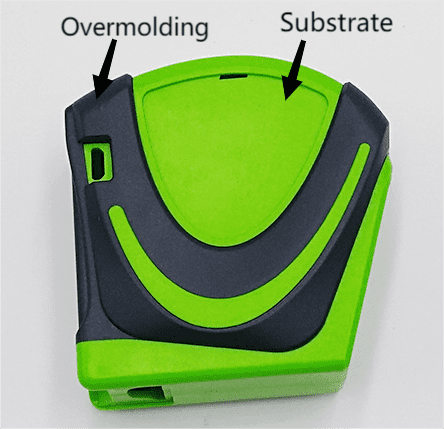
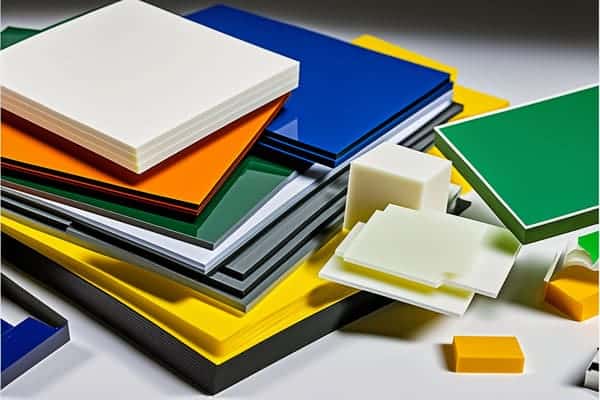
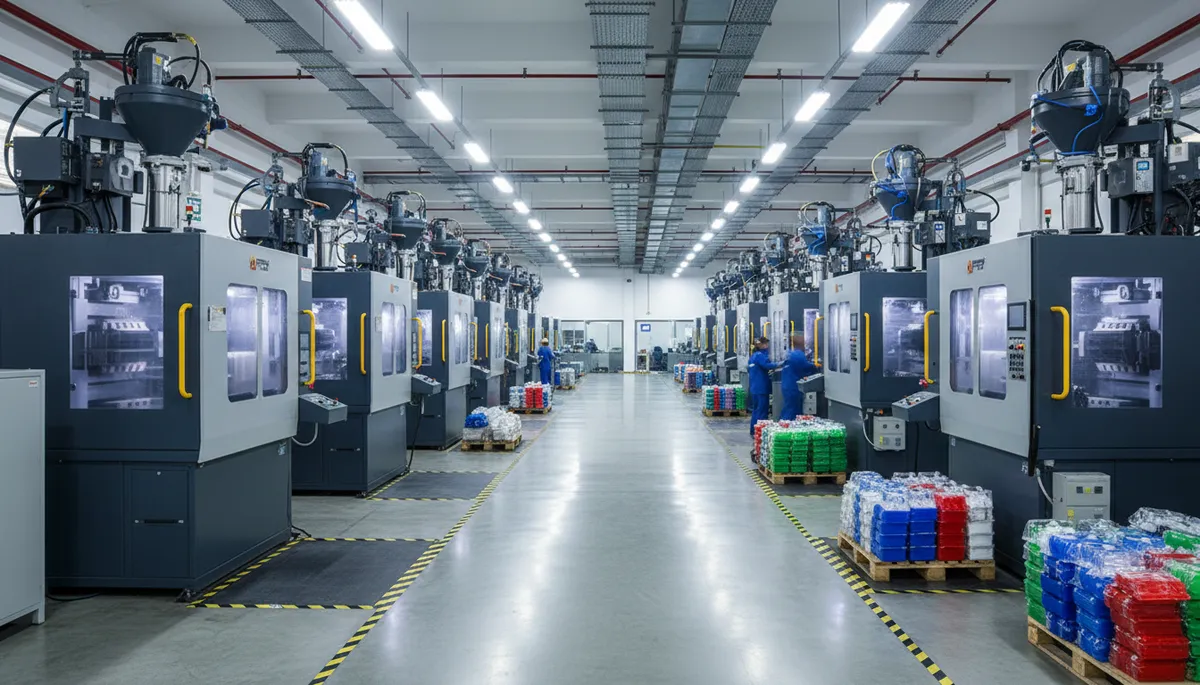
- オーバーモールドは、2つの異なる材料を単一部品に結合し、最も一般的には硬質基材(ABS、PC、ナイロン)を軟質熱可塑性エラストマー(TPE)で覆い、組み立てステップを40-60%削減します。
- 材料の互換性は、最も重要な成功要因です:基材はオーバーモールド材料よりも高い融解温度を持つ必要があり、化学的接着には2 (cal/cm³)^0.5以内の溶解度パラメータの一致が必要です。
- 回転プラテンプレスでのツーショットオーバーモールドでは、1部品あたり25〜45秒のサイクルタイムが得られます。一方、ピックアンドプレースオーバーモールドでは、基材の移送に10〜15秒追加されますが、設備投資は少なくて済みます。
- オーバーモールド層の肉厚は、十分な充填と接着のために1.0〜3.0 mmとし、ショートショットを防ぐためにどの点でも最低0.5 mmを確保する必要があります。
- 一般的な欠陥には、剥離(接着不良)、基材-オーバーモールド界面でのフラッシュ、および40 MPaを超えるオーバーモールド射出圧力による基材の変形が含まれます。
オーバーモールドとは何で、どのように機能しますか?
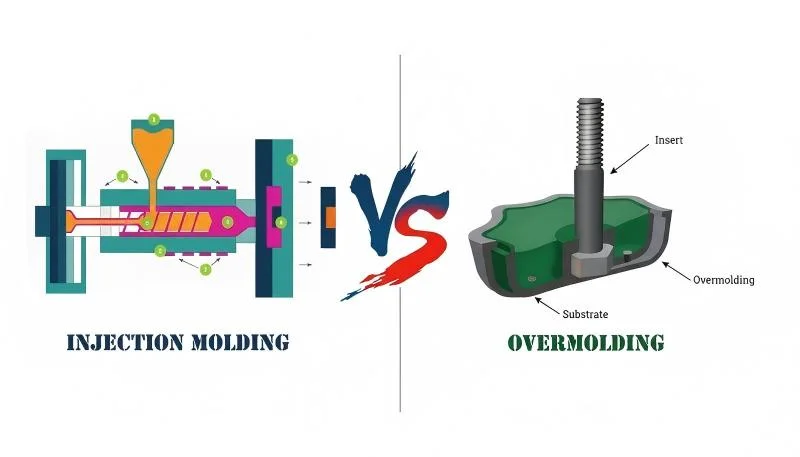
オーバーモールドは、あらかじめ成形した硬質基材の上へ第2の材料(通常は軟質の熱可塑性エラストマー1)を接合する2段階の射出成形工程で、1回の製造作業で単一の複数材料部品を作ります。この工程により、複数材料製品のコスト、故障点、生産時間を増やす手作業組立、接着、機械的締結部品が不要になります。
基材は、基本樹脂の標準射出成型パラメータを使用して最初に成型されます。部分的または完全な冷却後、基材は第二キャビティに転送される(ピック&プレース方式)か、多ステーションプレス上で位置に回転されます(二射成型方式)。その後、オーバーモールド材料が基材上に射出され、化学接着、機械的インターロック、または両方によって結合します。
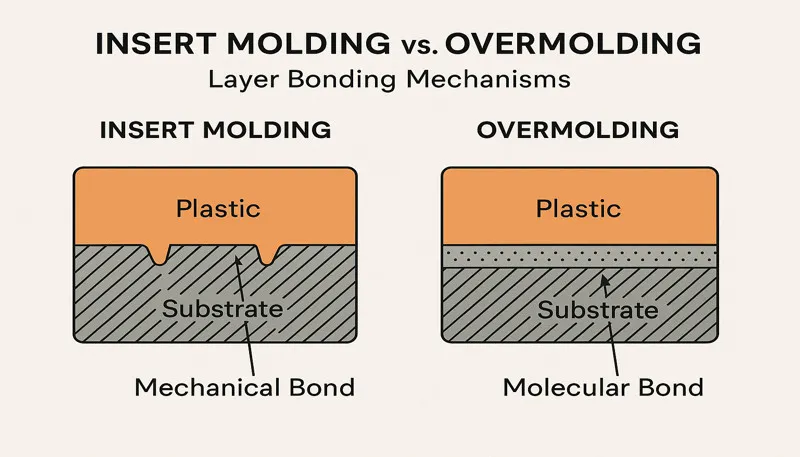
化学結合は、オーバーモールドの溶融が基材表面を部分的に再溶融し、界面で分子の絡み合いを生じる時に発生します。この機構は適合するポリマー化学が必要です—ABS上の熱可塑性エラストマーは剥離試験で150–300 Nの結合強度を達成しますが、TPEとポリエチレンなどの非適合ペアは機械的特徴なしではほぼゼロの接着力を生みます。
| 方法 | サイクルタイム | 資本コスト | 最適 |
|---|---|---|---|
| ツーショット(回転プラテン) | 25〜45秒 | $150K–$400K | 大量生産(年間10万個超) |
| ピック&プレース(転送) | 35〜60秒 | $80K–$200K | 中量生産、複雑な基材 |
| マルチショット (3+材料) | 40–70秒 | $300K–$600K | 多色または多硬度部品 |
| オーバーインサートハイブリッド | 30〜50秒 | $100K–$250K | 金属基材 + プラスチックオーバーモールド |
二射成型とピック&プレースの選択は、生産量と部品の複雑さに依存します。回転プラテンを持つ二射成型プレスは転送時間を排除し、基材とオーバーモールド間のより厳密な位置公差(±0.05 mm)を生み出します。ピック&プレース方式は2つの別々の単射成型機を使用し、ステーション間で回転できない基材形状に対してより柔軟性を提供します。
オーバーモールドを成功させるには、3つの重要パラメータを精密に管理する必要があります。オーバーモールド射出時の基材表面温度(理想的には周囲温度より40–80°C高い温度)、オーバーモールド材の溶融温度(材料サプライヤーの推奨範囲内)、射出圧力(通常、肉厚と流動長に応じて30–80 MPa)です。いずれかのパラメータが外れると、接着強度と部品品質に直接影響します。
オーバーモールドに互換性のある材料はどれですか?
材料の適合性は80%のオーバーモールドの成功または失敗を決定し、TPE-to-ABSとTPE-to-PCは商業生産において最も信頼性のある2つの組み合わせです。基材は第二射の際に基材の変形を防ぐため、オーバーモールド材料よりも融点が最低40°C高い必要があります—ABS(融点220–260°C)とTPE(180–220°C)の組み合わせは、十分な安全マージンを持ってこの要件を満たします。
化学的接着強度は、2つのポリマー間の溶解度パラメータの一致に依存します。溶解度パラメータが互いに2 (cal/cm³)⁰·⁵以内の材料は、強力な化学的結合を形成します。スチレン系TPE(SEBSベース)は、ABSおよびポリスチレンによく接着します。これは、3つすべてが類似したスチレンベースの化学構造を共有しているためです。ポリエステルベースのTPEは、界面でのエステル交換反応により、PBTおよびPCに接着します。
| 基材 | 適合オーバーモールド | 結合タイプ | 剥離強度 (N) |
|---|---|---|---|
| ABS | TPE (SEBSベース) | 化学的 + 機械的 | 150–300 |
| PC | TPE(ポリエステル系) | 化学的 | 120–250 |
| PA6/PA66(ナイロン) | TPE(ポリアミド系) | 化学的 | 100–200 |
| PP | TPE(PP系、TPV) | 化学的 | 80–150 |
| POM(アセタール) | TPE(任意) | 機械的のみ | 30–60 |
| 高密度ポリエチレン | TPE(任意) | 機械的のみ | 20–50 |
| ISO 10993: | TPE(SEBSまたはポリエステル系) | 化学的 | 130–270 |
POM、HDPE、PEEK基材のように化学的接着が不可能な場合、機械的インターロックが唯一信頼できる接続を提供します。基材上の貫通穴、アンダーカット、溝、およびテクスチャ表面がオーバーモールド材料を物理的に捕捉します。これらの機械的特徴は、予想される使用荷重に耐えるのに十分な深さ(最低0.3 mm)が必要であり、その間隔は界面全体に応力をどのように均一に分散させるかを決定します。
シリコーンオーバーモールドは特殊なケースであり、基材にプライマー塗布またはプラズマ表面処理が必要です。液体シリコーンゴム(LSR)は、表面活性化なしではどの熱可塑性プラスチックとも化学的に接着しません。プライマーを用いた接着は工程が追加されますが、80–150 Nの接着強度を達成し、医療機器シール、防水ガスケット、-40°Cから+200°Cの温度にさらされる自動車コネクターに適しています。
オーバーモールド層のショア硬さは完成部品の触感を決定します。ショアA 40~60は手工具や歯ブラシに好まれる柔らかくクッション性のあるグリップを生み出します。ショアA 70~85は電子機器ハウジングや自動車コントロールに適したより固い表面を提供します。適切な硬さの選択には、ユーザーの快適性と耐摩耗性のバランスが必要です—柔らかい材料は繰り返しの摩擦接触でより早く摩耗します。
基材とオーバーモールドの色合わせにも材料の考慮が必要です。半透明のTPEオーバーモールドは基材の色を透かして見せることができ、塗装なしで単一材料の色効果を実現します。不透明のTPEグレードは基材を完全に隠し、基材の色が不均一な場合(再生樹脂、ミネラル充填コンパウンド)に好まれます。異なる色のTPEを順次射出する多色オーバーモールドは、成形後の装飾なしに、電動工具ハンドルの象徴的なツートーングリップなど、ブランド固有のパターンを作り出します。
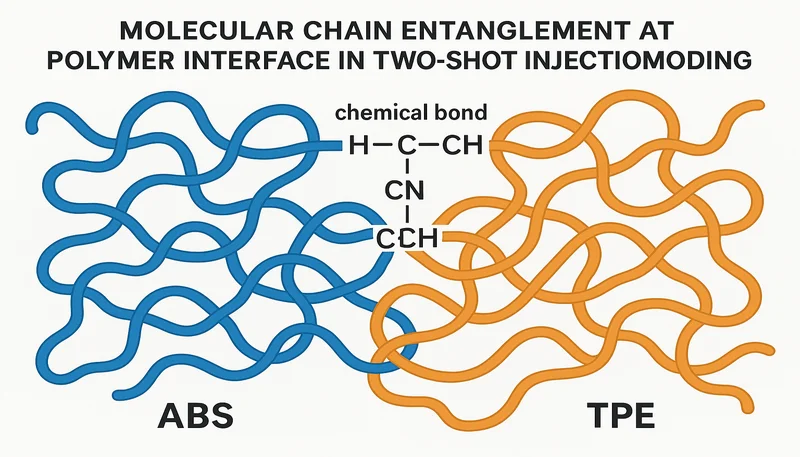
"TPEからABSへのオーバーモールドでは、表面プライマーや機械的形状を必要とせず、150–300 Nの化学結合強度を実現できます。"True
SEBSベースのTPEとABSはスチレン系化学を共有しており、オーバーモールド射出時に基材表面温度が60°Cを超えると界面で分子鎖の絡み合いを可能にします。この化学的適合性により、TPE/ABSは電動工具のグリップからパーソナルケア機器まで、消費財で最も広く使用されるオーバーモールディングの組み合わせとなっています。
「射出条件を適切に最適化すれば、どの2種類のプラスチックでも組み合わせてオーバーモールドできる。」False
材料化学がオーバーモールドの適合性を根本的に制限します。POM、HDPE、PEEKは表面エネルギーが低く、非極性の分子構造を持つため、プロセス最適化に関わらず、どのTPEとも化学的に接着しません。これらの基材には、部品形状に設計された機械的インターロック構造が必要です。ポリマー化学が適合しない場合、温度や圧力の調整をどれだけ行っても化学的接着は生まれません。
オーバーモールド部品の主要な設計ガイドラインは何ですか?
1.0~3.0 mmのオーバーモールド肉厚は、キャビティの完全充填、適切な接着形成、許容可能なサイクル時間を確保する最適範囲です。1.0 mm未満では、溶融体が充填末端に到達する前に凍結し、ショートショットと弱い接着を引き起こします。3.0 mmを超えると、冷却時間が指数関数的に増加します—4.0 mmのオーバーモールド層は2.5 mm層より60%多くの冷却時間を必要とし、サイクルごとに8~12秒追加されます。
基材-オーバーモールド境界でのシャットオフ設計は、材料遷移部で金型表面間にしみ出る薄い材料の膜であるバリを防止します。0.01~0.02 mmのクリアランスと3~5°の干渉角を持つスチール対スチールのシャットオフは、500,000サイクル以上にわたる信頼性のあるシールを提供します。雄雌構造設計は、より高い金型コストでさらに優れたバリ制御を提供します。
| パラメータ | 推奨範囲 | 違反の影響 |
|---|---|---|
| オーバーモールド肉厚 | 1.0–3.0 mm | ショートショット(1.0未満)または長サイクル(3.0超) |
| シャットオフクリアランス | 0.01–0.02 mm | 界面のバリ(>0.03 mm) |
| 基材の抜き勾配 | 1.5–3.0° | エジェクション損傷(1.0°未満) |
| 機械的インターロック深さ | ≥0.3 mm | 荷重下での接着破壊(0.2 mm未満) |
| ゲートから最遠端までの流動比 | ≤100:1 | 充填不足または溶接ライン |
| 基材表面粗さ | Ra 1.6~6.3 μm | 接着不良(Ra 0.8未満) |
オーバーモールドショットのゲート配置は、単一材料成形とは異なる規則に従います。ゲートは、オーバーモールド領域の最長寸法に沿って溶融樹脂の流れを導き、ゲートから最遠点までの流動経路は、流動長さと肉厚の比が100:1を超えてはなりません。ファンゲートやフィルムゲートは、ピンゲートよりも溶融樹脂を均等に分散し、目に見える外観不良や潜在的な接着弱部を生むウェルドラインを減少させます。
基材表面の準備は接着品質に大きく影響します。Ra 1.6~6.3 μmの表面粗さは、オーバーモールド材料に最適な微細機械的固定を提供します。高度に研磨された基材(Ra 0.8 μm未満)は、オーバーモールドが掴む表面形状を持たないため、接着力を低下させます。基材の接着面をEDM放電加工または化学エッチングでテクスチャリングすると、平滑面に比べて剥離強度を30~50%向上させることができます。
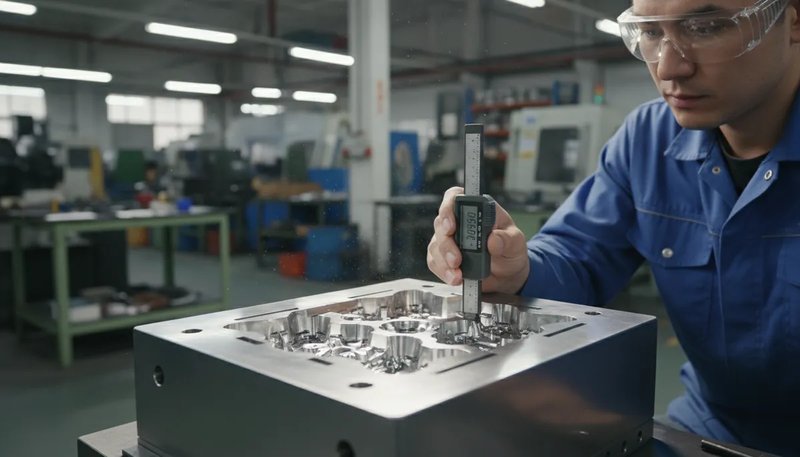
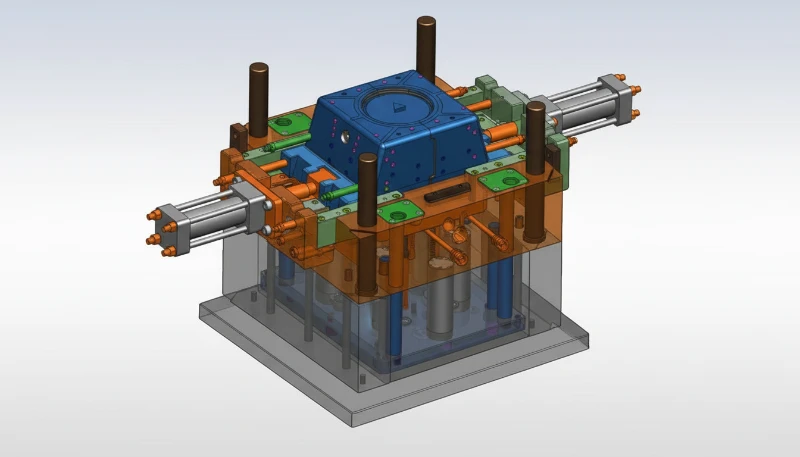
金型製作前に徹底したDFM5レビューを行えば、金型鋼材の切削後では修正費が高くなる設計問題を発見できます。オーバーモールド案件でよく見つかる問題には、基材の抜き勾配不足(離型損傷の原因)、確実に充填できないほど薄いオーバーモールド部、50,000サイクル後にバリを生じるシャットオフ形状があります。設計段階で対処すれば、案件ごとに$5,000~$15,000の金型改修費を削減できます。
最も一般的なオーバーモールドの欠陥と解決策は何ですか?
デラミネーション(オーバーモールドが基材から剥離すること)は最も重大なオーバーモールド不良であり、材料適合性が事前に検証されていない場合、初回試作の35%で発生します。根本原因は、常に界面での接着強度不足であり、それは材料の不適合、基材表面温度の低さ、表面汚染、または不十分な機械的インターロック構造によるものです。
オーバーモールドの射出圧力が、高温下における基材のたわみ抵抗を上回ると、基材が変形します。薄肉基材(肉厚1.5 mm未満)は特に影響を受けやすく、60 MPaの射出圧力によって厚さ1.0 mmのABS基材が0.3–0.5 mm湾曲し、寸法誤差や目視可能な外観不良が生じることがあります。射出速度と圧力を下げるか、金型コア形状で基材を支持することで、この不良を防止できます。
| 欠陥 | 根本原因 | 第一の対策 | エネルギー消費量: |
|---|---|---|---|
| 層間剥離 | 不適合な材料または低温の基材 | 基材の予熱温度を60–80°Cに上げる | 剥離試験で材料ペアを検証 |
| インターフェースでのフラッシュ | 摩耗したシャットオフまたは過剰なクランプ圧力 | シャットオフ表面の再切削 | 雄雌式(つぎはぎ)のシャットオフを設計 |
| ショートショット(オーバーモールド) | 薄肉部が早期に凍結 | 溶融温度を10~20°C上げる | 最小1.0 mmの肉厚に再設計 |
| 基材の反り | 射出圧力が高すぎる | 充填率を20–30%削減 | 型にコアサポート機能を追加 |
| 溶接ライン | 複数の流動先端が合流 | ゲート位置の再配置 | シーケンシャルバルブゲーティングを使用 |
基材-オーバーモールド界面でのフラッシュは、シャットオフ表面が繰り返し型循環で摩耗するにつれて徐々に蓄積する。新しい型は通常100,000–200,000循環フラッシュなしで運転し、その後鋼-鋼接触表面が鋭いエッジを失う。予防保守には、150,000循環ごとにシャットオフ表面を再切削し、高摩耗シャットオフ位置で硬化鋼インサート(HRC 52–58)を使用して保守間隔を400,000+循環に延長する。
溶接ラインは、オーバーモールド充填中に2つ以上の溶融フロントが収束する場所で形成されます。主に見た目上の問題である単一材料の溶接ラインとは異なり、オーバーモールドの溶接ラインは、どちらの流れフロントも基材に十分な圧力で接触せず、接着が形成されない結合のない領域を作り出すことがあります。シーケンシャルバルブゲーティング—ゲートが同時ではなく時間をずらして開く—は、収束する流れフロントを排除し、溶接ラインのない部品を生産します。
厚いオーバーモールドセクションの反対側にある基材側のシンクマークは、もう一つの繰り返し発生する問題です。オーバーモールド層が局所的に3.0 mmを超えると、集中した熱量により基材が再軟化し、内側に収縮します。どの断面でもオーバーモールドの厚さを最大2.5 mmに制限するか、厚いオーバーモールドゾーンの真下に冷却チャネルを追加することで、ケースの90%で基材側のシンクマークを排除できます。
色の滲みは、両表面が軟化温度以上である短い期間に、オーバーモールド材料中の色素が基材に移行するときに発生する。この欠陥は、明るい基材上の暗いオーバーモールドで最も目立つ。カラー粒子がポリマー微小球内に閉じ込められたカプセル化色素システムを持つTPEグレードを使用すると、処理温度が高くなっても移行を防止する。
"オーバーモールド射出前に基材を60–80°Cへ予熱すると、室温の基材と比べて接着強度が40–70%向上します。"True
高い基材温度は、オーバーモールド接触時に界面ゾーンをガラス転移温度以上に保ち、境界を越えるポリマー鎖の拡散を可能にする。TPE/ABSペアの工業試験では、剥離強度が25°C基材温度で120 Nから70°Cで210 Nに増加し、基材軟化が寸法リスクを導入する90°C以上では減少する利益が見られる。
「オーバーモールドの不良は、金型や部品設計を変更しなくても、加工条件を調整すれば必ず解消できる。」False
プロセス最適化には限界があります。非互換性材料からの剥離は、プロセスの変更ではなく材料の変更を必要とします。摩耗したシャットオフ面からのフラッシュは金型修理を必要とします。0.5 mm未満の薄肉部でのショートショットは、肉厚を増やすための設計修正を必要とします。生産におけるオーバーモールド欠陥の約40%は、プロセスパラメータ調整だけでは解決できない金型または設計の変更を必要とします。
どの業界がオーバーモールドを使用し、なぜですか?
消費者向け電子機器は、スマートフォン、ウェアラブル、電動工具におけるソフトタッチグリップ、密閉筐体、マルチカラー美学への普遍的な需要により、世界のオーバーモールド需要の30%を占めています。単一のオーバーモールドされた電話ケースは、3ピースアセンブリ(ハードシェル+ゴムバンパー+接着剤)を置き換え、50万個以上の量産ではユニットあたりの製造コストを$0.15–$0.40削減します。
医療機器は最も急速に成長するオーバーモールドセグメントであり、年間8–12%で拡大している。外科器具は、湿った手術環境での滑り止めハンドリングを提供する、ステンレス鋼またはポリカーボネート基材上のショアA 50–65 TPEの人間工学グリップを必要とする。オーバーモールド層は内部電子機器を流体侵入から密封し、追加のガスケットや二次密封作業なしにIP67またはIP68評価を達成する。
自動車内装部品は、ダッシュボードスイッチ、ステアリングホイールコントロール、ドアハンドルに広くオーバーモールドを採用しています。オーバーモールド層は、一貫した触覚フィードバック(ショアA 70~85)、紫外線耐性(SAE J2527に基づくキセノンアーク試験最低1,000時間)、ハンドクリーム、日焼け止め、洗浄溶剤に対する耐化学性を提供します。オーバーモールドされた各スイッチは、機械的に固定されたゴム・オーバー・プラスチックの代替品と比較して、2~3の組み立て工程を削減します。
| 産業 | 代表的なアプリケーション | 主要要件 | 組立との比較によるコスト削減 |
|---|---|---|---|
| 家電製品 | スマホケース、工具グリップ | ソフトタッチ感、落下保護 | 1ユニットあたり15~25 |
| 医療機器 | 外科器具、薬剤送達 | 生体適合性、IP67密封 | ユニットあたり20–35% |
| 自動車 | スイッチ、ノブ、ハンドル | UV安定性、耐薬品性 | 10–20% 単位 |
| 産業用工具 | 電動工具ハンドル、振動吸収グリップ | 衝撃吸収、疲労寿命 | 15–30% 単位 |
| パーソナルケア | 歯ブラシ、かみそり | ソフトグリップ、防湿シール | 25–40% 単位 |
産業用電動工具は、グリップの快適性に加えて、振動吸収のためにオーバーモールドを活用しています。ナイロン製工具ハウジングに施された2.0 mmのTPEオーバーモールド層は、伝達される振動エネルギーの20~35%を吸収し、ISO 5349で規定される1日あたりの作用値2.5 m/s²を下回るレベルまで作業者の手・腕への振動曝露を低減します。この機能的な利点により、無加工のプラスチックハウジングと比較して1ユニットあたり0.30~0.80のコスト増加が正当化されます。
1990年代に大量生産のオーバーモールドを先導し、プロセス効率の基準として今も残る個人用ケア製品—歯ブラシ、剃刀、ヘアスタイリングツール。現代の歯ブラシ生産ラインは15秒周期で4–8キャビティの工具をオーバーモールドし、単一プレスで一日に40,000–80,000個のハンドルを生産する。オーバーモールドはグリップのテクスチャと、競合ブランドを店頭で区別する色のアクセントを両方提供する。
航空宇宙セクターは、-55°Cから+125°Cで確実に動作する必要がある振動減衰マウントブラケットと密封コネクタハウジングにオーバーモールドを採用した。PEEKまたはPEI基材上のフルオロエラストマー(FKM)オーバーモールドは、ジェット燃料、油圧流体、除氷化学物質に耐えながら、敏感な航空電子機器をエンジン伝達共振周波数から保護する振動隔離を提供する。
オーバーモールドはインサート成形と比較してどうですか?
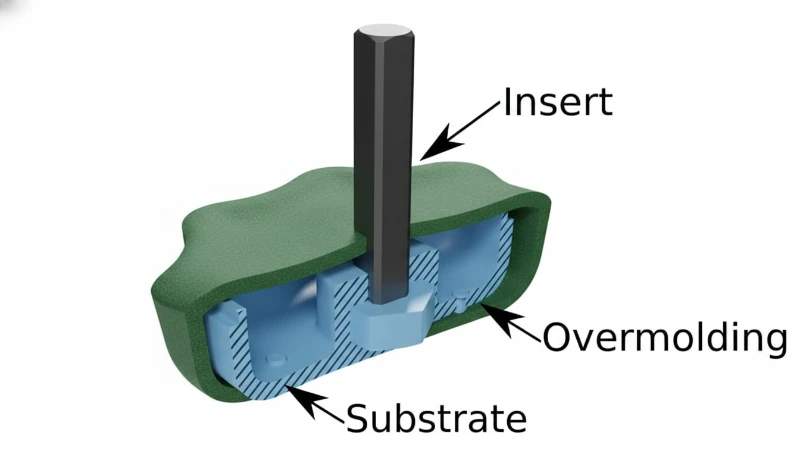
オーバーモールドとインサート成形2はいずれも複数材料を1部品に組み合わせますが、基材の種類と工程順序が異なります。オーバーモールドは樹脂同士(または樹脂とTPE)を接合する一方、インサート成形は通常、ねじインサート、電気接点、構造補強材などの金属部品を樹脂本体内へ封入します。
オーバーモールディングにおける基材は、常に最初に射出成形されます—同じサイクル内(ツーショット)または別の事前作業(ピックアンドプレース)で行われます。インサート成形では、基材は成形前に金型内に配置される事前成形部品(打抜き金属、機械加工黄銅、ワイヤーハーネス)です。この違いは金型設計に影響します:オーバーモールド金型は2つの射出ユニットと2つのキャビティセットが必要ですが、インサート成形金型は1つの射出ユニットと自動化された基材ローディングシステムが必要です。
| ファクター | オーバーモールディング | インサート成形 |
|---|---|---|
| 基材 | 射出成形プラスチック | 金属、予備成形プラスチック、ワイヤー |
| 接合メカニズム | 化学的 + 機械的 | 機械的封止 |
| 標準的なサイクルタイム | 25~45秒(2色成形) | 20–40 sec(単一射出+投入) |
| 金型費 | $150K–$400K | $80K–$200K |
| 接着強度 | 150–300 N(剥離) | 封止形状によります |
| 最適な用途 | ソフトタッチグリップ、密閉筐体 | ねじインサート、電気接点 |
コスト比較では、金属の機能(ねじ、導電性、構造強度)を必要とする部品にはインサート成形が有利であり、複数材料による外観や触感を必要とする部品にはオーバーモールドが有利です。ナイロンで封入したねじ付き金属インサートは、ねじ付きインサートを別工程で組み立てる場合より、部品1個当たり$0.08–$0.15安くなります。オーバーモールドしたソフトグリップハンドルは、硬質ハンドルにゴムスリーブを接着する場合より、1個当たり$0.20–$0.40安くなります。
多くの製品では、1つの部品に両方の工程を使用します。たとえば電動ドリルのハンドルでは、まずインサート成形で真鍮製ねじインサートと電気接点を封入し、その後オーバーモールドでソフトタッチのTPEグリップ表面を形成します。この組み合わせにより、金属とプラスチックの構造的な接合と、プラスチックとTPEの人間工学的な表面を備えた3材料部品を実現できます。従来の方法で製造する場合は、6–8工程の組立が必要です。
Zetarはオーバーモールドプロジェクトをどのように扱いますか?
Zetarの技術チームは、すべてのオーバーモールド案件で工具鋼を切削する前に金型流動解析3を行い、基材ショットとオーバーモールドショットの両方をシミュレーションして、充填パターン、接合線温度、潜在欠陥位置を予測します。この二重シミュレーションにより、工具製作前の材料選定とゲート配置の判断に起因する潜在的なオーバーモールド不良の85%を特定できます。
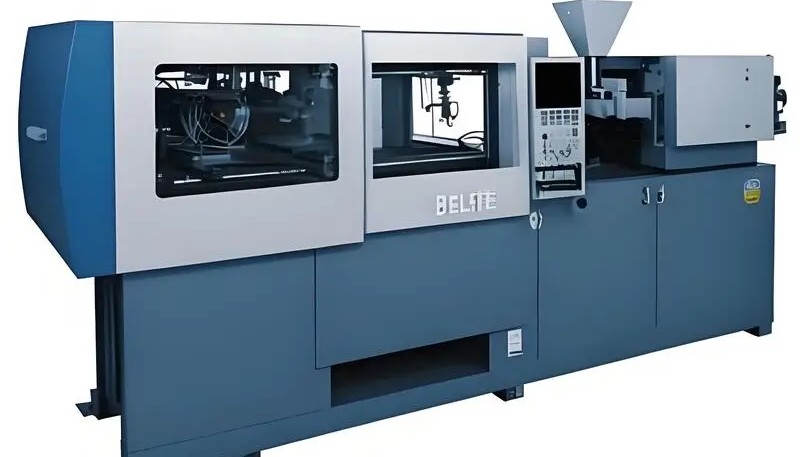
Zetarは、ロータリープラテン付き多材質成形機を含む50~1,600トンの射出成形機47台を備え、100個の試作数量から年間1,000,000個を超える量産まで、オーバーモールディング案件に対応しています。工場には、量産金型へ着手する前に基材とオーバーモールド材の接着強度を検証する剥離試験治具など、専用の材料適合性試験設備があります。
Zetarの射出金型設計4工程では、摩耗シミュレーションで保守間隔を予測してシャットオフを最適化し、最初の予定再切削まで300,000サイクル超のバリなし生産を確保します。オーバーモールド案件の初回合格率92%と合わせ、通常3~4回の金型修正を1~2回へ減らし、業界平均と比べて案件ごとに$10,000~$30,000と4~8週間を顧客に節約します。
オーバーモールドに関するよくある質問?
オーバーモールドと二色成形の違いは何ですか?
オーバーモールディングは、ある材料の上に別の材料を接合するあらゆる工程を含む広義の区分です。二色・二材成形はその一方式で、2基の射出ユニットと回転プラテンを備えた成形機を使用し、同じ金型内で両方の材料を射出します。第1ステーションで基材を成形し、プラテンを180度回転させ、第2ステーションで被覆材を射出します。これらを25–45秒の単一自動サイクル内で行います。もう一つの主要方式であるピックアンドプレース式オーバーモールディングでは、基材を別々の金型と成形機の間で移載します。二色・二材成形は高速かつ高精度ですが、設備投資額が高くなります(ピックアンドプレース金型の$80K–$200Kに対し、$150K–$400K)。
プラスチックにシリコーンをオーバーモールドできますか?
はい。ただし、シリコーン(LSR)は表面処理なしではどの熱可塑性樹脂にも化学接着しません。標準的な方法では、基材を金型へ入れる前にプライマーを塗布し、シリコーン接着を可能にする反応界面層を形成します。薬品を追加せず基材表面を活性化するプラズマまたはコロナ処理も選択肢です。プライマー方式の剥離試験強度は80–150 Nで、医療用シール、防水ガスケット、高温コネクターに十分です。追加工程により1個当たり$0.02–$0.05、サイクルに5–10秒が加わります。150°C未満の用途では、TPEオーバーモールディングがプライマーなしで同等のシール性能を提供します。
組み合わせてオーバーモールドできない材料は何ですか?
POM(アセタール)、HDPE、PEEKは、表面エネルギーが低く分子構造が非極性であるため、どの熱可塑性エラストマーとも化学結合しにくく、オーバーモールドが最も難しい基材です。これらの材料をオーバーモールドするには、基材に成形した貫通穴、アンダーカット、溝など、オーバーモールド材を物理的に保持する機械的インターロック形状が必要です。機械的形状を設けても、接合強度は30~60 Nにとどまり、化学的に適合する材料の組み合わせで得られる150~300 Nを下回ります。標準的なSEBS系TPEはポリプロピレン基材への接着性が低いため、PPで確実な化学結合を得るには、PP用に配合されたTPV(熱可塑性加硫エラストマー)が必要です。
オーバーモールドによって部品コストはどの程度増加しますか?
オーバーモールドの追加コストは、オーバーモールド量、材料選定、加工方法に応じて、部品1個当たり$0.10–$0.80です。オーバーモールド材料自体のコストは、部品1個当たり$0.03–$0.15です(TPEは1 kg当たり$3–$8、一般的なオーバーモールド重量は2–10グラム)。追加の射出サイクル時間に伴う加工コストは、部品1個当たり$0.05–$0.30です。金型費の償却分は、生産数量と金型の複雑さに応じて、部品1個当たり$0.02–$0.35です。一方、オーバーモールドにより、組立工賃(部品1個当たり$0.15–$0.60)、接着剤費($0.05–$0.15)、接着組立品の品質検査費($0.03–$0.10)が不要になります。年間50,000個を超える数量では、正味コストへの影響がゼロまたはコスト削減となることが少なくありません。
オーバーモールド層の肉厚はどの程度にすべきですか?
ほとんどのTPE用途で最適なオーバーモールド肉厚は1.0–3.0 mmです。1.0 mmでは、基材との接着に必要な熱を保持しながら、中程度に複雑な形状(流動長/肉厚比は最大100:1)を充填できる十分な流動長が得られます。3.0 mmでは、冷却時間を15–25秒という管理可能な範囲に維持できます。1.0 mm未満では、溶融樹脂がキャビティ末端に達する前に固化し、ショートショットや未接着部が発生します。3.0 mmを超えると冷却時間が急増し、5.0 mmのオーバーモールドには40秒以上の冷却が必要です。射出中の完全な固化を防ぐため、いかなる箇所でも絶対最小肉厚は0.5 mmです。
オーバーモールドの接着強度はどのように試験しますか?
標準試験方法は、ASTM D1876に準拠した90度または180度剥離試験です。オーバーモールド層を一定速度(通常は毎分50~300 mm)で基材から引き剥がし、必要な力をロードセルで記録します。結果は単位幅当たりのニュートン(標準はN/25 mm)で示します。生産品質管理では、部品上の所定の試験用タブで行う簡易な手動剥離試験により合否を判定できます。界面で剥離せず、オーバーモールド材が凝集破壊(TPE層内で破断)すれば、接着は十分です。厚さ0.5 mm未満の薄いオーバーモールド層には、ASTM D3359に準拠したクロスハッチ接着試験を用います。
オーバーモールディングは少量生産にも適していますか?
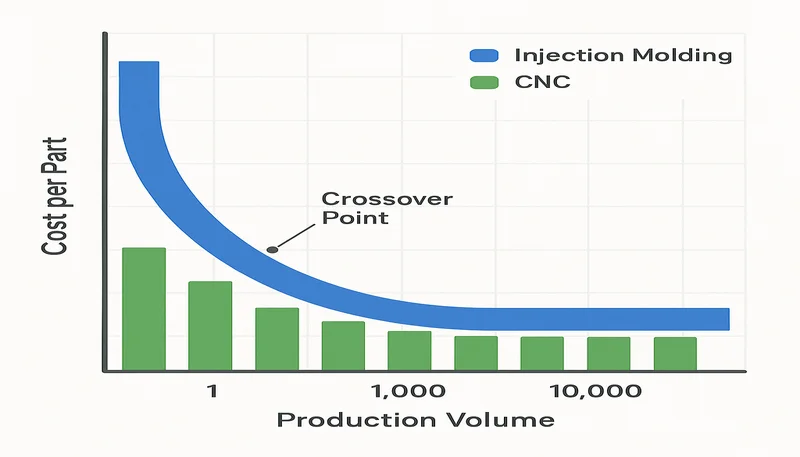
はい、ピックアンドプレース方式のオーバーモールドは、1,000~5,000個程度の少量生産でも経済的に成立します。この方式では、基材用とオーバーモールド用の2つの独立した1個取り金型を使用し、その間を手作業またはロボットで移送します。金型費は合計$80K~$200Kで、二色成形用の回転金型より大幅に低額です。500個未満の試作では、3Dプリントした基材をソフトツーリング(アルミ金型)でオーバーモールドでき、金型費は$5K~$15Kです。ただし、プリント基材の多孔質な表面により接着強度が低下する場合があります。真空注型によるシリコーンオーバーモールドも少量生産向けの選択肢で、設計反復1回当たり$500~$3,000です。
熱可塑性エラストマー:熱可塑性エラストマー(TPE)は、エラストマーのゴム状弾性と熱可塑性樹脂の溶融加工性を兼ね備えた共重合体の一種で、通常ショアA硬度20~90を示します。 ↩
インサート成形:インサート成形は、あらかじめ成形した部品(通常は金属)を金型キャビティへ置いてから周囲へ樹脂を射出し、一体部品を作る射出成形工程です。 ↩
金型流動解析:金型流動解析とは、溶融ポリマーが金型キャビティ内を充填、保圧、冷却する挙動を予測し、充填時間(秒)、圧力分布(MPa)、ウェルドライン位置で評価するコンピューターシミュレーション技術です。 ↩
射出金型設計:射出金型設計は、寸法精度の高い樹脂部品を製造するため、ゲート配置、パーティングライン、冷却水路、エジェクタシステムを最適化した工具を設計する工学分野です。 ↩
DFM:DFM(Design for Manufacturability、製造容易性設計)とは、製造工程の制約に照らして部品形状、公差、材料選定を評価し、コストと欠陥リスクを最小化する体系的な工学的アプローチです。 ↩