 コンテンツへスキップ

インサート成形1 は 射出成形プロセス ここでは、通常金属製の事前配置されたインサートがプラスチックでオーバーモールドされ、単一の統合部品が形成されます。 標準的な射出成形とは異なり、インサートは各サイクルの前に金型キャビティに装填され、溶融樹脂がその周囲に流れ込み、機械的に、また適切な材料選択により化学的にも結合します。
ZetarMoldで20年以上にわたりインサート成形プロジェクトを実施してきた経験から、このプロセスが二次組立工程を排除し、部品点数を最大60%削減し、自動車コネクタから医療機器ハウジングに至るあらゆるもののねじ強度を向上させるのを見てきました。このガイドでは、プロセス、材料、設計ルール、および現場で遭遇する一般的なミスについて説明します。
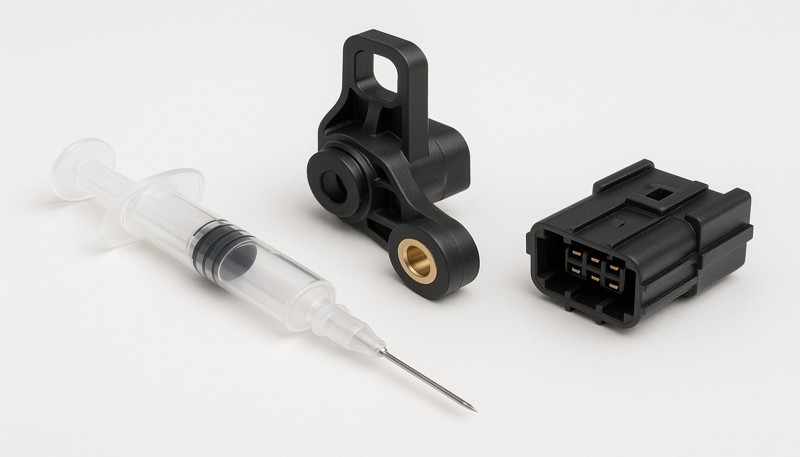
金属の強度とプラスチックの汎用性を組み合わせた部品(センサー筐体内のねじ式取付点、ギアアセンブリ内の真鍮ブッシュ、コネクタに埋め込まれた電気接点など)を設計する場合、インサート成形がほぼ確実に適切なプロセスです。重要な技術的判断は、インサート材料、樹脂選択、肉厚比率、インサート保持のための金型設計を中心に行われます。
- インサート成形は射出サイクル中に金属インサートをプラスチックに結合します—成形後の組み立ては不要です。
- ねじ込みインサートは、プラスチックにおけるセルフタッピングねじよりもファスナーの耐久性を向上させます。
- 垂直プレスは、金型閉鎖中に重力を利用してインサートを所定位置に保持します。
- インサート成形の材料選択は、インサートと樹脂間の熱膨張の不一致を考慮する必要があります。
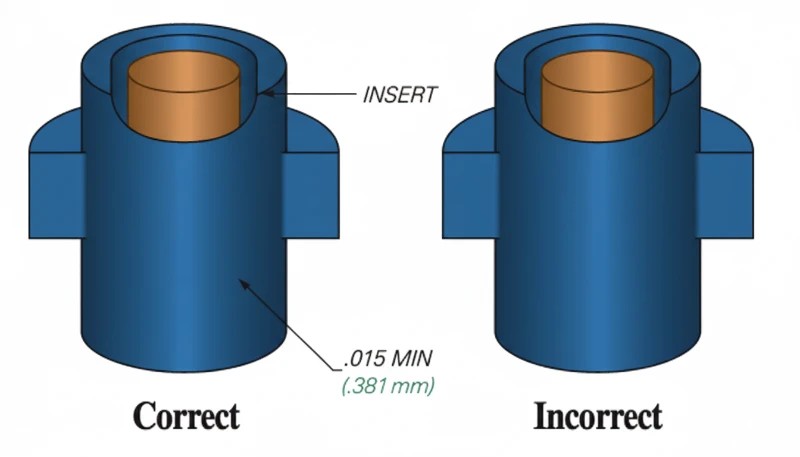
- インサート成形の設計には、適切な充填と結合強度のために、インサート径の1.5倍以上の肉厚が必要です。
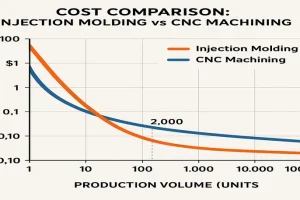
部品あたりのコスト対生産量チャート
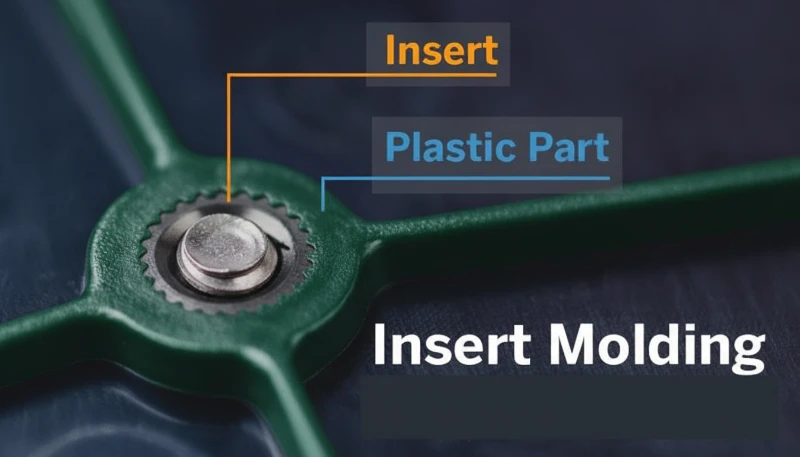
インサート成形は、予め配置されたインサートを溶融プラスチック内に封入して単一の統合部品を形成する製造プロセスです。標準的な射出成形とは異なり、インサートは各サイクル前に金型キャビティに挿入され、射出中に溶融樹脂がその周囲を流れ、永久的な機械的結合を形成します。このプロセスは自動車、医療、電子機器製造で広く使用され、金属の強度とプラスチックの多様性を一つの生産工程で組み合わせます。
このプロセスは標準的な射出成形と同様に機能しますが、一つ重要な違いがあります。金型が閉じられ射出が始まる前に、オペレーターまたはロボットアームがインサートをキャビティ内の指定されたポケットや位置決めピンに配置します。金型が閉じると、溶融した熱可塑性プラスチックがインサートの周囲に流れ込み、それを封入します。冷却と取り出しの後、インサートはプラスチック部品に機械的にロックされます。結合は純粋に機械的なもの(インサートのアンダーカット、ノッキング、または穴にプラスチックが流れ込みロックする)でもよく、樹脂中の接着促進剤によって強化されることもあります。
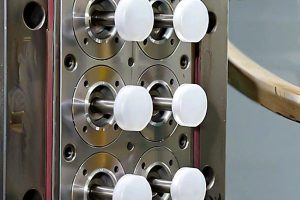
実際には、多くのインサート成形作業は垂直 射出成形 水平式ではなく垂直式プレスで行われます。垂直式プレスでは金型閉鎖時に重力がインサートを所定位置に保持するため、インサートのずれリスクを低減できます。当社の上海工場では、90トンから1850トンまでの47台の射出成形機を稼働しており、そのうち数台の垂直式プレスは、自動車および電子機器クライアント向けのインサート成形量産に専用されています。
“Insert molding can produce multi-material parts in a single molding cycle, eliminating secondary assembly.”真
インサートは射出前に配置されるため、プラスチックは同じサイクル中にその周囲で結合します—その後、接着、圧入、または超音波溶接工程は必要ありません。
“Insert molding always requires a horizontal injection molding machine.”偽
多くのインサート成形作業では、金型閉鎖中に重力がインサートを指定位置に保持するため、特に垂直プレスを使用します。
インサート成形にはどのような材料が使用されますか?
インサート成形で使用される主な材料は、熱可塑性樹脂(PA、PBT、PPS、PEEK)と、真鍮、鋼、またはステンレス鋼のインサートです。樹脂は接着特性、熱安定性、機械的要件に基づいて選択され、インサート材料は用途によって異なります。ねじ部には真鍮、構造荷重には鋼、耐食性にはステンレス鋼が使用されます。金属とプラスチックの熱膨張の不一致を管理することが、インサート成形プロジェクトにおける中心的な材料課題です。
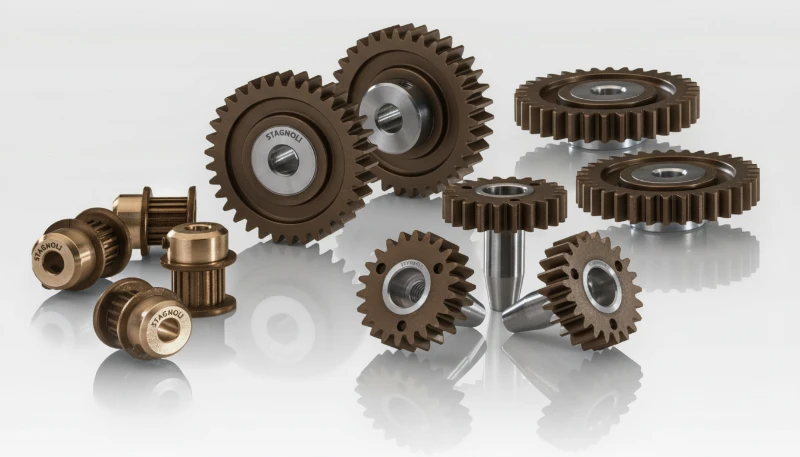
真鍮はねじ込み用途で主要なインサート材料です。なぜなら加工が容易で、腐食に強く、機械的ロックを向上させるノックル加工が可能だからです。構造的な負荷支持用途では、硬化鋼インサートが好まれます。樹脂側では、ZetarMoldで400以上の材料を扱っており、インサート成形では高い寸法安定性と強力なインサート保持力が要求される場合、ガラス充填ナイロン(PA6-GF30)またはPPSを最も頻繁に推奨します。
インサート成形の主な利点は何ですか?
インサート成形の主な利点は、組み立てコストの削減、より強固なねじ性能、部品の統合です。プラスチック部品を成形した後、超音波溶着やヒートステーキングによる別工程でねじインサートを取り付ける代わりに、射出サイクル中にインサートを成形に埋め込み、金型から取り出した直後に部品が完成します。
プラスチックに成形されたねじ込み真鍮インサートは、最大5倍の 引き抜き強度2 同じ材料でのセルフタッピングねじの。これは部品が複数回組み立て・分解される用途で重要です—民生用電子機器筐体、自動車センサー、医療機器ハウジングはすべて恩恵を受けます。部品統合ももう一つの大きな利点です:4-6個の別々の部品が単一のインサート成形部品に削減された設計例があり、組み立て労力と在庫の複雑さを削減しました。
軽量化は二次的ですが重要な利点です。固体金属部品をプラスチックとインサートの構造に置き換えることで、部品重量を30-50%削減しながら、重要な取付点での構造性能を維持または向上できることがよくあります。これが自動車および航空宇宙エンジニアがインサート成形ソリューションを指定することが増えている理由です。
“Threaded brass inserts molded into plastic provide up to 5× the pull-out strength of self-tapping screws.”真
引き抜き試験では、成形時に埋め込まれたインサートは荷重をより広い表面積に分散させるため、繰り返し組み立てサイクルにおけるストリッピングに対する抵抗性がはるかに高いことが一貫して示されています。
“Insert molding is only useful for threaded fastener applications.”偽
インサートは、電気接点、RFシールド、軸受面、ヒートシンク、構造補強など、プラスチック単体では提供できない材料特性が必要とされるあらゆる場所で使用されます。
インサート成形はオーバーモールドとどのように異なりますか?
主な違いは、インサート成形は剛性のあるインサートをプラスチックに結合するのに対し、 オーバーモールディング3 成形された基材の上に第二のプラスチック層を結合します。インサート成形は通常、金属をプラスチックに結合しますが、オーバーモールドはプラスチックをプラスチックに結合します—多くの場合、剛性基材に柔軟なTPEまたはTPUグリップ層を結合します。両プロセスは多材料部品を生産しますが、設備、工具、およびプロセスパラメータは両アプローチ間で大きく異なります。
経験上、混乱が生じるのは両プロセスが複数素材の部品を生産するためです。現場での実用的な違いは、インサート成形は通常垂直プレスで行われ、サイクル間に手動またはロボットによるインサートの挿入が行われます。一方、オーバーモールディングは回転式または多ステーション金型で行われることが多く、基材は一つのステーションで成形され、オーバーモールド材料は次のステーションで射出されます。金属製のねじ込みブッシュをプラスチックハウジングに接着しようとする場合は、それはインサート成形です。プラスチックハンドルにゴムグリップを追加する場合は、それはオーバーモールディングです。

インサート成形の設計ルールとは?
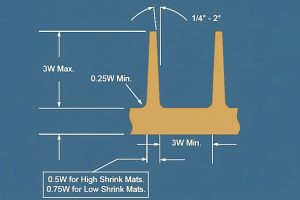
インサート周囲の肉厚は最も重要な設計ルールです。プラスチック壁は、シンクマーク、ボイド、冷却中のクラックを防ぐために、インサート径の少なくとも1.5倍であるべきです。大きな真鍮インサート周囲の薄肉は不均一に収縮し、見える表面にシンクを生じさせ、構造的な弱点を引き起こす可能性があります。あらゆるインサート周囲の最小肉厚は1.5mmを推奨し、ガラス充填材料では2.0mmが望ましいです。
インサート設計自体はプラスチック形状と同じくらい重要です。ノックル加工または溝付きインサートは機械的なインターロックを提供し、引き抜きおよびトルク抜き抵抗を劇的に増加させます。インサートのスルーホールはプラスチックが流れ込み機械的ロックを形成することを可能にします。純粋に接着剤による結合に依存しない限り、保持機能のない滑らかな円筒形インサートは避けてください。プラスチック壁の抜き勾配(最低1-2°)は、インサート結合を損なうことなくクリーンな取り出しを確保します。
ゲート配置は、私たちがよく目にするもう一つの一般的なミスです。ゲートは、樹脂がインサートの片側に最初に当たる(インサートを移動させたり不完全な封入を引き起こす可能性がある)のではなく、インサートの周囲を均一に充填するように流れを導くべきです。厳しい位置公差を持つインサート成形部品については、シミュレーションソフトウェア(Moldflow)を実行する価値があります。数時間のシミュレーションコストは、金型の再加工と比べて取るに足らないものです。
“Running Moldflow simulation before cutting steel can prevent insert shift and fill problems that are expensive to fix after machining.”真
シミュレーションは、金型の再加工コストのほんの一部で、流動の不均衡、エアトラップ、インサート近くの溶接ラインを特定します。
“Smooth cylindrical inserts without grooves provide sufficient retention for most insert molding applications.”偽
ノッキング、溝、または貫通穴がない滑らかなインサートは、完全にシュリンクフィットの摩擦に依存しますが、これは熱サイクルと振動によって劣化します。
インサート成形は現場ではどのように行われますか?
現場で使用される二つの方法は、手動装填と自動ロボット装填です。手動装填は低〜中量産に適しており、自動システムは5,000個以上の部品生産ロットで費用対効果が高く、各金型閉鎖前にセンサー検証されたインサート位置決めを提供します。両アプローチとも、金型閉鎖および射出中に重力を利用してインサートを位置保持する垂直射出プレスで実行されます。
高量産の場合、ロボットまたはボールフィードによる自動装填はサイクルタイムを短縮し、一貫性を向上させます。ピックアンドプレースロボットは2秒以内にインサートを金型に装填し、システムは金型が閉じる前にセンサーでインサートの存在を確認します。これにより、インサートなしでサイクルを実行するリスク(金型表面を損傷する)が排除され、部品あたりの労働コストが大幅に削減されます。当社の施設では、自動化されたインサート成形セルは、同じ部品形状に対して標準的な射出成形サイクルの10〜15%以内のサイクルタイムを日常的に達成しています。
What Industries Use Insert Molding Most?
Automotive is the largest consumer of insert-molded parts by volume. Sensor housings, connector blocks, fuse holders, and mounting brackets all use threaded brass or steel inserts molded into PA or PBT housings. The key requirement is thread durability—automotive components are assembled, serviced, and sometimes disassembled over a 15-year vehicle lifespan, so self-tapping screws in bare plastic are not acceptable.
Medical device manufacturing is the second major application. Implantable device components, surgical tool handles, and diagnostic equipment housings use insert molding for its ability to create sealed, sterilizable multi-material assemblies. Consumer electronics comes third—think of the threaded brass inserts in your laptop chassis that allow repeated screw fastening without stripping. Industrial equipment, aerospace, and defense round out the list, where insert-molded bushings and bearing surfaces replace machined metal components at lower weight and cost.
In our Shanghai factory, we run 47 injection molding machines from 90T to 1850T and have 20+ years of experience processing over 400 materials, including the glass-filled nylons and high-temperature PPS grades most commonly used in insert molding production.
What Are Common Insert Molding Defects and How Do You Prevent Them?
The three defects we see most often are insert shift, sink marks around inserts, and incomplete fill. Insert shift happens when the injection pressure pushes the insert out of position—the resin hits one side of the insert before the other, creating an asymmetric force. Prevention starts with proper insert locating features in the mold (pins, pockets, or magnetic holders) and gate placement that balances flow around the insert.
Sink marks appear when the wall thickness around the insert is too thin relative to the insert diameter. The thicker plastic section near the insert cools and shrinks more than the thinner surrounding wall, creating a visible depression. Increasing wall thickness to 1.5-2.0× the insert diameter, adding ribs for stiffness, or using a foaming resin are standard fixes. Incomplete fill around the insert usually means the insert is blocking the flow path—repositioning the gate or adding flow channels around the insert solves this.
Cracking around the insert after cooling is a thermal stress issue. It occurs when the metal insert and plastic resin have very different coefficients of thermal expansion (CTE) and the part cools too quickly. Solutions include using a resin grade with a lower CTE (glass-filled grades help), pre-heating the inserts to reduce the temperature differential, and slowing the cooling cycle. Pre-heating inserts to 80-120°C is standard practice in our shop for PEEK and PPS insert molding jobs.
How Do You Choose an Insert Molding Supplier?
The four key criteria are vertical press capacity, insert handling expertise, material knowledge, and quality documentation. Not every injection molder is equipped for insert molding—the vertical press requirement, insert loading fixtures, and process validation are specialized capabilities. Ask whether the supplier has dedicated insert molding cells and what their typical insert positional tolerance is for production runs.
Material knowledge matters because the insert-resin combination determines bond quality. A supplier who has experience with your specific resin family (PA, PBT, PPS, PEEK) will know the right mold temperature, injection speed, and cooling profile to avoid the common defects described above. Quality documentation—PPAP-level inspection reports, dimensional CMM data, and pull-out test results—separates a qualified supplier from one who simply runs the parts. For sourcing guidance, see our supplier sourcing guide.
“Pre-heating metal inserts to 80-120°C reduces thermal stress and prevents cracking in high-performance resins like PEEK and PPS.”真
Pre-heating narrows the temperature gap between molten resin and insert, allowing more gradual cooling and lower residual stress at the bond interface.
“Any injection molder with horizontal presses can handle insert molding without specialized equipment.”偽
Insert molding frequently requires vertical presses, insert loading fixtures, robotic loading arms, and sensor-verified insert presence detection—equipment that most standard injection molding shops do not have.
よくある質問
よくある質問
What is the difference between insert molding and overmolding?
Insert molding places a pre-formed solid insert (usually metal) into the mold before injection, while overmolding injects a second layer of plastic over an already-molded plastic substrate. Insert molding creates metal-to-plastic bonds; overmolding creates plastic-to-plastic bonds. Both produce multi-material parts, but the equipment, tooling, and process parameters differ significantly. Insert molding typically runs on vertical presses with manual or robotic insert loading, while overmolding often uses rotary or multi-station molds where the substrate is molded first and the overmold material is injected second.
What materials work best for insert molding?
On the resin side, glass-filled nylon (PA6-GF30), PBT, PPS, and PEEK are the most commonly used choices because they offer dimensional stability, chemical resistance, and strong insert retention performance. On the insert side, brass dominates threaded applications due to its excellent machinability and corrosion resistance, while hardened steel is preferred for structural loads. The key consideration is matching the resin shrinkage rate and coefficient of thermal expansion (CTE) to the insert material to prevent cracking, loosening, or dimensional instability after cooling in production.
Can insert molding be done on a standard horizontal press?
Yes, insert molding can run on a standard horizontal press, but vertical presses are strongly preferred because gravity holds inserts in place during mold closure, reducing the risk of insert shift. Horizontal presses require magnetic or mechanical insert retention features built into the mold, which adds complexity and tooling cost. For low-volume prototype runs, horizontal presses with manual loading are sometimes used, but for production volumes above a few thousand parts, a dedicated vertical press setup is almost always the more reliable and cost-effective choice for consistent quality.
How tight can insert positional tolerance be?
With proper mold design using locating pins, precision machined pockets, or magnetic holders, and controlled insert loading procedures, positional tolerance of plus or minus 0.05 mm is achievable in production environments. Standard production tolerance is plus or minus 0.1 mm for most commercial applications. Achieving tighter tolerances requires robotic insert loading with machine vision verification systems, which adds equipment cost but significantly improves consistency and reduces scrap rates, especially for automotive and medical device applications where dimensional accuracy is strictly regulated and documented.
What is the minimum order quantity for insert molding?
MOQ depends primarily on the insert loading method and overall part complexity. Manual insert loading works for production runs of 500 to 1,000 parts and keeps tooling costs lower since no robotic loading hardware is required. Automated loading becomes cost-effective at 5,000 or more parts, where the reduced per-part labor cost justifies the capital investment in automation equipment. The primary cost driver is always mold tooling—an insert molding mold with locating features typically costs 10 to 20 percent more than a standard injection mold.
How do you prevent inserts from shifting during injection?
Prevention requires a combination of proper insert retention in the mold using locating pins, precision pockets, or magnetic holders, balanced gate placement so resin flows evenly around both sides of the insert simultaneously, controlled injection speed to avoid creating asymmetric pressure that pushes the insert, and sensor verification that confirms the insert is present and correctly positioned before the mold closes and injection begins. Pre-heating inserts before loading can also help by reducing the thermal shock that sometimes contributes to insert movement during the initial resin contact phase.
Is insert molding more expensive than post-molding insert installation?
Per-part cost is often lower because insert molding eliminates a secondary assembly operation such as ultrasonic welding or heat staking. However, the initial mold cost is higher due to insert locating features and potentially more complex tooling. The break-even point is typically 1,000 to 2,000 parts. Below that volume, post-molding insert installation using a simpler mold may be more economical. Above that volume, insert molding wins on total cost, and the quality consistency improves because every part gets the same controlled molding conditions.
What quality tests are done on insert-molded parts?
Standard quality tests include dimensional inspection using coordinate measuring machines (CMM), visual inspection for sink marks and incomplete fill, pull-out force testing on threaded inserts to verify retention strength, torque-out testing to confirm rotational lock, cross-section analysis to verify complete plastic encapsulation around the insert, and in some cases thermal cycling or vibration testing for automotive and aerospace applications. PPAP documentation with all of these test results is standard practice in the automotive supply chain and increasingly expected in medical device manufacturing.
Need a Quote for Your Insert Molding Project?
Get competitive pricing, DFM feedback, and production timeline from ZetarMold engineering team. We run 47 presses from 90T to 1850T, process 400+ materials, and have 20+ years of insert molding experience with ISO 9001 / ISO 13485 certified quality systems. Our in-house mold manufacturing facility supports 100+ mold sets per month, so your insert molding tooling stays under one roof.
Request a Free Quote
-
インサート成形: Insert molding refers to a manufacturing process where a pre-formed insert is placed into a mold cavity and then encapsulated with molten plastic during the injection cycle to create a single integrated component. ↩
-
引き抜き強度: Pull-out strength refers to the axial force required to extract a threaded insert from its host material, measured in newtons or pounds-force, and is a standard metric for evaluating insert retention performance. ↩
-
オーバーモールディング: Overmolding is a two-step injection molding process where a substrate part is first molded and then a second material is injected over it to create a multi-layer or multi-material component. ↩



 EN
EN  ES
ES  FR
FR  DE
DE  PT
PT  AR
AR  RU
RU  JA
JA  KO
KO  IT
IT  NL
NL  TR
TR  PL
PL 