- I quattro principali tipi di canali di raffreddamento per stampi a iniezione sono a foratura diritta, a deflettore, a spirale e conformi.
- Il raffreddamento rappresenta il 70–80% del tempo di ciclo totale — la leva più importante per la produttività.
- Il raffreddamento conforme riduce il tempo di ciclo del 20–35% rispetto ai canali a punta diritta su geometrie complesse.
- L'acqua è il refrigerante più comune; l'olio viene utilizzato per stampi che richiedono temperature superiori a 90°C.
- Un raffreddamento uniforme previene deformazioni, segni di ritiro e variazioni dimensionali nei pezzi finiti.
Perché la scelta del sistema di raffreddamento fa la differenza per il tuo stampo
La scelta del sistema di raffreddamento corretto è la decisione con il maggiore impatto nella progettazione dello stampo: controlla il 70–80% del tempo di ciclo1. Quando si valuta un fornitore di stampaggio a iniezione per uno stampo di produzione, è essenziale conoscere le opzioni di raffreddamento. Una scelta errata comporta scarti e perdita di produttività per l’intera vita dell’attrezzatura. Questo articolo descrive i quattro principali tipi di canali di raffreddamento e fornisce i criteri per scegliere quello giusto.
Il raffreddamento non è un aspetto secondario dello stampaggio a iniezione. Rappresenta il 70–80% del tempo totale del processo di stampaggio a iniezione. La differenza tra uno stampo ben raffreddato e uno raffreddato male può tradursi in un ciclo di 12 secondi anziché 18: su un’attrezzatura da un milione di cicli, è la differenza tra redditività e perdita.
Questo articolo illustra i quattro principali tipi di sistemi di raffreddamento utilizzati negli stampi a iniezione, ne confronta le prestazioni e fornisce i criteri per scegliere quello adatto all’applicazione. Che tu stia specificando il tuo primo stampo di produzione o ottimizzandone uno esistente, comprendere i tipi di canali di raffreddamento è la via più rapida per ottenere pezzi migliori e costi unitari inferiori.
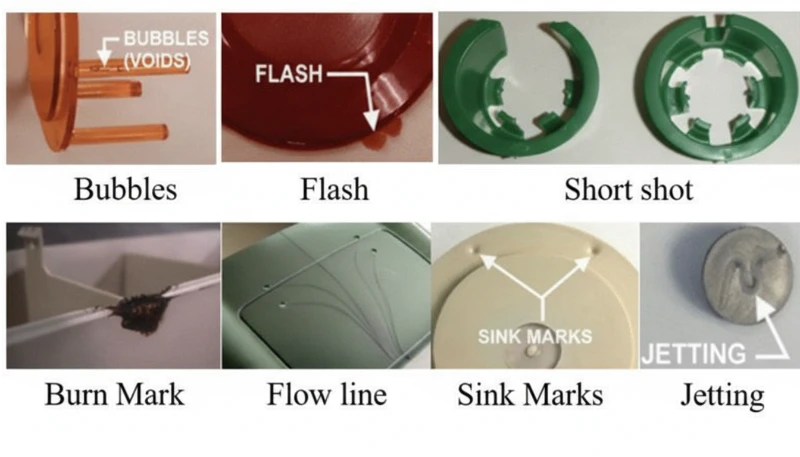
Una scelta errata del raffreddamento non causa soltanto rallentamenti, ma crea problemi qualitativi che si aggravano nel tempo. Un raffreddamento non uniforme provoca deformazioni, risucchi e deriva dimensionale, che peggiorano con il riscaldamento dello stampo durante la produzione. Correggere questi problemi a valle mediante selezione, rilavorazione o scarto costa 5–10× più che impostare correttamente il raffreddamento in fase di progettazione.
Che cos’è un sistema di raffreddamento per stampi a iniezione?
Un sistema di raffreddamento per stampi a iniezione estrae calore dalla plastica fusa tramite canali interni — e controlla il 70–80% del vostro tempo di ciclo. Il sistema di raffreddamento è il singolo fattore che contribuisce maggiormente al tempo di ciclo nello stampaggio a iniezione.
Quando la plastica fusa calda (tipicamente 200–300°C) entra nella cavità, trasferisce calore alle pareti dello stampo in acciaio. Senza un raffreddamento attivo, una parte in ABS di 3 mm di spessore impiegherebbe oltre 120 secondi per solidificarsi abbastanza per l’espulsione. Con un circuito ad acqua progettato correttamente, quella stessa parte viene espulsa in 15–25 secondi — un miglioramento di 5–8×.
Il sistema di raffreddamento influisce su tre risultati critici: tempo di ciclo (produttività), qualità del pezzo (stabilità dimensionale e aspetto) e durata dello stampo (fatica termica). Definirlo correttamente nella fase di progettazione dello stampo a iniezione costa molto meno che riprogettare i canali dopo la lavorazione dell’acciaio. Una riprogettazione del raffreddamento dopo T0 costa in genere $5,000–$15,000 e aggiunge 2–4 settimane al programma.
Il circuito di raffreddamento è composto da diversi elementi che lavorano insieme: i canali interni perforati o formati nell’acciaio dello stampo, la tubazione esterna (tubi, collettori, raccordi a innesto rapido), l’unità di controllo della temperatura (TCU o termoregolatore) che riscalda o raffredda il refrigerante, e il sistema di gestione del flusso che garantisce un flusso turbolento per il massimo trasferimento di calore.
In ZetarMold, il passaggio da canali di raffreddamento rettilinei a canali conformali2 riduce il tempo ciclo del 20–35% sui pezzi a parete sottile. Nel 2024 abbiamo documentato una riduzione del 28% del tempo ciclo in un programma di alloggiamenti ABS con parete da 1,2mm.
Tipi di canali di raffreddamento negli stampi a iniezione
I quattro principali tipi di canali di raffreddamento sono a foratura diritta, a deflettore, a spirale e conformi — ciascuno adatto a geometrie e volumi diversi. La tabella seguente riassume come si confrontano in termini di impatto sul tempo di ciclo, costo dell’utensilatura e complessità.
| Tipo di Canale | Caso d'uso tipico | Impatto sul tempo ciclo | Costo degli utensili | Complessità |
|---|---|---|---|---|
| Foratura diritta | Parti semplici e piatte | Valore di riferimento | Basso | Basso |
| Deflettore | Nuclei profondi, nervature alte | 10–15% più veloce della punta | Medio | Medio |
| Spirale | Parti cilindriche, rotonde | 15–20% più veloce della foratura | Medio | Medio |
| Conforme | Geometrie complesse, pareti sottili | 20–35% più veloce della foratura | Alto | Alto |
Canali di Raffreddamento a Foratura Diritta
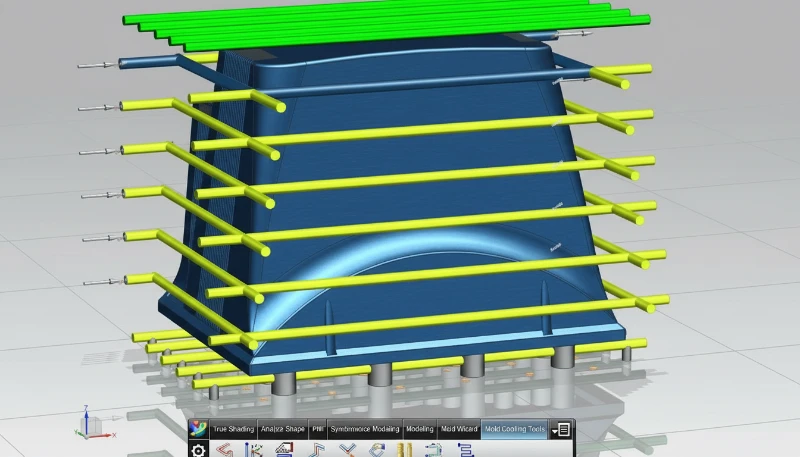
I canali a foratura diritta sono il metodo di raffreddamento più comune e meno costoso. Il costruttore dello stampo pratica una serie di fori diritti a sezione circolare attraverso le piastre dello stampo, quindi li collega con tappi e tubi per formare un circuito. Oltre l’80% di tutti gli stampi di produzione utilizza il raffreddamento a foratura diritta come metodo principale.
Questi canali sono adatti a pezzi piani e di spessore uniforme, come vassoi semplici, coperture piatte o involucri rettangolari. Il limite è geometrico: si possono praticare solo fori rettilinei, quindi la distanza del canale dalla superficie della cavità varia. Nelle zone in cui la cavità è curva o presenta elementi profondi, il percorso di foratura non può seguirne il profilo, lasciando punti caldi che prolungano il tempo di raffreddamento.
I diametri tipici dei fori vanno da 6 mm a 12 mm. La distanza dalla parete del canale alla superficie della cavità dovrebbe essere 1,5–2,0 volte il diametro del canale — generalmente 12–15 mm — per bilanciare l’efficienza di raffreddamento con l’integrità strutturale dell’acciaio dello stampo. Una spaziatura più ravvicinata migliora l’uniformità della temperatura ma indebolisce l’acciaio tra i canali.
Canali di raffreddamento a deflettore
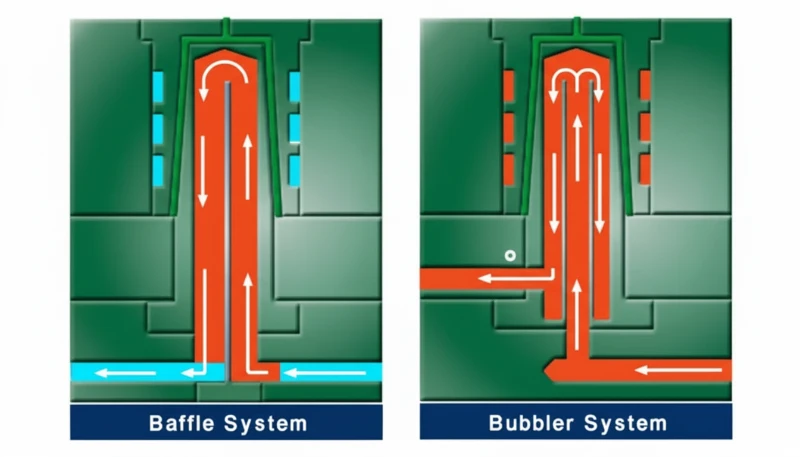
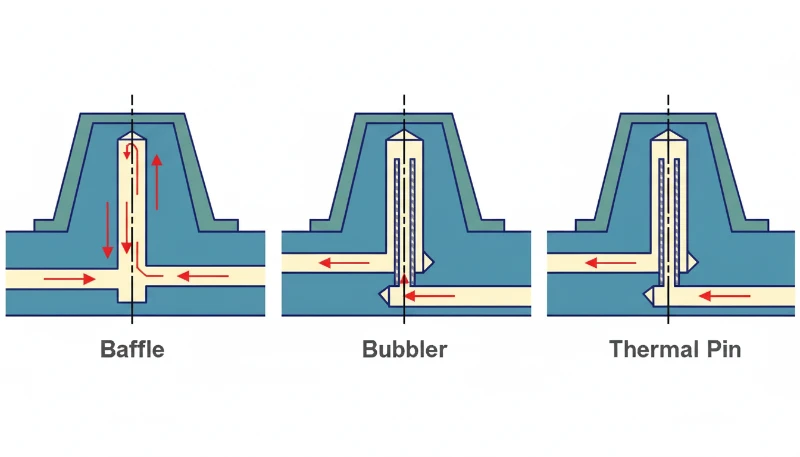
I canali a deflettore sono essenzialmente fori a foratura diritta con una piastra metallica (il deflettore) inserita al centro, che divide il foro in due metà. Il refrigerante scorre su un lato e giù dall’altro, creando turbolenza che migliora il trasferimento di calore del 30–40% rispetto al flusso laminare in un semplice foro praticato. Il flusso turbolento rompe lo strato limite che isola la parete del canale.
I deflettori sono la soluzione preferita per raffreddare anime profonde e nervature alte, dove i soli canali rettilinei forati non riescono ad arrivare. Il deflettore può essere posizionato fuori centro per dirigere più refrigerante verso la zona più calda della cavità. Sono relativamente economici da aggiungere durante la costruzione dello stampo, ma richiedono un dimensionamento accurato: un deflettore sottodimensionato limita il flusso, mentre uno sovradimensionato riduce la superficie di raffreddamento.
Canali di Raffreddamento a Spirale
I canali a spirale avvolgono le anime cilindriche lungo un percorso elicoidale, mantenendo una distanza costante dalla superficie della cavità per tutto il circuito. Sono usati soprattutto per pezzi rotondi o cilindrici, come tappi, contenitori e raccordi, la cui geometria si presta naturalmente a un percorso elicoidale del fluido.
Il vantaggio rispetto alla foratura rettilinea è la distanza di raffreddamento uniforme. In un circuito forato attorno a una parte rotonda, si ottengono zone morte tra le linee di foratura parallele. Una spirale elimina completamente questi spazi. Il refrigerante entra dal fondo, risale a spirale attorno al nucleo ed esce dall’alto — o viceversa — garantendo che ogni punto sulla superficie cilindrica riceva un’intensità di raffreddamento pressoché uguale.
I canali a spirale vengono realizzati fresando una scanalatura sulla superficie del nucleo, poi sigillata con una camicia o un anello inserito. Sono quindi più costosi dei canali rettilinei forati, ma restano molto più economici del raffreddamento conformato. Il limite principale è che le spirali funzionano solo per geometrie a simmetria rotazionale: non riescono a seguire profili irregolari meglio dei canali rettilinei forati.
Canali di raffreddamento conformali
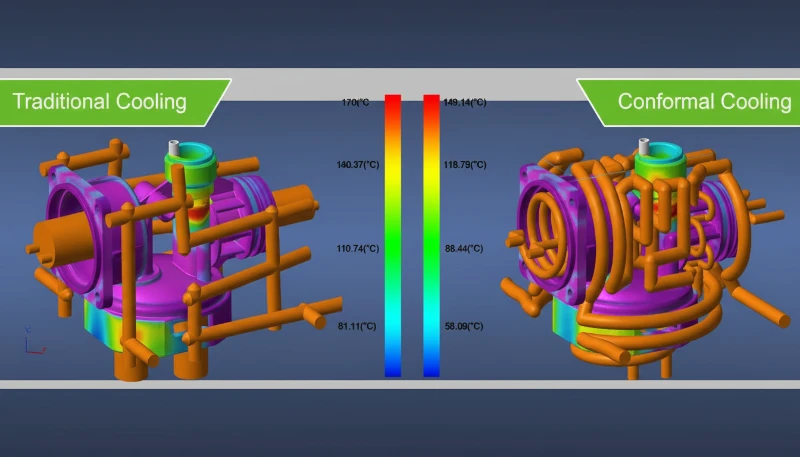
I canali di raffreddamento conformali seguono esattamente il profilo della cavità dello stampo, mantenendo una distanza uniforme dalla superficie del pezzo indipendentemente dalla complessità della geometria. Sono realizzati mediante stampa 3D in metallo (fusione laser selettiva) o, in alcuni casi, ricavando per lavorazione meccanica scanalature in inserti separati e sigillandole con leghe di rame conformali.
Il risultato è un raffreddamento notevolmente più uniforme. Le aree che sarebbero punti caldi in uno stampo a foratura rettilinea — cavità profonde, nervature sottili, superfici curve — ricevono la stessa intensità di raffreddamento delle aree piane. Su un alloggiamento complesso per dispositivo medico con pareti di 1,2 mm, il raffreddamento conforme può ridurre il tempo di ciclo del 20–35% rispetto alla foratura convenzionale.
Il compromesso è il costo. Un inserto con raffreddamento conformale costa 2–4× più di un equivalente con canali forati, a causa del processo di produzione additiva. Tuttavia, per stampi destinati ad alti volumi che superano 500K+ cicli, il risparmio sul tempo ciclo compensa la differenza nel giro di poche settimane. Abbiamo inoltre osservato che il raffreddamento conformale può ridurre la deformazione fino al 50% sui pezzi asimmetrici, poiché il gradiente di temperatura nel pezzo è inferiore.
I canali conformati possono anche avere sezioni variabili e profili non circolari, cosa impossibile con la foratura convenzionale. Ciò consente ai progettisti di stampi di ottimizzare indipendentemente la velocità del flusso e il coefficiente di scambio termico in diverse regioni dello stesso inserto, un livello di controllo termico che i circuiti rettilinei forati non possono eguagliare.
Fluidi di raffreddamento: acqua, olio e aria
L’acqua è il fluido di raffreddamento utilizzato in oltre il 90% delle operazioni di stampaggio a iniezione nel mondo. Offre un’elevata conducibilità termica3 (0.6 W/(m·K)), costi contenuti, facile reperibilità e un controllo preciso della temperatura tra 10°C e 90°C mediante termoregolatore o torre di raffreddamento. L’acqua possiede inoltre un’elevata capacità termica specifica, quindi assorbe una grande quantità di energia termica per unità di volume.
Il raffreddamento a olio serve oltre 90°C, comune con PEEK (temperatura stampo 160–200°C) o polisulfone (120–160°C). I sistemi arrivano a 300°C ma hanno conducibilità circa 4× inferiore all’acqua (0.15 contro 0.6 W/(m·K)), richiedono più energia, introducono rischio incendio e maggiore manutenzione.
Il raffreddamento ad aria è raramente usato come sistema principale perché la conducibilità termica dell’aria è circa 25× inferiore a quella dell’acqua (0.025 vs 0.6 W/(m·K)). Si usa come integrazione, con aria compressa su punti caldi specifici, o in stampi prototipo a bassissimo volume dove un circuito idrico non è giustificato. Alcuni stampi impiegano aria sugli espulsori per raffreddare anime profonde difficili da raggiungere con l’acqua.
| Proprietà | Acqua | Olio | Aria |
|---|---|---|---|
| Conduttività termica | Conducibilità termica: 0.6 W/(m·K) | 0.15 W/(m·K) | 0.025 W/(m·K). |
| Intervallo di temperatura | 10–90°C | 50–300°C | Solo a temperatura ambiente |
| Costo | Basso | Medio | Molto basso |
| Uso tipico | La maggior parte delle applicazioni | Resine per alte temperature | Solo prototipo |
Come il raffreddamento influisce sulla qualità del prodotto e sul tempo ciclo
Le prestazioni del sistema di raffreddamento incidono direttamente su tre parametri qualitativi: accuratezza dimensionale, aspetto superficiale e uniformità meccanica. Un raffreddamento disomogeneo, nel quale una zona del pezzo solidifica più rapidamente di un’altra, genera tensioni interne che provocano deformazioni, risucchi e variazioni di ritiro nel pezzo.
Una differenza di temperatura di soli 10°C sulla superficie del pezzo può causare una deriva dimensionale misurabile di 0.1–0.3mm su una quota di 100mm. Per componenti automotive o medicali con tolleranze strette, dove la finestra di accettazione è ±0.05mm, ciò comporta lo scarto. Il problema peggiora durante la produzione: mentre lo stampo si riscalda con i cicli continui, i gradienti termici aumentano e i pezzi conformi nella prima ora iniziano a uscire specifica.
Per quanto riguarda il tempo di ciclo, in un normale ciclo di stampaggio a iniezione il riempimento richiede 1–3 secondi, il compattamento 2–5 secondi e il raffreddamento 10–40 secondi. L’espulsione e l’apertura/chiusura dello stampo aggiungono altri 3–8 secondi. Il raffreddamento domina il ciclo totale e rappresenta il 70–80% del tempo trascorso nella maggior parte delle applicazioni.
Il calcolo è semplice. Se il ciclo attuale dura 20 secondi e il raffreddamento viene ridotto di 3 secondi (miglioramento del 15%), su uno stampo da 1 milione di stampate si risparmiano 833 ore macchina. Con una tariffa di $30–50/ora, sono $25,000–$41,000 di costi produttivi in meno, più del sovrapprezzo per canali di raffreddamento migliori nella maggior parte dei casi. Per questo l’ottimizzazione del raffreddamento è quasi sempre il miglior investimento possibile su uno stampo di produzione.
Principi di progettazione dei sistemi di raffreddamento degli stampi
Il raffreddamento dello stampo segue cinque principi: massimizzare i canali, mantenere uniforme la distanza dalla cavità, allineare il refrigerante al flusso del materiale, limitare a 3–5°C la differenza tra ingresso e uscita e garantire flusso turbolento in ogni circuito. Più canali ravvicinati sono sempre più efficaci di pochi canali grandi.
Prima, massimizzare il numero di canali e minimizzarne la distanza. Più canali a passo ridotto uniformano la temperatura cavità. Il limite è la resistenza dello stampo: canali troppo vicini indeboliscono l’acciaio. Come regola, la fascia tra due canali paralleli deve essere almeno pari al diametro del canale.
Cinque regole per un layout di raffreddamento efficace
Secondo, mantenere 12–15mm tra canale e cavità. Sotto 10mm si creano punti freddi e rischio di cricche; oltre 20mm cala molto l’efficienza di raffreddamento.
In terzo luogo, allineate la direzione del flusso del refrigerante a quella del materiale. L’ingresso del refrigerante dovrebbe trovarsi vicino al punto di iniezione, dove la plastica è più calda. Questo approccio “acqua-materiale paralleli” fa sì che l’acqua più fredda raggiunga per prima la plastica più calda e che il refrigerante progressivamente più caldo raffreddi le aree meno calde del componente. Ne derivano una solidificazione complessiva più uniforme e una deformazione sensibilmente inferiore.
Quarto, mantenere la differenza tra ingresso e uscita del refrigerante sotto 3–5°C. Un divario maggiore rende la zona presso l’uscita molto più calda, causando il raffreddamento disuniforme che produce deformazioni e variazioni dimensionali.
In quinto luogo, specificare un flusso turbolento in ogni circuito: non basta una portata adeguata, servono numeri di Reynolds effettivi superiori a 4000. Il flusso laminare (Reynolds < 2300) crea lungo la parete del canale uno strato limite a movimento lento che agisce da isolante termico. In pratica, ciò richiede una velocità minima del refrigerante di 0.5–1.0 m/s in un canale da 10mm e una pompa in grado di erogare 3–5 litri al minuto per circuito. In molti stampi di produzione i canali sembrano avere una buona circolazione (si vede l’acqua scorrere), ma operano in realtà nel regime di transizione (Reynolds 2300–4000), rinunciando al 15–20% della capacità di raffreddamento potenziale.
Questi quattro principi valgono indipendentemente dal tipo di canale scelto. Anche uno stampo con forature rettilinee offre buone prestazioni quando i canali sono distanziati correttamente tra loro e dalla cavità e il refrigerante scorre in regime turbolento. Il tipo di canale determina il limite massimo delle prestazioni di raffreddamento; i principi di progettazione determinano quanto ci si avvicina a tale limite.
In ZetarMold, i nostri 8 ingegneri senior verificano ogni circuito di raffreddamento durante la DFM, prima di lavorare l'acciaio. In un recente programma per interni auto, rilevare in DFM una distanza canale-cavità di 20mm, troppo elevata, ha fatto risparmiare circa 4 secondi per ciclo, equivalenti a oltre $120,000 nella vita produttiva dello stampo.
Quando passare dai canali rettilinei forati al raffreddamento conformato
Passa al raffreddamento conformale quando il pezzo presenta una geometria complessa: variazione dello spessore delle pareti superiore a 3:1, dettagli profondi oltre 50mm, pareti sottili sotto 1.5mm o volume annuo superiore a 200K cicli. La decisione dipende dalla geometria del pezzo, dal volume produttivo e dal costo del tempo ciclo alla tariffa specifica della macchina.
Effettuare l’upgrade quando il pezzo presenta variazioni dello spessore superiori a 3:1, elementi profondi (>50 mm) non raggiungibili con foratura rettilinea, pareti sottili (<1,5 mm) che richiedono raffreddamento rapido e uniforme o volumi annui oltre 200K cicli. In ciascuno di questi casi, il risparmio sul tempo ciclo offerto dal raffreddamento conformale ripaga normalmente il sovrapprezzo dello stampo entro la prima produzione.
Usare canali forati diritti quando il pezzo è semplice e piano, lo spessore è uniforme e il volume è inferiore a 100K cicli. Il raffreddamento conformale su uno stampo semplice è sovradimensionato: il ciclo può migliorare solo del 5–8%, senza giustificare il costo 2–4× superiore dell’inserto.
Deflettori e spirali rappresentano la soluzione intermedia. Per un pezzo moderatamente complesso che non giustifica il costo del raffreddamento conformato, canali con deflettori nei maschi profondi e canali a spirale sulle forme cilindriche consentono di ottenere il 60–70% del vantaggio sul tempo ciclo con un sovrapprezzo del 20–30%. È l’approccio ibrido che consigliamo per la maggior parte dei programmi automotive ed elettronici di medio volume.
Il calcolo del punto di pareggio è semplice: (sovraccosto dell’attrezzatura) ÷ (risparmio sul tempo ciclo per pezzo × tariffa macchina). Se il risultato è inferiore al volume di produzione previsto, il raffreddamento conformale si ripaga. Se è superiore, mantenete i canali convenzionali e investite altrove il risparmio.
"I canali di raffreddamento conformali possono ridurre il tempo ciclo del 20–35% su pezzi con geometria complessa."True
Mantenendo una distanza uniforme dalla superficie della cavità, i canali conformali eliminano i punti caldi che ritardano l'espulsione negli stampi forati convenzionalmente. Casi documentati mostrano una riduzione del ciclo del 28% su alloggiamenti ABS con parete da 1.2mm.
"Il raffreddamento a olio è sempre migliore di quello ad acqua perché l'olio può raggiungere temperature superiori."False
L'olio ha una conduttività termica circa 4 volte inferiore all'acqua (0,15 vs 0,6 W/(m·K)), il che significa un'estrazione del calore più lenta per unità di flusso. L'olio è superiore solo quando la resina richiede temperature dello stampo superiori a 90°C — per la maggior parte delle applicazioni, l'acqua raffredda più velocemente, a minor costo e in modo più sicuro.
Comprendere questi fatti aiuta a porre le domande giuste quando si valutano i preventivi per gli stampi da parte dei fornitori. Molti costruttori di stampi optano per il raffreddamento a canali diritti perché è l’opzione più economica, non perché sia la scelta migliore per la geometria del pezzo. Chiedere specificamente sul tipo di canale di raffreddamento, sulla distanza canale-cavità e sul numero di Reynolds durante la fase DFM distingue uno stampo ben progettato da uno che costerà in scarti e perdita di produttività durante tutta la sua vita produttiva. Se il fornitore non può spiegare la propria strategia di raffreddamento in termini di questi principi fondamentali, è un campanello d’allarme da approfondire prima di impegnarsi per la costruzione dello stampo.
"L'ingresso del refrigerante deve essere posizionato vicino alla zona del punto di iniezione per ottenere un'uniformità di raffreddamento ottimale."True
Collocare l'acqua più fredda vicino al punto di iniezione, dove la plastica è più calda, allinea il flusso del refrigerante a quello del materiale. Questo approccio "acqua-materiale paralleli" riduce del 40–60% il gradiente di temperatura nel pezzo, impedendo la deformazione dovuta al raffreddamento differenziale e consentendo un'espulsione anticipata.
"I canali di raffreddamento rettilinei realizzati per foratura funzionano ugualmente bene con qualsiasi geometria del componente."False
I canali diritti non possono seguire caratteristiche curve o profonde della cavità, lasciando punti caldi in aree come nervature alte, tasche profonde e superfici curve. Per pezzi con variazione dello spessore di parete superiore a 3:1 o caratteristiche profonde oltre 50mm, sono necessari canali a deflettore o conformi per ottenere un'uniformità di raffreddamento accettabile.
Domande frequenti
Domande frequenti
Qual è il sistema di raffreddamento più comune utilizzato negli stampi ad iniezione?
I canali di raffreddamento ad acqua diritti-forati sono il sistema più comune, utilizzato in oltre l’80% degli stampi di produzione in tutto il mondo. Sono l’opzione a costo più basso e funzionano bene per pezzi con geometrie relativamente semplici e piatte dove è possibile mantenere una distanza uniforme canale-cavità in tutto lo stampo. Per pezzi più complessi, i costruttori di stampi integrano tipicamente i circuiti diritti-forati con deflettori o inserti conformi nelle aree critiche. L’acqua a 10–80°C è il refrigerante standard, fatta circolare da un’unità di controllo della temperatura (TCU) che mantiene la temperatura target dello stampo entro ±1°C.
Quanto costa aggiungere il raffreddamento conforme a uno stampo?
Il raffreddamento conforme tipicamente aggiunge un costo di 2–4 volte superiore per l’inserto raffreddato rispetto alla foratura convenzionale, a causa del processo di stampa 3D metallica (fusione selettiva laser) necessario per produrre i canali. Per un inserto di produzione standard che costa 3.000–5.000 € con foratura convenzionale, la versione conforme potrebbe costare 8.000–15.000 €. Tuttavia, per stampi ad alto volume che producono oltre 500.000 pezzi, il risparmio di tempo di ciclo del 20–35% di solito recupera questo premio entro le prime serie di produzione. Il periodo esatto di ammortamento dipende dal costo orario della macchina e dalla geometria specifica del pezzo stampato.
Quale temperatura dovrebbe avere l’acqua di raffreddamento?
La temperatura dell’acqua di raffreddamento dipende dal materiale stampato ed è specificata dal produttore della resina. Gli intervalli comuni comprendono 10–30°C per resine di largo consumo come PP e PE (cristallizzazione rapida), 40–60°C per resine amorfe come ABS e PC e 60–80°C per tecnopolimeri come PA66 e PBT, che richiedono stampi più caldi per una corretta cristallizzazione. La scheda tecnica del produttore del termoplastico indica sempre l’intervallo di temperatura dello stampo consigliato. Una temperatura troppo bassa può causare segni di flusso ed elevate tensioni residue; una temperatura troppo alta prolunga inutilmente il tempo di ciclo.
Perché l’acqua è migliore dell’aria per il raffreddamento degli stampi?
L’acqua ha una conducibilità termica circa 25 volte superiore a quella dell’aria (0,6 contro 0,025 W/(m·K)), il che significa che estrae calore dallo stampo in modo molto più efficiente per unità di flusso. L’acqua ha anche una capacità termica specifica molto più elevata, consentendole di assorbire più energia termica prima che la sua temperatura aumenti significativamente. Inoltre, l’acqua consente un controllo preciso della temperatura tramite termoregolatori (±1°C di precisione), mentre il raffreddamento ad aria non offre quasi alcuna capacità di regolazione della temperatura. L’aria viene utilizzata solo come integrazione in scenari molto specifici — stampi per prototipi, raffreddamento localizzato di punti caldi o dove il rischio di perdite d’acqua è inaccettabile.
In che modo un raffreddamento insufficiente causa deformazioni nei pezzi stampati a iniezione?
Un raffreddamento non uniforme crea gradienti termici nel pezzo: una zona solidifica e si ritira mentre un’altra è ancora calda e si contrae a una velocità diversa. Questo ritiro differenziale genera tensioni interne che deformano il pezzo dopo l’espulsione e il raffreddamento a temperatura ambiente. Una variazione di appena 10°C sulla superficie della cavità può causare uno scostamento dimensionale di 0.1–0.3mm su una quota di 100mm. L’effetto è più marcato nei pezzi con spessore delle pareti non uniforme, sezioni lunghe e sottili o geometria asimmetrica, proprio quelli che richiedono la progettazione più accurata dei canali di raffreddamento per compensarlo.
Qual è la distanza ideale tra i canali di raffreddamento e la superficie della cavità?
La distanza consigliata dalla parete del canale di raffreddamento alla superficie della cavità è di 12–15 mm, o circa 1,5–2,0 volte il diametro del canale per fori standard da 8–10 mm. Questo intervallo bilancia l’efficienza di estrazione del calore con l’integrità strutturale dello stampo. Una distanza inferiore a 10 mm crea punti freddi localizzati sulla superficie del pezzo e rischia di provocare crepe nell’acciaio sotto le alte pressioni di iniezione (tipicamente 80–140 MPa). Una distanza superiore a 20 mm riduce significativamente l’efficienza di raffreddamento — l’acciaio agisce come isolante termico e si finisce per far circolare più refrigerante con rendimenti decrescenti sulla rimozione effettiva del calore dalla cavità.
È possibile combinare diversi tipi di canali di raffreddamento in un unico stampo?
Sì, combinare i tipi di canali è una pratica standard negli stampi di produzione ed è spesso l’approccio più conveniente. Una configurazione comune utilizza circuiti a foratura dritta per le aree piane del pezzo, canali a deflettore nei nuclei profondi e nelle nervature alte, canali a spirale attorno alle caratteristiche cilindriche e inserti conformi solo nelle regioni più complesse o termicamente critiche. Questa strategia ibrida bilancia costo e prestazioni senza sovra-ingegnerizzare l’intero utensile. In ZetarMold, specifichiamo questo approccio misto su circa il 60% degli stampi di produzione — cattura il 70–80% delle prestazioni termiche del raffreddamento conforme completo a un sovrapprezzo del 30–40%.
tempo di ciclo: Il tempo di ciclo è la durata totale di un ciclo completo di stampaggio a iniezione, misurata in secondi, dalla chiusura dello stampo all'espulsione del pezzo. ↩
raffreddamento conformato: Il raffreddamento conformato utilizza canali che seguono il profilo della superficie della cavità dello stampo, generalmente prodotti mediante stampa 3D metallica o fabbricazione additiva. ↩
conducibilità termica: La conducibilità termica è una proprietà del materiale, misurata in W/(m·K), che quantifica la velocità con cui il calore si trasferisce attraverso una sostanza. ↩