 Vai al contenuto

Hai appena scartato 3.000 pezzi a causa di affossamento1s l'ispettore ha scoperto il problema troppo tardi. Il vero problema? Nessuno stava osservando cosa accadeva all'interno della cavità dello stampo durante l'iniezione. Il monitoraggio della pressione in cavità offre una finestra in tempo reale sulle fasi di riempimento, compattazione e mantenimento — così da individuare i difetti alla macchina, non al molo di spedizione. Questo articolo spiega come funzionano i sensori di pressione in cavità, cosa rivelano le curve di pressione e quando l'investimento si ripaga effettivamente.
- I sensori di pressione in cavità misurano in tempo reale ciò che accade all'interno dello stampo
- Le curve di pressione rivelano il comportamento di riempimento, compattazione e raffreddamento invisibile dall'esterno
- Lo stampaggio scientifico utilizza i dati della cavità per creare processi ripetibili e disaccoppiati
- Il ROI è più forte per pezzi a tolleranze strette, ad alto volume o di grado medico
- La selezione e il posizionamento del sensore sono critici quanto il sistema di monitoraggio stesso
Cos'è il Monitoraggio della Pressione in Cavità nello Stampaggio a Iniezione?
Il monitoraggio della pressione in cavità consiste nell'uso di sensori integrati all'interno della cavità dello stampo per misurare la pressione del fuso in tempo reale durante ogni ciclo di iniezione. Ti offre una visione diretta di ciò che la plastica sperimenta durante il riempimento, la compattazione e il mantenimento — qualcosa che la pressione lato macchina non può dirti.
La pratica consiste nell'incorporare sensori di pressione dentro un stampo a iniezione2 per misurare la pressione del fuso in posizioni specifiche durante ogni ciclo. A differenza dei sensori di pressione lato macchina che ti dicono solo cosa sta facendo la vite, i sensori in cavità ti dicono cosa la plastica sta effettivamente sperimentando all'interno della cavità. Questa distinzione è importante. Molto.
In una configurazione convenzionale, il tecnico di processo regola la velocità di iniezione, la pressione di compressione e il tempo di mantenimento basandosi su osservazioni esterne — iniezioni incomplete, sfiati, segni di affondamento, report dimensionali. Quando si vede il difetto, il ciclo è già terminato. Il monitoraggio della pressione nella cavità sposta il ciclo di feedback da controllo post-mortem a rilevamento in-process.
Il concetto ha avuto origine nella metodologia dello stampaggio scientifico, dove l'obiettivo è disaccoppiare le quattro fasi di stampaggio a iniezione — riempimento, compressione, mantenimento e raffreddamento — e controlla ogni fase in modo indipendente utilizzando dati, non intuizione. La pressione nella cavità è la variabile più informativa in questa metodologia.
| Parametro | Pressione Macchina | Pressione in Cavità |
|---|---|---|
| Posizione di misurazione | Vite / ugello | All'interno della cavità |
| Cosa ti dice | Impegno della macchina | Comportamento del materiale |
| Rileva stampi incompleti? | Indirettamente | Direttamente, in tempo reale |
| Rileva i segni di affondamento? | No | Sì — deficit di compattazione visibile |
| Influenzato dal design dello stampo? | No | Sì — la geometria del runner è importante |
| Costo del sensore per stampo | $0 (integrato) | $500–$3.000 per sensore |
Perché la Pressione in Cavità è Importante per la Qualità del Pezzo?
La pressione in cavità è l'unica variabile interna allo stampo che controlla direttamente il peso del pezzo, le dimensioni e la formazione di difetti durante il ciclo di stampaggio. La maggior parte dei difetti di stampaggio a iniezione ha origine durante le fasi di riempimento e compattazione — e la pressione in cavità è l'unica variabile che misura direttamente entrambe. Quando si osserva un'infossatura, uno scostamento dimensionale o un problema di linea di saldatura sul pezzo finito, la causa principale è stato un evento di pressione verificatosi pochi secondi prima all'interno della cavità.
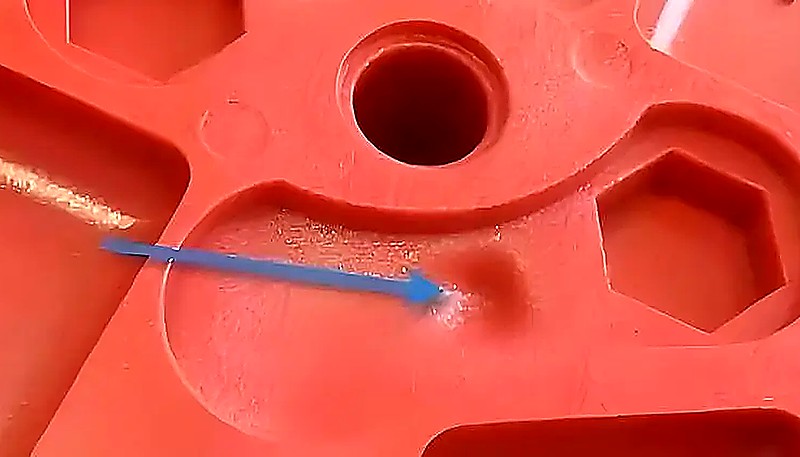
Ecco un esempio pratico. Supponiamo che si stia stampando un alloggiamento in policarbonato con una parete nominale di 3mm e un perno che crea una sezione spessa 5mm. Se la pressione in cavità nella posizione del perno scende troppo rapidamente durante la fase di compattazione, la sezione spessa non viene adeguatamente compattata. Risultato: un'infossatura che non supera l'ispezione visiva. Senza i dati della pressione in cavità, il tecnico di processo ipotizza pressione e tempo di compattazione. Con essi, vede esattamente quando la pressione cala e regola il profilo di mantenimento per compensare.
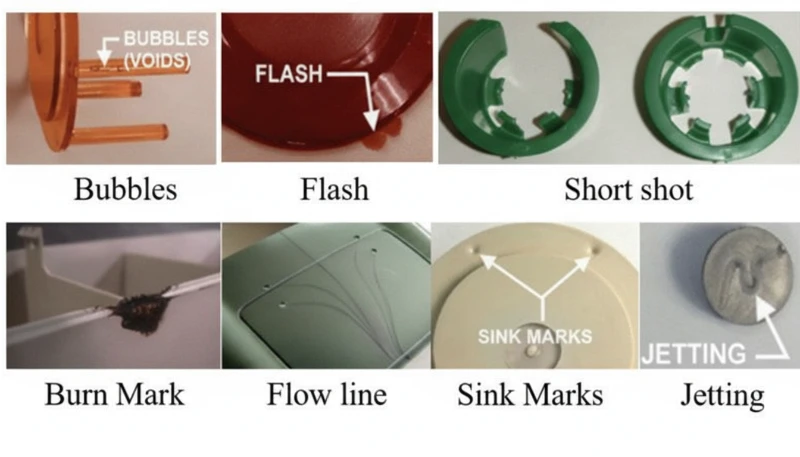
Le quattro categorie di difetti che il monitoraggio della pressione in cavità affronta in modo più efficace sono:
1. Stampi incompleti e riempimento insufficiente. Se la curva di pressione non raggiunge mai il picco previsto alla posizione del sensore di fine-fill, la cavità non si è riempita completamente. Lo si scopre al primo ciclo — non dopo una produzione di 500 parti.
2. Segni di affondamento e vuoti. Questi parametri sono direttamente correlati al decadimento della pressione di mantenimento. La curva di pressione mostra se la cavità ha ricevuto materiale sufficiente durante la fase di mantenimento per compensare il ritiro volumetrico.
3. Sbavatura. Una pressione eccessiva nella cavità — specialmente quando supera la soglia della forza di chiusura della macchina — è il precursore dei bavosi. La curva di pressione ti avvisa prima che i bavosi compaiano sul pezzo.
4. Variazione dimensionale. La pressione della cavità durante la fase di compattazione determina direttamente il peso e le dimensioni della parte. Studi dimostrano che controllare la pressione massima della cavità entro ±2% può mantenere dimensioni critiche entro ±0.05mm su parti con tolleranza stretta.
Come Funziona un Sensore di Pressione in Cavità?
Un sensore di pressione della cavità è un trasduttore incorporato nello stampo che converte la pressione del fuso in un segnale elettrico in tempo reale. Due tipi di sensori dominano il mercato: a contatto diretto (piezoelettrico) e indiretto (basato su estensimetro). Ciascuno presenta compromessi che influenzano il loro posizionamento e la durata in produzione.
Diretto sensore piezoelettrico3s si posizionano a filo con la superficie della cavità e misurano la pressione del fuso attraverso un diaframma che entra in contatto diretto con la plastica. Offrono il tempo di risposta più rapido (sotto il millisecondo) e la lettura più accurata della pressione effettiva del fuso. Lo svantaggio: richiedono una tasca lavorata nell'acciaio dello stampo, sono sensibili ai danni meccanici durante la manipolazione dello stampo e necessitano di amplificatori di carica per convertire il segnale piezoelettrico in una tensione utilizzabile.
Sensori a estensimetro indiretto montare dietro un perno di ejector o un inserto della cavità. Non toccano il materiale fuso — invece, misurano la deformazione elastica dell'acciaio dello stampo sotto pressione della cavità. Sono più resistenti, più facili da adattare su stampi esistenti e più economici. Ma reagiscono più lentamente e la lettura della pressione dipende dal percorso di trasferimento meccanico (diametro del perno, clearance di montaggio, durezza dell'acciaio), che introduce complessità di calibrazione.
Una terza opzione che sta guadagnando terreno è sensori ultrasonici non a contatto che si montano fuori dello stampo e misurano la pressione attraverso la parete di acciaio. Eliminano completamente la necessità di tasche per sensori, ma la precisione è attualmente limitata — sono meglio per monitoraggio di tendenza che per misurazione di pressione assoluta.
| Caratteristica | Piezoelettrico (Diretto) | Estensimetro (Indiretto) | Ultrasuoni |
|---|---|---|---|
| Tempo di risposta | < 1 ms | 2–5 ms | 5–10 ms |
| Precisione | ±0,5% FS | ±1–2% FS | ±3–5% FS |
| Modifica dello stampo | Tasca richiesta | Dietro lo spingitore | Montaggio esterno |
| Durata | Moderato | Alto | Alto |
| Costo per canale | $1.500–$3.000 | $500–$1.500 | $800–$2.000 |
| Caso d'uso migliore | Stampaggio di precisione | General production | Monitoraggio retrofit |
Quali Sono i Parametri Chiave nelle Curve di Pressione in Cavità?
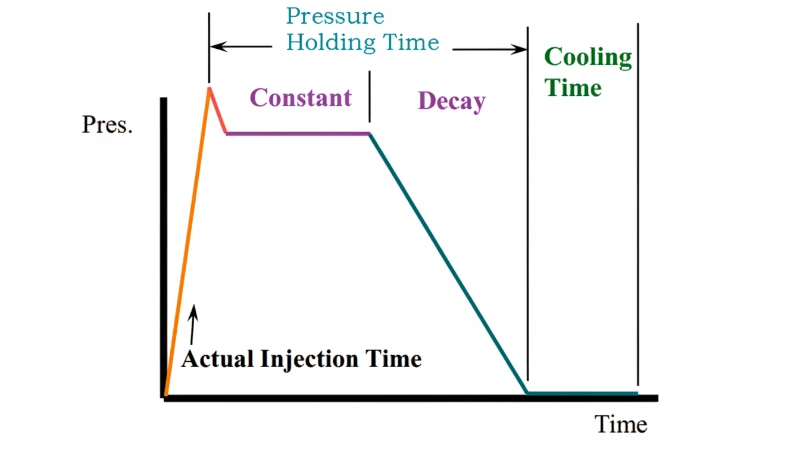
I parametri chiave in una curva di pressione della cavità sono: pendenza di riempimento, punto di commutazione, plateau di compattazione, tempo di solidificazione dell'ingresso e velocità di decadimento del raffreddamento. Una curva tipica di pressione della cavità sembra una catena montuosa con picchi e valli distinti. Ogni regione della curva corrisponde a una fase specifica del ciclo di stampaggio a iniezione, e ingegneri di processo esperti leggono queste curve come una carta diagnostica.
Fase di riempimento (salita al picco). La curva sale bruscamente quando il fuso entra nella cavità. La pendenza indica la velocità di riempimento. Una pendenza più ripida significa un'iniezione più veloce. Se la pendenza cambia durante la salita, stai osservando variazioni nella resistenza al flusso — forse il fuso sta attraversando una sezione sottile o una curva stretta nella geometria della cavità.
Punto di commutazione. Questo è il punto in cui la macchina passa dal riempimento controllato in velocità al mantenimento controllato in pressione. Sulla curva, è il punto di flesso alla sommità della salita. Un passaggio graduale produce un picco arrotondato. Una transizione brusca della macchina crea un picco acuto seguito da un calo — questo sovraelongamento può causare bavosi o variazioni di peso del pezzo.
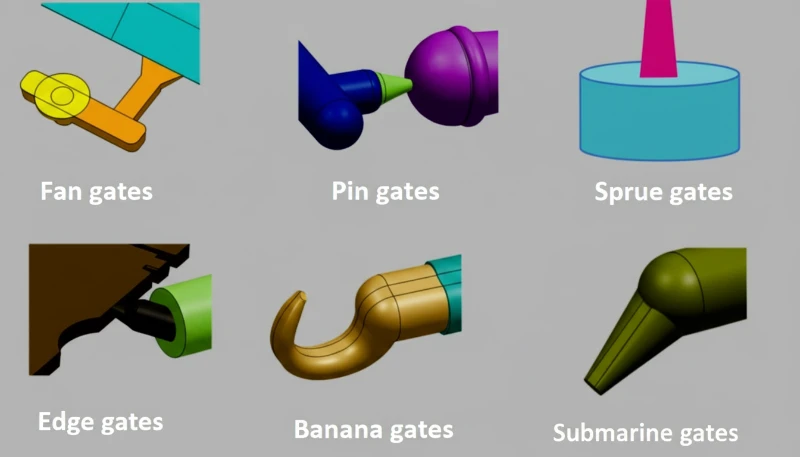
Fase di compattazione (plateau). Dopo il cambio, la pressione della cavità dovrebbe stabilizzarsi su un plateau — questo è materiale aggiuntivo che viene spinto nella cavità per compensare il restringimento volumetrico mentre la parte si raffredda. La altezza e la durata di questo plateau determinano direttamente il peso della parte, le dimensioni e la probabilità di segni di affondamento.
Congelamento del punto di iniezione. At some point during the hold phase, the gate solidifies and cuts off the flow path. On the pressure curve, you see the plateau end and pressure begins to drop — even though the machine is still applying holding pressure. This gate freeze point is critical: any additional holding time beyond gate freeze is wasted energy. Knowing exactly when the gate freezes lets you optimize hold time precisely.
Cooling and decay. After gate freeze, pressure decays as the material contracts and cools. The rate of decay depends on part geometry, material shrinkage behavior, and mold temperature. Anomalously fast decay in one region can signal a hot spot in the mold or an insufficient cooling circuit.
““Gate freeze-off time can be identified directly from the cavity pressure curve.””Vero
The pressure curve shows a clear inflection point where cavity pressure starts dropping despite continued machine holding pressure — that is the gate seal point. Beyond this, additional hold time adds no value.
““Higher machine injection pressure always produces higher cavity pressure.””Falso
Cavity pressure depends on flow resistance, gate design, and melt viscosity. A restrictive gate or long runner can absorb most of the machine pressure, leaving cavity pressure unchanged even when you increase injection pressure significantly.
Come Utilizzi i Dati della Pressione in Cavità per Ottimizzare la Finestra di Processo?
Collecting cavity pressure data is one thing. Acting on it is another. The practical workflow looks like this:
Step 1: Establish a golden curve. Run 50–100 cycles at your validated process settings. Record cavity pressure at each sensor location. Average the curves to create a reference — your “golden curve.” This becomes the baseline that every production cycle is compared against.
Step 2: Set tolerance bands. Define acceptable upper and lower limits for key curve parameters: peak pressure, packing plateau level, gate freeze time, pressure at end of hold. These limits should be based on dimensional and visual quality data — not arbitrary percentages.
Step 3: Monitor in real time. Modern monitoring systems (Priamus, Kistler, RJG) compare each cycle’s pressure curve against the golden curve within the tolerance bands. If a cycle falls outside the band, the system flags it — and can optionally divert the part to a quarantine bin automatically.
Step 4: Diagnose root causes from curve deviations. This is where experience matters. A lower-than-normal peak pressure usually means either insufficient fill speed or a viscosity change in the material. A shorter packing plateau suggests the gate froze earlier — possibly because of lower melt temperature. A shifted switchover point indicates machine inconsistency.
Quando Dovresti Investire nel Monitoraggio della Pressione in Cavità?
Cavity pressure monitoring is worth the investment when your part tolerances are under ±0.1mm or when regulatory compliance requires documented process validation. Not every mold needs cavity pressure sensors. If you’re running commodity parts with ±0.5mm tolerances and wide aesthetic specifications, the investment is hard to justify. But for specific situations, the ROI is clear and fast.
Medical and automotive parts. Regulatory requirements (FDA, ISO 13485, IATF 16949) increasingly expect documented process validation. Cavity pressure data provides objective evidence that each cycle met validated conditions — not just that a random sample passed inspection.
High-cavitation molds. When you’re running a 32-cavity mold, cavity pressure monitoring can detect individual cavity blockages or imbalances that would be invisible from machine data alone. One blocked cavity out of 32 means 3% scrap — which adds up fast at 500,000 cycles per year.
Tight-tolerance engineering plastics. Materials like PEEK, LCP, and glass-filled nylons have narrow processing windows. Cavity pressure monitoring catches viscosity shifts from lot-to-lot material variation before they produce out-of-spec parts.
Long production runs. The per-part cost of monitoring drops dramatically as volume increases. A $10,000 monitoring system amortized over 2 million parts adds half a cent per part — trivial compared to the cost of a single rejected shipment.
““Cavity pressure monitoring can detect individual cavity blockages in multi-cavity molds in real time.””Vero
Each sensor monitors its own cavity independently. A sudden pressure drop or complete absence of signal at one sensor location immediately flags a blocked or underfilled cavity, while neighboring cavities continue showing normal curves.
““Cavity pressure monitoring eliminates the need for post-molding quality inspection entirely.””Falso
Cavity pressure catches process-related defects like short shots, sink marks, and dimensional variation. But it cannot detect cosmetic defects like color inconsistency, surface contamination, or assembly errors. Final visual and dimensional inspection remains necessary.
Quali sono i limiti del monitoraggio della pressione nella cavità?
Cavity pressure monitoring is limited by sensor fragility, placement sensitivity, data overload, and inability to detect cosmetic defects. Here’s what the sensor vendors won’t tell you on the first call.
Sensors fail. Piezoelectric sensors in particular are fragile. A careless mold setter can destroy a $2,000 sensor during mold installation. Thermal cycling degrades sensor performance over thousands of cycles. You need a maintenance and recalibration plan — or you’ll be making decisions based on drifting data.
Placement is everything. A sensor in the wrong location gives you misleading data. Too close to the gate and you measure runner pressure, not cavity behavior. Too far from the last-to-fill point and you miss the most critical region. Most engineers place sensors at two locations: near the gate (to monitor injection and packing) and near the end of fill (to confirm complete filling).
Data overload is real. A single sensor generates thousands of data points per cycle. A 4-sensor mold running 24/7 produces terabytes per year. Without proper software to filter, trend, and alert, you end up with a massive database nobody looks at. The monitoring system is only as useful as the analytics behind it.
Cost adds up on multi-cavity molds. If each cavity needs its own sensor, a 16-cavity mold requires 32 sensors (gate + end-of-fill per cavity). At $1,500–$3,000 per channel, that’s $48,000–$96,000 in sensor hardware alone — before the monitoring system, cabling, and installation.
Not all defects are pressure-related. Color streaks, contamination, ejector pin marks, and mold surface defects have nothing to do with cavity pressure. Monitoring pressure won’t prevent these issues. It’s a powerful tool, but it’s one tool — not a complete quality system.
Bottom line: If you’re scrapping more than 2% of parts from process-related defects, cavity pressure monitoring usually pays for itself within 6–12 months. Start with one sensor on your highest-volume, tightest-tolerance mold. Prove the ROI on that tool, then scale.
If you are comparing vendors for a monitored production program, use our injection molding supplier sourcing guide to check process-control maturity, validation records, sensor maintenance discipline, and quality escalation rules before awarding the tool.
Domande Frequenti sul Monitoraggio della Pressione in Cavità
What is cavity pressure in injection molding?
Cavity pressure is the force per unit area exerted by the molten plastic inside the mold cavity during the injection, packing, and holding phases of the molding cycle. It is typically measured in bar or psi using pressure sensors embedded directly in the mold steel. This measurement reflects the actual conditions the material experiences inside the cavity — unlike machine-side pressure, which only shows what the injection unit is delivering from the nozzle. Cavity pressure directly influences part weight, dimensions, surface quality, and structural integrity of the final molded component.
Quanti sensori di pressione della cavità mi servono per stampo?
La maggior parte delle applicazioni produttive utilizza due sensori per cavità: uno posizionato vicino all'ingresso per monitorare il comportamento di iniezione e compattazione, e uno vicino alla fine del riempimento per confermare il riempimento completo della cavità. Per componenti semplici con tolleranze ampie, può bastare un singolo sensore. Per stampi multi-cavità, un approccio pratico consiste nell'instrumentare cavità rappresentative piuttosto che ogni singola cavità, per poi estrapolare i risultati. Il numero esatto dipende dalla complessità geometrica del componente, dai requisiti di tolleranza, dal vostro budget e dal livello di documentazione della qualità richiesto dal cliente o dall'ente normativo.
Qual è la differenza tra pressione nella cavità e pressione dell'ugello?
La pressione dell'ugello viene misurata all'ugello di iniezione della macchina e riflette la forza di uscita della vite durante l'iniezione. La pressione nella cavità viene misurata all'interno dello stampo e riflette ciò che la plastica effettivamente sperimenta mentre riempie, compatta e raffredda nella cavità. La differenza tra le due rappresenta la pressione persa attraverso il materozzolo, il sistema di canali e l'ingresso. Questa caduta di pressione può essere sostanziale – spesso viene consumato il 30–60% della pressione dell'ugello prima che il fuso entri persino nella cavità, a seconda della lunghezza del canale, del diametro e del design dell'ingresso.
Il monitoraggio della pressione nella cavità può rilevare la qualità delle linee di saldatura?
Sì, il monitoraggio della pressione nella cavità fornisce una visione diretta della formazione e della resistenza delle linee di saldatura. Quando due fronti di flusso si incontrano all'interno della cavità, la pressione nella posizione della linea di saldatura indica quanto bene i fronti si sono fusi insieme. Una pressione maggiore nella cavità alla linea di saldatura significa un migliore intreccio molecolare attraverso l'interfaccia, risultando in una maggiore resistenza della linea di saldatura. Questo è particolarmente prezioso per componenti strutturali dove l'integrità della linea di saldatura è un parametro critico di prestazione e un cedimento alla linea di saldatura potrebbe compromettere l'intero assemblaggio.
Cos'è lo stampaggio scientifico e come si relaziona la pressione in cavità ad esso?
Lo stampaggio scientifico è una metodologia basata sui dati che separa il processo di stampaggio ad iniezione in quattro fasi distinte — riempimento, compattazione, mantenimento e raffreddamento — e controlla ciascuna indipendentemente basandosi su variabili misurabili piuttosto che solo sulle impostazioni della macchina. La pressione in cavità è la variabile di misurazione primaria nello stampaggio scientifico perché riflette direttamente ciò che il materiale sta effettivamente facendo all'interno dello stampo. Monitorando la pressione in cavità in punti chiave, gli ingegneri possono stabilire parametri di processo ripetibili e trasferibili che producono parti consistenti indipendentemente da quale macchina o stabilimento utilizzi lo stampo.
Quanto costa implementare il monitoraggio della pressione nella cavità?
Un sistema di monitoraggio a due canali di base — che include sensori di pressione in cavità, amplificatore di carica o condizionatore di segnale, hardware di acquisizione dati e software di analisi di base — costa tipicamente tra $5.000 e $15.000 per un'applicazione a cavità singola. Per il monitoraggio completo della produzione su uno stampo di produzione multi-cavità con software di analisi completo, capacità di deviazione automatica delle parti e dashboard di tendenza storica, i costi possono variare da $30.000 a oltre $100.000. L'investimento totale scala direttamente con il numero di canali sensore, la sofisticazione della piattaforma analitica e i requisiti di integrazione in fabbrica.
Posso adattare sensori di pressione della cavità a uno stampo esistente?
Sì, la retrofitting è comune e pratica. I sensori a estensimetro montati dietro gli espulsori esistenti sono l'opzione di retrofitting più popolare perché richiedono una modifica minima dello stampo — tipicamente solo la foratura di una tasca dietro un perno esistente e il passaggio del cavo attraverso la piastra espulsore. Anche i sensori piezoelettrici diretti sono possibili per i retrofit ma richiedono una lavorazione più estesa dell'acciaio della cavità per creare una tasca a filo per il diaframma del sensore. Il costo del retrofit è significativamente inferiore rispetto all'integrazione dei sensori in uno stampo nuovo da zero.
Il monitoraggio della pressione nella cavità funziona con tutti i materiali plastici?
Il monitoraggio della pressione nella cavità funziona con tutti i materiali termoplastici, dalle resine comuni come PP e PE alle materie plastiche tecniche ad alte prestazioni come policarbonato, nylon e PEEK. Tuttavia, le caratteristiche della curva di pressione differiscono significativamente tra i materiali. Materiali altamente viscosi come policarbonato e PEEK generano pressioni di riempimento più elevate e forme di curva diverse rispetto a materiali a bassa viscosità come polipropilene. Le soglie di monitoraggio, le bande di tolleranza e i parametri della curva di riferimento devono essere calibrati in modo indipendente per ogni specifica combinazione di materiale e stampo per fornire dati di controllo del processo significativi durante la produzione.
Pronto a Implementare il Monitoraggio della Pressione in Cavità?
Se si producono parti di precisione con tolleranze strette — specialmente nel settore medico, automobilistico o elettronico — il monitoraggio della pressione in cavità non è più opzionale. È il modo per passare da "pensiamo che il processo sia buono" a "possiamo dimostrare che ogni ciclo ha rispettato le specifiche".
Nella nostra fabbrica, i nostri ingegneri utilizzano il monitoraggio del processo in tutta la struttura di Shanghai perché i clienti regolamentati richiedono un controllo del processo documentato e supportato dai dati. Con oltre 400 materiali qualificati e un processo di controllo qualità in 6 fasi dall'ispezione in entrata alla verifica in uscita, comprendiamo che una qualità costante inizia dalla comprensione di ciò che accade all'interno dello stampo.
Vuoi discutere del monitoraggio della pressione nella cavità per il tuo prossimo progetto di attrezzatura? Parla con un produttore di stampaggio a iniezione — esamineremo la geometria del tuo componente, le tolleranze e il volume di produzione per raccomandare il livello giusto di monitoraggio del processo per la tua applicazione.
-
segno di rientranza: L'infossamento si riferisce ad una depressione superficiale sulle parti stampate causata da una pressione di compattazione insufficiente durante la fase di mantenimento. ↩
-
injection mold: Lo stampo ad iniezione si riferisce ad uno strumento di precisione utilizzato nello stampaggio ad iniezione che contiene una o più cavità sagomate per formare parti in plastica. ↩
-
sensore piezoelettrico: sensore piezoelettrico si riferisce a un trasduttore di pressione a contatto diretto che genera una carica elettrica proporzionale alla pressione del fuso applicata. ↩


 EN
EN  ES
ES  FR
FR  DE
DE  PT
PT  AR
AR  RU
RU  JA
JA  KO
KO  IT
IT  NL
NL  TR
TR  PL
PL 