 Vai al contenuto

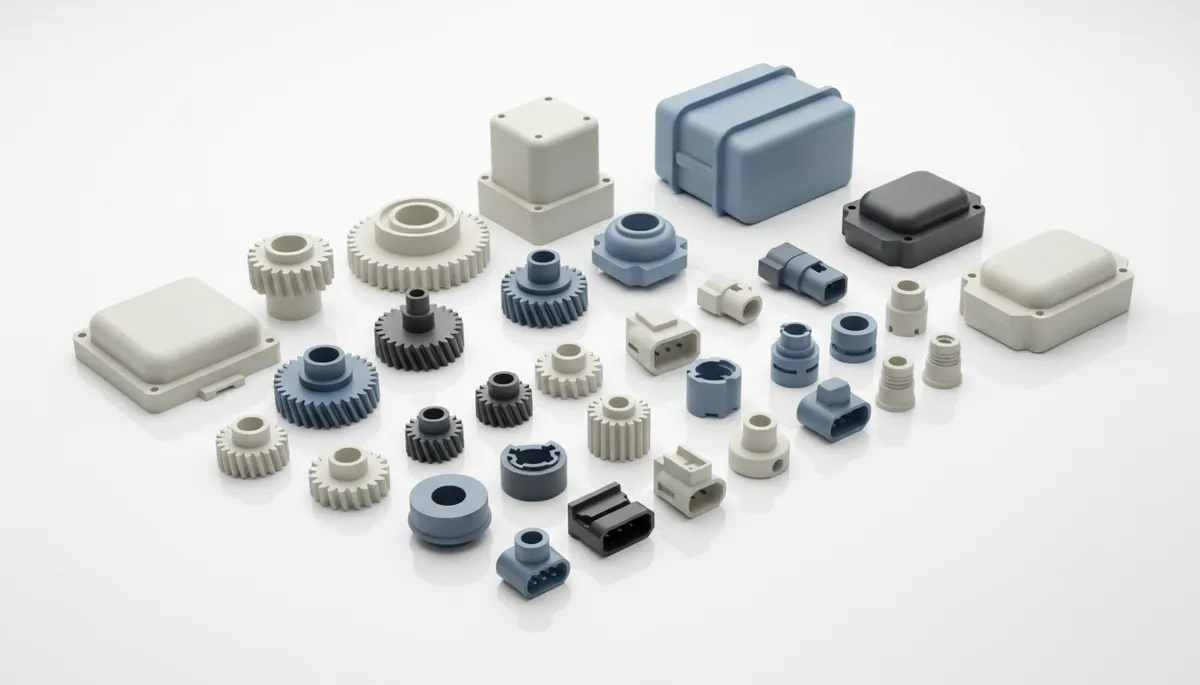
Ingranaggi, parti di precisione stampo a iniezioneing by 10–30% is achievable through wall thickness optimization, rib design, material substitution, and advanced processes like gas-assist and microcellular foam molding.
– Wall thickness is the single biggest lever — reducing it from 3.0 mm to 2.0 mm can cut part weight by over 30% while maintaining structural integrity with proper rib reinforcement.
– Microcellular foam injection molding (MuCell) creates internal cell structures that reduce density by 8–20% with minimal impact on mechanical properties.
– Material selection matters: switching from standard ABS (1.05 g/cm³) to PP (0.90 g/cm³) delivers an immediate 14% weight reduction at lower material cost.
– Nel nostro stabilimento, abbiamo aiutato clienti automobilistici a ridurre il peso delle parti di 15–25% su componenti del dashboard utilizzando una combinazione di design con pareti sottili e stampaggio a iniezione assistito da gas.
What Does It Mean to Reduce Part Weight in Injection Molding?
Reducing part weight in injection molding means designing and manufacturing plastic components that use less material while maintaining the required mechanical performance, dimensional accuracy, and surface quality. It is one of the most effective ways to cut material costs, shorten cycle times, and meet increasingly strict sustainability and fuel-efficiency requirements across industries.
Nella nostra esperienza presso ZetarMold, i progetti di riduzione del peso mirano tipicamente a un risparmio di materiale di 10–30%. L'approccio dipende dalla funzione della parte, dal materiale e dal volume di produzione. Un housing per elettronica di consumo con pareti sottili richiede strategie diverse rispetto a un supporto strutturale automobilistico. La chiave è comprendere quale combinazione di design, materiale e modifiche di processo offre il miglior rapporto peso-performance per la tua specifica applicazione.
The demand for lighter injection molded parts is driven by several converging trends: automotive OEMs chasing fuel economy standards, consumer electronics brands seeking thinner devices, and sustainability mandates pushing for reduced plastic consumption. According to industry data, every 10% reduction in vehicle weight can improve fuel efficiency by 6–8%.
“La riduzione dello spessore della parete indebolisce sempre il pezzo e ne causa il cedimento.”Falso
When combined with proper rib reinforcement and material selection, thinner walls can maintain or even improve stiffness. Ribs at 60% of wall thickness add structural support without sink marks, allowing significant weight reduction with no loss in performance.
“Il rinforzo tramite nervature permette pareti più sottili mantenendo la rigidità della parte.”Vero
Properly designed ribs (50–60% of nominal wall thickness, with 1–3° of draft) increase the moment of inertia without adding significant material. This is the standard approach in automotive and electronics for weight-optimized parts.
What Are the Main Strategies to Reduce Part Weight?
There are five core strategies to reduce part weight in injection molding: wall thickness optimization, rib and structural reinforcement, material substitution, process modification, and part consolidation. Each addresses a different aspect of the weight equation, and the most effective projects combine multiple approaches.
| Strategy | Typical Weight Reduction | Complessità | Il migliore per |
|---|---|---|---|
| Wall thickness optimization | 15–35% | Medio | Housings, enclosures, panels |
| Rib reinforcement | 10–20% | Basso | Structural parts, brackets |
| Material substitution | 10–25% | Low–Medium | All part types |
| Gas-assist / foam molding | 15–30% | Alto | Thick sections, handles, large panels |
| Part consolidation | 5–15% | Medium–High | Multi-component assemblies |
In our factory, we typically start with a analisi del flusso dello stampo1 to identify where material can be removed without compromising fill patterns or structural performance. This simulation-first approach prevents costly mold revisions later.
How Does Wall Thickness Optimization Reduce Weight?
Wall thickness optimization is the most direct way to reduce part weight in injection molding. Since part weight is directly proportional to volume, reducing wall thickness from 3.0 mm to 2.0 mm on a flat panel reduces weight by approximately 33% — and often shortens cooling time by 40–50%, which also cuts cycle time.
La sfida è mantenere una rigidità adeguata ed evitare difetti di stampaggio. Pareti più sottili richiedono pressioni di iniezione più elevate e velocità di riempimento più rapide, e sono più suscettibili a iniezioni incomplete e deformazioni. Ecco cosa abbiamo imparato da centinaia di progetti con pareti sottili:
- Minimum wall thickness depends on material: PP can go as thin as 0.8 mm for small parts, while PC typically needs 1.2 mm minimum.
- Spessore uniforme della parete is critical — variations greater than 25% cause differential cooling and warpage.
- Flow length-to-thickness ratio deve rimanere nei limiti del materiale (tipicamente 150:1 per PP, 100:1 per PC).
- Gate location and size must be optimized for the thinner cross-section.
| Materiale | Densità (g/cm³) | Min Wall Thickness (mm) | Max Flow Ratio | Applicazioni tipiche |
|---|---|---|---|---|
| PP | 0.90–0.91 | 0.8 | 150:1 | Packaging, containers |
| ABS | 1.04–1.07 | 1.0 | 120:1 | Electronics housings |
| PC | 1.20–1.22 | 1.2 | 100:1 | Lenses, safety components |
| PA (Nylon) | 1.13–1.15 | 0.8 | 130:1 | Automotive, structural |
| POM | 1.41–1.43 | 0.8 | 100:1 | Gears, precision parts |
L'ottimizzazione dei parametri del processo di stampaggio a iniezione è fondamentale per produrre parti più leggere in modo costante. Pareti più sottili e materiali più leggeri richiedono impostazioni della macchina diverse rispetto allo stampaggio convenzionale, e il corretto definizione di questi parametri è la differenza tra parti buone e scarti.
Rib design is the complementary strategy to wall thickness reduction. When you make walls thinner, you compensate for the lost stiffness by adding ribs — thin, protruding features on the non-cosmetic side of the part. Properly designed ribs can increase part stiffness by 3–5 times with only a 10–15% increase in material usage compared to the weight saved from thinner walls.

We follow these proven guidelines for rib design in weight reduction projects:
- Rib thickness: 50–60% of the adjacent wall thickness (e.g., 1.2 mm rib for a 2.0 mm wall)
- Rib height: Maximum 3× the wall thickness
- Angolo di sformo: 1–3° per side for clean ejection
- Rib spacing: Minimum 2× wall thickness between ribs
- Base radius: 0.25–0.5× wall thickness to reduce stress concentration
In un progetto automobilistico, abbiamo ridotto la parete di un supporto del dashboard da 2,8 mm a 1,8 mm e aggiunto un pattern di nervature trasversali. Il risultato: una riduzione del peso di 28% con solo una diminuzione della deflessione sotto carico di 5%. Le pareti più sottili hanno anche ridotto il tempo di ciclo da 45 a 32 secondi.
Which Materials Offer the Best Weight Reduction Potential?
Material selection is a powerful tool for weight reduction because different polymers have significantly different densities. Switching from a higher-density material to a lower-density alternative — or using filled compounds that enable thinner walls — can deliver 10–25% weight savings without changing part geometry.
Here are the material substitution strategies we use most often:
- PP for ABS: Switching from ABS (1.05 g/cm³) to PP (0.90 g/cm³) saves ~14% weight. PP is also cheaper per kg.
- Glass-filled PA for metal: PA6-GF30 (1.36 g/cm³) replacing die-cast zinc (6.6 g/cm³) saves ~80% weight in structural brackets.
- Long glass fiber (LGF) compounds: Enable thinner walls with higher stiffness, reducing weight through wall optimization.
- Foamable grades: Materials designed for foam injection molding contain chemical or physical blowing agents for 8–20% density reduction.
“I materiali più leggeri costano sempre più, rendendo la riduzione del peso finanziariamente impraticabile.”Falso
Il PP è sia più leggero (0,90 g/cm³) e più economico per kg rispetto all'ABS (1,05 g/cm³) o al PC (1,20 g/cm³). Molti progetti di riduzione del peso in realtà riducono i costi del materiale perché si usa meno materiale per parte, e i materiali più leggeri spesso hanno prezzi per kilogrammo più bassi.
“Il rinforzo con fibre di vetro permette pareti più sottili che compensano la maggiore densità del compound.”Vero
While glass-filled compounds are denser (e.g., PA6-GF30 at 1.36 g/cm³ vs. unfilled PA6 at 1.13 g/cm³), the 2–3× improvement in stiffness enables wall thickness reductions of 30–40%, resulting in a net weight decrease of 15–20%.
How Do Gas-Assist and Foam Molding Processes Reduce Weight?
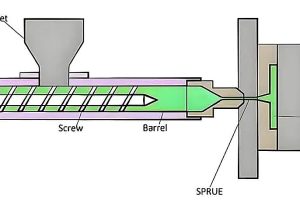
Lo stampaggio a iniezione assistito da gas e lo stampaggio a microcellule (MuCell®) sono i due approcci più efficaci basati sul processo per la riduzione del peso. Entrambi creano strutture interne cave o cellulari che riducono l'uso di materiale di 15–30% mantenendo le dimensioni esterne e l'apparenza superficiale della parte.
Stampaggio a iniezione assistito da gas
Nel stampaggio assistito da gas, gas nitrogeno viene iniettato nelle sezioni spesse dopo la prima iniezione di plastica. Il gas crea canali cavi dentro la parte, riducendo l'uso di materiale di 20–40% in componenti con pareti spesse come maniglie, telai e elementi strutturali. Abbiamo utilizzato questa tecnica sui braccioli di mobili dove abbiamo ridotto il peso della parte da 380 g a 260 g — un risparmio di 32%.
Microcellular Foam Molding (MuCell)
MuCell technology introduces supercritical nitrogen or CO₂ into the polymer melt, creating millions of microscopic cells (5–100 μm) throughout the part. This achieves:
- 8–20% weight reduction depending on part geometry
- 15–30% shorter cycle times (lower cooling time and no packing phase)
- Reduced clamp force requirements (up to 50% less)
- Virtually eliminated sink marks and warpage
The trade-off is a slight surface swirl pattern on uncoated parts, which limits MuCell to non-cosmetic surfaces or parts that will be painted or textured.
What Role Does Mold Design Play in Part Weight Reduction?
Mold design directly impacts how successfully you can reduce part weight. A mold designed for a 3.0 mm wall part cannot simply run a 1.5 mm wall without modifications. The mold design must support the specific weight reduction strategy through optimized gating, cooling, and venting.

Critical mold design considerations for lightweight parts:
- Gate design: Thinner walls need larger or more gates to ensure complete fill before freeze-off. Hot runner systems with valve gates offer the best control.
- Cooling layout: Uniform cooling is even more critical for thin walls. Conformal cooling2 channels (3D-printed inserts) can reduce cooling time by 30–40%.
- Sfiato: Thin cavities fill faster, trapping air more easily. Vents should be 0.02–0.03 mm deep for most resins.
- Steel selection: High-thermal-conductivity steels (like copper-beryllium alloys) in critical areas improve heat extraction.
Abbiamo scoperto che investire nella simulazione del flusso dello stampo prima di tagliare il metallo salva 2–3 cicli di revisione dello stampo nei progetti con pareti sottili. Identifica problemi di bilanciamento del riempimento, posizioni delle linee di saldatura e problemi di uniformità del raffreddamento che altrimenti richiederebbero modificazioni costose dello stampo.
What Are the Process Parameters to Optimize for Lighter Parts?
Optimizing injection molding process parameters is essential for producing lighter parts consistently. Thinner walls and lighter materials require different machine settings than conventional molding, and getting these parameters right is the difference between good parts and scrap.

| Parametro | Steel-safe si riferisce a una direzione di modifica dello stampo in cui il metallo viene rimosso dallo stampo anziché aggiunto. Le asportazioni di nucleo e le aggiunte di nervature sono modifiche steel-safe perché richiedono l'asportazione di acciaio, il che è più semplice ed economico rispetto alla saldatura o alla sostituzione degli inserti. | Thin-Wall / Lightweight | Why It Changes |
|---|---|---|---|
| Velocità di iniezione | 50–100 mm/s | 200–500 mm/s | Prevents freeze-off in thin sections |
| Pressione di iniezione | 80–120 MPa | 120–200 MPa | Overcomes higher flow resistance |
| Temperatura di fusione | Standard range | Upper range (+10–20°C) | Improves flow in thin cavities |
| Temperatura dello stampo | 40–60°C | 60–90°C | Delays freeze-off for better fill |
| Pressione di mantenimento | 60–80% of injection | 40–60% of injection | Gate freezes faster, less packing needed |
| Tempo di raffreddamento | 15–30 s | 8–15 s | Thinner walls cool faster |
One practical tip from our production floor: when transitioning to thinner walls, increase injection speed in 10% increments while monitoring part weight on a precision scale. Part weight stability (within ±0.5%) is the best indicator that your process is optimized for the new design.
What Are Real-World Applications of Weight Reduction in Injection Molding?
La riduzione del peso nello stampaggio a iniezione offre benefici misurabili nell'automotive, nell'elettronica di consumo, nei dispositivi medici e nel packaging. Ecco alcuni esempi specifici da progetti che abbiamo gestito e benchmark del settore.

Automotive
A Tier-1 supplier we worked with replaced a die-cast aluminum HVAC bracket with PA66-GF50, reducing weight from 420 g to 185 g (56% reduction) while consolidating three parts into one. The injection molded part also eliminated secondary machining operations.
Elettronica di consumo
For a laptop housing, we optimized wall thickness from 2.0 mm to 1.4 mm using PC/ABS blend with 15% glass fiber. The weight dropped from 145 g to 98 g, and cycle time decreased from 28 s to 19 s. The thinner design required switching to a corridore a caldo3 system with 8 valve gates.
Dispositivi medici
Single-use medical device housings benefit from weight reduction through material savings at high volumes. We helped a client reduce a diagnostic cartridge weight by 18% using thin-wall PP molding, saving over $200,000 annually in material costs at 5 million units/year production.
Imballaggio
Thin-wall packaging is the extreme case of weight reduction — yogurt cups at 0.4 mm wall thickness, food containers at 0.6 mm. These applications use high-MFI PP grades (MFI 50–100 g/10min) and injection speeds above 500 mm/s.
FAQ
How much weight can you realistically reduce in an injection molded part?
Most weight reduction projects achieve 10–30% savings. Wall thickness optimization alone can deliver 15–35%, while microcellular foam molding adds another 8–20%. Combined strategies in automotive applications have achieved up to 50% weight reduction when switching from metal to engineered plastic.
Does reducing part weight affect structural strength?
Not necessarily. When you remove material strategically — thinning walls while adding ribs, using higher-stiffness materials, or employing foam cores — the strength-to-weight ratio actually improves. The key is using simulation tools like mold flow analysis and FEA to validate the design before production.
What is the cost impact of weight reduction?
Weight reduction typically reduces piece-part cost because you use less material per part. However, upfront tooling costs may increase for thin-wall molds (higher-grade steel, more complex cooling, hot runner systems). For production volumes above 50,000 parts, the material savings almost always outweigh the higher tooling investment.
Can existing molds be modified for lighter parts?
Sometimes. Adding ribs or coring out thick sections is feasible because it involves removing steel from the mold (which is “steel-safe”4). However, reducing wall thickness requires adding steel to the core side, which is more complex and sometimes requires new inserts or complete core replacement.
What is MuCell and how does it reduce weight?
MuCell (Microcellular Foam Injection Molding) is a process that introduces supercritical gas (N₂ or CO₂) into the polymer melt to create millions of microscopic cells. These cells reduce part density by 8–20% while also eliminating sink marks, reducing warpage, and cutting cycle times by 15–30%. It requires a special injection unit with a gas delivery system.
Which industries benefit most from injection molding weight reduction?
Automotive leads in demand due to fuel efficiency regulations — every kilogram matters. Consumer electronics follow closely, where lighter devices improve user experience. Medical packaging and single-use devices benefit from material cost savings at high volumes. Aerospace uses injection molded lightweight parts for non-structural interior components.
How do you verify that a lightweight part meets specifications?
We use a combination of: (1) part weight monitoring on every shot (±0.5% tolerance), (2) dimensional inspection via CMM, (3) mechanical testing (tensile, impact, flexural) per ASTM/ISO standards, and (4) functional testing in the application. For critical parts, CT scanning can verify internal structure in foam-molded components.
Sintesi
Reducing part weight in injection molding is a systematic engineering challenge that combines design optimization, material science, and process technology. The most effective approach starts with wall thickness optimization and rib design — the lowest-cost, highest-impact changes. Material substitution offers easy wins when switching to lower-density polymers. For maximum weight reduction, advanced processes like gas-assist and microcellular foam molding push savings to 20–30% or more.

At ZetarMold, we approach every weight reduction project with simulation-driven design, backed by decades of production floor experience. Whether you need to trim 10% from a consumer product or 30% from an automotive component, the right combination of these strategies will get you there. Contact our engineering team to discuss your weight reduction goals. See our Injection Molding Complete Guide for a comprehensive overview. See our Injection Molding Complete Guide for a comprehensive overview. See our Injection Molding Complete Guide for a comprehensive overview. See our Injection Molding Complete Guide for a comprehensive overview. See our Injection Molding Complete Guide for a comprehensive overview. See our Injection Molding Complete Guide for a comprehensive overview.
-
L'analisi di flusso dello stampo (mold flow analysis) è una tecnica di simulazione computerizzata che predice come la plastica fusa riempisce la cavità dello stampo, identificando potenziali problemi come trappole d'aria, linee di saldatura e raffreddamento non uniforme prima che lo stampo sia prodotto. ↩
-
Il raffreddamento conforme (conformal cooling) indica canali di raffreddamento che seguono il contorno della cavità dello stampo, tipicamente prodotti mediante stampa 3D metallica (DMLS). A differenza dei canali convenzionali rettilinei, il raffreddamento conforme offre un'estrazione uniforme del calore, riducendo il tempo di raffreddamento di 30–40% e migliorando la qualità della parte. ↩
-
Un sistema hot runner mantiene la plastica nei canali del runner alla temperatura di fusione, eliminando lo spreco del runner e permettendo tempi di ciclo più rapidi. Nel stampaggio con pareti sottili, hot runner con valvole di iniezione (valve gates) offrono un controllo preciso sul bilanciamento del riempimento tra più punti di iniezione. ↩
-
Steel-safe (sicuro per lo stampo) indica una direzione di modifica dello stampo in cui il metallo viene rimosso dallo stampo piuttosto che aggiunto. Core-outs (svuotamenti del nucleo) e aggiunte di nervature sono modificazioni steel-safe perché richiedono la rimozione di metallo, che è più semplice e economica rispetto alla saldatura o alla sostituzione degli inserti. ↩
Need a Quote for Your Injection Molding Project?
Get competitive pricing, DFM feedback, and production timeline from ZetarMold’s engineering team.


 EN
EN  ES
ES  FR
FR  DE
DE  PT
PT  AR
AR  RU
RU  JA
JA  KO
KO  IT
IT  NL
NL  TR
TR  PL
PL 