Automotive injection molding supplier risk is not controlled by choosing the lowest-defect sample at quotation. It is controlled by proving that the supplier can repeat the part, document every change, protect traceability, and react before a vehicle program is disrupted. This guide identifies the mistakes that most often turn a capable-looking mold shop into a launch or serial-production risk. Start with the wider supplier sourcing framework, then use these automotive-specific gates before nomination.
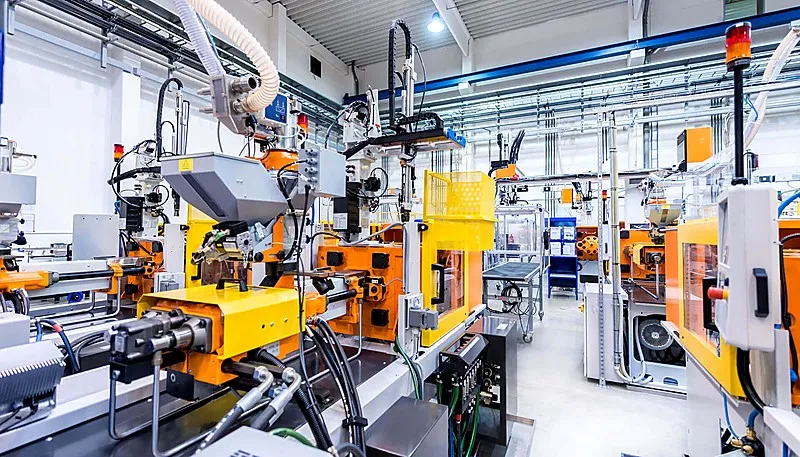
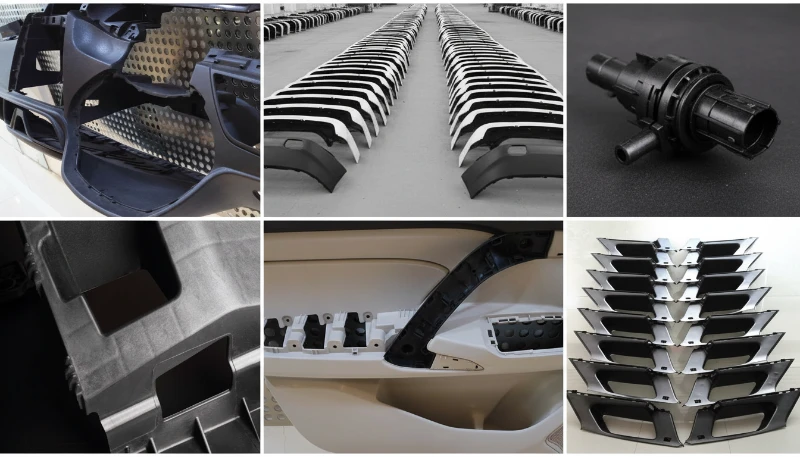
Automotive parts combine tight assembly interfaces, appearance zones, regulated materials, long service lives, and expensive line stoppages. The buyer therefore needs more than a machine list and one successful mold trial. Supplier approval must connect product design, injection molding process control, tooling maintenance, sub-supplier management, capacity, logistics, and escalation. A weakness in any one of those systems can remain invisible during sampling and surface only when volumes rise or an engineering change arrives.
The twelve mistakes below are organized around decisions a sourcing, quality, or engineering team can verify. Each risk includes evidence to request and a practical release condition. The objective is not to demand paperwork for its own sake. It is to establish a reliable signal that the quoted process, the trial process, and the production process are the same controlled system, with enough people and equipment to support the customer's ramp and service obligations.
- Audit the production system and sub-supplier chain, not only the showcase machine
- Require automotive planning records to match the actual part, mold, cavity, and process
- Validate capacity with downtime, changeover, scrap, maintenance, and peak-volume assumptions
- Approve changes only after risk review, validation evidence, traceability, and customer authorization
- Test escalation and business-continuity behavior before serial production starts
Why is a certificate-only supplier approval risky?
Certificate-only approval is risky because a valid management-system certificate does not prove product-specific capability. IATF 169491 establishes automotive quality-management expectations, but the buyer still has to verify scope, site, expiry, exclusions, and daily use. Ask the supplier to trace one comparable part from customer requirement through feasibility, tooling, control plan, inspection, nonconformance, and shipment. Records should identify the same legal entity and production address that appear in the quotation and purchase order.
Mistake one is accepting a PDF certificate without checking the issuing body's database or the certified activities. Mistake two is ignoring process evidence because the supplier serves a well-known customer. Customer logos do not prove approval for your resin, geometry, appearance class, or volume. Interview the people who will run the program, sample their records, and walk the material and product flow. An effective audit follows evidence across departments instead of letting sales present isolated success stories.
Sample audit evidence across different dates and shifts. A single perfect file selected by the sales team may show that the procedure can work, not that it normally works. Choose a recent incoming-material lot, a mold-maintenance event, an in-process nonconformance, a customer complaint, and a released shipment. Check timestamps, signatures, revision status, and quantity reconciliation. When records contradict one another, ask the process owner to explain and demonstrate the actual workflow. Repeated gaps indicate a system risk even if the displayed sample is complete.
"A process walk can reveal automotive launch risks that a conference-room audit misses."True
Material labels, quarantine areas, cavity segregation, parameter records, gauge status, and reaction behavior are visible where the work actually occurs.
"An IATF 16949 certificate means the supplier can produce any automotive molded part without additional validation."False
Certification supports a management system, while each product still requires feasible design, capable tooling, validated processes, measurement, and customer approval.
How do buyers verify program planning and feasibility?
Automotive feasibility is a cross-functional commitment that the part can be produced at the required quality, rate, cost, and timing. Require manufacturing, tooling, quality, purchasing, and project leaders to review drawings, special characteristics, resin, annual volume, peak rate, packaging, testing, and customer-specific requirements. Advanced product quality planning2, commonly called APQP, should produce dated owners and deliverables rather than a generic template copied from another program. Open assumptions must be priced, scheduled, and assigned before nomination.
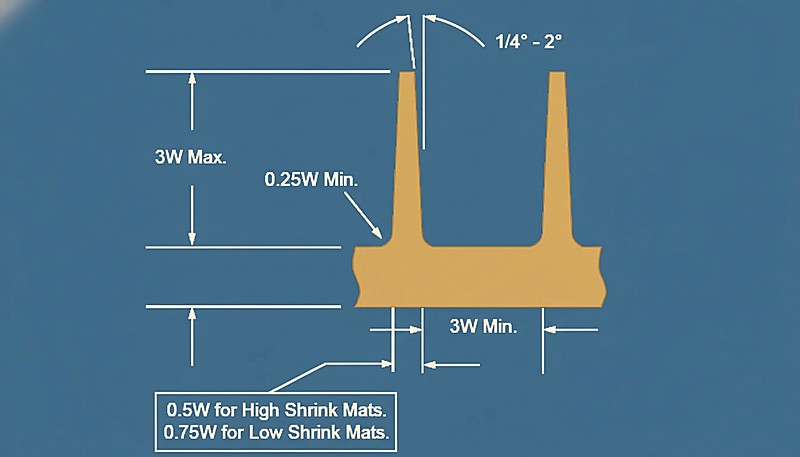
Mistake three is approving a quote before special characteristics and assembly interfaces are understood. Mistake four is treating mold design as separate from production risk. The injection mold design and build process determines cavity balance, cooling, venting, sensing, maintenance access, and repeatability. Request a feasibility response that marks every high-risk feature, required tolerance study, gauge concept, simulation need, and proposed control. Reject answers that merely repeat the drawing without explaining how the process will achieve it.

Which risk-analysis mistakes weaken the control plan?
Risk analysis is weak when the team fills forms after decisions are already made. A process failure mode and effects analysis3, or PFMEA, should connect each operation to realistic failure modes, causes, prevention controls, detection controls, and actions. Mistake five is using generic severity and occurrence scores that do not reflect the application. Mistake six is allowing the PFMEA, process flow, and control plan to describe different steps or controls. Select a special characteristic and trace it through all three documents.
The best audit question is what changed because of the risk analysis. Look for poka-yoke, cavity identification, sensor limits, automated parameter capture, first-piece approval, layered audits, preventive maintenance, or a stronger gauge plan. If high-risk items remain with no action owner or completion evidence, the document is decorative. Require a reaction plan that tells operators what to stop, segregate, verify, notify, and record when a limit is exceeded. A control without a reaction is only an observation.
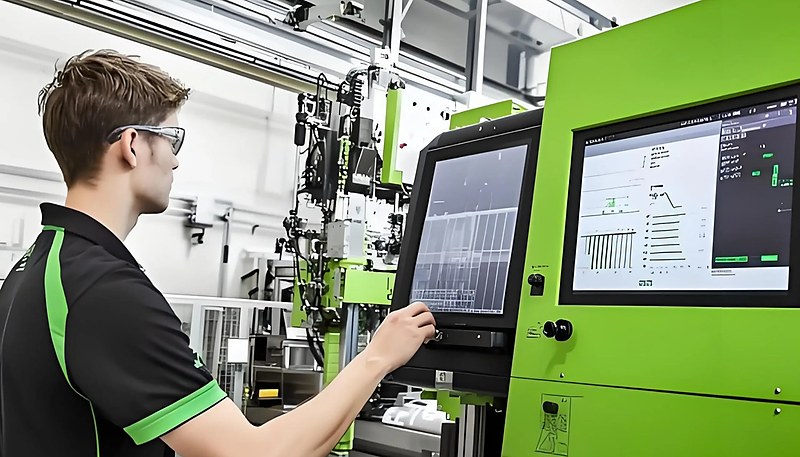
Measurement-system risk belongs in the same review. A tight drawing tolerance means little if fixture repeatability, datum loading, probe access, environmental conditions, or operator technique consume most of the tolerance. Ask for gauge calibration and measurement-system analysis appropriate to the characteristic. Compare supplier and customer methods before submission, especially for warped, flexible, textured, or conditioned plastic parts. When correlation is poor, resolve the method first; otherwise both teams can obtain internally repeatable numbers and still disagree on product conformity.
| Automotive risk | Evidence to request | Release condition |
|---|---|---|
| Special characteristic | Flow, PFMEA, control plan, gauge study | Documents align by operation |
| Cavity variation | Cavity-marked dimensional results | Each cavity meets criteria |
| Rate shortfall | Run-at-rate data with downtime | Peak demand plus buffer |
| Unapproved change | Change log and customer approval | No open unauthorized change |
What goes wrong during PPAP and run-at-rate approval?
Production part approval process4, or PPAP, is evidence that the planned production system can repeatedly meet requirements. Mistake seven is building approval samples with special handling, hand-selected material, an unplanned machine, or an unsustainable cycle. Mistake eight is reviewing a polished submission without checking raw cavity data and production conditions. The buyer should define the PPAP level, customer-specific additions, significant production run quantity, submission timing, and approval authority before the trial begins.
A run-at-rate must include realistic operators, material handling, inspection, changeover, scrap, downtime, and packing. Compare demonstrated output with weekly peak demand, not only average annual volume. Inspect cycle time distribution and constraint stations rather than multiplying one ideal cycle by available hours. If the supplier plans to move the mold or add cavities after approval, treat that as a controlled future change. Conditional approval should list the exact missing evidence, allowed quantity, expiration, and containment instead of becoming permanent informal permission.
Review submission consistency, not just document presence. Part weight, cavity count, material designation, drawing revision, process settings, dimensional sample IDs, capability results, and control-plan references should agree across the package. Investigate values that look copied, rounded, or identical across cavities. Ask how rejected trial parts were controlled and how the final submission lot was selected. The approver should be able to move from a reported result back to the labeled physical sample and original measurement record without relying on memory or a manually rebuilt spreadsheet.
How should capacity and maintenance risks be tested?
Capacity risk is tested with a realistic model for good parts per hour and all planned losses. Include shifts, uptime, scrap, maintenance, changeover, labor, and shared-equipment demand. Mistake nine is accepting a machine-tonnage list as proof of available capacity. Ask which exact presses are qualified, which other programs share them, what backup press can accept the mold, and how parameter equivalence will be validated. Review utility capacity, dryers, robots, chillers, gauges, secondary operations, and packaging because the molding press may not be the true bottleneck.
Tool maintenance must be based on cycles and condition, with ownership for cleaning, lubrication, vents, cooling, hot runner, ejectors, wear components, and spare inserts. Ask for the planned interval, completion history, abnormal findings, and escalation criteria. A supplier should forecast maintenance around customer demand rather than waiting for flash, blocked cooling, or unplanned downtime. Validate that critical spares have drawings, materials, stock locations, and lead times. A backup machine is not a continuity plan if the damaged mold cannot run.
"A run-at-rate should expose realistic losses instead of demonstrating only an ideal molding cycle."True
Good-part capacity depends on downtime, scrap, inspection, material replenishment, changeovers, packing, labor coverage, and shared constraints.
"Keeping one spare injection molding machine guarantees automotive supply continuity."False
Continuity also depends on mold condition, qualified setup, utilities, materials, gauges, people, data, sub-suppliers, and an approved transfer process.
Which traceability and change-control gaps create recalls?
Automotive traceability is the documented link between a shipment and its production inputs. Those inputs include date, shift, machine, mold, cavity where required, resin and colorant lots, process approval, inspection status, and rework history. Mistake ten is assigning a lot code that cannot reconstruct those inputs. Perform a timed mock recall: select a shipment, trace backward to materials and process records, then trace forward to every other affected shipment. Investigate gaps, duplicate labels, manual overrides, and records stored only on one employee's computer.
Mistake eleven is allowing changes through purchasing or maintenance without customer review. Resin source, recycled content, colorant, mold insert, cavity, machine, production site, secondary operation, gauge, packaging, and sub-supplier changes can alter risk. Create one change request that states reason, affected requirements, inventory boundary, validation, timing, and authorization. Emergency changes still need documented containment and retrospective closure. The supplier's internal approval is not a substitute for customer approval when notification is contractually or technically required.
Protect electronic traceability from easy overwrite. User permissions, label reprint controls, master-data revision, clock synchronization, backup, and audit logs determine whether the system can be trusted during an investigation. Check how operators handle scanner failures, mixed containers, split lots, rework, and repacking. A manual fallback should preserve unique identity and later reconciliation rather than issuing a generic temporary label. Periodically compare physical stock, system quantity, scrap, and shipment records so hidden differences are corrected before a real recall requires exact boundaries.
How do you test escalation and continuity before launch?
Escalation readiness is the ability to recognize risk, contain material, and reach decision makers on time. Mistake twelve is discovering the escalation chain during the first line stop. Before launch, run a tabletop scenario for a critical dimension shift, resin shortage, mold damage, or logistics interruption. Record who stops production, who notifies the customer, how stock is identified, where replacement capacity comes from, and which approvals are required. Require decision-quality evidence instead of unsupported reassurance during the exercise.
Business-continuity plans should name alternate material routes, tooling-repair resources, backup equipment, data backups, power and utility responses, priority rules, and recovery objectives. Test a few high-impact assumptions rather than accepting a long generic document. Confirm emergency contacts across time zones and holidays. Track closure of every weakness found during the exercise. A practical plan protects product quality during recovery; it does not authorize uncontrolled transfers or substitutions simply because delivery is urgent.
After nomination, convert these gates into a supplier development scorecard. Track launch deliverables, special-characteristic capability, customer complaints, repeat failures, change notifications, maintenance compliance, delivery, premium freight, and corrective-action aging. Review trends with named owners and deadlines. Escalate deterioration before the annual audit. A supplier that performs well should see reduced oversight, while repeated evidence gaps should trigger containment, improvement support, sourcing limits, or controlled exit based on business risk.
At ZetarMold, 8 senior engineers, more than 10 QC specialists, and over 30 English-speaking project managers support programs across 47 presses from 90T to 1850T. Our Shanghai factory uses a six-step quality flow and keeps tooling, molding, inspection, and project communication connected. Our engineers recommend assigning named owners, records, equipment, and a tested reaction path to the actual program. In our experience, that evidence is more useful to an automotive buyer than headcount or certification claims alone. It also lets customer teams verify responsibilities before the launch clock creates pressure.
What are common automotive supplier risk questions?
Frequently Asked Questions
Is IATF 16949 mandatory for every automotive injection molding supplier?
The contractual answer depends on the customer, supply-chain position, market, and product. Many automotive programs expect certification or a documented development path, while some prototype, service, or indirect suppliers may operate under different approved requirements. Do not assume either way. Record the customer-specific obligation during feasibility, confirm that certificate scope covers the correct legal entity and production site, and identify any outsourced process outside that scope. Even when certification is required, the buyer must still validate product-specific tooling, process capability, measurement, capacity, traceability, and change control.
How much run-at-rate capacity buffer should a supplier have?
There is no universal percentage because risk depends on demand volatility, downtime, scrap, shift pattern, maintenance, shared equipment, logistics, and recovery time. Build the model from good parts per hour and the customer's peak weekly requirement. Stress-test credible losses such as a press outage, resin delay, extended changeover, or reduced labor. The release decision should show how demand is met during normal operation and how backlog is recovered after disruption. A verbal promise of spare capacity is weaker than a documented model supported by a realistic production run.
What should buyers check in an automotive control plan?
Check that the control plan matches the current process flow, PFMEA, drawing revision, special characteristics, cavity strategy, gauges, frequency, sample size, responsibility, records, and reaction plan. Walk several rows on the shop floor and ask operators to show the specified method and latest result. Verify that limits are numerical or tied to controlled standards, not vague wording. Confirm how startup, changeover, shutdown, rework, and abnormal conditions are handled. Finally, trace a recent out-of-control result to segregation, notification, disposition, corrective action, and documented release.
When does an automotive molding change require customer approval?
The governing contract and customer-specific requirements decide, but changes that can affect fit, function, appearance, material, durability, traceability, process capability, or approved production conditions should enter formal review before implementation. Common examples include resin source, recycled content, colorant, tool repair or insert replacement, cavity activation, press or site transfer, secondary-process supplier, inspection method, and packaging. The supplier should state the reason, risk, affected stock, validation evidence, and proposed date. The buyer then grants approval, requests more evidence, or rejects the change in writing.
How can a buyer verify a supplier's mock-recall performance?
Select a real shipment identifier without advance warning and start a timed exercise. The supplier should identify the production lot, material and colorant lots, process and inspection records, mold and cavity information where applicable, rework, inventory locations, and every shipment that shares the exposure. Then test the communication path and reconciliation of produced, scrapped, stored, and shipped quantities. Record missing links and manual workarounds. A credible mock recall has a defined target time, complete quantity reconciliation, protected records, named decision makers, and corrective actions for every gap discovered.
IATF 16949: IATF 16949 is an automotive quality-management standard that refers to requirements for organizations in the automotive production and service-parts supply chain. ↩
Advanced product quality planning: Advanced product quality planning is a structured method that describes how teams plan and validate product and process quality before launch. ↩
process failure mode and effects analysis: Process failure mode and effects analysis is a risk method that identifies potential process failures, their effects, causes, and controls. ↩
Production part approval process: Production part approval process is an automotive submission framework that refers to evidence showing a supplier can meet requirements using the intended production process. ↩