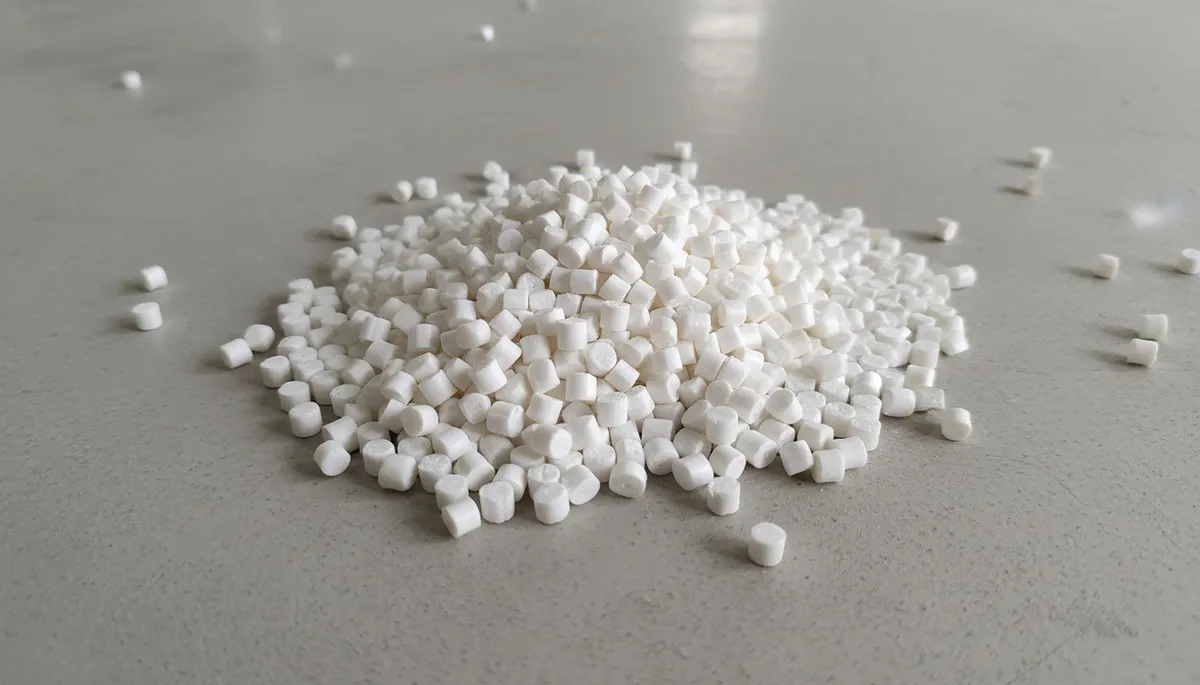
draft angle1 is the single most important geometric parameter you can get wrong in mold design — and it is also one of the easiest to fix if you catch it before steel is cut. A proper draft angle ensures that parts eject cleanly, without scratches, drag marks, or deformation, and it directly impacts cycle time, mold longevity, and part quality.
In production, draft angles typically range from 1° to 3° per side, but the exact value depends on the material, surface finish, part geometry, and texture requirements. A polished PE part might need only 0.5°, while a textured nylon component could require 3° or more.
This guide breaks down the factors that determine draft angle, provides material-specific reference values, and shares real production cases from our factory floor. Whether you are designing your first mold or troubleshooting ejection problems on an existing one, the principles below will help you get it right.
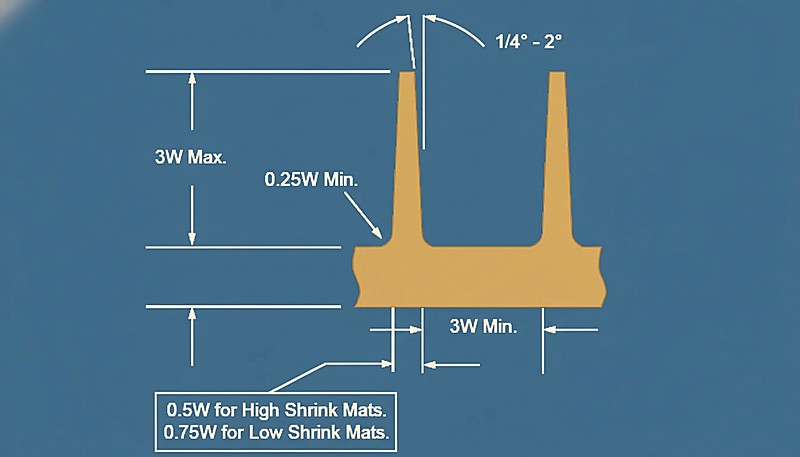 injection mold3ing draft angle diagram” class=”wp-image-53346 size-full” style=”max-width:100%;height:auto;” />
“Draft angles reduce ejection force in injection molding.”True
A proper draft angle minimizes friction between the part and the mold, making ejection smoother and preventing damage.
“All injection molded parts require a draft angle.”False
While most parts benefit from draft angles, certain low-friction materials or flexible designs may allow for zero or minimal draft.
What is the Definition And Importance of Draft Angle?
If you are comparing vendors or planning procurement, our injection molding sourcing guide covers RFQ prep, qualification, and commercial risk checks.
Draft angles are essential in injection molding, ensuring smooth part ejection and preventing damage to the mold or final product.
A draft angle is a slight taper on molded parts to aid removal from the mold, prevent defects, reduce ejection force, and extend mold life. It typically ranges from 1 to 3 degrees.
- Draft angles of 1–3° are standard for most injection-molded parts; specific values depend on material, texture, and geometry.
- Insufficient draft causes ejection defects (scratches, deformation), while excessive draft affects dimensional stability.
- Surface treatments (polishing, chrome plating) reduce friction and allow smaller draft angles.
- CAD simulation and FEA help optimize draft angles before tooling investment.
- Proper draft angle design extends mold life and reduces production costs.
Definition of the Draft Angle
The draft angle is the angle made between the mold cavity or core and the direction of mold opening, that is, the slope of the mold wall to the direction of opening. This angle makes it easier to demould the mould plastic part without having to worry of damaging or deforming it.
Importance of the Draft Angle
A well designed draft angle is capable of avoiding imperfections such as scratched and deformed products during the ejection process hence enhancing the surface finish of the product and incorporating sharp accuracies. Furthermore, getting a right draft angle can increase the mold’s life and lower the production expenses. If the draft angle chosen is too small, high ejection resistance is created which in turn creates surface scratches or deforms the plastic part; again if it is too large, the dimensional stability and mold life is affected. Hence, reasonable design about the draft angle contributes to promote the production quality and efficiency.
What are the Factors That Affect the Design of Draft Angle?
The right draft angle does not come from a single lookup table — it is the result of balancing several interacting variables. In our experience, the four factors below account for 90% of draft angle decisions.
Material type is usually the first factor engineers consider, but surface finish, part structure, mold precision, and process parameters all play important roles. Below we walk through each one with specific recommendations.
Plastic Material
Different plastics shrink and grip the mold differently. The table below summarizes the recommended draft angle ranges for common injection molding materials:
| Material | Recommended Draft Angle | Notes |
|---|---|---|
| Polyethylene (PE) | 0.5° to 1.5° | Low shrinkage, slippery — minimal draft needed |
| Polypropylene (PP) | 1° to 2° | Semi-crystalline, moderate shrinkage |
| Polystyrene (PS) | 0.5° to 1.5° | Amorphous, low shrinkage, rigid |
| ABS | 1° to 2° | Amorphous, good release characteristics |
| Nylon (PA6/PA66) | 2° to 3° | High shrinkage, strong adhesion to mold |
Product Structure
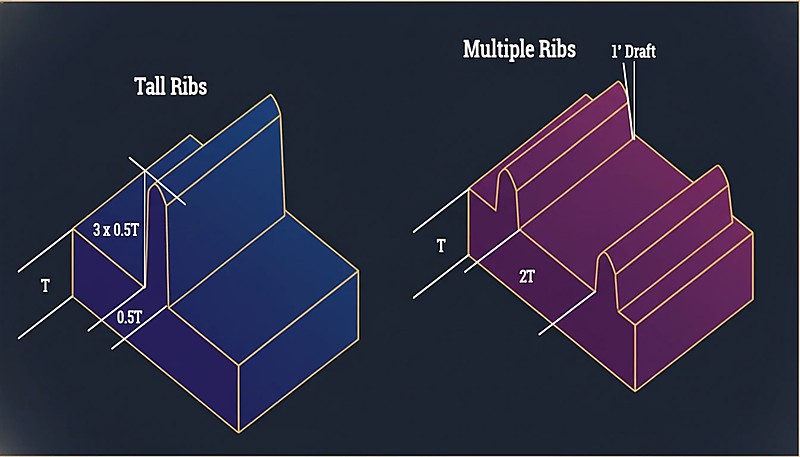
The draft angle is also affected by the shape and structure of the product. It should be noted that products with complex shapes and uneven wall thickness should have a larger draft angle for easy demolding. For example, parts with complex geometric features or micro features such as internal ribs will generate a lot of resistance during demolding, so the draft angle needs to be increased.
Mold Processing Precision
The higher the mold processing accuracy and the smoother the surface, the smaller the required draft angle. On the contrary, if the mold surface is rough, the draft angle needs to be increased to reduce the ejection force. Lubrication, high-precision processing, and surface treatments such as polishing and chrome plating can help reduce friction and improve ejection efficiency.
Injection Process Parameters
Other important process parameters such as injection pressure, temperature and speed also affect the draft angle design. Higher injection pressure and temperature have effect in terms of increasing the shrinkage rate of plastic part and may demand a bigger draft angle. Varying process conditions impact the material’s behaviour in terms of its flow and solidification, meaning that these elements must be addressed in the design process.
What are the Basic Principles of Draft Angle Design?
In our Shanghai factory, we run 47 injection molding machines (90T to 1850T) with an in-house mold manufacturing facility. Draft angle issues are one of the most common tooling problems we encounter — and getting it right from the design stage saves weeks of rework and thousands in tooling costs.
The principles behind good draft angle design are straightforward, but they require judgment. Here are the guidelines our tooling engineers follow when planning a new mold.
The core principle is simple: add enough taper to let the part release without excessive force, but not so much that it compromises dimensions or wastes material. The guidelines below help you find that balance.
Select Draft Angle Based on Plastic Type
Rather than repeating raw numbers, consider the underlying logic: low-shrinkage, slippery materials like PE and PP need less draft because they release easily. High-shrinkage, sticky materials like nylon and glass-filled compounds need more. Here is a practical decision guide:
Consider Product Wall Thickness and Shape
The greater the shrinkage of thick-walled products, the greater the draft angle required. Products with complex shapes, such as internal threads or grooves, also require increased draft angles.
Ensure Smooth Mold Surface
Enhancing the mold surface finish will definitely help to minimize the ejection resistance, implying that it will minimize the draft angle which is required in the molding process. The common practices used are polishing and chrome plating.
Ensure Reasonable Injection Process Parameters
When designing draft angle the necessary parameters of injection process have to be taken into consideration in order to guarantee the mold design compliance with the injection process. For example, decreasing injection pressure and temperature will decrease the shrinkage rate of the designed plastic part and in turn, enhance the draft angle design.
What is the Relationship Between Draft Angle And Mold Life?
The relationship between draft angle and mold life is defined by the function, constraints, and tradeoffs explained in this section. Every ejection cycle puts stress on the mold surface. Without adequate draft, the friction between the cooling plastic and the steel cavity accelerates wear, shortens tool life, and increases maintenance costs.
Draft angles reduce friction during part ejection, minimizing mold stress and preventing sticking and damage. Proper angles extend mold life, improve efficiency, and lower production costs by reducing maintenance needs and preventing early mold failure.
A reasonable draft angle can not only affect the quality of the plastic parts, but it also directly acts on the lifetime of the mold. When the draft angle is too small, there comes a lot of friction between the plastic part and the mold and therefore wears the surface; when the draft angle is too large, it will influence the dimensions of the product. Thus, angle designs required in a draft feature the kind of material used in the mold, the kind of surface treatment required, and other factors that will ensure a longer mold life and improved efficiency.
“Larger draft angles extend mold life by reducing friction.”True
Increased draft angles allow easier part release, reducing mechanical stress and prolonging mold durability.
“Draft angles are unnecessary for injection molding.”False
Without draft angles, parts may stick to the mold, causing defects, increased wear, and frequent maintenance, ultimately shortening mold life.
What are the Methods for Optimizing Draft Angle?
The methods for optimizing draft angle are the main categories or options explained in this section. Modern draft angle optimization relies on a combination of CAD analysis, simulation, and production verification. The best results come from using all three methods together rather than relying on any single approach.
Draft angle optimization adjusts angles considering material, thickness, and geometry, typically 1-3 degrees. Textured surfaces need more. Proper angles enhance mold release, reduce wear, and boost durability.
Computer-Aided Design (CAD)
CAD software can accurately calculate and simulate draft angles for injection molds. Pre-calculating and simulating ideal angles can reduce the possibility of blind design and thus improve design efficiency. For example, when using software for draft analysis, areas where there may be problems can be found and modified.
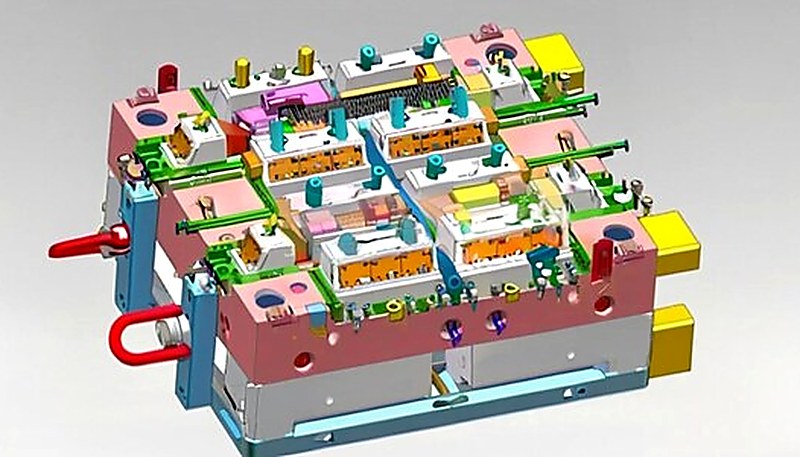
Numerical Simulation
Experimental Verification
In the real production process, it is necessary to compare the effects of different draft angles by experimental confirmation in order to gradually optimize the angle. In the course of experiments, measuring ejection force and observing product surface quality can evaluate the rationality of the draft angle.
Comprehensive Consideration
During draft angle design should take into account the characteristics of the material, structure of the product, processing of the mold and the injection process parameters so that the designed angle of the draft should be capable of sparing the quality of the product and durability of the mold.
What are the Common Problems And Solutions for Draft Angle of Injection Molds?
The common problems and solutions for draft angle of injection molds are the main categories or options explained in this section. Even experienced tooling engineers encounter draft angle problems during production trials. The four issues below are the most common — and fortunately, each has a straightforward fix if you catch it early.
A balanced draft angle in molding ensures easy part release, prevents distortion, minimizes ejection difficulty, and reduces mold wear, promoting smooth production and fewer defects.
Difficult Ejection
When ejection difficulty happens during production, the draft angle should be measured for a possibility of being small. In order to optimize separation, draft angle should be increased and the mold surface can be polished or chromed plated to decrease friction.
Product Deformation
Even experienced tooling engineers encounter draft angle problems during production trials. The four issues below are the most common — and fortunately, each has a straightforward fix if you catch it early.
Surface Scratches
Common causes of a surface scratch include lack of draft angle or a rough surface of the mold. This problem can be solved by raising the angle of the draft and increasing the surface quality of the mold.
Excessive Ejection Force
High ejection force can be attributed to small draft angle and or improper selection of the injection process parameters. The ejection force can be minimized by modifying the draft angle on the parts and improving the injection process variables such as decreasing the injection pressure and temperature.
“Incorrect draft angles cause ejection problems.”True
An improper draft angle can make it difficult to eject parts, leading to defects and increased wear on the mold.
“Excessive draft angles are always better.”False
While excessive draft angles may ease ejection, they can lead to structural weaknesses in parts and unnecessary material waste.
What are the Practical Application Cases of Draft Angle of Injection Molds?
The practical application cases of draft angle of injection molds are the main categories or options explained in this section. The practical cases below show how draft angle adjustments solved real production problems across different materials and part geometries. Each case includes the initial design, the problem encountered, and the corrective action taken.
Case 1: Draft Angle Design for Polypropylene Plastic Parts
A company designed a polypropylene cap with a wall thickness of 2mm. The recommended draft angle of polypropylene is about 1.5°. In the early stage of production, it was found that there were scratches on the edge surface when the product was ejected. After increasing the draft angle to 2°, the scratch problem was solved and the product qualification rate was improved.
Case 2: Draft Angle Design for Nylon Plastic Parts
An electronic product housing made from nylon (PA66) required a draft angle that could accommodate both the external cosmetic surface and internal rib structures. The initial design used a uniform 1.5° draft, but during sampling, the internal ribs showed drag marks. The engineering team increased the core-side draft to 2.5° while keeping the cavity side at 1.5°. This differential draft approach eliminated the drag marks and maintained the external dimensional tolerance within specification.
Case 3: Draft Angle Design for Complex-Shaped Plastic Parts
The shell of a certain household appliance is made of ABS material, with a complex structure, many grooves and ribs. When calculating the draft angle, the initial draft angle is set as the first parameter to 1.5°. During the trial production, some grooves had difficulty in ejection. By increasing the draft angle of the groove to 2.5° and chrome-plating the mold surface, the ejection problem was solved and a perfect product was produced.
Case 4: Small Electronic Product Housing
A company designed housing for a small electronic product using ABS material with an initial draft angle of 1°. During trial production, ejection difficulties and surface scratches were observed, particularly around rib features. The draft angle was increased to 2°, and the mold surface was polished to an SPI A-2 finish. After these changes, ejection force dropped by approximately 40%, and the surface quality met the cosmetic specification without secondary finishing.
Case 5: Automotive Component
An automotive parts manufacturer needs to produce a high-precision nylon body injection molded part with an initial draft angle of 2.5°. Small batch tests found that demolding was difficult and the mold surface wear rate was high. Increasing the draft angle to 3.5° and chrome-plating the mold surface solved the demolding problem and extended the mold life.
Case 6: Household Product Plastic Part
A daily necessities factory produces polypropylene plastic containers with a wall thickness of 3mm. The initial draft angle is 1.5°. During the trial production, the product is easy to deform when demolding. The draft angle is increased to 2.5°, the injection process parameters are optimized, the demolding is smooth, and the product quality is improved.
“Draft angles improve part ejection and reduce molding defects.”True
Draft angles ease the ejection process by reducing friction, which minimizes part damage and mold wear.
“A higher draft angle always leads to better results.”False
While a larger draft angle can ease part removal, too steep of an angle may compromise the structural integrity of the part and increase mold complexity.
What is the Future Development Direction of Draft angle of Injection Molds?
The future development direction of draft angle of injection molds is defined by the function, constraints, and tradeoffs explained in this section. Looking ahead, draft angle design is evolving alongside advances in simulation software, additive manufacturing for tooling, and new polymer formulations. Three trends are shaping the next generation of mold design:
Future injection mold draft angles focus on reducing parting line visibility, enhancing mold release, and minimizing waste, utilizing advanced designs for improved product quality and faster production.
As injection molding technology enhances draft angle design also enhances and adopts the best method. As the computer and numerical simulation technology progresses, the draft angle design will be even more accurate and faster created. At the same time, application of the new materials and processes will also introduce the new challenges and possibilities for the draft angle design. For example, the innovation of 3D printing technology provides new opportunities to design and create the molds of complex shapes.
“Draft angles help reduce mold ejection issues.”True
Draft angles reduce friction during ejection, preventing damage to the molded part and improving cycle times.
“Increasing draft angles always improves mold efficiency.”False
While draft angles improve ejection, excessively large angles can reduce the strength of the molded part and affect design aesthetics.
What Are the Key Takeaways on Draft Angle Design for Injection Molds?
Draft angle is one of the most critical yet commonly overlooked parameters in injection mold design. Getting it right the first time saves tooling rework, prevents production defects, and extends mold life — we see this play out daily on our production floor.
The key to a successful draft angle strategy is balancing material behavior, surface finish requirements, and part geometry. Standard ranges like 1–2° for PE/PP and 2–3° for nylon give you a starting point, but every part is different. That is why CAD draft analysis combined with production trials remains the gold standard for optimization. If you are unsure where to start, most tooling engineers recommend beginning with 1.5° per side for polished surfaces and adding 1° for every 0.25 mm of texture depth.
| Decision Area | What to Verify |
|---|---|
| Material Selection | Match draft to resin shrinkage: low-shrinkage (PE/PP) 0.5-2°, high-shrinkage (nylon/GF) 2-3° |
| Surface Finish | Polished surfaces need less draft; add 1° per 0.25 mm texture depth |
| Part Geometry | Deep draws, ribs, and undercuts all increase required draft angle |
| Process Window | Higher injection pressure/temperature increases shrinkage — plan accordingly |
Need a Quote for Your Injection Molding Project?
Get competitive pricing, DFM feedback, and production timeline from ZetarMold’s engineering team.
Request a Free Quote →
Frequently Asked Questions About Draft Angle in Injection Molding
What is the standard draft angle for injection molding?
The standard draft angle for most injection-molded parts ranges from 1 to 3 degrees per side. For polished mold surfaces with low-shrinkage materials like PE or PP, 0.5 to 1.5 degrees may suffice. Textured surfaces typically require an additional 1 degree of draft for every 0.25 mm of texture depth. In practice, starting with 1.5 degrees per side and adjusting based on material trials is a reliable approach. For deep-draw parts exceeding 100 mm of draw depth, most engineers increase the standard draft to 2 to 3 degrees to account for the greater surface contact area during ejection.
Does draft angle affect part dimensions?
Yes, draft angle directly changes the cross-sectional dimension of a part from top to bottom. For a wall that is 50 mm tall with a 2 degree draft per side, the difference between the top and bottom of that wall is approximately 1.75 mm per side, calculated as 2 times the tangent of the draft angle times the wall height. Engineers must account for this taper in tolerance stack ups, especially for parts that mate or assemble with other components. In precision applications, the draft induced dimensional variation can consume a significant portion of the available tolerance band, so it must be planned from the earliest stages of part design.
Can you injection mold without draft?
Technically yes, but it is almost never recommended for production. Without draft, ejection force increases dramatically, causing surface scratches, part deformation, and accelerated mold wear. Some flexible materials like HDPE or rubber-like TPEs can tolerate near-zero draft in shallow geometries because the material stretches during ejection, but even then, a minimum of 0.5 degrees per side is standard practice for reliable production. For rigid materials like ABS or polycarbonate, attempting zero-draft molding on vertical surfaces almost always results in drag marks and increased scrap rates that outweigh any perceived design benefit.
How does surface texture affect draft angle requirements?
Textured mold surfaces create mechanical interlocking between the plastic and the mold wall, increasing ejection resistance significantly. A common rule of thumb is to add 1 degree of draft for every 0.25 mm of texture depth. For example, a fine leather-grain texture at 0.5 mm depth on a part that would normally need 1 degree of draft now requires at least 3 degrees per side to eject cleanly without drag marks. This is one of the most frequently underestimated factors we see in mold design reviews, and failure to account for texture depth during the design phase often leads to costly mold rework after initial sampling.
What happens if the draft angle is too large?
Excessive draft angle wastes material, thickens part walls unevenly, and can create assembly fit problems in multi-part products. It also reduces usable cavity volume and may require redesign of mating features to accommodate the increased taper. In extreme cases, an oversized draft angle can cause the part to warp during cooling because of uneven wall thickness distribution. Most engineers consider anything above 5 degrees per side unnecessary for standard parts and reserve larger angles only for deep-draw or heavily textured applications. The key is finding the minimum draft that allows reliable ejection without compromising the part functional requirements.
Is draft angle the same for the core and cavity side?
Not always. The core side, which forms the inside of the part, often requires more draft than the cavity side because the plastic shrinks onto the core during cooling, creating greater friction and higher ejection force. A typical guideline is 0.5 to 1 degree more draft on the core side compared to the cavity side. This difference becomes especially important for deep-draw parts or materials with high shrinkage rates like nylon and glass-filled compounds. For shallow parts with generous wall thickness, the core-to-cavity draft difference may be negligible, but it should always be verified during the mold design review. For more information, see our complete guide to injection molding.
-
draft angle: Draft angle is the taper applied to vertical mold surfaces to facilitate part ejection, typically measured in degrees from the mold opening direction. ↩
-
injection molding: Injection molding is a manufacturing process that injects molten polymer into a mold cavity under high pressure, cools it, and ejects the solidified part in a repeatable cycle. ↩
-
injection mold: injection mold refers to an injection mold is the precision steel tool that defines part geometry, surface finish, cooling, and ejection behavior for the injection molding cycle. ↩