

You designed the perfect part, your tooling is dialed in, and first-article inspection passed with flying colors. Then the shipment arrives at your customers dock — and 15% of the parts are scratched, warped, or cracked. Sound familiar? In our experience, packaging is the most underestimated step in the entire moulage par injection supply chain. This guide breaks down the packaging requirements that actually prevent shipping damage, based on what we have seen work (and fail) across thousands of shipments from our Shanghai factory.
Every year, manufacturers lose millions to shipping damage that could have been prevented with proper packaging. For injection molded components specifically, the stakes are high because these parts often have tight tolerances, delicate surface finishes, and geometric features that are easily deformed under load. Whether you are shipping electronic housings, medical device components, or automotive trim pieces, the packaging strategy must be as carefully engineered as the parts themselves. This article covers the specific packaging requirements, materials, testing standards, and validation processes that separate reliable suppliers from those who leave your parts vulnerable to damage in transit.
- Scratches, cracks, and contamination account for over 80% of shipping damage claims on plastic parts
- Proper packaging starts at part design — sharp edges and thin walls demand extra protection
- ESD-safe and moisture-barrier materials are non-negotiable for electronic and medical components
- ISTA 3A and ASTM D4169 [astm-d4169] are the two testing standards every supplier should reference
- Custom packaging costs more upfront but cuts defect rates by 60-80% compared to generic solutions
What Are the Most Common Types of Shipping Damage for Injection Molded Parts?
Surface scratches, cracks, warpage, and particulate contamination are the four dominant failure modes we see in shipped injection molded parts. Surface damage tops the list — parts rubbing against each other inside a bag or tray is the number-one cause of rejected shipments. Cracks typically originate at stress-concentration points: sharp internal corners, thin wall transitions, or gate remnants that were not fully trimmed. Warpage during transit is less common but more expensive, usually caused by uneven temperature exposure inside shipping containers. Contamination — dust, metal shavings, or chemical residue — is a silent killer, especially for medical and optical parts where even microscopic particles trigger rejection.
According to ISTA [ista-3a1] data, roughly 70% of all package damage happens during last-mile handling — rough forklift moves, conveyor belt transfers, and waist-height drops. This means your packaging has to survive rough handling, not just gentle stacking inside a container.
Surface scratches — caused by part-to-part contact in bulk packaging. Aesthetic covers, lens bezels, and glossy housings are most at risk. Usually reworkable but costly at volume.
Cracks and fractures — caused by impact shock or stress at thin walls. Snap-fit clips, bayonet connectors, and thin ribs are the usual victims. Result: scrap loss.
Déformation et gauchissement — caused by temperature cycling or uneven stacking pressure. Large flat panels and long thin profiles suffer most. This is a 100% scrap event.
Particulate contamination — caused by open packaging or dirty transit environments. Medical components, optical lenses, and food-contact parts are affected. Leads to quarantine and expensive re-cleaning.
ESD damage — caused by static discharge during handling.
Electronic housings and sensor carriers are at risk, with latent field failures being the worst outcome.

In our Shanghai factory, we run 47 injection molding machines ranging from 90T to 1850T, and we ship parts globally — from small precision components to large automotive panels. Over the years we have learned that packaging decisions must match part geometry and destination. A 500g electronic housing going to Germany by air freight needs completely different protection than a 2kg automotive trim piece going by sea to the US.
How Should Injection Molded Parts Be Packaged for Safe Transit?
Pièces moulées par injection are best shipped in three layers: individual wrapping, inner trays, and a double-wall outer box. Layer 1 — Individual protection. Every part gets its own barrier. For small, high-value parts this means individual polybags (ideally with VCI or desiccant for corrosion-sensitive materials). For larger parts, a single wrap of PE foam or bubble wrap with tape securing the seam. The goal is zero part-to-part contact.
Layer 2 — Inner packaging. Parts are arranged in trays,egg-carton inserts, or custom-molded pulp trays that hold each part in a fixed position. The tray material matters: expanded polyethylene (EPE) foam trays are excellent for shock absorption, while corrugated pulp trays are cheaper and more environmentally friendly but offer less cushioning. For parts with Class A surfaces, we recommend PET sheet dividers — they are non-abrasive, transparent for inspection, and reusable. Layer 3 — Outer container. Double-wall corrugated cartons with a minimum Edge Crush Test (ECT) rating of 32 lb/in are the baseline for most moule d'injection component shipments. Heavy or high-density parts may require triple-wall boxes or even wooden crates.
The inner dimensions of the outer box should leave no more than 25mm of void space on any side after the inner packaging is placed inside — excess space allows shifting, which causes damage.
“Individual polybag packaging for each part is one of the most effective ways to prevent surface scratches”Vrai
True. Individual bags eliminate part-to-part contact, which is the leading cause of surface damage. The cost per bag is minimal compared to the rework or scrap cost of damaged parts.
“Standard single-wall corrugated boxes provide adequate protection for most injection molded parts”Faux
False. Single-wall boxes routinely fail under stacking loads and vibration during ocean freight. Double-wall cartons with ECT 32+ rating are the baseline minimum we specify for all shipments.
What Packaging Materials Work Best for Precision Plastic Components?
PE foam is the best all-around packaging material for precision plastic components. Add ESD-safe and moisture-barrier materials for sensitive electronic and medical parts. Material selection is not just about cushioning — it is about chemical compatibility, static control, and environmental conditions during transit.
For anything heavier, the bubbles compress permanently under load and you lose protection after the first impact. Use large-cell bubble wrap only as void fill, not as primary cushioning. Corrugated pulp trays are gaining popularity because they are recyclable and can be molded to fit specific part geometries. The downside: they provide almost no shock absorption. We use them for sturdy parts where positioning matters more than cushioning — think threaded inserts or heavy wall brackets.
Anti-static and ESD materials deserve their own conversation, which we cover in the next section. But the short version: if your parts are going anywhere near electronics assembly, you need ESD-safe packaging from the individual bag all the way to the outer carton.
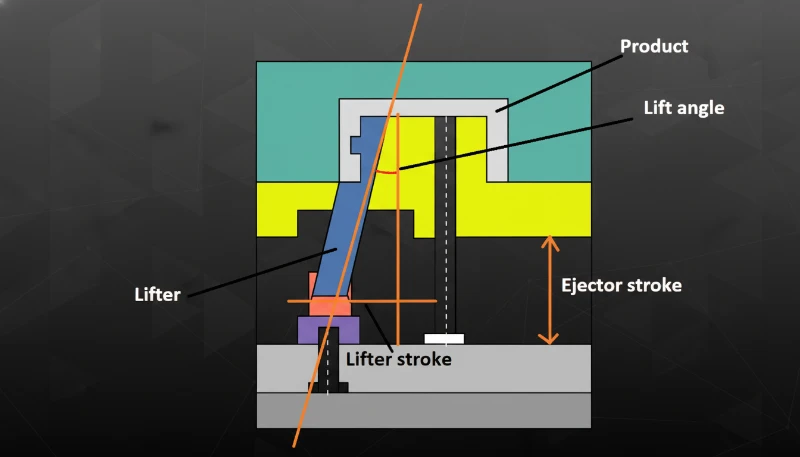
Even parts with complex mold lifter mechanisms or long ejector stroke features need trays that hold them securely. A part with a delicate lifter undercut can be damaged if the tray applies pressure at the wrong angle during the packaging process.
Why Do Moisture and Static Control Matter in Part Packaging?
Two environmental enemies destroy more shipped parts than physical impact: moisture and electrostatic discharge. Both are invisible until the damage is done, and both are preventable with the right packaging strategy. Moisture damage takes several forms. Hygroscopic materials like nylon (PA6, PA66) and polycarbonate absorb atmospheric moisture, which causes dimensional change — a part that was within spec at the factory can measure out of tolerance after a two-week ocean voyage through humid climates.
The fix is simple: desiccant packets (silica gel or molecular sieve) inside sealed moisture-barrier bags (MBBs). Military-grade packaging uses MIL-DTL-81705 rated barrier materials, but for most commercial applications, a PE-lined bag with 2-3 silica gel packets per cubic foot of void space is sufficient.
For maximum protection, vacuum-seal the bag after inserting the desiccant. Static discharge is the hidden killer for electronic-related components. When a PE bag rubs against a plastic part during transit, static charges build up to thousands of volts. If that part is an ESD-sensitive housing, sensor carrier, or connector body, the discharge can damage embedded circuitry or create latent defects that fail in the field. The solution is a layered ESD packaging system: pink poly bags (low-charging) or metallized shield bags for individual parts, pink foam or conductive trays for inner packaging, and ESD-safe outer cartons with grounding labels.
With over 20 years of injection molding experience and 8 senior engineers on staff, we have shipped parts to customers in over 50 countries. We have seen moisture damage destroy an entire container of nylon gears headed for Germany because the supplier skipped desiccant packs. That small decision cost a fortune in scrap and emergency air freight for a replacement shipment.
“ESD-safe packaging should cover every layer from individual bag to outer carton”Vrai
True. A single ESD-safe layer does not provide adequate protection. Static can build up on any non-ESD surface and discharge through the protected layer. The full chain — bag, tray, and outer box — must be ESD-rated.
“Silica gel packets alone are sufficient to protect nylon parts from moisture damage during ocean freight”Faux
False. Silica gel works only inside a sealed moisture-barrier bag. In a standard carton, the desiccant saturates within hours and provides no further protection. You need a sealed PE-lined or metallized barrier bag plus desiccant.
What Industry Standards Govern Injection Molded Part Packaging?
ISTA 3A, ASTM D4169, and JEDEC J-STD-033 are the three primary standards governing injection molded part packaging validation. Each addresses a different risk profile, from parcel shipping hazards to medical device requirements to moisture sensitivity. Many suppliers use color-coded storage boxes to organize parts by batch and specification during the validation process, making it easier to trace packaging performance back to specific tray configurations.
ASTM D4169 [astm-d41692] is the medical device and pharmaceutical industry standard (often required by FDA). It defines performance testing of shipping containers through simulated hazard sequences. DC-13 is the most common test plan for small parcel shipments. ASTM D4169 [astm-d4169] is stricter than ISTA 3A and includes additional conditioning steps like temperature cycling and altitude simulation for air freight.
JEDEC J-STD-033 governs moisture-sensitive component handling. If you ship parts made from hygroscopic resins (nylon, polycarbonate, PBT), this standard defines the moisture barrier bag specifications, desiccant quantity calculations, and humidity indicator card requirements. It also specifies the floor life — how long a part can sit outside its barrier bag before it needs to be re-baked to remove absorbed moisture.
How Can Suppliers Validate Packaging Effectiveness Before Shipment?
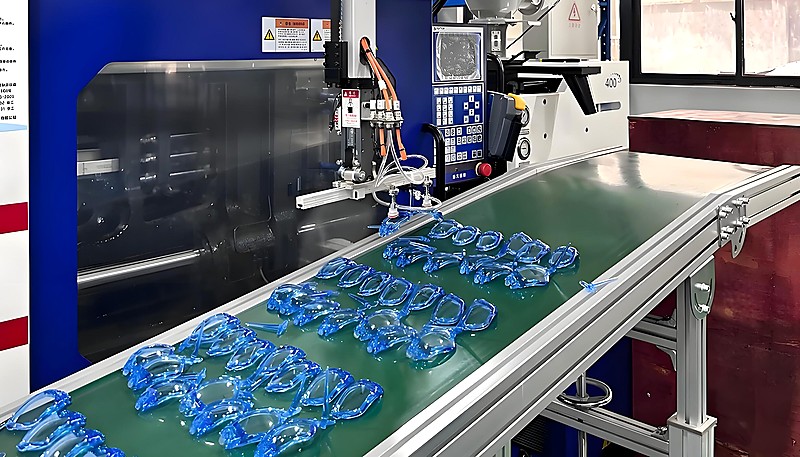
Packaging validation is a repeatable test protocol that suppliers run with actual production parts using ISTA 3A or ASTM D4169 standards. The key is testing with real parts, not dummy weights or empty boxes, because actual part geometry affects how loads distribute inside the package during drops and vibration. Package real production parts using the exact materials and configuration you plan to ship, then run the full test protocol and inspect every part afterward using the same criteria your customer will use for incoming quality inspection.
After testing, inspect every part using the same criteria your customer will use — not a visual once-over. For medical parts, this means dimensional measurement against the drawing specification. For aesthetic parts, it means checking for scratches under proper lighting at the correct viewing angle. Document results in a test report with photos of the packaging before and after testing. This report becomes your evidence base if the customer audits your packaging process. Step 3: Document and lock the packaging specification. Once you find a configuration that passes testing, document every detail: bag type, desiccant quantity, tray orientation, box dimensions, tape type, and label placement. Create a packaging work instruction with photos.
This becomes the locked standard under ISO 9001 [iso-90013] quality management — no changes without formal re-validation and documented approval. If your customer sends a packaging change request, always run a quick validation test before implementing it on the production line. We have seen cases where a well-meaning change from PE foam to corrugated inserts doubled the damage rate because the new material did not absorb vibration as effectively during simulated drop testing. Every modification, no matter how minor it seems, needs to go through the same validation protocol as the original specification. This discipline is what separates suppliers with consistently low damage rates from those who experience periodic quality spikes.
When Should You Choose Custom Packaging Over Standard Solutions?
Custom packaging is not always necessary, but when the situation calls for it, the ROI is undeniable. The decision comes down to part value, part fragility, and annual volume. Here is how to decide. Go custom when: your part has fragile features (thin ribs under 1mm, snap-fit clips, threaded metal inserts that protrude), when surface finish is Class A (automotive exterior, consumer electronics visible surfaces), or when your annual volume exceeds 10,000 units and the per-part packaging cost matters. Custom thermoformed trays molded to the exact part geometry are the single most effective packaging investment for medium-to-high volume production.
They lock each part in place, prevent any movement during transit, and can be designed to stack efficiently in standard carton sizes.
Stick with standard when: your parts are robust (wall thickness over 3mm, no fragile features), volumes are low (under 1,000 units per shipment), or the surface finish is functional rather than cosmetic. Standard PE foam sheets, bubble wrap, and double-wall cartons are perfectly adequate for these scenarios. The key is being honest with yourself about your parts vulnerability — optimism is not a packaging strategy. The cost trade-off looks like this: a custom thermoformed tray might cost $0.30 to $1.00 per unit at 5,000-piece volume, versus $0.08 to $0.15 for generic foam-and-bag packaging.
But if generic packaging gives you a 5% damage rate on a $20 part, your effective cost per good part is $21.00 — already more expensive than custom packaging at 0.5% damage rate. For parts over $5 unit value, custom packaging almost always pays for itself within the first year. For sourcing guidance on finding the right fournisseur de moulage par injection with proper packaging capabilities, see our comprehensive sourcing guide.
How Do Packaging Requirements Vary by Part Geometry and Material?
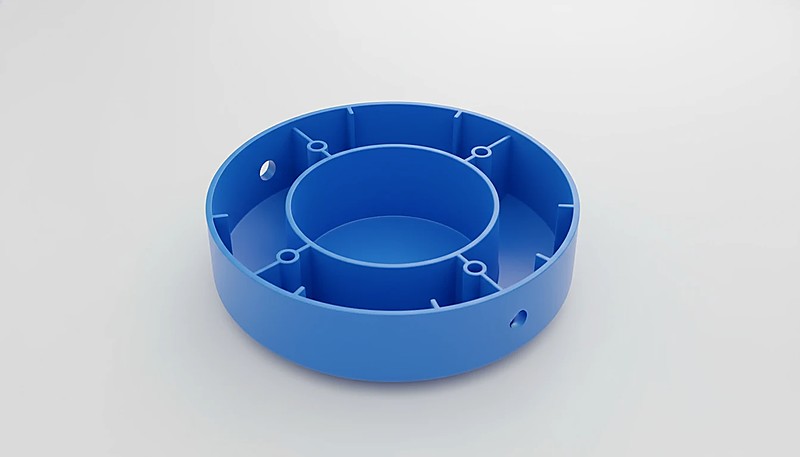
Part geometry and material are the two biggest factors driving packaging requirements. Thin walls demand rigid support, soft materials need breathing room, and brittle composites require targeted shock absorption.
Thin-wall parts (wall thickness under 1.5mm) are fragile under compressive loads and should never be stacked without rigid support. Use individual cavities in a molded tray with a rigid top cover that prevents vertical compression. Do not rely on the part itself to support stacking weight — it will crack. Large flat panels (over 300mm on any side) are susceptible to warpage from uneven pressure and temperature gradients. Ship these in single-layer trays with foam padding on both faces, oriented flat inside the carton. Never stack large panels vertically — the bending stress from vibration during transit causes permanent deformation.
Matériaux souples (TPE, TPU, LDPE) résistent bien aux chocs mais se déforment sous une pression soutenue. Ne les emballez pas trop serrés — laissez de l'espace pour que les pièces ne soient pas comprimées les unes contre les autres ou contre les parois du plateau. Des sacs individuels avec du talc empêchent les surfaces collantes d'adhérer. Pour les pièces nécessitant des tolérances serrées — qu'elles proviennent d'un moulage par injection de précision ou d'opérations d'usinage CNC secondaires — l'emballage doit empêcher même une déformation mineure qui pourrait faire sortir les dimensions des spécifications.
Ayant travaillé avec plus de 400 matériaux plastiques différents et produisant plus de 100 jeux de moules par mois, nous savons de première main que les exigences d'emballage varient considérablement selon le matériau. Une poignée surmoulée en TPU souple nécessite une manipulation complètement différente d'un engrenage rigide en nylon chargé de verre — et se tromper à l'étape de l'emballage peut annuler des semaines de travail de moulage minutieux.
What Are the Most Common Questions About Injection Molding Packaging Requirements?
Questions fréquemment posées
Qu'est-ce que le test ISTA 3A et mon emballage en a-t-il besoin ?
ISTA 3A est un protocole de test standardisé développé par l'International Safe Transit Association qui simule les risques réels d'expédition pour les colis pesant moins de 70 kg expédiés via des réseaux de livraison de colis. Le protocole de test comprend une chute libre de 76 cm sur chaque face, arête et coin, un test de vibration aléatoire à 0,73 grms pendant 60 minutes, et une compression statique équivalente aux charges d'empilage en entrepôt. Si vous expédiez des pièces moulées par injection via un coursier ou des services postaux, réussir le test ISTA 3A vous donne la confiance que l'emballage survivra aux conditions réelles de transit. Nous recommandons la certification ISTA 3A pour toute pièce dont la valeur unitaire dépasse trois dollars ou pour laquelle les dommages esthétiques constituent un critère de rejet.
Combien de sachets dessiccant dois-je utiliser dans un sac barrière à l'humidité ?
Le calcul standard suit les directives JEDEC J-STD-033. En règle pratique, utilisez une unité de gel de silice par pied cube de volume de sac pour les expéditions de moins de sept jours de transit, et deux unités par pied cube pour les voyages plus longs comme le fret maritime. Incluez toujours une carte indicateur d'humidité sans cobalt à l'intérieur du sac barrière afin que l'inspecteur qualité réceptionnaire puisse vérifier d'un coup d'œil si les pièces ont été exposées à une humidité excessive pendant le transit. Pour les matériaux particulièrement sensibles comme le nylon ou le polycarbonate, envisagez d'ajouter également une étiquette indicateur d'humidité secondaire à l'extérieur du carton.
Puis-je réutiliser les plateaux d'emballage d'une expédition précédente ?
Les plateaux réutilisables sont acceptables s'ils sont fabriqués en matériaux durables comme le PET ou le PVC rigide et passent une inspection visuelle pour vérifier l'absence de fissures, de déformation ou de contamination avant chaque utilisation. Les plateaux en mousse EPE et les plateaux en pulpe ondulée ne doivent généralement pas être réutilisés car ils se compriment sous charge et perdent leurs propriétés d'amortissement après le premier cycle d'expédition. Si vous passez de plateaux à usage unique à des plateaux réutilisables, effectuez toujours un test de chute ISTA simplifié pour confirmer que le plateau réutilisé offre toujours une protection adéquate des pièces. Documentez le nombre maximum de cycles de réutilisation autorisé dans votre instruction de travail d'emballage.
De quel emballage mon fournisseur a-t-il besoin pour les pièces médicales moulées par injection ?
Les pièces médicales nécessitent un emballage conforme aux normes d'essai de performance ASTM D4169 ainsi qu'aux exigences ISO 11607 pour les systèmes de barrière stérile si une stérilisation terminale est requise. Les matériaux d'emballage compatibles avec les salles propres, tels que les sachets Tyvek, les sacs en polyéthylène de qualité médicale et les en-têtes à ouverture par pelage validés, sont standard dans l'industrie. Des étiquettes de traçabilité avec numéros de lot, dates de fabrication et codes de lot de stérilisation doivent être apposées sur chaque couche d'emballage. De plus, le processus d'emballage lui-même doit être réalisé dans un environnement contrôlé correspondant aux exigences de propreté de la pièce, et tous les matériaux d'emballage nécessitent une documentation de certificat de conformité.
Comment calculer le retour sur investissement d'un emballage sur mesure par rapport à un emballage standard ?
Commencez par calculer votre perte annuelle actuelle due aux dommages pendant l'expédition : multipliez votre taux de dommage en pourcentage par la valeur unitaire de la pièce multipliée par le volume annuel, plus les éventuels frais de transport associés aux retours et remplacements. Comparez ensuite ce total au surcoût annuel du passage à des plateaux thermoformés sur mesure. D'après notre expérience, les plateaux sur mesure s'amortissent généralement lorsque la valeur unitaire de la pièce dépasse cinq dollars et que le volume annuel est supérieur à dix mille pièces, car ils réduisent les taux de dommage d'environ cinq pour cent à moins d'un demi pour cent. Le seuil de rentabilité est atteint plus rapidement pour les pièces aux finitions de surface coûteuses.
Quelle est la différence entre un emballage antistatique et un emballage sûr contre les décharges électrostatiques (ESD) ?
Les matériaux antistatiques sont conçus pour résister à la génération de charge statique lors d'une manipulation normale — ils n'accumulent tout simplement pas facilement de charge. L'emballage sûr contre les décharges électrostatiques (ESD) va plus loin en fournissant un chemin de dissipation contrôlé qui permet à toute charge accumulée de se décharger en toute sécurité à la terre, empêchant un événement de décharge soudaine à travers la pièce elle-même. Pour les boîtiers électroniques moulés par injection, les supports de capteurs et les corps de connecteurs, la spécification correcte est un emballage sûr contre les ESD avec une résistivité de surface comprise entre dix puissance cinq et dix puissance onze ohms par carré. L'antistatique seul est insuffisant pour les pièces qui seront assemblées dans des systèmes électroniques.
Why Choose ZetarMold for Injection Molded Parts with Validated Packaging?
L'emballage n'est pas une réflexion après coup — c'est la dernière étape de fabrication qui détermine si vos pièces arrivent conformes ou à la ferraille. Chez ZetarMold, nos 30+ chefs de projet anglophones coordonnent les spécifications d'emballage avec chaque client avant la première série de production. Nous opérons sous les systèmes de management de la qualité ISO 9001 [iso-9001] et ISO 13485, ce qui signifie que chaque décision d'emballage est documentée, validée et reproductible.
Que vous ayez besoin d'un emballage pour colis testé ISTA 3A, d'un emballage médical compatible avec les salles propres, ou de plateaux thermoformés sur mesure pour des composants délicats, nous avons l'expérience et les systèmes pour livrer des pièces qui arrivent prêtes pour l'assemblage. Get a free quote pour votre prochain projet de moulage par injection — et parlez-nous de vos besoins en matière d'emballage.
Nous inclurons une spécification d'emballage validée dans votre devis sans frais supplémentaire.
-
ista-3a: L'ISTA 3A est un protocole d'essai de l'International Safe Transit Association pour les produits emballés pesant moins de 70 kg expédiés par service de colis. ↩
-
astm-d4169: L'ASTM D4169 fait référence à une pratique standard pour les essais de performance des conteneurs et systèmes d'expédition, largement utilisée dans la validation de l'emballage des dispositifs médicaux. ↩
-
iso-9001: L'ISO 9001 fait référence à une norme internationale qui spécifie les exigences pour un système de management de la qualité, y compris les procédures documentées d'emballage et de manutention. ↩





 EN
EN  ES
ES  FR
FR  DE
DE  PT
PT  AR
AR  RU
RU  JA
JA  KO
KO  IT
IT  NL
NL  TR
TR  PL
PL 