You have one shot at first production. Pick the right proveedor de moldeo por inyección, and your parts arrive on-spec, on-time, and on-budget. Pick wrong, and you burn through your seed funding on tooling rework, delayed launches, and parts that fail QC. This guide walks you through every decision point — from evaluating technical capabilities and MOQs to spotting red flags before they become expensive problems. Every recommendation comes from two decades of watching startups succeed or implode at the production handoff.
- Prioritize suppliers with in-house tooling — it cuts lead time by 30–50% and eliminates finger-pointing.
- Verify ISO 9001 at minimum; ISO 13485 matters if your product is medical-adjacent.
- Negotiate MOQs aggressively — many factories will flex for startup volumes if tooling is confirmed.
- Ask for a first article inspection (FAI) report before approving production.
- Get everything in writing: tolerances, surface finish, material certs, delivery schedule.
Why Does Your Choice of Injection Molding Supplier Matter for First Production?
Your first production run is a threshold moment. The supplier you choose determines whether your product launches on schedule or gets stuck in weeks of rework. A common mistake first-time founders make is treating injection molding like ordering parts from a catalog — pick a supplier, send a 3D file, and wait. In reality, moldeo por inyección is a collaborative engineering process, and the supplier’s technical depth directly impacts part quality, cycle time, and cost.
The stakes are especially high for startups. You usually have limited runway, one shot at a product launch, and no room for a second tooling build if the first one fails. According to a 2023 survey by the Society of Plastics Engineers (SPE1), tooling issues account for 40–60% of injection molding project delays. Choosing a supplier with deep engineering support — not just manufacturing capacity — is the single most impactful decision you can make before placing your first order.
What Should Startups Look for in an Injection Molding Supplier?
Focus on five non-negotiables: engineering support, in-house tooling, material expertise, quality systems, and communication. If a supplier is weak on any of these, the cracks will show up during your production run — usually as delayed tooling, dimensional drift, or unresponsive project management when you need answers most.
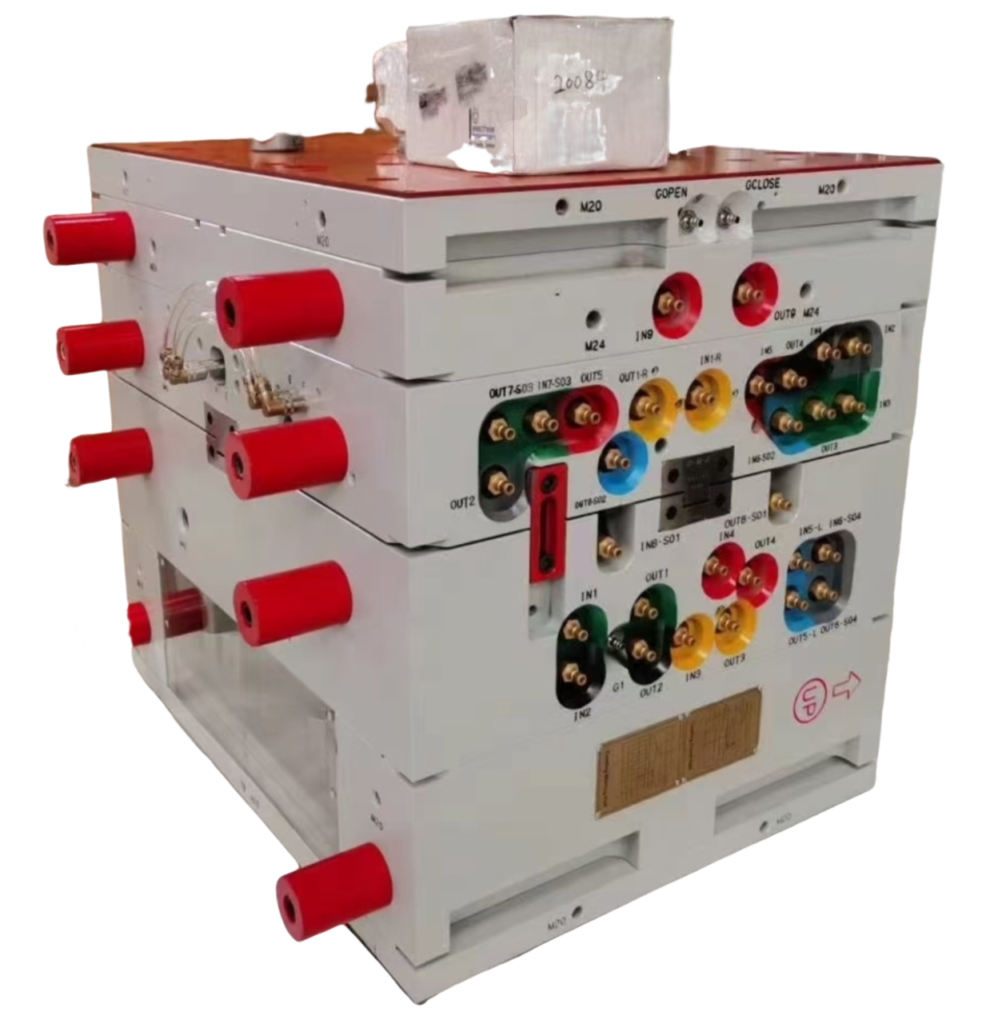
Engineering support is the one most startups overlook. You want a supplier who pushes back on your design — not one who just builds whatever you send. A good supplier will flag draft angle issues, wall thickness inconsistencies, and gate placement problems before steel is ever cut. This is where having molde de inyección engineering expertise in-house makes the difference between a tool that runs 100,000 shots without issue and one that needs constant maintenance.
In our Shanghai factory, we have seen hundreds of startup projects succeed or stall at the production gate. With 8 senior engineers averaging 15+ years of experience each, we have learned that the best results come from early design collaboration — not late-stage firefighting. A supplier who catches a sink-mark risk during DFM2 review saves you weeks of tooling iteration.
How Do You Evaluate a Supplier’s Technical Capabilities?
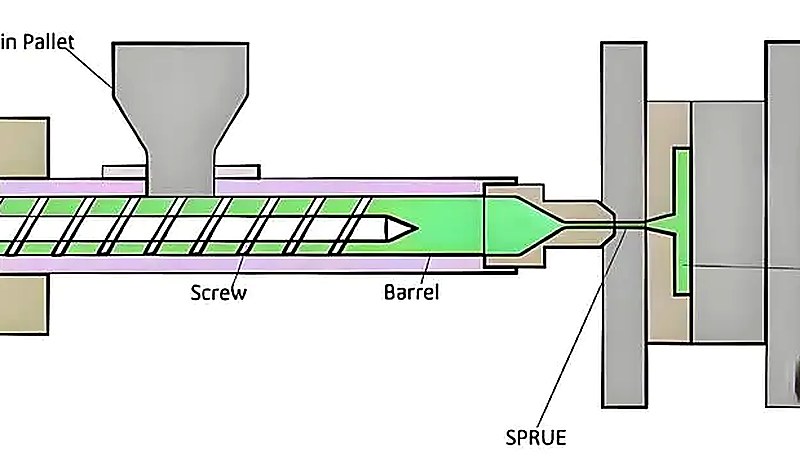
The most important capability indicators are machine tonnage range, total machine count, and in-house mold making. A supplier with five machines all under 200T cannot help you if your part requires a 500T press. Similarly, a factory that outsources all tooling will add two to four weeks to your lead time and give you less control over mold quality. Ask for their machine list with tonnage, brand, and year of manufacture.
Ask for their machine list — tonnage, brand, and year of manufacture. Reputable suppliers will share this without hesitation. Also check their material handling capabilities: do they have dryers for hygroscopic resins like nylon and polycarbonate? Do they offer scientific molding with pressure and temperature monitoring? These details separate a manufacturer who can hold ±0.05 mm tolerances from one who struggles with ±0.2 mm.
What Minimum Order Quantities (MOQs) Should Startups Expect?
MOQs are where most startup-supplier negotiations either succeed or break down. The standard industry MOQ for injection molding ranges from 1,000 to 10,000 units depending on part complexity, material, and cycle time. But here is the reality: if you are bringing tooling business, many factories will negotiate down to 300–500 units for initial runs. The key is to frame the conversation around long-term volume potential, not just the first order.
Be transparent about your projections. A good supplier would rather win a 5,000-unit first run that grows to 50,000 units per year than demand a 20,000-unit MOQ that kills the deal entirely. Some factories offer bridge production programs specifically for startups — lower MOQs with slightly higher per-unit pricing, scaling to production pricing as volume ramps.
How Important Is In-House Tooling vs. Outsourced Mold Making?
In-house tooling is the single biggest differentiator between a smooth production launch and a nightmare of delays. When a supplier outsources mold fabrication, you lose direct control over timeline, quality, and communication. The mold shop has their own queue, their own priorities, and their own interpretation of your tolerances. Every change request goes through two layers of project management instead of one.
With in-house tooling, the supplier controls the entire DFM-to-production pipeline. If a mold needs an adjustment after T1 sampling, the tool room can rework it in days instead of weeks. For startups on tight launch schedules, this difference alone can determine whether you hit your go-to-market window or miss it by a quarter.
Our in-house mold manufacturing facility produces 100+ mold sets per month, which means your tooling project does not wait in an external queue. For startup customers, we typically deliver T1 samples within 25–35 days from mold design approval — because the same engineering team that reviews your DFM also runs the CNC machines.
What Quality Certifications Should a Startup Supplier Have?
ISO 9001 is the minimum certification your supplier must hold. This means they have a documented quality management system and are audited regularly. If your product touches medical devices, food contact, or automotive applications, you need ISO 13485, ISO 22000, or IATF 16949 respectively. Do not accept a supplier who says they are basically compliant but cannot produce a current certificate.
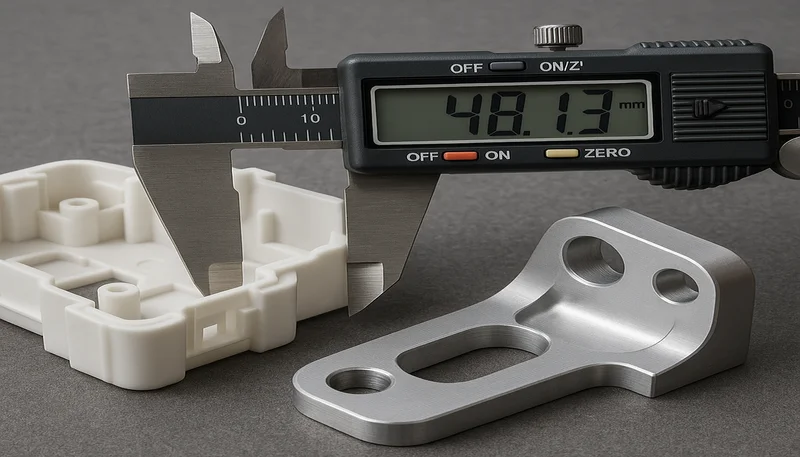
Beyond certifications, ask about their inspection protocols. Do they perform incoming material inspection? In-process monitoring? Final inspection with CMM reports and first article inspection (FAI3)? A supplier with robust quality systems will show you their inspection plan for your specific part before you place the order — because they have already thought about it during the quoting process. Suppliers who treat quality as an afterthought will treat your parts the same way.
“ISO 9001 certification is the minimum quality standard a startup should require from an injection molding supplier.”Verdadero
Correct. ISO 9001 provides a baseline quality management framework. Without it, you have no assurance that the supplier’s processes are documented, audited, or repeatable.
“A supplier without in-house tooling can match the lead times of one that builds molds internally.”Falso
False. Outsourced tooling adds 2–4 weeks of lead time due to queuing at the external mold shop, plus communication delays between the molder and the toolmaker.
How Can Startups Manage Costs Without Sacrificing Quality?
Cost control in injection molding is not about finding the cheapest supplier — it is about making smart trade-offs. The four biggest cost levers are: material selection, part design optimization, mold complexity, and production volume. Change any one of these and the per-unit price shifts significantly.
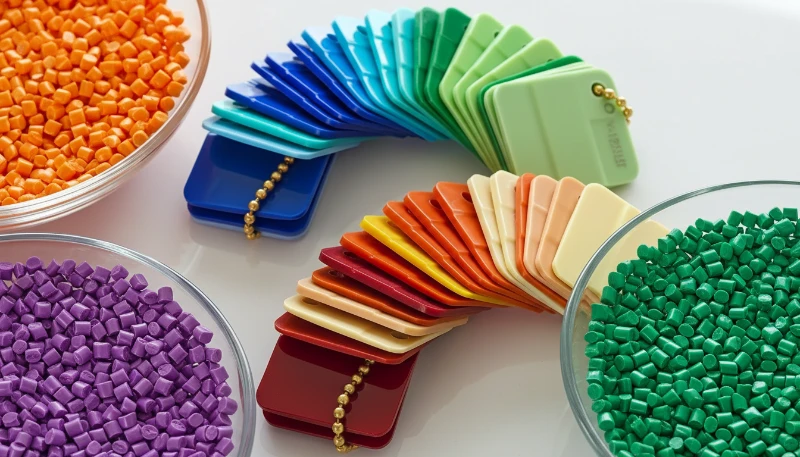
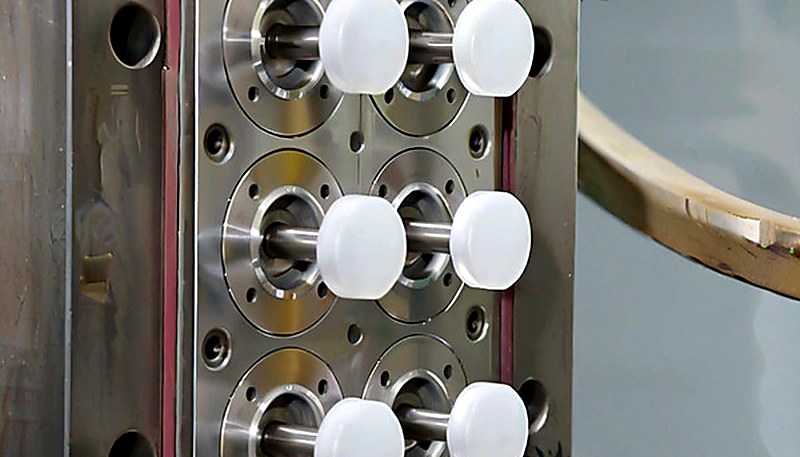
Start with design for manufacturing (DFM). A part designed with uniform wall thickness, adequate draft angles, and minimal undercuts can be molded in a simpler tool that costs 30–50% less. Work with your supplier’s engineering team during the design phase, not after. Material selection also matters: using a commodity resin like PP or HDPE instead of an engineering-grade material like PEEK can cut material costs by 80%, but only if the application allows it. Never specify a more expensive material than the application requires, and never downgrade to save cost without understanding the performance implications.
What Red Flags Should Warn You Away from a Supplier?
Some warning signs are obvious: a supplier who refuses factory audits, cannot provide references, or quotes prices 60% below market average. But the subtle red flags are more dangerous because they only appear after you have committed. Watch for these: slow email response times during the quoting phase (it only gets worse after you pay), reluctance to share machine specifications, no clear quality inspection plan in their quotation, and pushing you toward their preferred material instead of discussing your requirements.
Another red flag is a supplier who agrees to every specification without asking questions. Good suppliers push back — they want to understand your application, suggest alternatives, and flag risks. A supplier who says yes to everything is either not paying attention or plans to cut corners to meet unrealistic commitments. In our experience, the suppliers who ask the most questions during quoting deliver the best results in production.
“A supplier who asks detailed questions during the quoting phase is more likely to deliver a successful production run.”Verdadero
True. Detailed questions indicate the supplier is analyzing your part requirements, not just guessing. This engineering engagement upfront prevents costly issues during production.
“The cheapest injection molding quote is always the best choice for a startup with limited funding.”Falso
False. A low quote often hides costs in tooling rework, missed delivery dates, and quality failures. Total cost of ownership — including scrap rate, inspection costs, and delay impact — matters far more than unit price.
When Should You Switch from Prototyping to Production Supplier?
If your projected annual volume exceeds 5,000 units and your design is frozen, it is time to move to injection molding. Many startups prototype with 3D printing or low-volume urethane casting, then face this decision point. Below that threshold, 3D printing or vacuum casting may still be more economical depending on part geometry and material needs.
As a rule of thumb, if your projected annual volume exceeds 5,000 units and your design is frozen, it is time to move to injection molding. Below that threshold, 3D printing or vacuum casting may still be more economical. But if you need material properties that only injection molding can deliver — structural integrity, specific surface finishes, or certified materials — the switch may be justified at lower volumes.
The transition from prototyping supplier to production supplier is also a good time to reassess. Some prototyping shops offer production molding, but their capabilities may not match a dedicated injection molding manufacturer. Evaluate whether your prototyping partner can meet production-level tolerances, volumes, and quality requirements — or whether you need a specialist.
How Do You Protect Your IP When Working with an Overseas Supplier?
IP protection is a legitimate concern for startups working with overseas suppliers, but it should not paralyze your decision-making. The practical approach: sign a non-disclosure agreement (NDA) before sharing detailed designs, register your patents and designs in the supplier’s country before production begins, and choose suppliers with established export track records to markets with strong IP enforcement.
Suppliers who have been exporting to North America and Europe for years have a commercial incentive to protect your IP — their reputation and future business depend on it. Ask about their NDA process, data security measures, and whether they have experience with IP-sensitive industries like medical devices or consumer electronics. A supplier who takes IP seriously will have clear policies and will not be offended that you asked.
Since 2013, we have focused exclusively on overseas business, building a team of 30+ English-speaking project managers and 10+ QC specialists. For startup founders, this means your project updates, quality reports, and engineering discussions happen in clear English — not through a translation layer that loses critical details.
Preguntas frecuentes
What is the typical lead time for a production mold?
Most production molds take four to eight weeks from design approval to T1 samples. Complex molds with side actions or multi-cavity configurations can take ten to twelve weeks. Suppliers with in-house tooling often deliver on the shorter end because there is no external queue to manage. Plan your project timeline with at least one revision cycle built in after T1 sampling to account for any dimensional adjustments that may be needed before you give your final production approval to the supplier.
How much does a production mold cost for a startup?
Production molds range from several thousand dollars for simple single-cavity tools to over fifty thousand for multi-cavity molds with complex actions. For most consumer product startups, expect to budget ten to twenty-five thousand for a quality production mold. The cost depends on part size, complexity, number of cavities, material requirements, and expected production volume over the tool lifetime. A reputable supplier will provide a detailed cost breakdown showing steel costs, machining hours, and special features like hot runners or lifters.
Should a startup source from a local or overseas supplier?
It depends on your priorities and product requirements. Local suppliers offer faster communication, easier factory visits, and shorter shipping times, but they typically charge two to three times more per unit and may have limited tooling capabilities. Overseas suppliers in China offer significant cost advantages and deep tooling expertise, especially if they have English-speaking project managers and established export experience. Many successful startups prototype locally for speed, then transition production overseas once the design is frozen and volumes justify the tooling investment.
What is a first article inspection (FAI) report?
An FAI report documents the dimensional measurement of the first production samples against your part drawing specifications. It verifies that the mold produces parts within tolerance before full production begins. Always request an FAI report because it is your quality baseline and the best way to catch mold issues early when they are cheapest to fix. Skipping this step risks shipping defective parts to your customers and incurring costly warranty claims or product recalls that can cripple a young company.
Can a startup request design changes after mold fabrication begins?
Yes, but changes become progressively more expensive as the mold build advances. Steel-safe changes that remove metal rather than add it are relatively affordable and can usually be completed within a few days. However, changes that require welding, re-machining, or adding entirely new features like lifters or side cores can be costly and may add weeks to the delivery timeline. This is why thorough DFM review and physical prototyping before committing to production tooling is critically important for startups with limited budgets.
What payment terms should a startup negotiate?
Standard terms are a thirty to fifty percent deposit with the balance due before shipment. For mold tooling, expect fifty percent upfront and fifty percent after T1 sample approval. Negotiate production payment terms based on your relationship history and order frequency. After a few successful production runs and demonstrated payment reliability, many suppliers will offer net-thirty payment terms on production orders. Never pay the full amount upfront for tooling, as it removes your leverage if samples do not meet agreed specifications.
How do I verify a supplier production capacity?
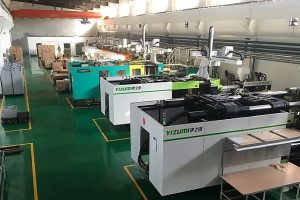
Request their complete machine list with tonnage ranges and brand names, ask for photos or videos of their facility showing actual production equipment, and check if they maintain documented capacity allocation plans. A supplier running at near-full utilization may struggle to fit your job into their schedule without making quality compromises. Also ask about their peak season capacity, typical lead times during busy periods, and whether they subcontract overflow work to other shops, which can significantly affect quality consistency and communication.
What documentation should I receive with my first production order?
You should receive dimensional inspection reports or FAI results documenting actual versus nominal dimensions, material certificates of analysis confirming resin grade and lot number, process parameter records showing injection pressure and temperature settings used during production, packaging specifications confirming adequate part protection during transit, and any agreed-upon test results such as pull tests or environmental exposure data. This documentation package serves as your permanent quality record and is essential for demonstrating regulatory compliance in your target markets including the United States and the European Union.
Choosing your first injection molding supplier does not have to be a leap of faith. With the right questions, the right evaluation framework, and a partner who brings engineering depth to the table, your first production run can be smooth, repeatable, and on-budget. At ZetarMold, we work with startups every day — providing in-house tooling, 47 injection molding machines from 90T to 1850T, ISO-certified quality systems, and a team of 30+ English-speaking project managers to guide you from DFM through delivery. Ready to discuss your project? Get a free quote and let our engineers review your design.
-
SPE: The Society of Plastics Engineers (SPE) is a professional association for plastics scientists and engineers, providing technical resources and industry standards. ↩
-
DFM: Design for Manufacturing (DFM) refers to the engineering practice of optimizing part design to reduce manufacturing cost and improve quality during the production process. ↩
-
FAI: First Article Inspection (FAI) is a quality verification process that compares the first production sample against design specifications. ↩

 EN
EN  ES
ES  FR
FR  DE
DE  PT
PT  AR
AR  RU
RU  JA
JA  KO
KO  IT
IT  NL
NL  TR
TR  PL
PL