 Ir al contenido

What Is an Injection Mold and Why Is It Critical to Manufacturing?
“La moldura por sobreinyección de dos disparos generalmente produce uniones de mayor calidad y más fuertes que la moldura por sobreinyección con inserto, pero requiere una mayor inversión en herramientas y máquinas.” moldeo por inyección1 process. It defines the part geometry, surface finish, and dimensional accuracy — making it the single most critical component in any plastic manufacturing operation. Without a properly designed mold, consistent production is impossible regardless of machine quality or material selection.
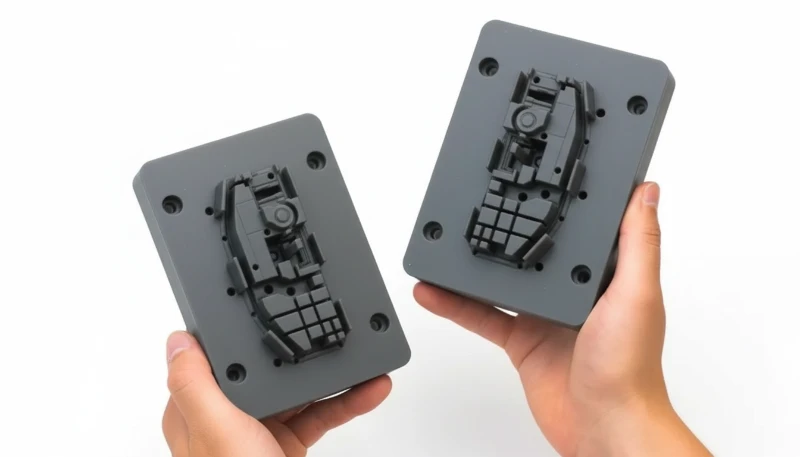
La naturaleza crítica de los moldes de inyección surge de tres factores: definen la precisión dimensional, la calidad del acabado superficial y la eficiencia de producción. Un molde con cavidades mal espaciadas o núcleos desalineados producirá piezas fuera de especificación independientemente de los parámetros de la máquina. Las texturas superficiales – desde acabados Clase A de alto brillo hasta texturas mate como VDI 3400 – se graban físicamente en el acero del molde y se transfieren directamente a cada pieza. Y diseño de moldes determina el tiempo de ciclo mediante el diseño de canales de enfriamiento, el equilibrio de cavidades y la eficiencia de eyección. Elegir el tipo de molde correcto para su aplicación no es solo una decisión técnica – es una decisión empresarial estratégica que afecta el costo de la herramienta, el precio por pieza, la flexibilidad de producción y el tiempo de comercialización.
- Single-cavity molds fit prototypes, tight tolerances, and lower tooling budgets.
- Multi-cavity molds reduce unit cost only when annual demand justifies the higher tool investment.
- Family molds work best for related parts with similar volume, resin, and fill behavior.
- Stack molds raise output per cycle but demand tighter alignment, maintenance, and machine setup.
- Overmolding supports multi-material parts, but material compatibility and tooling cost must be checked early.
What Are the Main Types of Injection Molds?
Injection molds are categorized by cavity configuration, production strategy, and application requirements. Understanding each type helps manufacturers select the optimal tool for their specific production goals.
| Tipo de molde | Configuration | Lo mejor para | Cavities | Typical Cost |
|---|---|---|---|---|
| Molde de una cavidad | One cavity per shot | Prototyping, low volume, high precision | 1 | Low ($3k-$15k) |
| Multi-Cavity Mold | Multiple identical cavities | High-volume production runs | 2-100+ | High ($20k-$200k+) |
| Family Mold | Multiple different parts | Related parts in one tool | 2-8 parts | Medium ($15k-$60k) |
| Stack Mold | Multiple levels stacked | Space efficiency, high output | 2x-4x standard | Very High ($50k-$500k+) |
| Overmolding Mold | Two-shot or insert molding | Multi-material parts | 1-4 cavities | High ($25k-$150k) |
“El equilibrio de cavidades – lograr condiciones de llenado idénticas en todas las cavidades – es más desafiante en moldes multicavidad que en moldes de una cavidad.”Verdadero
¿para Su Proyecto de Moldeo por Inyección?2 must deliver equal melt volume, temperature, and pressure to each cavity simultaneously. Uneven runner length, subtle temperature gradients, or slight machining variations can cause cavity-to-cavity variations in weight, dimensions, and cosmetic quality. This balancing challenge increases exponentially with cavity count.
“Multi-cavity molds always produce lower per-part costs regardless of production volume.”Falso
Multi-cavity molds only offer economic advantages when production volume justifies the higher tooling cost. For runs under 50,000-100,000 parts, the per-part cost savings from reduced cycle time and labor often fail to offset the mold’s higher initial investment. Single-cavity molds may actually be more economical for medium volumes when you factor in mold maintenance and cavity-to-cavity quality consistency requirements.
When Should You Choose a Single-Cavity Mold?
Los moldes de una cavidad son el tipo de molde fundamental – se produce una pieza por ciclo de máquina. A pesar de su simplicidad, ofrecen ventajas distintivas que los convierten en la opción óptima para muchas aplicaciones.
At ZetarMold, we recommend single-cavity molds for:
Prototyping and development: Quick tooling (USD 3k-10k) allows rapid design iterations without major capital commitment. Changes are easier and cheaper with one cavity.
Low to medium volume production: Annual volumes under 50,000-100,000 parts rarely justify multi-cavity tooling costs.
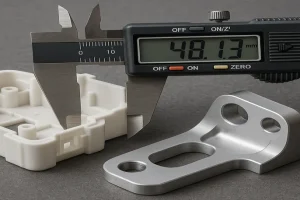
High-precision applications: Tight tolerances (±0.05mm or tighter) are easier to maintain with one cavity. moldeo por inyección de precisión3 benefits from focused attention to cavity quality.
Piezas grandes o complejas: Las piezas mayores de 200mm o con geometrías complejas a menudo consumen toda la fuerza de cierre y capacidad de inyección de la máquina.
Future design uncertainty: If part design may change, single-cavity molds are easier and cheaper to modify or replace.
La contrapartida es un costo por pieza más alto para series de producción – pero cuando la flexibilidad, la precisión o una menor inversión en herramientía son prioridades, los moldes de una cavidad ofrecen la mejor economía general.
When Do Multi-Cavity Molds Make Economic Sense?
Multi-cavity molds are economically justified when annual demand is high enough to recover higher tooling cost through lower unit cost. Multi-cavity molds make economic sense when your annual production volume exceeds 50,000–100,000 identical parts, at which point the higher tooling cost is quickly offset by dramatically lower per-part prices. By producing two, four, eight, or even hundreds of copies per cycle, a multi-cavity mold cuts unit cost through superior production efficiency — but only when volume justifies the investment.
Use multi-cavity molds when:
Annual volume exceeds 100,000 parts: The break-even point varies by part size and complexity, but 100,000+ parts per year is a common threshold.
Part design is stable: Multi-cavity tools are expensive to modify. Ensure the design is production-ready before investing.
Consistent quality is required: High-volume products need consistent part-to-part quality across cavities.
Machine capacity allows: Ensure your molding machine has enough clamping force (multiply single-cavity force by cavity count) and shot capacity.
Per-part cost is critical: Consumer products and automotive components often require multi-cavity molds to achieve target pricing.
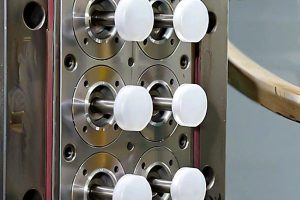
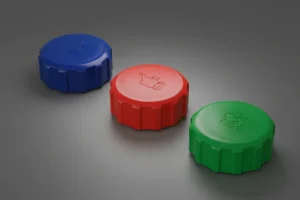
In our experience, 4-cavity and 8-cavity molds are the most common configurations for mid-range production (100,000-1,000,000 parts annually). Higher cavity counts (16, 32, 64+) are typically reserved for very small parts like bottle caps, electrical connectors, and fasteners.
What Are Family Molds and When Are They Useful?
Family molds are molds that produce related parts in one cycle and are useful when those parts share material, shrinkage, and demand. Family molds are most useful when you need 2–8 different but related parts in moderate volumes, especially components that will be assembled together in the same product. By cutting multiple part geometries in a single mold base, a family mold eliminates separate tooling costs and ensures all components are produced from the same material batch for consistent fit and color.
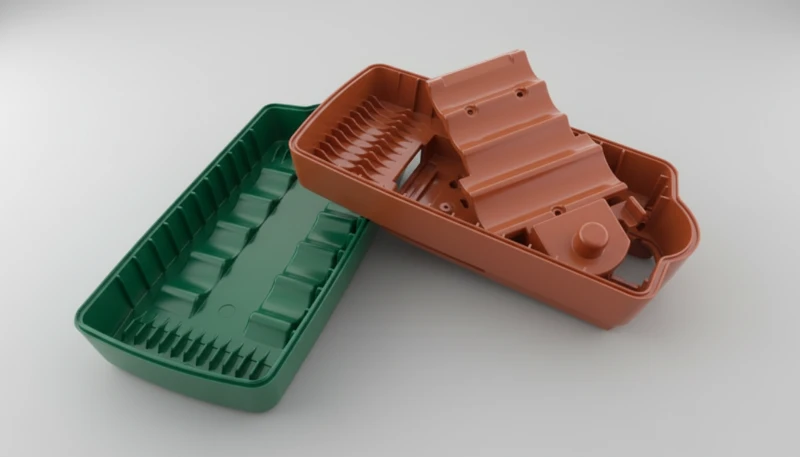
Family molds excel when:
Parts form an assembly set: A housing, lid, and internal bracket produced together eliminates inventory mismatches and simplifies assembly logistics.
El material es idéntico: Todas las cavidades deben usar la misma resina plástica – diferentes materiales requieren moldes separados.
Part sizes are similar: Large variations in part volume cause cavity imbalance and filling issues.
Volume is moderate: Production volume should be high enough to justify the family mold but low enough that dedicated molds for each part would be wasteful.
Color matching is critical: Producing all components together ensures perfect color consistency.
The challenges include: cavity balance is more difficult due to differing part geometries; if one cavity wears or requires maintenance, the entire mold must be removed from the machine; and cycle time is limited by the slowest-filling cavity. Despite these challenges, family molds can reduce overall tooling costs by 40-60% compared to separate molds for each component.
How Do Stack Molds Improve Production Efficiency?
The main way stack molds improve production efficiency is by increasing output per cycle without a proportionally larger machine footprint. Stack molds improve production efficiency by placing multiple levels of cavities — typically two or four — vertically within a single mold base, effectively doubling or quadrupling output per cycle without requiring a larger injection molding machine. Each level operates independently, so the part count per shot multiplies while machine footprint and clamp tonnage stay the same.
Stack mold advantages:
Double or quadruple output: A 2-level stack produces 2x parts per cycle; a 4-level stack produces 4x.
Space efficiency: Same machine footprint, twice the output. Critical for facilities with limited floor space.
Lower per-part cost: Machine time is amortized across more parts per cycle.
Improved cavity balance: All cavities are equidistant from the sprue, improving balance compared to traditional multi-cavity layouts.
Stack mold challenges:
Higher tooling cost: Stack molds cost 2-3x more than equivalent conventional multi-cavity molds.
Increased mold height: Requires machines with larger daylight (mold opening stroke) and sufficient clamping force.
Complex maintenance: More components mean more potential failure points and longer maintenance downtime.
Longer cycle times: Stack molds often require additional time for layer separation and ejection between levels.
In our factory, we’ve successfully used 2-level stack molds for high-volume consumer products and automotive interior components. The investment is substantial but justified when production volumes exceed 500,000 parts annually.
What Are Overmolding Molds and How Do They Work?
Overmolding molds are molds that combine multiple materials by molding one material over or around another substrate in sequence. Overmolding molds work by injecting a second material — typically a soft TPE or TPU — over a previously molded rigid substrate in a two-shot or multi-shot process, creating a single integrated part with combined properties. Common applications include soft-touch grips on power tools, multi-color housings, and sealed electronic enclosures where a rigid core meets a flexible exterior.
Two overmolding approaches:
Two-shot molding: A rotary mold with two separate molding stations. First shot produces the substrate; then the mold rotates 180°, and the second shot molds the overmold material onto the substrate. Highest quality but requires specialized machine and mold.
Insert molding: A pre-molded substrate (or metal insert) is manually or robotically placed into a single-shot mold, then the overmold material is injected around it. Lower tooling cost but higher labor cost and cycle time.
“Two-shot overmolding generally produces higher quality and stronger bonds than insert overmolding, but requires higher tooling and machine investment.”Verdadero
Two-shot molding bonds materials in their molten state, creating a molecular-level bond that is stronger than mechanical interlocking alone. The process eliminates human handling, reducing contamination and cycle time variability. However, two-shot molds cost 2-3x more than insert molds and require a rotary machine with synchronized injection units. Insert molding is more economical for lower volumes and when material compatibility allows simpler bonding strategies.
“Any two plastic materials can be overmolded together without special considerations.”Falso
La compatibilidad de materiales es crítica para el sobremoldeo exitoso. Los materiales del sustrato y del sobremoldeo deben unirse química o mecánicamente. Los materiales con estructuras químicas similares (como dos polipropilenos o dos grados de ABS) se unen bien. Los materiales diferentes requieren capas de unión especiales, tratamientos superficiales o características de enclavamiento mecánico. Las diferencias de temperatura también importan – si la temperatura de fusión del material de sobremoldeo es demasiado alta, puede refundir o distorsionar el sustrato.
What Design Factors Affect Mold Type Selection?
Mold type selection is driven by annual volume, part geometry, tolerance, material compatibility, tooling budget, and machine limits. Several design and production factors determine which mold type will deliver the best economics and quality. Analyzing these factors before tooling investment prevents costly mistakes.
| Factor | Favors Single-Cavity | Favors Multi-Cavity | Favors Stack/Family |
|---|---|---|---|
| Annual Volume | < 50,000 parts | > 100,000 parts | > 200,000 parts |
| Part Stability | Design evolving | Design frozen | Design frozen |
| Tooling Budget | Lower ($3k-$15k) | Medium-High ($20k-$200k) | High ($50k-$500k) |
| Tamaño de la pieza | Large (>150mm) | Small-Medium | Small (<50mm) |
| Tolerance | Tight (±0.05mm) | Moderate (±0.1mm) | Moderado |
| Machine Capacity | Smaller machines OK | Needs larger tonnage | Needs larger daylight |
Additional considerations we evaluate at ZetarMold:
Selección de material: Algunos materiales (nailones cargados, PPS con vidrio) son abrasivos y aumentan el desgaste del molde – las herramientas multicavidad pueden requerir mantenimiento más frecuente.
Cooling requirements: Parts with thick sections or challenging geometries may require longer cooling times, reducing the advantage of multi-cavity production.
Quality requirements: Medical and aerospace applications often require single-cavity molds for traceability and individual cavity validation.
Future scalability: If volume may increase dramatically, designing a multi-cavity mold from the start (even if initially running fewer cavities) can be cost-effective.
How Do You Maintain Different Mold Types for Long Service Life?
Long service life is achieved when different mold types are cleaned, lubricated, inspected, and repaired on a schedule matched to wear risk. Mold maintenance requirements vary by type but all molds benefit from regular care. A well-maintained mold can produce millions of quality parts; a neglected mold fails prematurely and produces defects.
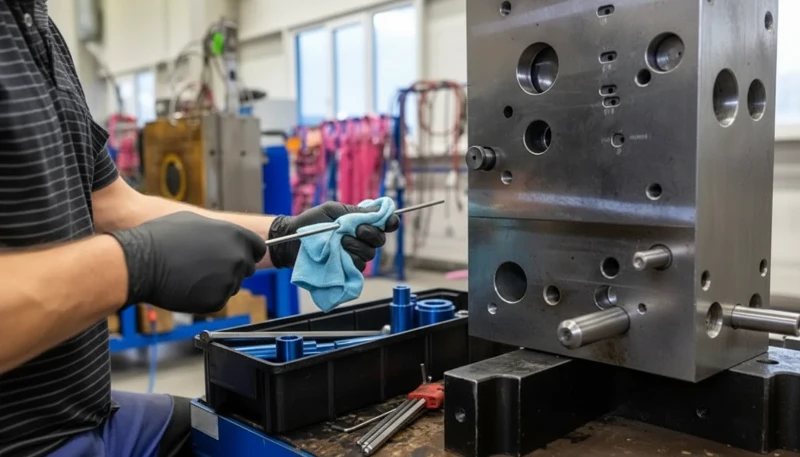
Maintenance schedule by mold type:
Molde de una cavidad: Cada 25.000-50.000 inyecciones – limpiar cavidades, revisar pasadores eyectores, inspeccionar líneas de enfriamiento por fugas. Molde más simple = inspección más rápida.
Multicavidad: Cada 10.000-25.000 inyecciones – el equilibrio de cavidades cambia con el tiempo; verificar dimensiones de compuerta, desgaste del canal de distribución y patrones de llenado de cavidades individuales. Más cavidades = más puntos de inspección.
Molde familiar: Cada 15.000-30.000 inyecciones – prestar especial atención al equilibrio de cavidades ya que las piezas difieren en volumen. Monitorear el desgaste en cavidades más grandes versus más pequeñas.
Molde apilado: Cada 5.000-15.000 inyecciones – más complejo con más partes móviles. Inspeccionar mecanismo rotativo, pasadores de alineación y sincronización de nivel. Los moldes apilados fallan catastróficamente si se desarrollan problemas de alineación.
Sobremoldeo: Cada 10.000-20.000 inyecciones – inspeccionar áreas de unión por deslaminación, verificar daños al sustrato durante el moldeo de segunda inyección, confirmar aislamiento de material.
Universal maintenance practices:
Preventive cleaning: Remove material buildup from vents, cores, and cavities before it causes defects.
Lubrication: Keep slides, lifters, and ejector pins properly lubricated with high-temperature mold grease.
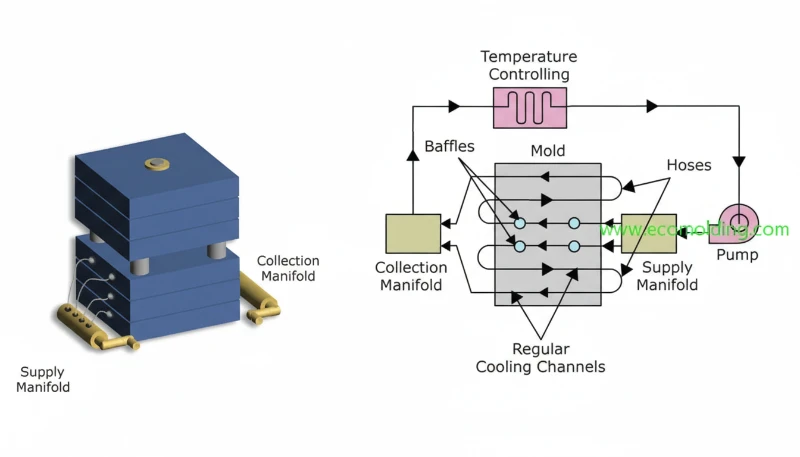
Temperature monitoring: Verify cooling channel flow and temperature consistency across cavities.
Documentation: Track maintenance intervals, changes made, and production performance to identify trends.
PREGUNTAS FRECUENTES
What is the most common mold type?
Single-cavity molds are the most common overall, especially for prototype development and lower-volume production. For high-volume commercial products, 4-cavity and 8-cavity multi-cavity molds are the most widely used configurations. At ZetarMold, approximately 60% of our mold builds are single-cavity, 30% are multi-cavity (4-8 cavities), and 10% are specialized types (family, stack, or overmolding).
How much does an injection mold cost?
Mold cost varies dramatically by type, size, complexity, and precision requirements. Single-cavity molds typically cost $3,000-$15,000 for simple parts and $15,000-$50,000 for complex parts with tight tolerances. Multi-cavity molds range from $20,000-$200,000+ depending on cavity count and complexity. Stack molds and complex overmolds can exceed $500,000 for large, intricate tools.
Can you change a single-cavity mold to a multi-cavity mold?
Generalmente no – la conversión requiere diseñar y construir una base de molde y un juego de cavidades completamente nuevos. Sin embargo, algunos moldes se diseñan con bloques de cavidad que pueden intercambiarse, permitiendo que una base de molde se use para diferentes cavidades de tamaño similar. Esto es más común en moldes familiares que en conversiones verdaderas de multicavidad a una cavidad.
What is the lifespan of an injection mold?
Mold lifespan depends on mold steel grade, material molded, and maintenance. Aluminum molds last 10,000-50,000 shots (good for prototypes). P20 steel molds last 100,000-500,000 shots (good for low-to-medium volume). H13 hardened steel molds last 500,000-2,000,000+ shots (ideal for high-volume production). Proper maintenance can extend these numbers by 50-100%.
How do you choose between two-shot and insert overmolding?
Two-shot overmolding is better for high-volume production (>200,000 parts annually) where quality consistency and bond strength are critical. Insert overmolding is better for lower volumes (10,000-200,000 parts) where tooling cost is a major concern or when using metal inserts. The cost crossover point varies but is typically around 200,000-300,000 parts depending on part complexity.
What is cavity balance and why is it important?
Cavity balance is the design and tuning of the mold runner system to deliver equal melt volume, temperature, and pressure to all cavities simultaneously. Poor cavity balance causes variations in part weight, dimensions, and cosmetic quality between cavities. Multi-cavity molds require careful runner design and often use simulation software like Moldflow to achieve balance before machining.
How many cavities can a mold have?
Theoretically unlimited, but practical limits exist. Small parts like bottle caps often use 64-128 cavity molds. Medium-sized parts typically use 4-16 cavities. Large parts may be limited to 1-2 cavities due to machine clamping force and shot capacity constraints. The cavity count must balance production needs against mold complexity, maintenance requirements, and cavity balance challenges.
Resumen
Los tipos de moldes de inyección – de una cavidad, multicavidad, familiar, apilado y sobremoldeo – sirven cada uno a necesidades de producción específicas. Los moldes de una cavidad ofrecen flexibilidad, precisión y menores costos de herramientía para prototipos y producción de bajo volumen. Los moldes multicavidad ofrecen costos por pieza dramáticamente más bajos para series de alto volumen cuando se diseñan con un equilibrio de cavidades adecuado. Los moldes familiares producen eficientemente piezas relacionadas en una sola herramienta, mientras que los moldes apilados duplican la producción sin aumentar la huella de la máquina. El sobremoldeo permite piezas multimaterial con uniones integradas mediante procesos de moldeo de dos inyecciones o con insertos.
La clave para una selección exitosa del tipo de molde es emparejar su volumen de producción, complejidad de la pieza, requisitos de calidad y presupuesto con el tipo de molde apropiado. En ZetarMold, hemos visto proyectos tener éxito y fracasar basados en esta decisión fundamental. Invertir tiempo por adelantado para analizar estos factores – y consultar con ingenieros de moldes experimentados – asegura que su herramienta entregue tanto piezas de calidad como economía favorable a lo largo de todo el ciclo de vida del producto. Vea nuestro Injection Molding Complete Guide for a comprehensive overview.
Need a Quote for Your Injection Molding Project?
Get competitive pricing, DFM feedback, and production timeline from ZetarMold’s engineering team.
Request a Free Quote →
-
injection molding: Injection molding is a manufacturing process where molten thermoplastic material is injected under high pressure into a closed mold cavity, cooled to solidify into a desired shape, and then ejected as a finished part. ↩
-
runner system: Runner system refers to a network of channels that deliver molten plastic from the machine nozzle to each mold cavity, designed to fill all cavities simultaneously with balanced flow. ↩
-
precision injection molding: Precision injection molding refers to a manufacturing process that achieves tight dimensional tolerances (typically ±0.05mm or better) through optimized mold design, controlled process parameters, and high-quality tooling materials. ↩



 EN
EN  ES
ES  FR
FR  DE
DE  PT
PT  AR
AR  RU
RU  JA
JA  KO
KO  IT
IT  NL
NL  TR
TR  PL
PL 