 Ir al contenido
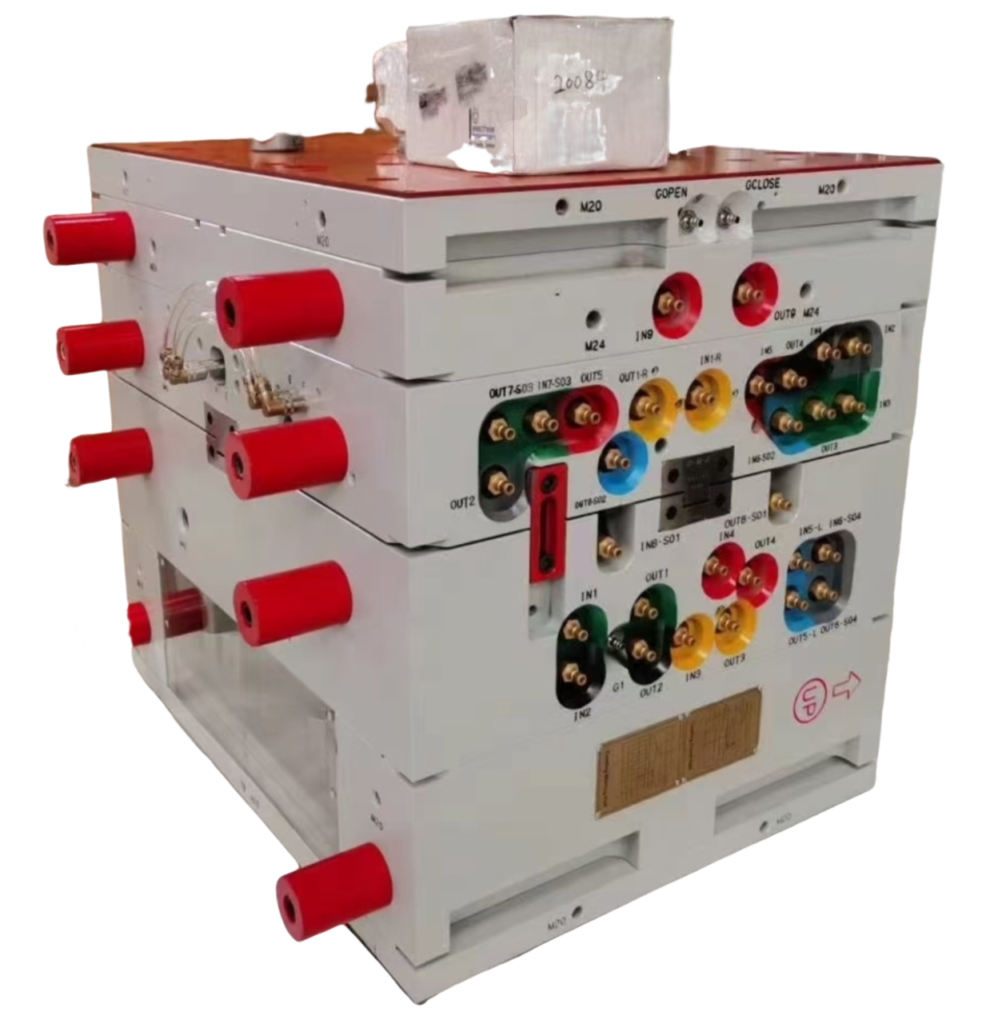
– The choice between 3D printing and injection molding is primarily a function of volume; the typical “breakeven point” lies between 100 and 500 units.
– 3D printing offers zero upfront tooling costs but high per-unit costs, making it ideal for prototyping and highly complex geometries.
– Injection molding requires significant initial investment (CAPEX) but offers extremely low variable costs and superior material properties.
– Bridge tooling (aluminum molds) serves as a strategic middle ground for low-volume production (500–1,000 parts).
What Are the Fundamental Differences Between Additive Manufacturing and Injection Molding?
To understand the breakeven point, we must first define the cost structures of additive manufacturing vs injection molding1.
3D Printing (Additive Manufacturing) builds parts layer by layer directly from a CAD file. It is a "zero-tooling" process.
- Cost Driver: Time and Material. The cost is roughly the same whether you print 1 part or 100 parts.
- Constraint: Slower production speed and anisotropic mechanical properties (weaker in the Z-axis).
Moldeo por inyección (IM) involves injecting molten plastic into a machined metal mold.
- Cost Driver: Tooling (Mold creation). The initial setup is expensive, but once the mold exists, parts are made in seconds.
- Benefit: Isotropic strength, scalability, and wide material selection.

How Do Cost Per Part Comparisons Change with Volume?
The most critical metric for startups is the Breakeven Point—the quantity where the total cost of injection molding becomes lower than the total cost of 3D printing.
The Breakeven Formula
Total Cost(3DP) = Unit Price × Quantity
Total Cost(IM)= Tooling Cost + Unit Price × Quantity
Scenario Analysis: Small Plastic Enclosure (ABS Material)
| Cost Factor | Industrial 3D Printing (SLS/SLA) | Injection Molding (Aluminum Tool) |
|---|---|---|
| Upfront Tooling | $0 | $3,500 |
| Coste unitario | $25.00 | $1.50 |
| Total Cost (50 Units) | $1,250 | $3,575 |
| Total Cost (150 Units) | $3,750 | $3,725 (Breakeven) |
| Total Cost (1,000 Units) | $25,000 | $5,000 |
In this cost per part comparison2, 3D printing is the clear winner for 50 units. However, at 150 units, the lines cross. By 1,000 units, injection molding is 80% cheaper.
3D printing is always the most cost-effective method for production runs under 1,000 units.Falso
While true for very small runs (1-100), simple parts can often be molded cost-effectively at volumes of 300-500 using simplified aluminum tooling, which provides better material properties than printing.
High-volume injection molding reduces the unit price significantly because the tooling cost is amortized over millions of parts.Verdadero
As production volume increases, the initial fixed cost of the mold is divided by a larger number of units, causing the effective cost per part to approach the raw material and machine time cost.

What Is the Role of Bridge Tooling Strategies?
When startups are ready to exit the prototyping phase but are not ready for a $50,000 steel mold, they utilize bridge tooling strategies3.
Bridge Tooling (Rapid Tooling):
- Material: Aluminum (7075 or QC-10) or soft steel (P20).
- Lifespan: 1,000 to 10,000 shots.
- Advantage: Lower cost (30-50% cheaper than production steel tools) and faster build time (2-3 weeks).
- Función: Allows companies to validate the design with real molded material and bridge the gap until high-volume production starts.

What Are the Key Differences in Material Properties and Quality?
The transition from rapid prototyping vs production4 often necessitates a switch in technology due to physical performance requirements.
| Característica | 3D Printing (FDM/SLS) | Moldeo por inyección | Impact on Product |
|---|---|---|---|
| Structure | Layered (Anisotropic) | Solid (Isotropic) | Printed parts are brittle along layer lines; molded parts have uniform strength. |
| Acabado superficial | Rough, Layer lines visible | Smooth, Textured, Polished | Molding produces consumer-ready finishes without post-processing. |
| Tolerancias | +/- 0.1mm to 0.3mm | +/- 0.05mm | Molding is required for precision assemblies and snap-fits. |
| Disponibilidad de material | Limited filaments/resins | Virtually all thermoplastics | Only molding supports specific engineered resins (e.g., Glass-filled Nylon, PEEK). |
Injection molded parts are generally stronger than 3D printed parts made from the same base material.Verdadero
Injection molding melts plastic into a solid, homogenous mass, whereas 3D printing fuses layers together, creating inherent structural weaknesses between those layers (delamination risk).
You can simply use the exact same CAD file for injection molding that you used for 3D printing.Falso
3D printing ignores tooling constraints. To switch to molding, the CAD file must be updated with Design for Manufacturing (DFM) features like draft angles, uniform wall thickness, and the removal of impossible undercuts.

Comparison Table: Pros and Cons of Manufacturing Methods
| Característica | Impresión 3D | Moldeo por inyección |
|---|---|---|
| Setup Cost | Low (File prep only) | High (Mold machining) |
| Per-Unit Cost | High (Constant) | Low (Decreases with volume) |
| Plazos de entrega | Hours / Days | Weeks / Months |
| Design Freedom | High (Complex lattices allowed) | Medium (Must follow DFM rules) |
| Scalability | Pobre | Excelente |
| Waste | Low (Additive) | Low to Medium (Runners/Sprues) |

Which Low Volume Production Method Fits Your Scenario?
Choosing between these low volume production methods5 depends on your immediate business goals.
Choose 3D Printing If:
- Volume: You need 1–100 parts.
- Design: The geometry is impossible to mold (e.g., hollow honeycombs).
- La hora: You need parts tomorrow.
- Iteration: You are still changing the design frequently.
Choose Injection Molding If:
- Volume: You need 300+ parts.
- Rendimiento: The part requires specific certification (FDA, UL) or mechanical strength.
- Acabado: You need a cosmetic, glossy surface "right off the tool."
- Coste: You anticipate scaling up and want to reduce the unit price.

Practical Tips for Making the Switch
- Freeze the Design: Do not cut steel until the design is finalized. Engineering Change Orders (ECOs) on metal molds are expensive.
- Design for Molding (DFM) Early: Even if you are printing prototypes, design them with draft angles and uniform walls so the transition to molding is seamless.
- Use Master Unit Die (MUD) Inserts: For lower costs, ask your molder about MUD inserts. You only pay for the cavity steel, sharing the standard mold base with other customers.

Preguntas más frecuentes (FAQ)
Q: Can I use 3D printed molds for injection molding?
A: Yes, this is a niche technique called "Polymer Molding." You 3D print a mold using high-temp resin. It is suitable for 10-50 shots of real thermoplastic but fails quickly due to heat and pressure.
Q: How long does it take to switch from printing to molding?
A: Typically 4-6 weeks. This includes DFM analysis, mold design, machining, and T1 sampling. Bridge tooling can sometimes reduce this to 2-3 weeks.
Q: Is the material used in 3D printing the same as injection molding?
A: Rarely. 3D printing uses "likeness" materials (e.g., "ABS-like resin"). While FDM printing uses real ABS or Nylon filament, the mechanical bonding is different. Injection molding uses standard pellets with verifiable data sheets.
Q: What is the typical breakeven quantity?
A: For most consumer plastic parts, the breakeven point is between 150 and 300 units. For very small or very large parts, this number shifts.
Q: Can I modify a mold after it is made?
A: It is easy to remove metal (add plastic) but difficult to add metal back (remove plastic). You can usually increase a dimension but not decrease it without welding or inserting.

Resumen
Deciding when to switch from 3D printing vs injection molding is a balance of risk and reward. 3D printing offers agility and low entry costs, making it the champion of the rapid prototyping vs production phase. However, once volumes hit the 100–500 range, the cost per part comparison heavily favors injection molding. By leveraging bridge tooling strategies and analyzing low volume production methods, startups can scale effectively without draining capital on unnecessary tooling too early.
-
A direct comparison of the two technologies, focusing on the trade-offs between upfront investment and long-term scalability. ↩
-
Detailed breakdown of how unit prices are calculated in molding, providing the data needed to construct a breakeven model. ↩
-
Explains the concept of using softer, cheaper metals for molds to bridge the gap between prototyping and mass production. ↩
-
General industry comparison highlighting the physical and mechanical differences between printed and molded components. ↩
-
Discusses specific strategies for handling production runs that are too large for printing but too small for traditional mass production. ↩


 ES
ES  EN
EN  FR
FR  DE
DE  PT
PT  AR
AR  RU
RU  JA
JA  KO
KO  IT
IT  NL
NL  TR
TR  PL
PL 