Zum Inhalt springen
PETG1 (Polyethylenterephthalatglycol) liegt in einem optimalen Bereich, den nur wenige andere Thermoplaste erreichen: optische Klarheit nahe Polycarbonat, Schlagzähigkeit, die mit ABS konkurriert, und chemische Beständigkeit, die beide übertrifft – alles bei niedrigeren Verarbeitungstemperaturen und Kosten. Wenn Sie jemals ein klares Gehäuse für medizinische Geräte, ein Displayfenster für Unterhaltungselektronik oder einen Lebensmittelkontaktbehälter in der Hand hatten, wurde es wahrscheinlich aus PETG geformt. In diesem Leitfaden führen wir Sie durch alles, was Sie wissen müssen, um PETG erfolgreich auf Ihrem Spritzgießwerkzeug zu verarbeiten – von Trocknung und Schmelztemperaturen bis hin zur Angussgestaltung und Fehlerbehebung.
- PETG ist ein amorphes Copolymer mit einem Glasübergang von ~88 °C – einfach zu verarbeiten, zäh und kristallklar.
- PETG bei 65–75 °C für 4–6 Stunden trocknen; Feuchtigkeit über 0,02 % verursacht Spritzer und Sprödigkeit.
- Schmelztemperaturfenster: 220–260 °C. Formtemperatur: 15–40 °C für Klarheit, bis zu 65 °C für Spannungsabbau.
- Die Wandstärke sollte zwischen 1,0–3,0 mm liegen; eine gleichmäßige Dicke verhindert Einfallstellen und innere Spannungen.
- PETG ist FDA-konform für Lebensmittelkontakt, chemikalienbeständig und vollständig recycelbar – ideal für medizinische und Verbraucheranwendungen.
Was ist PETG und warum ist es beim Spritzgießen wichtig?
PETG ist eine glykolmodifizierte Version von Polyethylenterephthalat (PET). Das Glykol-Copolymer unterbricht die Kristallisation, was der Schlüssel zum Verständnis fast aller Aspekte des Verhaltens dieses Materials in einer Form ist. Im Gegensatz zu PET, das kristallisieren und undurchsichtig werden möchte, bleibt PETG amorph – transparent, dimensionsstabil und nachsichtig bei der Verarbeitung. Seine Glasübergangstemperatur liegt bei etwa 88 °C (190 °F). Das liegt deutlich unter Polycarbonat (ca. 147 °C), aber über Standard-Klarkunststoffen wie Polystyrol.
In der Praxis bedeutet das, dass PETG eine optische Klarheit nahe PC bietet, ohne die hohe Trocknungsempfindlichkeit oder das zu Verzug neigende Verhalten. Es bedeutet auch niedrigere Spritzgießen Zykluszeiten, weil Sie von einer niedrigeren Schmelztemperatur in eine Form abkühlen, die nicht so heiß sein muss. Für Hersteller, die ein transparentes, zähes, chemikalienbeständiges Teil benötigen – und die ihr Formgebungsfenster weit halten möchten – ist PETG oft die erste Wahl.
Das Material ist auch aus Nachhaltigkeitssicht attraktiv. PETG ist recycelbar (SPI-Harzcode 1 in den meisten PET-Strömen), und viele Sorten sind FDA-konform für direkten Lebensmittelkontakt. Da der regulatorische Druck auf Einweg- und Medizinverpackungen zunimmt, ist ein klares Thermoplast, das Lebensmittelkontakt- und medizinische Standards erfüllt, ohne die Kosten von PC zu verursachen, ein echter Vorteil.
Was sind die wichtigsten Materialeigenschaften von PETG?
Die wichtigsten Materialeigenschaften von PETG umfassen einen Glasübergang von ~88 °C, eine Zugfestigkeit von 50–55 MPa und eine Lichtdurchlässigkeit von 85–92 %. Bevor Sie auch nur eine Temperatur an Ihren Zylinderreglern einstellen, müssen Sie die Zahlen verstehen, die das PETG-Verhalten steuern. Hier ist eine Zusammenfassung der Eigenschaften, die auf der Produktionsfläche am wichtigsten sind.
| Eigentum | Value | Anmerkungen |
|---|---|---|
| Dichte | 1,27 g/cm3 | Mäßig; leichter als viele technische Kunststoffe |
| Glasübergang (Tg) | ~88 °C (190 °F) | Amorph; kein scharfer Schmelzpunkt |
| Schmelztemperaturbereich | 220–260 °C | Überschreiten Sie 280 °C nicht, um Abbau zu vermeiden |
| Formtemperaturbereich | 15–65 °C | Niedriger = klarer; höher = weniger Spannung |
| Zugfestigkeit | 50–55 MPa | Vergleichbar mit ABS, niedriger als PC |
| Dehnung beim Bruch | 100–150 % | Hohe Duktilität – widersteht sprödem Bruch |
| Biegemodus | ~2.100 MPa | Steif genug für strukturelle Teile |
| Izod-Kerbschlagzähigkeit | ~800 J/m | Deutlich überlegen gegenüber Acryl; nahe an PC |
| Lichtübertragung | 85–92 % | Nahezu optisch klar |
| Moisture Absorption | 0,2–0,3 % | Niedrig, aber dennoch Trocknung erforderlich |
Die Kombination aus hoher Dehnung und guter PETG-Zugfestigkeit2 (50–55 MPa) ist es, was PETG von anderen klaren Kunststoffen unterscheidet. Acryl (PMMA) mag mehr Licht durchlassen, bricht aber bei Aufprall. Polycarbonat ist zäher, kostet aber deutlich mehr und ist weitaus empfindlicher gegenüber Feuchtigkeit und chemischem Angriff. PETG liegt in der Mitte, und unserer Erfahrung nach befinden sich die meisten realen Anwendungen genau in diesem Mittelfeld.
Wie bereitet man PETG für den Spritzguss vor?
PETG ist hygroskopisch – nicht so aggressiv wie Nylon oder Polycarbonat, aber ausreichend, dass das Weglassen des Trockners Sie teuer zu stehen kommt. Der Ziel-Feuchtigkeitsgehalt liegt unter 0,02 Gewichtsprozent. In unserer Werkstatt trocknen wir PETG bei 65–75 °C für 4–6 Stunden in einem Entfeuchter-Trichtertrockner und halten den Trichter während des gesamten Laufs auf Temperatur. Dies Trocknungstemperatur für PETG3 ist kritisch – zu heiß und die Granulate verkleben; zu kalt und die Ziel-Feuchtigkeit wird nie erreicht.
„Ungetrocknetes PETG-Harz verursacht Spritzerflecken und verringerte Schlagzähigkeit aufgrund von Hydrolyse der Polymerhauptkette.“Wahr
Richtig. Feuchtigkeit in der Schmelze verursacht Dampfblasen, die silberne Schlieren auf der Oberfläche erzeugen. Hydrolyse bricht auch Esterbindungen in der Polymerkette, wodurch Zähigkeit und Dehnung dauerhaft reduziert werden.
„PETG muss vor dem Spritzgießen nicht getrocknet werden, da seine Feuchtigkeitsaufnahme sehr gering ist.“Falsch
Falsch. Während PETG weniger Feuchtigkeit aufnimmt als Nylon, verursacht jede Feuchtigkeit über 0,02 % Spritzer, Blasen und reduzierte Schlagfestigkeit. PETG sollte vor dem Spritzgießen immer bei 65–75 °C für 4–6 Stunden getrocknet werden.
Folgendes passiert, wenn Sie den Trocknungsprozess überspringen oder abkürzen: Spritzer (silberne Streifen auf der Bauteiloberfläche) durch Dampfausdehnung in der Schmelze; reduzierte Schlagfestigkeit, da Hydrolyse Esterbindungen im Polymerrückgrat bricht; Blasen und Hohlräume in dicken Bereichen; spröde Schweißlinien an Verbindungsstellen; und ungleichmäßiges Schuss-zu-Schuss-Gewicht mit Maßabweichungen.
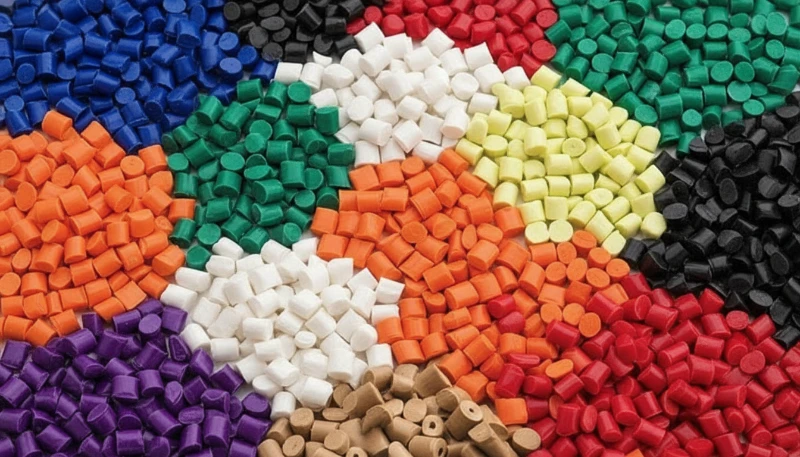
Ein schneller Feldtest: Wenn Sie beim Spülen Knacken hören oder Schaum an der Düse sehen, ist Ihr PETG feucht. Stoppen Sie, laden Sie getrocknetes Material nach und spülen Sie den Zylinder gründlich durch. Die Investition in die Trocknung ist immer günstiger als die Kosten für Ausschuss. Farbmittel- und Additivkonzentrate (Masterbatches) müssen ebenfalls trocken sein – PETG wird bei einer Temperatur verarbeitet, bei der jede Restfeuchte in einem Farbpellet die gleichen Defekte erzeugt.
Was sind die optimalen PETG-Spritzguss-Parameter?
PETG ist einer der nachsichtigeren Werkstoffe beim Spritzgießen, was teilweise seine Popularität erklärt. Aber „nachsichtig“ bedeutet nicht, dass man die Grundlagen ignorieren kann. Hier sind die Parameter, die wir bei jedem PETG-Auftrag einstellen, zusammen mit den Bereichen, die zuverlässig bei verschiedenen Bauteilgeometrien funktionieren.
| Parameter | Empfohlener Bereich | Tipps |
|---|---|---|
| Spritzzylinder Hinterzone | 210–230 °C | Niedrig halten, um vorzeitiges Schmelzen zu vermeiden |
| Zylinder-Mittelzone | 230–250 °C | Primäre Schmelzzone |
| Zylinder-Vorderzone / Düse | 240–260 °C | 280 °C nicht überschreiten |
| Temperatur der Form | 15–40 °C (Klarheit) / 40–65 °C (Spannungsabbau) | Kühler = klarere Oberfläche |
| Einspritzgeschwindigkeit | Mäßig bis schnell | Vermeiden Sie Zögerungsmarkierungen in dünnen Wänden |
| Haltedruck | 40–70 % Einspritzdruck | Nachdruck, bis der Anguss erstarrt |
| Haltezeit | 3–8 Sekunden (hängt von der Wandstärke ab) | Angussversiegelung ist entscheidend |
| Abkühlungszeit | 15–40 Sekunden (hängt von der Wandstärke ab) | Gleichmäßige Wand = kürzerer Zyklus |
| Gegendruck | 5–10 bar | Niedrig bis mäßig; übermäßige Scherung verschlechtert PETG |
| Schneckendrehzahl | 40–80 RPM | Niedrigere Geschwindigkeiten reduzieren die Schererwärmung |
Ein praktischer Tipp: PETG hat ein relativ breites Verarbeitungsfenster, aber die Ränder dieses Fensters erzeugen unterschiedliche Ergebnisse. Im unteren Bereich (220–230 °C) erhält man bessere Klarheit und ein geringeres Vergilbungsrisiko, aber das Füllen dünnwandiger Bereiche kann schwierig sein. Im oberen Bereich (250–260 °C) verbessert sich die Fließfähigkeit deutlich, aber längere Verweilzeiten führen zu thermischem Abbau – das Material beginnt zu vergilben und verliert an Schlagfestigkeit. Für die meisten Bauteile liegt der optimale Bereich bei 240–250 °C.
Die Einspritzgeschwindigkeit ist für PETG wichtiger, als vielen Formern bewusst ist. Da PETG amorph ist, hat es keinen scharfen Schmelzpunkt – es erweicht allmählich über einen Bereich. Schnelles Einspritzen hilft dem Material, gleichmäßig durch den Hohlraum zu fließen, bevor die Front erstarrt. Bei dünnwandigen Teilen (unter 1,5 mm) fahren wir typischerweise mit 70–90 % der maximalen Einspritzgeschwindigkeit. Bei dickeren Teilen verlangsamen wir auf 40–60 %, um Strahlen und Lufteinschlüsse zu vermeiden.
Nachdruck und -zeit sind der Ursprung der meisten PETG-Spritzgießprobleme. PETG ist bei der Entformungstemperatur ein „weicher“ Werkstoff – es verzieht sich, sinkt ein oder verändert seine Abmessungen, wenn der Nachdruck gelöst wird, bevor der Anguss erstarrt. Eine Anguss-Erstarrungsstudie (Teile bei fortschreitend längerer Nachdruckzeit wiegen, bis das Gewicht stabil ist) lohnt sich einmal pro Form. In unserer Werkstatt stellen wir fest, dass 4–6 Sekunden Nachdruckzeit die meisten PETG-Teile unter 3 mm Wandstärke abdecken.
„Für jede neue PETG-Form wird eine Anguss-Erstarrungsstudie empfohlen, um die optimale Nachdruckzeit zu bestimmen.“Wahr
Richtig. Die Einfrierzeit des Angusses variiert mit der Wandstärke, der Angussgröße und der Formtemperatur. Das Wiegen von Teilen bei zunehmend längeren Nachdruckzeiten, bis sich das Gewicht stabilisiert, gibt Ihnen die minimale Nachdruckzeit, die für eine gleichbleibende Teilequalität erforderlich ist.
„PETG sollte immer bei der höchstmöglichen Schmelztemperatur verarbeitet werden, um ein vollständiges Füllen des Hohlraums zu gewährleisten.“Falsch
Falsch. Während höhere Schmelztemperaturen den Fluss verbessern, führt ein Überschreiten von 280 °C zu thermischem Abbau, Vergilbung und Verlust der Schlagzähigkeit. Der empfohlene Bereich liegt bei 220–260 °C, wobei 240–250 °C für die meisten Anwendungen optimal sind.
Wie sollten Sie Formen für PETG-Teile gestalten?
Das PETG-Formendesign wird von gleichmäßigen 1-3 mm Wandstärken, 2-3 Grad Schrägungswinkeln und scherarmen Angussarten für saubere Entformung und optische Klarheit bestimmt.
Wandstärke und Schwindung
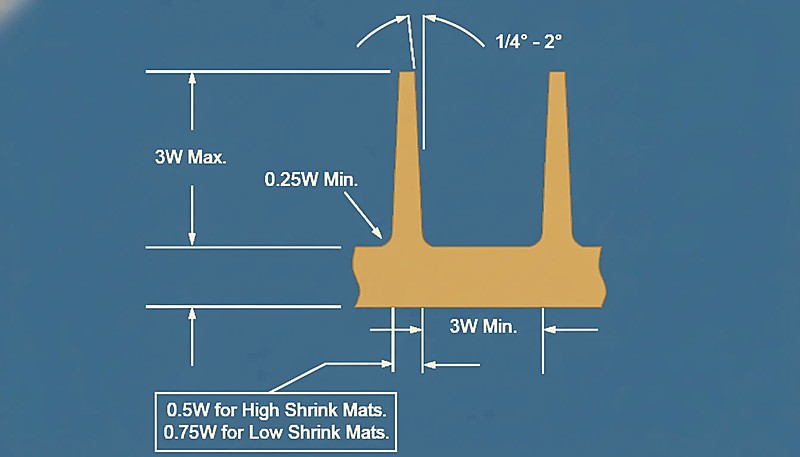
Ziel ist eine Wandstärke von 1,0–3,0 mm, und halten Sie sie so gleichmäßig wie möglich. PETG kristallisiert nicht, daher schrumpft es weniger als teilkristalline Materialien wie Nylon – aber es schrumpft dennoch (0,3–0,7 %). Ungleichmäßige Dicke führt zu differenziellem Schrumpfen, das sich als Einfallstellen und Verzug zeigt. Wenn Sie aus strukturellen Gründen einen dickeren Abschnitt benötigen, ist das Aushöhlen mit Rippen immer einem massiven Block vorzuziehen.
Angussdesign und -platzierung
Bei transparenten PETG-Teilen beeinflussen Angussplatzierung und -typ direkt die optische Qualität. Randanschnitte und Fächeranschnitte sind die häufigste Wahl, da sie einen breiten, scherungsarmen Eintrittspunkt bieten, der Strahlen und Fließmarken minimiert. Tunnelanschnitte funktionieren für kleine Teile, können aber einen Rest hinterlassen, der bei klaren Teilen sichtbar ist. Vermeiden Sie Punktanschnitte für alles, was mehr als ein paar Gramm wiegt – die hohe Scherung durch eine kleine Öffnung verschlechtert PETG und erzeugt Trübung in der Nähe des Angusses.
Platzieren Sie die Angüsse so, dass die Fließfront gleichmäßig durch den Hohlraum verläuft. Bei ungleichmäßigem Fließweg sind Schweißlinien und Fließspuren im transparenten Material sichtbar. Eine Moldflow-Simulation vor dem Stahlbeschnitt ist eine lohnende Investition für jedes PETG-Bauteil, bei dem optische Qualität wichtig ist.
Schrägungswinkel und Oberflächengüte
Die Standard-Schrägung beträgt 1–2° pro Seite, aber PETG profitiert bei tiefen Zügen von einer etwas stärkeren Schrägung (2–3°), da das Material bei der Auswurfstemperatur relativ weich ist. Unzureichende Schrägung führt zu Ziehspuren, die bei einem klaren Bauteil sofort sichtbar sind. Polieren Sie Kern- und Kavitätsoberflächen auf Hochglanz (SPI A-2 oder besser) für optimale optische Klarheit – PETG überträmt die Oberflächentextur der Form zuverlässig.
Belüftung
PETG gibt während des Formgebungsprozesses keine aggressiven Gase ab (im Gegensatz zu PVC oder Acetal), dennoch ist eine ausreichende Entlüftung unerlässlich. Eingeschlossene Luft verursacht Brandflecken und unvollständige Formteile. Standard-Entlüftungstiefen von 0,01–0,02 mm sind ausreichend. Bei Teilen mit komplexer Geometrie sollten Entlüftungen am Ende der Fließwege und an Sacktaschen angebracht werden.
Was sind die häufigsten Spritzgießfehler bei PETG und ihre Lösungen?
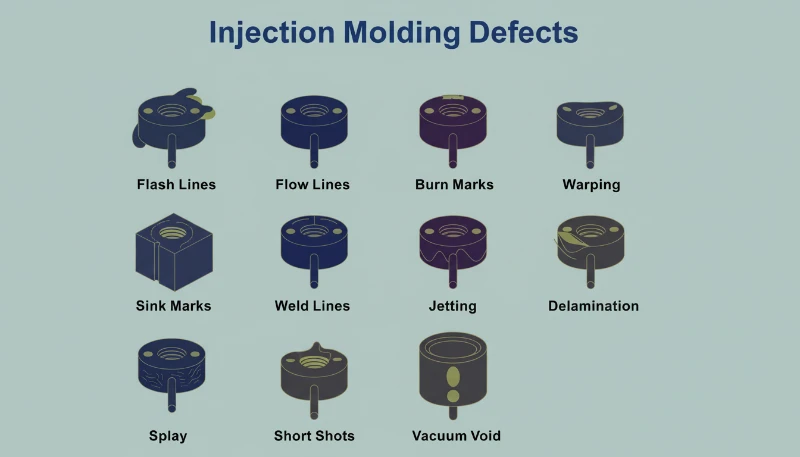
Häufige PETG-Fehler umfassen Spritzer, Trübungen, Sinkstellen und Verzug – die meisten sind durch richtiges Trocknen, Angussdesign und Nachdruck vermeidbar. Selbst mit guten Parametern hat PETG seine Eigenheiten. Hier sind die Fehler, die wir am häufigsten in der Produktion sehen, zusammen mit den tatsächlich wirksamen Lösungen.
Splay Marks (Silberstreifen)
Ursache: Feuchtigkeit im Kunststoff. Dies ist das Hauptproblem bei PETG. Selbst geringe Feuchtigkeit erzeugt Dampfblasen, die an der Fließfront platzen und Silberstreifen auf der Bauteiloberfläche hinterlassen. Die Lösung ist einfach: Trocknertemperatur und -zeit überprüfen. Sicherstellen, dass der Taupunkt der Trockenluft unter -20 °C liegt. Bei der Verwendung von Regranulat dieses separat vortrocknen – Regranulat hat eine größere Oberfläche und nimmt Feuchtigkeit schneller auf als Neuware.
Schleier oder Trübung
Ursache: Übermäßige Scherung durch zu schnelles Einspritzen durch ein zu kleines Anguss, Verunreinigung oder eine zu niedrige Schmelztemperatur für eine vollständige Homogenisierung. Abhilfe: Anguss leicht vergrößern, Einspritzgeschwindigkeit reduzieren und sicherstellen, dass die Zylindertemperaturen korrekt profiliert sind. Auch auf Verunreinigungen im Trichter prüfen – selbst Spuren eines anderen Kunststoffs (insbesondere kristalliner Materialien) verursachen Trübung in PETG.
Sinkende Markierungen
Ursache: Unzureichender Nachdruck oder Nachdruckzeit oder übermäßige Wandstärkenvariation. PETG ist amorph und schrumpft relativ wenig, aber dicke Bereiche sinken trotzdem ein, wenn sie nicht richtig gepackt werden. Abhilfe: Nachdruck erhöhen und Nachdruckzeit verlängern, bis der Anguss erstarrt. Dicke Bereiche mit Aussparungsrippen neu gestalten. Ein richtig gepackter Spritzgussform Der Hohlraum sollte Teile mit minimalem Einfall erzeugen.
„Die amorphe Struktur von PETG bedeutet eine geringere und gleichmäßigere Schrumpfung im Vergleich zu teilkristallinen Kunststoffen wie Nylon oder POM.“Wahr
Richtig. Amorphe Materialien wie PETG schrumpfen isotrop (0,3–0,7 %), während teilkristalline Materialien mit 1–2,5 % schrumpfen können und dabei erhebliche Richtungsunterschiede aufweisen. Das macht PETG einfacher für das Spritzgießen mit engen Toleranzen.
„Sinkstellen in PETG-Teilen können einfach durch Senken der Werkzeugtemperatur vermieden werden.“Falsch
Falsch. Während die Formtemperatur die Oberflächengüte beeinflusst, werden Einfallstellen hauptsächlich durch unzureichenden Nachdruck oder dicke Wandstärken verursacht, die während des Abkühlens ungleichmäßig schrumpfen. Die Lösung besteht darin, den Nachdruck zu erhöhen, die Nachdruckzeit zu verlängern und dicke Bereiche mit Aussparungen neu zu gestalten.
Verzug und Strahlspritzen
Verzug wird durch ungleichmäßige Abkühlung oder unterschiedliche Schrumpfung zwischen dicken und dünnen Bereichen verursacht. Die geringe Schrumpfung von PETG hilft, aber asymmetrische Wandstärken oder ungleichmäßige Werkzeugkühlung verursachen dennoch Verzug. Sorgen Sie für eine gleichmäßige Kühlkanalanordnung, verwenden Sie Werkzeugtemperaturregler auf beiden Hälften und erwägen Sie eine etwas höhere Werkzeugtemperatur (50–65 °C) für Teile mit unvermeidbaren Dickenschwankungen.
Strahlspritzen tritt auf, wenn der Schmelzstrom zu schnell durch einen engen Anguss in den Hohlraum eintritt, ohne Wandkontakt herzustellen – er schlängelt sich durch den Hohlraum und erzeugt wurmartige Oberflächenmarkierungen. Abhilfe: Einspritzgeschwindigkeit in der Anfangs-Füllphase reduzieren, auf einen Fächer- oder Tab-Anguss umstellen, um den Eintrittsfluss zu verteilen, und den Anguss so positionieren, dass die Schmelze unmittelbar nach dem Eintritt auf eine Wand oder einen Kernstift trifft.
Welche Branchen und Anwendungen nutzen PETG-Spritzguss?
PETG wird hauptsächlich in Medizinprodukten, Lebensmittelverpackungen, Unterhaltungselektronik und industriellen Schutzvorrichtungen eingesetzt, bei denen Klarheit und Zähigkeit wichtig sind. Seine Kombination aus Klarheit, Zähigkeit, chemischer Beständigkeit und regulatorischer Konformität macht es zu einem Standardmaterial in mehreren anspruchsvollen Branchen.
Medizin und Gesundheitswesen
PETG wird häufig für Gehäuse von Medizingeräten, Fluidführungskomponenten, Abdeckungen von Diagnosegeräten und Blisterverpackungen verwendet. Seine Klarheit ermöglicht die visuelle Kontrolle von Füllständen und Gerätestatus, während seine Zähigkeit Stürze und Stöße übersteht, die Acrylglas zerbrechen würden. Viele PETG-Typen erfüllen die USP-Klasse VI und ISO-10993-Biokompatibilitätsanforderungen für Medizinprodukte. Nach unserer Erfahrung mit PETG für medizinische Kunden macht die Kombination aus optischer Klarheit und Sterilisationskompatibilität (kompatibel mit Ethylenoxid und Gammasterilisation) es zur Standardwahl für klare medizinische Gehäuse.
Lebensmittel- und Getränkeverpackungen
FDA-konforme PETG-Qualitäten werden für klare Lebensmittelbehälter, Getränkeflaschen, Feinkostschalen und Kosmetikverpackungen verwendet. Die chemische Beständigkeit des Materials verträgt Öle und Säuren ohne Spannungsrissbildung, und seine Klarheit steigert die Attraktivität im Regal. Im Gegensatz zu PET kann PETG ohne Kristallisation thermogeformt und spritzgegossen werden, was die Verarbeitung für Verpackungshersteller vereinfacht.
Unterhaltungselektronik und Industrie
Schaufenster, LED-Lichtdiffusoren, Schutzabdeckungen und transparente Gehäuse für Wearables und Gadgets werden alle aus PETG gefertigt. Es bietet die optische Klarheit von PC zu geringeren Kosten und vergilbt bei richtiger Stabilisierung unter UV-Einwirkung nicht so schnell. Industrielle Anwendungen umfassen Einzelhandelspräsentationsvorrichtungen, Beschilderungen, Schutzvorrichtungen und Maschinensichtfenster, bei denen die Schlagfestigkeit PETG in hochfrequentierten Umgebungen gegenüber Acryl bevorzugt.
PETG im Vergleich zu anderen transparenten Kunststoffen – Wie schneidet es ab?
Die Wahl zwischen PETG, Polycarbonat, Acryl (PMMA) und klarem ABS läuft auf die Abwägung von Klarheit, Zähigkeit, Kosten und Verarbeitungsanforderungen hinaus. So schneiden sie im direkten Vergleich ab.
| Eigentum | PETG | Polycarbonat (PC) | Acryl (PMMA) | Klares ABS |
|---|---|---|---|---|
| Lichtübertragung | 85–92 % | 88–91 % | 92 % | 75–85 % |
| Impact Strength (Izod) | ~800 J/m | ~850 J/m | ~20 J/m | ~300 J/m |
| Tg | ~88 °C | ~147 °C | ~105 °C | ~105 °C |
| Verarbeitungstemp. | 220–260 °C | 280–320 °C | 200–250 °C | 220–260 °C |
| Feuchtigkeitsempfindlichkeit | Mäßig | Hoch | Niedrig | Mäßig |
| Chemische Beständigkeit | Gut | Schlecht (Risse) | Schlecht | Mäßig |
| Kosten (relativ) | $$ | $$$ | $ | $$ |
| FDA-Konformität | Ja (viele Typen) | Einige Qualitäten | Einige Qualitäten | Nein |
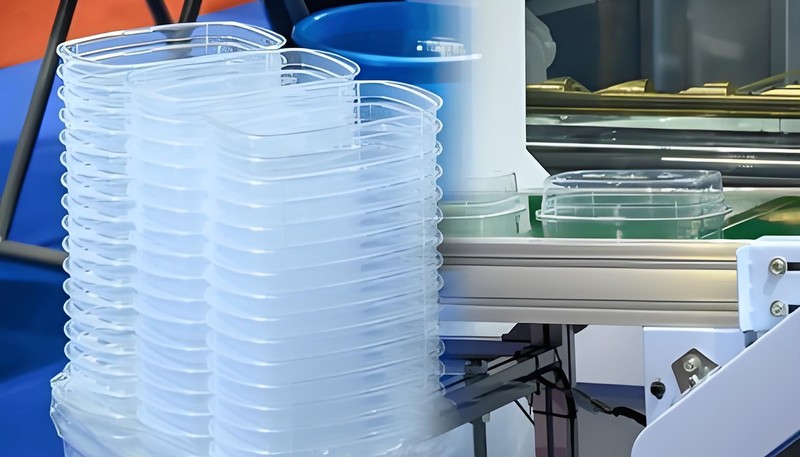
Das Fazit: Wenn Ihr Bauteil klar, zäh und chemikalienbeständig sein muss und Sie nicht die extreme Temperaturbeständigkeit von Polycarbonat benötigen, ist PETG in der Regel die beste Wahl. Es lässt sich einfach verarbeiten, kostet weniger als PC und bietet eine bessere Chemikalienbeständigkeit. Der Kompromiss ist eine geringere Wärmebeständigkeit – wenn Ihr Teil dauerhaft Temperaturen über 70 °C ausgesetzt sein wird, sollten Sie stattdessen PC in Betracht ziehen.
Wie verarbeitet ZetarMold PETG in der Produktion?
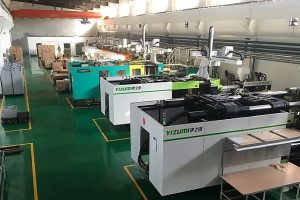
In unserer Einrichtung in Shanghai gehört PETG zu den fünf meistverarbeiteten Materialien nach Volumen. Mit 47 Spritzgießmaschinen von 90T bis 1850T bearbeiten wir PETG-Teile von kleinen Gehäusen für medizinische Geräte bis hin zu großen Abdeckungen für Industriedisplays. Hier ist, was wir aus tausenden PETG-Zyklen in den letzten 20+ Jahren gelernt haben.
| Capability | Specification |
|---|---|
| Spritzgießmaschinen | 45 Maschinen, 90T–1850T |
| Materialpalette | 400+ verarbeitete Materialien, einschließlich aller wichtigen PETG-Qualitäten |
| Ingenieurteam | 8 Senior-Ingenieure mit jeweils über 10 Jahren Erfahrung |
| Produktionspersonal | 120+ production workers |
| Monatliche Formenausbringung | 100+ Spritzgießformen pro Monat |
| Qualitätssystem | ISO 9001 / 13485 / 14001 / 45001 zertifiziert |
| Internationales Team | 30+ fließende Englischsprecher für globale Kommunikation |
Trocknungsdisziplin ist nicht verhandelbar. Wir betreiben Entfeuchter-Trichtertrockner bei 70 °C mindestens 4 Stunden vor jedem PETG-Auftrag. Unsere Materialhandhaber wissen, dass das Überspringen der Trocknung bei PETG bedeutet, mindestens die ersten 20 Schüsse zu verschrotten. Das Angussdesign ist wichtiger, als viele denken – bei transparenten PETG-Teilen spezifizieren wir fast immer Fächer- oder Kantenanschnitte mit einer Breite von 60–80 % der Wandstärke, um die Scherung zu minimieren und eine saubere Fließfront zu erzeugen.
Formtemperaturregelung entscheidet über Qualität. Wir verwenden wasserumlaufende Formtemperaturregler, die für die meisten PETG-Teile auf 25–30 °C eingestellt sind. Dies bietet die beste Kombination aus Oberflächenklarheit und Zykluszeit. Für Teile mit starker Wandstärkenschwankung erhöhen wir auf 50 °C. Für medizinische und optische Anwendungen spannen wir PETG-Teile manchmal bei 65–70 °C für 30–60 Minuten aus, um innere Eigenspannungen abzubauen, was die Dimensionsstabilität verbessert und das Risiko von Spannungsrissen in chemischen Umgebungen reduziert.
Wenn Sie eine neue PETG-Anwendung entwickeln und Hilfe bei der Materialauswahl, Werkzeugkonstruktion oder Prozessoptimierung benötigen, kontaktieren Sie uns – wir teilen gerne unser Wissen. Unser Team antwortet innerhalb von 24 Stunden und bietet umfassende sourcing Unterstützung von der anfänglichen DFM-Prüfung bis zur Produktionsaufnahme.
Häufig gestellte Fragen zum PETG-Spritzgießen
Häufig gestellte Fragen
Bei welcher Temperatur spritzen Sie PETG?
PETG wird typischerweise mit einer Schmelztemperatur von 220–260 °C und einer Werkzeugtemperatur von 15–40 °C für klaritätskritische Teile gespritzt, oder bis zu 65 °C für Teile, die zusätzliche Spannungsabbau während der Abkühlung benötigen. Die Zylindertemperatur sollte von 210 °C hinten bis 250 °C an der Düse profiliert werden, um optimale Materialhomogenisierung und konstante Schmelzqualität zu erreichen. Das Überschreiten von 280 °C riskiert thermischen Abbau, Vergilbung und Verlust der Schlageigenschaften, bleiben Sie also im empfohlenen Fenster und überwachen Sie die Schmelzfarbe während Ihrer Produktionsläufe genau.
Muss PETG vor dem Spritzgießen getrocknet werden?
Ja, absolut. PETG sollte vor Beginn des Spritzgießens bei 65–75 °C für 4–6 Stunden getrocknet werden, um die Feuchtigkeit unter 0,02 Gew.-% zu reduzieren. Obwohl PETG weniger hygroskopisch ist als Nylon oder Polycarbonat, verursacht Restfeuchtigkeit Spritzer auf der Bauteiloberfläche, deutlich reduzierte Schlagzähigkeit, eingeschlossene Blasen in dicken Bereichen und dimensionsbezogene Unstimmigkeiten von Zyklus zu Zyklus. Verwenden Sie einen Entfeuchter-Trockner mit einem Taupunkt unter -20 °C und halten Sie den Trockner während des gesamten Produktionslaufs auf Temperatur, um die Wiederaufnahme von Umgebungsfeuchtigkeit zu verhindern.
Kann PETG für Lebensmittelkontaktanwendungen verwendet werden?
Viele PETG-Typen entsprechen der FDA-Verordnung 21 CFR §177.1630 für den direkten Lebensmittelkontakt und eignen sich daher für Lebensmittelbehälter, Getränkeflaschen, Aufschnittschalen und Küchenutensilien. Überprüfen Sie stets die Konformitätsbescheinigung des jeweiligen Typs bei Ihrem Materiallieferanten, bevor Sie eine Lebensmittelkontaktanwendung in Betracht ziehen, da nicht alle PETG-Formulierungen nach Lebensmittelqualitätsstandards hergestellt werden. Darüber hinaus erfüllen einige PETG-Typen auch die EU-Lebensmittelkontaktvorschriften gemäß EU-Verordnung 10/2011 für einen breiteren internationalen Marktzugang und die Einhaltung von Vorschriften in mehreren globalen Regionen.
Was verursacht Trübung in gespritzten PETG-Teilen?
Trübung in gespritzten PETG-Teilen wird typischerweise durch übermäßige Scherung bei zu schneller Einspritzung durch eine kleine Angussöffnung, unzureichende Schmelztemperatur für vollständige Materialhomogenisierung oder Kontamination durch ein anderes Harz verursacht, das über den Trichter oder Zylinder eingebracht wurde. Um Trübungsprobleme zu beheben, vergrößern Sie den Anguss, um die Scherspannung in der Schmelze zu reduzieren, stellen Sie sicher, dass die Zylindertemperaturen im Düsenbereich korrekt bei 240–250 °C profiliert sind, reduzieren Sie die Einspritzgeschwindigkeit während der Anfangs-Füllphase und reinigen Sie Trichter und Beschickungssystem gründlich, um Kreuzkontamination von vorherigen Produktionsläufen zu beseitigen.
Wie schneidet PETG im Vergleich zu Polycarbonat für transparente Teile ab?
PETG bietet eine ähnliche optische Klarheit wie Polycarbonat bei deutlich niedrigeren Materialkosten und insgesamt viel einfacheren Verarbeitungseigenschaften. PETG schmilzt bei 220–260 °C im Vergleich zu PC bei 280–320 °C, erfordert weniger aggressive Trocknungsverfahren und widersteht vielen Chemikalien, die bei Polycarbonat Spannungsrissbildung verursachen. Allerdings übertrifft Polycarbonat PETG in der Wärmebeständigkeit mit einer Tg von 147 °C gegenüber 88 °C bei PETG, und PC hat eine etwas höhere absolute Schlagzähigkeit. Für die meisten Anwendungen, die unter einer Betriebstemperatur von 70 °C arbeiten, bietet PETG das bessere Gesamtnutzenverhältnis für transparente Spritzgussteile.
Wie hoch ist die typische Schwindungsrate beim PETG-Spritzgießen?
PETG weist eine Schwindung von 0,3–0,7 % auf, was für amorphe Thermoplaste typisch und deutlich niedriger ist als bei teilkristallinen Materialien wie Nylon mit 1,0–2,0 % oder Acetal mit 1,8–2,5 %. Diese niedrige, isotrope Schwindungsrate macht es relativ einfach, PETG auf enge Maßtoleranzen zu spritzen, ohne komplexe Schwindungskompensation im Werkzeugdesign zu benötigen. Eine gleichmäßige Wandstärke über die gesamte Bauteilgeometrie und ein angemessener Nachdruck bis zum Einfrieren des Angusses tragen dazu bei, differenzielle Schwindung zu minimieren und Verzug in den fertigen Spritzgussteilen zu verhindern.
Kann PETG mit TPE- oder TPU-Materialien umspritzt werden?
Ja, PETG wird häufig als starres Substrat für TPE- oder TPU-Umspritzungen in Konsumelektronik, Elektrowerkzeugen und medizinischen Geräteanwendungen verwendet, bei denen eine Soft-Touch-Oberfläche über einem klaren oder starren Basisteil benötigt wird. Die chemische Kompatibilität zwischen PETG und vielen TPE- oder TPU-Typen ist gut und erzeugt ausreichende Haftfestigkeit an der Materialgrenzfläche. Für beste Ergebnisse sollten Sie mechanische Verklammerungen in die Werkzeuggeometrie einbauen, eine ordnungsgemäße Oberflächenvorbereitung des PETG-Substrats sicherstellen und die Umspritztemperatur optimieren, um eine chemische Bindung zu erreichen, ohne das starre Basisteil während des zweiten Spritzvorgangs zu verformen oder zu verziehen.
Welche Angussarten eignen sich am besten für PETG-Spritzgießen?
Kantenanschnitte und Fächeranschnitte sind die besten Wahlmöglichkeiten für PETG, besonders für transparente Teile, bei denen optische Qualität wichtig ist. Diese Angussarten bieten einen breiten, scherarmen Eintritt, der Fließmarkierungen, Strahlenbildung und Anguss-Schleier minimiert. Tunnelanschnitte funktionieren für kleine Teile, können aber sichtbare Rückstände auf klaren Oberflächen hinterlassen. Vermeiden Sie Punktanschnitte für größere Teile, da die hohe Scherung durch eine kleine Öffnung PETG abbaut und Trübung nahe dem Anguss erzeugt. Die Angussbreite sollte 60–80 % der Nennwandstärke für eine optimale Füllung betragen.
Wie beginnt man mit PETG-Spritzgießen?
PETG-Spritzgießen vereint optische Klarheit, Schlagzähigkeit und Verarbeitungsfreundlichkeit in einem vielseitigen klaren Thermoplast. Ob Sie Gehäuse für Medizinprodukte, Lebensmittelkontaktbehälter, Displays für Unterhaltungselektronik oder Schutzverpackungen spritzen – PETG bietet eine Balance, die nur wenige andere transparente Kunststoffe erreichen.
Der Schlüssel zum Erfolg ist einfach: Trocknen Sie das Material ordnungsgemäß bei 65–75 °C für 4–6 Stunden, konstruieren Sie Ihr Werkzeug mit ausreichenden Anschnitten und gleichmäßiger Wandstärke, arbeiten Sie innerhalb des 220–260 °C Schmelzfensters und halten Sie, bis der Anguss erstarrt. Machen Sie diese vier Dinge konsequent, und PETG wird Sie mit klaren, zähen, dimensionsstabilen Teilen Zyklus für Zyklus belohnen.
Bei ZetarMold verarbeiten wir PETG und über 400 andere Materialien seit über 20 Jahren in unserer Einrichtung in Shanghai. Mit 45 Maschinen von 90T bis 1850T und einem Team von 8 Senior-Ingenieuren können wir Ihnen helfen, Ihr PETG-Projekt von der Konzeption bis zur Produktion zu begleiten. Erhalten Sie noch heute ein kostenloses Angebot und lassen Sie unser Ingenieurteam Ihre Bauteilkonstruktion und den Spritzgießprozess optimieren.
-
PETG: PETG steht für Polyethylenterephthalat-Glycol – ein thermoplastischer Polyester-Copolymer, bekannt für Klarheit, Zähigkeit und Chemikalienbeständigkeit. Glasübergangstemperatur von etwa 88 °C (190 °F). ↩
-
PETG-Zugfestigkeit: PETG-Zugfestigkeit bezieht sich auf den Nennbereich von 50–55 MPa für Standard-PETG-Typen, mit einer Bruchdehnung von 100–150 % laut Eastman Chemical Datenblättern. ↩
-
Trocknungstemperatur für PETG: Die Trocknungstemperatur für PETG liegt bei den empfohlenen 65–75 °C für 4–6 Stunden, um die Feuchtigkeit gemäß den Autodesk Moldflow-Materialrichtlinien unter 0,04 % zu reduzieren. ↩


 EN
EN  ES
ES  FR
FR  DE
DE  PT
PT  AR
AR  RU
RU  JA
JA  KO
KO  IT
IT  NL
NL  TR
TR  PL
PL