

- Ein typisches Spritzgussteil kostet 0,15–5,00 € pro Einheit, aber das Werkzeug selbst kostet 5.000–100.000 € oder mehr, je nach Komplexität.
- Die Produktionsmenge ist der größte Kostentreiber – eine 20.000 €-Form erhöht die Kosten um 2,00 €/Teil bei 10.000 Stück, aber nur um 0,20 €/Teil bei 100.000.
- Die Materialkosten machen typischerweise 20–50 % des Preises pro Teil aus; Technikkunststoffe wie PEEK kosten 10–20-mal mehr als Standard-PP.
- Maschinenkosten, Zykluszeit und Arbeitskraft machen zusammen 30-60 % der Kosten pro Teil aus.
- Versteckte Kosten – Nachbearbeitung, Ausschuss, Versand, Werkzeugwartung – addieren 10-25 % zum angebotenen Preis.
Was sind die Hauptfaktoren, die die Kosten pro Teil beim Spritzgießen bestimmen?
Die fünf Kernfaktoren, die Ihre Spritzgusskosten bestimmen, sind Formwerkzeug1, Material, Maschinenkostensatz, Zykluszeit2und Nachbearbeitung. Wenn Sie Lieferanten vergleichen, sehen Sie unseren injection molding supplier sourcing guide für die Angebotsvorbereitung und Risikoprüfungen.
Die Kosten eines Spritzgießen Teil wird von fünf Kernfaktoren bestimmt: Werkzeugkosten, Rohmaterialpreis, Maschinenstundensatz, Zykluszeit und Nachbearbeitung. Jedes Angebot, das Sie von einer Fabrik erhalten, ist letztlich eine Berechnung basierend auf diesen fünf Eingaben zuzüglich der Marge des Lieferanten.
In der Praxis sind die meisten Ingenieure überrascht, wie stark die Werkzeugkosten bei geringen Stückzahlen dominieren. Ein Präzisions-Mehrfachwerkzeug für ein Gehäuse könnte $35.000 kosten. Wenn Sie nur 5.000 Teile benötigen, schlägt das Werkzeug allein mit $7,00 pro Teil zu Buche – noch bevor Sie Harz kaufen oder die Maschine laufen lassen. Skalieren Sie dasselbe Werkzeug auf 500.000 Teile über zwei Jahre, sinkt der Werkzeuganteil auf $0,07 pro Teil, wodurch Material- und Verarbeitungskosten die Haupttreiber werden.
Hier die kurze Hierarchie der Kosteneinflüsse, vom höchsten zum niedrigsten Einfluss: (1) jährliche Produktionsmenge, (2) geometrische Komplexität des Teils, (3) Materialauswahl, (4) Anzahl der Formhohlräume3, (5) geografische Lage des Lieferanten. Beachten Sie, dass „billigste Fabrik“ nicht auf dieser Liste steht – denn eine Fabrik mit schlechter Qualitätskontrolle kostet Sie mehr durch Ausschuss, Verzögerungen und Garantieansprüche, als Sie je am Stückpreis gespart haben.
Wie viel kostet das Spritzgießwerkzeug und wie wird es abgeschrieben?
Das Spritzgießwerkzeug ist die größte Vorabinvestition in jedem Spritzgießprojekt und am empfindlichsten gegenüber der Produktionsmenge. Ein Einkavitätenwerkzeug für ein Halterungsteil kostet 5.000–12.000 €; ein Mehrkavitäten-Präzisionswerkzeug mit Seitenaktionen, Liftern und Heißkanal kostet 40.000–100.000 € oder mehr.
Die Werkzeugabschreibung – die Verteilung der einmaligen Formeninvestition auf Ihre Produktionsmenge – ist die entscheidende Kennzahl. Nehmen Sie den gesamten Formenpreis und teilen Sie ihn durch Ihre erwartete Gesamtproduktionsmenge. So sieht das in der Praxis aus:
| Form Typ | Cost Range | Bei 10.000 Teilen | Bei 50.000 Teilen | Bei 500.000 Teilen |
|---|---|---|---|---|
| Einkavität, einfach | $5,000-$12,000 | $0.50-$1.20 | $0.10-$0.24 | $0.01-$0.02 |
| Mehrkavität (4-8) | $20,000-$50,000 | $2.50-$5.00 | $0.50-$1.00 | $0.04-$0.10 |
| Heißkanal, komplex | $40,000-$80,000 | $4.00-$8.00 | $0.80-$1.60 | $0.08-$0.16 |
| Hochkavitation (16-32) | $60,000-$150,000 | $3.75-$9.38 | $0.75-$1.88 | $0.08-$0.19 |
| Einsatzwerkzeug / Umspritzen | $15,000-$60,000 | $1.50-$6.00 | $0.30-$1.20 | $0.03-$0.12 |
Die Zahlen sind eindeutig: Bei einer erwarteten Stückzahl unter 10.000 Teilen ist ein Einkavitätenwerkzeug fast immer die richtige Wahl. Die Mehrkosten für Mehrkavitation amortisieren sich erst ab 30.000–50.000 Einheiten. Aber sobald Sie im Bereich von 100.000+ liegen, reduziert die Investition in mehr Kavitäten die Kosten pro Teil deutlich durch kürzere Zykluszeiten pro Stück.
Ein weiterer Punkt, den die meisten Erstkäufer übersehen: Werkzeugwartung. Ein gut gewartetes Produktionswerkzeug in einer Anlage mit 47 Spritzgießmaschinen benötigt typischerweise 500–2.000 € jährlich für Wartung – Polieren, Ersetzen verschlissener Auswerferstifte, Nachbearbeitung der Trennlinien. Planen Sie 2-5 % der anfänglichen Werkzeugkosten pro Jahr für Wartung ein und berücksichtigen Sie dies in Ihrer Gesamtkostenrechnung.
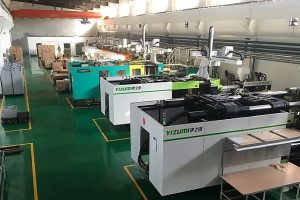
ZetarMold Fabrikdaten: Unsere Formenfertigung in Shanghai liefert monatlich über 100 Formsätze mit 23 speziellen Formenbaumaschinen. Mit Maschinen von 90 bis 1850 Tonnen Schließkraft können wir alles herstellen, von Mikroteilen bis zu großen Gehäusen bis 10 kg. Jede Form wird in unserem 6-stufigen QS-Prozess überwacht, um die Maßgenauigkeit vor Produktionsstart sicherzustellen.
Wie beeinflusst die Materialwahl Ihre Stückkosten?
Der Rohstoff macht typischerweise 20–50 % Ihrer Kosten pro Teil aus, und die Spanne zwischen Standard- und Technikkunststoffen ist enorm. Polypropylen (PP) kostet 1,00–1,50 € pro Kilogramm. PEEK? Das sind 80–120 € pro Kilogramm. Gleiches Teil, gleiche Form – allein das Material kann Ihre Stückkosten um den Faktor 10 verändern.
Aber Materialkosten sind nicht nur der Preis pro Kilogramm. Sie müssen auch das Teilegewicht, den Anguss- und Sprue-Abfall (typischerweise 5-15 % des Schussgewichts) und die Möglichkeit der Materialrückführung berücksichtigen. Amorphe Materialien wie ABS und PC vertragen Regranulat besser; teilkristalline Materialien wie POM und PBT sind empfindlicher gegenüber Wiederaufbereitung.
| Material | Preis/kg (USD) | Typical Use | Relativer Kostenindex |
|---|---|---|---|
| PP (Polypropylen) | $1.00-$1.50 | Verpackungen, Gehäuse, lebende Scharniere | 1,0x (Basiswert) |
| ABS | $1.50-$2.50 | Gehäuse, Automobilinnenraum | 1,5x |
| PA6 (Nylon 6) | $2.50-$4.00 | Zahnräder, Strukturteile | 2,5x |
| PC (Polycarbonat) | $3.00-$5.00 | Transparente Abdeckungen, LED-Linsen | 3.0x |
| POM (Acetal) | $2.50-$4.50 | Precision gears, bushings | 3.0x |
| PPO/PPE | $4.00-$7.00 | Electrical housings, fluid handling | 4.0x |
| PPS | $5.00-$10.00 | Under-hood automotive, connectors | 5.5x |
| PEEK | $80-$120 | Aerospace, medical implants | 65x |
In our experience, when our engineers review part designs with customers at our Shanghai facility, the most common cost-reduction opportunity is over-specifying material. Many engineers specify PC-ABS or glass-filled nylon when standard ABS or PA6 would meet all functional requirements. Running a proper material selection analysis — looking at tensile strength, impact resistance, thermal requirements, and chemical exposure — can cut material cost by 30-50% without sacrificing performance.
Welche Rolle spielt die Produktionsmenge für die Kosten pro Teil?
Production volume is the single most powerful lever on per-part cost because it affects every other cost component. Higher volume justifies multi-cavity molds (lower cycle time per part), enables bulk material purchasing (5-15% discount), and reduces the overhead allocation per piece. In injection molding, volume isn’t just a number — it’s the architecture of your cost structure.
Here’s a real example. We recently quoted a 45mm diameter gear housing in PA6+GF30 for a power tool customer. At 5,000 units, the unit price was $3.85 (single-cavity mold, full markup on low-volume material buy). At 50,000 units, it dropped to $1.42 (4-cavity mold, bulk resin pricing, optimized cycle time). At 500,000 units annually, we hit $0.68 — less than one-fifth of the low-volume price.

The crossover point — where investing in a better mold starts paying for itself — is typically around 30,000-50,000 units for most part geometries. Below that threshold, a simple single-cavity mold with manual loading and standard tolerances is usually your most economical option. Above 100,000 units, you should seriously consider hot runner systems, high-cavitation molds, and automation to squeeze out every cent of savings.
Volume also affects which supplier can serve you best. A factory with 47 injection machines and monthly capacity of millions of parts can offer significantly better per-part pricing at volume than a small shop with 5-10 machines, because the larger factory has lower overhead per machine-hour and can schedule production more efficiently.
The quoted unit price is never the full story. After 20 years of running injection molding projects, we’ve seen every hidden cost there is. The most commonly overlooked items add up to 10-25% above the quoted per-part price.
First: secondary operations. Does your part need assembly, ultrasonic welding, pad printing, chrome plating, or heat staking? Each secondary step adds $0.05-$2.00 per part depending on complexity. A part that costs $0.80 to mold might cost $2.30 after silk screening, UV coating, and threaded insert installation.
Second: packaging and logistics. Export packaging for delicate cosmetic parts (custom foam inserts, individual poly bags, desiccant packs) can add $0.10-$0.50 per part. Ocean freight from Shanghai to Los Angeles for a standard pallet currently runs $2,000-$4,000 — spread across the pieces on that pallet, it’s usually $0.02-$0.15 per unit, but for bulky, lightweight parts the shipping can exceed the molding cost.
“Scrap rate is built into every factory’s quotation, typically 2-5% for simple parts and 5-10% for complex or tight-tolerance parts.”Wahr
TRUE — Every factory factors in a scrap allowance. If your part has tight tolerances, complex geometry, or requires a specific surface finish (like high-gloss or optical clarity), the scrap rate will be higher. The cost of scrapped material and machine time is distributed across the good parts in your quote.
“The per-part price quoted by a Chinese factory includes all shipping costs to your warehouse door (DDP).”Falsch
FALSE — Most Chinese injection molding quotes are FOB (Free on Board) Shanghai or EXW (Ex Works). FOB means the factory’s price ends when goods pass the ship’s rail at the port. You pay ocean freight, import duties, customs brokerage, and last-mile delivery separately. DDP pricing is available but adds 15-25% to account for the factory’s risk and logistics overhead.
Third: quality control and inspection. Incoming quality control (IQC), in-process inspection, and final quality control (FQC) are standard at any reputable factory. But if you require 100% dimensional inspection, CMM reports for every batch, or third-party inspection by SGS/QIMA, expect to pay $0.02-$0.20 per part extra. It’s worth it for critical components, but it’s not free.
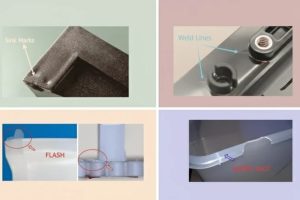
Fourth: mold modification and design changes. First-time Spritzgussform tooling rarely produces perfect parts on the first try. Most molds need 1-3 rounds of modifications — adjusting gate size, fixing flash, tuning shrinkage compensation. These modifications are typically included in the initial tooling price (called T1-T3 sampling), but major design changes initiated by the buyer are billed separately at $2,000-$5,000 per change.
Wie beeinflussen Designentscheidungen die Kosten?
Design for manufacturability (DFM) is where you win or lose the cost game before a single part is molded. Every design decision — wall thickness, draft angle, undercut, surface finish — has a direct line-item impact on your per-part price. The good news: most DFM improvements are free. They just require thinking about the molding process during the design phase, not after.
Wall thickness is the biggest lever. Thicker walls mean longer cooling time, which means longer cycle time, which means higher per-part cost. A part with 3mm walls might need 30 seconds to cool; the same geometry with 2mm walls might cool in 18 seconds. That 40% reduction in cycle time translates directly to 40% lower machine cost per part. Uniform wall thickness also prevents sink marks, warpage, and internal voids — eliminating quality costs downstream.
“Specifying a Class 101 mold (highest precision, 1M+ cycle life) for a part that only needs 50,000 units is a waste of money.”Wahr
TRUE — Mold classification matters. A Class 101 mold with hardened steel cavities and precision temperature control costs 3-5x more than a Class 104 mold (standard tolerance, <100K cycles). If your total volume is under 100,000 parts, a Class 102 or 103 mold is usually the right balance of cost and durability. Over-specifying the mold class is one of the most common ways buyers overspend.
“Adding more features and complexity to a part during initial design costs the same as a simpler version, since the mold is being built from scratch anyway.”Falsch
FALSE — Every additional undercut, side action, lifter, or threaded core adds $2,000-$15,000 to the mold cost and increases cycle time by 5-20 seconds. A simple two-plate mold with straight-pull geometry might cost $8,000 and run 15-second cycles. The same part with two side cores and a threaded insert feature could cost $28,000 and need 35-second cycles. Simplicity saves money at every scale.
Surface finish is another cost multiplier. SPI A-1 (mirror polish) requires hand polishing the cavity for 8-16 hours, adding $1,000-$5,000 to the mold cost. SPI B-1 (fine matte) is achievable with standard EDM finish and costs nothing extra. If your part isn’t cosmetic-facing, skip the premium finish.
ZetarMold Fabrikdaten: Our 8 senior engineers (each with 10+ years of experience) provide complimentary DFM analysis with every mold quotation. We flag cost-saving opportunities — wall thickness optimization, draft angle corrections, gate placement alternatives — before you commit to tooling. With 400+ materials in our database, we can recommend the most cost-effective resin for your performance requirements.
Wie können Sie die Kosten pro Teil beim Spritzgießen senken?
You can cut injection molding cost per part by 15-60% through three levers: design optimization, process efficiency, and supply chain strategy. Here are the specific tactics, ranked by savings impact.
| Strategy | Savings Potential | When to Apply | Effort Level |
|---|---|---|---|
| Increase production volume | 30-60% | Always — combine annual demand | Niedrig |
| Optimize wall thickness (uniform, thinner) | 15-40% on machine cost | Design phase | Mittel |
| Switch to multi-cavity mold | 25-50% per part at volume | Above 30K units | Mittel |
| Negotiate bulk material pricing | 5-15% | Above 5 tons/year | Niedrig |
| Eliminate secondary operations | 10-30% | Design phase | Hoch |
| Use family mold for similar parts | 20-40% on tooling | Multiple similar parts | Mittel |
| Reduce surface finish requirements | 5-15% | Non-cosmetic parts | Niedrig |
| Source from China vs. local | 30-50% | When quality standards are met | Mittel |
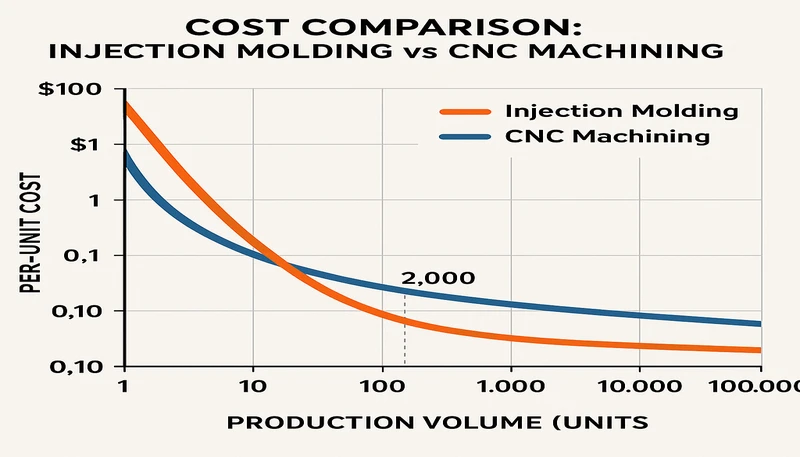
The most underused tactic is consolidation. If you’re ordering the same part in multiple batches throughout the year, consolidate into one annual order. Even if you don’t need all the parts immediately, the per-part savings from volume pricing often outweigh warehousing costs. As a rough guide: if you can commit to 50,000+ units of a single part number annually, you should expect 20-35% lower pricing than ordering 5,000 units ten times.
Another overlooked opportunity: material substitution. We regularly see parts specified in PC-ABS ($3.50/kg) that would perform identically in standard ABS ($2.00/kg) with a minor design tweak. Or parts in glass-filled nylon where a slightly thicker wall in unfilled nylon would meet the same stiffness target at half the material cost. The right supplier will proactively suggest these alternatives, not just execute your Bill of Materials verbatim.
Wie sieht eine echte Kostenaufschlüsselung aus?
Theory is useful, but let’s look at a real example. Here’s an actual cost breakdown for a 65mm x 40mm x 25mm electronic enclosure in ABS, produced at our Shanghai facility. This part has a simple snap-fit feature, two brass threaded inserts (heat-staked), and requires SPI B-2 surface finish on cosmetic faces.
| Cost Component | At 10K Units | At 100K Units | Anmerkungen |
|---|---|---|---|
| Mold tooling (4-cavity, P20 steel) | $0.80/part | $0.08/part | $32,000 mold, amortized |
| Material (ABS, including runner waste) | $0.12/part | $0.09/part | 18g per part + 15% runner |
| Machine time (180T, 22s cycle) | $0.18/part | $0.14/part | Overhead rate: $25/hr |
| Threaded inserts (2x M3 brass) | $0.08/part | $0.06/part | Material + heat staking |
| Assembly (snap-fit + insert install) | $0.05/part | $0.03/part | Manual operation |
| Quality inspection (AQL 2.5) | $0.03/part | $0.02/part | Standard QC |
| Packaging (poly bag + carton) | $0.04/part | $0.03/part | Bulk packaging |
| Scrap allowance (3%) | $0.04/part | $0.03/part | Included in quote |
| Total per-part cost | $1.34 | $0.48 | - |
Notice the cost inversion. At 10,000 units, the mold tooling ($0.80) is the single largest cost component — 60% of the total. At 100,000 units, material ($0.09) and machine time ($0.14) together exceed the tooling contribution ($0.08). This is why the “what’s your minimum order quantity?” question matters so much — the answer determines which cost component dominates your budget.
ZetarMold Fabrikdaten: With 47 injection molding machines ranging from 90T to 1850T and 120+ production staff, our Shanghai factory handles everything from micro-molding to large structural parts. Our 30+ English-speaking project managers ensure clear communication on cost breakdowns, DFM feedback, and milestone-based payment schedules — so you know exactly where every dollar goes.
Häufig gestellte Fragen zu den Kosten pro Teil beim Spritzgießen
What is the average cost per part for injection molding?
The average cost per part for injection molding ranges from $0.15 for simple, high-volume commodity plastic parts like bottle caps or cable clips, up to $5.00 or more for complex, low-volume parts requiring tight tolerances, engineering-grade materials, or secondary operations such as insert molding or painting. Most production parts fall in the $0.30 to $2.00 range when produced at volumes of 50,000 to 500,000 units. The exact number depends heavily on your part geometry, material selection, production volume, and the supplier’s geographic location.
Wie berechnet man die Kosten pro Teil beim Spritzguss?
The formula for calculating injection molding cost per part is straightforward in principle but requires accurate data for each component. Per-Part Cost equals the sum of: Mold Cost divided by Total Production Volume, plus Part Weight times Material Price per kilogram, plus Cycle Time times Machine Hour Rate divided by Number of Cavities, plus Secondary Operations cost, plus Packaging cost, plus Scrap Allowance. The most commonly overlooked component is the runner and sprue waste weight, which typically adds 5-15% to the raw material cost per shot. For a precise calculation, you also need to account for setup time amortized across the batch size, and any rework or quality sorting costs.
Is injection molding cheaper than 3D printing for production?
Injection molding is almost always cheaper than 3D printing for production quantities above 500 to 2,000 units, depending on part complexity. A part that costs $8.00 to produce via SLA 3D printing might cost only $0.50 to injection mold at 10,000 units — but you must first invest $5,000 to $15,000 in tooling. Below approximately 500 units, 3D printing wins on total project cost because there is no mold investment. Above 2,000 units, injection molding wins decisively on per-unit cost, and the gap widens dramatically at higher volumes. The crossover point shifts based on part size, complexity, and material requirements.
What is the minimum order quantity for injection molding?
There is no technical minimum order quantity for injection molding — once the mold is built, you can produce a single part if needed. The practical minimum is determined by economics: the total mold investment plus setup and calibration costs divided by the number of parts ordered. For a $10,000 single-cavity mold, ordering only 1,000 parts means $10.00 per part just for tooling amortization, which is rarely viable. Most experienced injection molding factories recommend a minimum of 3,000 to 5,000 parts to make the per-unit economics reasonable. At higher mold costs, the recommended minimum increases proportionally.
How much does injection molding cost per hour of machine time?
Machine hour rates vary significantly by region and machine size. In China, rates range from approximately $15 per hour for small machines in the 50-100 ton range to $60 per hour for large machines above 1,000 tons. In the United States and Europe, rates are typically 2 to 4 times higher, ranging from $40 to $150 per hour depending on machine size, automation level, and regional labor costs. The hourly rate includes machine depreciation, electricity consumption, operator wages, facility overhead, and scheduled maintenance. To convert this to per-part cost, divide the hourly rate by the parts produced per hour.
Can I reduce injection molding cost by changing the material?
Yes, material substitution is one of the fastest and most effective ways to reduce per-part cost without changing the part geometry or mold design. Common down-specification opportunities include switching from PC-ABS to standard ABS for a 30-40% material cost reduction, replacing glass-filled nylon with unfilled nylon combined with design reinforcements like ribs for 20-30% savings, and substituting PEEK with PPS for high-temperature applications that do not exceed 240 degrees Celsius for an 80-90% savings. Always verify that the substitute material meets all functional requirements including tensile strength, impact resistance, thermal limits, and chemical compatibility with the end-use environment.
How does multi-cavity molding reduce cost per part?
Multi-cavity molding reduces per-part cost by producing multiple identical parts in a single machine cycle. A 4-cavity mold produces 4 parts in roughly the same cycle time as a single-cavity mold, effectively cutting the machine cost per part by approximately 75%. The mold itself costs 2 to 4 times more to build due to the additional cavities, machining complexity, and balanced runner design. The economic crossover point where machine time savings exceed the higher mold investment is typically 30,000 to 50,000 units. Beyond this threshold, multi-cavity molds deliver increasingly better per-part economics as volume grows.
Wie hoch ist die typische Aufschlagsrate oder Marge bei spritzgegossenen Teilen?
Die typische Bruttomarge für Spritzgießlieferanten liegt je nach Teilekomplexität, Marktwettbewerb und Länge der Kundenbeziehung zwischen 15% und 35%. Standardteile mit mehreren konkurrierenden Lieferanten tendieren zu Margen von 15-20%, da der Preisdruck hoch ist. Maßgefertigte, technisch anspruchsvolle Teile, die proprietäre Prozesse, enge Toleranzen oder spezielle Materialien erfordern, erzielen Margen von 25-35%. Langfristige Liefervereinbarungen über drei oder mehr Jahre gehen in der Regel mit niedrigeren Margen von 15-25% einher, im Austausch für Mengenzusagen und reduzierte Kundengewinnungskosten. Das Verständnis der Margenstruktur hilft Ihnen, effektiv zu verhandeln, ohne den Lieferanten unter die Rentabilitätsgrenze zu drücken.
Fazit: Kosten pro Teil beim Spritzgießen verstehen
Die Kosten pro Teil beim Spritzgießen lassen sich auf fünf Grundlagen zurückführen: Werkzeugbau (mengenabhängig verteilt), Materialauswahl, Maschinenzeit, Nachbearbeitung und versteckte Kosten. Der größte Hebel ist fast immer die Produktionsmenge – sie bestimmt, ob Ihre $20.000 Werkzeugkosten $2,00 oder $0,04 pro Teil betragen. Nach der Menge bieten Teilekonstruktion (Wandstärke, Komplexität, Oberflächengüte) und Materialauswahl die nächstgrößten Einsparmöglichkeiten.
Die Fabriken, die Ihnen die besten Stückpreise bieten, sind diejenigen, die Ihnen helfen, die gesamte Kostenstruktur zu optimieren – nicht nur den Materialpreis. Wenn Ihr Lieferant kein DFM-Feedback, Materialalternativen und mengenbasierte Preisstufen anbietet, lassen Sie Geld auf dem Tisch liegen. Nutzen Sie einen injection molding supplier sourcing guide um Angebotsqualität, Kapazität und kommerzielles Risiko zu vergleichen, bevor Sie den Werkzeugbau beauftragen. Ein gut konstruiertes Werkzeug in der richtigen Fabrik, mit dem richtigen Material und der richtigen Menge, wird Teile zu einem Preis liefern, der Ihr Produkt wettbewerbsfähig macht.
-
Formwerkzeug: Werkzeugbau bezieht sich auf den Prozess der Konstruktion und Herstellung des Metallwerkzeugs, das beim Spritzgießen verwendet wird. Die Werkzeugbaukosten umfassen die Kavitätenbearbeitung, die Kernherstellung, das Bohren von Kühlkanälen, die Installation des Auswurfsystems und die Oberflächenveredelung. Die Werkzeugkosten werden auf die Gesamtproduktionsmenge verteilt – eine entscheidende Kennzahl für die Stückkostenrechnung. ↩
-
Zykluszeit: Zykluszeit bezieht sich auf die Gesamtzeit, die benötigt wird, um einen Spritzgießzyklus abzuschließen – vom Schließen der Form, Einspritzen, Nachdrücken, Abkühlen, Öffnen der Form bis zum Auswerfen. Typische Zykluszeiten reichen von 10 Sekunden für kleine, einfache Teile bis zu 120 Sekunden für große, komplexe Teile. ↩
-
Formhohlräume: Formkavitäten beziehen sich auf die Hohlräume innerhalb einer Spritzgießform, die die endgültige Teilform bilden. Eine Einfachkavitäten-Form produziert ein Teil pro Zyklus, während eine Mehrfachkavitäten-Form mehrere identische Teile pro Zyklus produziert. Mehr Kavitäten reduzieren die Stückkosten, indem Zykluszeit und Maschinenkosten auf mehr Einheiten verteilt werden, erhöhen aber die Werkzeuginvestition. ↩




 EN
EN  ES
ES  FR
FR  DE
DE  PT
PT  AR
AR  RU
RU  JA
JA  KO
KO  IT
IT  NL
NL  TR
TR  PL
PL 