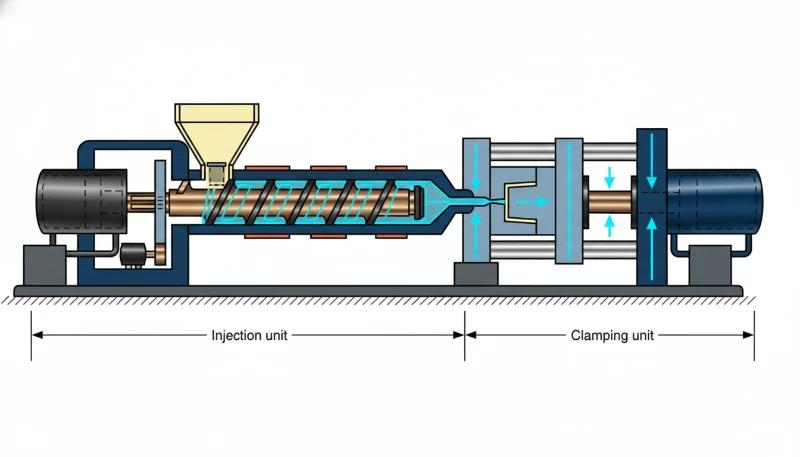
Beschaffungsingenieure, die Spritzgusskosten kalkulieren, stehen vor einem häufigen Problem: Angebote, die beim Stückpreis wettbewerbsfähig wirken, verbergen oft Werkzeugkostenüberschreitungen, Nachteile durch lange Zykluszeiten und Folgekosten, die die Margen um 15-30% schmälern. Dieser Leitfaden schlüsselt jede Kostenkomponente auf - Werkzeug, Material, Verarbeitung und Gemeinkosten -, damit Sie Angebote auf gleicher Grundlage vergleichen und erkennen können, wo Einsparungen tatsächlich möglich sind.
- Gesamtkosten beim Spritzgießen = Werkzeugkosten + (Stückpreis × Menge). Die Werkzeugkosten betragen $3,000–$100,000+; der Stückpreis liegt je nach Menge und Komplexität bei $0.10–$5.00.
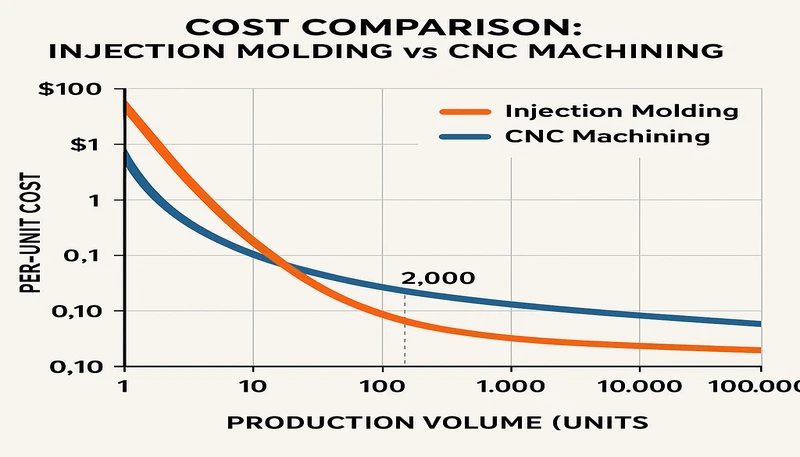
- Der Break-even-Punkt gegenüber 3D-Druck oder CNC liegt je nach Teilegeometrie und Material in der Regel bei 500–5,000 Stück.
- Die Werkzeugkosten werden von 4 Faktoren bestimmt: Teilekomplexität, Kavitätenzahl, Stahlsorte und erforderliche Toleranzen.
- Der Stückpreis wird von 4 Faktoren bestimmt: Zykluszeit, Materialkosten, Ausschussquote und Maschinenstundensatz.
- Eine DFM-Prüfung vor dem Werkzeugbau vermeidet 60%+ der Änderungskosten - jede Änderungsschleife kostet $1,000–$5,000 und 2–4 Wochen.
Umfassende Prozesshinweise finden Sie in unserem vollständigen Leitfaden zum Spritzgießen und unserem vollständigen Leitfaden zu Spritzgusswerkzeugen.
Wie berechnen Sie die Spritzgusskosten?
Die Spritzgusskosten bestehen aus zwei Komponenten: den einmaligen, festen Werkzeugkosten und dem variablen Stückpreis pro Teil. Gesamtprojektkosten = Werkzeugkosten + (Stückpreis × Menge). Bei einem typischen Verbraucherprodukt liegen die Werkzeugkosten bei $5,000–$20,000 und der Stückpreis bei einer Menge von 10,000 Stück bei $0.50–$2.00. Die Rechnung ist einfach - doch die meisten Einkäufer sind überrascht, welche Variablen tatsächlich den größten Einfluss haben.
Ihr Werkzeugangebot ist gerade mit $85,000 zurückgekommen. Ihr Vorgesetzter möchte wissen, ob das normal ist. Die kurze Antwort: Es hängt von drei Dingen ab - der Teilekomplexität (Hinterschnitte, Gewinde, enge Toleranzen), der Kavitätenzahl (wie viele Teile pro Schuss) und der Stahlsorte (P20 für die Standardproduktion gegenüber H13 für hohe Stückzahlen oder abrasive Materialien). Wenn Sie jede Komponente verstehen, können Sie sachkundig verhandeln, statt einfach alles zu genehmigen, was der Lieferant Ihnen vorlegt.
Welche Faktoren bestimmen die Kosten eines Spritzgusswerkzeugs?
Die Werkzeugkosten reichen von $3,000 für ein einfaches Einkavitäten-Prototypenwerkzeug aus Aluminium bis zu $100,000+ für ein komplexes Mehrkavitäten-Serienwerkzeug. Die vier wichtigsten Kostentreiber sind: (1) Teilekomplexität - Anzahl der Hinterschnitte, Gewinde, seitlichen Bewegungen und Komplexität der Kavitätsgeometrie, (2) Kavitätenzahl - ein Werkzeug mit 4 Kavitäten kostet das 2.5–3-Fache eines Einkavitätenwerkzeugs (nicht das 4-Fache, da die Grundstruktur gemeinsam genutzt wird), (3) Stahlsorte - P20-Stahl für Standardstückzahlen, H13 für abrasive Materialien oder 500,000+ Zyklen und (4) erforderliche Toleranzen - jede Verschärfung um ±0.05mm gegenüber dem Standard erhöht die Bearbeitungskosten um 10–20%.
Warum unterscheiden sich die Werkzeugkosten so stark?
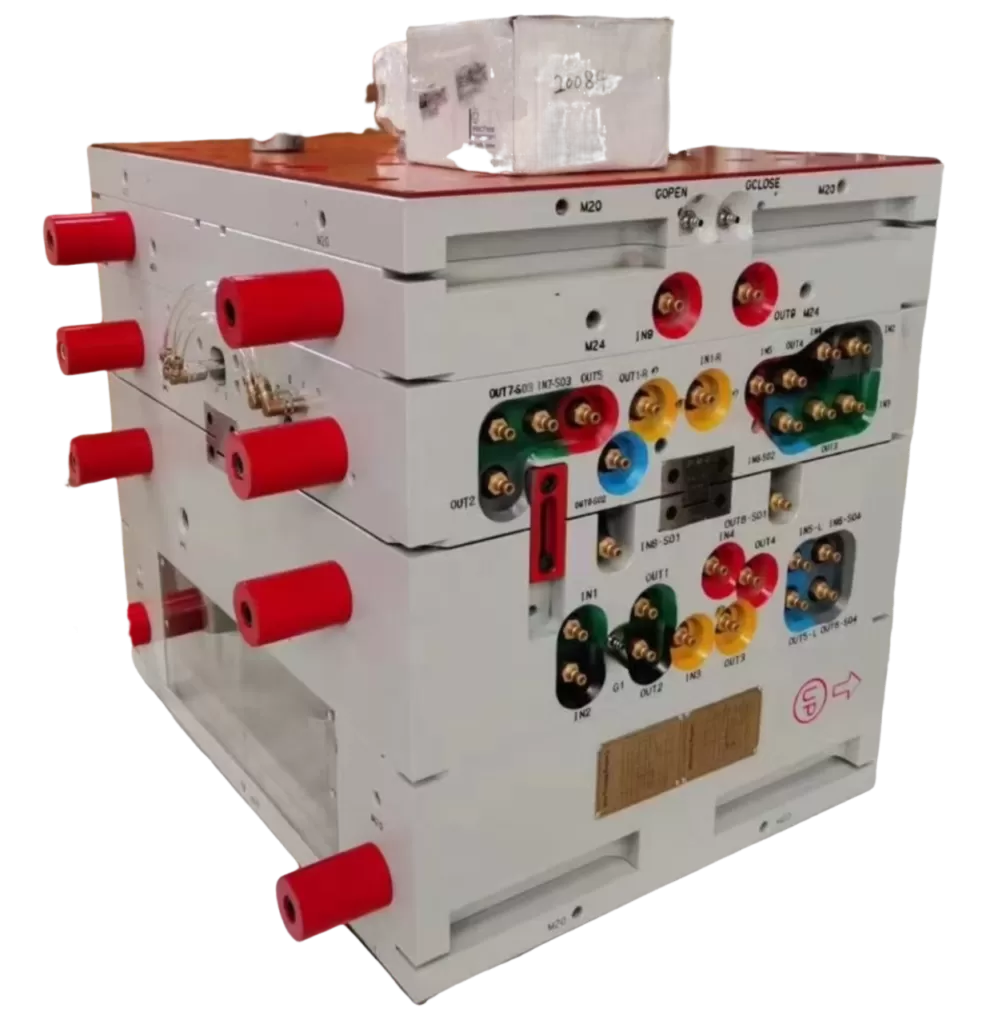
Die Kosten des Werkzeugaufbaus sind die versteckte Variable, die die meisten Einkäufer übersehen. Der Werkzeugaufbau - das standardisierte Stahlgehäuse, das Kern- und Kavitätseinsätze aufnimmt - macht 15–30% der gesamten Werkzeugkosten aus. Standardisierte Werkzeugaufbauten1 (DME, HASCO, LKM) sind handelsübliche Komponenten, die Werkzeugbauzeit und -kosten reduzieren. Sonderanfertigungen für ungewöhnliche Teilegeometrien oder Konfigurationen mit seitlichen Bewegungen kosten 40–60% mehr und verlängern die Lieferzeit um 1–2 Wochen. Fragen Sie Ihren Werkzeugbauer immer, welchen Standard für Werkzeugaufbauten er verwendet und warum - das ist ein schneller Hinweis auf den Reifegrad seiner Prozesse.
Die Stahlhärte bestimmt sowohl die Werkzeugkosten als auch die Werkzeuglebensdauer. P20 (vorvergütet auf HRC 28–34) ist der Standard für die meisten kommerziellen Serienwerkzeuge - es lässt sich schnell bearbeiten (geringere Kosten) und ermöglicht 300,000–500,000 Zyklen, bevor erheblicher Verschleiß auftritt. H13 (wärmebehandelt auf HRC 48–52) verursacht aufgrund seiner Härte 25–40% höhere Bearbeitungskosten, ermöglicht jedoch 1,000,000+ Zyklen und widersteht dem Verschleiß durch glasfaser- oder mineralgefüllte Kunststoffe. Bei Medizinprodukten und optischen Komponenten bietet S136 (rostfrei, HRC 48–52) zusätzliche Korrosionsbeständigkeit gegenüber aggressiven Materialien und in Umgebungen mit Dampfsterilisation.
Wie verändern Kavitätenzahl und seitliche Bewegungen die Kosten?
Die Kavitätenzahl wirkt sich nichtlinear auf die Werkzeugkosten aus. Aus einem Einkavitätenwerkzeug für $10,000 wird bei 4 Kavitäten kein Werkzeug für $40,000 - in der Regel kostet es dann $25,000–$28,000. Der gemeinsame Werkzeugaufbau, Kühlkreislauf und das Auswerfersystem verteilen sich auf die Kavitäten. Jede zusätzliche Kavität erhöht jedoch die Präzisionsanforderungen für eine gleichmäßige Füllung und ausgewogene Kühlung, was bei höheren Kavitätenzahlen (ab 16 Kavitäten) zusätzliche Kosten verursacht.
Seitliche Bewegungen (für Hinterschnitte) sind der größte einzelne Kostenaufschlag beim Werkzeug. Jede seitliche Bewegung erhöht die Werkzeugkosten je nach Komplexität um $500–$5,000. Bei einem Teil mit 4 äußeren Hinterschnitten, die jeweils einen Schrägauswerfer erfordern, können allein die Komponenten für seitliche Bewegungen $8,000–$15,000 zusätzlich kosten. Deshalb ist eine DFM2-Prüfung vor dem Werkzeugbau entscheidend - die Verlagerung eines Merkmals zur Beseitigung eines Hinterschnitts kostet im CAD nichts, kann aber $10,000 an Werkzeugänderungen vermeiden.
Im ZetarMold-Werk in Shanghai entfallen 40% der angebotenen Werkzeugkosten auf CNC-Bearbeitung und EDM-Arbeiten an Kern- und Kavitätseinsätzen. Kunden, die die DFM vor der Werkzeugfreigabe genehmigen, sparen durchschnittlich 2.3 Änderungsschleifen - das entspricht vermiedenen Nacharbeiten im Wert von $8,000–$25,000. In 20 Jahren Betrieb von Spritzgusswerkzeugen war die teuerste Änderung, die wir beobachten, die Verlagerung des Anschnitts nach T1 - dafür muss die alte Anschnittposition in der Regel zugeschweißt und erneut bearbeitet werden, was $1,500–$4,000 kostet und eine Verzögerung von 2 Wochen verursacht.
| Mold Type | Cavities | Steel | Tooling Cost | Cycle Life | Best For |
|---|---|---|---|---|---|
| Prototype/Soft | 1 | Aluminum | $3,000–$8,000 | 10K–50K shots | Validation, low volume |
| Simple production | 1–2 | P20 | $8,000–$20,000 | 300K–500K shots | Standard products |
| Mid-volume multi | 4–8 | P20/718H | $20,000–$45,000 | 500K shots | Consumer electronics |
| High-volume multi | 8–16 | H13/S136 | $45,000–$80,000 | 1M+ shots | Automotive, medical |
| Complex precision | 1–4 | H13/S136 | $50,000–$100,000+ | 500K+ shots | Tight tolerances |
Wie wird der Stückpreis berechnet?
Stückpreis = (Maschinenstundensatz × Zykluszeit pro Teil) + Materialkosten pro Teil + Gemeinkostenzuschlag + Gewinnmarge. Bei einem 30-Sekunden-Zyklus auf einer 100-Tonnen-Maschine, die ein Teil pro Schuss fertigt, gilt: Maschinenzeit = $0.15/Schuss × 2 Schuss/Minute × 0.5 Minuten = $0.075. Nach Hinzurechnung von Material (2g ABS zu $2.50/kg = $0.005), Gemeinkosten (20%) und Marge (15%) liegt der Stückpreis bei Serienmengen bei etwa $0.11–$0.15.
Der Anteil der Materialkosten am Stückpreis unterscheidet sich je nach Kunststoffsorte erheblich. Standardkunststoffe wie ABS oder PP kosten $1.50–$2.50/kg - ein vernachlässigbarer Betrag. Technische Kunststoffe wie PA66-GF30 kosten $5–$8/kg. Hochleistungskunststoffe wie PEEK kosten $80–$120/kg, wodurch das Material bei kleinen Teilen zum dominierenden Kostentreiber wird. Bei einer medizinischen Komponente aus PEEK mit 5g Gewicht kostet allein das Material $0.40–$0.60 pro Teil - oft mehr als die Maschinenzeit.
Wie beeinflussen Maschinenkosten und Ausschussquote den Preis?
Nach den Materialkosten ist der Maschinenstundensatz die größte Variable des Stückpreises. Eine hydraulische 100-Tonnen-Maschine kostet in einem typischen chinesischen Fertigungsbetrieb $35–$50/Stunde. Eine 500-Tonnen-Maschine kostet $80–$120/Stunde. Elektrische Maschinen vergleichbarer Tonnage haben aufgrund der höheren Kapitalkosten einen 15–25% höheren Stundensatz, verbrauchen jedoch pro Schuss 30–50% weniger Energie. Wenn Ihr Lieferant einen Stückpreis anbietet, fragen Sie, auf welcher Maschinentonnage Ihr Werkzeug laufen soll - die Fertigung eines für eine 100-Tonnen-Maschine geeigneten Teils auf einer 500-Tonnen-Maschine erhöht den Stückpreis ohne Qualitätsvorteil um 80–150%.
Wie beeinflusst die Ausschussquote Ihren effektiven Stückpreis?
Die Ausschussquote ist eine häufig übersehene Komponente des effektiven Stückpreises. Ein Prozess mit 3% Ausschuss bei einem Teil für $1.00 kostet effektiv $1.03. Bei 1,000,000 Stück verursacht diese Ausschussquote von 3% Kosten von $30,000 durch verschwendetes Material und vergeudete Maschinenzeit. Werkzeuge mit vielen Kavitäten und nicht optimal ausgewogenem Anschnitt verursachen in ihren leistungsschwächsten Kavitäten 3–8% Ausschuss. Gut validierte Werkzeuge mit einer oder zwei Kavitäten bleiben in der stabilen Serienproduktion normalerweise unter 0.5% Ausschuss. Fragen Sie beim Vergleich von Lieferantenangeboten immer nach der historischen Ausschussquote bei ähnlichen Programmen.
Piece Price = (Machine Rate × Cycle Time) + Material Cost + Overhead + MarginAt 10,000 units with a $12,000 mold: tooling = 59% of total cost. At 100,000 units: tooling = 12% of total cost. Volume is the single biggest lever on effective per-unit cost.
Die Kavitätenzahl wirkt sich umgekehrt proportional auf den Stückpreis aus. Wenn 4 statt 1 Kavität pro Schuss laufen, sinkt der Stückpreis um 65–70% (nicht um 75%, da Einrichtung, Prüfung und Ausschussbehandlung pro Schuss anfallen). Bei 10,000 Stück produziert ein Werkzeug mit 4 Kavitäten dieselbe Menge in einem Viertel der Maschinenzeit. Ob sich ein Mehrkavitätenwerkzeug rechnet, hängt davon ab, ob Sie die höheren Werkzeugkosten über Ihr geplantes Produktionsvolumen auffangen können - in der Regel ist dies ab 20,000+ Stück pro Jahr gerechtfertigt.
Ab welcher Stückzahl ist Spritzgießen wirtschaftlich sinnvoll?
Bei einfachen Teilen wird Spritzgießen gegenüber CNC-Bearbeitung ab etwa 500–2,000 Stück und gegenüber 3D-Druck bei den meisten Teilegeometrien ab 1,000–5,000 Stück wettbewerbsfähig. Die Break-even-Berechnung lautet: (Werkzeugkosten beim Spritzgießen) / (Stückpreisersparnis beim Spritzgießen gegenüber CNC) = Break-even-Stückzahl. Wenn Spritzgießen gegenüber CNC $4.00 pro Teil einspart, amortisiert sich ein Werkzeug für $10,000 bei 2,500 Stück.
„Ein Mehrkavitätenwerkzeug senkt den Stückpreis effizienter als mehr Zyklen mit einem Einkavitätenwerkzeug.“True
Ein Werkzeug mit 4 Kavitäten produziert 4 Teile pro Zyklus, während ein Einkavitätenwerkzeug dafür 4 Zyklen benötigt. Die Zykluszeit eines Werkzeugs mit 4 Kavitäten entspricht im Wesentlichen der eines Werkzeugs mit 1 Kavität (sie ist aufgrund der Anforderungen an die ausgewogene Füllung geringfügig länger), sodass der Durchsatz bei 2.5–3-fachen Werkzeugkosten um das 3.5–4-Fache steigt. Darin liegt die wirtschaftliche Begründung für Mehrkavitätenwerkzeuge bei hohen Produktionsmengen.
„Ein günstigeres Werkzeug führt immer zu niedrigeren Gesamtprojektkosten.“False
Ein Prototypenwerkzeug für $5,000, das 3 Änderungsschleifen erfordert, kostet $5,000 + $4,500 für Nacharbeit = $9,500. Ein Serienwerkzeug für $12,000 mit DFM-Prüfung, das keine Änderungen erfordert, kostet $12,000. Bei jeder Produktionsserie über 5,000 Stück führen die längere Werkzeuglebensdauer und die bessere Teilekonsistenz des Serienwerkzeugs trotz der höheren Anfangsinvestition zu niedrigeren Gesamtbetriebskosten.
Um zu verstehen, welche Mengenschwellen für Ihr Programm gelten, müssen Sie sowohl die alternativen Fertigungsverfahren als auch Ihre Teilegeometrie abbilden. In unserem Werk sinkt der Stückpreis bei Programmen, die vom 3D-Druck zum Spritzgießen wechseln, typischerweise um 70–80% - die Investition in das Werkzeug muss jedoch durch das gesamte Produktionsvolumen über die Lebensdauer und nicht nur durch die kurzfristige Prognose gerechtfertigt sein. Modellieren Sie immer drei Szenarien: Mindestmenge, erwartete Menge und Höchstmenge, und berechnen Sie anschließend für jedes Szenario den Break-even-Punkt. Die Mengenentscheidung ist die folgenreichste Kostenentscheidung in der frühen Produktentwicklung - sie hat mehr Einfluss als die Lieferantenauswahl oder Materialverhandlungen.
„Heißkanalsysteme sparen bei höheren Produktionsmengen trotz höherer anfänglicher Werkzeugkosten mehr Geld.“True
Ein Heißkanalsystem erhöht die Werkzeugkosten um $3,000–$15,000, beseitigt aber den gesamten Angussausschuss. Bei einem Werkzeug mit 16 Kavitäten, das PC mit einem Verhältnis von Anguss- zu Schussgewicht von 18% verarbeitet, spart dies pro Zyklus 18% der Materialkosten. Bei 100,000 Schuss übersteigen die Materialeinsparungen ($0.08–$0.15 pro Schuss) den Heißkanalaufschlag von $5,000–$10,000 deutlich. Bei Standardanwendungen wird der Break-even-Punkt in der Regel nach 30,000–80,000 Schuss erreicht.
„Werkzeuge mit vielen Kavitäten (16+ Kavitäten) bieten bei hohen Produktionsmengen immer die niedrigsten Gesamtkosten.“False
Werkzeuge mit vielen Kavitäten erfordern eine außergewöhnlich gute Werkzeugbalancierung, engere Fertigungstoleranzen und anspruchsvollere Heißkanalsysteme. Ein schlecht ausgewogenes Werkzeug mit 16 Kavitäten erreicht aufgrund von Maßabweichungen zwischen den Kavitäten möglicherweise nur 75% des theoretischen Durchsatzes. Bei vielen Programmen übertreffen 2–4 optimierte Kavitäten mit einem bewährten Heißkanal 16 Kavitäten mit Balancierungsproblemen. Vergleichen Sie immer den tatsächlichen Durchsatz und nicht die theoretische Kavitätenzahl.
Wie senken Sie die Kosten eines Spritzgussprojekts?
Die Kostensenkungen mit dem höchsten ROI sind in dieser Reihenfolge: (1) Beseitigen Sie Hinterschnitte im Rahmen der DFM - jeder Hinterschnitt, der eine seitliche Bewegung erfordert, erhöht die Werkzeugkosten um $500–$5,000. (2) Vereinheitlichen Sie die Wanddicke - ungleichmäßige Wände erhöhen Kühlzeit, Zykluszeit und Ausschussquote. (3) Fassen Sie Teile zusammen - die Konsolidierung von 3 Teilen zu 1 Teil senkt die Montagekosten und kann die höhere Werkzeugkomplexität ausgleichen. (4) Optimieren Sie die Anschnittposition - eine korrekte Anschnittplatzierung senkt den Fülldruck und damit die erforderliche Tonnage und die Kosten der Spritzgießmaschine.
Welche Konstruktions- und Materialänderungen senken die Kosten am stärksten?
Die Materialwahl beeinflusst den Stückpreis stärker, als die meisten Einkäufer erkennen. Der Wechsel von PA66-GF30 zu ABS bei einer nicht tragenden Komponente spart $5–$7/kg an Materialkosten. Bei 100,000 Teilen mit einem Durchschnittsgewicht von 10g pro Teil entspricht das einer Materialeinsparung von $5,000–$7,000 - oft mehr als die Kosten der DFM-Konstruktionsprüfung. Prüfen Sie stets die strukturellen Anforderungen, bevor Sie eine Materialsorte auswählen; Überdimensionierung ist häufig und teuer.
Wie kann die Optimierung der Zykluszeit den Stückpreis senken?
Nach der DFM ist die Optimierung der Zykluszeit ein zuverlässiger Weg zur Senkung des Stückpreises. Die Kühlzeit macht 60–70% der Zykluszeit beim Spritzgießen aus. Eine gleichmäßige Wanddicke gewährleistet eine gleichmäßige Kühlung - wenn die Wände zwischen 2mm und 4mm variieren, verlängert sich die Zykluszeit, um den dicken Bereich ausreichend zu kühlen. Bei ZetarMold verkürzt eine auf die Teilegeometrie abgestimmte Neuanordnung der Kühlkanäle den Zyklus typischerweise um 3–6 Sekunden - das entspricht $0.02–$0.05 pro Teil oder $2,000–$5,000 je 100,000 produzierte Einheiten. Dies ist eine der Prozessoptimierungen mit dem höchsten ROI, die nach Abschluss der ersten DFM-Prüfung zur Verfügung stehen, und sie amortisiert sich typischerweise innerhalb der ersten 50,000 Einheiten des Produktionsvolumens vollständig.
Sekundärarbeiten verursachen zusätzliche Kosten, die sich in Stückpreisangeboten nur selten widerspiegeln. Das Abtrennen des Angusses, die Prüfung, der Tampondruck und Funktionsprüfungen erhöhen die Kosten um $0.05–$1.00 pro Teil. Fragen Sie beim Vergleich von Lieferantenangeboten immer, was im Stückpreis enthalten ist - ein Angebot ohne Abtrennen des Angusses ist nicht mit einem Angebot vergleichbar, das die vollständige Nachbearbeitung umfasst. Erstellen Sie vor Beschaffungsentscheidungen ein vollständiges Kostenmodell pro fertiggestelltem Teil - Werkzeugkosten, Stückpreis, Abtrennen des Angusses, Prüfung und Logistik müssen vollständig berücksichtigt werden, um vor der Bindung an einen Lieferanten ein präzises Modell der Gesamtwirtschaftlichkeit pro Einheit aufzubauen.
Wie beeinflussen Angusssystem und Toleranzwahl die Kosten?
Die Entscheidung zwischen Heißkanal und Kaltkanal ist die einflussreichste Werkzeugspezifikation für Programme mit hohen Stückzahlen. Ein Kaltkanal verursacht 10–20% des Teilegewichts als Angussausschuss, der wiedervermahlen oder entsorgt werden muss. Bei Standardkunststoffen (ABS, PP) ist Mahlgut in einem Mischungsverhältnis von 10–25% mit Neuware akzeptabel. Bei technischen Kunststoffen (PC, PA66) und medizinischen Materialien ist Mahlgut möglicherweise nicht zulässig - dadurch wird der Angussausschuss zu reinen Abfallkosten. Der Break-even-Punkt einer Investition in einen Heißkanal hängt von den Materialkosten, dem Produktionsvolumen und den Vorgaben für Mahlgut ab.
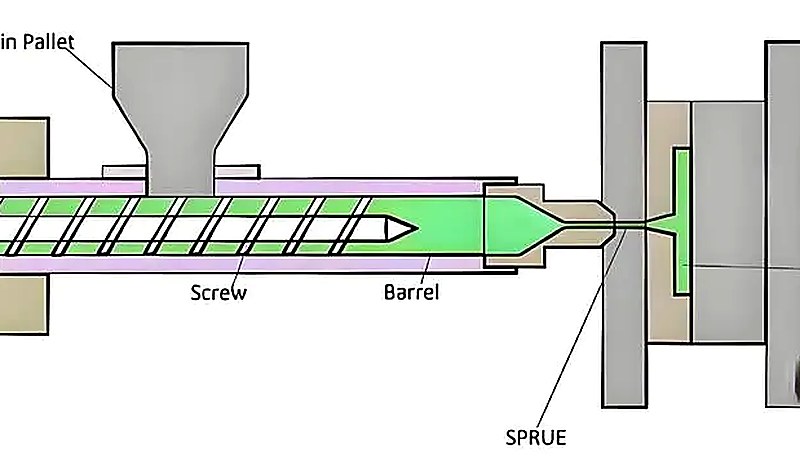
Die Wahl des Angusssystems beeinflusst Materialkosten und Ausschussquote. Ein Kaltkanalsystem mit 3 Kavitäten kann 15–20% des Schussgewichts als Angussausschuss erzeugen, der wiedervermahlen werden muss. Ein Heißkanalsystem beseitigt den Angussausschuss vollständig - bei einem PC-Linsenwerkzeug mit 16 Kavitäten spart dies gegenüber einem Kaltkanal pro Zyklus 18% der Materialkosten. Ein Heißkanal erhöht die Werkzeugkosten um $3,000–$15,000, amortisiert sich bei den meisten Anwendungen jedoch ab 50,000+ Schuss.
Toleranzen sind Preismultiplikatoren. Standardtoleranzen beim Spritzgießen betragen für die meisten Merkmale ±0.1–0.2mm. Die Verschärfung eines kritischen Maßes auf ±0.05mm erfordert langsamere Zyklen (eine geringere Einspritzgeschwindigkeit für mehr Stabilität), zusätzliches Polieren des Werkzeugs und eine CMM-Prüfung - dadurch steigen die Werkzeugkosten typischerweise um 20–40% und der Stückpreis um 10–15%. Fragen Sie sich immer: Benötigt dieses Maß tatsächlich ±0.05mm, oder reichen ±0.1mm für die Funktion aus?
Was zeigt die Kurzübersicht zu Spritzgusskosten?
Verwenden Sie diese vereinfachte Formel, um die Gesamtprojektkosten vor der Angebotsanfrage zu schätzen: Gesamtkosten = Werkzeugkosten + (Stückpreis × Menge). Beispielrechnung: 10,000 Einheiten eines Gehäuses für Unterhaltungselektronik aus ABS, eine Kavität. Werkzeugkosten: $12,000 (mittlere Komplexität, P20-Stahl). Stückpreis: $0.85 (30-Sekunden-Zyklus, 15g schweres Teil). Gesamt = $12,000 + ($0.85 × 10,000) = $20,500. Bei 50,000 Einheiten: $12,000 + ($0.85 × 50,000) = $54,500 (die Werkzeugkosten entsprechen 22% der Gesamtkosten gegenüber 59% bei 10K Einheiten).
| Volume | Simple Part | Moderate Complexity | High Complexity |
|---|---|---|---|
| 1,000 units | $8K–$20K total | $15K–$35K total | $50K–$80K total |
| 10,000 units | $12K–$28K total | $22K–$48K total | $60K–$105K total |
| 100,000 units | $22K–$55K total | $42K–$100K total | $90K–$200K total |
| 1,000,000 units | $90K–$350K total | $200K–$650K total | $400K–$1.2M total |
Was ist das Fazit zu Spritzgusskosten?
Fazit: Die Spritzgusskosten gliedern sich in Werkzeugkosten (60-80% der Ausgaben im ersten Jahr), Stückpreis (Material + Maschinenzeit + Gemeinkosten) und Sekundärarbeiten. Die Kostensenkungen mit dem höchsten ROI entstehen durch DFM-Optimierung vor der Werkzeugfertigung und nicht durch nachträgliche Verhandlungen über den Stückpreis. Wenn Sie ein neues Spritzgussprogramm bewerten, beginnen Sie mit einer DFM-Prüfung - sie kostet nichts und spart allein bei den Werkzeugkosten typischerweise 10-25%.
| Cost Component | Typical Range | Share of First-Year Spend |
|---|---|---|
| Tooling | $3,000–$100,000+ | 60–80% |
| Piece price (per part) | $0.10–$5.00+ | 15–35% |
| Secondary operations | Varies | 5–15% |
Faustregel: Wenn das gesamte Projektvolumen 10,000 Teile übersteigt, ist Spritzgießen bei den Stückkosten fast immer günstiger als Bearbeitung und 3D-Druck. Für eine detaillierte Kostenschätzung auf Grundlage Ihrer Teilegeometrie reichen Sie über unsere Seite für den Spritzgussservice3 eine Zeichnung ein.
| Volume Range | Recommended Process |
|---|---|
| <500 parts | 3D printing or CNC machining |
| 500–10,000 parts | Bridge tooling or prototype injection molding |
| >10,000 parts | Production injection molding (best unit cost) |
Häufig gestellte Fragen zu Spritzgusskosten
Wie berechnen Sie die Spritzgusskosten pro Teil?
Der Stückpreis wird aus Maschinenzeit, Material, Gemeinkosten und Marge berechnet.
Wie viel kostet ein Spritzgusswerkzeug?
Die Werkzeugkosten reichen in der Regel von etwa $3,000 für einfache Prototypenwerkzeuge bis zu $100,000+ für komplexe Serienwerkzeuge.
Wo liegt der Break-even-Punkt beim Spritzgießen?
Je nach alternativem Verfahren und Teilegeometrie wird Spritzgießen häufig ab etwa 500–5,000 Stück wirtschaftlich.
Welche Kosten schätzt ein Spritzgusskostenrechner?
Eine schnelle Schätzung verwendet: Gesamtkosten = Werkzeugkosten + (Stückpreis × Menge).
Welche Faktoren erhöhen die Spritzgusskosten am stärksten?
Hinterschnitte, enge Toleranzen, teure Materialien, geringe Stückzahlen und späte Konstruktionsänderungen erhöhen die Kosten am stärksten.
Wie kann ich die Werkzeugkosten beim Spritzgießen senken?
Die wirksamsten Maßnahmen sind eine DFM-Prüfung vor dem Werkzeugbau (beseitigt Hinterschnitte und seitliche Bewegungen), die Vereinheitlichung der Wanddicke (verkürzt die Kühlzeit) und die Verwendung standardisierter Werkzeugaufbaugrößen (reduziert die Sonderbearbeitung). Die meisten DFM-Verbesserungen kosten im CAD nichts und sparen $1,000–$15,000 bei den Werkzeugkosten.
Quellen
- Bryce, D. M. (2008). Injection Mold Design Engineering. Society of Manufacturing Engineers.
- Beschaffungsunterlagen des ZetarMold-Werks (Daten des chinesischen Werkzeugmarkts 2024).
- Interne Produktionsdaten: Einfluss der DFM-Prüfung auf Änderungsschleifen (Q1 2026).
Richtwerte für Werkzeugkosten stammen aus Injection Mold Design Engineering (Bryce, 2008) und wurden anhand der Daten des chinesischen Werkzeugmarkts 2024 aus den Beschaffungsunterlagen unseres Werks aktualisiert. ↩
Die DFM-Prüfung (fertigungsgerechtes Konstruieren) ist eine Analyse vor dem Werkzeugbau, die kostenbestimmende Merkmale - Hinterschnitte, ungleichmäßige Wände und enge Toleranzen - vor der Stahlbearbeitung identifiziert. Interne Produktionsdaten zeigen, dass DFM die Änderungsschleifen im Durchschnitt um den Faktor 2.3 reduziert. ↩
Maschinenstundensätze setzen die üblichen Sätze chinesischer OEM-Betriebe ($35–$50/hr für 100-Tonnen-Maschinen, $80–$120/hr für 500-Tonnen-Maschinen) mit Stand Q1 2026 voraus. Die Sätze westlicher Fertigungsbetriebe sind typischerweise 2–4× höher. ↩