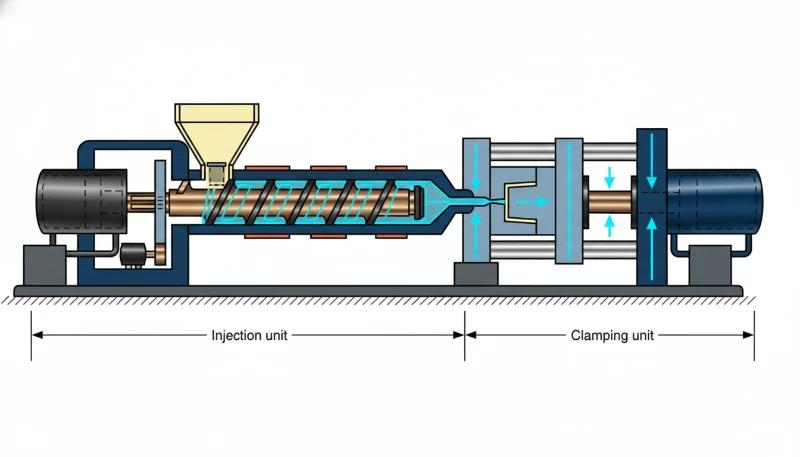
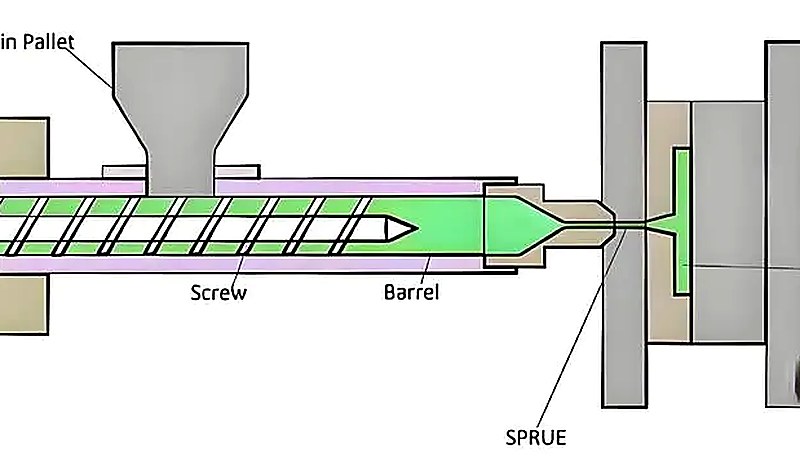
I responsabili degli approvvigionamenti che calcolano il costo dello stampaggio a iniezione affrontano un problema comune: i preventivi che sembrano competitivi in base al prezzo unitario spesso nascondono sforamenti dei costi di attrezzaggio, penalizzazioni dovute al tempo di ciclo e costi secondari che riducono i margini del 15-30%. Questa guida analizza ogni componente di costo — attrezzaggio, materiale, lavorazione e spese generali — affinché tu possa confrontare i preventivi su basi omogenee e individuare dove sia davvero possibile risparmiare.
- Costo totale dello stampaggio a iniezione = costo dell'attrezzaggio + (prezzo unitario × quantità). L'attrezzaggio costa $3,000–$100,000+; il prezzo unitario è di $0.10–$5.00 in funzione del volume e della complessità.
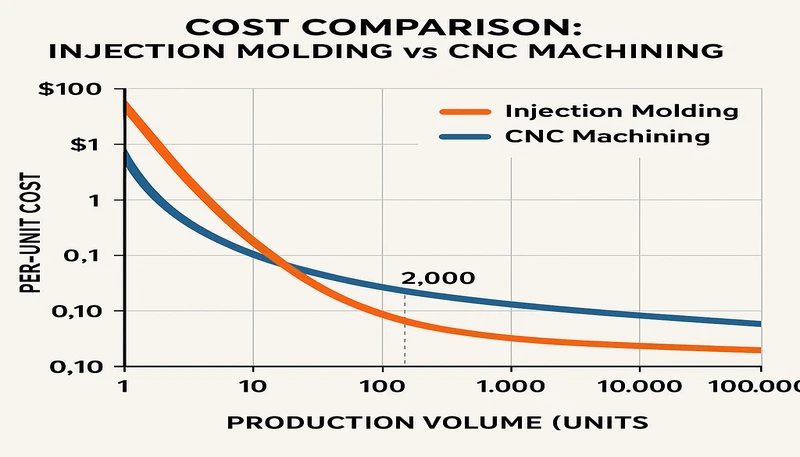
- Il punto di pareggio rispetto alla stampa 3D o alla lavorazione CNC è in genere di 500–5,000 unità, a seconda della geometria del pezzo e del materiale.
- Il costo dell'attrezzaggio dipende da 4 fattori: complessità del pezzo, numero di cavità, tipo di acciaio e tolleranze richieste.
- Il prezzo unitario dipende da 4 fattori: tempo di ciclo, costo del materiale, tasso di scarto e tariffa oraria della macchina.
- La revisione DFM prima dell'attrezzaggio elimina oltre il 60% dei costi di revisione — ogni ciclo di revisione costa $1,000–$5,000 e richiede 2–4 settimane.
Per una guida completa al processo, consulta la nostra guida completa allo stampaggio a iniezione e la guida completa agli stampi a iniezione.
Come si calcola il costo dello stampaggio a iniezione?
Il costo dello stampaggio a iniezione comprende due componenti: il costo dell’attrezzaggio (una tantum, fisso) e il prezzo unitario (per pezzo, variabile). Costo totale del progetto = costo dell’attrezzaggio + (prezzo unitario × quantità). Per un tipico prodotto di consumo, l’attrezzaggio costa $5,000–$20,000 e il prezzo unitario è di $0.50–$2.00 per 10,000 unità. Il calcolo è semplice — ma la maggior parte degli acquirenti resta sorpresa dalle variabili che incidono davvero sul risultato.
Hai appena ricevuto un preventivo di $85,000 per l’attrezzaggio. Il tuo responsabile vuole sapere se è normale. La risposta breve è che dipende da tre elementi — complessità del pezzo (sottosquadri, filettature, tolleranze strette), numero di cavità (quanti pezzi per stampata) e tipo di acciaio (P20 per la produzione standard rispetto a H13 per volumi elevati o materiali abrasivi). Comprendere ogni componente fa la differenza tra negoziare con cognizione di causa e approvare qualsiasi proposta inviata dal fornitore.
Quali fattori determinano il costo dell’attrezzaggio di uno stampo a iniezione?
Il costo dell’attrezzaggio varia da $3,000 per un semplice stampo prototipo in alluminio a cavità singola a $100,000+ per uno stampo di produzione multicavità complesso. I quattro principali fattori di costo sono: (1) complessità del pezzo — numero di sottosquadri, filettature, movimenti laterali e geometria della cavità, (2) numero di cavità — uno stampo a 4 cavità costa 2.5–3× uno stampo a cavità singola (non 4×, grazie alla struttura condivisa), (3) tipo di acciaio — acciaio P20 per volumi standard, H13 per materiali abrasivi o 500,000+ cicli e (4) tolleranze richieste — ogni ±0.05mm in meno rispetto allo standard aggiunge il 10–20% al costo di lavorazione.
Perché il costo dell’attrezzaggio dello stampo varia così tanto?
Il costo del portastampo è la variabile nascosta che sfugge alla maggior parte degli acquirenti. Il portastampo — l’alloggiamento standardizzato in acciaio che contiene gli inserti dell’anima e della cavità — rappresenta il 15–30% del costo totale dell’attrezzaggio. I portastampi1 standard (DME, HASCO, LKM) sono componenti disponibili a catalogo che riducono i tempi e i costi di attrezzaggio. I portastampi personalizzati per geometrie insolite dei pezzi o configurazioni con movimenti laterali costano il 40–60% in più e prolungano i tempi di consegna di 1–2 settimane. Chiedi sempre allo stampista quale standard di portastampo utilizza e perché — è un rapido indicatore della maturità del suo processo.
La durezza dell’acciaio determina sia il costo dell’attrezzaggio sia la durata dello stampo. Il P20 (pretemprato a HRC 28–34) è lo standard per la maggior parte degli stampi di produzione commerciale — si lavora rapidamente (costo inferiore) e resiste per 300,000–500,000 cicli prima di un’usura significativa. L’H13 (trattato termicamente a HRC 48–52) costa il 25–40% in più da lavorare a causa della durezza, ma resiste per 1,000,000+ cicli e all’usura causata da resine caricate con fibra di vetro o minerali. Per i dispositivi medici e i componenti ottici, l’S136 (inossidabile, HRC 48–52) offre una maggiore resistenza alla corrosione con materiali aggressivi e negli ambienti di sterilizzazione a vapore.
In che modo il numero di cavità e i movimenti laterali modificano il costo?
Il numero di cavità ha un effetto non lineare sul costo dell’attrezzaggio. Uno stampo a cavità singola da $10,000 non diventa uno stampo da $40,000 con 4 cavità — in genere arriva a $25,000–$28,000. Il portastampo, il circuito di raffreddamento e il sistema di espulsione condivisi sono ripartiti tra le cavità. Tuttavia, ogni cavità aggiuntiva aumenta i requisiti di precisione per ottenere un riempimento uniforme e un raffreddamento bilanciato, con un conseguente aumento dei costi quando il numero di cavità è elevato (16 cavità e oltre).
I movimenti laterali (per i sottosquadri) sono la voce che aumenta maggiormente il costo dell’attrezzaggio. Ogni movimento laterale aggiunge $500–$5,000 al costo dello stampo, a seconda della complessità. Un pezzo con 4 sottosquadri esterni, ciascuno dei quali richiede un sollevatore, può aggiungere $8,000–$15,000 solo in componenti per movimenti laterali. Per questo la revisione DFM2 è fondamentale prima dell’attrezzaggio — riposizionare una caratteristica per eliminare un sottosquadro non costa nulla in CAD e può evitare $10,000 di modifiche allo stampo.
Nello stabilimento ZetarMold di Shanghai, il 40% del costo di attrezzaggio preventivato è destinato alla lavorazione CNC e all'elettroerosione degli inserti dell'anima e della cavità. I clienti che approvano la DFM prima di autorizzare l'attrezzaggio risparmiano in media 2.3 cicli di revisione — evitando rilavorazioni per un valore di $8,000–$25,000. In 20 anni di gestione di stampi a iniezione, la revisione più costosa che vediamo è lo spostamento del punto di iniezione dopo T1 — in genere richiede la saldatura della vecchia posizione del punto di iniezione e una nuova lavorazione, con un costo di $1,500–$4,000 e un ritardo di 2 settimane.
| Mold Type | Cavities | Steel | Tooling Cost | Cycle Life | Best For |
|---|---|---|---|---|---|
| Prototype/Soft | 1 | Aluminum | $3,000–$8,000 | 10K–50K shots | Validation, low volume |
| Simple production | 1–2 | P20 | $8,000–$20,000 | 300K–500K shots | Standard products |
| Mid-volume multi | 4–8 | P20/718H | $20,000–$45,000 | 500K shots | Consumer electronics |
| High-volume multi | 8–16 | H13/S136 | $45,000–$80,000 | 1M+ shots | Automotive, medical |
| Complex precision | 1–4 | H13/S136 | $50,000–$100,000+ | 500K+ shots | Tight tolerances |
Come si calcola il prezzo unitario?
Prezzo unitario = (tariffa oraria della macchina × tempo di ciclo per pezzo) + costo del materiale per pezzo + quota delle spese generali + margine di profitto. Per un ciclo di 30 secondi su una macchina da 100 tonnellate che produce un pezzo per stampata: tempo macchina = $0.15/stampata × 2 stampate/minuto × 0.5 minuti = $0.075. Aggiungendo il materiale (2g di ABS a $2.50/kg = $0.005), le spese generali (20%) e il margine (15%), il prezzo unitario si attesta intorno a $0.11–$0.15 ai volumi di produzione.
Il costo del materiale come percentuale del prezzo unitario varia notevolmente in base al tipo di resina. Le resine di base ABS o PP costano $1.50–$2.50/kg — un importo trascurabile. I tecnopolimeri come PA66-GF30 costano $5–$8/kg. Le resine ad alte prestazioni come PEEK costano $80–$120/kg, rendendo il materiale il principale fattore di costo per i pezzi piccoli. Per un componente medicale in PEEK da 5g, il solo materiale costa $0.40–$0.60 per pezzo — spesso più del tempo macchina.
In che modo i costi macchina e il tasso di scarto incidono sul prezzo?
La tariffa oraria della macchina è la principale variabile del prezzo unitario dopo il costo del materiale. Una macchina idraulica da 100 tonnellate costa $35–$50/ora in un tipico stabilimento produttivo cinese. Una macchina da 500 tonnellate costa $80–$120/ora. Le macchine elettriche di tonnellaggio analogo hanno tariffe orarie superiori del 15–25% a causa del maggiore costo d’investimento, anche se consumano il 30–50% di energia in meno per stampata. Quando il fornitore quota il prezzo unitario, chiedi su quale tonnellaggio intende utilizzare il tuo stampo — produrre un pezzo da 100 tonnellate su una macchina da 500 tonnellate aumenta il prezzo unitario dell’80–150% senza alcun vantaggio qualitativo.
In che modo il tasso di scarto incide sul prezzo unitario effettivo?
Il tasso di scarto è una componente spesso trascurata del prezzo unitario effettivo. Un processo con il 3% di scarto su un pezzo da $1.00 costa effettivamente $1.03. Su 1,000,000 di unità, quel tasso di scarto del 3% costa $30,000 in materiale e tempo macchina sprecati. Gli stampi con molte cavità e un bilanciamento non ottimale dei punti di iniezione registrano il 3–8% di scarto nelle cavità meno performanti. Gli stampi a cavità singola o doppia ben validati operano in genere con meno dello 0.5% di scarto nella produzione a regime. Quando confronti i preventivi dei fornitori, chiedi sempre il loro tasso di scarto storico per programmi analoghi.
Piece Price = (Machine Rate × Cycle Time) + Material Cost + Overhead + MarginAt 10,000 units with a $12,000 mold: tooling = 59% of total cost. At 100,000 units: tooling = 12% of total cost. Volume is the single biggest lever on effective per-unit cost.
Il numero di cavità incide in modo inverso sul prezzo unitario. Utilizzare 4 cavità per stampata invece di 1 riduce il prezzo unitario del 65–70% (non del 75%, a causa dell’attrezzaggio, dell’ispezione e della gestione degli scarti per ogni stampata). Per 10,000 unità, uno stampo a 4 cavità produce la stessa quantità in un quarto del tempo macchina. La convenienza economica dell’attrezzaggio multicavità dipende dalla possibilità di assorbire il maggiore costo dell’attrezzaggio sul volume di produzione previsto — in genere è giustificato a partire da 20,000+ unità all’anno.
A quale volume lo stampaggio a iniezione diventa economicamente conveniente?
Lo stampaggio a iniezione diventa competitivo rispetto alla lavorazione CNC a circa 500–2,000 unità per i pezzi semplici e rispetto alla stampa 3D a 1,000–5,000 unità per la maggior parte delle geometrie. Il calcolo del punto di pareggio è: (costo dell’attrezzaggio IM) / (risparmio sul prezzo unitario IM rispetto al CNC) = numero di unità al punto di pareggio. Se l’IM consente di risparmiare $4.00 per pezzo rispetto al CNC, uno stampo da $10,000 raggiunge il pareggio a 2,500 unità.
“L'attrezzaggio multicavità riduce il prezzo unitario in modo più efficiente rispetto all'esecuzione di più cicli con uno stampo a cavità singola.”True
Uno stampo a 4 cavità produce 4 pezzi per ciclo, rispetto ai 4 cicli di uno stampo a cavità singola. Il tempo di ciclo di uno stampo a 4 cavità è sostanzialmente uguale a quello di uno stampo a 1 cavità (leggermente più lungo per i requisiti di bilanciamento del riempimento), quindi la produttività aumenta di 3.5–4× a fronte di un costo dell'attrezzaggio pari a 2.5–3×. Questa è la motivazione economica dell'attrezzaggio multicavità per elevati volumi di produzione.
“Uno stampo più economico comporta sempre un costo totale del progetto inferiore.”False
Uno stampo prototipo da $5,000 che richiede 3 cicli di revisione costa $5,000 + $4,500 di rilavorazioni = $9,500. Uno stampo di produzione da $12,000 con revisione DFM che non richiede revisioni costa $12,000. Per qualsiasi produzione superiore a 5,000 unità, la maggiore durata e la migliore uniformità dei pezzi dello stampo di produzione determinano un costo totale di proprietà inferiore nonostante il maggiore investimento iniziale.
Capire quali soglie di volume si applicano al tuo programma richiede di valutare sia le alternative di processo produttivo sia la geometria del pezzo. Nella nostra fabbrica, i programmi che passano dalla stampa 3D allo stampaggio a iniezione registrano in genere una riduzione del prezzo unitario del 70–80% — ma l’investimento nell’attrezzaggio deve essere giustificato dal volume totale di produzione nell’intero ciclo di vita, non solo dalle previsioni a breve termine. Modella sempre tre scenari: volume minimo, previsto e massimo, quindi calcola il punto di pareggio per ciascuno. La scelta del volume è la decisione sui costi più rilevante nello sviluppo iniziale del prodotto — più importante della selezione del fornitore o della negoziazione del materiale.
“I sistemi a canale caldo consentono di risparmiare di più a volumi di produzione maggiori, nonostante il costo iniziale superiore dell'attrezzaggio.”True
Un sistema a canale caldo aggiunge $3,000–$15,000 al costo dell'attrezzaggio, ma elimina completamente gli scarti dei canali. Per uno stampo a 16 cavità che lavora PC con un rapporto tra peso del canale e peso della stampata del 18%, si risparmia il 18% del costo del materiale per ciclo. A 100,000 stampate, il risparmio sul materiale ($0.08–$0.15 per stampata) supera facilmente il sovrapprezzo di $5,000–$10,000 per il canale caldo. Per le applicazioni standard, il punto di pareggio si raggiunge in genere a 30,000–80,000 stampate.
“L'attrezzaggio con molte cavità (16+ cavità) offre sempre il costo totale più basso per la produzione in grandi volumi.”False
Gli stampi con molte cavità richiedono un bilanciamento eccezionale, tolleranze di fabbricazione più strette e sistemi a canale caldo più sofisticati. Uno stampo a 16 cavità mal bilanciato può funzionare al 75% della produttività teorica a causa delle variazioni dimensionali tra le cavità. Per molti programmi, 2–4 cavità ottimizzate con un canale caldo collaudato superano le prestazioni di 16 cavità con problemi di bilanciamento. Confronta sempre la produttività effettiva, non il numero teorico di cavità.
Come si riduce il costo di un progetto di stampaggio a iniezione?
Le riduzioni dei costi con il ROI più elevato, in ordine, sono: (1) eliminare i sottosquadri durante la DFM — ogni sottosquadro che richiede un movimento laterale aggiunge $500–$5,000 all’attrezzaggio. (2) Uniformare lo spessore della parete — pareti non uniformi aumentano il tempo di raffreddamento, il tempo di ciclo e il tasso di scarto. (3) Combinare i pezzi — consolidare 3 pezzi in 1 riduce il costo di assemblaggio e può compensare la maggiore complessità dello stampo. (4) Ottimizzare la posizione del punto di iniezione — il corretto posizionamento riduce la pressione di riempimento, diminuendo il tonnellaggio richiesto alla pressa a iniezione e il costo macchina.
Quali modifiche al design e al materiale riducono maggiormente i costi?
La scelta del materiale incide sul prezzo unitario più di quanto pensi la maggior parte degli acquirenti. Passare da PA66-GF30 ad ABS per un componente non strutturale consente di risparmiare $5–$7/kg sul costo del materiale. Su 100,000 pezzi con un peso medio di 10g ciascuno, il risparmio sul materiale è di $5,000–$7,000 — spesso più del costo della progettazione DFM. Convalida sempre i requisiti strutturali prima di selezionare il tipo di materiale; una specifica eccessiva è comune e costosa.
In che modo l’ottimizzazione del tempo di ciclo può ridurre il prezzo unitario?
L’ottimizzazione del tempo di ciclo è un percorso affidabile per ridurre il prezzo unitario dopo la DFM. Il tempo di raffreddamento rappresenta il 60–70% del tempo di ciclo dello stampaggio a iniezione. Uno spessore uniforme della parete assicura un raffreddamento omogeneo — pareti che variano da 2mm a 4mm prolungano il tempo di ciclo per adattarlo alla sezione più spessa. In ZetarMold, riprogettare la disposizione dei canali di raffreddamento in base alla geometria del pezzo consente in genere di ridurre 3–6 secondi per ciclo — pari a $0.02–$0.05 per pezzo, o $2,000–$5,000 per 100,000 unità prodotte. Questa è una delle ottimizzazioni di processo con il ROI più elevato disponibili dopo il completamento della revisione DFM iniziale e in genere si ripaga completamente entro le prime 50,000 unità del volume di produzione.
Le operazioni secondarie aggiungono costi che i preventivi basati sul prezzo unitario raramente riflettono. Il distacco del punto di iniezione, l’ispezione, la tampografia e i test funzionali aggiungono $0.05–$1.00 per pezzo. Quando confronti i preventivi dei fornitori, chiedi sempre che cosa è incluso nel prezzo unitario — un preventivo che esclude il distacco del punto di iniezione non è confrontabile con uno che comprende la finitura completa. Crea un modello completo del costo per pezzo finito prima di prendere decisioni di approvvigionamento — attrezzaggio, prezzo unitario, distacco del punto di iniezione, ispezione e logistica devono essere tutti considerati per elaborare un modello accurato dell’economia unitaria complessiva prima di impegnarti con un fornitore.
In che modo le scelte del sistema di canali e delle tolleranze determinano i costi?
La scelta tra canale caldo e canale freddo è la specifica di attrezzaggio con l’impatto maggiore per i programmi ad alto volume. Un canale freddo aggiunge il 10–20% del peso del pezzo sotto forma di scarto del canale, che deve essere rimacinato o smaltito. Per le resine di base (ABS, PP), il rimacinato è accettabile in una percentuale di miscelazione del 10–25% con materiale vergine. Per i tecnopolimeri (PC, PA66) e i materiali di grado medicale, il rimacinato potrebbe non essere consentito — rendendo lo scarto del canale un costo totalmente improduttivo. Il punto di pareggio dell’investimento in un canale caldo dipende dal costo del materiale, dal volume di produzione e dalla politica sul rimacinato.
La scelta del sistema di canali incide sul costo del materiale e sul tasso di scarto. Un sistema a canale freddo con 3 cavità può generare come scarto del canale il 15–20% del peso della stampata, che deve essere rimacinato. Un sistema a canale caldo elimina completamente gli scarti dei canali — su uno stampo per lenti in PC a 16 cavità, consente di risparmiare il 18% del costo del materiale per ciclo rispetto al canale freddo. Il canale caldo aggiunge $3,000–$15,000 al costo dell’attrezzaggio, ma si ripaga a partire da 50,000+ stampate per la maggior parte delle applicazioni.
Le tolleranze moltiplicano il prezzo. Le tolleranze standard dello stampaggio a iniezione sono di ±0.1–0.2mm per la maggior parte delle caratteristiche. Restringere una dimensione critica a ±0.05mm richiede cicli più lenti (velocità di iniezione inferiore per una maggiore stabilità), un’ulteriore lucidatura dello stampo e un’ispezione CMM — con un aumento tipico del 20–40% del costo dell’attrezzaggio e del 10–15% del prezzo unitario. Chiediti sempre: questa dimensione deve davvero essere di ±0.05mm o è sufficiente ±0.1mm per la funzione?
Che cosa mostra la guida rapida ai costi dello stampaggio a iniezione?
Usa questa formula semplificata per stimare il costo totale del progetto prima di richiedere un preventivo: costo totale = costo dell’attrezzaggio + (prezzo unitario × quantità). Esempio di calcolo: 10,000 unità di un alloggiamento per elettronica di consumo in ABS, a cavità singola. Attrezzaggio: $12,000 (complessità moderata, acciaio P20). Prezzo unitario: $0.85 (ciclo di 30 secondi, pezzo da 15g). Totale = $12,000 + ($0.85 × 10,000) = $20,500. Per 50,000 unità: $12,000 + ($0.85 × 50,000) = $54,500 (il costo dell’attrezzaggio diventa il 22% del totale rispetto al 59% per 10K unità).
| Volume | Simple Part | Moderate Complexity | High Complexity |
|---|---|---|---|
| 1,000 units | $8K–$20K total | $15K–$35K total | $50K–$80K total |
| 10,000 units | $12K–$28K total | $22K–$48K total | $60K–$105K total |
| 100,000 units | $22K–$55K total | $42K–$100K total | $90K–$200K total |
| 1,000,000 units | $90K–$350K total | $200K–$650K total | $400K–$1.2M total |
Qual è il punto essenziale sui costi dello stampaggio a iniezione?
In sintesi: il costo dello stampaggio a iniezione si suddivide in attrezzaggio (60-80% della spesa del primo anno), prezzo unitario (materiale + tempo macchina + spese generali) e operazioni secondarie. Le riduzioni dei costi con il ROI più elevato derivano dall’ottimizzazione DFM prima della lavorazione dello stampo, non dalla successiva negoziazione del prezzo unitario. Se stai valutando un nuovo programma di stampaggio, inizia con una revisione DFM — non costa nulla e in genere consente di risparmiare il 10-25% sul solo attrezzaggio.
| Cost Component | Typical Range | Share of First-Year Spend |
|---|---|---|
| Tooling | $3,000–$100,000+ | 60–80% |
| Piece price (per part) | $0.10–$5.00+ | 15–35% |
| Secondary operations | Varies | 5–15% |
Regola rapida: se il volume totale del progetto supera 10,000 pezzi, lo stampaggio a iniezione offre quasi sempre un costo unitario inferiore rispetto alla lavorazione e alla stampa 3D. Per una stima dettagliata dei costi basata sulla geometria del tuo pezzo, invia un disegno tramite la nostra pagina dedicata al servizio di stampaggio a iniezione3.
| Volume Range | Recommended Process |
|---|---|
| <500 parts | 3D printing or CNC machining |
| 500–10,000 parts | Bridge tooling or prototype injection molding |
| >10,000 parts | Production injection molding (best unit cost) |
Domande frequenti sui costi dello stampaggio a iniezione
Come si calcola il costo dello stampaggio a iniezione per pezzo?
Il prezzo unitario si calcola in base al tempo macchina, al materiale, alle spese generali e al margine.
Quanto costa uno stampo a iniezione?
L’attrezzaggio varia solitamente da circa $3,000 per semplici stampi prototipo a $100,000+ per stampi di produzione complessi.
Qual è il punto di pareggio dello stampaggio a iniezione?
Lo stampaggio a iniezione diventa spesso conveniente intorno a 500–5,000 unità, a seconda del processo alternativo e della geometria del pezzo.
Quale costo stima un calcolatore per lo stampaggio a iniezione?
Una stima rapida usa: costo totale = attrezzaggio + (prezzo unitario × quantità).
Quali fattori aumentano maggiormente il costo dello stampaggio a iniezione?
I sottosquadri, le tolleranze strette, i materiali costosi, i bassi volumi e le modifiche tardive al design sono i fattori che aumentano maggiormente i costi.
Come posso ridurre il costo dell’attrezzaggio per lo stampaggio a iniezione?
Le riduzioni più efficaci derivano dalla revisione DFM prima dell’attrezzaggio (elimina sottosquadri e movimenti laterali), dall’uniformazione dello spessore della parete (riduce il tempo di raffreddamento) e dall’uso di portastampi di dimensioni standard (riduce la lavorazione personalizzata). La maggior parte dei miglioramenti DFM non costa nulla in CAD e consente di risparmiare $1,000–$15,000 sull’attrezzaggio.
Fonti
- Bryce, D. M. (2008). Progettazione tecnica degli stampi a iniezione. Society of Manufacturing Engineers.
- Registri degli approvvigionamenti dello stabilimento ZetarMold (dati 2024 sul mercato cinese degli stampi).
- Dati di produzione interni: impatto della revisione DFM sui cicli di revisione (Q1 2026).
Parametri di riferimento dei costi degli stampi tratti da Injection Mold Design Engineering (Bryce, 2008) e aggiornati con i dati 2024 sul mercato cinese degli stampi ricavati dai registri degli approvvigionamenti della nostra fabbrica. ↩
Revisione DFM (Design for Manufacturability): analisi precedente all'attrezzaggio che identifica le caratteristiche che aumentano i costi — sottosquadri, pareti non uniformi, tolleranze strette — prima della lavorazione dell'acciaio. I dati di produzione interni mostrano che la DFM riduce in media i cicli di revisione di 2.3×. ↩
Le tariffe orarie delle macchine presuppongono le tariffe standard degli stabilimenti OEM cinesi ($35–$50/hr per 100 tonnellate, $80–$120/hr per 500 tonnellate) al Q1 2026. Le tariffe degli stabilimenti occidentali sono in genere 2–4× superiori. ↩