İçeriğe geç
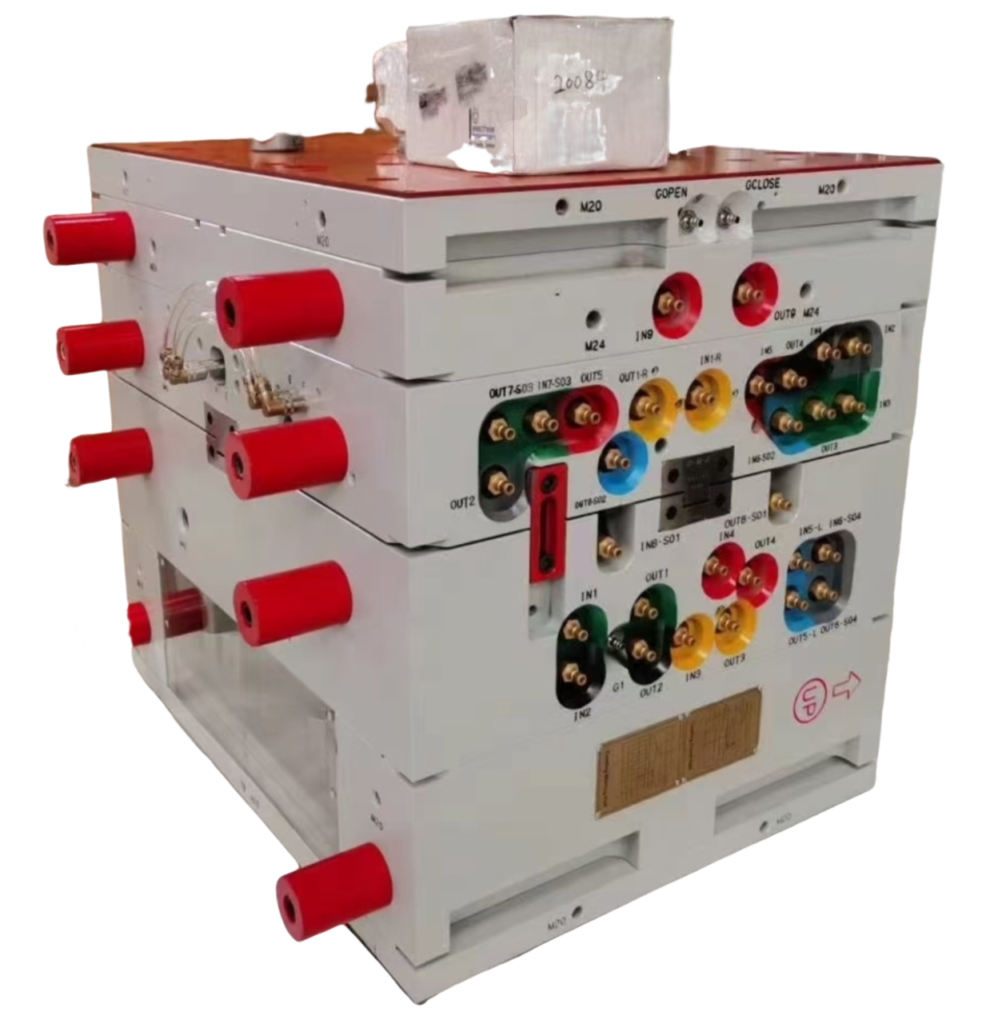
PETG1 (Polietilen Tereftalat Glikol) çok az termoplastiğin erişebildiği ideal bir noktada yer alır: polikarbonata yakın optik berraklık, ABS ile rekabet eden darbe direnci ve her ikisinden de üstün kimyasal direnç — tüm bunlar daha düşük işleme sıcaklığı ve maliyetle. Şeffaf bir tıbbi cihaz muhafazası, tüketici elektroniği görüntüleme penceresi veya gıda temaslı bir kap kullandıysanız, büyük olasılıkla PETG'den kalıplanmıştı. Bu rehberde, PETG'yi enjeksiyon kalıplama tesisinizde başarıyla kullanmak için bilmeniz gereken her şeyi, kurutma ve ergime sıcaklıklarından kapı tasarımı ve hata gidermeye kadar adım adım ele alacağız.
- PETG, cam geçiş sıcaklığı ~88 °C olan, kolay kalıplanabilen, sağlam ve kristal berraklığında amorf bir kopolimerdir.
- PETG'yi 65–75 °C'de 4–6 saat kurutun; %0.02'yi aşan nem püskürtme ve kırılganlığa neden olur.
- Ergime sıcaklığı aralığı: 220–260 °C. Kalıp sıcaklığı: Berraklık için 15–40 °C, gerilim giderme için 65 °C'ye kadar.
- Duvar kalınlığı 1.0–3.0 mm arasında olmalıdır; eşit kalınlık çökme izlerini ve iç gerilimi önler.
- PETG gıda teması için FDA uyumludur, kimyasallara dayanıklıdır ve tamamen geri dönüştürülebilir — tıbbi ve tüketici uygulamaları için idealdir.
PETG Nedir ve Enjeksiyon Kalıplamada Neden Önemlidir?
PETG, polietilen tereftalatın (PET) glikol modifiye versiyonudur. Glikol komonomeri kristalleşmeyi engeller ve bu, bu malzemenin kalıptaki davranışını anlamanın anahtarıdır. Kristalleşip opaklaşma eğiliminde olan PET'in aksine, PETG amorf kalır — şeffaf, boyutsal olarak stabil ve işleme sırasında esnektir. Cam geçiş sıcaklığı yaklaşık 88 °C (190 °F) civarındadır. Bu onu polikarbonatın (yaklaşık 147 °C) oldukça altına, ancak polistiren gibi sıradan şeffaf plastiklerin üzerine yerleştirir.
Pratikte bu, PETG'nin size yüksek kurutma hassasiyeti veya bükülme eğilimi olmadan PC'ye yakın optik berraklık sağladığı anlamına gelir. Aynı zamanda daha düşük enjeksiyon kalıplama döngü süreleri, çünkü daha düşük bir ergime sıcaklığından, o kadar sıcak olması gerekmeyen bir kalıba soğutuyorsunuz. Şeffaf, dayanıklı, kimyasallara dirençli bir parçaya ihtiyaç duyan ve kalıplama pencerelerini geniş tutmak isteyen üreticiler için PETG genellikle ilk tercihtir.
Bu malzeme aynı zamanda sürdürülebilirlik açısından da caziptir. PETG geri dönüştürülebilirdir (çoğu PET akışında SPI reçine kodu 1) ve birçok sınıfı doğrudan gıda teması için FDA uyumludur. Tek kullanımlık ve medikal ambalajlara yönelik düzenleyici baskılar arttıkça, PC'nin maliyeti olmadan gıda teması ve medikal sınıf standartlarını karşılayan berrak bir termoplastiğe sahip olmak gerçek bir avantajdır.
PETG'nin Temel Malzeme Özellikleri Nelerdir?
PETG'nin temel malzeme özellikleri arasında ~88 °C cam geçişi, 50–55 MPa çekme dayanımı ve –92 ışık geçirgenliği bulunur. Varil kontrolörlerinizde tek bir sıcaklık bile ayarlamadan önce, PETG davranışını yönlendiren sayıları anlamanız gerekir. İşte üretim alanında en çok önem taşıyan özelliklerin bir özeti.
| Mülkiyet | Value | Notlar |
|---|---|---|
| Yoğunluk | 1.27 g/cm3 | Orta; birçok mühendislik plastiğinden daha hafif |
| Cam Geçişi (Tg) | ~88 °C (190 °F) | Amorf; keskin bir erime noktası yok |
| Ergime Sıcaklık Aralığı | 220–260 °C | Bozulmayı önlemek için 280 °C'yi aşmaktan kaçının |
| Kalıp Sıcaklık Aralığı | 15–65 °C | Düşük = daha berrak; Yüksek = daha az gerilim |
| Çekme Dayanımı | 50–55 MPa | ABS ile karşılaştırılabilir, PC'den düşük |
| Kopma Uzaması | 100–150 °C | Yüksek süneklik — gevrek kırılmaya direnç gösterir |
| Eğilme Modülü | ~2.100 MPa | Yapısal parçalar için yeterince sert |
| Izod Çentikli Darbe | ~800 J/m | Akrilikten çok üstün; PC'ye yakın |
| Işık İletimi | 85–92 % | Optik berraklığa yakın |
| Moisture Absorption | 0.2–0.3 mm | Düşük ancak yine de kurutma gerektirir |
Yüksek uzama ve iyi PETG çekme dayanımı2 (50–55 MPa) PETG'yi diğer şeffaf plastiklerden ayıran özelliğidir. Akrilik (PMMA) daha fazla ışık geçirebilir, ancak darbe altında çatlar. Polikarbonat daha dayanıklıdır, ancak önemli ölçüde daha pahalıdır ve neme ve kimyasal etkilere karşı çok daha hassastır. PETG orta noktada yer alır ve deneyimlerimize göre, bu orta yol aslında gerçek dünya uygulamalarının çoğunun bulunduğu yerdir.
PETG Enjeksiyon Kalıplamaya Nasıl Hazırlanır?
PETG higroskopiktir — naylon veya polikarbonat kadar agresif değil, ancak kurutucuyu atlamanın size mal olacağı kadar. Hedef nem içeriği ağırlıkça %0,02'nin altındadır. Atölyemizde PETG'yi 65–75 °C'de 4–6 saat nem alıcı hazneli kurutucuda kurutuyoruz ve hazneyi çalışma boyunca sıcaklıkta tutuyoruz. Bu PETG için kurutma sıcaklığı3 kritiktir — çok sıcak olursa peletler birbirine yapışır; çok soğuk olursa hedef nem seviyesine asla ulaşılmaz.
"Kurutulmamış PETG reçinesi, polimer omurgasının hidrolizi nedeniyle püskürtme izleri ve azalmış darbe dayanımı üretir."Doğru
Doğru. Ergiyikteki nem, yüzeyde gümüş çizgiler oluşturan buhar kabarcıklarına yol açar. Hidroliz ayrıca polimer zincirindeki ester bağlarını kırarak tokluk ve uzamayı kalıcı olarak azaltır.
"PETG enjeksiyon kalıplama öncesinde kurutma gerektirmez çünkü nem alma kapasitesi çok düşüktür."Yanlış
Yanlış. PETG naylondan daha az nem emmesine rağmen, 0.02 %'nin üzerindeki herhangi bir nem, çizik izlerine, kabarcıklara ve darbe dayanımının azalmasına neden olur. Kalıplamadan önce PETG'yi her zaman 65–75 °C'de 4–6 saat kurutun.
Kurutma işlemini atlarsanız veya kısa keserseniz şunlar olur: ergiyikteki buharın genişlemesiyle oluşan çizik izleri (parça yüzeyindeki gümüş çizgiler); hidrolizin polimer omurgasındaki ester bağlarını kırması nedeniyle azalan darbe dayanımı; kalın kesitlerde kabarcık ve boşluklar; birleşme noktalarında kırılgan kaynak çizgileri; ve boyutsal sapma ile tutarsız atış-ağırlığı.
Hızlı bir saha testi: temizleme sırasında nozulda patlama sesi duyuyorsanız veya köpük görüyorsanız, PETG'niz ıslaktır. Durdurun, kurutulmuş malzemeyle yeniden yükleyin ve varili iyice temizleyin. Kurutma yatırımı her zaman fire maliyetinden daha ucuzdur. Renklendirici ve katkı konsantreleri (masterbatch) de kuru olmalıdır — PETG, bir renk peletindeki herhangi bir artık nemin aynı kusurları üreteceği bir sıcaklıkta işlenir.
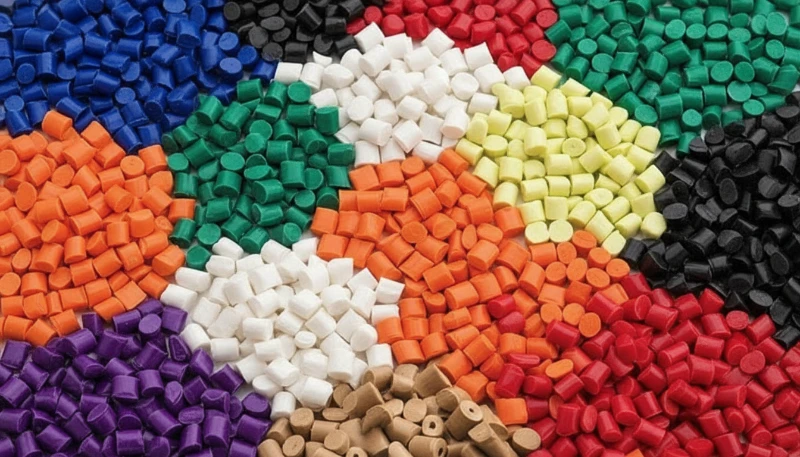
PETG Enjeksiyon Kalıplama İçin Optimal Parametreler Nelerdir?
PETG, kalıplanması daha hoşgörülü malzemelerden biridir ve bu da onu bu kadar popüler yapan nedenlerden biridir. Ancak "hoşgörülü" temelleri görmezden gelebileceğiniz anlamına gelmez. İşte her PETG işinde ayarladığımız parametreler ve parça geometrileri arasında güvenilir şekilde çalışan aralıklar.
| Parametre | Önerilen Aralık | İpuçları |
|---|---|---|
| Namlu Arka Bölgesi | 210–230 °C | Erken erimeyi önlemek için düşük tutun |
| Varil Orta Bölge | 230–250 °C | Birincil erime bölgesi |
| Kovan Ön Bölgesi / Nozul | 240–260 °C | 280 °C'yi aşmayın |
| Kalıp Sıcaklığı | 15–40 °C (berraklık) / 40–65 °C (gerilme giderme) | Daha soğuk = daha berrak yüzey |
| Enjeksiyon Hızı | Orta ila hızlı | İnce duvarlarda tereddüt izlerinden kaçının |
| Tutma Basıncı | Enjeksiyon basıncının –70'i | Kapı donana kadar tut |
| Bekleme Süresi | 3–8 saniye (duvar kalınlığına bağlı) | Geçit sızdırmazlığı kritiktir |
| Soğutma Süresi | 15–40 saniye (duvar kalınlığına bağlıdır) | Düzgün duvar = daha kısa döngü |
| Geri Basınç | 5–10 bar | Düşük ila orta; aşırı kayma PETG'yi bozar |
| Vida Hızı | 40–80 RPM | Düşük hızlar kesme ısınmasını azaltır |
Pratik bir ipucu: PETG'nin nispeten geniş bir işleme penceresi vardır, ancak bu pencerenin sınırları farklı sonuçlar üretir. Düşük uçta (220–230 °C), daha iyi berraklık ve sararma riski daha az elde edersiniz, ancak ince duvar bölümlerini doldurmakta zorlanabilirsiniz. Yüksek uçta (250–260 °C), akış önemli ölçüde iyileşir, ancak uzun kalış süresi termal bozulmaya neden olur — malzeme sararmaya başlar ve darbe dayanımını kaybeder. Çoğu parça için 240–250 °C ideal noktadır.
PETG için enjeksiyon hızı, birçok kalıpçının fark ettiğinden daha önemlidir. PETG amorf olduğu için keskin bir erime noktasına sahip değildir — bir aralıkta yavaş yavaş yumuşar. Hızlı enjeksiyon, malzemenin ön kenarı donmaya başlamadan önce boşluk boyunca düzgün bir şekilde akmasına yardımcı olur. İnce duvarlı parçalarda (1,5 mm altında), tipik olarak maksimum enjeksiyon hızının –90'ında çalışırız. Daha kalın parçalarda, jetleme ve hava tuzaklarını önlemek için hızı –60'a düşürürüz.
PETG kalıplama sorunlarının çoğu tutma basıncı ve süresinden kaynaklanır. PETG, kalıptan çıkarma sıcaklığında 'yumuşak' bir malzemedir — eğer kapı donmadan önce tutma basıncını serbest bırakırsanız, eğilir, çöker veya boyutsal olarak kayar. Kapı donma çalışması (ağırlık stabil hale gelene kadar kademeli olarak uzun tutma sürelerinde parçaları tartmak) her kalıp için bir kez yapmaya değer. Atölyemizde, 3 mm altı duvar kalınlığındaki çoğu PETG parçası için 4-6 saniye tutma süresinin yeterli olduğunu görüyoruz.
"Optimal tutma süresini belirlemek için her yeni PETG kalıbında bir geçit donma çalışması yapılması önerilir."Doğru
Doğru. Geçit donma süresi duvar kalınlığına, geçit boyutuna ve kalıp sıcaklığına göre değişir. Ağırlık sabitlenene kadar kademeli olarak uzayan tutma sürelerinde parçaları tartmak, tutarlı parça kalitesi için gereken minimum tutma süresini verir.
"PETG her zaman mümkün olan en yüksek erime sıcaklığında, boşluğun tamamen dolmasını sağlamak için kalıplanmalıdır."Yanlış
Yanlış. Daha yüksek ergiyik sıcaklıkları akışı iyileştirse de, 280 °C'yi aşmak termal bozulmaya, sararmaya ve darbe dayanımı kaybına neden olur. Önerilen aralık 220–260 °C'dir ve çoğu uygulama için 240–250 °C optimaldir.
PETG Parçalar için Kalıplar Nasıl Tasarlanmalıdır?
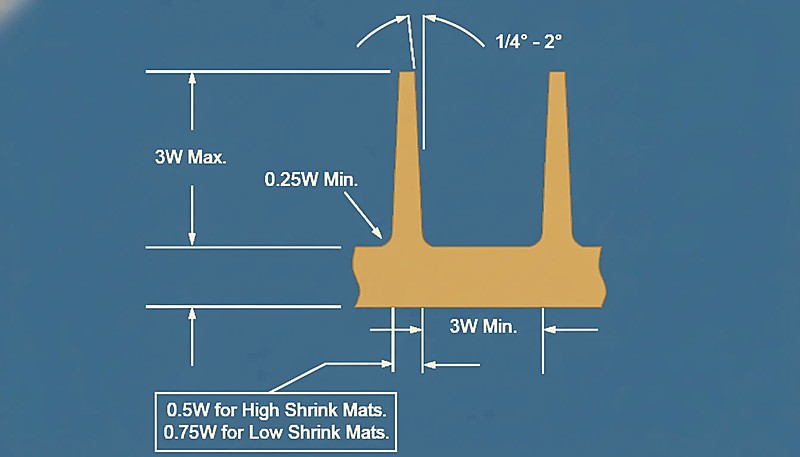
PETG kalıp tasarımı, düzgün 1-3 mm duvar kalınlığı, 2-3 derece pah açıları ve temiz çıkarma ile optik berraklık için düşük kayma kapı tipleri ile yönlendirilir.
Duvar Kalınlığı ve Büzülme
Hedef 1.0–3.0 mm duvar kalınlığıdır ve mümkün olduğunca homojen tutun. PETG kristalleşmez, bu yüzden naylon gibi yarı kristal malzemelerden daha az çeker — ancak yine de çekme gerçekleşir (0.3–0.7 %). Düzensiz kalınlık, çökme izleri ve eğrilme olarak ortaya çıkan farklı çekmelere neden olur. Yapısal nedenlerle daha kalın bir kesit gerekiyorsa, katı bir blok yerine nervürlerle boşaltmak her zaman tercih edilir.
Kapı Tasarımı ve Yerleşimi
Şeffaf PETG parçalar için, kapı yerleşimi ve tipi doğrudan optik kaliteyi etkiler. Kenar kapıları ve fan kapıları en yaygın seçimdir çünkü geniş, düşük kayma giriş noktası sağlayarak jetlemeyi ve akış izlerini en aza indirirler. Gizli (tünel) kapılar küçük parçalar için çalışır, ancak şeffaf parçalarda görülebilen bir kalıntı bırakabilirler. Birkaç gramdan büyük herhangi bir şey için iğne ucu kapılardan kaçının — küçük bir orifisten geçen yüksek kayma, PETG'yi bozar ve kapı yakınında bulanıklık oluşturur.
Kapıları, akış cephesinin boşluk boyunca düzgün bir şekilde hareket etmesini sağlayacak şekilde yerleştirin. Akış yolu düzensizse, şeffaf malzemede kaynak çizgileri ve akış izleri görürsünüz. Optik kalitenin önemli olduğu herhangi bir PETG parçası için çelik kesmeden önce Moldflow simülasyonu yapmak değerli bir yatırımdır.
Pah Açıları ve Yüzey Bitirme
Standart pah her yan için 1–2°'dir, ancak PETG, derin çekimlerde biraz daha fazla pahdan (2–3°) fayda görür çünkü malzeme çıkarma sıcaklığında nispeten yumuşaktır. Yetersiz pah, berrak bir parça üzerinde hemen görülebilen sürükleme izlerine yol açar. En iyi optik berraklık için çekirdek ve boşluk yüzeylerini ayna parlaklığında (SPI A-2 veya daha iyi) parlatın — PETG kalıp yüzey dokusunu sadakatle kopyalar.
Havalandırma
PETG, kalıplama sırasında (PVC veya asetalın aksine) agresif gazlar salmaz, ancak yeterli havalandırma yine de gereklidir. Hapso lan hava yanıklara ve kısa dolumlara neden olur. 0,01–0,02 mm standart havalandırma derinlikleri yeterlidir. Karmaşık geometriye sahip parçalar için, akış yollarının sonunda ve kör ceplerde havalandırma ekleyin.
PETG Enjeksiyon Kalıplamada Yaygın Kusurlar ve Çözümler Nelerdir?
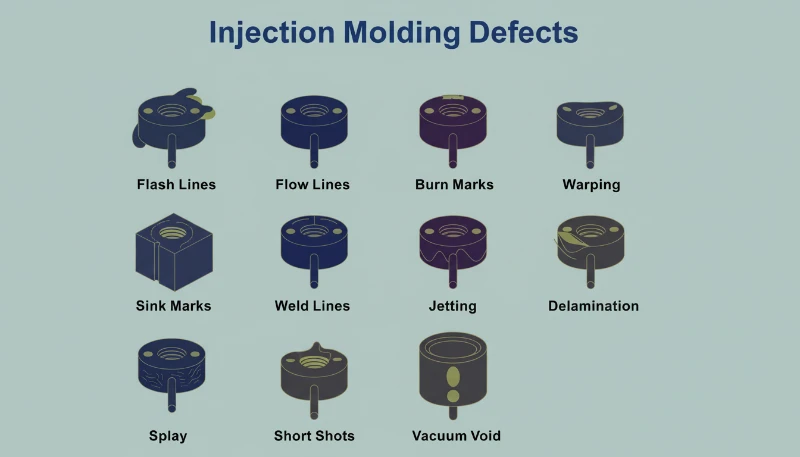
Yaygın PETG kusurları arasında sıçrama izleri, puslanma, çökme izleri ve bükülme yer alır — çoğu uygun kurutma, geçit tasarımı ve tutma basıncı ile önlenebilir. İyi parametrelerle bile PETG'nin kendine özgü özellikleri vardır. İşte üretim alanında en sık gördüğümüz kusurlar ve gerçekten işe yarayan düzeltmeler.
Sıçrama İzleri (Gümüş Çizgiler)
Neden: Reçinedeki nem. Bu, PETG'nin bir numaralı sorunudur. Az miktarda nem bile akış cephesinde patlayan buhar kabarcıkları oluşturarak parça yüzeyinde gümüş çizgiler bırakır. Çözüm basittir: kurutucu sıcaklığını ve süresini doğrulayın. Kurutma havasının çiy noktasının -20 °C'nin altında olduğunu kontrol edin. Geri dönüştürülmüş malzeme kullanıyorsanız, ayrıca ön kurutun — geri dönüştürülmüş malzeme daha fazla yüzey alanına sahiptir ve saf peletlerden daha hızlı nem emer.
Pus veya Bulanıklık
Neden: Küçük bir geçitten çok hızlı enjeksiyondan kaynaklanan aşırı kesme, kirlilik veya tam homojenizasyon için çok düşük ergime sıcaklığı. Düzeltme: geçidi hafifçe açın, enjeksiyon hızını düşürün ve namlu sıcaklıklarının uygun şekilde profillendiğinden emin olun. Ayrıca bunkerdeki kirliliği kontrol edin — farklı bir reçinenin (özellikle kristal malzemelerin) eser miktarları bile PETG'de bulanıklığa neden olur.
Lavabo İşaretleri
Neden: Yetersiz tutma basıncı veya süresi veya aşırı cidar kalınlığı değişimi. PETG amorf ve nispeten düşük büzülmelidir, ancak kalın kesitler düzgün şekilde paketlenmezse yine de çöker. Düzeltme: geçit donana kadar tutma basıncını artırın ve tutma süresini uzatın. Kalın kesitleri çekirdek destek kaburgalarıyla yeniden tasarlayın. Düzgün paketlenmiş enjeksiyon kalıbı kalıp boşluğu minimum çökme ile parçalar üretmelidir.
“PETG'nin amorf yapısı, naylon veya POM gibi yarı kristal plastiklere kıyasla daha düşük ve daha düzgün büzülmeye sahip olduğu anlamına gelir.”Doğru
Doğru. PETG gibi amorf malzemeler izotropik olarak büzülür (0.3–0.7 %), yarı kristal malzemeler ise önemli yönsel değişimle 1–2.5 % büzülebilir. Bu, PETG'yi sıkı toleranslara kalıplamayı kolaylaştırır.
“PETG parçalardaki çökme izleri, kalıp sıcaklığını basitçe düşürerek ortadan kaldırılabilir.”Yanlış
Yanlış. Kalıp sıcaklığı yüzey kalitesini etkilese de, çökme izleri öncelikle yetersiz tutma basıncı veya soğuma sırasında düzgün şekilde büzülmeyen kalın cidar kesitlerinden kaynaklanır. Düzeltme, tutma basıncını artırmayı, tutma süresini uzatmayı ve kalın kesitleri çekirdek boşaltmalı olarak yeniden tasarlamayı içerir.
Bükülme ve Fışkırma
Eğrilme, düzensiz soğuma veya kalın ve ince kesitler arasındaki farklı büzülmeden kaynaklanır. PETG'nin düşük büzülmesi yardımcı olsa da, asimetrik cidar kalınlığı veya düzensiz kalıp soğutması yine de eğrilmeye neden olur. Düzgün soğutma kanalı düzeni sağlayın, her iki yarıda da kalıp sıcaklık kontrolörleri kullanın ve kaçınılmaz kalınlık değişimi olan parçalar için biraz daha yüksek bir kalıp sıcaklığı (50–65 °C) çalıştırmayı düşünün.
Jetting, ergimiş akışın kısıtlayıcı bir geçitten cidara temas etmeden çok hızlı girerek boşluğa girmesiyle oluşur — boşluk boyunca sürünerek solucan benzeri yüzey izleri yaratır. Düzeltme: ilk dolum aşamasında enjeksiyon hızını düşürün, giriş akışını yaymak için fanlı geçit veya sekme geçidine geçin ve geçidi, ergimişin girişte hemen bir cidara veya çekirdek pime çarpmasını sağlayacak şekilde konumlandırın.
PETG Enjeksiyon Kalıplamayı Hangi Endüstriler ve Uygulamalar Kullanır?
PETG başlıca tıbbi cihazlar, gıda ambalajları, tüketici elektroniği ve berraklık ile dayanıklılığın önemli olduğu endüstriyel koruyucularda kullanılır. Berraklık, dayanıklılık, kimyasal direnç ve düzenleyici uyumluluğunun kombinasyonu, onu birçok zorlu endüstride tercih edilen bir malzeme yapar.
Tıbbi ve Sağlık Hizmetleri
PETG, tıbbi cihaz muhafazaları, sıvı taşıma bileşenleri, teşhis ekipmanı kapakları ve blister ambalajlar için yaygın olarak kullanılır. Berraklığı, sıvı seviyelerinin ve cihaz durumunun görsel olarak incelenmesine olanak tanırken, sağlamlığı akrilik kıracak düşme ve darbelere dayanır. Birçok PETG sınıfı, tıbbi cihaz uygulamaları için USP Sınıf VI ve ISO 10993 biyouyumluluk gereksinimlerini karşılar. Tıbbi müşteriler için PETG çalıştırma deneyimimizde, optik berraklık ve sterilizasyon uyumluluğunun (etilen oksit ve gama sterilizasyonu ile uyumlu) kombinasyonu, berrak tıbbi muhafazalar için varsayılan seçim haline getirir.
Gıda ve İçecek Ambalajı
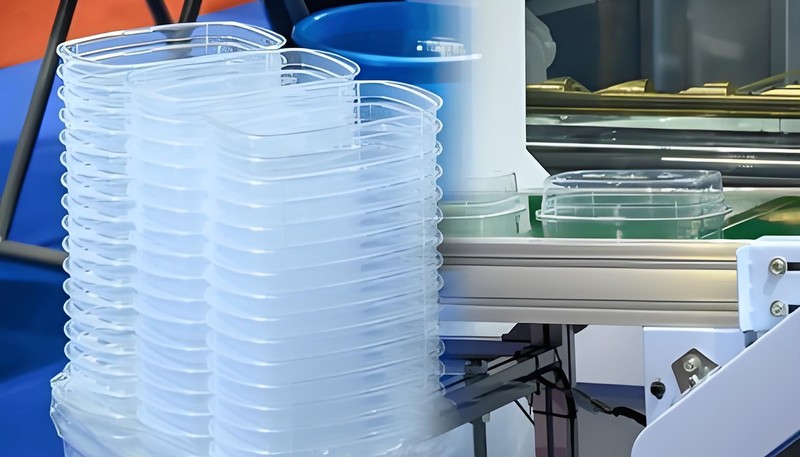
FDA uyumlu PETG sınıfları, şeffaf gıda kapları, içecek şişeleri, şarküteri tepsileri ve kozmetik ambalajlar için kullanılır. Malzemenin kimyasal direnci, yağ ve asitleri stres çatlaması olmadan işler ve berraklığı raf çekiciliğini artırır. PET'ten farklı olarak, PETG kristalleşme olmadan termoform ve enjeksiyon kalıplama yapılabilir, bu da ambalaj üreticileri için işlemeyi basitleştirir.
Tüketici Elektroniği ve Endüstriyel
Vitrin camları, LED ışık difüzörleri, koruyucu kapaklar ve giyilebilir cihazlar ile gadget'lar için şeffaf muhafazaların hepsi PETG kullanır. PC'nin optik berraklığını daha düşük maliyetle sağlar ve uygun şekilde stabilize edildiğinde UV maruziyetinde aynı hızla sararmaz. Endüstriyel uygulamalar arasında perakende vitrin donanımları, tabelalar, koruyucular ve darbe direncinin PETG'yi yüksek trafikli ortamlarda akrilikten daha tercih edilir kıldığı makine görüş pencereleri bulunur.
PETG vs. Diğer Şeffaf Plastikler — Nasıl Karşılaştırılır?
PETG, polikarbonat, akrilik (PMMA) ve şeffaf ABS arasında seçim yapmak; netlik, dayanıklılık, maliyet ve işleme gereksinimleri arasında denge kurmaya bağlıdır. İşte bunların karşılaştırmalı durumu.
| Mülkiyet | PETG | Polikarbonat (PC) | Akrilik (PMMA) | Şeffaf ABS |
|---|---|---|---|---|
| Işık İletimi | 85–92 % | 88–91 % | 92 % | 75–85 % |
| Impact Strength (Izod) | ~800 J/m | ~850 J/m | ~20 J/m | ~300 J/m |
| Tg | ~88 °C | ~147 °C | ~105 °C | ~105 °C |
| İşleme Sıcaklığı | 220–260 °C | 280–320 °C | 200–250 °C | 220–260 °C |
| Nem Hassasiyeti | Orta düzeyde | Yüksek | Düşük | Orta düzeyde |
| Kimyasal Direnç | İyi | Zayıf (çatlaklar) | Zayıf | Orta düzeyde |
| Maliyet (göreceli) | $$ | $$$ | $ | $$ |
| FDA Uyumluluğu | Evet (birçok sınıf) | Bazı sınıflar | Bazı sınıflar | Hayır |
Sonuç olarak: parçanızın şeffaf, dayanıklı ve kimyasallara dirençli olması gerekiyorsa ve polikarbonatın aşırı sıcaklık direncine ihtiyacınız yoksa, genellikle en iyi seçim PETG'dir. Kolay işlenir, PC'den daha ucuzdur ve daha iyi kimyasal direnç sağlar. Dezavantajı, daha düşük ısı direncidir — parçanız 70 °C üzerinde sürekli sıcaklıklara maruz kalacaksa, bunun yerine PC'yi düşünmelisiniz.
ZetarMold PETG'yi Üretimde Nasıl Çalıştırır?
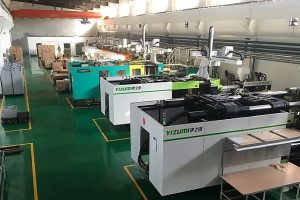
Şangay tesisimizde PETG, hacim olarak çalıştırdığımız ilk beş malzemeden biridir. 90T ila 1850T arasında değişen 47 enjeksiyon kalıplama makinesiyle, küçük tıbbi cihaz muhafazalarından büyük endüstriyel ekran kapaklarına kadar PETG parçaları işliyoruz. İşte son 20+ yılda binlerce PETG döngüsü çalıştırarak öğrendiklerimiz.
| Capability | Specification |
|---|---|
| Enjeksiyon Kalıplama Makineleri | 45 makine, 90T–1850T |
| Malzeme Aralığı | Tüm büyük PETG sınıfları dahil 400+ malzeme işlenmiştir |
| Mühendislik Ekibi | Her biri 10+ yıl deneyime sahip 8 kıdemli mühendis |
| Üretim Personeli | 120+ production workers |
| Aylık Kalıp Çıktısı | Ayda 100+ takım enjeksiyon kalıbı |
| Kalite Sistemi | ISO 9001 / 13485 / 14001 / III certified |
| Uluslararası Ekip | Küresel iletişim için 30+ akıcı İngilizce konuşan |
Kurutucu disiplini tartışılmazdır. Her PETG işinden önce nem alıcı hazneli kurutucuları 70 °C'de en az 4 saat çalıştırıyoruz. Malzeme işleyicilerimiz, PETG'de kurutmayı atlamanın ilk 20 atışın en azından hurdaya çıkması anlamına geldiğini bilir. Geçit tasarımı insanların düşündüğünden daha önemlidir — şeffaf PETG parçalarında, kesme kuvvetini en aza indirmek ve temiz bir akış cephesi oluşturmak için neredeyse her zaman duvar kalınlığının –80'i genişliğinde yelpaze veya kenar geçitleri belirleriz.
Kalıp sıcaklık kontrolü kaliteyi belirler. Çoğu PETG parçası için 25–30 °C'ye ayarlanmış su dolaşımlı kalıp sıcaklık kontrol cihazları kullanıyoruz. Bu, yüzey berraklığı ve döngü süresinin en iyi kombinasyonunu sağlar. Duvar kalınlığı değişimi fazla olan parçalar için 50 °C'ye çıkarıyoruz. Tıbbi ve optik uygulamalar için, bazen PETG parçalarını 65–70 °C'de 30–60 dakika tavlayarak kalan iç gerilimi gideriyor, boyutsal kararlılığı iyileştiriyor ve kimyasal ortamlarda gerilme çatlaması riskini azaltıyoruz.
Yeni bir PETG uygulaması geliştiriyorsanız ve malzeme seçimi, kalıp tasarımı veya proses optimizasyonu konusunda yardıma ihtiyacınız varsa, bize ulaşın — öğrendiklerimizi paylaşmaktan mutluluk duyarız. Ekibimiz 24 saat içinde yanıt verir ve kapsamlı sourcing ilk DFM incelemesinden üretim lansmanına kadar destek.
PETG Enjeksiyon Kalıplama Hakkında Sıkça Sorulan Sorular
Sıkça Sorulan Sorular
PETG'yi hangi sıcaklıkta enjeksiyonla kalıplarsınız?
PETG, genellikle 220–260 °C eriyik sıcaklığı ve berraklık-kritik parçalar için 15–40 °C, veya soğutma sırasında ek gerilim giderme gerektiren parçalar için 65 °C'a kadar kalıp sıcaklığı ile enjeksiyonla kalıplanır. Optimal malzeme homojenizasyonu ve tutarlı eriyik kalitesi için namlunun arka kısmında 210 °C'dan nozülde 250 °C'a kadar profillenmesi gerekir. 280 °C'ı aşmak termal bozulma, sararma ve darbe özelliklerinde kayıp riski taşır, bu nedenle önerilen aralıkta kalın ve üretim çalışmalarınız boyunca eriyik rengini yakından izleyin.
PETG, enjeksiyon kalıplamadan önce kurutulmalı mıdır?
Evet, kesinlikle. PETG, herhangi bir kalıplama işlemine başlamadan önce nemi ağırlıkça %0,02'nin altına düşürmek için 65–75 °C'de 4–6 saat kurutulmalıdır. PETG, naylon veya polikarbonattan daha az higroskopik olsa da, kalan nem parça yüzeyinde püskürtme izlerine, önemli ölçüde azalmış darbe dayanımına, kalın kesitlerde hapsolmuş kabarcıklara ve atıştan atışa boyutsal tutarsızlığa neden olur. Çiy noktası -20 °C'nin altında olan bir nem alıcı hazneli kurutucu kullanın ve ortam neminin yeniden emilimini önlemek için tüm üretim süresi boyunca hazneyi sıcaklıkta tutun.
PETG gıda temaslı uygulamalar için kullanılabilir mi?
Birçok PETG sınıfı, doğrudan gıda-temaslı kullanım için FDA 21 CFR §177.1630'a uygundur; bu da onları gıda kapları, içecek şişeleri, şarküteri tepsileri ve mutfak eşyaları uygulamaları için uygun kılar. Bir gıda-temaslı uygulamaya karar vermeden önce, tüm PETG formülasyonları gıda sınıfı standartlarda üretilmediği için, daima belirli sınıfın uygunluk sertifikasını malzeme tedarikçinizle doğrulayın. Ayrıca, bazı PETG sınıfları, daha geniş uluslararası pazar erişimi ve birden fazla küresel bölgede düzenleyici uyumluluk için AB Gıda Temas Yönetmeliği 10/2011 kapsamında Avrupa Birliği gıda temas düzenlemelerini de karşılar.
Kalıplanmış PETG parçalarda bulanıklığa ne sebep olur?
PETG kalıplanmış parçalardaki bulanıklık, genellikle küçük bir kapı açıklığından çok hızlı enjeksiyon nedeniyle aşırı kayma, tam malzeme homojenizasyonu için yetersiz eriyik sıcaklığı veya hazne veya namludan giren farklı bir reçineden kaynaklanan kontaminasyondan kaynaklanır. Bulanıklık sorunlarını gidermek için, eriyik üzerindeki kayma gerilimini azaltmak için kapı boyutunu artırın, namludaki sıcaklıkların nozülde 240–250 °C'de düzgün profillendiğini doğrulayın, ilk dolum aşamasında enjeksiyon hızını düşürün ve önceki üretim çalışmalarından herhangi bir çapraz kontaminasyonu ortadan kaldırmak için hazne ve besleme sistemini iyice temizleyin.
PETG, şeffaf parçalar için polikarbonatla nasıl karşılaştırılır?
PETG, polikarbonata benzer optik berraklık sunarken önemli ölçüde daha düşük malzeme maliyeti ve genel olarak çok daha kolay işleme özelliklerine sahiptir. PETG 220–260 °C'de erirken PC 280–320 °C'de erir, daha az agresif kurutma prosedürleri gerektirir ve polikarbonatta gerilme çatlamasına neden olan birçok kimyasala karşı dayanıklıdır. Ancak, polikarbonat ısı direncinde PETG'nin 88 °C'sine karşılık 147 °C Tg değeriyle öne geçer ve PC biraz daha yüksek mutlak darbe dayanımına sahiptir. 70 °C servis sıcaklığının altında çalışan çoğu uygulama için, şeffaf enjeksiyon kalıplı parçalarda PETG genel olarak daha iyi değer önerisi sunar.
PETG enjeksiyon kalıplama için tipik büzülme oranı nedir?
PETG, %0.3–0.7 büzülme sergiler; bu amorf termoplastikler için tipiktir ve naylondaki %1.0–2.0 veya asetaldeki %1.8–2.5 gibi yarı-kristal malzemelerden önemli ölçüde düşüktür. Bu düşük, izotropik büzülme oranı, PETG'nin kalıp tasarımında karmaşık büzülme telafisi gerektirmeden sıkı boyutsal toleranslara göre nispeten kolay kalıplanmasını sağlar. Parça geometrisi boyunca düzgün duvar kalınlığını korumak ve kapı donana kadar uygun tutma basıncı uygulamak, her ikisi de diferansiyel büzülmeyi en aza indirmeye ve bitmiş kalıplanmış bileşenlerde eğrilmeyi önlemeye yardımcı olur.
PETG'yi TPE veya TPU malzemelerle üzerine kalıplayabilir misiniz?
Evet, PETG, şeffaf veya rijit bir temel bileşen üzerinde yumuşak dokulu bir yüzeyin gerekli olduğu tüketici elektroniği, elektrikli aletler ve tıbbi cihaz uygulamalarında TPE veya TPU üzerine kalıplama için rijit bir altlık olarak yaygın şekilde kullanılır. PETG ile birçok TPE veya TPU sınıfı arasındaki kimyasal uyumluluk iyidir ve malzeme arayüzünde yeterli bağlanma mukavemeti sağlar. En iyi sonuçlar için, kalıp geometrisine mekanik kilitlemeler tasarlayın, PETG altlığın uygun yüzey hazırlığını sağlayın ve ikinci enjeksiyon atımı sırasında rijit temel parçayı deforme veya bozmadan kimyasal bağlanma elde etmek için üzerine kalıplama sıcaklığını optimize edin.
PETG enjeksiyon kalıplama için hangi kapı tipleri en iyi sonucu verir?
Kenar kapıları ve yelpaze kapıları, özellikle optik kalitenin önemli olduğu şeffaf parçalar için PETG için en iyi seçimlerdir. Bu kapı tipleri, akış izlerini, fışkırmayı ve kapı lekesini en aza indiren geniş, düşük-kayma girişi sağlar. Gizli kapılar küçük parçalar için çalışır ancak şeffaf yüzeylerde görünür iz bırakabilir. Daha büyük parçalar için iğne ucu kapılardan kaçının çünkü küçük bir delikten yüksek kayma, PETG'yi bozar ve kapı yakınında bulanıklık yaratır. Kapı genişliği, optimal dolum için nominal duvar kalınlığının –80'i olmalıdır.
PETG Enjeksiyon Kalıplamaya Nasıl Başlanır?
PETG enjeksiyon kalıplama, optik berraklık, darbe tokluğu ve işleme kolaylığını çok yönlü bir şeffaf termoplastikte birleştirir. İster tıbbi cihaz muhafazaları, gıda-temaslı kaplar, tüketici elektroniği ekranları veya koruyucu ambalajlar kalıplıyor olun, PETG, diğer şeffaf reçinelerin çok azının karşılayabileceği bir denge sunar.
Başarının anahtarı basittir: malzemeyi 65–75 °C'de 4–6 saat uygun şekilde kurutun, kalıbınızı yeterli geçitler ve düzgün duvar kalınlığı ile tasarlayın, 220–260 °C erime penceresi içinde çalıştırın ve geçit donana kadar bekletin. Bu dört şeyi tutarlı bir şekilde yapın ve PETG, her döngüde berrak, sağlam, boyutsal olarak kararlı parçalarla sizi ödüllendirecektir.
ZetarMold'da, Şangay tesisimizde 20 yılı aşkın süredir PETG ve 400+ diğer malzemeyi çalıştırıyoruz. 90T'den 1850T'ye 45 makine ve 8 kıdemli mühendisten oluşan bir ekiple, PETG projenizi konseptten üretime taşımanıza yardımcı olabiliriz. Bugün ücretsiz teklif alın ve mühendislik ekibimizin parça tasarımınızı ve kalıplama sürecinizi optimize etmesine izin verin.
-
PETG: PETG, polietilen Tereftalat Glikol'ü ifade eder — berraklık, tokluk ve kimyasal direnç ile bilinen bir termoplastik polyester kopolimeridir. Yaklaşık 88 °C (190 °F) camsı geçiş sıcaklığına sahiptir. ↩
-
PETG çekme dayanımı: PETG çekme dayanımı, standart PETG dereceleri için nominal 50–55 MPa aralığını ifade eder, Eastman Chemical veri sayfalarına göre kopma uzaması 0–150'dir. ↩
-
PETG için kurutma sıcaklığı: PETG için kurutma sıcaklığı, Autodesk Moldflow malzeme kılavuzlarına göre nemi %0.04'ün altına düşürmek için önerilen 65–75 °C'de 4–6 saat anlamına gelir. ↩


 EN
EN  ES
ES  FR
FR  DE
DE  PT
PT  AR
AR  RU
RU  JA
JA  KO
KO  IT
IT  NL
NL  TR
TR  PL
PL