 Przejdź do treści

- Injection moulding produces parts from 0.01g micro-components to 10kg automotive panels
- Material selection determines product performance, cost, and manufacturability
- Over 400 material grades cover automotive, medical, consumer, and industrial applications
- Tooling investment pays back at volumes above 1,000 units for most product categories
- Design for manufacturing (DFM) review prevents 80% of common production defects
What Products Are Made by Injection Moulding?
Injection moulding produces an enormous range of products across virtually every manufacturing industry. From the keyboard you type on to the dashboard in your car, from medical syringes to bottle caps, injection moulded parts are everywhere. The process creates precise, repeatable components in volumes from hundreds to millions, using materials that span commodity polypropylene to high-performance PEEK polymers. In our Shanghai factory alone, we run 45 injection moulding machines from 90T to 1850T, producing everything from 0.5g micro clips to 10kg industrial housings for customers in over 30 countries.
The real question is not what injection moulding can make — it is whether your specific product requirements align with what the process does best. High-volume, dimensionally consistent, complex-geometry parts made from thermoplastic or elastomeric materials: that is the sweet spot. Understanding shot weight1 limits, material behaviour, and tooling economics helps you decide if injection moulding is the right manufacturing method for your product.
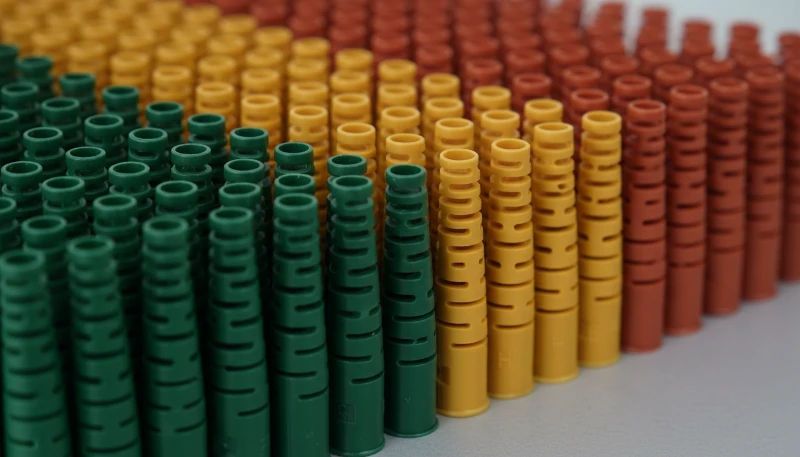
How Does the Injection Moulding Process Adapt to Different Products?
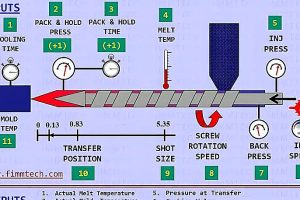
The injection moulding process adapts to different products through machine selection, material choice, mould design, and process parameter tuning. A 90T machine producing 0.5g polypropylene bottle caps runs at 15-second cycles with 64-cavity moulds, while our 1850T machine moulding a 10kg automotive battery case operates at 120-second cycles with a single cavity. The process window — melt temperature, injection speed, packing pressure, and cooling time — changes dramatically depending on product geometry and material requirements.
Multi-material products use techniques like obtrysk2, where a second material bonds to a first-shot substrate to create soft-grip tool handles or sealed electronic enclosures. Our factory added three two-shot moulding machines in 2024 specifically for multi-material consumer products that combine rigid structural components with TPE sealing surfaces. Insert moulding places metal inserts or electronic components into the mould before injection, creating integrated assemblies like threaded fasteners or connector housings in a single cycle.
Process adaptation also involves mould temperature control, which directly affects surface finish, dimensional accuracy, and cycle time. High-gloss consumer products require elevated mould temperatures (60-80 degrees Celsius) to eliminate weld lines and flow marks, while crystalline engineering parts like POM gears need controlled cooling rates to manage crystallization and minimise warpage.
What Consumer Electronics Products Use Injection Moulding?
Consumer electronics represent one of the largest application segments for injection moulded products. Smartphone housings, laptop chassis, keyboard keys, mouse shells, earbud cases, and charging adapters are all produced through injection moulding. These products demand tight tolerances (typically plus or minus 0.05mm for snap-fit features), excellent surface finish, and consistent colour matching across production batches — requirements that injection moulding delivers reliably at scale.
Internal electronic components also rely heavily on injection moulded parts. Connector housings, cable glands, PCB insulators, battery compartments, and LED light guides all use precision moulded features. Many of these parts require flame-retardant materials rated UL94 V-0, which adds complexity to both material selection and process control. Our factory produces connector housings with 0.1mm wall thickness variation using PC/ABS blends, maintaining dimensional consistency across 500,000-piece production runs. Maintaining uniform wall thickness prevents forma wtryskowa3 and internal voids that compromise both appearance and structural integrity.
What Automotive Parts Are Made by Injection Moulding?
The automotive industry consumes approximately 30% of all injection moulded plastic parts globally. Dashboard panels, door handles, bumpers, light housings, fluid reservoirs, cable clips, gear shift knobs, and seat belt components are all injection moulded. Modern vehicles contain over 1,000 individual plastic parts, and the trend toward vehicle electrification increases plastic content further as battery housings, charging port assemblies, and thermal management components replace traditional metal structures.
Automotive injection moulding demands strict adherence to material specifications and process validation. Parts must meet temperature resistance requirements ranging from minus 40 degrees Celsius to plus 120 degrees Celsius, pass UV aging tests, and maintain dimensional stability under vibration and thermal cycling. PP-T20 (polypropylene with 20% talc filler) dominates interior trim applications, while glass-fibre reinforced PA66 handles structural and under-hood applications requiring higher strength and heat resistance.
Our factory produces automotive cable clips and connector housings using PA66-GF30, maintaining ISO/TS 16949 quality standards with full traceability from raw material lot to finished part. Each production run includes first-article inspection, in-process monitoring at 2-hour intervals, and final dimensional verification against customer drawings before shipment.
What Medical Products Come from Injection Moulding?
Medical injection moulding produces syringe barrels, IV connectors, diagnostic device housings, surgical instrument handles, pill dispensers, and laboratory consumables. These products require cleanroom manufacturing environments, biocompatible materials (USP Class VI or ISO 10993 certified), and rigorous documentation for regulatory compliance. Our Shanghai facility operates cleanroom moulding equipment for medical and food-contact applications, meeting Class 10,000 standards.
Material selection for medical products is particularly stringent. Polycarbonate (PC) provides transparency and impact resistance for syringe barrels and diagnostic housings. Polypropylene offers chemical resistance and steam sterilisation capability for reusable medical containers. PEEK serves implant-grade applications requiring biocompatibility and long-term chemical stability at body temperature. Each material requires specific process optimisation to achieve the surface quality and dimensional precision medical applications demand.
Validation protocols for medical moulded parts include Installation Qualification (IQ), Operational Qualification (OQ), and Performance Qualification (PQ) to demonstrate consistent production capability. Process parameters are locked down after validation, and any changes require formal change control procedures. This level of rigour distinguishes medical moulding from general commercial production and significantly impacts tooling cost and lead time.
What Industrial and Packaging Products Are Injection Moulded?
Industrial injection moulded products include cable management systems, pump impellers, valve bodies, conveyor components, protective equipment, and storage containers. These products often prioritise functional performance over cosmetic appearance, using materials selected for chemical resistance, impact strength, or dimensional stability rather than surface finish quality. Glass-fibre reinforced nylon (PA6-GF30) handles structural loads, while PVC provides chemical resistance for corrosive environments.
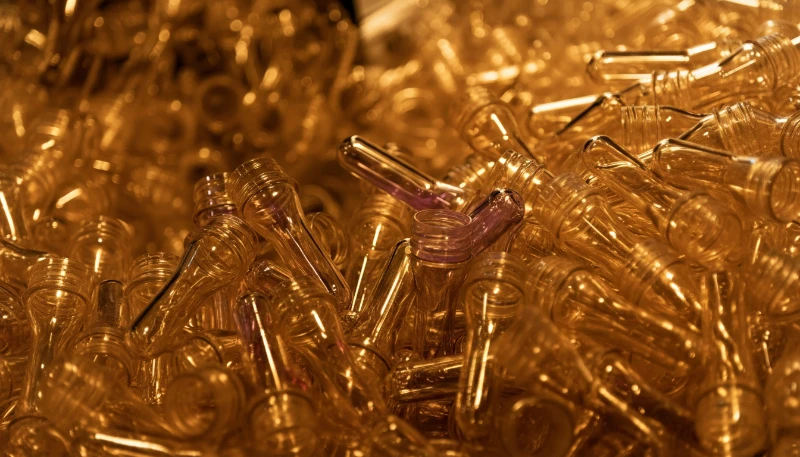
Key Packaging Applications
Packaging products represent the highest-volume segment of injection moulding. Bottle caps and closures alone account for hundreds of billions of units annually worldwide. Thin-wall containers, food trays, cosmetic jars, and pharmaceutical packaging all use injection moulding for consistent quality at extreme production speeds. A 64-cavity cap mould running on a high-speed machine can produce over 2 million caps per day, with each cap weighing less than 3 grams and requiring precise thread geometry for reliable sealing.
The transition to sustainable packaging drives material innovation in this segment. Post-consumer recycled (PCR) content requirements, bio-based polymers like PLA, and mono-material designs for recyclability all challenge traditional process parameters. Processing recycled PP requires adjusted melt temperatures and injection speeds to compensate for material degradation, while maintaining the dimensional accuracy and seal integrity that packaging applications demand.
How Do Material Choices Affect Injection Moulded Products?
Material selection fundamentally determines product performance, manufacturing cost, and tooling design. Polypropylene (PP) dominates high-volume consumer products due to its low cost, excellent chemical resistance, and fatigue endurance that enables living hinge designs in flip-top caps. Polycarbonate (PC) serves transparent and high-impact applications. Nylon (PA6/PA66) handles mechanical loads and elevated temperatures. Each material family has distinct processing requirements that affect cycle time, mould temperature, and injection pressure.
Material additives further customise performance. Glass fibre reinforcement increases stiffness and dimensional stability but accelerates mould wear and creates anisotropic shrinkage that requires careful tool design. Flame retardant additives enable UL94 V-0 ratings for electronics but reduce impact strength and increase material cost by 30-50%. UV stabilisers protect outdoor products from degradation but may affect colour matching. Understanding these trade-offs is essential for specifying the right material grade for each product application.
Our factory processes over 400 material grades across commodity, engineering, and high-performance categories. We maintain incoming material inspection protocols that verify melt flow index, moisture content, and contamination levels before any material enters production. This prevents batch-to-batch variation from affecting product quality — a problem we see frequently when customers switch to lower-cost material suppliers without adjusting process parameters.
Material cost typically represents 30-50% of total injection moulded product cost, making material selection a critical economic decision. Commodity resins like PP and HDPE cost 1.00-1.50 USD per kg, while engineering grades like PA66-GF30 range from 3.50-5.00 USD per kg, and high-performance materials like PEEK exceed 80 USD per kg. Our procurement team maintains relationships with multiple material suppliers to ensure competitive pricing and supply chain resilience for customers across different product segments and volume requirements.
When Is Injection Moulding Not the Right Choice?
Injection moulding is not the right choice when production volumes are too low to amortise tooling costs, when lead times cannot accommodate 6-12 week mould construction schedules, or when part geometry exceeds process limitations such as extreme aspect ratios, internal undercuts without mechanical side-action capability, or wall thickness variations beyond 2:1 ratios. For these situations, alternative processes like 3D printing, CNC machining, vacuum casting, or rotational moulding may deliver better economics or faster time to market.
The tooling investment threshold varies by product complexity. A simple single-cavity aluminium mould for prototyping might cost 2,000-5,000 USD, while a production-grade 8-cavity hardened steel mould with hot runners and side actions can exceed 100,000 USD. At volume thresholds below 500-1,000 units, the unit tooling cost often exceeds the value of the part itself. We regularly guide customers through make-versus-buy analyses comparing injection moulding against alternative processes for their specific volume projections and quality requirements.
Products requiring extremely large continuous structures (boat hulls, storage tanks) or flexible, hollow shapes (inflatable items, soft squeeze tubes) also fall outside injection moulding’s capabilities. Understanding these process boundaries early in product development prevents costly design iterations and tooling modifications later. Consulting with experienced moulding engineers early in the design process helps identify these boundary conditions and select the most appropriate manufacturing approach for each product category.
Cost-benefit analysis for manufacturing process selection should consider total lifecycle cost, not just unit price. Injection moulding tooling represents a significant upfront investment, but the per-part cost decreases dramatically as volume increases. A mould producing 100,000 parts amortises tooling cost to fractions of a dollar per unit, while the same mould serving a 1,000-part order carries ten times the per-part tooling burden. Our quoting team provides detailed cost breakdowns showing tooling amortisation curves at different volume levels so customers can make informed decisions about production quantities and timing.
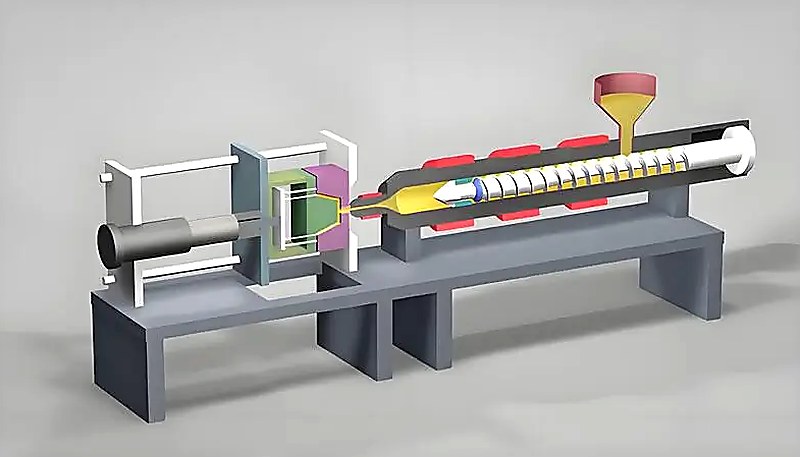
Quality assurance throughout the production lifecycle ensures consistent product performance. Our factory implements a six-step quality control system starting with incoming material verification, followed by first-article approval, in-process inspection at regular intervals, dimensional auditing, visual inspection, and final outgoing quality control. Each step is documented and traceable, providing customers with complete quality records for their production runs.
Design for manufacturing (DFM) reviews catch potential issues before tooling investment. Common problems include wall thickness variations exceeding 2:1 ratios, sharp internal corners that cause stress concentration, and inadequate draft angles that prevent clean part ejection. Our engineering team reviews every new project against a 47-point DFM checklist developed from 20 years of injection moulding experience across automotive, medical, consumer electronics, and industrial applications. This systematic approach prevents approximately 80% of common production defects and reduces tooling modification cycles by an average of 40% compared to projects that skip DFM review.
Rapid prototyping bridges the gap between product design and production moulding. We offer prototype moulding services using aluminium tooling that delivers production-equivalent parts in 2-3 weeks at 20-30% of production mould cost. This allows customers to validate fit, function, and assembly before committing to production tooling. Prototype parts also support early market testing, regulatory submissions, and investor demonstrations while production moulds are being manufactured in parallel, compressing overall time to market by 30-50% for new product launches.
Understanding when injection moulding fits your product requirements saves significant time and capital. Our engineering team regularly conducts feasibility assessments for customers, comparing injection moulding against alternative processes based on part geometry, production volume, material requirements, and total project budget. In many cases, hybrid approaches using injection moulding for high-volume components combined with CNC machining for low-volume customisation deliver the best overall value.
How Can ZetarMold Help With Your Injection Moulding Project?
ZetarMold provides comprehensive injection moulding services from initial DFM review through production and delivery. Our Shanghai factory operates 45 injection moulding machines (90T to 1850T clamping force) with in-house mould manufacturing capability producing over 100 mould sets per month. Our team of 8 senior engineers (each with 10+ years experience) and 120+ production staff serve customers across automotive, medical, consumer electronics, and industrial sectors.
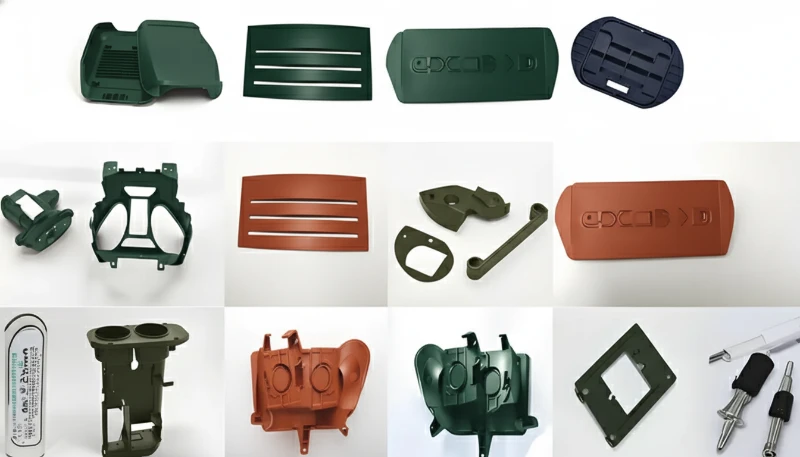
Consumer product moulding typically involves these key processes:
- Custom Pantone colour matching
- Surface finish selection (matte, gloss, textured)
- Assembly and post-processing
Custom colour matching represents another critical capability for consumer product moulding. Pantone colour standards require precise pigment formulations and consistent processing conditions to maintain batch-to-batch colour uniformity. Our colour lab maintains masterbatch formulations for over 200 standard colours and can develop custom matches within 3-5 business days. Process parameters including melt temperature, back pressure, and screw speed all affect final colour appearance, requiring documented process settings for each colour-specific production run.
- Commodity plastics (PP, PE, PS) — low cost, high volume, consumer packaging
- Tworzywa konstrukcyjne (PA, PC, POM) — mechanical strength, automotive and industrial
- High-performance polymers (PEEK, PEI, PPS) — extreme conditions, medical and aerospace
Sustainability considerations increasingly influence material and process selection for injection moulded products. European regulations now mandate minimum recycled content thresholds for packaging applications, driving material suppliers to develop high-quality recycled grades that match virgin resin performance. Bio-based polymers like PLA and PHA offer renewable feedstock alternatives but require careful process adjustment due to different thermal behaviours and narrower processing windows compared to conventional petroleum-based materials. Lifecycle analysis of injection moulded products shows that the manufacturing phase typically accounts for only 10-20% of total carbon footprint, with material production and end-of-life disposal representing the largest environmental impact categories.
Energy efficiency in injection moulding production has improved significantly with all-electric machine technology. Modern all-electric machines consume 50-70% less energy than hydraulic equivalents, while providing superior shot-to-shot repeatability for precision products. Our factory has progressively transitioned to energy-efficient machines, reducing both operating costs and environmental impact while maintaining the tight tolerances that precision product applications demand. This investment in modern equipment reflects our commitment to sustainable manufacturing practices while delivering superior product quality and consistency for our global customer base.
We offer free DFM review for new projects, identifying potential manufacturing issues before tooling investment. Our 6-step quality control process (IQC, in-process checking, process inspection, packaging inspection, FQC, and OQC) ensures consistent quality across production runs. With 400+ material grades in our processing portfolio and 30+ English-speaking project managers, we support international customers from first inquiry through volume production with responsive communication and transparent project management.
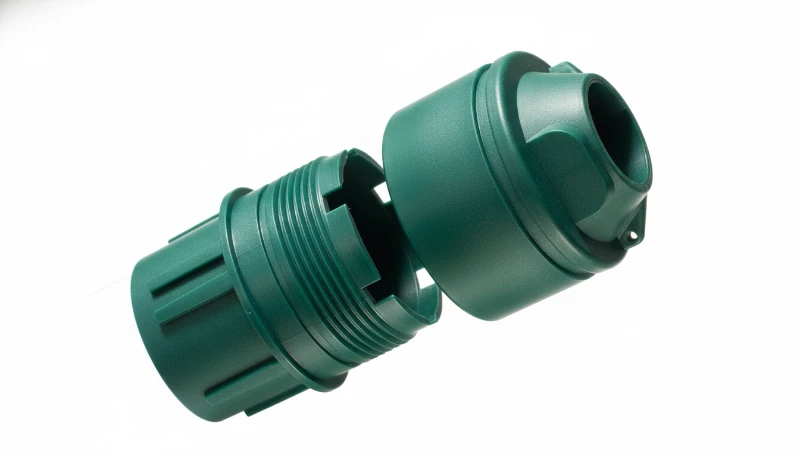
“Injection moulding can produce parts weighing less than 0.01 grams.”Prawda
Micro-moulding technology produces parts weighing less than 0.01 grams for medical, electronic, and optical applications. Dedicated micro-moulding machines with precise shot volume control, specialised screw designs, and high-speed injection capabilities make sub-gram production routine for applications like micro-gears, sensor housings, and implantable medical components across the healthcare and electronics industries.
“The same mould can produce identical parts from any plastic material.”Fałsz
Different plastic materials have different shrinkage rates, melt viscosities, and processing temperatures that directly affect part dimensions and quality. PP shrinks 1.5-2.5% while PC only 0.5-0.7%. Switching materials in the same mould produces dimensionally different parts unless the mould is designed with compensation or process parameters are significantly adjusted for each specific material grade and formulation.
Understanding the capabilities and limitations of injection moulding helps engineers make informed manufacturing decisions early in the product development cycle. Material selection, tooling economics, and process constraints all factor into whether injection moulding delivers the best value for a given application. Our team provides complimentary design-for-manufacturing reviews that address these considerations before tooling investment, helping customers avoid common pitfalls that cause delays and cost overruns.
“Injection moulded parts typically require no secondary finishing operations.”Prawda
One of injection moulding primary advantages is producing net-shape parts that emerge from the mould with finished surfaces, precise dimensions, and structural integrity ready for immediate use. The process consolidates features like snap fits, living hinges, threaded inserts, and surface textures directly into the moulded part, eliminating machining, painting, or assembly steps that other manufacturing processes typically require for equivalent functionality.
“Injection moulding is always the most cost-effective method for plastic parts.”Fałsz
Injection moulding becomes cost-effective only when production volumes are high enough to amortise the significant upfront tooling investment. For volumes below 1,000 units, 3D printing or CNC machining often provides lower total cost despite higher per-part material prices. A 20,000 USD production mould requires 20,000 units just to bring tooling amortisation below 1 USD per part, making low-volume applications economically unsuitable for traditional injection moulding production.
Często zadawane pytania
What household products are made by injection moulding?
Common household injection moulded products include food storage containers, bottle caps, toothbrush handles, razor shells, laundry baskets, plastic hangers, kitchen utensil handles, remote control housings, power tool casings, and garden furniture components. Nearly every plastic item in a typical home was produced through injection moulding due to the process ability to create complex shapes with consistent quality at high production volumes. The average household contains over 500 injection moulded items across kitchen, bathroom, garage, and living areas throughout the entire home.
How much does injection moulding tooling cost?
Injection moulding tooling costs range from 2,000 USD for simple prototype aluminium moulds to over 100,000 USD for complex multi-cavity production moulds with hot runner systems and mechanical side actions. The cost depends on part complexity, number of cavities, mould material selection between aluminium and hardened steel, and required surface finishes. Most production moulds for consumer products fall in the 15,000-50,000 USD range. Hot runner systems add 5,000-15,000 USD but reduce material waste and cycle time, typically paying back at production volumes above 50,000 finished units.
What is the minimum order quantity for injection moulding?
There is no strict minimum order quantity for injection moulding, but the economics depend on amortising tooling cost across production volume. For a 20,000 USD mould, orders below 2,000-5,000 units typically have tooling costs exceeding 4-10 USD per unit, making alternative processes like 3D printing or vacuum casting more economical for small batches. At volumes above 10,000 units, injection moulding usually delivers the lowest unit cost for most product categories, with per-part prices often below 0.50 USD for simple commodity plastic components in high-cavity moulds.
Can injection moulding produce transparent products?
Yes, injection moulding produces transparent products using amorphous thermoplastics like polycarbonate (PC), acrylic (PMMA), and clear polystyrene (GPPS). Achieving optical clarity requires highly polished mould surfaces, precisely controlled melt temperatures to prevent material degradation and yellowing, and thorough material drying to eliminate moisture-induced splay marks on the finished part surface. PC provides the best combination of clarity, impact resistance, and heat resistance for demanding applications like safety glasses, medical device windows, and electronic display covers requiring both transparency and durability.
What tolerances can injection moulded products achieve?
Injection moulded products typically achieve tolerances of plus or minus 0.1mm for dimensions up to 25mm, and plus or minus 0.3-0.5mm for larger dimensions up to 150mm. Tight tolerances of plus or minus 0.05mm are achievable for critical features like snap-fit joints and bearing bores with careful mould design, stable material selection, and tightly controlled process parameters. Semi-crystalline materials like PP and nylon exhibit higher shrinkage variation than amorphous materials like PC and PMMA, directly affecting the tolerances that can be reliably maintained across production runs.
How long does an injection mould last?
Production injection moulds typically last 100,000 to over 1,000,000 cycles depending on mould material selection, part complexity, and ongoing maintenance practices. Hardened steel moulds processing unfilled commodity resins can exceed 1 million cycles with proper preventive maintenance schedules including regular cleaning and lubrication. Moulds processing glass-filled or mineral-filled materials experience significantly faster wear on cavity surfaces, gate areas, and sliding mechanism components, requiring more frequent polishing, re-coating, and component replacement throughout the mould service life to maintain consistent part quality and dimensional compliance across production runs.
Can recycled plastic be used for injection moulding products?
Yes, recycled plastics are increasingly used for injection moulded products, particularly in packaging and consumer goods applications worldwide. Post-consumer recycled PP and PET content requirements of 25-50% are now common in packaging applications driven by sustainability regulations across multiple markets. Processing recycled material requires adjusted melt temperatures, injection speeds, and packing pressures to account for potential degradation, contamination, and wider melt flow variation compared to virgin resin batches. Quality inspection protocols must be more rigorous when using recycled content to maintain consistent product quality.
-
shot weight: Shot weight is defined as the total amount of polymer material injected into the mold cavity during a single molding cycle, including the part, runner, and gate material. ↩
-
overmoulding: Overmoulding is defined as a two-step injection moulding process where a second material is moulded over or around a previously moulded substrate to create multi-material or multi-color parts. ↩
-
sink marks: Sink marks are defined as localized depressions on the surface of a moulded part caused by uneven shrinkage during cooling, typically occurring opposite thick wall sections or internal structural features that prevent uniform heat dissipation. ↩



 EN
EN  ES
ES  FR
FR  DE
DE  PT
PT  AR
AR  RU
RU  JA
JA  KO
KO  IT
IT  NL
NL  TR
TR  PL
PL 