

You just landed a project that needs five different plastic parts, all due for prototype review in three weeks. Your tooling budget covers maybe two full molds. Do you delay the timeline, cut the part count, or find a smarter way? This is exactly where a MUD injection mold system saves the day — and your budget.
- MUD systems cut mold changeover from hours to under 15 minutes using standardized base plates and interchangeable inserts.
- You only buy one base plate per machine, then swap inserts for each part design — ideal for multi-part projects.
- Best suited for low-volume runs (100–10,000 parts) and high-mix production, not mass manufacturing.
- Expect 30–50% tooling savings when producing three or more part families on a single MUD base.
- Size is the main constraint: most MUD frames max out at 12×12 inches.
| Functie | MUD System | Conventional Mold |
|---|---|---|
| Changeover time | 5–15 min | 2–6 hours |
| Per-part tooling cost | $1,500–$8,000 | $8,000–$25,000 |
| Best for | 3+ variants, <10K parts | 1-2 designs, 50K+ parts |
What Is a MUD Injection Mold?
A MUD injection mold — short for Master Unit Die1 — is a standardized quick-change mold system that separates the mold into two parts: a heavy universal base plate that stays bolted in the machine, and lightweight interchangeable inserts that carry the actual cavity geometry. You swap inserts, not entire molds.
Developed in the 1960s by the Master Unit Die Products company, MUD was originally designed for spuitgieten van kleine aantallen2 shops that needed to run dozens of different parts on a handful of machines. Instead of buying 20 full molds at $15,000 each, you bought one base plate and 20 sets of inserts at $2,000–$5,000 each.
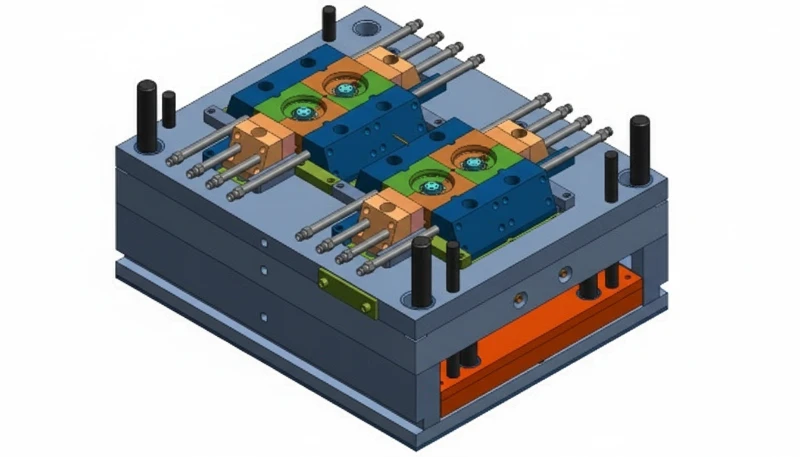
Every MUD system has four core components: the base plate (the heavy frame with guide pins), the locating system (tapered interlocks or dowel pins for repeatable alignment), the clamping mechanism (hydraulic or manual levers), and the ontwerp van spuitgietmatrijzen3 inserts themselves — the A-side and B-side steel blocks that form your part.
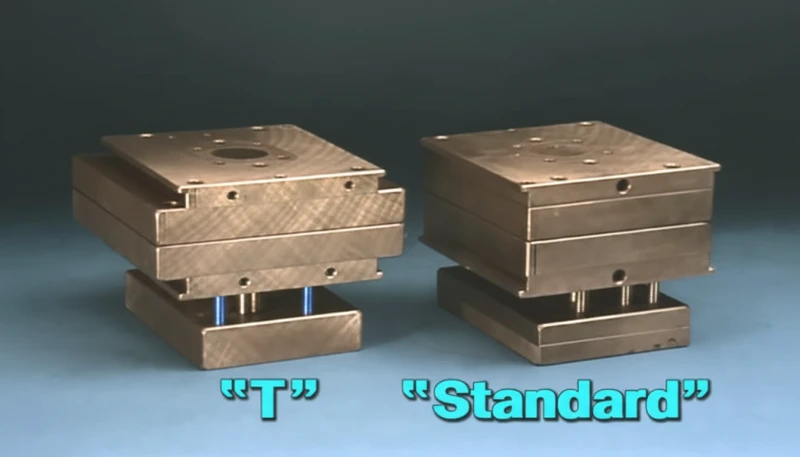
In our shop, we run MUD frames on machines from 90T up to 500T. The smaller frames (6×6 and 8×8 inches) fit our 90T and 150T machines. The larger 10×12 and 12×12 frames go into our 300T–500T machines. If you need parts bigger than about 12 inches in any dimension, MUD is the wrong tool — you need a full conventional mold.
“For a single part design, a traditional mold is usually cheaper than a MUD system.”Echt
A MUD base plate adds $3,000–$15,000 to your first project. That upfront cost only pays off when you run three or more insert sets on the same base.
“MUD systems can only handle small, simple parts with basic geometry.”Vals
Modern MUD inserts accommodate undercuts, side actions, lifters, and threaded cores within their size envelope. The limitation is size, not complexity.
How Does a MUD Quick-Change System Work?
The workflow is simple. The base plate stays mounted in the press — you never touch it during a changeover. The operator loosens the clamping levers, the old insert slides out on guide rails, the locating surfaces get a quick clean, the new insert slides in along the same rails, and tapered locating pins self-align it to within 0.001 inches. Tighten the clamps, close the machine, run a test shot. Total elapsed time: 5 to 15 minutes.
A conventional mold changeover takes 2 to 6 hours: unbolt, crane out, store, retrieve, hoist back in, align, reconnect water lines. On a machine running at $80–$150 per hour, MUD saves $160–$900 in machine time per changeover.
| Method | Herhaalbaarheid | Kosten |
|---|---|---|
| Tapered interlock | ±0.001 in | Standaard |
| Dowel pin | ±0.002 in | Economy |
| Linear bearing | ±0.0005 in | Premium |
What Are the Benefits of Using MUD Molds?
The biggest benefit is speed — not just changeover speed, but project speed. We can cut steel for MUD inserts in 2–3 weeks instead of the 4–6 weeks a full mold requires, because we only design and manufacture the insert set, which is roughly 60% less steel than a complete mold.
Here is a real example from our floor. A medical device company needed eight different connector housings in the same material. With conventional molds, that would be eight full molds at roughly $12,000 each — $96,000 in tooling over 5 months. With MUD, we used one 10×12 base plate ($8,500) and eight insert sets ($2,200 each, $17,600 total). Total tooling: $26,100. They saved $70,000 and got all eight parts into production in 8 weeks.
Factory Insight: At ZetarMold’s Shanghai facility, we run 45 injection molding machines (90T–1850T). Several 90T–500T machines are equipped with MUD frames for multi-part projects. Our 8 senior engineers design insert sets with optimized cooling to maximize lifespan — typically 50,000 to 200,000 cycles.
| Spec | Detail |
|---|---|
| MUD-ready machines | 90T–500T range |
| Standard frame sizes | 6×6, 8×8, 10×12 inches |
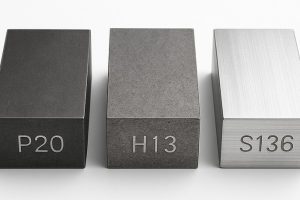
| Insert material options | P20, H13, aluminum, beryllium copper |
When Should You Choose MUD Over Traditional Molds?
MUD is not a universal solution. Here is the honest breakdown of where it shines and where it falls flat.
Choose MUD when you need 500 to 10,000 parts per design across three or more designs in the same size range. The breakeven point is typically at the third insert set.
Snelle prototyping is another sweet spot. When your design team needs 50–200 parts of each variant for fit testing, aluminum MUD inserts can be cut in under two weeks.
Bridge production is the third use case: you need 5,000–20,000 parts for market testing before committing to production molds.
✅ TRUE - “MUD inserts can serve as both prototype and bridge production tooling”
Many projects start with aluminum MUD inserts for prototyping (50–200 parts), then transition the same insert geometry to steel for bridge production runs of 5,000–20,000 parts. The base plate stays the same throughout.
❌ FALSE - “MUD systems cannot handle multi-cavity layouts”
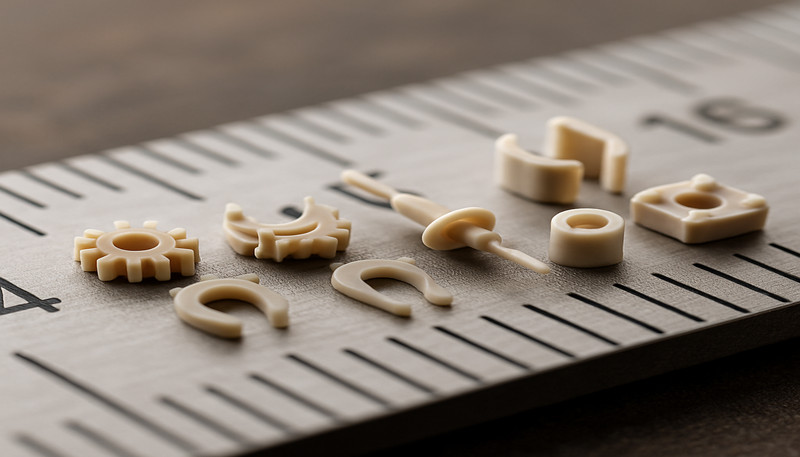
MUD inserts support multi-cavity layouts within the frame envelope. A 10×12 inch MUD insert commonly holds 4 to 8 cavities for small parts like connectors or clips.
What Are the Limitations of MUD Quick-Change Systems?
No tool is right for every job. Here is where MUD falls short.
Size is the hard ceiling. The largest MUD frame is roughly 12×12 inches. Most MUD work happens in the 4×4 to 10×10 inch range. Parts bigger than that need a full conventional mold.
Precision has a ceiling. Every insert swap introduces ±0.001 to ±0.002 inches of positional variance. For most commercial parts, fine. For precision optics holding ±0.0005 inch, a dedicated mold is safer.
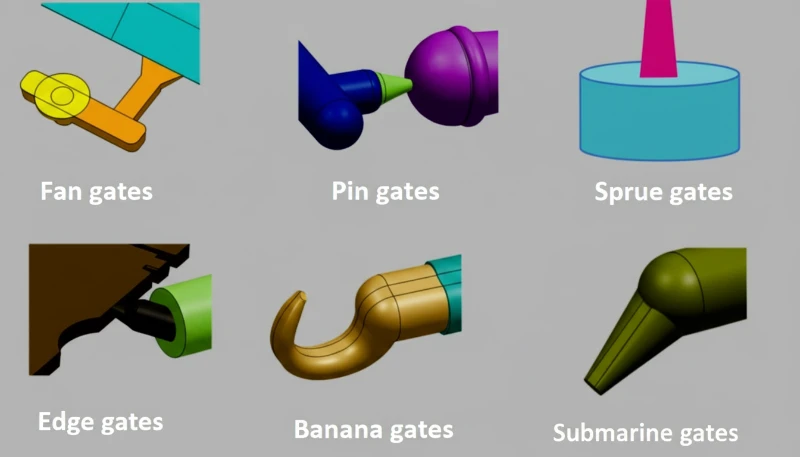
Cooling is another constraint. A dedicated mold has cooling channels custom-drilled to follow the part geometry. MUD inserts have limited space for cooling within the standardized frame. On thick-walled parts, this can add 10–20% to cycle time compared to an optimized dedicated mold.
Insert wear is real. Because inserts are handled — slid in, clamped, slid out, stored — the locating surfaces wear faster. Base plate locating bores typically need reconditioning every 2–3 years in high-swap environments. Budget for it.
How Much Does a MUD Quick-Change System Cost?
Here are real numbers from our quoting database.
| Component | Size Range | Typical Cost | Doorlooptijd |
|---|---|---|---|
| MUD base plate (6×6) | 6×6 in | $3,000–$5,000 | 3–4 weeks |
| MUD base plate (10×12) | 10×12 in | $8,000–$12,000 | 4–5 weeks |
| MUD base plate (12×12) | 12×12 in | $10,000–$15,000 | 5–6 weeks |
| Steel insert set (simple) | Any | $1,500–$3,000 | 2–3 weeks |
| Steel insert set (complex) | Any | $4,000–$8,000 | 3–4 weeks |
| Aluminum insert (prototype) | Any | $800–$2,000 | 1–2 weeks |
For five part designs at 10×12 inches, MUD saves roughly 58% compared to conventional molds. The breakeven happens at the third insert set. Hidden costs to watch: base plate regrinding ($500–$1,500 every 2–3 years) and clamp hardware replacement ($200–$400/year for daily swaps).
Which Industries Benefit Most from MUD Molds?
Medische apparaten are the top MUD user. Regulatory testing requires multiple iterations, each needing 50–500 parts. One customer runs 12 surgical instrument handles on a single MUD frame.
Consumentenelektronica companies use MUD for product families — variant cases and brackets sharing one frame. Automotive tier-two suppliers use MUD for low-volume trim components where a $3,000 insert beats a $20,000 dedicated mold.
Factory Insight: ZetarMold serves all these sectors from our Shanghai facility with 20+ years of experience, 120+ production workers, and 30+ English-speaking project managers. ISO 9001 and ISO 13485 certified. We process over 400 materials across insert sets.
How to Maintain MUD Quick-Change Systems?
MUD maintenance is straightforward but non-negotiable.
After every swap: Clean locating surfaces with isopropyl alcohol and a lint-free cloth. Two minutes, prevents 80% of issues.
Weekly: Check the clamping mechanism. Mark the correct lever position when new and watch for drift.
Monthly: Measure locating bore diameters with a bore gauge. When taper wear exceeds 0.0005 inches, schedule reconditioning.
| Task | Frequency | Tijd |
|---|---|---|
| Clean locating surfaces | Every swap | 2 min |
| Check clamp force | Weekly | 30 sec |
| Measure locating bores | Monthly | 5 min |
| Base plate regrind | 12–24 months | Outsource |
Expected lifespan: a well-maintained base plate lasts 5–10 years. Insert sets last 50,000–200,000 cycles depending on material abrasiveness. Track cycle counts and plan replacements at 80% of expected lifespan.
What Are the Most Common FAQs About MUD Molds?
What is the typical mold change time with a MUD system?
A trained operator swaps MUD inserts in 5 to 15 minutes. Hydraulic clamps: 5 to 8 minutes. Manual levers: 10 to 15 minutes. Conventional changeover takes 2 to 6 hours.
Can MUD molds be used for high-volume production?
Technically yes, but usually the wrong choice. MUD inserts max out around 200,000 cycles versus 500,000+ for dedicated molds. For annual volumes above 50,000 parts, a dedicated mold is more cost-effective per part.
What is the maximum part size for MUD molds?
The largest standard MUD frames accommodate roughly 12×12 inches of mold area. Most production happens in the 4×4 to 10×10 inch range. Parts exceeding 12 inches in any dimension require a conventional mold.
How many inserts can I use with one MUD base plate?
There is no mechanical limit. Customers run 15 to 20 insert sets on one base plate. Each set must share the same size envelope.
Are MUD molds suitable for tight-tolerance parts?
MUD systems deliver ±0.001 to ±0.002 inch repeatability. For ±0.0005 inch or tighter, a dedicated mold where cavity and base are one solid block provides better stability.
How do I choose between MUD and traditional molds?
Use MUD for 3+ part designs under 10K parts each. Use conventional molds for high-volume designs over 50K annual parts, parts larger than 12 inches, or tolerances tighter than ±0.001 inch.
What maintenance does a MUD system require?
Clean locating surfaces after every swap, check clamping force weekly, measure locating bores monthly, and schedule base plate regrinding every 12 to 24 months. Store inserts in a dry environment with silica gel packs and clear labels showing part number, cycle count, and last run date.
If your project involves multiple part designs, tight timelines, and a budget that does not stretch to a full mold for every cavity, MUD is worth a serious look. We run MUD systems daily at ZetarMold, and our engineering team can help you figure out whether a quick-change approach fits your specific parts. Get in touch with a drawing and we will give you an honest assessment — including telling you when MUD is the wrong choice.
-
Master Unit Die: A Master Unit Die (MUD) is a standardized quick-change mold base system that accepts interchangeable mold inserts, allowing rapid swapping of cavity designs without removing the base plate from the injection molding machine. ↩
-
low-volume injection molding: Low-volume injection molding refers to production runs of typically 100 to 10,000 parts, using cost-efficient tooling strategies such as aluminum molds or MUD insert systems rather than full production-grade steel tooling. ↩
-
injection mold design: Injection mold design refers to the engineering process of creating the mold structure, including cavity layout, cooling channels, ejection system, and gating, to produce plastic parts with specified dimensions and quality. ↩


 EN
EN  ES
ES  FR
FR  DE
DE  PT
PT  AR
AR  RU
RU  JA
JA  KO
KO  IT
IT  NL
NL  TR
TR  PL
PL 