

Look, waste in 사출 성형 isn’t just an environmental problem—it’s money walking out your door. After 20+ years in this business, I’ve seen too many operations hemorrhaging profits because they treat scrap as inevitable. It’s not. With proper regrind strategies and closed-loop systems, you can cut material waste by 80-90% while maintaining quality standards.
- Regrind ratios of 10-25% maintain part quality for most applications while reducing material costs by 15-20%
- Closed-loop recycling systems can achieve material utilization rates above 95% when properly implemented
- Quality control protocols are essential—bad regrind ruins entire production runs
- Sprues, runners, and flash typically represent 30-40% of total material usage in standard injection molding operations
What Are the Main Sources of Waste in Injection Molding?
The main waste sources in injection molding are sprues, runners, flash, rejected parts, and purge material—totaling 25-45% of resin. If comparing vendors, see our injection molding supplier sourcing guide for RFQ prep and qualification.
The main sources of waste from your 사출 금형 in injection molding are sprues, runners, flash, rejected parts, and purge material—collectively accounting for 25-45% of your total resin consumption. Let me break this down because understanding where waste comes from is the first step to eliminating it. Sprue and runner systems are your biggest culprit, especially in single-cavity molds. I’ve audited operations where runner weight exceeded part weight by 3:1. That’s insane. 핫 러너 시스템1 eliminate most of this waste, but they’re not always practical for every application. Cold runners can be optimized—reduce runner diameter to the minimum that maintains proper flow, use balanced designs, and consider sequential valve gating for multi-cavity molds. Flash is pure waste, period.
If you’re getting consistent flash, your process is wrong. Either your clamp tonnage is insufficient, your injection pressure is too high, or your mold needs maintenance. I’ve seen operators just accept flash as normal—that’s leaving money on the table. Rejected parts hurt twice: you’ve wasted material and lost production time. Most rejects come from process instability, inadequate quality systems, or rushing startups. The key is identifying root causes fast and fixing them permanently. Purge material varies wildly depending on your color changes and material switches. Smart scheduling minimizes this—group similar colors together, use intermediate purging compounds, and optimize your changeover procedures.
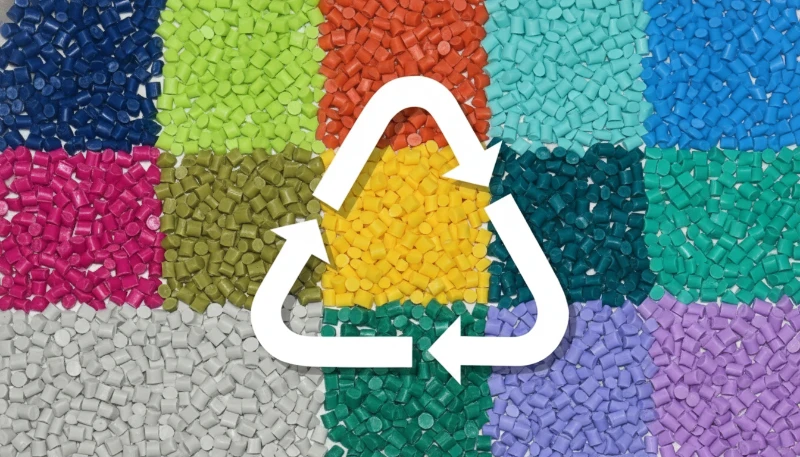
How Does Plastic Regrind Work in Practice?
In practice, regrind is the mechanical grinding of waste into uniform pellets blended with virgin resin at controlled ratios. Here’s what actually matters in real production. First, your grinder setup is critical. Granulator blade clearance should be 0.002-0.005 inches—too tight and you generate heat that degrades the plastic, too loose and you get inconsistent particle size. Screen size determines your regrind particle dimensions. I recommend 3/8-inch screens for most applications, though some demanding parts need 1/4-inch. Temperature control during grinding is huge. Thermoplastics can degrade from grinding heat, especially materials like PVC or POM. Good granulators have water cooling or forced air circulation.
We’ve seen regrind work beautifully across 400+ materials on our floor — but only when operators follow strict material segregation. Our 47 injection molding machines run everything from commodity PP to high-temp PEEK, and cross-contamination between resin families is the single fastest way to scrap an entire shift’s output.
If your regrind feels warm coming off the grinder, you’re cooking it. Contamination kills regrind quality faster than anything else. Metal fragments from worn grinder blades, paper labels, different plastic types, colorants—they all create problems. Install magnetic separators for metal contamination and density separation for different plastic types. Particle size distribution affects flow properties and mixing. Oversized particles create feeding problems and surface defects. Undersized particles (dust) can cause degradation from overheating. Use vibrating screens to remove both extremes. Storage matters too. Regrind absorbs moisture faster than virgin pellets because of the increased surface area. Keep it in sealed containers with desiccant, especially Hygroscopic materials2 like nylon or PET.
| 재료 유형 | Screen Size | 참고 |
|---|---|---|
| PP / PE / PS | 3 mm | Standard particle size |
| ABS / SAN | 4 mm | Moderate grinding for uniform flow |
| 유리 충전 등급 | 6–8 mm | Larger screen reduces fiber damage |
| Nylon / PC | 3 mm | Must dry immediately after grinding |
Here’s what most people get wrong about regrind: the particle size matters more than the ratio. If your granulator produces flakes instead of uniform pellets, you’ll get inconsistent feeding in the hopper. That means shot-to-shot variation, and your parts start failing dimensional checks. The standard practice is to use a 3–5 mm screen in your granulator for most thermoplastics. For glass-filled materials, you want a larger screen (6–8 mm) because the glass fibers create fines that degrade properties further. We’ve tested this extensively—uniform regrind particles within ±1 mm give you 20–30% better melt consistency compared to random flake sizes. Also critical: regrind must be dried before reuse.
Just like virgin material, regrind absorbs moisture, and in some cases it absorbs faster because of the increased surface area. For hygroscopic materials like nylon or polycarbonate, you’re looking at 3–4 hours in a dehumidifying dryer at material-specific temperatures before it goes back into the machine.
When Should You Regrind vs. Use Virgin Material?
Use regrind at 10-25% for non-critical parts; stick to virgin material for structural, food-contact, and certified applications. The decision comes down to part requirements and economics. For commodity parts like housings, containers, or toys, regrind ratios of 20-30% work fine. I’ve run production with 50% regrind on non-critical components without issues. The key is understanding property degradation—tensile strength typically drops 5-15%, impact resistance can decrease 10-25%, and molecular weight reduces with each processing cycle. Never use regrind for medical devices, food packaging, or aerospace components. These applications require virgin material certification and material traceability.
Even small amounts of regrind void certifications and create liability issues. Structural parts need case-by-case evaluation. Load-bearing components, snap-fit features, and living hinges are sensitive to property degradation. I’ve seen snap-fit failures from excessive regrind use—the reduced molecular weight makes the plastic more brittle. Economics drive most decisions. Regrind typically costs 60-80% of virgin material prices, but processing costs increase slightly due to drying requirements and quality control. Calculate your true savings including labor, energy, and quality losses. Color matching is another factor. Natural or black parts hide regrind easily, but achieving consistent color in transparent or light-colored parts with regrind is challenging. You’ll need color dosing systems and careful ratio control.
| Application Class | Max Regrind % | Key Rationale |
|---|---|---|
| Structural/Load-bearing | 0–10% | Tensile and impact properties degrade per heat cycle |
| Cosmetic/Visible parts | 15–25% | Color shift and splay visible above 25% |
| Hidden/Internal | 25–50% | Non-visible and non-structural; regrind acceptable |
| Packaging/Single-use | Up to 100% | Post-industrial regrind runs at high ratios |
The real answer is more nuanced than “critical vs. non-critical.” What matters is your application’s tolerance for property degradation and your customer’s specification.
After 3–4 heat histories, you’re looking at 10–20% reduction in elongation at break and 5–15% drop in impact strength. That’s not speculation—that’s what the MFI (Melt Flow Index3) data shows you. For medical or food-contact parts, most regulatory frameworks (FDA, EU 10/2011) require documented virgin material only, or strictly controlled regrind with full traceability. Don’t cut corners here.
One thing I always tell our clients: every time plastic goes through the barrel, it loses molecular weight. After 3–4 heat histories, you’re looking at 10–20% reduction in elongation at break and 5–15% drop in impact strength. That’s not speculation—that’s what the MFI (Melt Flow Index) data shows you.
What Is a Closed-Loop Recycling System in Injection Molding?
A closed-loop system captures all production waste and reprocesses it back into usable material, cutting material costs by 15-25%. This isn’t just environmental feel-good stuff—it’s a proven economic strategy. The system starts with waste segregation at the molding press. Sprues, runners, and reject parts go directly into dedicated containers—no mixing with other materials or contamination. Automated sprue picking and conveyor systems work best for high-volume operations.
On-site granulation is the heart of the system. Install granulators near production lines to minimize handling and contamination. Size your granulators for 150-200% of expected waste volume to handle production surges.
Include magnetic separation and dust collection—these aren’t optional. Material blending requires precise control. Most closed-loop systems use gravimetric blenders that meter virgin and regrind materials by weight, not volume. Typical ratios start at 10-15% regrind and can increase to 25-30% based on part requirements and material testing. Quality monitoring is essential. Test regrind material properties regularly—melt flow index, tensile strength, and impact resistance. Set acceptance criteria and reject batches that don’t meet specs. Bad regrind contaminates good material and ruins production runs. Material tracking completes the loop. Use lot coding to track material usage, regrind ratios, and part performance. This data helps optimize blend ratios and identifies process improvements.
| 구성 요소 | 기능 | Key Consideration |
|---|---|---|
| Automated Separator | Separates runners from parts post-ejection | Robotic pickers reduce manual sorting errors |
| Inline Granulator | Grinds runners and rejects at the press | Screen size 3-5mm for uniform particles |
| Gravimetric Blender | Mixes virgin and regrind by weight | ±0.5% accuracy prevents ratio drift |
| Dehumidifying Dryer | Removes moisture from regrind before reuse | Regrind absorbs moisture faster than pellets |
| MFI Testing Station | Monitors melt flow index per batch | Reject batches with >15% deviation from baseline |
Some systems include automated material identification using near-infrared spectroscopy to prevent mix-ups. A well-designed closed-loop system typically includes:
1. Automated sprue/runner separation — robotic or gravity-based pickers that separate runners from parts immediately after ejection
2. Inline granulation — granulator positioned next to the press, grinding runners and rejects in real-time
3. Dedicated storage and blending — regrind stored by material type and color, blended with virgin at controlled ratios using gravimetric blenders
4. Quality checkpoints — MFI testing, visual inspection, and contamination checks before regrind re-enters production
The key metric is your regrind utilization rate — what percentage of generated regrind actually goes back into production vs. gets downcycled or landfilled. Best-in-class operations hit 85–95% utilization. Average shops?
Maybe 40–60%, because they don’t have the systems to track and control it. For multi-material or multi-color shops (which is most contract manufacturers), the biggest challenge isn’t the equipment — it’s the logistics of keeping regrind streams separate. One contamination event (mixing ABS regrind into a PC run) can scrap an entire production batch.
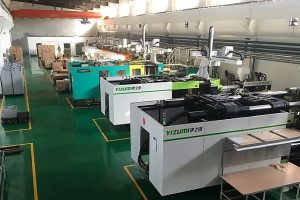
Factory Insight: At ZetarMold, we do not treat regrind as mixed floor scrap. In our Shanghai factory, operators keep resin families and colors separated, approved blend ratios are tied to the project specification, and regrind checks sit inside the same 6-step quality workflow used for molded parts. That process discipline matters when you support 400+ materials across 47 injection molding machines from 90T to 1850T.
How Do You Control Quality When Using Regrind?
Regrind quality control is the systematic process of testing batch properties, preventing contamination, and monitoring production in real time. You can’t just throw regrind in the hopper and hope for the best. Material property testing comes first. Establish baseline properties for your virgin material—tensile strength, impact resistance, melt flow index, and thermal properties. Test each regrind batch for these same properties and compare against acceptance criteria. I typically allow 10-15% property degradation for non-critical parts, but structural components need tighter limits. Contamination control is absolutely critical. Different plastic types, metal particles, paper labels, or foreign materials will ruin entire batches. Implement visual inspection, density separation, and magnetic separation.
Train operators to identify contamination—a single PVC part mixed with ABS regrind can cause corrosion and equipment damage. Blend ratio verification ensures consistent material properties. Use gravimetric feeders, not volumetric ones—plastic density changes with regrind content. Document actual blend ratios for every batch and correlate with part quality data. Adjust ratios based on testing results and customer requirements. Process parameter adjustment accounts for regrind flow differences. Regrind typically has different viscosity and thermal properties than virgin material. You might need to adjust injection pressure, mold temperature, or cycle times. Document these changes and create process sheets specific to each blend ratio. Statistical process control tracks quality trends over time. Monitor key part dimensions, mechanical properties, and appearance characteristics.
Use control charts to identify when process drift occurs and correlate changes with regrind usage patterns.
Can You Achieve Zero Waste in Injection Molding?
Near-zero waste is achievable with hot runners, optimized design, and regrind—but true zero waste is rarely worth the cost. Let me explain what’s actually possible. Hot runner systems eliminate sprue and runner waste entirely, but they’re not universal solutions. Initial costs are 2-3x higher than cold runners, and they’re limited to specific material types. You can’t easily change colors or materials, and maintenance complexity increases significantly. For high-volume, single-material production, hot runners make sense. Part design optimization reduces material usage through wall thickness reduction, eliminating unnecessary features, and optimizing gate locations.
I’ve seen 20-30% material reduction through smart design changes. Use finite element analysis to identify stress concentrations and optimize wall thickness gradients.
100% regrind utilization is theoretically possible but practically challenging. Each processing cycle degrades material properties, so you eventually reach a point where the plastic can’t meet performance requirements. Most operations can achieve 80-90% regrind utilization before hitting quality limits. Advanced process control minimizes rejects through real-time monitoring and closed-loop feedback. Cavity pressure sensors, melt temperature monitoring, and dimensional measurement systems catch problems before they create scrap. Investment in Industry 4.0 technologies pays off through reduced waste and improved quality. Economic reality matters. Achieving the last 5-10% waste reduction often costs more than the material savings justify.
| Priority | Strategy | Impact on Material Waste |
|---|---|---|
| 1. Eliminate | Hot runner systems remove runners entirely | 15-30% waste reduction |
| 2. Minimize | Optimize process parameters to reduce rejects | 5-10% waste reduction |
| 3. Regrind | Capture and reuse sprues, runners, and rejects | 10-20% material recovery |
| 4. Downcycle | Sell uncontaminated regrind to compounders | Revenue from waste stream |
| 5. Energy recovery | Incineration with energy capture (last resort) | 2-5% remaining waste |
Focus on the biggest waste streams first—runner systems, reject reduction, and regrind optimization deliver the best return on investment. Let me be honest: true zero waste is extremely difficult in injection molding. You’ll always have some material loss — purging compound, start-up scrap, color change waste, and machine maintenance purging. But you can get close.
Practical waste reduction hierarchy:
1. Eliminate — Use hot runner systems to eliminate runners entirely. This single change can reduce material waste by 15–30%.
2. Minimize — Optimize 사출 성형 process parameters to reduce reject rates.
Every 1% reduction in scrap is pure profit.
3. Regrind — Capture and reuse sprues, runners, and non-conforming parts internally.
4. Downcycle — Sell uncontaminated regrind to compounders or manufacturers with lower-spec applications.
5. Energy recovery — Last resort; incineration with energy recovery for truly non-recyclable material. The economic case is clear: at scale, a well-managed regrind program can save 8–15% on raw material costs. For a shop running 1,000 tons of material per year at $2/kg average resin cost, that’s $16,000–$30,000 in annual savings. Plus reduced waste disposal fees. What’s often missed is the ISO 14001 angle.
If your facility is ISO 14001 certified (as ours is), your waste reduction metrics directly support your environmental management system compliance and can be a differentiator in audits and customer evaluations.
“Regrind material typically has 5-15% lower tensile strength than virgin plastic”True
Mechanical grinding and reprocessing breaks polymer chains, reducing molecular weight and mechanical properties. This degradation is well-documented and varies by material type and processing conditions.
“Once regrind passes one material test, you can keep the same machine settings as virgin resin.”False
Regrind often changes viscosity, moisture sensitivity, and cosmetic behavior, so blend ratio, drying, and process settings should be verified and documented batch by batch.
Understanding these true/false distinctions helps injection molders avoid common regrind mistakes and implement more effective waste reduction strategies across their operations. In our experience running 400+ materials across 47 machines in Shanghai, the difference between a successful regrind program and one that causes quality problems comes down to process discipline: consistent testing, proper material segregation, and strict adherence to maximum regrind ratios for each application class. We see the most common failure mode in shops that start with good intentions but gradually let their quality checks slip because production pressure takes priority over material testing discipline.
“Hot runner systems can eliminate 90% of injection molding waste”True
Hot runners eliminate sprue and runner waste, which typically represents 25-40% of total material usage. Combined with optimized part design and regrind utilization, waste reduction of 90% is achievable.
“You can mix any plastic types together in regrind applications”False
Mixing incompatible plastics creates contamination that degrades properties and can damage equipment. Different plastic types have incompatible chemical structures, processing temperatures, and thermal expansion rates.
자주 묻는 질문
What percentage of regrind can I safely use without affecting part quality?
For non-critical applications, you can safely use 20–30% regrind without noticeable property changes. For structural parts, keep it under 10%. The key is monitoring MFI (Melt Flow Index) — if your regrind-virgin blend deviates more than 15% from virgin baseline, reduce the regrind ratio immediately. Always qualify each regrind percentage through mechanical testing before production runs. In practice, we’ve found that a 15% regrind ratio works reliably across most commodity thermoplastics, while engineering grades like PC or nylon should stay at or below 10% with strict MFI control.
How do I prevent contamination in my regrind material?
Dedicated storage containers with clear labeling by material type, color, and date are your first line of defense. Use sealed containers — not open bins — because regrind absorbs moisture faster than pellets. Implement a first-in, first-out (FIFO) system so regrind doesn’t sit around collecting dust or degrading. Color-code your granulator feed areas and never run different materials on the same granulator without a thorough cleaning between changeovers. A single PC pellet in an ABS run can cause delamination that ruins an entire batch.
Can I use regrind material for food packaging applications?
Generally, no — not without specific regulatory approval. FDA 21 CFR and EU Regulation 10/2011 require that food-contact materials meet strict migration limits, and regrind introduces additional variables such as multiple heat histories and potential contamination that complicate compliance testing. Some jurisdictions allow post-industrial regrind in food-contact applications with full traceability documentation and lot tracking, but you must verify compliance for each specific use case with your regulatory team. When in doubt, always use certified virgin material for any food-contact or medical application.
What’s the typical cost savings from implementing a regrind system?
Most shops save 8–15% on raw material costs with a well-managed regrind program. If you’re running 500 tons of material per year at $2.50/kg average resin cost, a 10% regrind utilization rate saves roughly $12,500 annually in material costs alone. Add reduced waste disposal fees ($2,000–$5,000/year for medium shops), and the total savings can reach $15,000–$20,000 per year. The payback period for a basic granulator and gravimetric blending system is typically 6–12 months, making it one of the fastest ROI investments on the production floor.
How often should I test regrind material properties?
Test every regrind batch before it goes back into production — no exceptions. At minimum, run MFI tests and visual contamination checks for each batch. For critical applications, add tensile testing and impact testing on a monthly basis. Keep a running log of MFI values because trends tell you far more than individual readings. If MFI starts drifting upward consistently across batches, your regrind is degrading faster than expected and you need to reduce the number of allowed heat histories.
재생 원료를 가공하려면 특별한 장비가 필요한가요?
세 가지 핵심 장비가 필요합니다: 프레스 출력에 맞는 크기의 과립기, 정확한 신재-재생 원료 혼합을 위한 중량식 블렌더, 재생 원료용 제습 건조기입니다. 과립기가 가장 큰 투자 비용이 듭니다. 중급 규모 프레스에 적합한 품질 좋은 장비는 $5,000~$15,000 정도 예상됩니다. 중량식 블렌더는 $3,000~$8,000 정도입니다. 많은 업체는 부피식 혼합(더 저렴하지만 정밀도가 낮음)으로 시작했다가 제품의 일관성 향상을 확인한 후 중량식으로 업그레이드합니다. 건조기를 생략하지 마십시오. 습한 재생 원료는 스프레이와 취성을 유발합니다.
사출 성형 작업에서 제로 웨이스트를 달성할 수 있을까요?
퍼징 컴파운드, 시동 스크랩, 색상 변경 시 발생하는 원료 손실은 효과적으로 회수할 수 없기 때문에 사출 성형에서 진정한 제로 웨이스트는 거의 불가능합니다. 그러나 핫 러너 시스템, 인라인 과립화, 철저한 재생 원료 관리 프로그램을 결합하면 95~98%의 원료 활용률을 달성할 수 있습니다. 나머지 2~5%는 일반적으로 다운사이클링이나 에너지 회수로 처리됩니다. ISO 14001 인증 시설은 이러한 폐기물 지표를 매년 추적하고 보고하며, 대부분은 이를 지속적 개선 KPI로 사용해 점진적인 성과 향상을 도모합니다.
재생 원료 적용에 가장 적합한 소재는 무엇인가요?
열 안정성이 좋은 열가소성 수지가 재생에 가장 적합합니다: 폴리프로필렌(PP), 폴리에틸렌(PE), ABS, 폴리스티렌(PS)은 여러 번의 가열 이력을 견디면서도 물성 저하가 최소화되므로 모두 우수한 후보입니다. 나일론과 폴리카보네이트 같은 엔지니어링 플라스틱도 재생 가능하지만, 각 사이클 후 엄격한 수분 관리와 MFI 모니터링이 필요합니다. 유리 충전제나 난연 등급 같은 충전재가 포함된 소재는 한 번 이상 재생하지 마십시오. 충전재가 불균형적으로 분해되어 효과를 잃기 때문입니다. PVC와 열경화성 수지는 재용융되지 않고 분해되므로 효과적으로 재생할 수 없습니다.
사출 성형 작업에서 폐기물 감소 전략을 시행할 준비가 되셨나요? ZetarMold의 경험 많은 엔지니어링 팀이 효율적인 재생 시스템 설계와 당사 45대 사출 성형기를 통한 원료 활용 최적화를 도와드릴 수 있습니다. 당사의 ISO 인증 시설은 400종 이상의 소재에 대해 폐쇄형 재활용을 성공적으로 구현했습니다. 입증된 폐기물 감소 기술을 통해 부품 품질을 유지하면서 원료 비용을 절감하는 방법에 대해 논의하려면 오늘 저희에게 연락하십시오.
-
핫 러너 시스템: 핫 러너 시스템은 몰드 내부에서 플라스틱을 용융 상태로 유지하여 러너 폐기물을 완전히 제거하는 몰드 공급 시스템을 말합니다. 핫 러너는 콜드 러너 시스템에 비해 원료 폐기물을 15~30% 감소시킬 수 있습니다. ↩
-
Hygroscopic materials: 흡습성 소재는 공기 중 수분을 쉽게 흡수하는 플라스틱을 말하며, 나일론, PET, PC, PBT 등이 포함됩니다. 가공 전 가수분해와 물성 저하를 방지하기 위해 제어된 건조가 필요합니다. ↩
-
Melt Flow Index: 용융 유량 지수는 열가소성 폴리머 용융물의 흐름 용이성을 측정한 지표로, ASTM D1238 기준으로 표준화되었습니다. 재생 원료의 폴리머 분해를 감지하기 위한 품질 관리 지표로 사용됩니다. ↩



 EN
EN  ES
ES  FR
FR  DE
DE  PT
PT  AR
AR  RU
RU  JA
JA  KO
KO  IT
IT  NL
NL  TR
TR  PL
PL 