 콘텐츠로 건너뛰기

기어 전반에 걸친 수축 변동은 피치 정확도 문제와 백래시 불일치를 초래합니다. 이러한 변동은 강화 재료의 배향 효과, 냉각 속도 차이, 그리고 패킹 압력 변동으로 인해 발생합니다. 해결책에는 예측적 수축 모델링, 전략적 강화 섬유 배향, 그리고 기어 형상을 고려한 최적화된 패킹 프로파일이 포함됩니다.
주요 내용
- POM (acetal) and PA66 (nylon 6/6) are the premier materials for injection molded plastic gears, offering optimal strength-to-wear ratios
- Center gate placement and precise shrinkage compensation are critical for achieving uniform tooth geometry
- Modern plastic gears can achieve AGMA quality grades Q8-Q10 with proper mold design and process control
- Plastic gears offer 50-70% cost savings over metal alternatives in sub-5 Nm torque applications
- Wire EDM machining enables precise tooth profile creation in production molds
What Is Plastic Gear Injection Molding and Why Is It Experiencing Rapid Growth?
Plastic gear injection molding is a specialized manufacturing process where molten thermoplastic material is injected under high pressure into a precision mold cavity shaped to replicate the gear’s exact tooth profile and geometry. This process differs from conventional plastic molding due to the complex geometries involved and the tight tolerances required for proper gear mesh.
The global plastic gear market has been experiencing robust growth at 6-8% annually, driven by automotive lightweighting initiatives, cost reduction pressures, and advances in engineering plastics. Modern plastic gears can now handle applications previously reserved for metal gears, opening new market opportunities across multiple industries.
At ZetarMold, we have successfully produced plastic gears for automotive window regulators, office equipment paper feed drives, and home appliance timing mechanisms. Each application demands specific material properties and geometric precision that can only be achieved through careful integration of mold design and process optimization. Understanding the fundamentals is crucial—refer to our comprehensive injection molding complete guide for deeper insights into the basic principles.
The shift toward plastic gears represents more than just material substitution. It enables design flexibility impossible with traditional machined metal gears, including integrated mounting features, snap-fit assemblies, and complex geometries that would require multiple machining operations in metal. This design freedom, combined with the economics of high-volume production, makes injection molded plastic gears increasingly attractive for engineers seeking cost-effective power transmission solutions.
Which Materials Deliver the Best Performance for Injection Molded Plastic Gears?
Material selection forms the foundation of successful plastic gear performance. Two materials dominate the landscape: POM (polyoxymethylene, also known as acetal or Delrin) and PA66 (nylon 6/6). These engineering thermoplastics offer the ideal combination of mechanical strength, wear resistance, and dimensional stability required for reliable gear operation. See our 사출 성형 가이드1.
POM delivers exceptional performance with tensile strength of 60-70 MPa, extremely low wear characteristics, and minimal moisture absorption at just 0.2%. Its crystalline structure provides excellent dimensional stability and low friction properties, making it ideal for precision applications. The material’s inherent lubricity reduces noise and extends service life in gear train applications.
PA66 provides higher tensile strength at 70-85 MPa and excellent impact resistance, though it absorbs more moisture (2.5%). Glass fiber reinforced grades (PA66-GF30) can handle significantly higher loads but may cause increased wear on mating metal components. The material’s toughness makes it suitable for applications involving shock loads or temperature cycling.
Specialty materials expand application possibilities. PEEK handles extreme temperatures up to 250°C continuously, making it suitable for automotive under-hood applications. PPS offers outstanding chemical resistance for harsh environments. PC provides transparency for visual gear position indication, though it’s more prone to stress cracking. Material selection must balance performance requirements against cost considerations and processing characteristics.
How Does Mold Design Directly Impact Gear Accuracy and Manufacturing Quality?
Precision mold design represents the most critical factor in achieving consistent gear quality. Unlike simple molded parts, gears demand exact replication of complex tooth profiles while maintaining tight dimensional tolerances across the entire part geometry. Every aspect of mold design directly influences the final gear’s performance characteristics.
Gate placement fundamentally determines fill pattern and material flow characteristics. Center gates (diaphragm gates) produce the most uniform filling pattern, ensuring consistent material density across all teeth. This uniform filling minimizes tooth-to-tooth variation and reduces the risk of incomplete filling in narrow tooth spaces. Side gates can cause uneven filling and create weld lines that weaken individual teeth.
Factory Insight: ZetarMold Plastic Gear Production
In our facility, we achieve Cpk values >1.67 for critical gear dimensions using H13 tool steel molds with wire EDM tooth profiles. Our climate-controlled molding area maintains ±1°C temperature stability, and we’ve found that center-gated 24-tooth automotive gears show 40% better tooth-to-tooth consistency compared to side-gated alternatives. Last quarter, we produced 2.3 million plastic gears with a first-pass quality rate of 99.2%.
Shrinkage compensation requires precise calculation and empirical validation. Different materials shrink at different rates—POM typically shrinks 2.0-2.5% while PA66 shrinks 1.5-2.0%. More critically, shrinkage varies by part geometry, wall thickness, and distance from the gate. Gear teeth near the gate may shrink differently than those farther away, affecting pitch accuracy and backlash consistency.
Wire EDM (Electrical Discharge Machining) has revolutionized gear mold manufacturing by enabling precise tooth profile creation directly in hardened tool steel. This process eliminates the geometric limitations of traditional machining and allows creation of complex tooth forms including helical gears, internal gears, and profiles with undercuts. The surface finish achievable through wire EDM directly transfers to the molded gear, influencing noise characteristics and wear performance. For comprehensive mold design principles, consult our detailed 사출 금형 완벽 가이드.
What Are the Critical Process Parameters for Molding High-Precision Gears?
Process parameter optimization transforms good mold designs into consistently high-quality gears. Each material requires specific temperature, pressure, and timing profiles to achieve optimal flow characteristics and dimensional accuracy. Understanding these parameters and their interactions enables predictable production of precision gears.
Temperature control affects both material flow and final part quality. POM requires melt temperatures of 190-210°C with mold temperatures of 80-100°C. These parameters ensure complete filling while maintaining dimensional stability. PA66 demands higher processing temperatures—melt temperatures of 270-290°C with mold temperatures of 80-90°C—due to its higher melting point and crystallization characteristics.
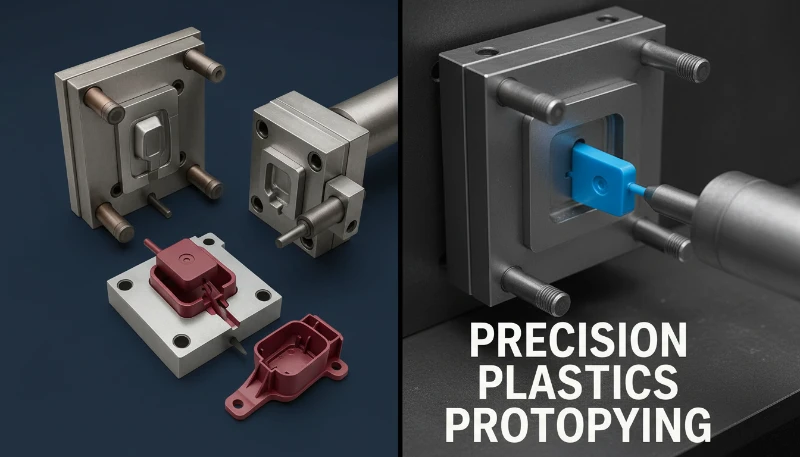
Injection pressure and speed must be carefully balanced to achieve complete filling without causing flash or dimensional distortion. High injection speeds help fill narrow tooth spaces before the material begins to cool, but excessive speed can cause jetting or create weld lines. Pack and hold pressures ensure dimensional consistency by compensating for material shrinkage during cooling.
Statistical process control becomes essential for gear production. Cpk values above 1.33 for pitch diameter represent the minimum. Per injection mold guide2 acceptable level, with world-class operations achieving >1.67. Key monitoring parameters include overall diameter, tooth thickness, concentricity, and surface finish. Advanced manufacturers implement real-time monitoring systems that adjust process parameters automatically based on dimensional feedback, ensuring consistent quality throughout production runs.
Cooling time significantly impacts both cycle efficiency and part quality. Insufficient cooling causes dimensional instability and potential warpage, while excessive cooling unnecessarily extends cycle times. Gear geometry complicates cooling analysis due to varying wall thicknesses between tooth and root areas. Mold temperature control systems with multiple zones enable optimization of cooling rates across the entire gear geometry. For additional insights into process optimization, explore our 사출 성형 resource center.
What Are the Most Common Challenges in Plastic Gear Molding and Their Solutions?
Plastic gear molding presents unique challenges that don’t occur in conventional plastic parts. These issues stem from the complex geometry, tight tolerances, and functional requirements that distinguish gears from decorative or structural components. Understanding these challenges and their solutions prevents costly production delays and quality issues.
Tooth profile distortion represents the most frequent quality issue. This distortion occurs due to differential shrinkage between thick and thin sections, uneven cooling rates, and residual stresses from the molding process. Solutions include optimized gate placement, controlled cooling rates, and material selection based on shrinkage characteristics. Post-molding annealing can relieve residual stresses in critical applications.
Weld lines on gear teeth create weak points that lead to premature failure under load. These lines form when separate flow fronts meet during mold filling, typically occurring in gears with complex geometries or multiple gates. Prevention strategies include single-point gating, increased melt temperature, and mold modifications that redirect flow patterns away from critical tooth surfaces.
Shrinkage variation across the gear creates pitch accuracy problems and backlash inconsistency. This variation occurs due to orientation effects in reinforced materials, cooling rate differences, and packing pressure variations. Solutions involve predictive shrinkage modeling, strategic reinforcement fiber orientation, and optimized packing profiles that account for gear geometry.
사출 성형 플라스틱 기어 완벽 가이드. POM 대 나일론 비교, 금형 설계 팁 학습, 정밀 기어 생산을 위한 공정 파라미터 최적화.
Where Are Injection Molded Plastic Gears Making the Greatest Impact?
Injection molded plastic gears have penetrated virtually every industry where cost-effective power transmission is required. Their adoption continues expanding as material performance improves and design engineers gain confidence in plastic gear capabilities. Understanding application trends helps identify opportunities for implementing plastic gear solutions.
Automotive applications represent the largest market segment for plastic gears. Window regulator mechanisms utilize plastic gears for their quiet operation and corrosion resistance. Power seat adjusters leverage plastic’s ability to integrate mounting features and reduce assembly complexity. Windshield wiper systems benefit from plastic gears’ ability to handle intermittent loads while minimizing noise transmission to the vehicle interior.
Office equipment applications demand high precision and quiet operation. Printer paper feed mechanisms use plastic gears for their precise motion control and ability to handle repetitive cycling. Copier document handling systems benefit from plastic gears’ resistance to toner dust and ability to maintain accuracy over millions of cycles. Scanner drive systems utilize plastic gears for their smooth, vibration-free operation essential for image quality.
Home appliance applications capitalize on plastic gears’ cost effectiveness and design flexibility. Washing machine agitator drives use reinforced plastic gears to handle substantial loads while resisting water and detergent exposure. Dishwasher spray arm mechanisms benefit from plastic’s corrosion resistance and ability to integrate complex water passages. Microwave turntable systems use plastic gears for their quiet operation and ability to handle continuous low-speed operation.
Medical device applications represent a growing market for precision plastic gears. Insulin pump mechanisms require plastic gears for their biocompatibility and precise dosing control. Hospital bed adjustment systems use plastic gears for their quiet operation in noise-sensitive environments. Ventilator blower systems benefit from plastic gears’ ability to maintain precision while reducing system weight and complexity.
자주 묻는 질문
사출 성형이 일관되게 달성할 수 있는 기어 정밀도 등급은 무엇인가요?
현대 사출 성형 기술로 플라스틱 기어의 AGMA 품질 등급 Q8-Q10을 달성할 수 있으며, 총 합성 오차(TCE)는 일반적으로 0.05-0.10mm 범위입니다. 이 정확도 수준은 대부분의 산업 응용 분야에 적합하지만, 일부 고정밀 응용 분야에서는 Q11-Q12 등급을 달성하기 위해 성형 후 가공이 필요할 수 있습니다.
플라스틱 기어는 고토크 응용 분야에서 효과적으로 사용될 수 있을까요?
유리 섬유 충전 PA66(30% 유리 섬유)는 2-5 Nm의 연속 토크 하중을 처리할 수 있으며, 단시간 동안 최대 10 Nm의 피크 하중까지 견딜 수 있습니다. POM은 일반적으로 1-3 Nm의 연속 하중을 처리합니다. 이러한 성능은 광범위한 응용 분야를 커버하지만, 극한의 고토크 응용 분야에는 여전히 금속 기어가 필요합니다.
주입 성형된 플라스틱 기어는 일반적으로 서비스에서 얼마나 오래 지속될까요?
서비스 수명은 적용 분야에 따라 크게 다르지만, POM 기어는 일반 작동 조건에서 보통 1천만~5천만 사이클을 달성합니다. PA66 기어는 부하 조건에 따라 5백만~2천5백만 사이클에 이를 수 있습니다. 적절한 윤활과 설계 최적화는 이러한 기준 수치를 훨씬 넘어 수명을 크게 연장할 수 있습니다.
플라스틱 기어도 금속 기어처럼 윤활이 필요한가요?
POM and PA66 are inherently self-lubricating materials that can operate without external lubrication in many applications. However, appropriate grease lubrication typically extends service life by 200-400% and reduces operating noise. The choice depends on application requirements and maintenance accessibility.
플라스틱 기어 금형에 필요한 최소 생산 수량은 얼마입니까?
At ZetarMold, we typically recommend minimum quantities of 1000-5000 pieces to justify production tooling costs, though this varies based on gear complexity and precision requirements. Prototype quantities can be produced using rapid tooling methods with aluminum molds for initial validation.
플라스틱 기어가 모든 응용 분야에서 금속 기어를 완전히 대체할 수 있을까요?
No, plastic gears have limitations in high-temperature environments above 150°C and high-load applications exceeding 10 Nm continuous torque. However, for sub-5 Nm applications, properly designed plastic gears offer 50-70% cost savings while providing equivalent performance and often superior noise characteristics compared to metal alternatives.

What Is the Bottom Line on Plastic Gear Injection Molding?
Plastic gear injection molding has evolved from a cost-cutting measure to a sophisticated manufacturing process capable of producing precision components that often outperform traditional metal alternatives. The key to success lies in understanding the intricate relationships between material properties, mold design, and process parameters that determine final gear quality and performance.
| 재료 | 최상의 대상 | Key Advantage |
|---|---|---|
| POM | Precision gears, low-friction | 0.2% moisture absorption |
| PA66+GF | High-load applications | 70-85 MPa tensile strength |
| PEEK | High-temperature environments | 250°C continuous service |
Material selection remains fundamental, with POM and PA66 dominating applications due to their optimal balance of strength, wear resistance, and dimensional stability. Advanced materials like PEEK and PPS expand capabilities into harsh environments previously impossible for plastics. The economics are compelling—plastic gears typically cost 50-70% less than metal equivalents while offering design flexibility impossible with traditional manufacturing methods.
Manufacturing success demands precision at every stage. Wire EDM tooth profiles, center gating. Our production line applies these principles—verified through 사출 성형 서비스3, and controlled shrinkage compensation create the foundation for consistent quality. Process control with Cpk >1.33 ensures dimensional reliability, while proper cooling and packing prevent warpage and distortion. Modern plastic gears routinely achieve AGMA Q8-Q10 quality grades suitable for demanding industrial applications.
The market trajectory strongly favors plastic gear adoption. Automotive lightweighting initiatives, cost reduction pressures, and advances in material science continue expanding application opportunities. Medical devices, consumer products, and industrial equipment increasingly rely on plastic gears for quiet operation, corrosion resistance, and integrated functionality.
For manufacturers considering plastic gear implementation, the critical success factors are clear: select appropriate materials for the application environment, invest in precision tooling with proper gating and cooling, implement statistical process control for consistent quality, and partner with experienced molders who understand gear-specific requirements. The technology has matured beyond the experimental stage—plastic gears now represent mainstream engineering solutions for power transmission applications requiring cost-effective, reliable performance.
-
ASTM D638: Standard test method for tensile properties of plastics used to determine mechanical strength of gear materials ↩
-
AGMA Standards: American Gear Manufacturers Association quality classification system for gears, with Q8-Q10 representing typical injection molded plastic gear accuracy levels ↩
-
Wire EDM: Wire Electrical Discharge Machining process that enables precise cutting of complex gear tooth profiles directly in hardened tool steel molds ↩
Need a Quote for Your Injection Molding Project?
Get competitive pricing, DFM feedback, and production timeline from ZetarMold’s engineering team.




 EN
EN  ES
ES  FR
FR  DE
DE  PT
PT  AR
AR  RU
RU  JA
JA  KO
KO  IT
IT  NL
NL  TR
TR  PL
PL 