Your purchasing team just shortlisted three injection molding suppliers in China. One quoted $8,000 for tooling, another $22,000, and the third hasn’t even asked to see your CAD files yet. How do you tell which one will actually deliver — and which one will cost you six months of delays?
After two decades of running molds in Shanghai, I’ve seen buyers make the same mistakes: chasing the lowest quote, skipping factory audits, and confusing a trading company’s slick website for actual production capability. Here’s the framework I’d use if I were in your shoes.
- Evaluate suppliers on equipment, quality systems, certifications, communication, and mold-making capacity
- In-house mold making cuts tooling lead time by 20–40%
- ISO 9001 is the baseline; ISO 13485 or IATF 16949 for medical and automotive
- Quotes more than 30–50% below market average usually mean hidden compromises
- English-speaking project managers reduce revision cycles by roughly one-third
What Should You Evaluate When Choosing a China Injection Molding Supplier?
A reliable China 射出成形 supplier is one that passes six critical checks. Machine capability, quality control, certifications, communication, in-house tooling, and pricing transparency — miss any one and you’ll pay for it later.
““A supplier quoting injection mold tooling without reviewing your 3D files is a red flag.””真
Accurate tooling quotes require at least STL or STEP files to assess part complexity, undercut features, and cavity layout. A price without technical review is either generic or deliberately low to win the order.
““The lowest tooling quote from any China supplier is always the best deal.””偽
Quotes 30–50% below market average typically involve compromises in mold steel grade, fewer testing cycles, or skipped mold flow analysis. The cheapest quote often produces the most expensive long-term outcome.
Most buyers focus almost entirely on unit price. That’s understandable — your boss wants to see cost savings. But price is the last thing you should compare. Why? Because a low quote from a supplier without proper QC or the right equipment means you’ll spend months on rework, shipping delays, and quality disputes that erase every penny you saved. For a structured framework, see our injection molding sourcing guide.
Here’s the evaluation order I recommend:
Equipment match — Do they have machines in the right tonnage range for your part?
Quality process — Can they show you a documented IQC-to-OQC workflow?
Certifications - ISO 90011 minimum, plus industry-specific certs if applicable
Communication — Can you talk directly to engineers, or only to sales?
Mold-making — Do they build molds in-house or outsource?
価格設定 — Is the quote itemized, or just a lump sum?
If a supplier checks out on points 1–5, then price comparison is meaningful. If they don’t, the cheapest quote is usually the most expensive decision you’ll make.
How Do You Verify a Factory’s Real Production Capabilities?
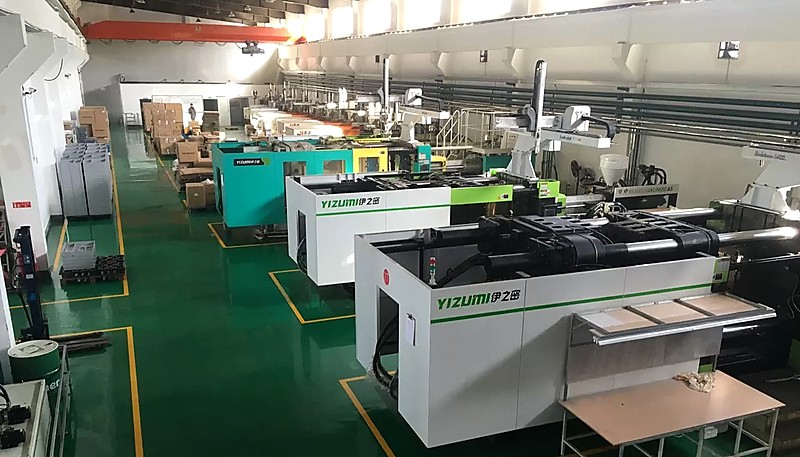
A factory’s real production capability is verified by its machine list with tonnage, brand, and year. Any supplier who can’t produce this list in 24 hours is either disorganized or hiding something — a facility running 45+ machines from 90T to 1850T covers 95% of commercial plastic parts.
““ISO 9001 certification is the minimum quality standard any production supplier should hold.””真
ISO 9001 establishes basic quality management requirements including documented processes, corrective action procedures, and management review. Suppliers without it lack even the foundational quality infrastructure.
““Trading companies and direct factories produce identical quality because they use the same machines.””偽
Trading companies add a communication and margin layer between buyer and factory. They cannot control production schedules, provide real-time DFM feedback, or guarantee the specific machines and operators used on your project.
The tonnage range tells you more than the total machine count. A factory with 100 small machines but nothing above 200T can’t mold your laptop housing. Conversely, a factory with only large machines will struggle with precision micro-parts. What you want is breadth: enough range to handle your current project and whatever comes next.
Don’t stop at the machine list. Ask these follow-up questions:
Clamping force distribution — How many machines in each tonnage band? If your part needs 500T and they only have one machine at that range, you’re at capacity risk.
Auxiliary equipment — Do they have dryers, conveyors, robotic arms, and hot runner temperature controllers?
Material handling — Can they dry and store hygroscopic materials (nylon, PC, TPU) properly?
Production scheduling — How many shifts? What’s their current utilization rate?
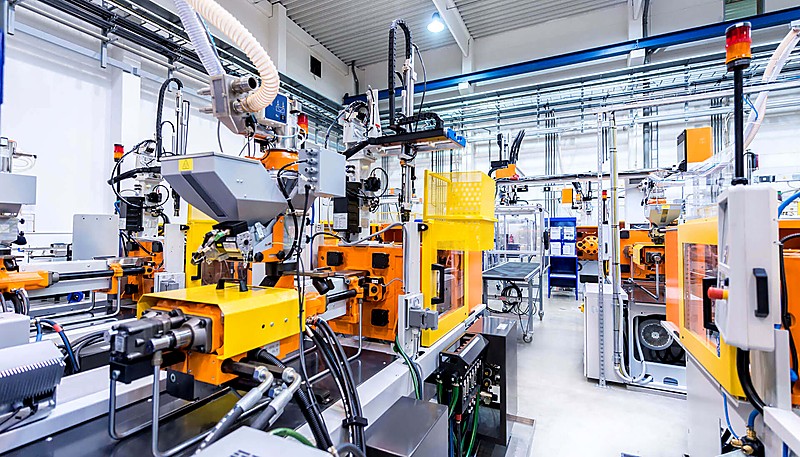
A factory that’s running three shifts at 85% utilization is healthier than one running one shift at 40%. High utilization means consistent work, experienced operators, and stable quality. Low utilization might mean they’re desperate for orders — which sometimes leads to aggressive pricing but unreliable delivery.
Why Does In-House Mold Making Matter for Your Project?
In-house 射出成形金型 making cuts 20–40% off tooling lead time because engineers and production are under one roof.
I’ve watched clients lose six weeks on a single mold revision because their molder and mold maker were in different provinces — the molder in Dongguan, the tool shop two hundred kilometers away. Every dimension issue meant packing up the mold, shipping it, waiting for repairs, shipping it back, and re-running samples. With in-house tooling, that cycle shrinks from weeks to days. At our Shanghai facility, our mold engineers are literally on the same floor as the production machines, which is why we consistently deliver 100+ mold sets per month.
The difference shows up most clearly during these critical moments:
T1 through T3 sampling — In-house teams iterate faster because feedback doesn’t cross company boundaries
Design changes mid-project — Engineering change orders take days instead of weeks
金型メンテナンス — Preventive maintenance happens on schedule, not when the external vendor has capacity
Troubleshooting defects — The person who built the mold is available to diagnose the root cause immediately
Ask your potential supplier point-blank: “Do you cut steel in-house?” If the answer is anything other than a clear yes, follow up with “Who builds your molds, and how far are they from your production floor?” A supplier who dodges this question is almost certainly outsourcing — and the distance between mold shop and molding floor is directly proportional to your lead time risk.
What Quality Systems Should Your Supplier Have?
A qualified injection molding supplier is defined by a minimum 6-step quality control process. IQC, in-process sampling, process inspection, packaging inspection, FQC, and OQC — anything less means defects are caught at your receiving dock instead of theirs.
Quality control isn’t just about catching bad parts — it’s about preventing them. The best suppliers invest in prevention at every stage:
| QC Stage | What It Catches | Typical Tool |
|---|---|---|
| IQC (Incoming) | Wrong material, moisture content, contamination | Moisture analyzer, material certification review |
| In-Process Sampling | Dimensional drift, visual defects, short shots | CMM, calipers, visual inspection |
| Process Inspection | Parameter deviation, cycle time changes | Machine monitoring, process logs |
| Packaging Inspection | Scratches, contamination, incorrect labeling | Visual check, packaging spec comparison |
| FQC (Final) | Overall dimensional compliance, cosmetic grade | CMM, go/no-go gauges |
| OQC (Outgoing) | Shipping damage, documentation completeness | Final count, packing list verification |
One practical test: ask your supplier for a sample inspection report from a recent project. If it’s a one-page checklist with checkmarks, that’s a red flag. A serious QC report includes dimensional data with tolerances, Cpk values, material batch numbers, and photographs of any borderline conditions.
In our Shanghai factory, we run 47 injection molding machines ranging from 90T to 1850T, supported by an in-house mold manufacturing facility that delivers 100+ mold sets per month. This integrated setup means you get tooling and production under one roof — no middleman, no communication gaps between mold maker and molder.
In our own shop, our 8 senior engineers — each with 10+ years of injection molding experience — review every first-article inspection report before production approval. That engineering review layer is something I always tell buyers to ask about: who signs off on quality, and what’s their experience level? A QC team reporting to a 23-year-old junior manager is fundamentally different from one overseen by engineers who’ve debugged thousands of molds over two decades.
What Certifications Are Non-Negotiable?
ISO 9001 is the absolute minimum for any production supplier. ISO 134852 is mandatory for medical devices, and IATF 16949 for automotive. A supplier without ISO 9001 isn’t a manufacturing partner — they’re a gamble.
Here’s how to think about certifications based on your industry:
消費者製品 — ISO 9001 is sufficient for most applications. If you’re selling into the EU, ask about RoHS and REACH compliance too.
医療機器 — ISO 13485 is non-negotiable. Don’t accept “we’re working on it” or “our parent company is certified.” The facility molding your parts needs its own certificate.
自動車 — IATF 16949 (the automotive version of ISO 9001) is standard. Most OEMs require PPAP documentation and full material data reporting via the IMDS3 platform from certified suppliers.
Food contact — Look for FDA-compliant material handling and, ideally, cleanroom capability.
Ask to see the actual certificates, not just logos on a website. Verify the scope — some suppliers hold ISO 9001 for their trading business, not for their manufacturing facility. The certificate’s registered address should match the factory you’re visiting or auditing.
Also check the certificate’s validity and the last audit date. A cert issued five years ago with no surveillance audits is essentially expired. Legitimate certification bodies conduct annual surveillance audits, and the supplier should be able to provide records.
How Important Is English Communication?
English communication is the difference between 2 revision cycles and 5. Sourcing feedback, tolerance discussions, and design intent don’t survive translation layers well — if your contact can only discuss price but can’t explain why a wall thickness affects cycle time, you have a costly communication gap.
The real cost of poor communication isn’t measured in translation errors — it’s measured in assumptions. When an engineer in China can’t clearly explain “this rib thickness will cause sink marks on the cosmetic surface,” they might just make a judgment call and proceed. That’s how you end up with 10,000 parts that meet the drawing but fail your cosmetic inspection.
Here’s what effective English communication looks like in practice:
DFM feedback — Your supplier proactively flags manufacturability issues with specific recommendations, not just “we can make it”
Technical discussions — Engineers can discuss gate location, weld line position, and cooling channel design in English
Problem resolution — When something goes wrong (and it will), you get a root-cause analysis in clear English, not a vague apology
Project updates — Regular progress reports with photos, not just “everything is on track” emails
Test this early: send a technical question — something like “What’s the maximum flow length ratio you’d recommend for a 2mm PC wall?” The quality of the answer tells you more than any capability brochure.
I learned this the hard way early in my career. A European client sent us a drawing with an ambiguous tolerance on a critical bore diameter. Our English-speaking engineer caught it during DFM review, sent back a marked-up screenshot with three options and a recommendation, and the client later told us that single email prevented a $40,000 rework. That kind of technical communication in English is what separates a supplier from a partner. Today we have 30+ fluent English speakers on staff — not just salespeople, but engineers and project managers who can discuss gate design, shrinkage compensation, and mold flow results in detail.
How Do You Assess Lead Time and Pricing Realistically?
Mold tooling in China is typically 25–45 days. Quotes 30–50% below market average are almost always compromised in steel grade, testing cycles, or surface finish — if three suppliers quote $20,000±$3,000 and one quotes $8,000, that $8,000 is a different product, not a bargain.
Understanding what drives tooling cost helps you evaluate quotes:
| Cost Driver | Low-End Approach | Professional Approach |
|---|---|---|
| Mold steel | P20 (standard) | Matched to cycle target: P20/H13/718H |
| 金型流動解析 | Skipped or basic | Full mold flow analysis 3 before steel cutting |
| Surface finish | SPI B-2 or lower | Matched to part requirements (A-1 through D-3) |
| Testing cycles | 1–2 sampling rounds | 3–5 rounds with dimensional reports |
| Mold life guarantee | None stated | Written guarantee (typically 100K–1M+ shots) |
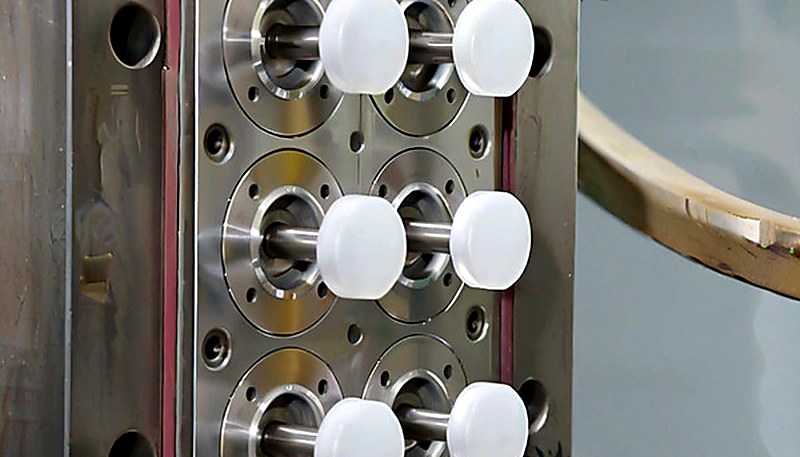
For production pricing, ask for a detailed cost breakdown: material cost per part, machine hour rate, labor, overhead, and packaging. In our factory, we provide itemized quotes for every production order because transparency builds long-term partnerships — not just one-off transactions. A supplier who won’t itemize is hiding margin somewhere — usually in material substitution. If they quote ABS but run recycled regrind, your part performs differently than specified, and you won’t find out until field failures start coming in.
Lead time works the same way. A supplier promising 15-day tooling when the industry standard is 30 days is either cutting corners or lying. Push for specifics: how many T1 samples? How many revision rounds are included? What’s the escalation process if dimensions are out of spec?
What Red Flags Should Make You Walk Away?
The biggest red flag is a supplier who quotes tooling without reviewing your 3D files. Walk away immediately if they refuse a factory audit or cannot provide material traceability — these three issues account for roughly 80% of failed China sourcing projects.
After seeing hundreds of buyer-supplier relationships, here are the red flags I consider non-negotiable dealbreakers:
Quoting without reviewing your files — Any legitimate supplier needs at least STL or STEP files to quote accurately. A price given without technical review is either generic (meaningless) or deliberately low (bait).
Refusing factory audits — Whether it’s an in-person visit or a video call walkthrough, if a supplier won’t show you their facility, they probably don’t have one worth showing.
No material certificates — If they can’t provide lot-specific material certificates from SABIC, DuPont, Covestro, or equivalent suppliers, you can’t verify what’s actually in your parts.
Unwilling to provide references — Every established supplier has customers willing to vouch for them. “Confidentiality” is sometimes legitimate, but a complete refusal is not.
Payment terms that shift all risk to you — 100% upfront payment before any work begins means they have zero skin in the game. Standard terms are 30–50% deposit with balance on T1 approval or shipment.
One more thing to check: how long has the supplier been in business under the same ownership? A factory that changed hands recently may have the old owner’s equipment list on their website but lesser capability today. Ask for the business license and verify the establishment date.
Quick rule: if a supplier passes your equipment check, quality audit, certification verification, and communication test, then you compare prices among qualified candidates. The lowest qualified price wins — not the lowest price overall.
One more practical tip: ask about production staffing depth. Our 120+ production workers run three shifts across 45 machines, which means we can maintain delivery schedules even when several projects peak simultaneously. A factory with 10 machines and 15 workers will prioritize whoever shouts loudest when capacity gets tight — and that’s usually not the new customer.
What Do Buyers Commonly Ask About China Injection Molding Suppliers?
Here are the questions we hear most often from buyers evaluating China injection molding suppliers.
よくある質問
How Much Does Injection Mold Tooling Cost in China?
Injection mold tooling in China typically costs $3,000 to $50,000+, depending on part complexity, cavity count, and steel grade. A single-cavity aluminum prototype mold starts around $3,000; a multi-cavity production mold in hardened steel runs $15,000–$50,000+. The final price depends on the number of cavities, surface finish requirements (SPI A-1 mirror finish costs significantly more than SPI B-2), side-action mechanisms, and expected mold lifespan. Always request an itemized tooling quote that breaks down steel cost, machining hours, EDM work, and surface treatment separately.
中国における射出成形の標準的なリードタイムはどのくらいですか?
標準的な金型製作は25~45日かかります。生産ロットは注文量に応じて15~30日を追加します。急ぎの金型製作(15~20日)を提供するサプライヤーもいますが、通常、テストサイクルが短縮され、欠陥リスクが大幅に増加します。サイドコア、リフター、またはアンスクリュー機構を備えた複雑な金型の場合、金型製作に35~60日を見込んでください。T1サンプリングは通常、金型完成後3~5日かかり、ほとんどのプロジェクトでは最終生産承認前に2~3回のサンプリングラウンドが必要です。初めての金型製作プロジェクトでは、常にタイムラインに2週間の余裕を持たせてください。
注文前に工場を訪問すべきですか?
はい、初回注文の場合は、工場見学(ビデオウォークスルーでも可)を強くお勧めします。これにより、機械台数の確認、清潔さ、整理整頓、および施設がサプライヤーのマーケティング資料と一致しているかどうかを確認できます。訪問時には、機械の銘板でブランドと製造年を確認し、工具室の設備を見て、サンプル検査報告書を確認し、品質管理エンジニアと直接話をしてください。直接訪問できない場合は、サプライヤーがカメラで生産現場を案内するライブビデオ通話を予約してください(事前に録画されたマーケティングビデオではありません)。
サプライヤーが商社かどうかをどのように知ることができますか?
商社は通常、詳細な技術的な質問に答えられず、生産現場を見せず、異常に速く見積もりを出します。工場現場からの直接のビデオ通話を要求してください。拒否された場合、それは中間業者の可能性が高いです。その他の指標としては、会社の住所が工業地域ではなく商業オフィスビルであること、全く異なるカテゴリーの製品を販売していること、具体的なトン数とブランドの機械リストを提供できないことなどが挙げられます。直接工場は一貫した設備、自社のエンジニアを有し、通常は1~2つの製造プロセスに特化しています。
中国の射出成形における標準的な支払条件は何ですか?
標準的な支払条件は、30~50%のデポジットで、残金はT1サンプル承認時または出荷前に支払います。100%前払いを要求するサプライヤーは避けてください。それは、品質の良い部品を時間通りに納品するインセンティブを失わせます。20,000米ドルを超える大きな注文の場合、マイルストーンに基づく支払い(例:30%デポジット、T1承認時40%、出荷前30%)がますます一般的であり、双方を保護します。国際的には電信送金(T/T)が最も広く受け入れられている支払方法です。一部の確立されたサプライヤーは、50,000米ドルを超える注文でL/C(信用状)を受け入れており、これは買い手に追加の保護を提供します。
中国のサプライヤーはFDA準拠の医療機器成形に対応できますか?
はい、サプライヤーがISO 13485認証を取得し、クリーンルーム施設を運営し、ロットごとの証明書による完全な材料トレーサビリティを提供できる場合に対応可能です。すべての中国の成形業者がこれらの要件を満たしているわけではないため、生産を開始する前に認証を確認してください。ISO 13485証明書の適用範囲(自社部品に使用される特定の製造プロセスをカバーしている必要があります)の確認を要求してください。サプライヤーはまた、検証済みの洗浄および包装手順、バッチ記録文書、およびSABIC、DuPont、Covestroなどのサプライヤーからの原材料証明書までさかのぼってすべての生産ロットを追跡する能力を有している必要があります。
射出成形の最低発注数量はいくつですか?
中国における最小発注数量は通常、部品サイズと材料に応じて500個から10,000個の範囲です。少量射出成形に特化した一部のサプライヤーは、100個という少ないロットも受け入れます。MOQは、最小材料購入数量、機械セットアップ時間、および生産ロットの経済性によって決まります。試作またはブリッジ生産の場合は、専用の少量生産セルを持つサプライヤーを検討してください。それらはより小さな機械で、より速い切り替え時間で稼働します。多キャビティ金型は、高ボリュームでは部品単価を自然に下げますが、金型投資を比例的に増加させます。
中国で製造する際、知的財産をどのように保護すればよいですか?
設計を共有する前に中国特許または実用新案を出願し、中国語版のNDAを使用し、確立された輸出実績を持つサプライヤーと協力します。2005年から輸出を行いISO認証を取得しているサプライヤーは、統計的に、新規で無認証のベンダーよりも知的財産リスクが低くなります。実践的なステップとしては、見積もり段階で完全なCADファイルを共有しない(内部形状のないSTEPまたはIGESファイルを提供する)、中国で商標登録を行う(先願主義)、製造契約に無断使用に対する損害賠償を規定する知的財産保護条項を含める、などがあります。
すべての条件を満たす中国の射出成形サプライヤーを評価する準備はできていますか?ZetarMoldにご連絡ください。3Dファイルを確認し、48時間以内に詳細なDFM分析を提供し、45台の機械を備えたISO認証取得の上海工場をご案内します。



 EN
EN  ES
ES  FR
FR  DE
DE  PT
PT  AR
AR  RU
RU  JA
JA  KO
KO  IT
IT  NL
NL  TR
TR  PL
PL