 コンテンツへスキップ

ティーピーイー 射出成形 標準的な熱可塑性プラスチック加工設備を使用して柔軟でゴムのような部品を製造する。加硫も加硫炉も不要で、従来のゴム成形よりも大幅に短いサイクル時間を実現する。シール、グリップ、ガスケット、またはソフトタッチ部品にTPEを評価している場合、 オーバーモールディング1その加工特性、設計上の制約、およびTPUや熱硬化性ゴムとのコストトレードオフを理解することは、適切な材料選択を行うために不可欠です。
- TPE processes on standard injection molding machines without vulcanization, cutting cycle time 50-70% vs thermoset rubber
- Shore hardness range spans 20A to 80D, covering soft gaskets through rigid wear components in a single material family
- TPE overmolding onto rigid substrates (PP, ABS, PC) enables soft-touch grips without adhesives or mechanical interlocks
- Key parameters: melt temp 180-240°C, mold temp 20-60°C, injection speed moderate to fast for consistent fill
- TPE costs 20-40% more per kilogram than commodity PP but eliminates secondary operations, often reducing total part cost
What Is TPE Injection Molding?
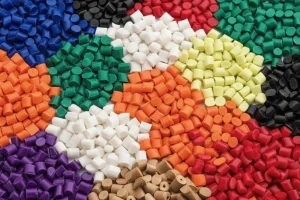
TPE射出成形2 は、熱可塑性エラストマーペレットを溶融し、金型に射出して柔軟でゴムのような部品を製造するプロセスである。数分から数時間の化学的加硫を必要とする熱硬化性ゴムとは異なり、TPEは標準的な熱可塑性プラスチック設備上で冷却により数秒で固化する。
For a broader look at 射出成形金型設計, our pillar guide covers tooling structure, thermal control, and manufacturability tradeoffs.
Thermoplastic elastomers are a broad family of block copolymers that combine the elastic recovery of vulcanized rubber with the melt-processability of conventional plastics. The molecular structure consists of hard crystalline segments that provide structural integrity and soft amorphous segments that deliver elasticity. When heated above the hard segment melting point, the entire polymer flows like a thermoplastic. When cooled, the hard segments re-crystallize, locking the elastic network in place without any chemical crosslinking reaction.
実用的な利点は非常に大きい:標準的な機械で成形に15〜30秒かかるTPE部品は、熱硬化性ゴムで製造した場合、2〜5分のプレス加硫時間が必要となる。このサイクル時間の短縮は、部品単価の低下、機械稼働率の向上、大量生産のための多キャビティ金型の使用可能性に直接つながる。当社の射出成形プロセス施設では、自動車および民生用途向けにTPEグレードを日々稼働させている。
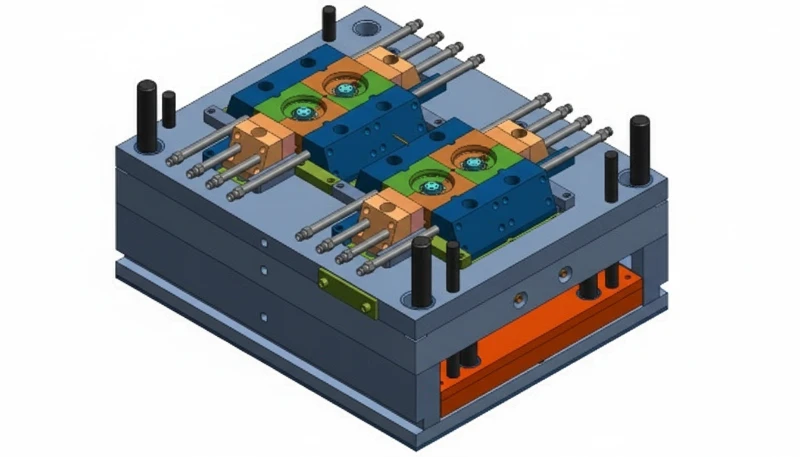
What Are the Key TPE Material Properties for Injection Molding?
TPE properties vary significantly across the material sub-families, but several characteristics are universal to the class. Understanding these helps you select the right grade and predict molding behavior before committing to tooling.
| プロパティ | SBS/SEBS (Styrenic) | TPO (Olefinic) | TPV (Vulcanizate) | TPC (Copolyester) |
|---|---|---|---|---|
| Hardness Range | 20A-80A | 60A-70D | 40A-80A | 40A-70D |
| Temp Resistance | -40 to 80°C | -40 to 120°C | -40 to 135°C | -40 to 150°C |
| 圧縮セット | Poor-Fair | フェア | グッド | Good-Excellent |
| 耐薬品性 | 貧しい | グッド | グッド | 素晴らしい |
| Cost (relative) | 低い | Low-Medium | ミディアム | 高い |
| Typical Use | Grips, toys | Automotive seals | Underhood parts | Hose, cable |
Shore hardness is the primary selection criterion. TPE grades span from ultra-soft 20 Shore A (comparable to a gel) through 80 Shore D (similar to rigid polyethylene). The wide range means a single material family can cover applications from cushioned insoles to stiff structural bushings, simplifying your supply chain compared to maintaining separate rubber and plastic material inventories.
Compression set resistance is where TPE historically falls short of thermoset rubber. Standard styrenic TPEs (SBS, SEBS) exhibit compression set values of 30 to 50 percent after 22 hours at 70°C, while a properly vulcanized EPDM rubber achieves under 20 percent. For static seal applications where long-term compression recovery matters, TPV and TPC grades close this gap significantly, with compression set values of 15 to 25 percent.
400種類以上のプラスチック材料の成形経験から、TPEグレードは加工変動に対して最も敏感な材料の一つである。溶融温度が10°C変化すると、測定されるショア硬度が3〜5ポイント変動する可能性がある。当社は常に、フル生産前に新しいTPEロットに対して初品検査を実施することを推奨している。
What Are the Critical TPE Injection Molding Parameters?
TPE射出成形には、180〜240°Cの溶融温度、20〜60°Cの金型温度、および中速から高速の射出速度が必要である。これらの 成形パラメータ3 剛性熱可塑性プラスチックと主に異なる点は、せん断速度と温度に対する感度である。これらを誤ると、バリ、ショートショット、または部品全体での硬度の不均一として現れ、量産用金型では修正に高コストがかかる問題となる。
「TPEはナイロンよりも吸湿性が低いとはいえ、成形前にTPEペレットを乾燥させることは必須です。残留表面水分は、外観品質が主要な合格基準となる柔軟部品において、スプルーマークや寸法不安定性を引き起こします」真
Most TPE grades require 2-4 hours of drying at 60-80°C. While not as hygroscopic as PA or PBT, surface moisture on pellets creates cosmetic defects that are particularly visible on soft, translucent TPE parts used in consumer products.
「TPE射出成形では、特定のTPEグレードやサブファミリーに関わらず、同じ加工パラメータが必要です」偽
SBS grades melt at 160-200°C, while TPC grades require 220-260°C. Injection speed, mold temperature, and holding pressure all vary significantly across the TPE family. Using one parameter set for all grades guarantees processing defects.
Melt temperature ranges from 180 to 240°C for most commercial TPE grades, with styrenic TPEs at the lower end and copolyester TPEs at the upper end. Mold temperature between 20 and 60°C is typical, with higher mold temperatures improving surface finish but extending cycle time. Injection speed should be moderate to fast — TPE viscosity drops sharply with increasing shear rate, so faster fill actually produces more consistent parts in many geometries.
Holding pressure and time are critical for dimensional consistency. TPE compresses significantly under pressure, and insufficient holding time allows the material to relax and shrink unevenly as the part cools. A practical starting point is 40 to 60 percent of injection pressure for 1 to 3 seconds, adjusted based on gate freeze time measured during sampling. Packing pressure that is too high causes flash on the parting line because TPE flows easily into small gaps.
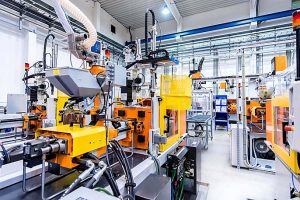
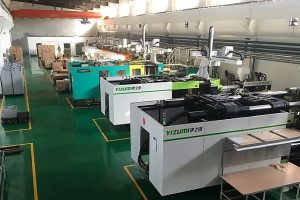
当社の上海工場では、90トンから1850トンまでの47台の射出成形機を稼働させている。20年以上にわたるTPE加工の経験から、初回試作で溶融温度と射出速度を適切に設定することが、数週間に及ぶ試行錯誤を回避することを学んだ。当社のDFMレビューは、鋼材が切削される前にパラメータの問題を発見する。
Cooling time drives cycle time and part quality. TPE conducts heat slowly compared to rigid plastics, so thick sections take longer to solidify than you might expect from experience with PP or ABS. For wall thicknesses above 3mm, cooling time typically exceeds 15 seconds. Ejecting too early causes permanent deformation because the part has not developed enough stiffness to resist ejection forces without distortion.
What Design Rules Apply to TPE Molded Parts?
TPE成形部品は、均一な肉厚(1.0〜4.0mm)、1〜2°の抜き勾配、およびすべての角における十分なR面が求められる。TPE設計は一般的な熱可塑性プラスチックの原則に従うが、材料の柔軟性と低い弾性率により、リビングヒンジ、スナップフィットタブ、および弾性シールなどの特徴については、剛性プラスチックでは不可能な重要な調整が必要となる。
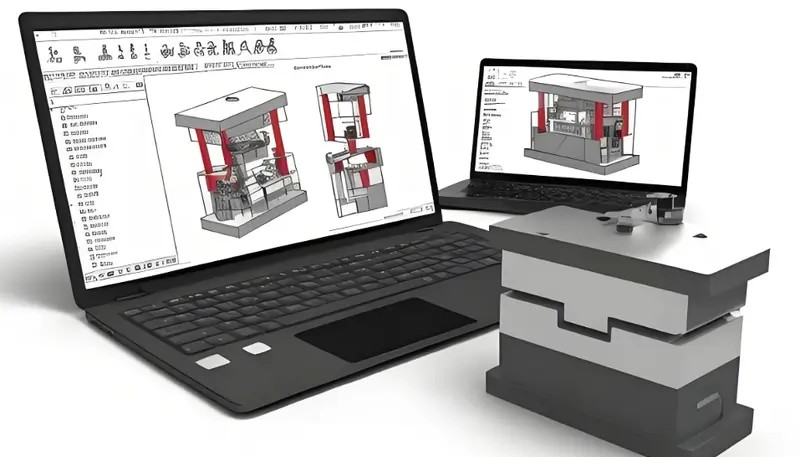
肉厚・抜き勾配のルール
Wall thickness should be uniform and between 1.0 and 4.0mm wherever possible. TPE parts thicker than 4mm develop significant sink marks and require extended cooling times that erode the cycle time advantage over rubber. For structural applications requiring stiffness, consider rib reinforcement on a thinner base wall rather than increasing overall thickness. Rib height should not exceed 3 times the base wall thickness, and rib base width should be 50 to 70 percent of wall thickness to minimize sink on the cosmetic surface.
Draft angles of 1 to 2 degrees are sufficient for most TPE parts because the material flexes during ejection and releases from undercuts that would trap rigid plastics. For deep cores or textured surfaces, increase to 3 degrees minimum. The ejector system should use large-area blades or stripper plates rather than small-diameter pins that can punch through soft TPE material during ejection.
Overmolding Design Principles
Overmolding is where TPE delivers the most value. Bonding TPE onto a rigid substrate (PP, ABS, PC, PA) creates soft-touch surfaces, grip zones, and environmental seals in a single molding operation. The key design rule is to provide mechanical interlocks — undercuts, holes, or T-slots in the substrate — that physically trap the TPE regardless of chemical adhesion. Chemical bonding between TPE and substrate depends on material compatibility and surface temperature, and it degrades with environmental aging.
TPE vs TPU vs Rubber — When Does Each Make Sense?
高速サイクルと容易なリサイクルにはTPEを選択し、耐摩耗性が重要な場合はTPUを、極端な圧縮永久ひずみ要件には熱硬化性ゴムを選択します。この決定は、機械的性能要件、生産量、二次加工を含む総コストという3つの実用的な要素に依存します。以下の表に主要特性を並べて比較します。
| Criterion | ティーピーイー | TPU | Thermoset Rubber |
|---|---|---|---|
| Hardness Range | 20A-80D | 60A-80D | 20A-90A |
| 耐摩耗性 | フェア | 素晴らしい | グッド |
| 圧縮セット | Fair-Good | グッド | 素晴らしい |
| 加工 | Standard IM | Standard IM | Compression/Transfer |
| サイクルタイム | 15-30s | 20-40s | 2-5 min |
| 金型費用 | Low-Medium | ミディアム | 高い |
| Recyclable | Yes | Yes | いいえ |
| 最適 | Grips, seals | Wear parts, belting | Static seals, tires |
Choose TPE when you need moderate elasticity, fast cycle times, and the ability to overmold onto rigid substrates. TPE is the default choice for soft-touch consumer products, automotive interior components, and general-purpose sealing applications where compression set requirements are not extreme.
Choose TPU when abrasion resistance is critical — conveyor belts, caster wheels, phone cases, and industrial wear components. TPU costs 30 to 60 percent more per kilogram than standard SEBS-based TPE but delivers significantly better wear life and tensile strength. TPU also bonds well to fabrics and metals with surface treatment, expanding overmolding options beyond what standard TPE can achieve.
Choose thermoset rubber (EPDM, NBR, FKM) when the application demands long-term compression set below 15 percent, continuous service temperatures above 150°C, or exposure to aggressive chemicals and fuels that attack TPE and TPU. The higher tooling cost and slower processing are justified for static oil seals, high-temperature gaskets, and chemical-resistant diaphragms where thermoplastic alternatives simply cannot meet the performance specification.
What Industries Use TPE Injection Molded Parts?
TPE射出成形部品は、自動車、民生電子機器、医療機器、産業、建設、食品接触産業など幅広い分野で使用されている。この材料ファミリーは非常に広い硬度と性能範囲をカバーしているため、最大規模のアプリケーションは自動車、消費財、および医療分野に集中している。
「自動車内装のTPE用途は、OEMメーカーが欧州ELVリサイクル指令を満たすためにPVCと熱硬化性ゴムをリサイクル可能なTPEグレードに置き換えたことで、2020年以降年間12%成長しています」真
EU End-of-Life Vehicle regulations require 85 percent recyclability by weight. TPE overmolded components can be ground and reprocessed alongside the base substrate material, while PVC and vulcanized rubber require separation and disposal as non-recyclable waste.
「TPEは生体適合性要件を満たさないため、医療機器部品には使用できません」偽
Several SEBS and TPC grades hold USP Class VI and ISO 10993 biocompatibility certifications, qualifying them for medical tubing, seals, and device housings that contact skin or bodily fluids. Medical-grade TPE replaces PVC and latex in many applications to eliminate plasticizer and protein allergy concerns.
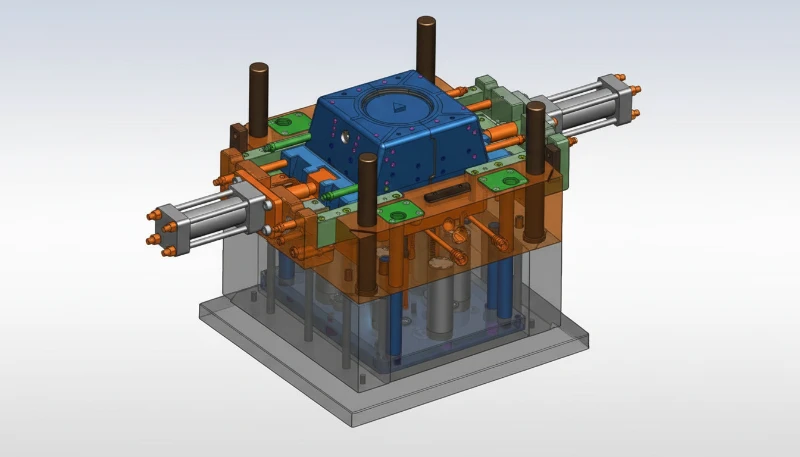
Key TPE Application Sectors:
自動車: Interior trim, seals, gaskets, NVH components
Consumer electronics: Wearable bands, earbud tips, phone cases
医療機器: Tubing, seals, inhaler mouthpieces, syringe caps
Industrial: Gaskets, bumper feet, anti-vibration mounts, cable glands
Construction: Window gaskets, door seals, expansion joints
民生電子機器・医療機器
Consumer electronics represents the fastest-growing segment, driven by wearable devices and wireless earbuds that require soft, skin-safe materials in thin-wall geometries. TPE grades with Shore A hardness between 30 and 50 dominate this segment because they combine comfort, grip, and the ability to mold complex geometries with living hinges for charging case covers and cable management features.
Industrial sealing and vibration damping applications use harder TPE grades in the 60 to 80 Shore A range for gaskets, bumper feet, and anti-vibration mounts. These parts often overmold onto metal inserts for threaded assembly, combining the sealing function with a rigid mounting point in a single molded component that eliminates a separate gasket installation step.
建設・食品接触用途
Construction and building applications consume growing volumes of TPE for window gaskets, door seals, and expansion joint profiles. TPE replaces traditional EPDM rubber in these applications because it can be extruded or molded with tighter dimensional tolerances and colored to match architectural elements without painting. The material also bonds to PVC and aluminum profiles during co-extrusion, creating integrated sealing systems.
Food contact applications require FDA-compliant TPE grades that pass extraction testing under 21 CFR 177.2600 for repeated use food contact surfaces. Several SEBS and TPO grades hold these certifications, enabling TPE use in food processing equipment seals, container closures, and dispensing valves. The absence of plasticizers — a concern with PVC in food contact — makes TPE an increasingly popular replacement material in food packaging and processing equipment.
スポーツ・レジャー・新規用途
スポーツ・レジャー産業では、自転車ハンドル、工具グリップ、フィットネス機器のハンドル、保護パッドなどのグリップ面にTPEを広く使用しています。これらの用途は、TPEが快適なソフトタッチ表面を提供し、適度な耐摩耗性と良好な湿潤グリップを実現する能力を活用しており、カスタムゴムコンパウンドよりも大幅に低コストです。
Frequently Asked Questions About TPE Injection Molding
Can TPE be overmolded onto metal inserts during injection molding?
Yes, TPE can be overmolded onto metal inserts, but the bond relies primarily on mechanical interlocking rather than chemical adhesion. Design the metal insert with knurling, holes, or undercuts that physically trap the TPE material as it flows around and through the insert during molding. For improved adhesion, preheat the metal insert to 80 to 120°C before molding and select a TPE grade with adhesive-modified formulations designed for metal bonding applications.
What shrinkage rate should I use for TPE injection molding tooling design?
TPEの収縮率は、特定のグレード、硬度、加工条件によって1.0%から2.5%の範囲です。50ショアA未満の柔らかいグレードはより収縮が大きく、通常1.5〜2.5%です。一方、70ショアA以上の硬いグレードは1.0〜1.5%収縮します。金型設計には必ず材料サプライヤーのデータシート値を使用し、生産用金型寸法を確定する前に試作品で確認してください。収縮は流れ方向によっても異なり、流れ方向に対して垂直方向の収縮は約0.3%高くなります。
TPE射出成形部品の品質試験と検査
Most TPE grades benefit from 2 to 4 hours of drying at 60 to 80°C before molding. While TPE is less hygroscopic than nylon or polycarbonate, surface moisture on pellets causes splay marks, silver streaks, and dimensional variation that are particularly visible on soft, translucent parts. Hydroscopic grades like TPC-based TPEs require more aggressive drying at 80 to 100°C for 4 hours minimum. Invest in a hopper dryer for consistent production quality.
How does TPE recycling work in injection molding operations?
TPE is fully recyclable as a thermoplastic material. Runners, sprues, and rejected parts can be reground and reprocessed at 10 to 30 percent regrind ratio without significant property loss for most commercial grades. This is a major cost advantage over thermoset rubber, where flash and rejected parts become non-recyclable scrap. Keep regrind clean and dry, and limit accumulated heat history to avoid progressive degradation of elastic properties over multiple reprocessing cycles.
What is the difference between SEBS and SBS TPE grades for injection molding?
SEBS (styrene-ethylene-butylene-styrene) is the hydrogenated version of SBS (styrene-butadiene-styrene), offering significantly better thermal stability, UV resistance, and chemical resistance. SBS grades cost 20 to 30 percent less but degrade above 80°C and yellow rapidly under UV exposure. SEBS grades handle continuous service temperatures up to 120°C and maintain color stability outdoors. For any application requiring weathering resistance or elevated temperature service, SEBS is the correct choice despite the price premium.
Can TPE parts replace silicone rubber in sealing applications?
TPE can replace silicone rubber in many moderate-temperature sealing applications below 150°C where extreme compression set resistance is not required. TPE offers faster cycle times, lower tooling costs, and full recyclability compared to liquid silicone rubber molding. However, silicone retains its sealing performance at temperatures up to 250°C and achieves compression set values below 10 percent — performance levels that no current TPE grade can match. Evaluate the specific temperature, chemical exposure, and compression requirements of your application before switching.
Why ZetarMold for TPE Injection Molding?
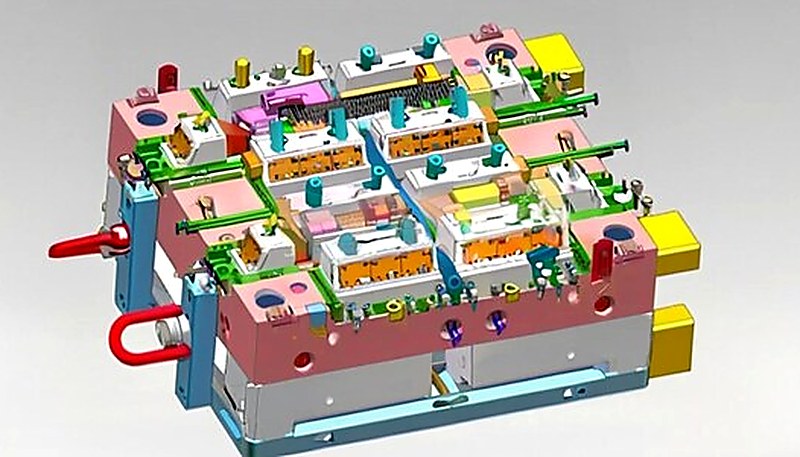
ZetarMoldは、上海に拠点を置く射出成形メーカーで、47台の成形機(90T~1850T)を保有し、TPEオーバーモールディング専用の2色射出成形機を備えています。自社の金型設備と20年以上のTPE加工経験により、数か月ではなく数週間で量産用金型を納品できます。複雑な 射出成形金型 複数のキャビティインサートを伴う設計について、当社のエンジニアリングチームは、鋼材が切削される前に潜在的な問題を発見するDFMフィードバックを提供します。
TPEプロジェクトを開始する準備はできていますか?材料選定のガイダンスと包括的な金型見積りを5営業日以内に提供しますので、当社のエンジニアリングチームにお問い合わせください。
Need a Quote for Your Injection Molding Project?
Get competitive pricing, DFM feedback, and production timeline from ZetarMold’s engineering team.
Request a Free Quote →



 EN
EN  ES
ES  FR
FR  DE
DE  PT
PT  AR
AR  RU
RU  JA
JA  KO
KO  IT
IT  NL
NL  TR
TR  PL
PL 