

Your tooling quote just landed—somewhere between $15,000 and $80,000. The first question your boss asks isn’t about the part design. It’s: “How many shots will we actually get out of this thing?” Reasonable question. The answer isn’t a single number—it’s a decision you make before the steel gets cut.
Injection mold lifespan ranges from 500 cycles for a prototype tool to over 1,000,000 cycles for a hardened production mold. The number depends on mold steel grade, material being molded, maintenance discipline, and cooling design—not on luck or brand name. This article breaks down each factor so you can forecast mold life accurately and avoid the most expensive mistake in tooling: buying the wrong class of mold for your production volume.
- Production molds in H13 or S136 steel typically last 500,000–1,000,000+ cycles.
- SPI Class 101–105 rating directly maps to expected lifespan—match it to your volume.
- Abrasive and corrosive materials (glass-filled, PVC) cut mold life by 30–60%.[4]
- Preventive maintenance at every 50,000–100,000 cycles is the single biggest ROI lever.
- Steel grade is the biggest upfront decision—switching after tooling is not an option.
What Is Injection Mold Lifespan, and Why Does It Matter?
射出成形金型1 lifespan is the total number of production cycles a mold delivers before parts fall outside acceptable tolerances. It matters because mold cost is a fixed investment—you’re amortizing it across every part produced. A mold rated for 500,000 cycles running a million-unit program isn’t a failure of engineering; it’s a budget problem that started at the design review.
The industry uses the SPI mold classification system as a common language.[1] Class 101 molds are built for 1,000,000+ cycles with hardened tool steel and full cooling circuits. Class 105 molds are disposable prototypes, built for 500 shots or fewer, often in aluminum or soft steel. If you skip the conversation about which class you need, you’ll either overpay or get a mold that fails at 200,000 cycles when your program needs 800,000.

The financial logic is straightforward. A $60,000 Class 101 mold producing 1,000,000 parts costs $0.06 per part in tooling amortization. A $20,000 Class 103 mold that needs replacement at 500,000 cycles costs $0.04 per part—but requires a second $20,000 investment for the next 500,000 parts, bringing the total to $0.08 per part. Matching mold class to production volume isn’t just engineering discipline; it’s basic unit economics.
What Are the SPI Mold Classes and Their Expected Shot Counts?
SPI mold classification provides a standardized five-class framework tying mold construction quality directly to expected shot count.
| SPI Class | Expected Cycles | Typical Steel | 最適 |
|---|---|---|---|
| クラス101 | 1,000,000+ | H13, S136, hardened P20 | High-volume production, automotive, medical |
| クラス102 | 500,000–1,000,000 | P20, 420 SS | Medium-high volume, moderate abrasion |
| クラス103 | 100,000–500,000 | P20, 1.2311 | Standard production runs |
| クラス104 | 100,000 or less | Soft P20, 1018 steel | Low-volume or limited production |
| クラス105 | Under 500 | Aluminum, epoxy | Prototype and concept verification only |
These are industry benchmarks, not guarantees. A Class 102 mold running an unfilled polypropylene part with regular maintenance will comfortably hit the upper end of its range. The same mold running 30% glass-filled nylon without a maintenance program might not make it to 200,000 cycles. Steel grade sets the ceiling; everything else determines whether you reach it.
One thing buyers often miss: Class 101 doesn’t mean “indestructible.” It means the mold was built to a standard that makes 1M+ cycles achievable under normal operating conditions. You still need to clean it, grease it, and replace wear components on schedule. Ignoring maintenance on a Class 101 tool is like buying a premium car and never changing the oil—the grade just determines what’s possible, not what’s automatic.
How Does Mold Steel Grade Affect How Long a Mold Lasts?
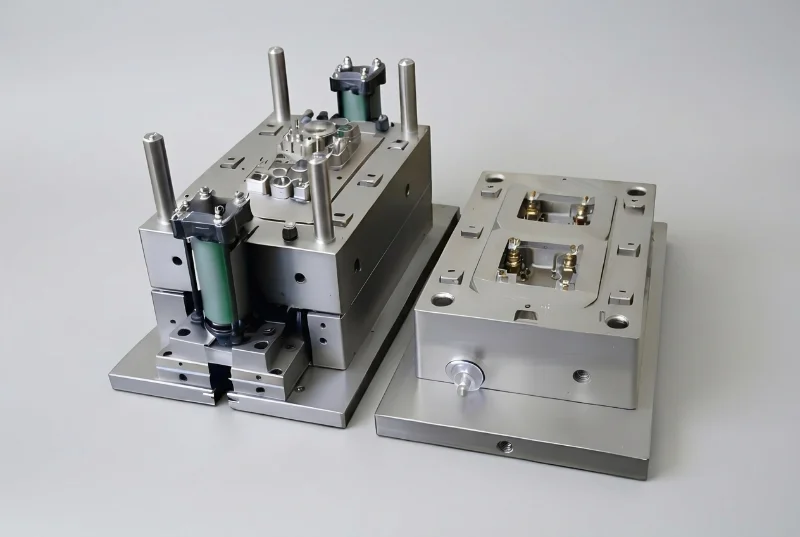
型鋼2 is the single most determinative factor in mold lifespan. Hardness, thermal conductivity, and corrosion resistance all interact with the specific demands of your part and material.
P20 is the workhorse: pre-hardened to 28–34 HRC,[2] good machinability, cost-effective for standard production. It’s appropriate for Class 102–103 molds running non-abrasive thermoplastics. H13 is the high-volume choice: hardened to 48–52 HRC,[3] excellent hot-work toughness, and thermal fatigue resistance that P20 can’t match. For glass-filled or mineral-filled materials, H13 is often the minimum viable choice. S136 (1.2083) adds corrosion resistance—essential if you’re running PVC, flame-retardant grades, or any material that releases corrosive gases during processing.
| 鋼種 | 硬度(HRC) | 耐食性 | Typical Lifespan Range | Common Application |
|---|---|---|---|---|
| P20 / 1.2311 | 28–34 | 低い | 100K–500K cycles | General purpose, non-abrasive resins |
| H13 / 1.2344 | 48–52 | ミディアム | 500K–1M+ cycles | Glass-filled, high-temp resins |
| S136 / 1.2083 | 50–54 | 高い | 500K–1M+ cycles | PVC, FR grades, food-contact parts |
| 718H / 1.2738 | 33–38 | Medium-low | 300K–700K cycles | Large molds, reduced distortion risk |
| Aluminum (7075) | Brinell 150 | ミディアム | 5K–30K cycles | Prototype, bridge tooling only |
The decision tree we use in practice: start with P20 for standard production at moderate volume. Move to H13 if the material has any filler content above 10%, or if the program requires more than 500,000 cycles. Move to S136 if the resin is corrosive by nature—PVC, halogenated FR grades, and hygroscopic materials processed at high temperatures. The cost delta between P20 and H13 is typically 15–25% of tool cost. Over a million-part run, that’s usually the right investment.
“Switching from P20 to H13 can more than double a mold’s production lifespan.”真
P20 (28–34 HRC) fatigues and wears faster under cyclic thermal loading and abrasive resins. H13 hardened to 48–52 HRC resists surface cracking and erosion substantially better, commonly extending mold life from 300K cycles to 700K–1M+ for the same part and material.
“Aluminum molds are a cost-effective choice for production runs under 100,000 parts.”偽
Aluminum molds are typically rated for 5,000–30,000 cycles under controlled conditions. For 100,000-part programs, aluminum introduces real risk: surface wear, parting line damage, and dimensional drift well before you reach your target volume. Class 104 soft-steel molds are the correct choice for runs in the 50K–100K range.
How Does the Molded Material Affect Mold Life?
The resin you run through a mold is as important as the mold steel itself. Some materials are gentle; others are quietly destructive—and the damage accumulates cycle by cycle.
Unfilled thermoplastics—standard ABS, PP, PE, and HDPE—are the most mold-friendly. They’re non-abrasive, relatively low-temperature, and don’t release corrosive byproducts. A well-maintained P20 mold running natural polypropylene can realistically exceed its SPI class rating. Glass-filled grades (10%, 20%, 30% GF) are a different story.[4] The glass fibers act like fine abrasive grit against the cavity surface, accelerating wear at gate areas, ribs, and thin edges. We routinely see gate erosion on P20 molds running 30% GF nylon within 150,000–200,000 cycles—well below the nominal Class 103 rating.
Corrosive materials create a different failure mode: chemical attack rather than mechanical wear. PVC releases hydrochloric acid vapor during processing;[5] standard P20 cavities will show rust and pitting if the mold sits idle for even a few days without proper corrosion inhibitor. Flame-retardant grades with halogenated additives create similar conditions. For these materials, S136 stainless mold steel isn’t optional—it’s the baseline. Budget accordingly.
| 素材タイプ | Wear Mechanism | Lifespan Impact | Recommended Steel Minimum |
|---|---|---|---|
| Unfilled PP, PE, ABS | Minimal | None—may exceed SPI rating | P20 |
| PC, Nylon (unfilled) | Low thermal fatigue | ~10% reduction | P20 or H13 |
| Glass-filled (10–30%) | Abrasive erosion at gate/ribs | 30–50% reduction | H13 |
| Mineral-filled | Abrasive + thermal | 40–60% reduction | H13 or hardened steel |
| PVC, FR grades (halogenated) | Corrosive chemical attack | Severe without SS steel | S136 minimum |
| High-temp resins (PEEK, PPS) | Thermal fatigue, oxidation | Requires optimized cooling | H13 + hard chrome or nitriding |
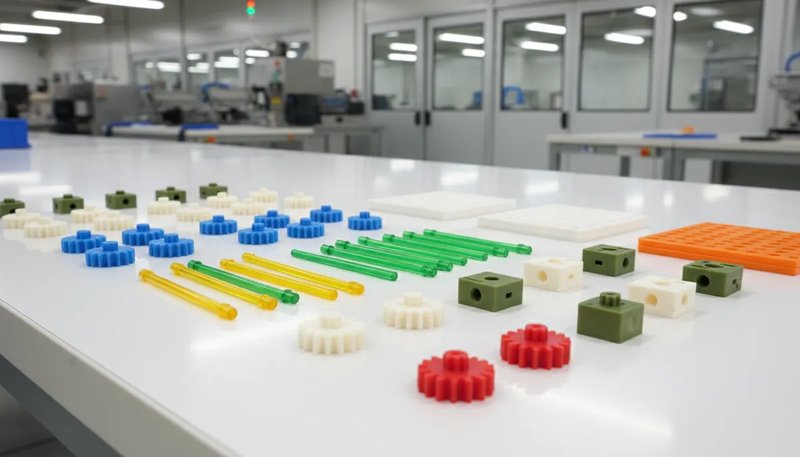
Processing conditions matter too. Running a mold hotter than specified—whether due to material viscosity, gate sizing, or just impatience—accelerates thermal fatigue. Mold temperature differentials greater than 20°C across a cavity cause differential expansion that stresses parting lines and core/cavity interfaces with each cycle. Over hundreds of thousands of cycles, that stress accumulates into flash, then dimensional drift, then cracking. The injection molding process parameters you set on day one either protect your mold investment or quietly erode it.
Why Is Mold Maintenance the Highest-ROI Action in Tooling?
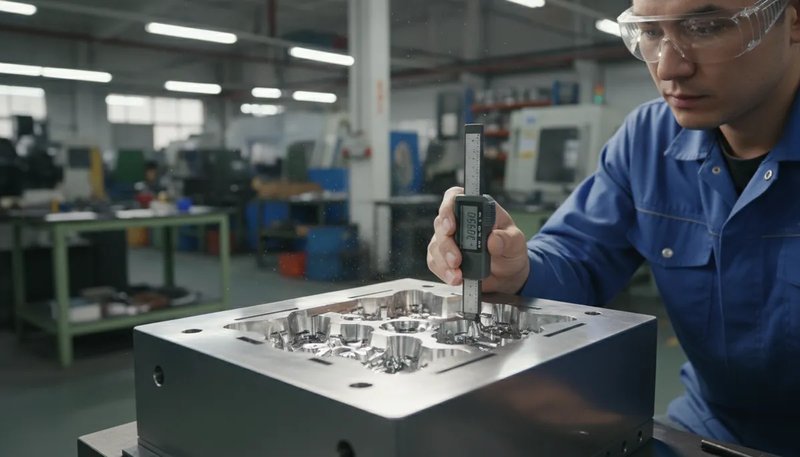
Preventive maintenance is the single highest-return action available after a mold is built. The math is simple: a $500 PM service at 50,000 cycles prevents a $5,000–$15,000 unplanned repair at 180,000 cycles and a $30,000–$50,000 premature mold replacement at 400,000 cycles.
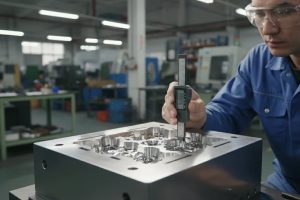
Standard PM protocol for a Class 103 production mold running a non-abrasive thermoplastic typically covers: cavity and core cleaning (removing resin buildup and oxidation); ejector pin inspection and lubrication; venting channel cleaning (clogged vents cause short shots and burning, both of which stress the mold mechanically); parting line inspection for flash or wear; and cooling circuit flow verification. This takes 4–8 hours on a typical mold and should happen at every 50,000–100,000 cycles.[6]
For molds running glass-filled or corrosive materials, the interval drops. We recommend PM at every 25,000–50,000 cycles for abrasive resins, with specific attention to gate inserts (replaceable components that take the highest wear) and cavity surface inspection using a profilometer or at minimum a trained visual check under magnification. Gate inserts that can be replaced for $200–$500 per set are dramatically cheaper than re-machining or re-polishing a full cavity at $3,000–$8,000.
| Material Category | PM Interval (cycles) | Priority Focus Areas | Typical PM Cost |
|---|---|---|---|
| Unfilled PP, PE, ABS | 75,000–100,000 | Vent cleaning, general lubrication | $300–$600 |
| PC, Nylon (unfilled) | 50,000–75,000 | Ejector pins, cooling circuit check | $400–$800 |
| Glass-filled (10–30%) | 25,000–50,000 | Gate inserts, cavity surface inspection | $600–$1,200 |
| PVC, FR grades | 15,000–30,000 | Corrosion inhibitor application, full cavity check | $800–$1,500 |
| High-temp resins (PEEK, PPS) | 20,000–40,000 | Cooling uniformity, thermal fatigue inspection | $700–$1,400 |
At ZetarMold, we’ve been manufacturing and maintaining injection molds since 2005 out of our Shanghai factory. With 100+ molds produced per month and a team of 8 mold engineers, we track PM intervals for every mold in our portfolio. Our data consistently shows that molds on a strict PM schedule outlast their SPI class rating by 15–30%, while molds that skip maintenance rarely make it to 70% of their rated life. We also stock standardized gate insert sets for our most common mold families—replacement turnaround is typically 24–48 hours, versus 2–3 weeks for cavity re-machining.
Unplanned downtime is the hidden cost nobody budgets for. A production mold failure during a high-volume run doesn’t just cost the repair—it costs the line downtime, the expediting fees, the customer relationship friction. Building a maintenance schedule into the tool handoff documentation is part of responsible mold design, not an afterthought.
“Regular PM at 50,000-cycle intervals can extend mold life 15–30% beyond its rated SPI class.”真
Consistent cleaning, lubrication, and wear-component replacement prevent the compounding damage that cuts mold life short. Our production data shows PM-compliant molds routinely exceed their SPI class targets, while neglected molds often fail at 60–70% of rated life.
“You should wait until parts show quality issues before performing mold maintenance.”偽
By the time part quality degrades, the mold has already experienced significant damage—ejector pin galling, vent blockage, or cavity erosion. Preventive maintenance at defined cycle intervals costs a fraction of reactive repair and prevents unplanned production downtime, which is often more expensive than the repair itself.
How Do Mold Design Decisions Affect Long-Term Lifespan?
Mold design choices made before a single chip of steel is cut lock in the long-term lifespan trajectory of the tool. The three decisions with the highest impact: cooling circuit design, gate type and location, and ejection system design.
| Design Decision | Lifespan Risk if Wrong | ベストプラクティス |
|---|---|---|
| Cooling channel diameter | Thermal fatigue, premature cracking | 8–12mm diameter, 1.5× diameter offset from cavity wall |
| Gate size and location | Erosion and jetting at gate zone | Replaceable H13 gate inserts; avoid undersizing |
| Ejector pin count and placement | Galling, pin-flash, deformation | Distribute force across ≥4 pins; minimum 1° draft |
| Parting line design | Flash and wear from clamp force imbalance | Match clamp force to projected area; add vent land hardening |
| 排気 | Burn marks, short shots, localized stress | Vent land 0.025–0.05mm depth; clean every 50K cycles |
Cooling is the most underestimated lifespan factor. Poor cooling creates thermal gradients across the mold; thermal gradients create cyclic stress; cyclic stress causes fatigue cracking—especially at sharp corners, thin cores, and deep ribs. Proper cooling design means uniform temperature distribution within ±5°C across the cavity and core, achieved through adequate channel diameter (typically 8–12mm), appropriate channel-to-cavity distance (1.5× diameter minimum), and sufficient coolant flow rate. Molds with undersized or poorly positioned cooling channels run hotter than designed, age faster, and require more frequent maintenance. This is covered extensively in our injection mold design guide.
Gate design is the second critical factor. Gates are the highest-wear point in any mold—the location where hot, pressurized resin enters the cavity at high velocity. Undersized gates create jetting and localized erosion; oversized gates leave weld marks and require higher clamp force. Edge gates in soft P20 steel running glass-filled materials typically show measurable wear within 50,000–80,000 cycles. The solution: use replaceable gate inserts in hardened steel (H13 or carbide-tipped) at the gate location, even if the rest of the mold is P20. This targeted hardening costs $300–$800 per gate location and can extend gate life by 3–5×.
“Replaceable hardened gate inserts can extend gate-area life by 3–5× compared to solid P20 cavities.”真
Gate zones experience the highest wear in any mold due to high-velocity resin impingement. Installing replaceable H13 or carbide-tipped inserts at gate locations costs $300–$800 per gate but can deliver 3–5× the wear life of solid P20—at a fraction of full cavity replacement cost.
「エジェクタピンは金型寿命に影響を与えないマイナーな部品である。」偽
過小または不適切に配置されたエジェクタピンは、エジェクション力を狭い表面積に集中させ、数十万サイクルにわたりピン穴の焼き付きやリーマアウトを引き起こします。これによりピン周囲にバリが発生し、最終的に金型の再加工が必要となります。適切なエジェクタピンサイジングと最低1°の抜き勾配は、寿命に直結する重要な設計判断です。
エジェクション設計は、エジェクタピン荷重というあまり目立たないメカニズムを通じて寿命に影響を与えます。エジェクションシステムが過小設計(ピン数不足、ピン径不適、製品の抜き勾配不足)の場合、エジェクション力が狭い表面積に集中します。繰り返される高力エジェクションは製品を変形させ、金型にストレスを与えます。時間の経過とともに、エジェクタピン穴が焼き付き、リーマアウトし、最終的にピン周囲にバリが発生します。適切なエジェクタピンサイジングと製品抜き勾配(最低1°、テクスチャ面では2°以上)は、成形品質だけでなく寿命に関する重要な設計判断です。
What Are the Signs That a Mold Is Approaching End of Life?
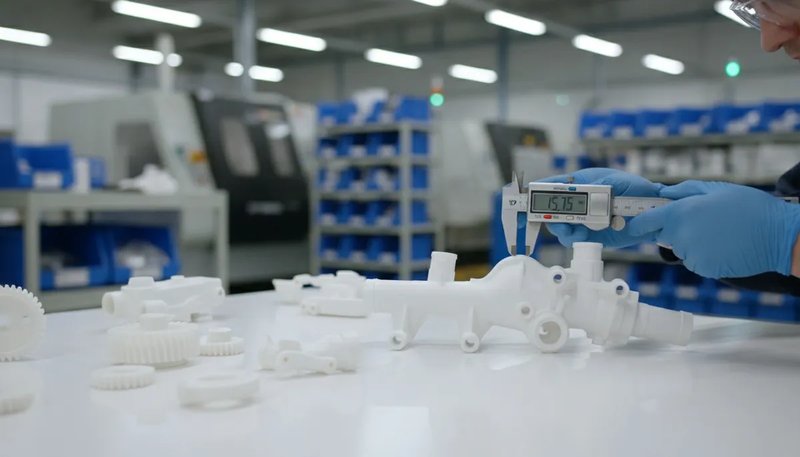
ほとんどの金型故障は、突然の壊滅的な事象として発生するわけではありません。それらは、ほとんどの生産チームが読み取るのが遅すぎる成形品品質のサインを通じて、徐々にその兆候を示します。
最初の兆候はパーティングラインのフラッシュです。最初のサイクルからのフラッシュは構築上の問題を示し、20万サイクル以上経過後に徐々に現れるフラッシュは、通常、パーティングラインの摩耗または疲労関連の寸法変化を意味します。2番目の兆候は、同じ場所でのショートショットや焼け跡です。樹脂の蓄積によるベントの詰まりはガスの逃げを妨げ、背圧を生み出して樹脂を焼き付け、キャビティの充填を妨げます。これは初期段階ではメンテナンスの問題ですが、金型寿命の後期ではベントランドの侵食を示す可能性があります。3番目の兆候は寸法ドリフトです。T1で公差内だった部品が徐々に境界に向かって移動する現象で、ゲート、リブ、薄肉部でのキャビティ侵食が原因です。
| Signal | Stage | Likely Cause | 介入 |
|---|---|---|---|
| パーティングラインでの進行性フラッシュ | 中期(200K+サイクル) | パーティングラインの摩耗または寸法疲労 | パーティングラインの再研削、クランプ力の増加 |
| 繰り返し発生するショートショット/焼け | 初期から中期寿命 | 樹脂蓄積によるベントの詰まり | ベントを清掃。ベントランドが侵食されている場合は交換 |
| 寸法ドリフト(公差外) | 中期から後期 | ゲートおよびリブ部のキャビティ侵食 | T1ベースラインに対して再測定し、必要に応じて再加工 |
| 表面仕上げの劣化 | 後期 | 微細割れと摩耗侵食 | 再研磨(最大2~3サイクル);その後再加工 |
| エジェクタピンフラッシュ | 中期寿命 | エジェクターホールの摩耗または焼き付き | エジェクタピンを交換;必要に応じて穴のサイズ修正 |
表面仕上げの劣化は、金型廃棄前の4番目、そして往々にして最終的な兆候です。製作時にSPI A1に研磨されたキャビティ表面は、微細割れと侵食により次第に粗くなります。表面が仕様通りに再研磨できなくなった時点(通常は2~3回の再研磨後)で、キャビティの再加工または金型の交換が必要となります。これらの兆候を早期に捉えれば、介入コストは低減できます:300,000サイクル時点での清掃・再研磨は、500,000サイクル時点でのキャビティ交換に比べて僅かな費用です。 射出成形プロセス 維持するパラメータも、これらの劣化サインが現れる速度に直接影響します。
How Can You Extend Mold Life Beyond Its Original Rating?
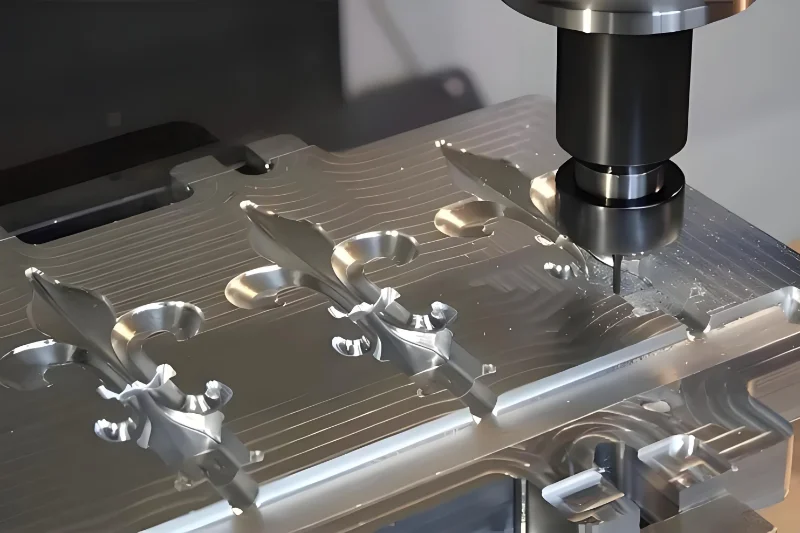
積極的な介入によって、金型の実用寿命を元のSPIクラス定格を超えて延ばすことは確かに可能ですが、それはある程度までであり、適切なアプローチがあってこそです。
キャビティ再加工と再研磨は、最も一般的な寿命延長策です。キャビティ表面に測定可能な侵食が見られるが、コア形状がまだ仕様内である場合、表面仕上げと寸法精度を回復する再加工により、中期金型に100,000~300,000サイクルを追加できます。コストは通常、元の金型コストの20~40%であり、金型が既に初期コストの大半を償却済みであれば合理的な投資です。
キャビティインサート交換は、再加工の対象を絞ったバージョンです。金型全体を再加工する代わりに、摩耗した部分のみ(ゲートインサート、高摩耗コア、損傷したエジェクタブッシュなど)を交換します。このアプローチは、元の金型設計が交換を想定していることが必要です:インサートポケット、標準化された寸法インターフェース、インサート交換のためのアクセス性などです。最初からモジュラー式インサートで設計された金型は、寿命延長がはるかに容易で安価です。これは、特に長期生産プログラムでは、初期の工具仕様書に明記する価値のある詳細です。
窒化とクロメート処理は、鋼材を交換せずに表面硬度と耐食性を付与し、表面寿命を延ばす表面処理オプションです。ガス窒化は約0.5mmの深さまで0.1~0.3mmの硬化層を形成し、表面硬度を60~70 HRC相当に高めます。[7] 硬質クロムめっきは、耐食性と耐摩耗性のために0.01~0.05mmのクロムを付加します。[7] これらの処置は、新規金型に対する予防措置として、または初期段階での介入として最も効果的です。すでに著しい侵食が見られるキャビティに適用しても、効果は限定的です。
| Method | 追加サイクル数 | コスト(新金型の%) | Best Application |
|---|---|---|---|
| キャビティ再研磨 | 50K–100K | 5–15% | 表面仕上げの劣化、早期侵食 |
| ゲートインサート交換 | 100K–200K | 3–8% | 研磨性樹脂によるゲート摩耗 |
| キャビティ再加工 | 100K–300K | 20–40% | 測定可能な寸法変化、表面侵食 |
| ガス窒化 | 100K–250K | 10–20% | Preventive or early-life surface hardening |
| Hard chrome plating | 50K–150K | 8–15% | Corrosion resistance, release improvement |
| Full cavity replacement | Full mold life reset | 50–80% | Core geometry still valid; cavities worn out |
The honest ceiling: there’s a point at which mold refurbishment costs more than building a new tool with lessons learned. A mold that has required two rounds of cavity re-machining, multiple insert replacements, and repeated PM interventions is often at or near that ceiling. The decision to refurbish vs. replace should be based on total remaining program volume, remaining technical life of the mold, and the cost differential between refurbishment and new tooling. The right answer is rarely emotionally satisfying—sometimes the financially correct decision is to retire a functional-looking mold and build a better one.
How Does ZetarMold Approach Mold Lifespan in Production Programs?
When we scope a tooling program, mold lifespan is one of the first engineering conversations—not an afterthought after the price is quoted.
ZetarMold has been building injection molds in Shanghai since 2005. We produce 100+ molds per month using equipment including CNC machines, EDMs, grinders, and precision engravers. Our mold engineering team of 8 specialists with 10+ years of experience handles steel selection, DFM review, and maintenance documentation for every tool we build. We’re certified to ISO 9001, ISO 13485, ISO 14001, and ISO 45001—which means our quality and documentation systems are externally audited, not just internally claimed. If you need a mold that lasts, the conversation starts with a brief: your volume, material, and timeline. We take it from there.
The process starts with production volume projection. If your program is 500,000 parts over three years, we design a Class 102 mold in P20 or H13 depending on your material. If it’s 2,000,000 parts over five years, Class 101 with full hardening is the answer—even though it costs more upfront.
| Annual Volume | Program Duration | Recommended SPI Class | Steel Choice |
|---|---|---|---|
| Under 50,000 | 1–2 years | Class 104–105 | Soft P20 or aluminum |
| 50,000–200,000 | 2–3 years | クラス103 | P20 (28–34 HRC) |
| 200,000–500,000 | 3–5 years | Class 102–103 | P20 or H13 |
| 500,000–1,000,000 | 5+ years | クラス102 | H13 (48–52 HRC) |
| 1,000,000+ | Long-term / repeat | クラス101 | H13 or S136, full hardening |
We’ve run this conversation enough times to know that customers who push back on the upfront tooling investment are almost always the same ones who call us three years later asking why their mold is failing at 60% of expected volume. The conversation is uncomfortable at the quote stage and much more uncomfortable when the mold dies early.
私たちの 射出成形金型設計3 process includes a standard DFM review that covers steel selection, gate design, cooling circuit layout, and ejection strategy—all with explicit lifespan impact analysis. We also supply a mold maintenance schedule with every tool we ship: cycle count PM intervals, consumables list (ejector pins, springs, gate inserts), and a documented T1 dimensional baseline for future comparison. In our experience, customers who follow the maintenance schedule reliably hit their target lifespan; those who don’t are usually back to us for unplanned repair within 18–24 months.
Frequently Asked Questions About Injection Mold Lifespan
一般的な射出成形金型は何ショットまで持つのですか?
A typical production injection mold lasts 100,000 to 1,000,000+ shots, depending on SPI class. Class 101 molds in H13 steel are designed for 1M+ cycles; Class 103 molds in P20 steel typically target 100,000–500,000 cycles. Prototype Class 105 aluminum molds are rated for fewer than 500 shots. Actual lifespan depends heavily on the material being molded, maintenance discipline, and processing conditions—not just the nominal SPI class rating. Well-maintained molds routinely exceed their rated lifespan; neglected molds often fail at 60–70% of the target.
射出成形金型の寿命を最も縮める要因は何ですか?
Abrasive and corrosive materials cause the greatest lifespan reduction: glass-filled resins (10–30% GF) can cut mold life by 30–50% versus unfilled grades, and corrosive materials like PVC can destroy P20 steel cavities within tens of thousands of cycles without stainless steel protection. Lack of preventive maintenance is the second largest factor—molds that skip PM intervals rarely reach 70% of their rated lifespan. Mismatched processing parameters, including excessive injection pressure or mold temperatures above specification, also accelerate wear and thermal fatigue.
射出成形金型は修理して寿命を延ばすことができますか?
Yes—cavity re-polishing, gate insert replacement, and cavity re-machining can extend mold life by 100,000–300,000 additional cycles. Repair cost is typically 20–40% of the original tooling investment, making it a worthwhile option for molds that have already amortized most of their initial cost. Surface treatments like gas nitriding or hard chrome plating add hardness and corrosion resistance to extend cavity surface life. However, there is a practical ceiling: molds requiring multiple repair rounds over their lifetime may become more economical to replace with a redesigned tool that incorporates lessons learned from the original production run.
長寿命に最適な金型鋼は何ですか?
H13 (1.2344) hardened to 48–52 HRC is the most widely used choice for high-lifespan production molds handling abrasive or high-temperature materials, delivering consistent results over 500,000–1,000,000+ cycles. S136 (1.2083) is preferred for corrosive materials like PVC and halogenated flame-retardant grades because of its stainless properties, which resist chemical attack from processing gases. For standard non-abrasive resins at moderate production volume, P20 (28–34 HRC) delivers adequate lifespan at lower upfront cost. Steel selection must match your specific material and total program volume—there is no universally ‘best’ steel for all injection molding applications.
射出成形金型はどのくらいの頻度でメンテナンスが必要ですか?
Preventive maintenance intervals depend on the material being run and the mold class. A Class 103 mold running unfilled thermoplastics should be serviced every 50,000–100,000 cycles. Molds running glass-filled or corrosive materials need PM every 25,000–50,000 cycles. Each PM service should cover cavity and core cleaning to remove resin buildup and oxidation, ejector pin lubrication and wear inspection, vent channel clearing to prevent short shots and burning, parting line examination for flash or wear, and a cooling circuit flow check to confirm adequate heat removal.
金型のサイズは耐久性に影響しますか?
Mold size affects lifespan indirectly through clamping force requirements, thermal mass distribution, and cooling circuit complexity. Larger molds experience greater thermal mass variation and are more sensitive to cooling circuit design quality—non-uniform cooling creates cyclic thermal stress that accelerates fatigue. Large molds built in 718H steel (33–38 HRC) rather than fully hardened H13 are less susceptible to distortion during heat treatment, which preserves dimensional stability over long production runs. For a given steel grade and maintenance program, mold size alone is not the primary lifespan driver.
クラス101とクラス103の金型の違いは何ですか?
Class 101 molds are designed for 1,000,000+ cycles using fully hardened tool steel (H13, S136), robust cooling circuits, and heavy-duty ejection and gating systems—including replaceable hardened gate inserts. Class 103 molds target 100,000–500,000 cycles using semi-hardened or pre-hardened P20 steel with standard cooling and ejection. The upfront cost difference is typically 40–80% higher for Class 101. The correct choice is driven entirely by your total program volume: overspending on Class 101 for a 200,000-part run is as wasteful as underspending on Class 103 for a million-part production program.
無限に持続する射出成形金型を構築することは可能ですか?
No injection mold lasts indefinitely—all tool steel experiences fatigue, erosion, and eventual dimensional drift with repeated thermal cycling. Class 101 molds with hardened steel, optimized cooling, and disciplined maintenance programs can exceed 2,000,000 cycles in favorable conditions with non-abrasive materials, but even these eventually require cavity replacement or re-machining. The practical engineering goal is not infinite life but matched life: designing the mold to outlast your production program with adequate margin, without paying for unnecessary durability that will never be exercised.
Ready to Design a Mold That Lasts as Long as Your Program Needs?

Quick rule for your next tooling decision: match SPI class to your total program volume, select steel to your material’s wear and corrosion profile, and build a PM schedule before the mold ships—not after the first quality incident. Print that out and bring it to your next DFM review.
ZetarMold has been building production injection molds in Shanghai since 2005. We produce 100+ molds per month across a full range of SPI classes, with a dedicated team of mold engineers who handle steel selection, DFM review, and maintenance documentation for every tool. If you have a production volume target and a material spec, we can tell you exactly what class of mold you need and what it will cost—no vague ranges, no upselling on unnecessary features.
Ready to build a mold that lasts? Send us your part drawing, material, and annual volume—we’ll scope the right tooling solution for your program, no vague ranges, no upselling on unnecessary features. ZetarMold has delivered production molds to customers across North America, Europe, and Asia since 2005.
参考文献
- Plastics Industry Association - Customs and Practices of the Moldmaking Industry: Defines SPI mold classifications (Class 101–105) and their approximate lifespans. — plasticsindustry.org
- P20 / 1.2311 Mold Steel Properties — Pre-hardened delivery hardness of ~280–320 HB (≈28–34 HRC), per steel supplier data. — mwalloys.com — P20 Mold Steel
- H13 Tool Steel (1.2344) Properties — 48–52 HRCに硬化された熱間工具鋼;大量生産用射出成形金型に広く使用されています。 — hudsontoolsteel.com — H13工具鋼
- 射出成形金型におけるガラス繊維摩耗 — 射出成形時のガラス繊維による摩耗は、金型鋼に重大な摩耗課題をもたらします。 — ScienceDirect — Wear, Vol. 271 (2011);また: MoldMaking Technology — 戦略的金型材料選定
- 金型鋼に対するPVC腐食攻撃 — PVCは加工中に分解し、塩酸蒸気を放出して標準工具鋼を腐食させるため、ステンレス金型鋼(S136/1.2083)が推奨される基本材です。 — MoldMaking Technology — 表面処理による金型仕上げの保護
- 射出成形金型の予防保全間隔 — 初回PMは25,000–50,000サイクルで推奨;定期的な間隔で金型の耐用年数を延長します。 — VEM Tooling — 金型寿命予測
- ガス窒化と硬質クロムめっきの特性 — ガス窒化により表面硬度67 HRC以上を達成可能;硬質クロメート被膜厚さ0.02~0.05mm、硬度HV800~HV1000。 — SSAB — ガス窒化工具鋼; Hoorenwell — 金型標準化ガイド
-
injection mold: 射出成形金型は、鋼材グレードとSPI分類によって決定される定格寿命を持つ、繰り返しの射出、冷却、および取り出しサイクルを通じてプラスチック部品の形状を定義する精密加工された鋼製工具です。 ↩
-
mold steel: 金型鋼は、硬度、耐食性、および熱疲労抵抗性に基づいて射出成形金型構造に特化して選定されるP20、H13、S136などの工具鋼合金のカテゴリーです。 ↩
-
injection mold design: 射出成形金型設計とは、寸法精度の高いプラスチック部品を可能な限り短いサイクルタイムと最長の金型寿命で生産するために、金型の形状、鋼材、ゲート、冷却、およびエジェクションシステムを定義するエンジニアリングプロセスです。 ↩



 EN
EN  ES
ES  FR
FR  DE
DE  PT
PT  AR
AR  RU
RU  JA
JA  KO
KO  IT
IT  NL
NL  TR
TR  PL
PL 