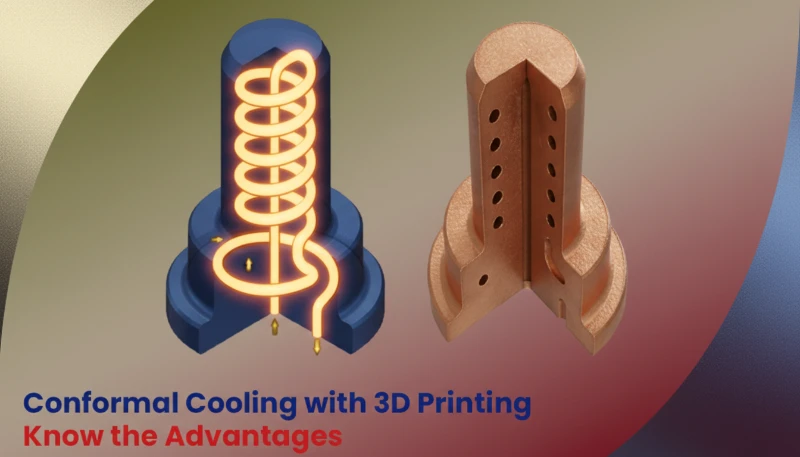
- P20は、ほとんどの量産金型(最大40万サイクル)のデフォルト選択肢です。加工コストが安く、溶接修理が容易で、ほとんどの熱可塑性樹脂に十分耐えます。
- H13は高摩耗環境(ガラス充填ナイロン、POM)でP20の3倍の性能を発揮し、300°Cを超える温度でも軟化しない。
- S136(420ステンレス)は、PVC、POM、透明光学部品などの腐食性樹脂に必須です。HRC 50–52の仕上げで鏡面研磨を保持します。
- 718HはP20とH13の性能差を埋める鋼材です。S136ほどのコスト増を伴わずにP20を上回り、POMや繊維充填材料に適しています。
- ZetarMoldの選定基準:標準用途にはP20、研磨性材料または大量生産にはH13、光学用途または腐食性材料にはS136、予算が制約となる場合は718H。
金型鋼とは?なぜ工具寿命を決定するのか?
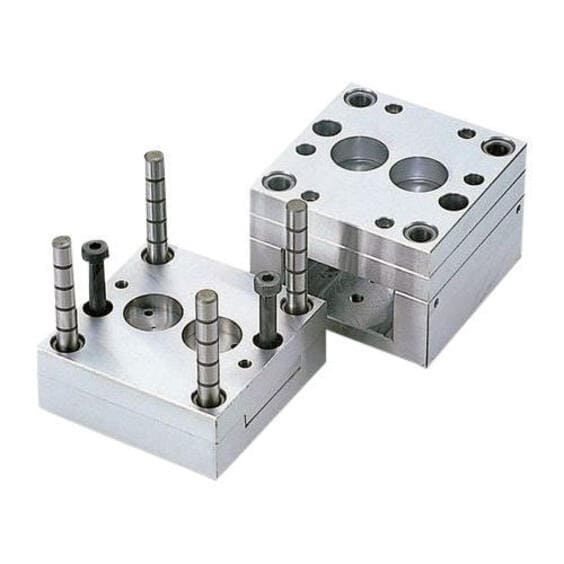
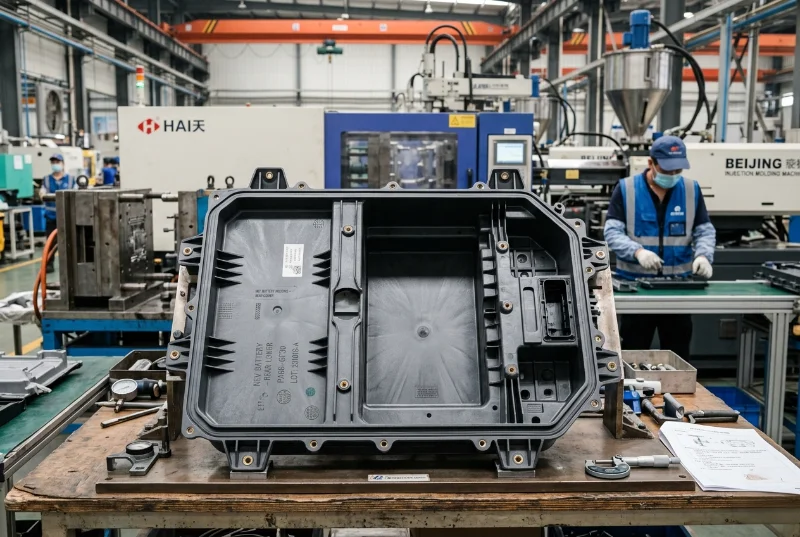
金型鋼材は、射出成形金型のコアとキャビティを加工する構造材料である。適切な選択は、金型寿命、表面仕上げ品質、サイクルタイム、生産期間全体の金型コストを決定する。
金型鋼材の選定は、CNC加工機に触れる前に確定します。鋼材を発注して荒加工を始めた後に材種を変更するには、鋼材ブロックを廃棄して最初からやり直す必要があり、通常は$3,000–$15,000の損失になります。選定を誤ったエンジニアは一度その代償を払います。正しく選定したエンジニアは、その後500,000ショットにわたり金型鋼材を気にする必要がありません。
基本的なトレードオフは単純です。硬い鋼材ほど寿命が長く耐摩耗性に優れますが、加工費と修理費が高くなります。P20のようなプリハードン鋼(注1)はHRC 28~36程度で、短時間で切削できるほど軟らかく、大半の熱可塑性樹脂には十分な硬さがあります。H13やS136などの焼入れ鋼は熱処理後にHRC 45~55へ達し、加工により多くの3時間と注意を要しますが、研磨材入り樹脂や光学透明部品には唯一現実的な選択肢です。
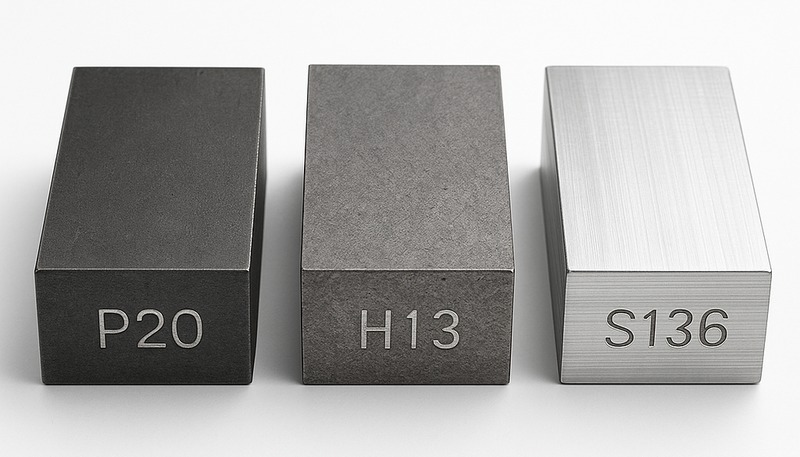
金型鋼の選定を左右する特性は四つあります。2(耐摩耗性)、靭性(耐亀裂性)、4(樹脂との化学的適合性)、被削性(キャビティ加工と修理に要するコスト)です。一つの鋼材ですべてを最大化することはできず、どの選択も使用樹脂、生産量、表面仕上げ要件に合わせたトレードオフになります。
P20:汎用金型の業界標準材
P20はHRC 28–36で供給されるプリハードン低合金鋼で、追加の熱処理をせずに加工できます。世界中の量産用射出成形金型の約60%に使用されています。あらゆる面で最良の鋼材だからではなく、すべての面で十分な性能を備えているためです。
P20はほとんどの汎用熱可塑性樹脂を問題なく扱います:ABS、PP、PE、PC、標準ナイロングレードはすべて、鋼材を侵食することなく成形可能です。プレハード化された状態は、標準的な超硬工具で直接CNCフライス加工が可能であり、微小な損傷をクラックを生じずに溶接修復でき、特殊な研磨なしにRa 0.4–0.8 µm範囲の表面仕上げを達成できることを意味します。最大400,000ショットまでの成形数では、P20が費用最適な選択肢です。
| プロパティ | 価値 / 範囲 | 実用的意味 |
|---|---|---|
| 硬度(出荷時) | HRC 28–36 | 即時加工可能;熱処理不要 |
| 引張強度 | 約900~1050 MPa | 最大200 MPaまでの標準射出圧力に対応 |
| 5 | 29~36 W/(m·K) | 中程度。冷却チャネルは25mm間隔以下で追加 |
| 溶接性 | グッド | ブロックを焼き戻さずにキャビティを修復可能 |
| 表面仕上げ | Ra 0.4–0.8 µm(研磨後) | 半光沢部品に適する;光学グレードではない |
| 典型的サイクル寿命 | 300,000–500,000ショット | 鋼材変更なしの中量生産 |
| 最適樹脂 | ABS、PP、PE、PC、標準PA | PVC、サイクル構成比が50%を超えるPOM、またはGF含有率が20%を超えるガラス繊維強化材には不適 |
P20が適さない条件:ガラス含有率が20~30%を超える研磨性樹脂では、200,000ショットまでにP20キャビティの摩耗が顕著になり、寸法ドリフトと表面劣化が発生します。PA66-GF30やPEEKを成形する場合、P20は適切ではありません。また、P20には耐食性がありません。PVCから発生する塩酸ガスにより、量産開始後数週間でキャビティ表面に孔食が生じます。
718H(P20+Niとも呼ばれる)は、ニッケルを添加した改良鋼種で、標準P20に比べて研磨性(Ra 0.2 µmまで)と靭性がやや向上しています。透明ABSを成形する場合や、多数個取り金型で表面品質の均一性を高めたい場合は、P20に対して~8–12%のコストプレミアムがあっても718Hを検討する価値があります。
H13:大量生産および摩耗性樹脂向けの定番材
H13は熱間工具鋼で、真空焼入れ・焼き戻し後にはHRC 46–54に達します。この硬度では、ガラス繊維強化樹脂による摩耗に対してP20よりも約3倍耐性があります — これは当社の社内生産プログラムにおいてPA66-GF30およびPOMを使用して実証された知見です。
H13の主な利点は熱安定性です。クロム・モリブデン・バナジウム合金組成により、高温下での軟化に耐えます。これは、高速サイクルや、280°Cを超えるバレル温度を必要とする熱に敏感な樹脂にとって極めて重要です。P20とは異なり、H13は複数シフトで連続生産しても、クリープやキャビティ変形を起こさず硬度を維持します。
ZetarMoldでは、GF含有率>30%のガラス繊維強化ナイロンにおいて、H13鋼はP20の3倍の寿命を示します。16個取りのPA66-GF30自動車用コネクター金型では、最初の量産で180,000ショット時点のキャビティ摩耗が確認されたため、P20からH13に変更しました。H13金型は最初の再研磨までに600,000ショットを超え、約$18,000相当のキャビティ全面再製作2回分を顧客が回避できました。
H13におけるトレードオフは加工コストです。この鋼材は焼きなまし状態(HRC ~18–22)で加工され、その後真空熱処理に送られるため、製造工程が長く高コストになります:荒削りCNC → 中仕上げ → 熱処理 → 仕上げ研削 → 微細部の放電加工。同等のP20金型に比べ、金型コストは25–40%高くなると予想されます。
次の条件ではH13が適切です。(1)樹脂に20%を超えるガラス繊維または鉱物フィラーが含まれる、(2)想定生産量が500,000ショットを超える、(3)成形温度が常時280°Cを超える、または(4)長期生産でP20では維持できない厳しい寸法公差が要求される。
「GF含有率が20%を超えるガラス繊維強化エンジニアリング樹脂には、H13を標準選択とするのが適切です。」True
ガラス繊維はキャビティ壁に対して研磨粒子として作用します。HRC 30のP20はPA66-GF30で20万ショットで目に見える摩耗を示しますが、HRC 50のH13は同じ樹脂で60万ショットを超えても測定可能な寸法変化なく対応します。
"金型寿命を最大化するため、すべての射出成形金型に必ずH13を使用すべきです。"False
H13は、P20と比較して加工・熱処理コストが25~40%高くなります。50万ショット未満の標準ABS、PP、PE部品の場合、P20は大幅に低い初期コストで十分な工具寿命を提供します。鋼種の過剰設計は、より優れた冷却設計やDFM最適化に充てられるべき予算を浪費します。
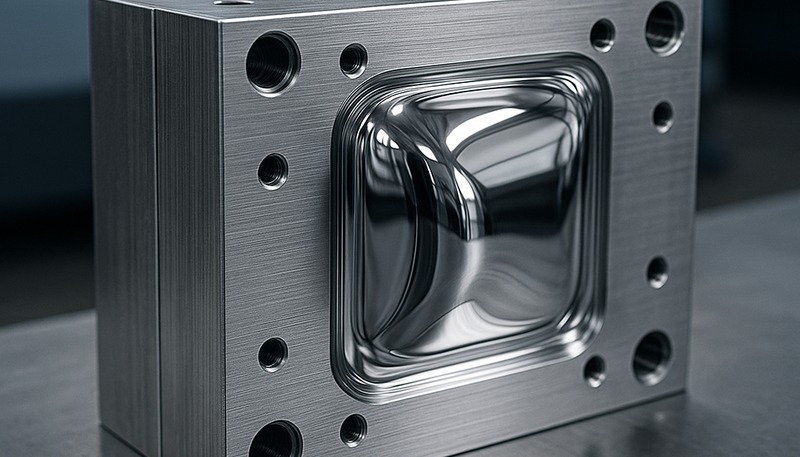
S136および420ステンレス:腐食や表面欠陥が許容できない場合
S136(AISI 420ステンレス鋼相当、Uddeholm呼称)は、13.6%のクロム含有量を持つマルテンサイト系ステンレス工具鋼で、熱処理後HRC 50–52を実現します。その主な機能は耐食性であり、工場の湿度だけでなく、PVC、POM、難燃樹脂の分解時に発生する酸に対する耐性も備えています。
S136が必要な3つのシナリオ:PVCの加工(バレル温度で塩酸を発生)、210°C以上でのPOM-CまたはPOM-Hの成形(ホルムアルデヒドガスが標準鋼材を侵食)、Ra ≤ 0.025 µmの鏡面研磨を必要とする光学グレード透明部品の製造です。S136は微細な炭化物組織により鏡面仕上げを達成・維持できますが、P20やH13では不可能です。
| プロパティ | S136(Uddeholm) | 420ステンレス(汎用) |
|---|---|---|
| クロム含有量 | 13.6% | 12–14% |
| 硬度(熱処理後) | HRC 50–52 | HRC 48–52 |
| 鏡面研磨能力 | 表面粗さRa ≤ 0.025 µm | 表面粗さRa ≤ 0.05 µm |
| 耐食性 | 素晴らしい | グッド |
| P20との被削性比較 | ~40%加工困難 | ~35% 加工が困難 |
| 溶接性 | 事前/事後加熱が必要 | 事前/事後加熱が必要 |
| P20に対する典型的なコストプレミアム | 50–70% | 35–50% |
S136は1キログラム当たりP20より50–70%高価で、厳格な加工手順が必要です。溶接前の予熱、熱処理後の制御冷却、マイクロクラックを防ぐための専用EDMパラメータが求められます。しかし、PMMAを240°Cで成形し、>92%の光線透過率が要求されるレンズ金型には、代替材がありません。このコストは任意ではなく、仕様を満たすための対価です。
重要な区別:S136は塩浴法よりも真空焼入れを好みます。真空焼入れはより清浄な表面酸化皮膜と優れた寸法安定性をもたらし、熱処理後の仕上げ加工余裕を削減します。発注書に真空焼入れを指定することは杓子定規ではありません。それは最終的な鏡面品質に直接影響します。
718HとNAK80:複雑形状用の焼入れ済み代替材
718H(718またはP20+Niとも表記)とNAK80(P21グレード)は、標準P20と完全焼入れ鋼種の間を埋めるプレハード鋼です。両方ともHRC 33–38で納入され、機械加工後の熱処理を必要とせず、リードタイムを1~2週間短縮し、複雑形状での熱処理歪みリスクを排除します。
718Hはニッケル含有量(約1%)により結晶粒組織が微細化され、標準P20よりも優れた研磨性を達成します。クリアABS、透明PC/ABSブレンド、またはSPI A3–B1仕上げを必要とする部品には、718Hがプレハード鋼の選択肢となります。NAK80はさらにAl、Cu、Sを添加することで時効硬化能力と優れたテクスチャ加工性を実現し、テクスチャ表面や粒目エッチングされた自動車内装パネルに最適です。
"718Hは、厳しい公差が要求される複雑な金型入れ子における熱処理変形のリスクを排除します。"True
718Hは工場で予備焼入れされているため、キャビティ加工は最終鋼材に対して行われます。焼入れ・焼戻しによる寸法変化がありません。公差が±0.02mm未満の複雑なサイドアクション、スライダー、インサートにおいて、この予測可能性は完全焼入れ鋼種に対する真の利点です。
「NAK80と718Hは、機械加工を変更せずにP20からそのまま置き換えられる上位材です。」False
NAK80の時効硬化特性と718Hのやや高い硬度に対応するには、標準的なP20と比べて切削速度と送り速度を調整する必要があります。同じ加工条件では工具摩耗が約15~20%増加します。これは管理可能な範囲ですが、無視するとびびりによる表面不良や工具の早期破損を招きます。
鋼材選定の意思決定フレームワーク:適切なグレードの選び方
鋼材選定は、成形する樹脂と想定生産数量という2つの入力条件から決まります。予算、リードタイム、表面仕上げなど、その他の要素はすべて、この2つの基準を中心に調整されます。
| 樹脂種類 | 生産量 | 推奨鋼材 | 理由 |
|---|---|---|---|
| ABS、PP、PE、PC(未充填) | < 500K ショット | P20 / 718H | コスト最適化;良好な被削性 |
| ABS、PP、PE、PC(未充填) | > 500Kショット | H13(HRC 48以上) | 硬度により100万ショット超の寿命を実現 |
| PA66-GF30, POM, PBT-GF30 | 数量を問わない | H13(HRC 48以上) | ガラスによる摩耗;P20は急速に摩耗 |
| PVC、POM(腐食性) | 数量を問わない | S136 (HRC 50以上) | 必須の耐食性 |
| 光学用PMMA、PCレンズ | 数量を問わない | S136 (HRC 50以上) | ミラーポリッシュ Ra ≤ 0.025 µm が必要 |
| PA66、ABS/PC(半透明) | 20万~80万ショット | 718HまたはNAK80 | 完全な熱処理なしでP20よりも優れた表面 |
| PEEK, PPS, LCP | 数量を問わない | H13またはS136(ケースバイケース) | 高い成形温度 + 摩耗 |
よくある誤りは、冷却システム設計と切り離して鋼種を選定することです。P20の熱伝導率29~36 W/(m·K)は、ほとんどのサイクルタイム目標に十分対応できます。ただし、H13(32~34 W/(m·K))またはS136(24~28 W/(m·K))へ変更する場合は、冷却水路の配置を見直してください。水路をキャビティ壁面に近づけて再配置しなければ、S136は熱伝導率が低いため、P20に比べてサイクルタイムが5~10%長くなる可能性があります。
技術者が見落としがちなもう一つの要因は納期です。P20は中国、米国、欧州の金型鋼販売業者に広く在庫されており、標準納期は3~5営業日です。大型ブロック(厚さ200mm超)のH13は、DaidoまたはFinklからの調達に10~15日を要する場合があります。S136(Uddeholm)は最も納期が長く、指定寸法に切断したブロックでは2~4週間です。プロジェクト日程に余裕がない場合は、鋼種仕様を確定する前に在庫状況を確認してください。納期を理由にS136から718Hへ変更するとコストは20~25%増加しますが、工程を2~3週間短縮できます。
生産数量予測の精度は、鋼材選定において最も過小評価されているリスクです。200Kショットの予測に基づいてP20を指定し、その後800Kショットまでプログラムを延長した顧客は、生産途中でキャビティの再研削または交換を迫られます。最終生産数量に実質的な不確実性がある場合は、H13を優先してください。初期費用は25–40%高くなりますが、需要が予想外に伸びた際、プログラム開始2年目に$15,000–$40,000を要するキャビティ再製作のリスクを排除できます。
ZetarMoldでは、T0承認前に実施するすべてのDFM承認工程に鋼材選定レビューを組み込んでいます。POMブッシュ用金型にP20を指定した結果、30,000ショット以内にホルムアルデヒドによる孔食が発生した事例も見てきました。量産途中でS136へ切り替えるには、キャビティを全面的に作り直す必要があります。DFM段階で5分間確認するだけで、4桁の手直し費用を節約できます。
予算の制約から、本来S136やH13を選ぶべき場面でP20を選択するエンジニアは少なくありません。実コストを踏まえた判断基準は次のとおりです。金型の想定寿命が800,000ショットを超え、樹脂にわずかでも研磨性がある場合、P20からH13へ変更する追加費用は、粉砕再生と手直しの費用削減により、通常300,000ショット時点で回収できます。初期の金型見積額だけでなく、総所有コストを算定してください。
エンジニアが過小評価しがちな鋼材選定要素がもう一つあります。それは溶接補修性です。P20は、150°Cを超える予熱を行わずに、標準的なMIGまたはTIG工程で溶接できます。H13では300~400°Cの予熱、慎重なパス間温度管理、溶接後の焼戻しが必要であり、各補修工程がコストを増やし、金型の停止期間を延ばします。S136では、マルテンサイト割れを防ぐため、さらに精密な熱管理が必要です。設計変更やキャビティ補修が頻繁に見込まれる金型では、溶接補修手順は母材の硬度仕様と同じくらい重要です。
キャビティの表面積は、多くのエンジニアが認識している以上に鋼材費へ影響します。S136製の300×200mmキャビティブロックは、工具経路を1本も加工していない素材段階で$2,000~$4,000かかることがあります。同じブロックでもP20なら$600~$900です。32個取りホットランナー金型では、ブロック1個当たり$3,000の差が急速に積み上がります。多数個取り金型で摩耗の激しいキャビティが一部だけの場合は、最初の数キャビティにS136を使用し、残りにP20を使用することを検討してください。このハイブリッド方式なら、必要箇所の表面品質を維持しながら、金型総費用を20~30%削減できます。
金型鋼の選定は、冷却システム設計とも相互に関係します。金属AM(積層造形)またはガンドリル加工によるコンフォーマル冷却チャネルが経済的に成立するのはP20とH13に限られます。S136はクロム含有量が高いため、標準設備による深穴加工がより困難です。冷却設計で深さ150mmを超える位置に直径6mm未満のチャネルが必要な場合は、設計を確定する前に、指定鋼種に対する金型メーカーの設備能力を確認してください。
表面処理オプション:窒化処理、PVD、ハードクロム
表面処理は、母材を変えることなく耐摩耗層を付加することで、あらゆる金型鋼の稼働寿命を延ばします。射出成形金型で最も一般的な3つの処理は、ガス窒化、PVD(物理蒸着)コーティング、硬質クロムめっきです。
ガス窒化は鋼材表面から0.1~0.3mmまで浸透し、寸法変化を生じさせることなく、窒素拡散層にHRC 65~70の硬度を付与します。P20とH13には適用できますが、クロム酸化皮膜が窒素の拡散を妨げるため、ステンレス鋼種には適しません。窒化処理の追加費用はキャビティ一式当たり約$200~$800で、軽度の摩耗環境ではP20金型の寿命を40~80%延長できます。
PVDコーティング(TiN、TiAlN、CrN)は、500°C未満の温度で厚さ2~5 µmの硬質層を形成するため、母材鋼の焼戻し状態を維持できます。TiNは金色で、硬度はHRC 80以上に達し、耐摩耗性と離型性を同時に向上させます。CrNはTiNより優れた耐食性を備えています。PVDは、繰り返し接触応力を受けるスライド、コア、その他の可動インサートに適した処理です。かじりのリスクを低減し、インサートの交換が必要になるまで2~3回再処理できます。
硬質クロムめっき(厚さ0.02–0.1mm)は従来からの選択肢で、PVDより安価ですが、六価クロムの毒性により規制市場では段階的に廃止されています。PVDを現地で利用できない用途では、硬質クロムめっきも依然として有効ですが、繰り返し荷重による微小亀裂をより頻繁に検査する必要があります。
ZetarMoldの鋼材調達・品質基準
ZetarMoldは、検証済みの製鋼所からのみ金型鋼を調達しています。S136はUddeholm(スウェーデン)、718Hおよび718SはASSAB、H13はDaido(日本)またはFinkl Steel(米国)から調達します。P20は国内のBaoshan Iron & Steel(Baosteel)から調達し、入荷ロットごとに材料検査を実施しています。
すべての鋼材ブロックは、CNC部門に送られる前に、受入硬度検査(公差±2 HRC)と内部介在物の超音波探傷を受けます。超音波検査で不合格となった鋼材は、納期が逼迫していても返品します。50,000ショット時点で介在物を起点にキャビティが割れれば、介在物のないブロックの調達に要する3日間の遅れを上回る損失が生じるためです。
当社の熱処理は、脱炭を防ぐため、真空炉を使用して社内または認定パートナーで行います。焼戻し温度とサイクルは概算ではなく、UddeholmおよびASSABが公開するデータシートに従います。S136では、キャビティの3領域(ゲート部、充填末端、パーティングライン)をロックウェル硬さ試験で測定して最終硬度を確認し、その結果を顧客へ提供する金型データパックに記録します。
鋼材を支給されるお客様には、ヒート番号を追跡できるミルシート、受入時の硬さ確認、および超音波探傷証明書の提出を求めています。過去2年間に、証明書のない支給鋼材での製作を3回お断りしましたが、いずれの場合も、その後お客様が機械加工中に鋼材ブロック内の介在物を発見しました。検査に要する手間は官僚的な手続きではなく、損失を未然に防ぐためのものです。
よくある質問
射出成形用金型に最適な鋼材は何ですか?
P20は、標準的な熱可塑性樹脂(ABS、PP、PC)を使用し、最大400Kショットまでの一般生産用金型に最適な標準選択です。H13(HRC 46–54)は、ガラス繊維強化エンジニアリング樹脂、または500Kショットを超えてP20では摩耗が速すぎる生産量に適しています。S136(420ステンレス鋼)は、鏡面研磨を要する光学グレード部品や、PVC、POMなどの腐食性樹脂には必須です。718Hは、熱処理による変形を許容できない複雑形状において、P20とH13の間を補います。万能な鋼材はありません。樹脂、生産量、表面仕上げ仕様に合わせて選定してください。
P20とH13金型鋼の違いは何ですか?
P20はHRC 28~36にプリハードンされ、熱処理なしで加工できます。安価で溶接補修しやすく、非充填熱可塑性樹脂なら50万ショットまでの多くの用途に適します。H13は粗加工後にHRC 46~54へ真空焼入れする熱間工具鋼で、納期が1~2週間、費用が25~40%増えますが、ガラス繊維強化樹脂に対する耐摩耗性は約3倍で、100万ショットを超えても寸法安定性を保ちます。標準量にはP20、摩耗や長寿命が重要ならH13を選びます。
射出成形金型にS136ステンレス鋼はいつ使用すべきですか?
S136が必要となるのは、次の3つの状況です。成形中に酸性ガスを発生する腐食性樹脂を加工する場合(PVCはHCl、POMはホルムアルデヒドを放出)、Ra ≤ 0.025 µmの鏡面研磨を要する光学グレードの透明部品(レンズ金型、ディスプレイカバー)を製造する場合、および定期的な予防保全を継続できない高湿度環境で金型を保管する場合です。クロム含有量13.6%により、P20やH13では得られない耐食性を備えています。P20と比べて素材鋼コストは50–70%、加工時間は35–40%増加しますが、これらの用途ではS136の採用は必須です。
金型鋼の硬度は表面仕上げ品質にどのように影響しますか?
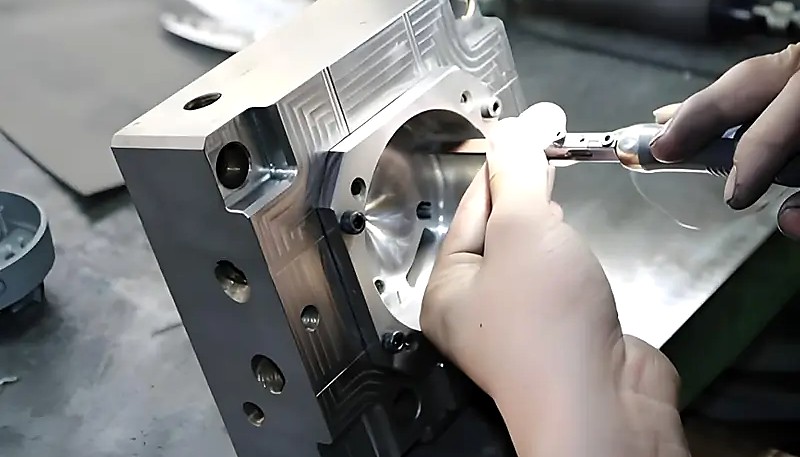
鋼材の硬度が高いほど精密な研磨が可能になり、その仕上げをより多くの生産サイクルにわたって維持できます。HRC 30のP20はRa 0.4–0.8 µm(SPI B2範囲)まで研磨でき、半光沢の消費財部品に適しています。HRC 50のH13は、慎重な手磨きによりRa 0.1 µm(SPI A3)に達します。HRC 52のS136はRa ≤ 0.025 µm(SPI A1、鏡面グレード)を実現し、PMMAレンズや光学用PC部品に必要とされます。仕上げを一段細かくするごとに、より微細なダイヤモンド研磨材を順次使用する必要があり、研磨工数は2–4×に増加します。キャビティの大きさと形状に応じて、1キャビティ当たり$500–$3,000の追加費用がかかります。
窒化処理やPVDコーティングは、より硬い金型鋼へのグレードアップを代替できるでしょうか?
軽度の摩耗性樹脂(GF 10–20%)を使用し、生産量が30万ショット未満の場合、P20キャビティへのガス窒化処理によって耐用寿命を有意に延ばせます。キャビティセット当たり$200–$800でHRC 65+の表面硬度を付与でき、H13へのアップグレード費用$3,000–$8,000より低コストです。PVDコーティング(TiN、CrN)も摺動部品に対して同様に機能します。ただし、これらの表面処理の厚さおよび深さは、それぞれ2–5 µmと0.1–0.3mmです。GF含有率が>30%の激しい摩耗条件、または50万ショットを超える生産量では、処理層が摩耗し、その下の軟らかい母材鋼が侵食されます。表面処理は適切な鋼材選定を補完するものであり、代替するものではありません。
ZetarMoldは標準生産工具にどのような金型鋼を使用していますか?
ZetarMoldでは、非充填熱可塑性樹脂を使用し、最大500Kショットを生産する標準量産金型にP20(Baosteel認証材)を標準採用しています。PA66-GF30、POM、PBT-GF30などのガラス繊維強化エンジニアリング樹脂案件には、DaidoまたはFinkl Steelから調達し、HRC 48–52まで真空焼入れしたH13を指定します。光学用途および耐食性が重視される用途にはUddeholm S136を採用し、キャビティ加工の開始前に社内で硬度検証と超音波探傷を行います。入荷するすべての鋼材ロットに対し、サプライヤーの認証書類の有無にかかわらず、硬度の抜取り検査と内部介在物の超音波探傷を実施します。
金型鋼材の選択は射出成形サイクルタイムにどのように影響しますか?
熱伝導率は、鋼材グレードとサイクルタイムを結び付ける主要変数です。P20の熱伝導率は29–36 W/(m·K)、H13は32–34 W/(m·K)で、ほぼ同等です。一方、S136は24–28 W/(m·K)で、P20より約15–20%低くなります。冷却時間が総サイクルタイムの60–70%を占める薄肉部品では、冷却水路を再配置せずにP20からS136へ変更すると、サイクルタイムが5–10%増加する可能性があります。流量制限を防ぐ十分な水路径を維持しながら、冷却水路とキャビティ壁の距離を標準の15mmから10–12mmへ短縮して補正します。
プリハードン鋼:プリハードン鋼とは、納入前に実用硬度(通常HRC 28~40)まで熱処理され、切削加工後の熱処理が不要な金型鋼です。↩
硬さ:硬さとは、ロックウェルC(HRC)またはブリネル(HB)で測定される、表面の永久変形に対する抵抗を示す材料特性です。HRC値が高いほど耐摩耗性は増しますが、靭性は低下します。↩
EDM:EDM(放電加工)とは、制御した放電によって工作物から材料を除去する製造工程で、硬い金型鋼を精密なキャビティ形状に加工する際によく用いられます。↩
耐食性:耐食性とは、酸化、化学的侵食、湿気による劣化に耐える材料の能力です。金型鋼では、重量減少試験や塩水噴霧試験の時間などで評価されます。↩
熱伝導率:熱伝導率はW/(m·K)で表され、材料が熱を伝える能力を示します。金型鋼の熱伝導率が高いほど、成形品から熱を速く除去でき、サイクルタイムを短縮できます。↩