 コンテンツへスキップ

You just got a quote for EVA foam shoe soles — 50,000 pairs, delivered in six weeks. The tooling looks reasonable, but your injection shop keeps rejecting the job because “EVA is tricky.” They’re not wrong. EVA (エチレン-ビニルアセテート1)射出成形は、ほとんどの熱可塑性プラスチックよりも加工ウィンドウが狭く、発泡膨張の挙動は多くの人々を不意打ちにします。この記事では、実際に重要な点を解説します:温度、収縮、金型設計の落とし穴、そしてEVA部品を最も頻繁に損なう3つの欠陥を回避する方法について。
- EVAは160–220 °Cで加工されます;250 °Cを超えると分解が発生します
- 収縮率は1.0~2.0% — PPやPEの約2倍
- 肉厚は1.5 mmから4.0 mmの間を維持する必要があります
- 金型温度20–40°C;コールドランナーが推奨されます
- VA含有量(8–28%)が柔軟性と発泡密度を決定します
EVA射出成形とは何か、またいつ使用すべきか?
EVA射出成形とその使用すべきタイミングは、このセクションで説明される機能、制約条件、トレードオフによって定義されます。EVA射出成形は、発泡可能な熱可塑性プラスチックであるエチレン-酢酸ビニル共重合体を、従来の 射出成形 設備。VA(ビニルアセテート)含有量は通常8%から28%の範囲であり、その割合が最も重要な変数です:低VA(8–14%)は硬質でPEのような材料を提供し、高VA(18–28%)は柔らかいゴム状のフォームを提供します。
In practice, EVA is the go-to material when you need lightweight cushioning with good impact absorption. Think shoe midsoles, sports padding, helmet liners, yoga mats, and protective packaging. It’s not the right choice if you need structural rigidity, chemical resistance, or tight dimensional tolerances — for those, look at 射出成形金型 PC、PA、またはPOMを使用するアプリケーション。
The key difference between EVA and standard thermoplastics: EVA expands during cooling. That foam expansion is what gives you the cushioning and low density (0.15–0.40 g/cm³ for foam grades), but it also means shrinkage is less predictable and part dimensions shift more than you’d expect from a standard polymer.
“Standard injection molding machines can process EVA without modification.”真
True. A general-purpose screw (20:1 L/D ratio) and standard barrel work fine. The only recommended addition is a closed-loop nozzle to prevent drool, since EVA’s low melt viscosity causes material to leak from open nozzles during hold and cooling phases.
“EVA is just a type of polyethylene and processes exactly like PE.”偽
誤り。EVAはエチレンと酢酸ビニルの共重合体ですが、VA含有量がその挙動を根本的に変化させます。EVA発泡体は冷却中に膨張し、PEよりも2~4倍高い収縮率を持ち、より低い温度(PEが300℃以上に対し、EVAは250℃)で分解します。PEの設定でEVAを成形すると、バリ、焼け跡、寸法不良品が発生します。
射出成形の工程において、EVAを制御する処理パラメータは何か?
このセクションは、射出成形のステップにおけるEVAの加工パラメータ制御と、コスト、品質、タイミング、または調達リスクへの影響についてです。EVA加工は同じ 射出成形のステップ 他の熱可塑性プラスチックと同様ですが、熱と滞留時間が制御されないとEVAは発泡、垂れ、または劣化する可能性があるため、温度ウィンドウは狭くなっています。シリンダー温度、金型温度、射出速度、保圧、冷却時間から開始し、試作時に一度に一つの変数を調整してください。
| パラメータ | Range | 備考 |
|---|---|---|
| 溶融温度 | 160–220 °C | 250 °C以上 = 分解(酢酸臭) |
| 金型温度 | 20–40 °C | 冷却水回路;高温は収縮を悪化させます |
| 射出圧力 | 40–80 MPa | 硬質プラスチックより低い;過剰な圧力はフォームを圧縮します |
| 射出速度 | 中速から低速 | 高速充填は空気を閉じ込め、焼け跡の原因となる |
| 保持圧力 | 20–40 MPa | 短い保圧時間(2~5秒); 発泡膨張が残りを処理する |
| 乾燥温度 | 60–70 °C | 2–4時間;EVAはナイロンよりも吸湿性が低いですが、乾燥は依然として必要です |
| 収縮 | 1.0–2.0% | VA含有量が高いほど収縮率が高くなります |
The biggest mistake we see: running EVA at the same temperatures you’d use for PE or PP. EVA’s thermal window is tighter. If you smell vinegar (acetic acid) during molding, you’ve already crossed into decomposition territory — drop the barrel temperature 15–20 °C and purge the barrel.
もう一つの一般的な見落としは、保持圧力と時間です。EVAフォーム部品は非常に短い保持時間(最大2〜5秒)が必要です。フォーム膨張が内部からキャビティを充填します。圧力を長時間保持すると、フォーム構造を圧縮し、柔らかく軽量であるべき部分が高密度で重いスポットになります。
VA含有量はEVA材料特性にどのように影響しますか?
The VA percentage is the dial that controls everything — hardness, flexibility, transparency, foam density, and chemical resistance. Here’s how it breaks down in real applications:
| VA含有量 | Shore Hardness | 特徴 | 代表的なアプリケーション |
|---|---|---|---|
| 8–14% | ショアD 40–55 | 硬く、PEに似た、良好な透明性 | 硬質包装、チューブ、自動車内装トリム |
| 15–18% | ショアA 80–95 | 柔軟だが弾力性がある | ワイヤージャケット、スクイーズ玩具、グリップ |
| 19–28% | Shore A 30–70 | Soft, rubbery, excellent foamability | Shoe midsoles, sports padding, yoga mats, helmet liners |
For injection-molded foam parts (which is what most people mean by “EVA molding”), you’re almost always in the 18–28% VA range. The material is compounded with a chemical blowing agent (typically azodicarbonamide2 or sodium bicarbonate) that activates at a specific temperature, releasing gas and expanding the part as it cools.
Practical tip: if you’re getting inconsistent part weights, the blowing agent distribution is your first suspect. Ask your material supplier for a masterbatch with pre-dispersed blowing agent rather than trying to mix it on the machine. The consistency improvement is worth the 10–15% material cost premium.
“Higher VA content in EVA results in softer, more flexible material with better foamability.”真
True. As VA content increases from 8% to 28%, the material transitions from stiff and PE-like to soft and rubbery. The higher VA content also means more foam expansion is possible, producing lower-density parts with better cushioning properties.
“You can simply add more blowing agent to any EVA grade to get better foam.”偽
False. Blowing agent dosage must be matched to the VA content and the target foam density. Too much blowing agent causes large, irregular cells that weaken the part structure and can cause surface blistering. The agent also has a shelf life (6–12 months) — expired material won’t activate properly regardless of quantity.
What Are the Common Defects in EVA Injection Molding?
EVA has three recurring defects that account for probably 80% of quality issues we’ve seen on the shop floor:
1. Sink marks and surface depressions. Because EVA foam expands during cooling, thick sections continue pushing material outward while thinner adjacent sections have already solidified. The result is visible depressions on the show surface. Fix: keep wall thickness as uniform as possible, aim for a 2:1 ratio (maximum) between thickest and thinnest sections.
2. Incomplete fills (short shots) with foam parts. The foam expansion helps pack the mold, but if melt temperature is too low or injection speed too slow, the material skin-freezes before the cavity fills. Fix: increase melt temp by 5–10 °C, increase injection speed one notch, and verify your blowing agent hasn’t expired (yes, blowing agents have shelf lives — typically 6–12 months).
3. Burn marks and discoloration. This is thermal decomposition — the vinegar smell is the giveaway. EVA starts breaking down above 250 °C, and decomposed material produces dark streaks or brown burn marks. Fix: lower barrel temperature, slow down screw speed (reduces shear heating), and check that your nozzle isn’t running hotter than the barrel zones.
One more thing: EVA’s low viscosity at processing temperature means flash is a real risk, especially on parting lines. If your mold has worn inserts or marginal shut-off surfaces, you’ll see flash at pressures that would be fine for PP or ABS. Budget for tighter mold tolerances if you’re tooling up for EVA.
How Should You Design Molds for EVA Parts?
This section is about design molds for eva parts and its impact on cost, quality, timing, or sourcing risk. Mold design for EVA isn’t the same as for rigid thermoplastics. The foam expansion changes the rules in three key areas:
Gate design: Use larger gates than you would for equivalent-sized rigid parts. Tab gates or fan gates with 1.5–3.0 mm thickness work well. Avoid pinpoint gates — the material’s low viscosity and foam expansion will jet through a small gate and create swirl marks on the visible surface.
Wall thickness: Target 1.5–4.0 mm. Below 1.5 mm, foam expansion can’t develop properly and you get dense, stiff sections. Above 4.0 mm, shrinkage and sink marks become difficult to control. If your part has functional thick sections (like a shoe sole heel area), coring out the back reduces the effective thickness without losing the external profile.
Draft and ejection: EVA’s flexibility actually helps here — the part compresses during ejection and rebounds. But foam parts tend to stick in deep ribs. Minimum 1.5° draft per side (2° is better), and use generous ejector pin diameters. Small pins on a soft foam part just punch holes instead of pushing the part out.
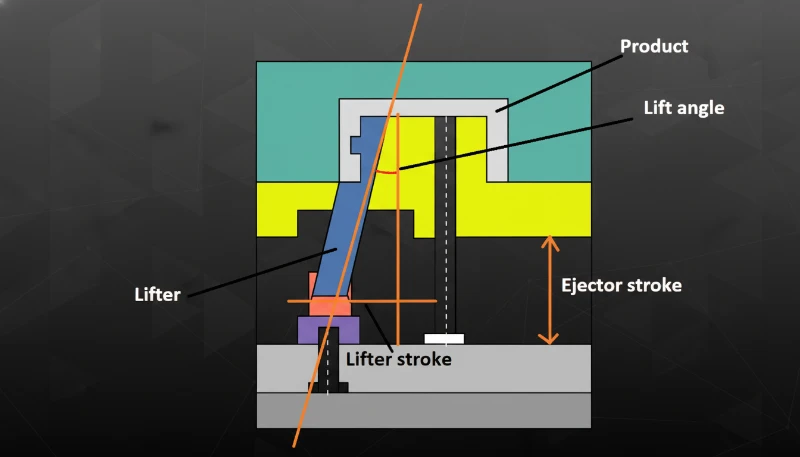
Cooling: EVA parts demold hot — the foam continues expanding for several seconds after the mold opens. Design cooling circuits for rapid surface chill, and expect cycle times of 30–60 seconds depending on wall thickness. Water at 15–25 °C works well; heated molds offer no benefit for EVA.
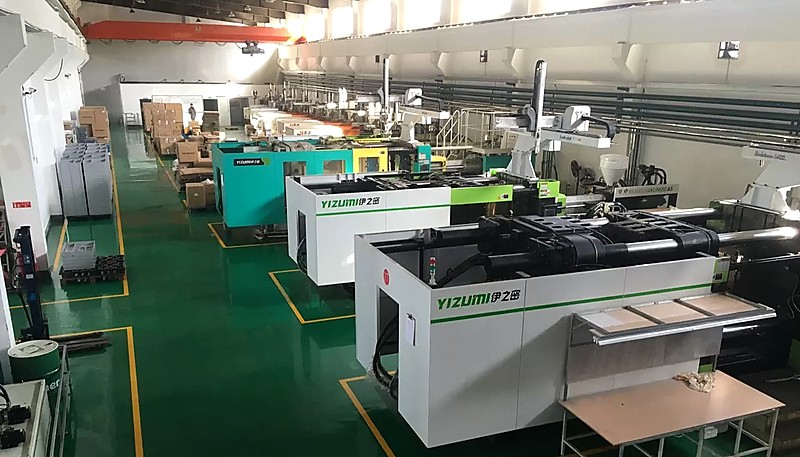
In our Shanghai factory, our team runs 47 injection molding machines from 90T to 1850T. For EVA parts, our engineers check low-viscosity melt behavior, venting, ejection area, and shrinkage risk before tooling, using 20+ years of molding experience and a 120+ staff production team to keep trial issues visible before volume production.
“EVA foam parts continue to expand for several seconds after the mold opens.”真
True. Unlike rigid thermoplastics that shrink on demolding, EVA foam parts continue expanding as residual blowing agent completes its reaction and trapped gas cells equilibrate. This means cooling fixtures are often needed to maintain dimensional accuracy during the first 2–5 minutes after ejection.
“Aluminum molds are never suitable for EVA injection molding production.”偽
False. Aluminum molds work for prototyping and low-to-medium volume EVA production (under 100,000 shots). EVA is non-abrasive and processes at relatively low temperatures, so aluminum tool life can reach 50,000–100,000 shots. For high-volume production, P20 steel is the standard choice.
What Industries Use EVA Injection Molding the Most?
This section is about industries use eva injection molding the most and its impact on cost, quality, timing, or sourcing risk. EVA’s combination of light weight, cushioning, and moisture resistance makes it dominant in four sectors:
Footwear (largest volume). Shoe midsoles, insoles, outsoles — EVA foam is the default material for athletic and casual footwear worldwide. The material can be color-matched, textured, and dual-density molded in a single shot. If you’re sourcing shoe molds, EVA compression molding (CMEVA3) is actually more common than injection for midsoles — but injection dominates for outsoles and smaller components.
Sports and protective equipment. Helmet liners, shin guards, knee pads, mouth guards. EVA absorbs impact energy without bottoming out, and it retains its properties across a wide temperature range (-40 °C to +80 °C for most grades).
Packaging. Protective inserts for electronics, medical devices, and fragile goods. EVA foam inserts can be molded to exact product shapes, providing better protection than cut PE foam at comparable cost for medium volumes (5,000–100,000 units).
Toys and consumer goods. Bath toys, pool floats, squeeze toys, grips, and handles. EVA’s non-toxic nature (food-contact grades are available) and soft feel make it suitable for children’s products, though you need to verify specific regulatory compliance (ASTM F963, EN 71) for your target market.
How Do EVA Processing Costs Compare to Other Materials?
EVA cost is not only resin price; it is also total 射出成形の生産時間、スクラップ率、脱型安定性、成形後冷却スペース。発泡体密度が変動したり、部品が長い平坦冷却を必要としたり、操作員が排出後に変形する柔らかい部品の仕分けに時間を費やしたりする場合、安価な材料でも依然として高コストになる可能性があります。
| Cost Factor | EVA vs PP/PE | EVA vs TPU |
|---|---|---|
| 原材料 | +30–70% | -20–40% |
| サイクルタイム | 30–60秒(長め、発泡体冷却) | 類似 |
| Mold cost | +10–20%(より厳しい公差) | 類似 |
| スクラップ率 | 5–8%(硬質プラスチックより高い) | 類似 |
| 後処理 | しばしばトリミング/バリ取りが必要 | 少ない |
結論:EVAは、軽量緩衝+成形性+色の選択肢の特定の組み合わせが必要な場合に費用効果が高いです。PPまたはPEで要件を達成できる場合は、それらはより安価です。柔軟性が必要だが耐化学性も必要な場合、TPUはアップグレードの選択肢です。
What Are the Best Practices for EVA Injection Molding Production?
EVA射出成形生産のベストプラクティスは、このセクションで説明する主要なカテゴリーまたはオプションです。数百の生産オーダーにわたるEVA部品の製造経験から、現場で実際に違いを生む要素は以下の通りです:
材料の扱い:成形前にEVAを60~70 °Cで2~4時間乾燥します。ナイロンのように水分を吸収しませんが、表面水分はスプレーマークと不均一なフォーム膨張を引き起こします。密封保管してください — 発泡剤は湿度にさらされると劣化します。
材料間で徹底的にパージしてください。EVAはシリンダー温度で動きがない場合、急速に劣化します。EVAから他の材料(または逆)に切り替える場合は、パージ剤で3~5ショットを実行してください。クロスコンタミネーションが生産全体を台無しにする事例を見ています — 分解したEVAからの酢酸は時間とともにシリンダーとスクリューを腐食します。
寸法だけでなく部品重量を監視してください。発泡部品では、重量が最良のプロセス指標です。重量管理チャート(X-bar R)を設定し、50〜100ショットごとにサンプリングします。±3%の重量変動は、寸法の問題が現れる前に何かが変化したことを示します — 通常はシリンダー温度または発泡剤の活性です。
脱型を考慮した設計。EVA発泡部品は金型から出たとき温かく柔らかいです。すぐに積み重ねると変形します。平坦な面で2〜5分間の空冷を計画するか、重要な寸法を持つ部品には冷却治具を使用してください。
私たちのチームは400以上のプラスチック材料の経験があり、緩衝、包装、消費財、医療関連用途に使用される複数のEVAグレードを含みます。ZetarMoldはISO 9001、ISO 13485、ISO 14001、ISO 45001システムに準拠して作業するため、EVA材料の選択、初品検査、包装検査、出荷検査は大量生産開始前に文書化できます。
EVA射出成形について買い手が尋ねる質問は何ですか?
よくある質問
EVA射出成形にはどの温度が使用されますか?
EVAは通常、160~220 °Cのシリンダー温度で加工され、金型温度は約20~40 °Cです。正確な設定はVA含有量、フォーム密度、部品の厚さ、および化学発泡剤の使用に依存します。重要なルールは過熱を避けることです。約250 °C以上では、EVAは分解し、酸性の副産物を放出し、臭気、褐色マーク、設備の腐食を引き起こします。低温から始め、溶融流動の安定性を確認し、試作中に温度を小さなステップで調整し、すべての変更を記録します。
EVAは標準的な機械で射出成形できますか?
はい、EVAは標準的な射出成形機で成形できますが、溶融体が柔軟で低粘度であるため、設定には注意が必要です。閉鎖式ノズルは垂れを防止し、一般用途スクリューは通常のグレードには十分です。金型は十分なベント、滑らかな流路、十分な離型面積を持つ必要があります。これは、EVAフォームが膨張後にキャビティに固着する可能性があるためです。生産において、より大きな課題は機械の適合性ではなく、各バッチ間の収縮、密度、寸法の繰り返し精度の制御です。
EVA射出成形部品の収縮率はどのくらいですか?
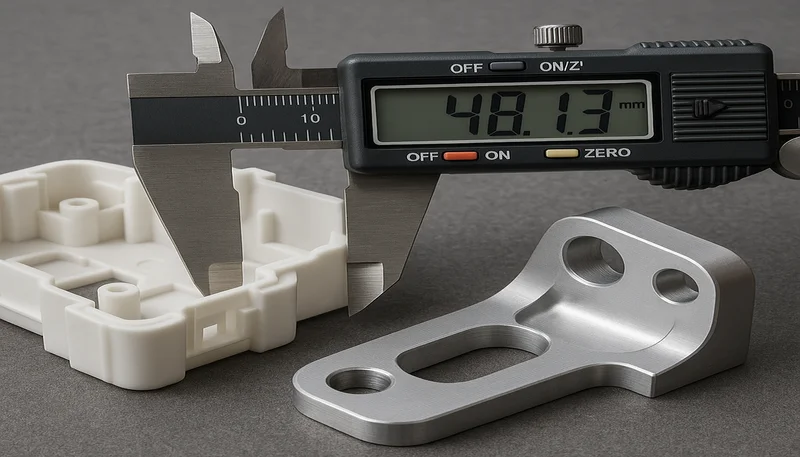
EVAの収縮率は通常1.0%から2.0%の範囲ですが、フォーム密度、VA含有量、肉厚、または金型温度が変化するとその範囲外になる可能性があります。VA含有量が高い場合と発泡が強い場合、一般に収縮率が増加します。これが、EVAの工具設計がCADの公称寸法のみから切削しないべき理由です。予想される収縮率を金型設計に組み込み、初品サンプルで確認します。重要な嵌合の場合、完全冷却後の部品を測定してください。EVAは離型後および保管後も緩和が続く可能性があります。
EVA射出成形発泡体はリサイクル可能ですか?
EVAは熱可塑性プラスチックなので、廃材は技術的に粉砕再処理できます。制限は、発泡EVAは最初の成形サイクル後に同じ構造に戻らないことです。これは発泡剤がすでに反応しているためです。再生材は通常、より密度が高く、不均一な部品を生産するので、非外観または非発泡用途に適しています。再生材含有量が必要な場合は、生産前に正確な再生材割合をテストし、検証試作中に密度、表面品質、臭気、収縮、反発の変化を監視してください。
EVA射出成形と圧縮成形の違いは何ですか?
射出成形は溶融したEVAを密閉された金型キャビティに押し込み、複雑な形状、多キャビティ金型、および大量生産に適しています。圧縮成形(CMEVA)は、あらかじめ計量されたEVAコンパウンドを開いた金型に入れ、熱と圧力で閉じるプロセスであり、圧縮により部品全体でより均一な発泡密度が得られるため、平らな靴の中底の標準的な製造方法です。射出成形はサイクルごとに速い(30〜60秒に対し、圧縮成形は4〜8分)ですが、より複雑な金型が必要です。ほとんどの履物部品では、部品形状と生産量の要件に応じて両方の方法が併用されます。
EVA成形部品にはどの肉厚が推奨されますか?
EVA射出成形フォームの場合、実用的な肉厚範囲は約1.5~4.0 mmです。1.5 mm以下の薄肉部分では安定したフォーム膨張が得られない可能性があり、4.0 mm以上の厚肉部分ではシンクマーク、不均一な密度、長い冷却時間が発生する可能性があります。肉厚は可能な限り均一に保ち、急激な変化を避けます。厚い緩衝が必要な場合は、一体の固形ブロックにする代わりに、リブ、空洞構造、または制御されたフォーム密度を使用します。初回サンプルでは寸法と反発感の両方を確認してください。



 EN
EN  ES
ES  FR
FR  DE
DE  PT
PT  AR
AR  RU
RU  JA
JA  KO
KO  IT
IT  NL
NL  TR
TR  PL
PL 