コンテンツへスキップ
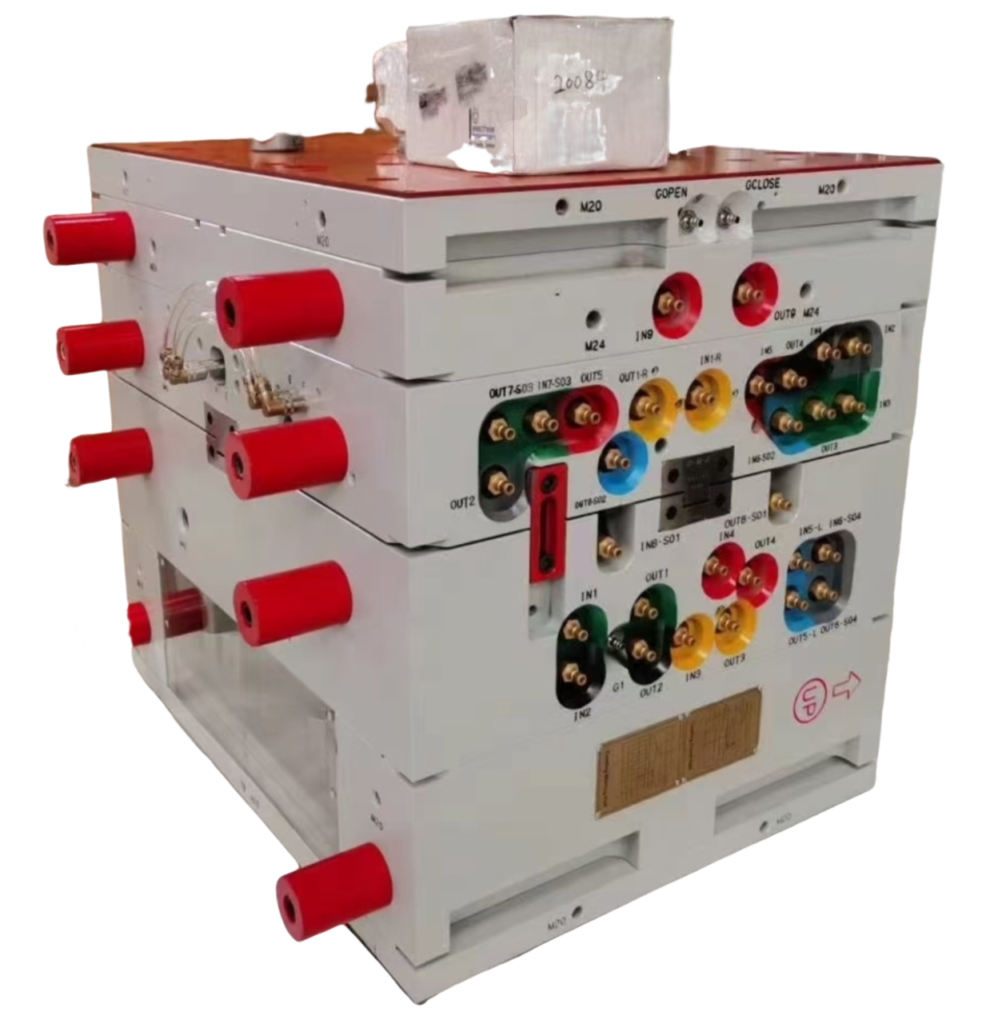
- Uniform wall thickness is the single most impactful DFM parameter — it controls fill, cooling, cycle time, and part strength simultaneously.
- Material-specific minimums: ABS 1.0–3.5mm, PC 1.0–4.0mm, PA6 0.8–3.0mm, PP 0.8–3.8mm, PEEK 0.4–6.5mm.
- Ribs must be 50–60% of nominal wall thickness and no taller than 3× wall to prevent sink marks and warpage.
- Every wall thickness transition requires a taper of at least 3:1 (length:thickness change) to avoid stress concentrations and knit lines.
- ZetarMold’s DFM audit shows wall thickness violations account for 40%+ of first-article failures — catching them before steel cuts saves $5,000–$25,000 per mold.
Why Does Wall Thickness Control Everything in Injection Molding?
A design engineer once brought us a PC housing with walls ranging from 0.8mm to 6.2mm in the same part. The tool ran for three weeks before we could hold a consistent cycle time. Wall thickness variation was the entire problem. When walls are uneven, thinner sections freeze first and restrict flow to thicker areas — causing short shots, sink marks, and unpredictable warpage. For the full injection molding process context, see our Injection Molding Complete Guide.
Uniform wall thickness is not a cosmetic preference. It governs fill pressure, cooling uniformity, cycle time, and structural performance. 熱可塑性プラスチック1 shrink as they cool, and non-uniform cooling creates differential 縮み2 — the root cause of warpage. Parts that look good in CAD can be structurally unsound and dimensionally unstable if wall thickness is not controlled from the design stage. For mold design specifications and tooling decisions, see our Injection Mold Complete Guide.
At ZetarMold, wall thickness violations account for 40%+ of first-article DFM failures in our review queue. The most common error: ribs designed at 100% of nominal wall — not the recommended 50–60% — causing sink marks on Class-A surfaces within the first 500 shots. Catching this in DFM review costs 4 hours; fixing it after T1 costs 2–4 weeks and $3,000–$8,000 in steel rework.
What Are the Wall Thickness Ranges for Common Injection Molding Materials?
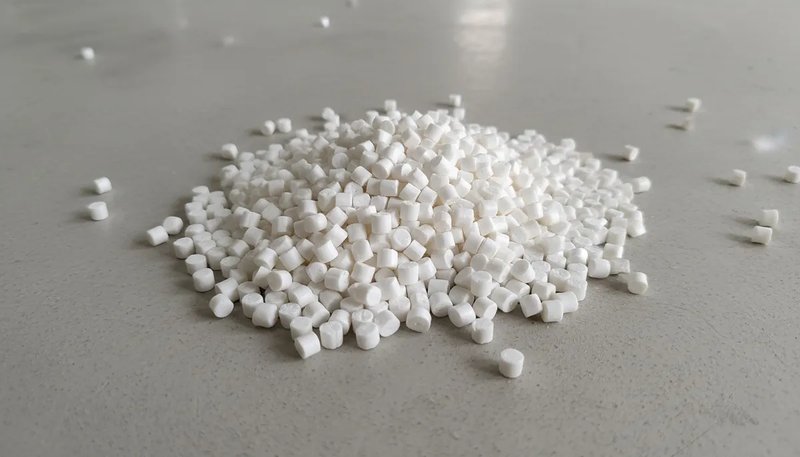
Every thermoplastic has a processable wall thickness range determined by its melt viscosity, thermal conductivity, and shrinkage rate. Outside this range, you get either short shots (too thin) or excessive sink marks and cycle time (too thick). These ranges assume standard processing conditions; thin-wall applications with high injection speed and optimized tooling can push below the minimums.
| 素材 | Min (mm) | Typical (mm) | Max (mm) | 備考 |
|---|---|---|---|---|
| ABS | 1.0 | 1.5–3.0 | 3.5 | Good flow; cosmetic grades need uniform wall for sink control |
| PC | 1.0 | 2.0–3.5 | 4.0 | High viscosity; avoid sharp corners, requires generous draft |
| PA6 (Nylon) | 0.8 | 1.5–3.0 | 3.0 | Hygroscopic; dry before processing; low warpage at uniform thickness |
| PP | 0.8 | 1.5~3.5 | 3.8 | High shrinkage (1.5–2.0%); warpage-prone with non-uniform walls |
| 覗き見 | 0.4 | 1.0–4.5 | 6.5 | High processing temp (380°C+); excellent dimensional stability |
| PC/ABS | 1.0 | 1.5–3.0 | 3.5 | Balanced flow/strength; preferred for enclosures |
| PA66-GF30 | 1.0 | 1.5~3.5 | 4.0 | Reduced shrinkage vs unfilled; anisotropic warpage risk |
How Do You Design Ribs and Bosses Without Causing Sink Marks?
Ribs are the leading cause of sink marks on Class-A surfaces. The rule is simple but frequently violated: rib thickness must be 50–60% of nominal wall thickness. At 100% wall thickness, the rib base creates a localized thick section that takes longer to cool — pulling material from the outer surface and creating a visible depression. At 40% or less, the rib fills poorly and has insufficient structural strength.
Rib height adds a second constraint: no taller than 3× the nominal wall thickness. Taller ribs cause jetting, poor fill, and high ejection stress. For cosmetic surfaces, limit rib height to 2× wall and ensure the draft angle is at minimum 0.5° per side — 1° preferred — to prevent scoring during ejection.
Bosses follow the same 50–60% rule for outer wall thickness relative to the nominal part wall. The boss core diameter determines the screw thread size; the outer wall is what creates sink risk. Add a rib from the boss to a nearby structural wall if the boss height exceeds 2× its outer diameter — unsupported bosses crack under torque loading in assembly.
What Happens When Wall Thickness Transitions Are Too Abrupt?
Abrupt wall transitions create two problems simultaneously: flow hesitation and stress concentration. When melt hits a sudden thick section after a thin one, it can hesitate and create a weld line or cold slug. When a thin section follows a thick one, the thin section freezes first and constrains the still-cooling thick section — generating residual stress that warps the part after ejection.
The design rule is a taper of at least 3:1 — for every 1mm of thickness change, allow 3mm of taper length. For critical structural parts or optical components, use 5:1 or greater. 金型流動解析3 reliably identifies abrupt transitions before steel is cut; any thickness ratio above 2:1 between adjacent wall sections should trigger a flow simulation review.
How Does Wall Thickness Affect Cycle Time and Cost?
Cycle time is dominated by cooling time, and cooling time scales with the square of wall thickness. A part with 3mm walls takes approximately 4× longer to cool than a 1.5mm wall part — not 2×. This is the most important formula in injection molding economics: doubling wall thickness quadruples cooling time, which directly multiplies unit cost at high volume.
For structural enclosures where thick walls seem necessary, evaluate rib-reinforced thin walls instead. A 1.5mm wall with properly designed ribs can match the structural performance of a 3.0mm solid wall at half the cycle time. The tooling cost increase for ribbed design is typically $2,000–$5,000; the savings at 500,000 parts/year often exceeds $80,000 annually in cycle time reduction alone.
How to Calculate Optimal Wall Thickness for Your Part
At our factory, switching from 3.0mm to 1.8mm wall thickness on a PC/ABS enclosure program reduced cycle time from 48 seconds to 31 seconds — a 35% reduction. At 400,000 parts/year on a 4-cavity tool, this saved the customer $62,000 annually in machine time, while the rib-reinforced 1.8mm wall met the same structural drop-test requirements as the original 3.0mm design.
The cost penalty of over-thick walls compounds at production volume. A 0.5mm reduction in wall thickness — from 2.5mm to 2.0mm — reduces cooling time by 36%. On a 16-cavity tool running 2 million parts per year, that 36% cycle time reduction can save $40,000–$80,000 annually in machine time. The tooling modification cost for a wall thickness adjustment is typically $500–$2,000 — one of the highest ROI changes available before T1.
Gate location relative to thick sections is the second critical parameter after wall thickness uniformity. Placing the gate at the thickest section ensures fill pressure reaches thin areas before the thick section freezes. Gating into a thin section causes hesitation marks and incomplete fill in thick zones. Mold flow analysis verifies gate position for any design where wall ratio exceeds 1.5:1 between gate-proximal and gate-distal sections.
“Uniform wall thickness is the highest-ROI DFM change available before tooling authorization.”真
Wall thickness uniformity affects fill, cooling, shrinkage, cycle time, and structural performance simultaneously. A DFM audit that enforces uniform wall — typically a 4-hour engineering review — prevents the most common causes of first-article failure. At our factory, wall thickness corrections caught in DFM review save an average of 2.3 revision rounds per mold, worth $6,000–$20,000 in steel rework avoidance.
“Thicker walls always produce stronger injection molded parts.”偽
Beyond material-specific optimal thickness ranges, additional wall thickness adds weight and cycle time without proportional strength gain. Structural efficiency peaks at 1.5–3.0mm for most engineering thermoplastics. Above this range, the dominant failure modes shift from material strength to residual stress, warpage, and sink marks — all of which reduce effective load-bearing performance. Ribbed thin-wall designs consistently outperform solid thick-wall equivalents in both strength-to-weight ratio and dimensional stability.
Wall thickness decisions cascade through the entire manufacturing process. A part designed with 3.0mm walls where 1.5mm would suffice carries 4× the cooling time penalty — and that penalty compounds across every production run. Mold flow analysis quantifies these tradeoffs before tooling authorization, giving engineering teams the data to make informed thickness decisions rather than conservative overestimates. Accounting for these dynamics early — in the concept design phase, not after T0 — is the difference between a program that runs on schedule and one that spends months in revision cycles chasing dimensional stability.
“Mold flow analysis can predict wall thickness-related defects before T1 samples are cut.”真
Modern mold flow simulation accurately predicts fill pressure, weld line location, sink mark depth, and warpage magnitude caused by wall thickness variation. Mold flow analysis catches 80%+ of thickness-related defects before steel is cut, at a cost of $500–$2,000 per simulation run. For production programs above 100,000 parts/year, mold flow analysis delivers positive ROI on every program by eliminating at least one T1 revision cycle.
「非外観面では、リブ肉厚を公称肉厚と同等にすることは許容される。」偽
過厚なリブによるシンクマークは、表面外観に限定されない — 局所的な収縮差を示し、内部応力を生み出し疲労寿命を低下させる。非外観面であっても、100%の肉厚リブは寸法変動を引き起こし、組立適合性に影響を与える。50–60%のリブ肉厚ルールは、外観分類に関係なく適用される。唯一の例外は、FEA解析により確認された荷重支持用途の構造リブである。
射出成形における金型壁厚に関するよくある質問

射出成形における最小壁厚は何ですか?
最小肉厚は材料と部品形状に依存します。標準的なABSおよびPCでは、従来の金型では実用的な最小値は1.0mmです。ナイロン(PA6/PA66)およびPPでは、最適化されたゲート設計と高速射出速度により0.8mmが達成可能です。PEEKおよびLCPは、特殊な薄肉金型で0.4mmに達することができます。最小肉厚を下回ると、キャビティが完全に充填される前に溶融樹脂が固化し、ショートショットが発生します。当社の工場では、充填信頼性が95%以上であることを確認するため、金型承認前に1.2mm未満のすべての肉厚を金型流動解析で検証しています。
壁厚はどのように収縮や反りに影響するのでしょうか?
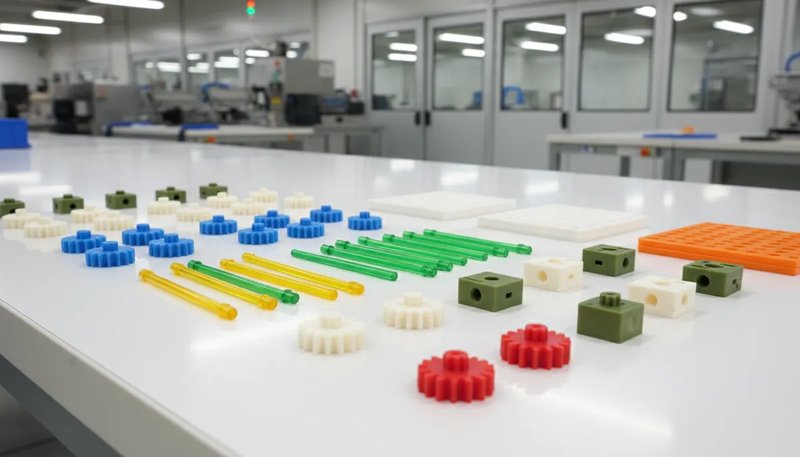
不均一な肉厚は、異なる収縮を引き起こします—厚い部分は薄い部分よりも冷却が遅く、収縮が大きくなります。この収縮の差は、脱型後に部品を反らせる内部応力を生成します。PPやPA6などの半結晶性材料では、厚い部分の収縮率は1.5〜2.5%、薄い部分では0.5〜1.0%に達することがあり、3倍の差が生じ、混合肉厚の部品で重大な反りを引き起こします。解決策は、肉厚の変動を10〜15%以内に均一に保ち、金型流動解析で冷却バランスを確認することです。反りシミュレーションは、金型製作前にたわみ量を正確に予測します。
壁厚が変化する部品を射出成形できますか?
はい、ただし変化は段階的な遷移で管理する必要があります。設計ルールは3:1のテーパー比です—肉厚の変化1mmごとに3mmのテーパー長さが必要です。急激な遷移は、流動遅れ、溶着線、残留応力を生じさせます。重要な光学部品や構造部品では、5:1以上の比率を使用してください。単一部品内で肉厚の変動が50%を超える場合、金型流動解析が不可欠です。当社の工場では、肉厚比が2:1を超える設計は、DFM承認前に必須の流動シミュレーションを実施するようフラグを立てています。
射出成形部品における理想的なリブ対壁厚比は何ですか?
標準的な比率は、公称肉厚の50〜60%です。公称肉厚2.0mmの場合、リブの基部の厚さは1.0〜1.2mmであるべきです。70%以上では、最初の100〜500ショット以内に対向面にシンクマークが目視可能になります。40%以下では、リブの充填が不十分で、構造荷重を十分に支えられません。リブの高さは公称肉厚の3倍を超えてはならず、抜き勾配は最低でも片側0.5°である必要があります。これらのルールは材料に関係なく適用されます—収縮によるシンクマーク形成の物理現象は、ABS、PC、ナイロン、PPで同じです。
壁厚は射出成形コストにどのくらい影響しますか?
肉厚はサイクルタイムを通じてコストに直接的かつ重大な影響を与えます。冷却時間—射出成形サイクルタイムの主要な要素—は肉厚の2乗に比例します。肉厚3.0mmの部品は、同じ部品が1.5mmの場合と比べて約4倍の冷却時間を要し、生産量に応じて単位コストを直接増加させます。年間50万個の生産では、この差は年間製造コストで6万〜12万円を占める可能性があります。さらに、1.0mm未満または4.0mmを超える肉厚は、特殊な金型と加工を必要とし、初期金型コストに5,000〜2万円を追加します。
肉厚は冷却時間とサイクルコストにどのように影響しますか?
冷却時間は肉厚のほぼ2乗に比例して増加します—肉厚を2倍にすると冷却時間は約4倍になり、サイクルタイムと部品単価に直接影響します。したがって、均一な肉厚を維持することは、構造上および生産効率上の要件です。肉厚が厚い部分は、シンクマークや反りのリスクがあるだけでなく、成形サイクルを大幅に延長し、1シフトあたりのプレス出力を低下させます。
- ロザート、D.V. & ロザート、M.G. Injection Molding Handbook、第3版。Springer、2000年 — 熱可塑性プラスチックの肉厚設計原則。
- ハーパー、C.A.(編) プラスチック技術ハンドブック. マグロウヒル、2006 — 材料固有の加工範囲と収縮データ。
- ブライス、D.M. プラスチック射出成形:金型設計と構築の基礎. SME、1998 — リブとボスの設計ルール、テーパー比。
-
thermoplastics: 熱可塑性プラスチックは、加熱すると溶融し、冷却すると固化するポリマーであり、繰り返し加工が可能です。これらは射出成形の主要な材料クラスであり、ABS、PC、PA6、PP、および数百種類のエンジニアリンググレードを含みます。 ↩
-
shrinkage: 収縮とは、成形部品が溶融温度から室温まで冷却される際に起こる体積減少を指します。不均一な肉厚によって引き起こされる不均一な収縮は、反りとシンクマークの主要な原因です。 ↩
-
mold flow analysis: 金型流動解析は、鋼材が切削される前に、金型キャビティ内のプラスチック溶融流動、冷却、収縮をモデル化するコンピュータシミュレーションです。肉厚の変動による充填バランスの不均一、溶着線、熱的ホットスポットを特定します。 ↩




 EN
EN  ES
ES  FR
FR  DE
DE  PT
PT  AR
AR  RU
RU  JA
JA  KO
KO  IT
IT  NL
NL  TR
TR  PL
PL