Why Do You Need a Supplier Onboarding Checklist?
Choosing a new fornitore di stampaggio a iniezione is a six-figure decision. A single bad mold can cost $15,000–$80,000 in rework and delay your product launch by months. Yet many buyers skip structured onboarding and jump straight to placing a purchase order based on a quotation email and a factory tour photo. A formal onboarding checklist protects both sides. It forces the supplier to demonstrate capability before you commit production volume, and it gives your engineering team a clear decision framework instead of gut feeling.
In this guide, we walk through every gate — from signing an NDA to approving that first production shipment — so you can avoid the expensive surprises we have seen over 20+ years of helping overseas buyers source molds and molded parts from China.
- A written onboarding checklist reduces supplier failure risk by forcing proof of capability at every stage.
- NDA and IP protection must be signed before sharing any 3D CAD data or mold design files.
- Factory audit should verify machines, certifications, and actual production samples — not just brochures.
- T1 sample approval is the most critical gate: never skip dimensional reports and material certs.
- First shipment documentation is your baseline for future quality tracking.
What Should Be in the NDA and IP Protection Agreement?
Il tuo progettazione di stampi is intellectual property. Before you send a 3D CAD file, STEP file, or even a 2D drawing to a prospective supplier, both parties must sign a Non-Disclosure Agreement (NDA) that explicitly covers mold design ownership, part geometry data, and any process know-how you share during quotation.
In practice, a strong NDA for injection molding should include three clauses that generic NDAs often miss: (1) mold ownership confirmation — stating that all mold designs, revisions, and the physical mold tooling belong to you, the buyer; (2) non-compete on your part geometry — the supplier cannot produce identical or derivative parts for other customers; and (3) data handling scope — specifying that CAD files may only be used for quoting and production of your parts, not for the supplier’s internal R&D or portfolio. If you are sourcing from China, make sure the NDA is bilingual (Chinese and English) and governed by Chinese contract law, since enforcement happens in the supplier’s jurisdiction.
A one-page NDA signed over email is better than nothing, but a formal contract reviewed by a China-qualified attorney is what actually holds up in a dispute.
At ZetarMold, we sign customer NDAs daily — it is standard operating procedure, not a special request. With 20+ years of experience serving overseas buyers and 30+ English-speaking project managers, we understand that IP protection is non-negotiable and have the bilingual legal framework ready.
How to Evaluate the Factory Capabilities and Certifications?
After the NDA is in place, the next gate is verifying that the factory can actually do what their website claims. This means checking three things: equipment capability, quality system certifications, and real production evidence. Start with the machine list. Ask the supplier for a tonnage range of their stampaggio a iniezione machines and whether they have machines suitable for your part size. A factory that only has 100T presses cannot mold a 2-kilogram automotive housing, no matter how enthusiastic the sales rep sounds. Also ask about auxiliary equipment: do they have dryers, automated part removal robots, and in-line weighing systems?
On certifications, ISO 90011 is the minimum you should accept. If your parts are medical, look for ISO 134852.
If environmental compliance matters (it increasingly does for EU and US buyers), ISO 140013 signals the factory has structured environmental management. These are not just wall certificates — ask for the latest audit report and the registrar’s name so you can verify the certificate is current and not expired.
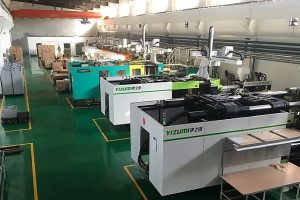
ZetarMold operates 47 injection molding machines ranging from 90T to 1850T in our Shanghai factory, with in-house mold manufacturing capability. We maintain ISO 9001, ISO 13485, ISO 14001, and ISO 45001 certifications — all current and audited annually.

What Questions to Ask During the Mold Design Review?
“A formal NDA should specify that all mold designs and physical tooling belong to the buyer.”Vero
Correct. Mold ownership and part geometry IP should be explicitly stated in the NDA before any CAD data is shared with the supplier.
“A generic NDA template signed over email provides sufficient protection for mold design IP in China.”Falso
False. For China-based suppliers, a bilingual NDA governed by Chinese contract law and reviewed by a qualified attorney is necessary for enforceable protection.
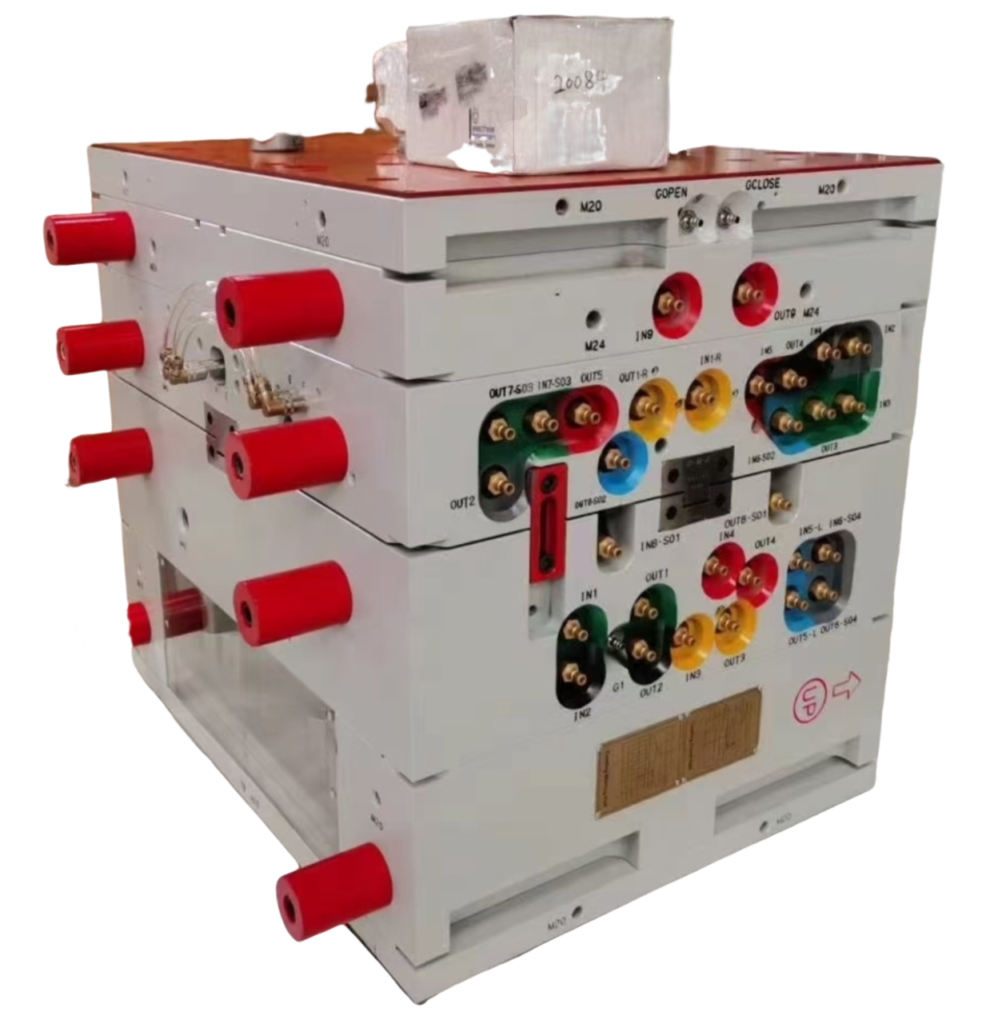
Once you approve the quotation, the supplier starts mold design. This is your best opportunity to catch problems before steel is cut. A proper mold design review should cover these areas:
Gate location and type: Where will the plastic enter the cavity? Edge gates, submarine gates, and hot-runner drops each have different flow patterns, weld-line positions, and gate vestige requirements. If appearance matters on a specific surface, make sure the gate is not placed there. Draft angle and parting line: Does the stampo a iniezione design include adequate draft (typically 0.5°–2° per side) for ejection without drag marks? Is the parting line positioned where flash will be invisible or easy to trim?
Cooling layout: Cooling channels determine cycle time and part warpage. Ask for a cooling layout diagram and confirm the supplier has considered conformal cooling if your part geometry is complex. Ejection method: Pins, sleeves, stripper plates, or lifters — the choice depends on part geometry and cosmetic requirements. Undersized ejector pins cause pin marks or even push-through on thin-wall parts. Material selection for the mold base and cavities: P20 is standard for low-volume production, but H13 or S136 hardened steel is necessary for glass-filled resins or runs exceeding 500,000 shots.
“T1 sample approval should always include physical sample inspection, not just photographs.”Vero
Correct. Photos cannot verify material feel, color accuracy, fit with mating parts, or subtle surface defects — physical samples are essential for proper T1 approval.
“If T1 samples pass dimensional inspection, you can skip the process parameter recording and go straight to production.”Falso
False. Recording injection pressure, holding time, melt temperature, mold temperature, and cycle time during T1 is critical — these become your locked process baseline for all future production runs.
How to Set Up Quality Acceptance Criteria and First Article Inspection?
Before any steel is cut or sample is molded, you and the supplier must agree on measurable acceptance criteria. “Good quality” is not a specification. You need a formal First Article Inspection (FAI) plan that covers:
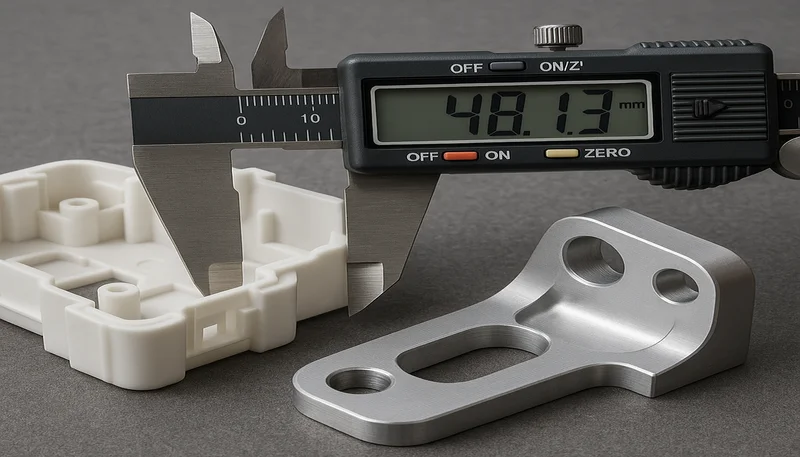
Dimensional inspection: Which critical dimensions will be measured, with what tolerance, and using which measurement tool (caliper, CMM, or optical comparator)? List every critical dimension on the drawing and assign it a tolerance class. Material certification: The supplier must provide a Certificate of Analysis (CoA) from the resin manufacturer confirming the material grade, lot number, and key properties (MFI, tensile strength, density). Never accept a substitute material without written approval. Visual and cosmetic standards: Define acceptable surface finish using SPI standards (A-1 through D-3).
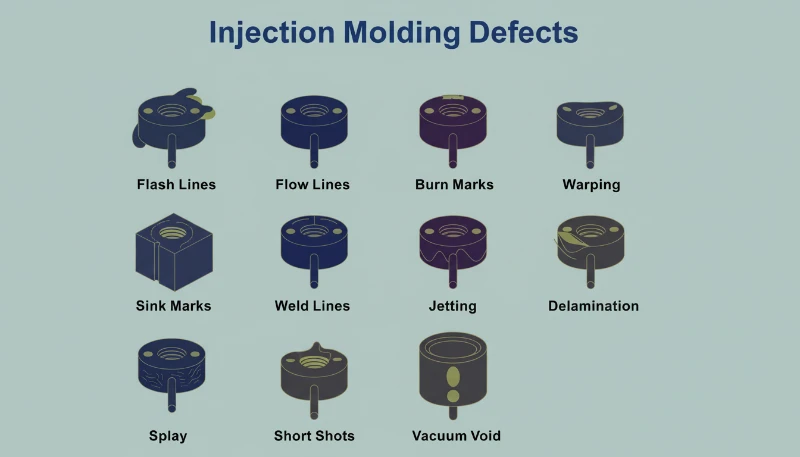
Specify whether sink marks, flow lines, weld lines, or gate vestige are acceptable and to what degree. A boundary sample (an approved physical reference part) is the most reliable way to align expectations. Functional testing: If the part has snap fits, living hinges, or assembly interfaces, include a functional test in the FAI protocol — not just dimensional checks. Color matching: For colored parts, use a spectrophotometer reading (Delta E) against a master standard. Visual comparison alone is unreliable across different lighting conditions.
What Does a T1 Sample Approval Process Look Like?
T1 (Trial 1) is the first full sample shot from the completed mold. It is the single most important quality gate in the entire onboarding process. Here is what a proper T1 approval should include:
Dimensional report: The supplier measures all critical dimensions per the FAI plan and provides a dimensional report (often called an ISIR — Initial Sample Inspection Report). Every dimension should be listed with nominal, tolerance, actual measured value, and pass/fail status. Material certificate: Confirm the exact resin grade and lot used for T1 matches your specification. Process parameter record: Record injection pressure, holding pressure, melt temperature, mold temperature, cooling time, and cycle time. These become your baseline process parameters for production.
Visual inspection against boundary sample: Compare the T1 part against the agreed cosmetic standard. Photograph any defects and classify them as acceptable, conditionally acceptable (with rework), or reject. You should expect T1 to need minor adjustments — that is normal. The key is whether the deviations are within adjustable range (tweaking process parameters) or require mold modification (cutting steel). If steel modification is needed, document it, agree on the timeline and cost responsibility, and proceed to T2. Never approve a T1 sample based on photos alone. Insist on receiving physical samples by courier so your engineering team can do hands-on inspection, test fit with mating parts, and verify material feel and color in person.
How to Manage the Transition from Sampling to Production?
Getting from approved samples to stable production volume is where many buyer-supplier relationships break down. The sample looked great, but production parts arrive with flash, short shots, or dimensional drift. Here is how to prevent that gap:
Lock process parameters: The injection pressure, holding time, melt temperature, and mold temperature recorded during T1 approval must become the locked process sheet for production. Any deviation from these parameters should require written approval from your quality team. Statistical process control (SPC): For production runs above 1,000 pieces, ask the supplier to run SPC on critical dimensions. Cpk values above 1.33 indicate a capable process; below 1.0 means you will get out-of-tolerance parts regularly.
Incoming quality inspection at your end: Even with a great supplier, set up your own incoming inspection protocol. Measure 5–10 parts per shipment against the FAI baseline. Track trends over time — gradual dimensional drift signals mold wear. Packaging and labeling standards: Define how parts should be packed (bag quantity, layer separation, humidity protection for hygroscopic materials) and labeled (part number, lot number, production date). Poor packaging causes as much damage as poor molding.
With an in-house mold manufacturing facility capable of 100+ mold sets per month and 8 senior engineers overseeing tool design, ZetarMold handles the full sampling-to-production transition internally — no outsourcing of mold modifications or trial shots to third parties.
What Documentation Should You Receive at First Shipment?
The first production shipment is not just boxes on a pallet — it is your baseline reference for every future order. Insist on receiving the following documentation with the first shipment:
1. Material Certificate of Analysis (CoA): Confirms the resin grade, manufacturer, lot number, and tested properties match your specification.
2. Final dimensional inspection report: Full measurement of all critical dimensions on a statistically valid sample (typically 5–10 pieces from the beginning, middle, and end of the production run). This becomes your reference baseline.
3. Process parameter sheet: Locked injection molding parameters (pressures, temperatures, times) used for this production run.
4. Visual inspection report: Photographs of sampled parts, any accepted minor defects documented and classified.
5.
Packaging and labeling confirmation: Photos of how the parts were packed, including humidity protection measures.
6. Material safety data sheet (MSDS/SDS): Required for customs clearance and workplace safety compliance in most jurisdictions.
7. Commercial invoice and packing list: Standard trade documents for customs and payment processing. Keep all of these documents in a project folder tied to this part number. When you reorder six months later and dimensions have drifted, you will know exactly what changed because you have the first shipment data to compare against. This onboarding checklist approach — from NDA through first shipment — transforms supplier management from reactive firefighting into a repeatable engineering process.
Store all first shipment documents in a dedicated project folder tied to this part number. When you reorder six months later and dimensions have drifted, or a new batch uses a different resin lot, you will have the original baseline to compare against. This documentation discipline — simple but consistently applied — is what separates reliable supply chains from chaotic ones. Suppliers who push back on providing these documents at first shipment are signaling a quality culture gap that will only get worse over time.
Domande frequenti
What is the typical timeline for onboarding a new injection molding supplier?
The full onboarding process from NDA signing to first production shipment typically takes 8 to 16 weeks, depending on mold complexity. A simple open-and-shut mold can go from design approval to T1 samples in 4 to 6 weeks, while complex multi-cavity molds with side actions may take 10 to 14 weeks for mold fabrication alone. Factor in 2 to 3 weeks for T1 sample evaluation, any required mold modifications, and another 1 to 2 weeks for first production run and shipment.
What certifications should an injection molding supplier have?
What certifications should an injection molding supplier have? At minimum, ISO 9001 certification is required for any qualified injection molding supplier, as it demonstrates a structured quality management system. For medical device components, ISO 13485 is mandatory to meet regulatory requirements in most markets. Environmentally conscious buyers — especially those supplying EU customers — should look for ISO 14001 environmental management certification. ISO 45001 indicates structured occupational health and safety management. Always verify that certificates are current by checking with the issuing registrar, as expired certifications are a common red flag during supplier audits.
Can I use the same NDA for all Chinese injection molding suppliers?
Can I use the same NDA for all Chinese injection molding suppliers? You can use a template NDA, but it should be reviewed by a China-qualified attorney before first use to ensure enforceability. Key elements must include bilingual text in both Chinese and English, governing law under Chinese jurisdiction, explicit mold ownership clauses stating that tooling belongs to the buyer, non-compete provisions preventing the supplier from producing identical parts for competitors, and clear data handling scope specifying that CAD files may only be used for your parts. Once properly reviewed, the template can be reused with minor supplier-specific modifications for each new vendor relationship.
What is the difference between T1 and first article inspection?
What is the difference between T1 and first article inspection? T1 refers to the first trial shot from a completed mold, focusing specifically on mold validation — confirming that the mold produces parts to specification with correct gate location, fill pattern, and dimensional accuracy. First Article Inspection (FAI) is a broader quality documentation process that includes dimensional measurement against the drawing, material certification from the resin supplier, visual inspection against boundary samples, and functional testing of mating interfaces. T1 approval is one important input into the FAI process, but FAI covers the complete quality record package for the first production run and serves as the ongoing quality baseline.
How do I verify that production parts match the approved T1 samples?
How do I verify that production parts match the approved T1 samples? Lock the process parameters from T1 approval — specifically injection pressure, holding pressure, melt temperature, mold temperature, and cycle time — as the production standard. Require the supplier to run Statistical Process Control (SPC) on critical dimensions for production runs exceeding 1,000 pieces, targeting Cpk values above 1.33 to confirm process capability. Conduct your own incoming inspection on every shipment by measuring 5 to 10 parts against the FAI baseline. Track dimensional trends over multiple shipments to detect gradual drift that signals mold wear before it produces out-of-tolerance parts.
What documents should accompany the first production shipment from a new supplier?
What documents should accompany the first production shipment from a new supplier? The first shipment from a new injection molding supplier must include: a material Certificate of Analysis (CoA) confirming resin grade and lot number, a final dimensional inspection report with statistical sampling across the production run, a locked process parameter sheet from the approved production run, a visual inspection report with photographs of sampled parts, packaging and labeling confirmation photos showing humidity protection, a material safety data sheet (MSDS) for customs and workplace compliance, and standard trade documents including commercial invoice and packing list. These documents collectively become your quality baseline for all future orders and your reference for detecting changes.
-
ISO 9001: ISO 9001 refers to the international standard for quality management systems published by ISO, defining requirements for organizations to demonstrate consistent product and service quality. ↩
-
ISO 13485: ISO 13485 refers to the international standard for quality management systems in medical devices, specifying requirements for regulatory compliance throughout the device lifecycle. ↩
-
ISO 14001: ISO 14001 refers to the international standard for environmental management systems, providing a framework for organizations to minimize environmental impact while maintaining compliance. ↩



 EN
EN  ES
ES  FR
FR  DE
DE  PT
PT  AR
AR  RU
RU  JA
JA  KO
KO  IT
IT  NL
NL  TR
TR  PL
PL