

- Uniform wall thickness is the single most impactful DFM parameter — it controls fill, cooling, cycle time, and part strength simultaneously.
- Material-specific minimums: ABS 1.0–3.5mm, PC 1.0–4.0mm, PA6 0.8–3.0mm, PP 0.8–3.8mm, PEEK 0.4–6.5mm.
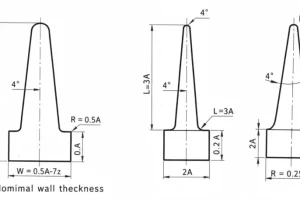
- Ribs must be 50–60% of nominal wall thickness and no taller than 3× wall to prevent sink marks and warpage.
- Every wall thickness transition requires a taper of at least 3:1 (length:thickness change) to avoid stress concentrations and knit lines.
- ZetarMold’s DFM audit shows wall thickness violations account for 40%+ of first-article failures — catching them before steel cuts saves $5,000–$25,000 per mold.
Why Does Wall Thickness Control Everything in Injection Molding?
A design engineer once brought us a PC housing with walls ranging from 0.8mm to 6.2mm in the same part. The tool ran for three weeks before we could hold a consistent cycle time. Wall thickness variation was the entire problem. When walls are uneven, thinner sections freeze first and restrict flow to thicker areas — causing short shots, sink marks, and unpredictable warpage. For the full injection molding process context, see our Injection Molding Complete Guide.
Uniform wall thickness is not a cosmetic preference. It governs fill pressure, cooling uniformity, cycle time, and structural performance. termoplastica1 shrink as they cool, and non-uniform cooling creates differential restringimento2 — the root cause of warpage. Parts that look good in CAD can be structurally unsound and dimensionally unstable if wall thickness is not controlled from the design stage. For mold design specifications and tooling decisions, see our Injection Mold Complete Guide.
At ZetarMold, wall thickness violations account for 40%+ of first-article DFM failures in our review queue. The most common error: ribs designed at 100% of nominal wall — not the recommended 50–60% — causing sink marks on Class-A surfaces within the first 500 shots. Catching this in DFM review costs 4 hours; fixing it after T1 costs 2–4 weeks and $3,000–$8,000 in steel rework.
What Are the Wall Thickness Ranges for Common Injection Molding Materials?
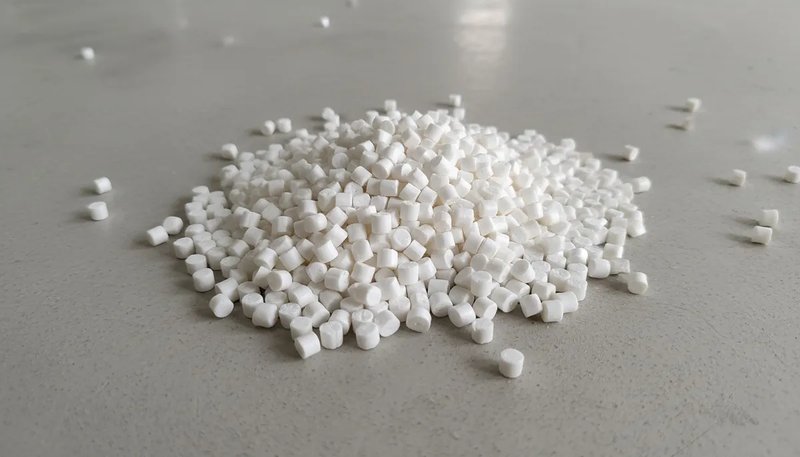
Every thermoplastic has a processable wall thickness range determined by its melt viscosity, thermal conductivity, and shrinkage rate. Outside this range, you get either short shots (too thin) or excessive sink marks and cycle time (too thick). These ranges assume standard processing conditions; thin-wall applications with high injection speed and optimized tooling can push below the minimums.
| Materiale | Min (mm) | Typical (mm) | Max (mm) | Note |
|---|---|---|---|---|
| ABS | 1.0 | 1.5–3.0 | 3.5 | Good flow; cosmetic grades need uniform wall for sink control |
| PC | 1.0 | 2.0–3.5 | 4.0 | High viscosity; avoid sharp corners, requires generous draft |
| PA6 (Nylon) | 0.8 | 1.5–3.0 | 3.0 | Hygroscopic; dry before processing; low warpage at uniform thickness |
| PP | 0.8 | 1.5–3.5 | 3.8 | High shrinkage (1.5–2.0%); warpage-prone with non-uniform walls |
| SETTIMANA | 0.4 | 1.0–4.5 | 6.5 | High processing temp (380°C+); excellent dimensional stability |
| PC/ABS | 1.0 | 1.5–3.0 | 3.5 | Balanced flow/strength; preferred for enclosures |
| PA66-GF30 | 1.0 | 1.5–3.5 | 4.0 | Reduced shrinkage vs unfilled; anisotropic warpage risk |
How Do You Design Ribs and Bosses Without Causing Sink Marks?
Ribs are the leading cause of sink marks on Class-A surfaces. The rule is simple but frequently violated: rib thickness must be 50–60% of nominal wall thickness. At 100% wall thickness, the rib base creates a localized thick section that takes longer to cool — pulling material from the outer surface and creating a visible depression. At 40% or less, the rib fills poorly and has insufficient structural strength.
Rib height adds a second constraint: no taller than 3× the nominal wall thickness. Taller ribs cause jetting, poor fill, and high ejection stress. For cosmetic surfaces, limit rib height to 2× wall and ensure the draft angle is at minimum 0.5° per side — 1° preferred — to prevent scoring during ejection.
Bosses follow the same 50–60% rule for outer wall thickness relative to the nominal part wall. The boss core diameter determines the screw thread size; the outer wall is what creates sink risk. Add a rib from the boss to a nearby structural wall if the boss height exceeds 2× its outer diameter — unsupported bosses crack under torque loading in assembly.
What Happens When Wall Thickness Transitions Are Too Abrupt?
Abrupt wall transitions create two problems simultaneously: flow hesitation and stress concentration. When melt hits a sudden thick section after a thin one, it can hesitate and create a weld line or cold slug. When a thin section follows a thick one, the thin section freezes first and constrains the still-cooling thick section — generating residual stress that warps the part after ejection.
The design rule is a taper of at least 3:1 — for every 1mm of thickness change, allow 3mm of taper length. For critical structural parts or optical components, use 5:1 or greater. analisi del flusso dello stampo3 reliably identifies abrupt transitions before steel is cut; any thickness ratio above 2:1 between adjacent wall sections should trigger a flow simulation review.
How Does Wall Thickness Affect Cycle Time and Cost?
Cycle time is dominated by cooling time, and cooling time scales with the square of wall thickness. A part with 3mm walls takes approximately 4× longer to cool than a 1.5mm wall part — not 2×. This is the most important formula in injection molding economics: doubling wall thickness quadruples cooling time, which directly multiplies unit cost at high volume.
For structural enclosures where thick walls seem necessary, evaluate rib-reinforced thin walls instead. A 1.5mm wall with properly designed ribs can match the structural performance of a 3.0mm solid wall at half the cycle time. The tooling cost increase for ribbed design is typically $2,000–$5,000; the savings at 500,000 parts/year often exceeds $80,000 annually in cycle time reduction alone.
How to Calculate Optimal Wall Thickness for Your Part
At our factory, switching from 3.0mm to 1.8mm wall thickness on a PC/ABS enclosure program reduced cycle time from 48 seconds to 31 seconds — a 35% reduction. At 400,000 parts/year on a 4-cavity tool, this saved the customer $62,000 annually in machine time, while the rib-reinforced 1.8mm wall met the same structural drop-test requirements as the original 3.0mm design.
The cost penalty of over-thick walls compounds at production volume. A 0.5mm reduction in wall thickness — from 2.5mm to 2.0mm — reduces cooling time by 36%. On a 16-cavity tool running 2 million parts per year, that 36% cycle time reduction can save $40,000–$80,000 annually in machine time. The tooling modification cost for a wall thickness adjustment is typically $500–$2,000 — one of the highest ROI changes available before T1.
Gate location relative to thick sections is the second critical parameter after wall thickness uniformity. Placing the gate at the thickest section ensures fill pressure reaches thin areas before the thick section freezes. Gating into a thin section causes hesitation marks and incomplete fill in thick zones. Mold flow analysis verifies gate position for any design where wall ratio exceeds 1.5:1 between gate-proximal and gate-distal sections.
“Uniform wall thickness is the highest-ROI DFM change available before tooling authorization.”Vero
Wall thickness uniformity affects fill, cooling, shrinkage, cycle time, and structural performance simultaneously. A DFM audit that enforces uniform wall — typically a 4-hour engineering review — prevents the most common causes of first-article failure. At our factory, wall thickness corrections caught in DFM review save an average of 2.3 revision rounds per mold, worth $6,000–$20,000 in steel rework avoidance.
“Thicker walls always produce stronger injection molded parts.”Falso
Beyond material-specific optimal thickness ranges, additional wall thickness adds weight and cycle time without proportional strength gain. Structural efficiency peaks at 1.5–3.0mm for most engineering thermoplastics. Above this range, the dominant failure modes shift from material strength to residual stress, warpage, and sink marks — all of which reduce effective load-bearing performance. Ribbed thin-wall designs consistently outperform solid thick-wall equivalents in both strength-to-weight ratio and dimensional stability.
Wall thickness decisions cascade through the entire manufacturing process. A part designed with 3.0mm walls where 1.5mm would suffice carries 4× the cooling time penalty — and that penalty compounds across every production run. Mold flow analysis quantifies these tradeoffs before tooling authorization, giving engineering teams the data to make informed thickness decisions rather than conservative overestimates. Accounting for these dynamics early — in the concept design phase, not after T0 — is the difference between a program that runs on schedule and one that spends months in revision cycles chasing dimensional stability.
“Mold flow analysis can predict wall thickness-related defects before T1 samples are cut.”Vero
Modern mold flow simulation accurately predicts fill pressure, weld line location, sink mark depth, and warpage magnitude caused by wall thickness variation. Mold flow analysis catches 80%+ of thickness-related defects before steel is cut, at a cost of $500–$2,000 per simulation run. For production programs above 100,000 parts/year, mold flow analysis delivers positive ROI on every program by eliminating at least one T1 revision cycle.
“Rib thickness equal to nominal wall thickness is acceptable for non-cosmetic surfaces.”Falso
Sink marks from over-thick ribs are not limited to surface appearance — they indicate localized shrinkage differentials that create internal stress and reduce fatigue life. Even on non-cosmetic surfaces, 100% wall-thickness ribs cause dimensional variation that affects assembly fit. The 50–60% rib thickness rule applies regardless of cosmetic classification; the only exception is structural ribs in load-bearing applications confirmed by FEA analysis.
Frequently Asked Questions About Injection Mold Wall Thickness

Qual è lo spessore minimo della parete per lo stampaggio a iniezione?
Minimum wall thickness depends on the material and part geometry. For standard ABS and PC, the practical minimum is 1.0mm with conventional tooling. For nylon (PA6/PA66) and PP, 0.8mm is achievable with optimized gate design and high injection speed. PEEK and LCP can reach 0.4mm in specialized thin-wall tools. Below minimum thickness, the melt freezes before the cavity fills completely, producing short shots. At our factory, we validate every wall thickness below 1.2mm with mold flow analysis before tooling authorization to confirm fill confidence above 95%.
Come lo spessore della parete influisce sul ritiro e sullo svergolamento?
Non-uniform wall thickness causes differential shrinkage — thicker sections cool more slowly and shrink more than thin sections. This differential shrinkage generates internal stress that warps the part after ejection. For semicrystalline materials like PP and PA6, shrinkage can reach 1.5–2.5% in thick sections versus 0.5–1.0% in thin sections — a 3× difference that creates significant warpage in parts with mixed wall thicknesses. The solution is uniform wall thickness within 10–15% variation, supplemented by mold flow analysis to confirm balanced cooling. Warpage simulation accurately predicts deflection magnitude before the mold is built.
Puoi stampare a iniezione parti con spessore di parete variabile?
Yes, but variation must be managed through gradual transitions. The design rule is a 3:1 taper ratio — 3mm of taper length for every 1mm of thickness change. Abrupt transitions create flow hesitation, weld lines, and residual stress. For critical optical or structural parts, use 5:1 or greater. Mold flow analysis is essential when wall thickness varies more than 50% within a single part. At our factory, we flag any design with a wall ratio above 2:1 for mandatory flow simulation before DFM sign-off.
Qual è il rapporto ideale tra lo spessore della nervatura e della parete per i pezzi stampati a iniezione?
The standard ratio is 50–60% of nominal wall thickness. For a 2.0mm nominal wall, ribs should be 1.0–1.2mm thick at the base. At 70% or above, sink marks become visible on the opposite surface within the first 100–500 production shots. At 40% or below, ribs fill poorly and carry insufficient structural load. Rib height should not exceed 3× the nominal wall; draft angle must be at minimum 0.5° per side. These rules apply regardless of material — the physics of shrinkage-driven sink mark formation is the same for ABS, PC, nylon, and PP.
Quanto influisce lo spessore della parete sul costo dello stampaggio a iniezione?
Wall thickness has a direct and significant impact on cost through cycle time. Cooling time — the dominant component of injection molding cycle time — scales with the square of wall thickness. A part with 3.0mm walls takes approximately 4× longer to cool than the same part at 1.5mm, directly multiplying unit cost at production volume. At 500,000 parts/year, this difference can represent $60,000–$120,000 in annual manufacturing cost. Additionally, walls below 1.0mm or above 4.0mm require specialized tooling and processing, adding $5,000–$20,000 to upfront tooling cost.
How does wall thickness affect cooling time and cycle cost?
Cooling time scales approximately with the square of wall thickness—doubling the wall thickness roughly quadruples the cooling time, which directly increases cycle time and per-part cost. Maintaining uniform wall thickness is therefore both a structural and a production efficiency requirement. Thick sections not only risk sink marks and warpage but significantly extend the molding cycle, reducing press output per shift.
- Rosato, D.V. & Rosato, M.G. Injection Molding Handbook, 3rd ed. Springer, 2000 — wall thickness design principles for thermoplastics.
- Harper, C.A. (ed.) Handbook of Plastics Technologies. McGraw-Hill, 2006 — material-specific processing ranges and shrinkage data.
- Bryce, D.M. Plastic Injection Molding: Mold Design and Construction Fundamentals. SME, 1998 — rib and boss design rules, taper ratios.
-
thermoplastics: Thermoplastics are polymers that melt when heated and solidify when cooled, allowing repeated processing. They are the dominant material class for injection molding, covering ABS, PC, PA6, PP, and hundreds of engineering grades. ↩
-
shrinkage: Shrinkage refers to the volumetric reduction a molded part undergoes as it cools from melt temperature to room temperature. Non-uniform shrinkage — caused by uneven wall thickness — is the primary driver of warpage and sink marks. ↩
-
mold flow analysis: Mold flow analysis is a computer simulation that models plastic melt flow, cooling, and shrinkage inside a mold cavity before steel is cut. It identifies fill imbalances, weld lines, and thermal hot spots caused by wall thickness variation. ↩




 EN
EN  ES
ES  FR
FR  DE
DE  PT
PT  AR
AR  RU
RU  JA
JA  KO
KO  IT
IT  NL
NL  TR
TR  PL
PL 